Holes in Plant Leaves: Causes and Treatments
'Leaf problems are often the first sign something is off with a houseplant. Holes in Leaves can look alarming, but the fix depends on where symptoms start, how fast they spread, and what the soil and roots are doing. This guide walks through how to identify Chewed or damaged leaf tissue, often from pests, rule out look-alikes, and treat the underlying cause. Track weekly progress after you change care, and note watering, light, and repotting dates so you can tell whether the symptom is improving or returning.'. Compare upper versus lower leaves, new versus old growth, and soil moisture at root depth before you treat, because the same visible symptom can come from watering, light, pests, or normal aging on different plants.
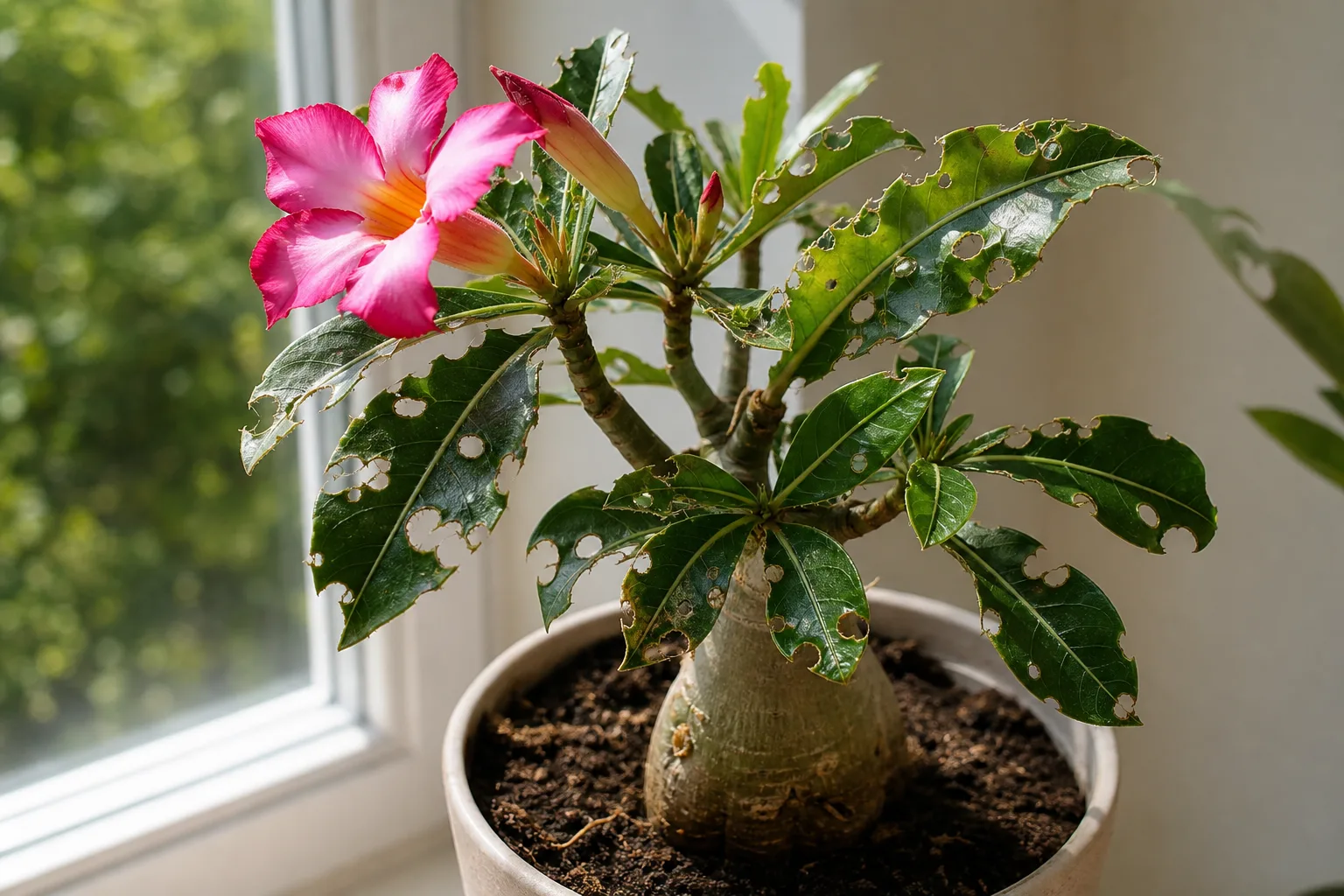
Holes in Leaves on Houseplants
Still unsure?Match your symptoms to the most likely problems in under a minute.Run diagnosis →Understand and fix holes in leaves
'Leaf problems are often the first sign something is off with a houseplant. Holes in Leaves can look alarming, but the fix depends on where symptoms start, how fast they spread, and what the soil and roots are doing. This guide walks through how to identify Chewed or damaged leaf tissue, often from pests, rule out look-alikes, and treat the underlying cause. Track weekly progress after you change care, and note watering, light, and repotting dates so you can tell whether the symptom is improving or returning.'. Compare upper versus lower leaves, new versus old growth, and soil moisture at root depth before you treat, because the same visible symptom can come from watering, light, pests, or normal aging on different plants.
Overview
'Leaf problems are often the first sign something is off with a houseplant. Holes in Leaves can look alarming, but the fix depends on where symptoms start, how fast they spread, and what the soil and roots are doing. This guide walks through how to identify Chewed or damaged leaf tissue, often from pests, rule out look-alikes, and treat the underlying cause. Track weekly progress after you change care, and note watering, light, and repotting dates so you can tell whether the symptom is improving or returning.'. Compare upper versus lower leaves, new versus old growth, and soil moisture at root depth before you treat, because the same visible symptom can come from watering, light, pests, or normal aging on different plants.
How to identify it
- Note which leaves are affected-oldest lower leaves vs newest growth
- Check whether spots are dry and crispy or soft and spreading
- Inspect leaf undersides for pests, webbing, or sticky residue
- Compare light exposure-did the plant move or get direct sun recently?
- Feel soil moisture before assuming the issue is only on the leaves
When to worry
Soft brown patches spreading fast, black stems, or more than a third of leaves declining in a week warrants urgent inspection for rot or disease.
Common causes
Watering stress
Both over- and underwatering show up on leaves first. Yellowing, browning, and drop often trace back to roots sitting too wet or too dry.
Low humidity or harsh tap water
Dry indoor air and mineral buildup cause brown tips and edges on sensitive plants like calatheas and peace lilies.
Incorrect light
Too little light weakens leaves; too much direct sun scorches them. Chewed or damaged leaf tissue, often from pests after a window move often points to light.
Pests or fungal disease
Stippling, webbing, spots with halos, or powdery patches mean the leaf damage may be infectious or insect-related-not just care stress.
Step-by-step fix
Document the pattern
Photograph affected leaves and note whether damage is on old growth, new growth, or one side of the plant.
Check soil, roots, and drainage
Confirm moisture at root level and that the pot drains. Many leaf issues resolve once watering stabilizes.
Adjust light and humidity
Move to bright indirect light if leggy or faded; pull back from harsh sun if scorched. Group plants or use a humidifier for crispy edges.
Treat pests or fungus if present
Isolate affected plants. Wipe leaves, use insecticidal soap for pests, and improve airflow for fungal spots.
Remove damaged tissue
Trim fully yellow or brown leaves at the base. Partial brown tips can be trimmed for appearance; they will not turn green again.
Prevention tips
- Water based on soil dryness, not leaf appearance alone
- Keep plants in appropriate light for their species
- Inspect leaves monthly for early pest signs
- Use filtered water on sensitive foliage plants
Common mistakes
- Removing all yellow leaves before fixing the root cause
- Fertilizing a stressed plant hoping leaves green up faster
- Spraying leaves at night, which encourages fungal spots
A hole is a record of lost tissue, but it is not a diagnosis. A caterpillar can chew a fresh crescent from a leaf, a thrips can scar a folded leaf that later opens with holes, a dead leaf-spot center can drop away, and a pet or rough window blind can tear foliage without any pest being present.
That is why spraying first is usually a poor diagnostic method. The useful question is whether tissue is still being removed now, then what evidence sits around the damage: smooth or ragged edges, dark droppings, pale trails, webbing, slime, insects, spots, or a clear contact point.
This guide uses an evidence-to-action method synthesized from extension and integrated pest-management resources reviewed in July 2026. It cannot identify a culprit from a photograph alone, and the two Adenium images below are reference examples rather than proof of one cause or evidence of the author’s firsthand diagnosis. Your best evidence comes from repeated inspection of the actual plant and its newest growth.
Quick Diagnosis: What Makes Holes in Leaves?
Holes in plant leaves most often come from chewing animals, insects feeding while a leaf is folded, dead spot tissue falling out, or physical injury. The Penn State Extension guide to holes in plants illustrates how irregular holes plus a shiny trail point toward slugs or snails, but that outdoor pattern should not be generalized to every indoor plant.
Start by separating true missing tissue from look-alikes. Pale stippling, translucent mines, brown lesions, and silvery scars may resemble holes at a glance but represent different damage. Hold the leaf against a bright background; a genuine hole transmits unobstructed light, while a thin mine or scar retains a tissue layer.
Use this shortlist:
| Evidence | More likely explanation | Next place to inspect | Least disruptive next step |
|---|---|---|---|
| Ragged holes plus dark pellets | Caterpillar or another chewing insect | Leaf undersides, folds, nearby surface | Remove a confirmed animal; monitor |
| Notched leaf margins | Beetle, weevil, caterpillar, or pet | Edge at night; pot rim and soil | Block contact or identify the feeder |
| Irregular holes plus slime | Slug or snail | Pot underside, saucer, damp hiding places | Hand-pick and remove shelter |
| Pale winding trail inside leaf | Leaf miner | End of trail for larva or dark frass | Remove a limited mined leaf |
| Holes aligned when leaf unfolds | Injury or feeding while leaf was folded | New growth, leaf sheath, thrips evidence | Protect new growth; confirm pests |
| Round or angular holes with brown rims | Dead lesion tissue that detached | Similar spots on other leaves | Isolate if lesions are spreading |
| One clean tear beside a wall or blind | Mechanical contact | Plant position and movement | Move the contact source; do not spray |
No single pattern is infallible. Several causes can coexist, and the same insect may leave different marks as it grows.
Treat the final column as a threshold, not a diagnosis. A treatment is justified only when its expected target is supported by fresh damage or corroborating evidence. If all edges are dry and no new injury appears during a week of inspection, monitoring is safer than escalating to pesticide.
Read Shape, Edge, Residue, and Timing
Examine the edge of the hole with a hand lens. A fresh feeding edge is usually green and moist-looking before it dries; an old edge becomes tan, dry, and stable. A brown border does not automatically mean disease because any wounded tissue can dry around its margin.
Next, look for residue. Caterpillar frass often appears as dark pellets; slugs and snails can leave reflective mucus; sap-feeding pests may leave cast skins or sticky honeydew rather than large bites. The UC IPM houseplant guidance recommends identifying the pest and understanding its biology before choosing a control, an important safeguard because a product labeled for one pest or site may be unsuitable for another.
Timing is equally useful. A plant that spent summer outdoors may bring chewing pests inside, while a leaf torn during a move will show one stable injury. Photograph representative leaves today and compare them every two or three days; if no new holes appear, an active infestation becomes less likely.
First Decide Whether the Damage Is Active
Do not judge progress by old leaves. Mature leaf tissue generally does not fill a missing hole, so yesterday’s damage remains visible after the cause has gone. Recovery means no fresh damage and normal new leaves, not the disappearance of scars.
To test activity, circle the affected leaves on a simple sketch or add a dated photo to your phone. Inspect at the same time for a week, including at least one after-dark check with a flashlight. Many chewing pests hide by day, and slugs or snails are especially associated with moist, sheltered conditions.
Active damage is more likely when edges are fresh, new holes appear, frass returns after cleaning, or an insect is found near new growth. Old damage is more likely when edges are fully dry, the pattern does not expand, and all new foliage opens intact.
Isolate the plant when you find a mobile pest, eggs, larvae, mines, or unexplained new damage. Isolation is a precaution, not proof that the problem spreads; it lets you inspect and treat without exposing neighboring plants.
In this wider view, compare whether damage is scattered across several leaves or concentrated on one contact-facing side. Distribution helps test a hypothesis, but the image cannot reveal whether the original cause is still present.
Chewing Insects and Their Feeding Patterns
Chewing insects remove tissue with mouthparts rather than extracting sap. The result may be a hole through the blade, a notch from the margin, a window where one surface remains, or skeletonization that leaves larger veins intact. Damage can be disproportionate to pest numbers because one hidden larva may feed repeatedly.
Inspect leaf undersides, petiole junctions, rolled foliage, flowers, and the point where a new leaf emerges. Also examine the bench, sill, and saucer below the plant because droppings can be easier to find than a camouflaged insect.
Do not assume every indoor chewing mark requires pesticide. Hand removal is often the most targeted response when one caterpillar, beetle, or snail is found. Bag the pest or move it outdoors only when local conditions and species make that responsible; an unidentified nonnative pest should not be released.
Caterpillars, Beetles, and Weevils
Caterpillars often leave irregular bites and frass, but species and life stage affect the pattern. Some feed openly; others hide in curled leaves or along veins. Beetles and weevils may cut notches from margins or make holes within the blade, and some are mainly active at night.
If you find a larva, photograph it before removal. Identification matters because Bacillus thuringiensis var. kurstaki is a microbial pesticide used against particular susceptible caterpillars rather than a general remedy for beetles, slugs, or physical damage; the US EPA overview of Bt explains that different Bt strains produce proteins active against particular insect groups. Always follow the exact product label, including crop or ornamental restrictions and indoor-use directions.
For a small houseplant, manual removal, rinsing, and repeated inspection may solve the problem with less exposure than a broadcast spray. If damage continues after the visible pest is removed, search for eggs, additional larvae, or a second cause rather than increasing chemical strength automatically.
Thrips and Damage That Opens as a Leaf Unfurls
Thrips do not usually carve neat mature holes the way a caterpillar does. Their feeding can scar soft, folded tissue; as that leaf expands, injured areas may split or leave distorted holes. Fine silvery patches, black specks, distorted new leaves, or narrow moving insects strengthen the case. The UC IPM thrips guide describes stippling, scarring, distortion, and black fecal specks as diagnostic evidence while warning that damage alone does not always justify treatment.
Tap a flower or growing tip over white paper and inspect the debris with a hand lens. Sticky cards can help detect winged adults, but they do not measure all life stages or solve the infestation by themselves. Penn State’s houseplant pest guidance supports quarantine and repeated examination of new plants because early detection is easier than controlling a population across a collection.
Thrips often require repeated, label-compliant management because eggs may be protected in plant tissue and life stages occupy different locations. Remove heavily damaged flowers, clean debris, and choose a product specifically labeled for thrips on indoor ornamentals if treatment is necessary.
Slugs and Snails on Pots and Patio Plants
Slugs and snails are more likely on plants kept outdoors, on ground-level patios, or in persistently damp shelter than on a dry shelf far indoors. They make irregular holes and can consume margins or tender seedlings; a shiny trail is one of the more useful corroborating clues.
Check after dark beneath the pot, saucer, bench, mulch, and dense foliage. Remove hiding places and avoid leaving the area continuously wet, while still watering the plant according to its needs. Copper barriers and baits have conditions and limitations, so do not improvise treatments around pets or children.
If a plant recently came inside, quarantine and inspect it over several nights. Finding no trail or animal does not absolutely exclude a slug, but it lowers the probability and should redirect attention to insects, old outdoor damage, or mechanical injury.
Leaf Miners and Internal Feeding
Leaf miners feed between the upper and lower surfaces rather than beginning with an open hole. Their mines may look serpentine, blotchy, pale, or translucent, sometimes with a dark frass line. Later, mined tissue can brown and tear, creating an apparent hole.
Hold the leaf to light and trace the mine. If practical, remove a lightly infested leaf before adults emerge, then seal it for disposal. Avoid spraying the outside of a leaf without confirming that the chosen treatment can reach the relevant life stage and is labeled for that plant.
One mined leaf does not prove the whole collection is infested. Inspect nearby plants and new growth, but preserve healthy foliage. Indiscriminate defoliation reduces the plant’s photosynthetic area and may add stress without controlling adults elsewhere.
Diseases and Dead Spots That Fall Away
Some bacterial or fungal leaf spots kill small areas whose centers later detach, a pattern often called shot-hole damage. The UC IPM shot-hole overview describes dead spot centers dropping out after lesions develop, although its listed hosts and pathogens must not be generalized to every houseplant. This explanation is more plausible when holes begin as discrete tan, brown, water-soaked, or haloed lesions and when similar spots appear across multiple leaves; it is less plausible when the leaf edge is freshly chewed without preceding discoloration.
Plant disease diagnosis requires a susceptible host, a causal agent, and favorable conditions. Penn State’s plant disease diagnosis overview emphasizes that nonliving factors can also produce symptoms, so a spot should not be labeled fungal merely because it is brown.
If lesions are expanding, isolate the plant, keep foliage dry when practical, improve spacing, and disinfect cutting tools between plants. Avoid misting a symptomatic canopy. Submit clear photos or a sample to a local extension diagnostic service when rapid spread, valuable plants, or uncertain identification makes treatment consequential.
Mechanical Damage, Pets, and Unfurling Tears
Houseplants are frequently damaged by transport sleeves, blinds, walls, sleeves, cleaning, curious pets, or leaves rubbing together in airflow. Mechanical holes tend to match the contact point and stop appearing once the source is removed. They may look dramatic but are not contagious.
New leaves are especially vulnerable while folded. Low humidity, inconsistent root moisture, or physical resistance at a sheath may contribute to a leaf sticking and tearing, but a tear alone cannot diagnose humidity. Stabilize species-appropriate care and resist manually peeling a leaf open.
Pet tooth marks often repeat along margins or appear at the animal’s reachable height. Move the plant and verify its toxicity status with an authoritative source; do not wait for more bites as a diagnostic test. Contact a veterinarian or poison-control service promptly if ingestion is suspected.
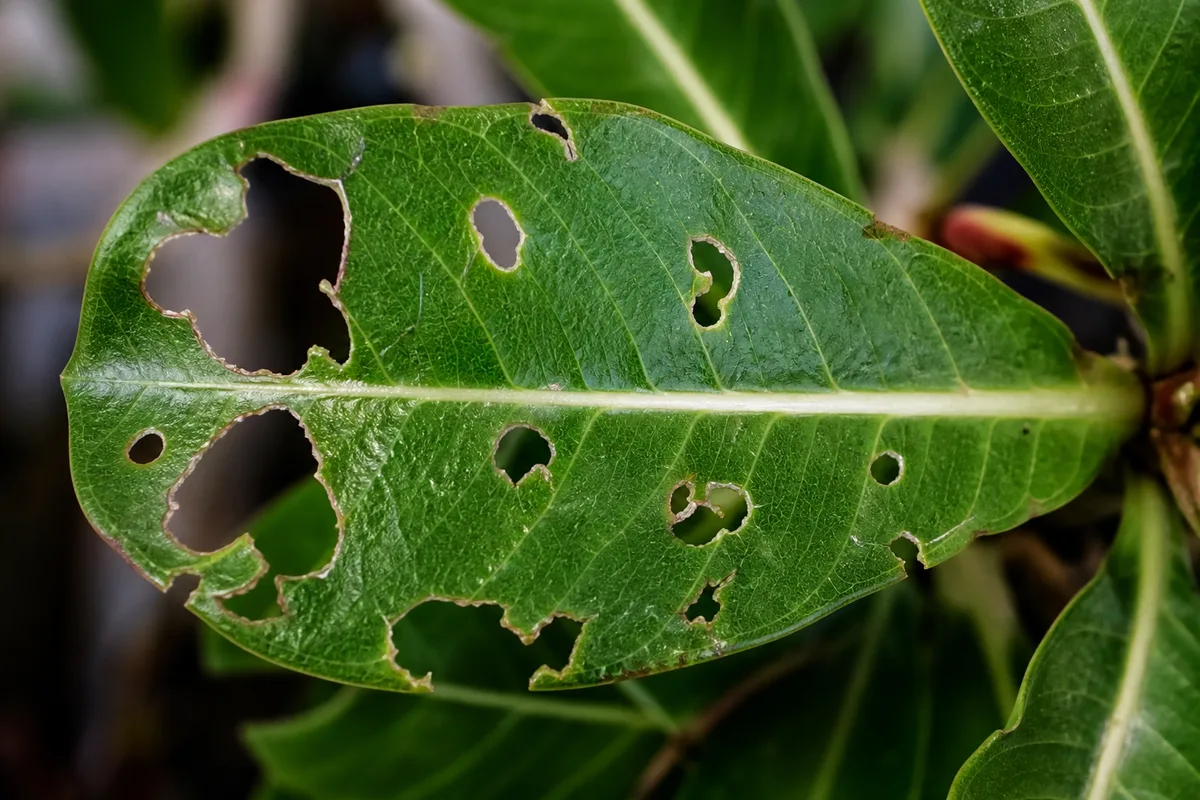
The close view makes margin texture easier to compare. Look for dried borders, preceding lesions, surface scarring, frass, or tissue still changing; the visual pattern should guide inspection, not replace it.
Inspect the Whole Plant in the First 48 Hours
Begin by moving the plant away from the collection without placing it in radically different light or temperature. Photograph the canopy, both leaf surfaces, growing tips, stems, soil surface, drainage hole, saucer, and nearby shelf. Record whether the plant recently came indoors, was moved, repotted, or exposed to a pet.
Clean loose debris so newly produced frass or fallen pests become visible. Use a flashlight and hand lens, and repeat the inspection after dark. Check neighboring plants even if they look healthy, but do not spray them preventively without evidence.
Then test one hypothesis at a time. Remove an identified chewing animal; stop physical contact; remove a severely mined leaf; or improve leaf-disease sanitation. A response is diagnostically useful only if you can tell what changed.
Create a simple damage map before treatment. Count newly affected leaves, mark their position in a sketch, and note whether holes occur only in soft new tissue or also in mature foliage. This baseline prevents an old scar from being mistaken for treatment failure and reveals whether an unseen culprit favors a particular part of the plant.
Also inspect the room rather than the pot alone. A leaf that repeatedly catches a curtain, oscillating fan, watering can, or passing sleeve can acquire several injuries over time, while insects often leave biological evidence elsewhere on the plant. Moving one suspected contact source for a week is a safe diagnostic test when pest evidence is absent.
Match the Treatment to the Culprit
Treatment should follow identification:
- One visible chewing pest: remove it manually and monitor for eggs or companions.
- Thrips or another confirmed small pest: isolate, clean, and use a product labeled for that pest, plant, and indoor site.
- Slug or snail: hand-pick, remove hiding places, and correct persistently damp surroundings.
- Leaf miner: remove limited mined leaves and monitor for adults or new mines.
- Spreading lesions: isolate, keep leaves dry, sanitize tools, and seek diagnosis before fungicide or bactericide use.
- Mechanical injury: remove the contact source and protect new growth; no pesticide is needed.
Insecticidal soap and horticultural oil are contact products; coverage and direct contact matter, and they are not equally effective for every chewing pest. The UC IPM pesticide guidance for houseplants stresses reading labels and considering plant sensitivity. Test any labeled spray on a small area first and never mix products or increase concentration beyond directions.
Should You Remove Leaves With Holes?
Keep a damaged leaf when it remains mostly green, the cause is no longer active, and the leaf is not infected. It still contributes to the plant even if it is cosmetically imperfect. A hole will not close, but appearance alone is not a reason to strip useful foliage.
Remove a leaf when it is mostly dead, supports an active miner, carries expanding disease lesions, or blocks inspection and airflow in a dense diseased canopy. Use clean tools and avoid removing a large share of foliage at once from an already stressed plant.
Dispose of pest- or disease-bearing material in a sealed bag when local guidance recommends it. Do not compost material that may preserve the problem unless you know the compost process is appropriate.
How to Measure Recovery
Recovery is a trend, not a cosmetic reversal. Old holes remain, so monitor the number of new damaged leaves, the expansion of marked lesions, pest evidence, and the quality of emerging foliage. A weekly photo from the same angle is more reliable than memory.
Keep a brief log of inspection dates and actions. If new growth opens intact and no fresh frass, mines, lesions, or insects appear through more than one pest life-stage interval, confidence rises that control worked. Exact timing varies by pest, temperature, and treatment, so continue checking rather than declaring success after one quiet day.
Normal growth rate is species- and season-dependent. A slow plant may not replace foliage quickly even after the cause is corrected; stability can be meaningful progress.
Prevent New Holes Without Routine Spraying
Quarantine new plants and inspect leaves, flowers, stems, and potting media before placing them with the collection. Clean pots and tools, remove dead debris, use intact screens, and inspect plants before bringing them indoors after summer.
Give each plant species-appropriate light and water so it can produce sturdy growth, but avoid the misleading claim that good care makes a plant pest-proof. Healthy plants can still acquire insects, and excessive fertilizer can create soft growth or salt stress.
Position plants away from repeated contact with doors, blinds, pets, and high-traffic paths. Allow leaves room to unfold. Make observation routine: a careful weekly look is more useful than preventive pesticide use against an unidentified target.
When to Escalate or Discard a Plant
Seek local extension or professional diagnostic help when damage spreads rapidly despite a matched treatment, when lesions reach stems or crowns, or when identification affects a valuable collection. Escalate immediately if a regulated or unusual pest is suspected; local reporting obligations vary.
Discarding may be reasonable when a common inexpensive plant remains heavily infested after repeated correct treatment and threatens many healthy plants. Bag it before carrying it through the collection. This is a risk-management choice, not evidence that every plant with holes is beyond saving.
When pets or people may have ingested plant tissue or pesticide, contact the appropriate medical, veterinary, or poison-control service. Plant treatment advice is not a substitute for exposure guidance.
Conclusion
Holes in plant leaves become manageable when you stop treating the hole as the diagnosis. Determine whether damage is active, read the edge and residue, inspect at different times, and connect the pattern to a specific pest, lesion, or physical event.
Choose the smallest action that fits the evidence: remove one pest, isolate an infestation, improve sanitation, prevent contact, or obtain a diagnosis. Protect and monitor new growth, because old holes will remain even after the underlying problem is solved.
Plants commonly affected
These houseplants often struggle with holes in leaves. Open a care guide or plant-specific troubleshooting page for tailored fixes.
 Medium
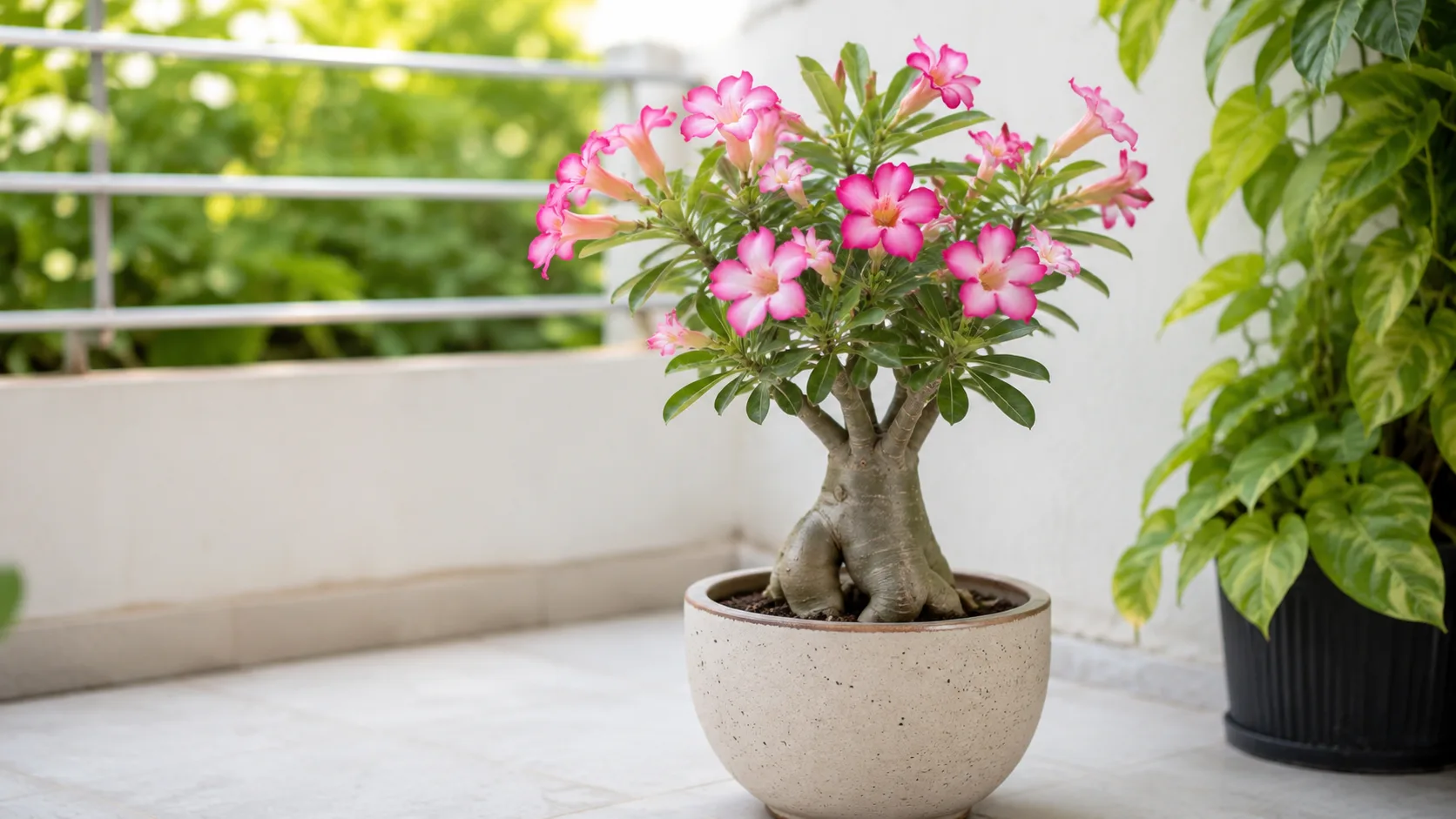
Adenium
Likely causeChewing insects—especially oleander caterpillars—eat holes through Adenium leaves and new growth.
Quick fixInspect leaf undersides at dawn, hand-pick larvae, and apply Bt to active feeding areas.
 Medium
African Milk Tree
Likely causeCommon holes in leaves pattern on African Milk Tree under indoor care stress.
Quick fixInspect roots, watering, light, and pests; adjust one variable and monitor new growth.
 Medium
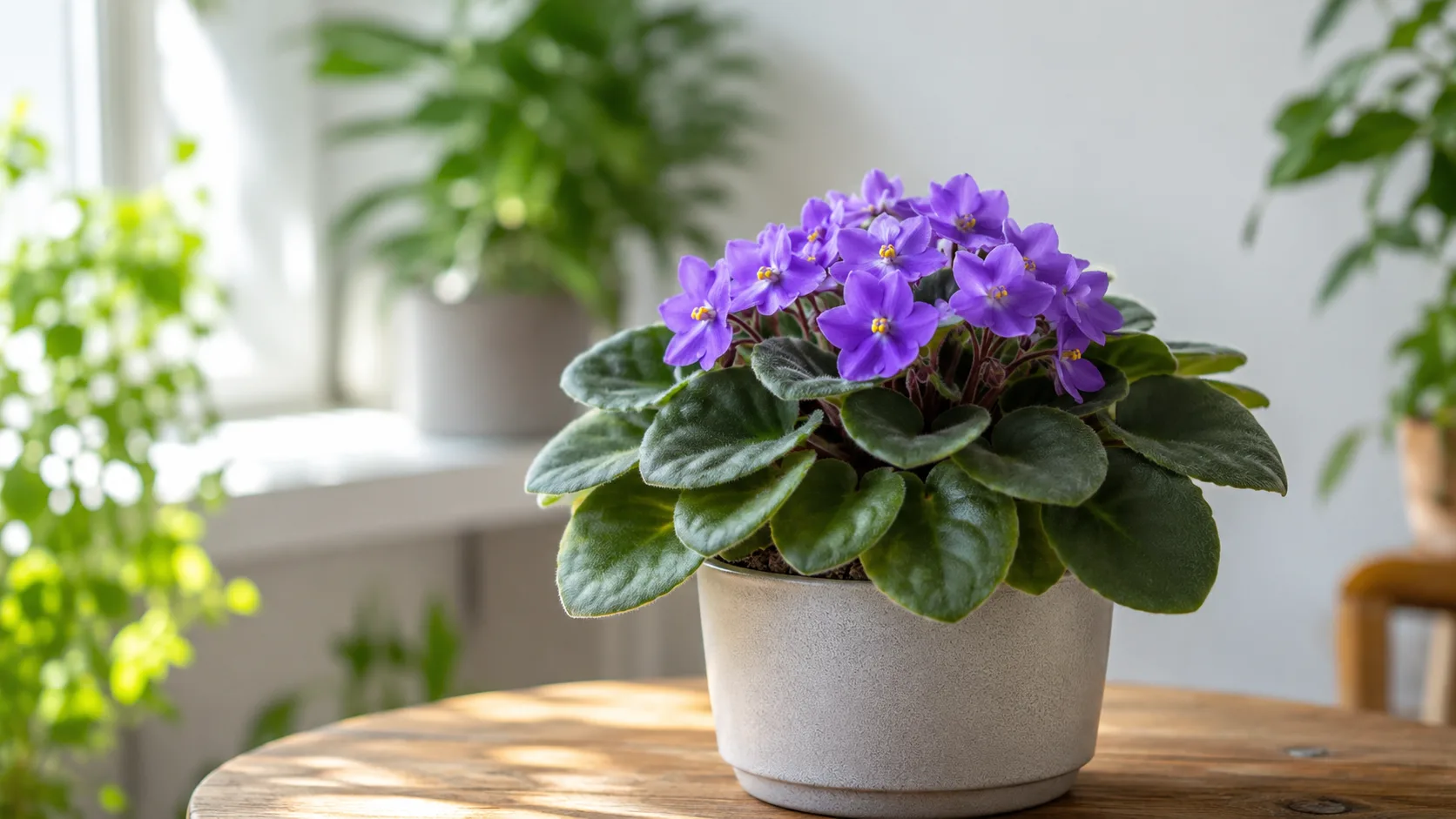
African Violet
Likely causeCommon holes in leaves pattern on African Violet under indoor care stress.
Quick fixInspect roots, watering, light, and pests; adjust one variable and monitor new growth.
 Medium
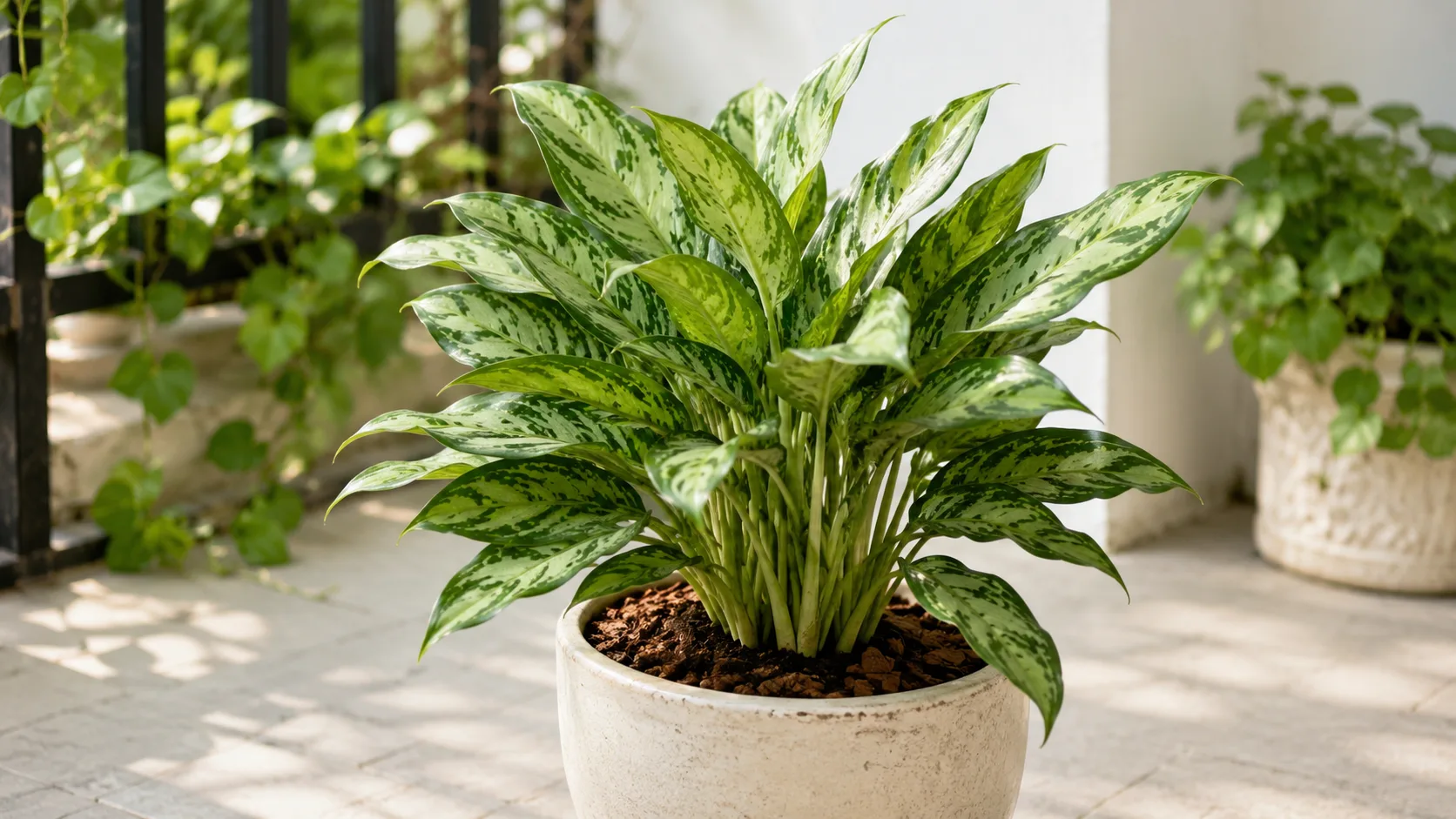
Aglaonema
Likely causeCommon holes in leaves pattern on Aglaonema under indoor care stress.
Quick fixInspect roots, watering, light, and pests; adjust one variable and monitor new growth.
 Medium
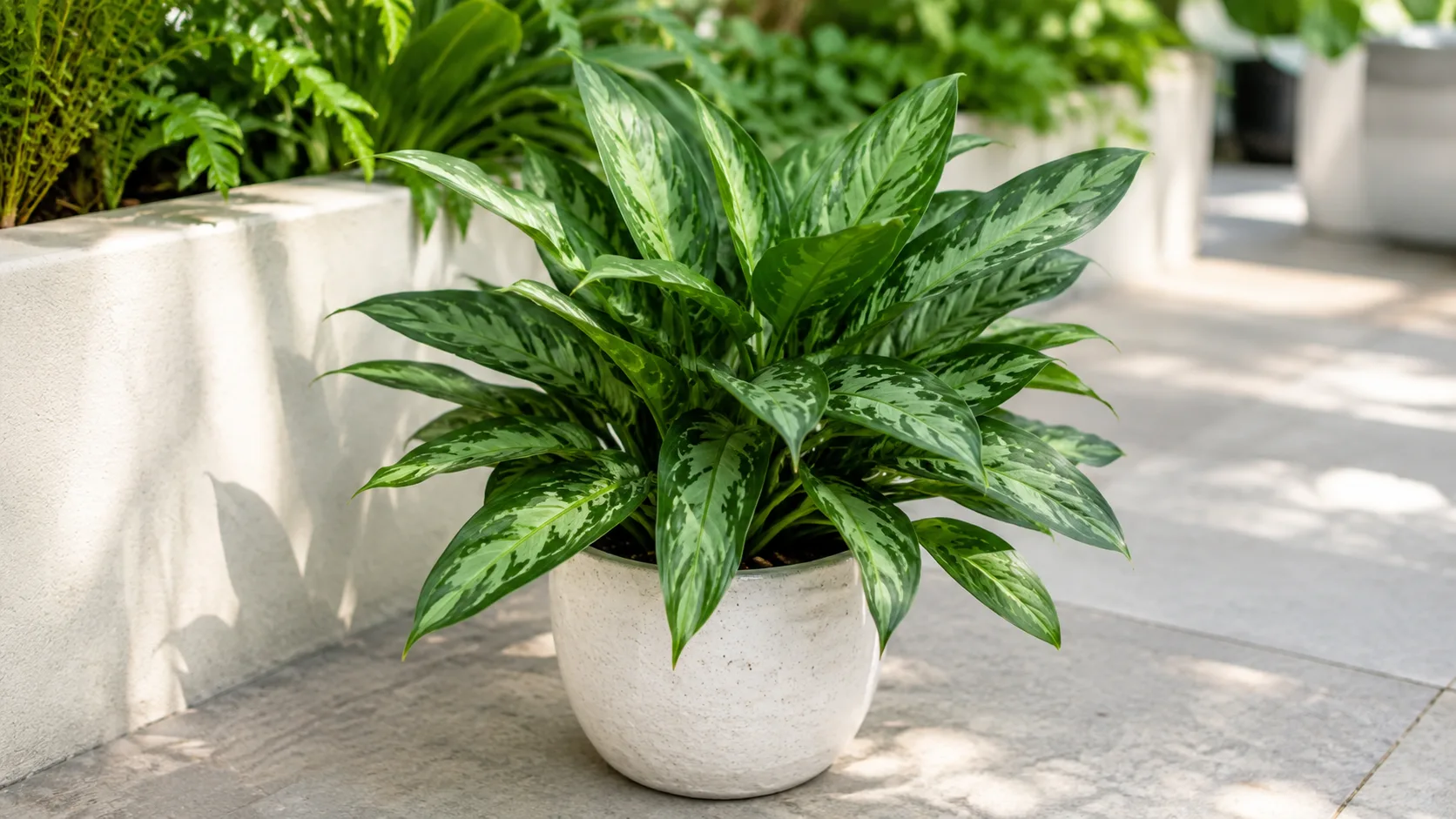
Aglaonema Cutlass
Likely causeCommon holes in leaves pattern on Aglaonema Cutlass under indoor care stress.
Quick fixInspect roots, watering, light, and pests; adjust one variable and monitor new growth.
- Medium
Aglaonema Lady Valentine
Likely causeCommon holes in leaves pattern on Aglaonema Lady Valentine under indoor care stress.
Quick fixInspect roots, watering, light, and pests; adjust one variable and monitor new growth.
- Medium
Aglaonema Maria
Likely causeCommon holes in leaves pattern on Aglaonema Maria under indoor care stress.
Quick fixInspect roots, watering, light, and pests; adjust one variable and monitor new growth.
- Medium
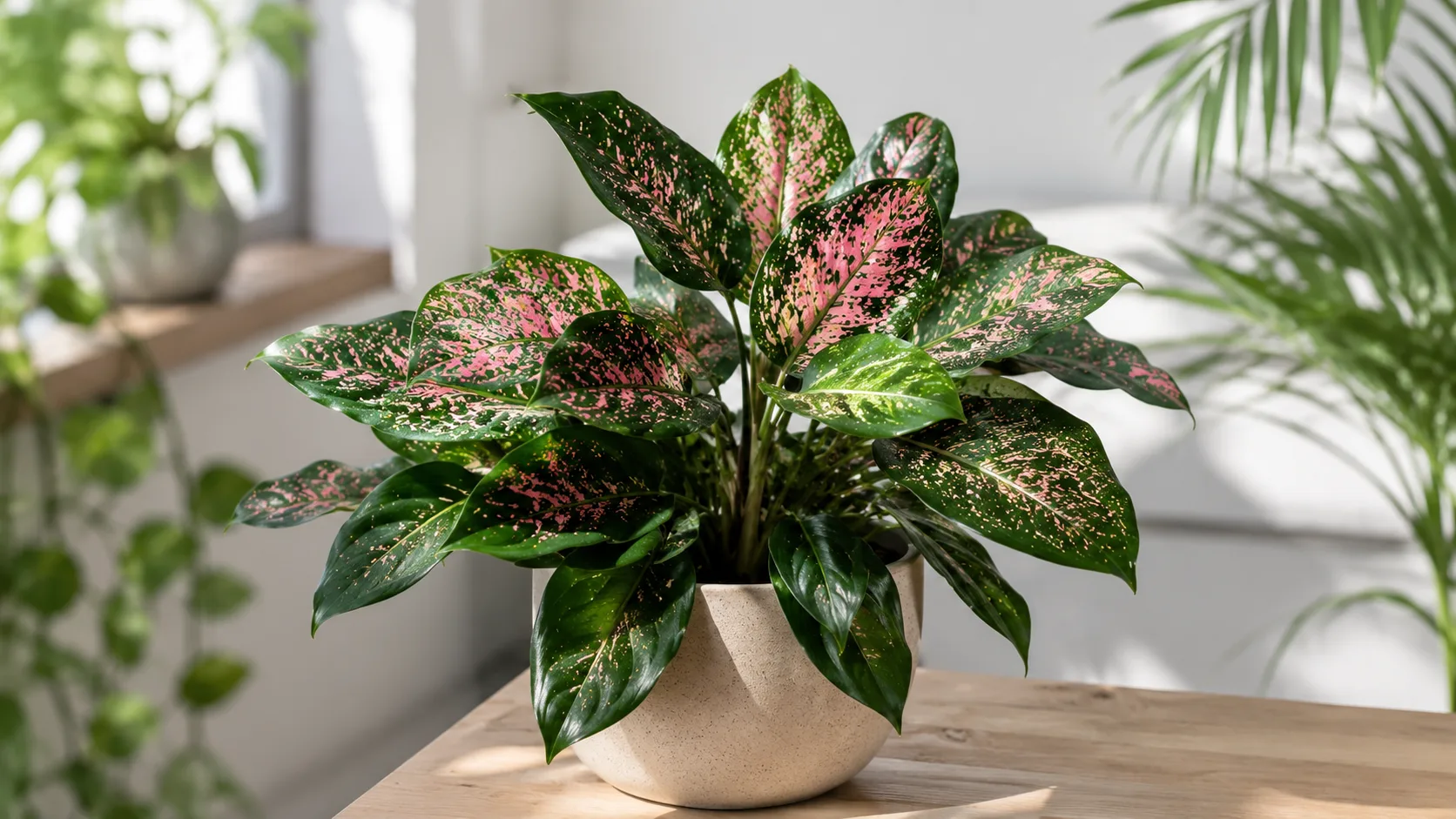
Aglaonema Pictum Tricolor
Likely causeCommon holes in leaves pattern on Aglaonema Pictum Tricolor under indoor care stress.
Quick fixInspect roots, watering, light, and pests; adjust one variable and monitor new growth.
 Medium
Aglaonema Pink Dalmatian
Likely causeCommon holes in leaves pattern on Aglaonema Pink Dalmatian under indoor care stress.
Quick fixInspect roots, watering, light, and pests; adjust one variable and monitor new growth.
- Medium
Aglaonema Red Siam
Likely causeCommon holes in leaves pattern on Aglaonema Red Siam under indoor care stress.
Quick fixInspect roots, watering, light, and pests; adjust one variable and monitor new growth.
 Medium
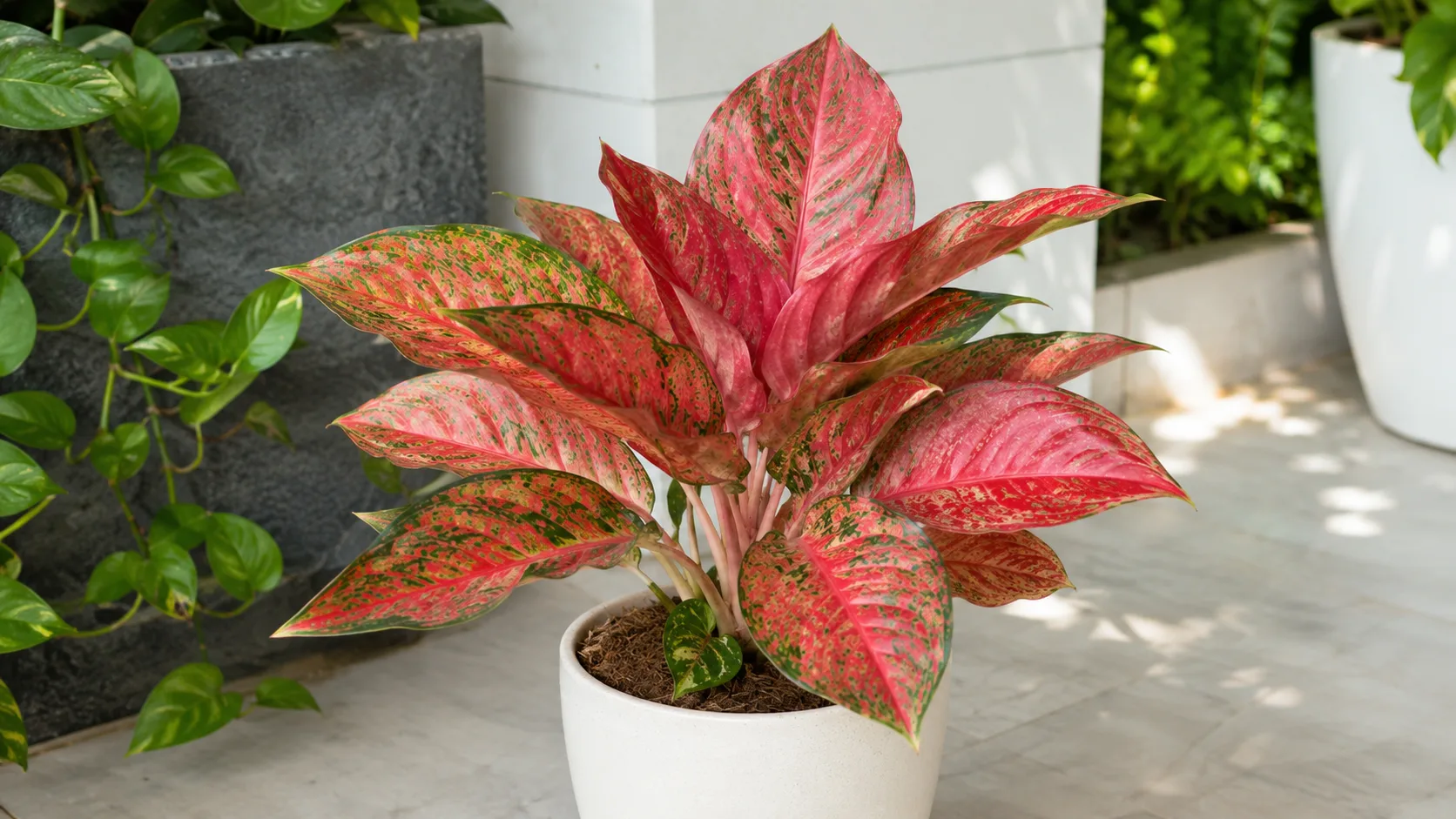
Aglaonema Red Valentine
Likely causeCommon holes in leaves pattern on Aglaonema Red Valentine under indoor care stress.
Quick fixInspect roots, watering, light, and pests; adjust one variable and monitor new growth.
 Medium
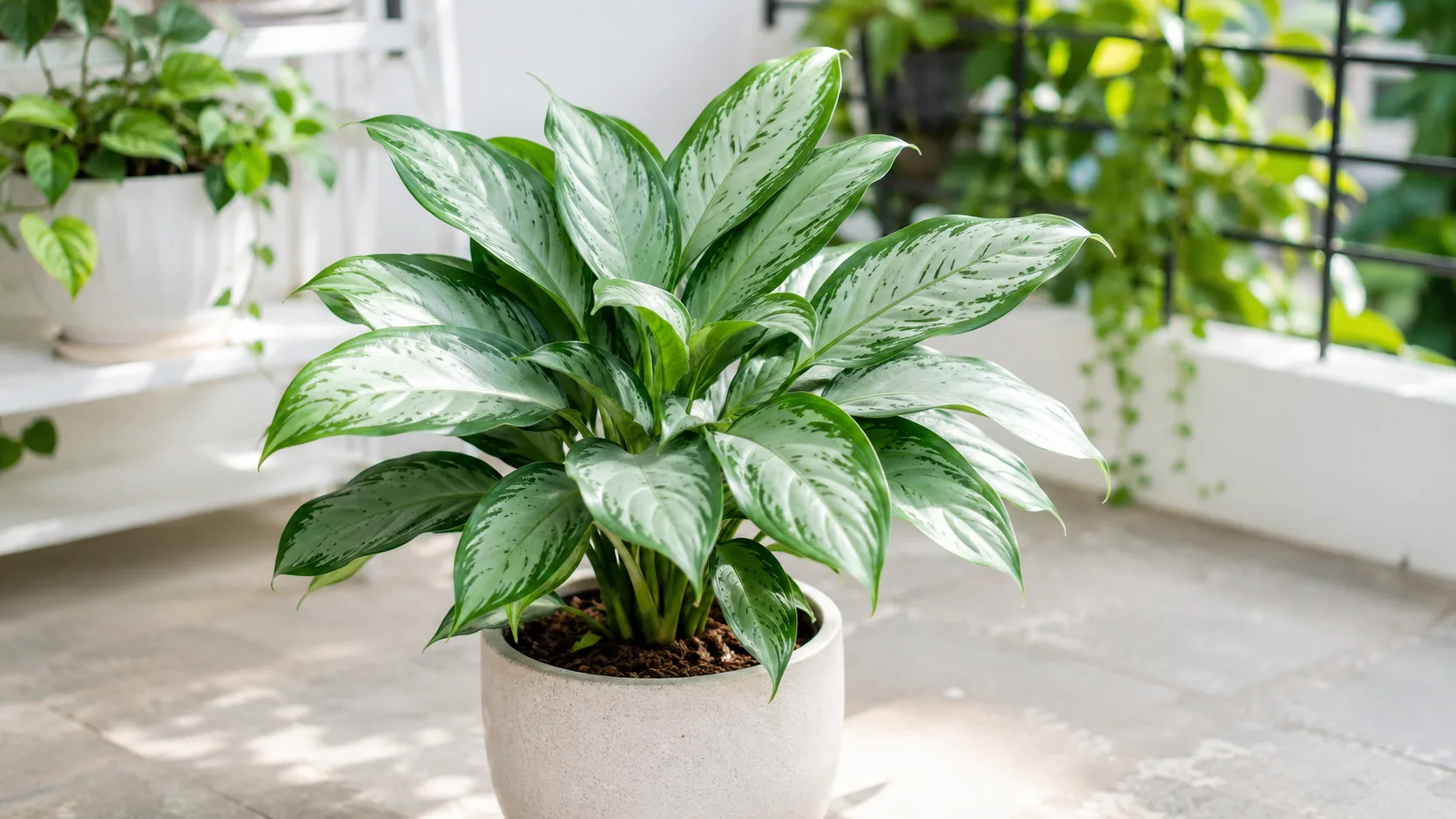
Aglaonema Silver Bay
Likely causeCommon holes in leaves pattern on Aglaonema Silver Bay under indoor care stress.
Quick fixInspect roots, watering, light, and pests; adjust one variable and monitor new growth.