Holes in Leaves on Monstera Adansonii: Causes, Checks &
Quick answer
Monstera Adansonii is supposed to have holes. Smooth oval fenestrations present when a leaf unfurls are normal. Ragged new holes on older leaves, serpentine trails inside blades, or solid new leaves on a mature vine mean something to fix-inspect undersides before spraying.
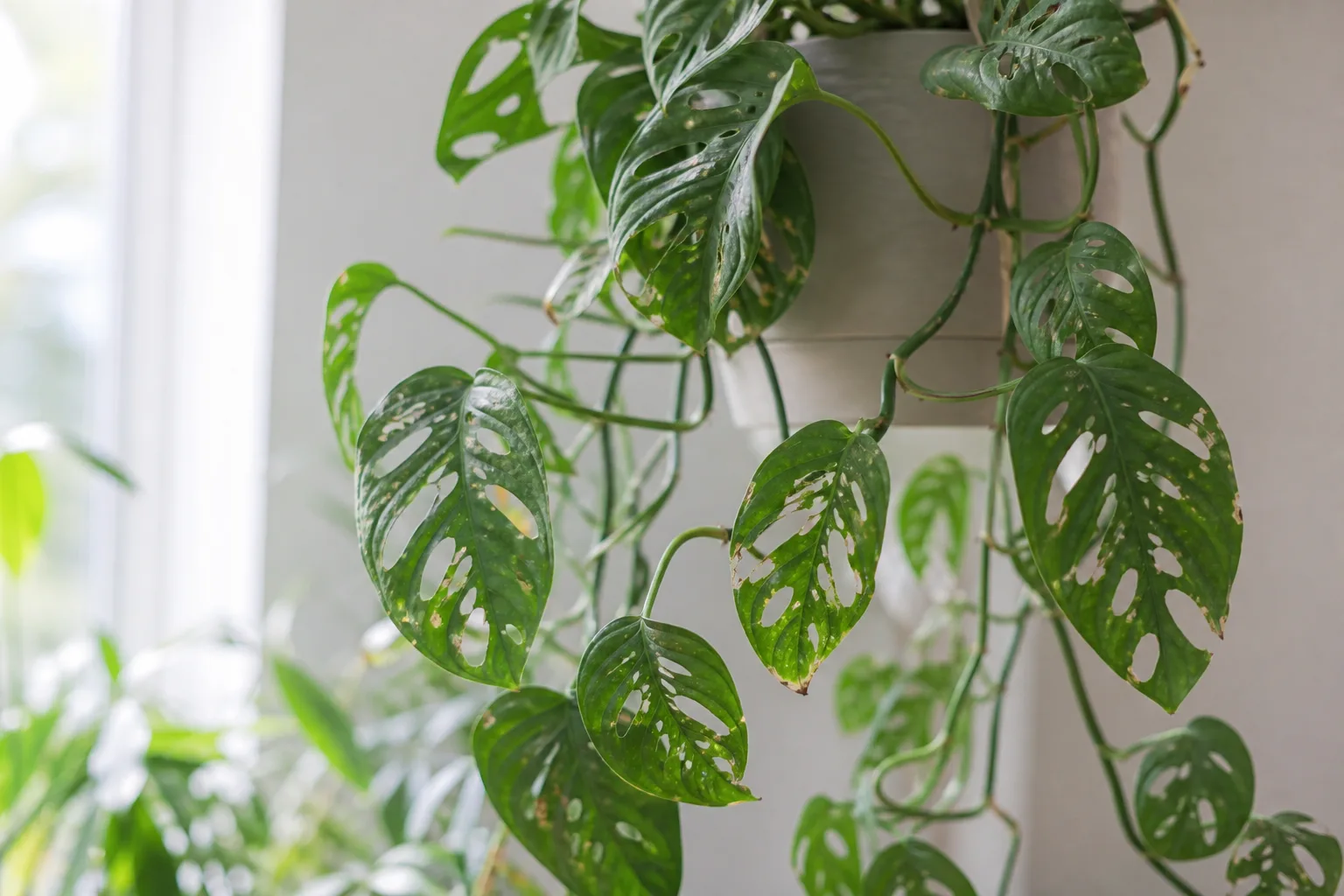
Holes in Leaves on Monstera Adansonii: Causes, Checks & Fixes
This guide covers holes in leaves on Monstera Adansonii. See also the general Holes in Leaves guide, watering, and light pages for this plant.
Holes in Leaves on Monstera Adansonii: Causes, Checks & Fixes
Quick answer
Monstera Adansonii (Monstera adansonii) is the Swiss cheese vine-perforated heart-shaped leaves with oval holes are its normal mature form, not a problem by default. The diagnostic question is whether the holes are fenestrations or damage.
Natural fenestrations form through programmed cell death while the leaf is still tiny, then open into smooth oval windows as the blade unfurls. On a healthy adansonii, you should see holes on most leaves once the plant has pushed out its first few blades-often within the first three or four leaves on a young plant.
First step: compare the newest unfurling leaf to the one below it. Smooth holes already visible at unfurling mean fenestration. Ragged holes that appeared later on older leaves, serpentine pale trails inside the blade, black frass pellets, or a brand-new solid leaf on an otherwise fenestrated mature vine each point to a different fix-inspect leaf undersides under bright light before reaching for spray.
What holes in leaves look like on Monstera Adansonii
Adansonii leaves are medium to dark green, glossy, and heart-shaped with unique oval holes-smaller and thinner than Monstera deliciosa, with holes rather than the large splits deliciosa develops. On houseplants, blades are usually a few inches long; wild specimens can reach much larger.
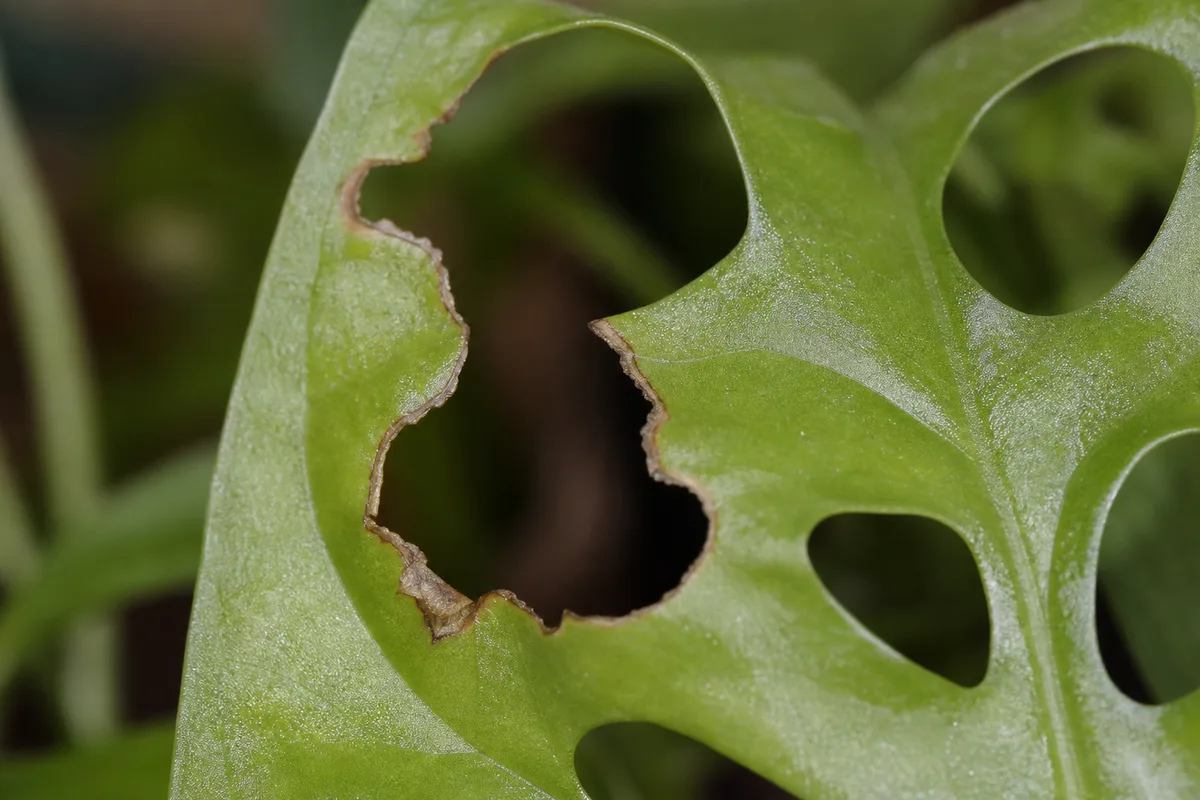
Holes in Leaves symptoms on Monstera Adansonii - compare with healthy tissue on the same plant.
When assessing holes, sort them into these patterns:
- Natural fenestrations - smooth, finished oval edges; holes present as the leaf opens; pattern repeats on successive new leaves along a climbing or trailing vine; leaf otherwise glossy and firm
- Missing fenestrations on new leaves only - newest blade solid while older leaves on the same vine already have holes; stems may stretch toward a window; common on plants in low light or small hanging pots without support
- Ragged margin notches or irregular holes on mature leaves - appear after the leaf fully opened; edges torn or chewed; sometimes with black frass pellets on foliage or the pot rim
- Serpentine or blotchy pale trails inside the leaf - tissue looks thin along a winding path through the heart-shaped blade, sometimes ending in a small exit hole; classic leaf-miner damage
- Single clean tears on outer vines - one or two leaves on trailing sections that scrape walls, hooks, or shelves; no new damage after repositioning
- Clustered small holes on soft new growth - often on unfurling tips, sometimes after a plant spent summer outdoors
Adansonii marks easily compared with thicker Monsteras. Thin leaves in dry air or after uneven watering can tear at fenestration edges, which can look like new damage until you confirm the tear follows an existing window rather than random chewing.
Why Monstera Adansonii gets holes in leaves
Fenestration is genetic, not pest damage. Holes form through programmed cell death in developing tissue and enlarge as the leaf grows. On adansonii, fenestrations typically appear early-often by the third or fourth leaf-unlike deliciosa, which may wait until the plant is larger and climbing. The holes help sunlight reach lower leaves on a climbing vine in its native rainforest habitat.
Low light suppresses fenestrations on new leaves. Adansonii in dim corners or crowded hanging baskets may push out solid heart-shaped leaves because the plant maximizes photosynthetic area when light is limited. This is not chewing damage-it is incomplete fenestration. Monstera Adansonii light guide and a moss pole or trellis encourage larger, more perforated mature leaves.
Outdoor summer brings caterpillars indoors. Moths lay eggs on leaves of plants that sat on patios. Larvae chew ragged holes in thin adansonii foliage-often on the softest unfurling tips-before you notice frass below. This pattern is distinct from smooth fenestrations present at unfurling.
Leaf miners create internal trails. Leafminer larvae feed between upper and lower leaf surfaces, leaving winding discolored paths through thin adansonii blades. The oval fenestrations adansonii is famous for do not look like serpentine tunnels.
Trailing and climbing growth gets mechanical damage. Vines on hangers swing against walls and window frames. A heart leaf caught on a hook tears cleanly; dried tissue can look like a neat hole separate from fenestrations. Damage stays on the same leaf after you adjust placement.
Common houseplant pests rarely punch large holes. Spider mites cause stippling and webbing, not clean oval windows. Thrips leave silvery scrape marks. Aphids, mealybugs, scale, and whiteflies weaken tissue but typically do not create the ragged chewed pattern caterpillars leave-though NC State lists these insects as problems on adansonii worth ruling out when leaves look generally unhealthy.
Fungal leaf spots can drop out. Indoor leaf spots sometimes dry and fall, leaving shot-hole appearance-usually preceded by brown halos, unlike clean fenestrations or insect frass.
How to confirm the cause
Work through these checks in order:
- Unfurling test - Watch the next leaf open. Smooth oval holes visible from the start mean fenestration. Holes appearing days later on an already-open leaf mean damage.
- Light and support audit - Solid new leaves on a vine that previously fenestrated, plus stretching stems, point to low light or lack of climbing support-not insects.
- Frass search - Hold vines over white paper and tap lightly. Black pellets rolling off suggest caterpillars.
- Trail inspection - Backlight heart leaves. Winding pale tunnels inside the blade confirm leaf miners, not natural perforations.
- Night patrol - Inspect vine tips and undersides with a flashlight after dark. Caterpillars feed when lights are low.
- Timeline - New ragged holes weekly on different leaves signal active feeding. One unchanged tear for a month suggests past mechanical contact.
- Placement trace - Follow which trailing vine touches walls or hooks. Isolated abrasions along that path need repositioning, not pesticide.
- Pest rule-out - Webbing and stippling suggest mites; sticky honeydew suggests aphids, scale, or mealybugs-different from fenestration or chewing patterns.
Lookalike symptoms to rule out
Sunburn scorches adansonii tips and margins to crisp brown without punched holes mid-blade. Overwatering yellows lower leaves and softens stems without frass or internal trails. Normal old-leaf drop breaks cleanly at the petiole. A juvenile plant with only one or two solid leaves may simply be too young to fenestrate yet-wait for the third or fourth leaf before worrying about missing holes.
First fix for Monstera Adansonii
Photograph the newest leaf, then inspect all undersides under bright light before treating anything.
If the issue is solid new leaves on an otherwise fenestrated vine: move the plant to bright indirect light, add a moss pole or trellis for the vine to climb, and wait for the next two or three leaves. Do not spray for pests when the only symptom is missing fenestrations.
If holes are ragged with frass and you find caterpillars: isolate the plant from other houseplants, hand-pick larvae and visible eggs from undersides, and discard heavily stripped leaves once insects are removed.
If you see serpentine trails inside leaves: pinch off and discard affected blades in a sealed bag. Do not compost mined tissue indoors.
If damage is a single tear on one trailing leaf with no frass, trails, or new holes: reposition the hanger or shelf so vines clear walls. No spray needed.
Do not apply insecticide to a plant whose only “problem” is beautiful natural fenestration. Do not repot, fertilize, or heavily prune on the same day you start pest removal.
Step-by-step recovery
Once the cause is confirmed:
- For missing fenestrations - Relocate to brighter indirect light, install a moss pole, and maintain watering when the top 3–5 cm of mix is dry. Judge the next two unfurling leaves.
- For caterpillars - Isolate, hand-pick nightly for one week, remove destroyed leaves, and shower accessible vines if needed to dislodge small larvae.
- For leaf miners - Remove mined leaves; monitor new growth for two weeks. Trails on freshly unfurled leaves should not reappear if infested tissue is gone.
- For mechanical tears - Adjust hanger height and vine clearance; trim only if more than half the blade is torn and unsightly.
- If feeding continues - Apply insecticidal soap or neem oil labeled for ornamentals on a test leaf first; wait 48 hours before full application. Cover undersides thoroughly.
- Monitor new growth - Success means clean new leaves with expected fenestrations-or, after pest removal, intact heart-shaped blades without new ragged holes.
Recovery timeline
Low-light fenestration recovery shows on the second or third leaf after brighter placement and climbing support-often two to four weeks during active growth. Caterpillar damage usually stops spreading within one week of hand-picking, with clean new perforated leaves visible shortly after. Leaf-miner removal shows results immediately on remaining foliage.
Existing fenestrations do not change shape; chewed tissue does not regenerate. Adansonii grows quickly when roots are healthy-firm stems, normal Monstera Adansonii watering guide, and unstippled new growth mean the plant is recovering even when older holed leaves look rough.
What not to do
- Do not treat natural fenestrations as pest damage-smooth oval holes at unfurling are the goal on adansonii.
- Do not spray the entire plant because new leaves lack holes; check light and maturity first.
- Do not leave mined leaves attached hoping they heal-larvae inside can pupate and damage new vines.
- Do not increase watering because leaves look damaged-adansonii roots rot easily in wet mix.
- Do not use homemade dish soap sprays; commercial insecticidal soaps are formulated for plant contact.
- Do not ignore trailing vines rubbing against walls-mechanical tears recur until placement changes.
- Do not return an outdoor plant to the indoor collection without inspecting every vine tip and leaf underside.
How to prevent holes in leaves on Monstera Adansonii
Give bright indirect light and a moss pole so fenestrations develop reliably on each new leaf. Quarantine new adansonii for two weeks before it shares a shelf with other aroids.
After any outdoor summer stay, inspect vine tips and leaf undersides before bringing the pot inside. Hang trailing sections where they clear walls, door frames, and sharp hooks. Keep pots out of pet reach-Monstera Adansonii is toxic if chewed, and tooth marks mimic pest damage on lower vines.
Scout leaf undersides during each watering check, especially in spring when fast new growth produces soft tissue caterpillars prefer. Let the top 3–5 cm of mix dry between waterings so thin leaves stay firm. Avoid splashing water on foliage and provide good air circulation to reduce leaf spot issues that can leave shot-hole scars.
When moving plants between indoor and outdoor spaces, rinse leaf undersides in the sink to dislodge hitchhiking eggs before they hatch on your collection.
When to worry
Escalate if new ragged holes appear on multiple leaves every few days despite hand-picking, if leaf-miner trails spread through most unfurling foliage, or if frass accumulates across an entire hanging basket during a spring growth flush. Chronic feeding can strip soft tips even when roots remain healthy.
A single old tear on one trailing leaf, with firm vines and normal fenestrations on new growth, is not an emergency. Solid new leaves on an otherwise perforated mature plant usually need better light-not urgent pest intervention.
If brown halos precede tissue drop rather than clean chewed edges, reassess for fungal leaf spot and improve airflow rather than hunting insects.
Conclusion
Holes on Monstera Adansonii are usually fenestrations-smooth oval windows present as each heart-shaped leaf unfurls. Match the pattern before acting: missing holes on new leaves mean brighter light and climbing support; ragged holes with frass mean caterpillars; internal trails mean leaf miners; isolated clean tears mean mechanical contact. Inspect undersides under bright light before spraying, and judge recovery by clean new perforated growth along the vine-not by repairing old blades.
When to use this page vs other Monstera Adansonii guides
- Monstera Adansonii watering guide - Use for routine moisture checks before assuming holes in leaves is the main issue.
- Monstera Adansonii problems hub - Browse all 22 common issues on this species.