Curling Leaves on Monstera Adansonii: Causes, Checks & Fixes
Quick answer
Curling leaves on Monstera Adansonii usually mean moisture stress on thin foliage-a protective roll or cup to cut water loss. Probe soil 3–5 cm deep and lift the pot before watering, misting, or repotting.
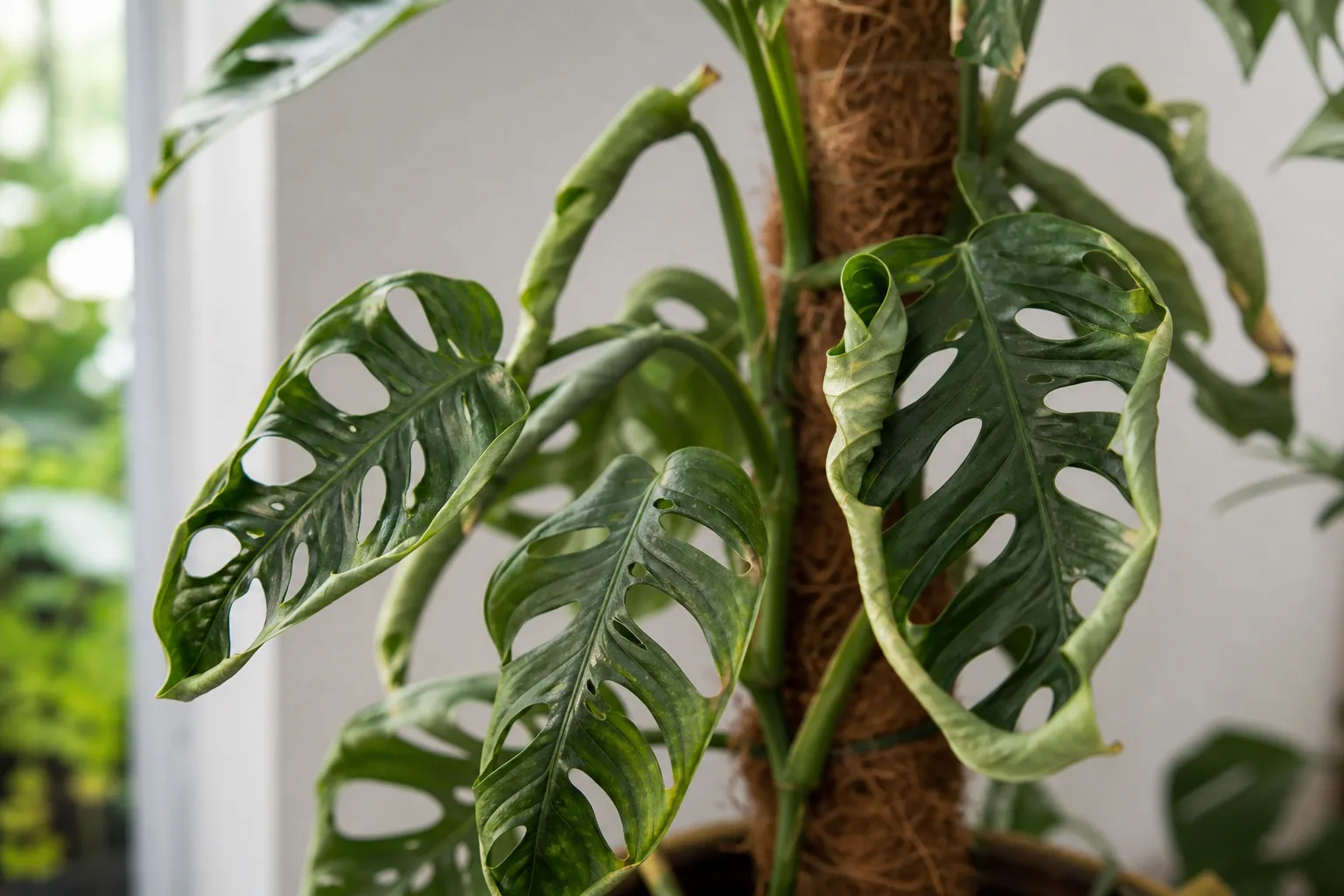
Curling Leaves on Monstera Adansonii: Causes, Checks & Fixes
This guide covers curling leaves on Monstera Adansonii. See also the general Curling Leaves guide, watering, and light pages for this plant.
Curling Leaves on Monstera Adansonii: Causes, Checks & Fixes
Quick answer
Curling leaves on Monstera Adansonii (Monstera adansonii, Swiss cheese vine) are a protective response-the plant rolls or cups leaf tissue to cut water loss when roots cannot keep up or when the air is too dry and hot. On this species, curl shows up quickly because the leaves are thinner and smaller than on Monstera deliciosa, so missed waterings, heater drafts, and low humidity mark the foliage within a day or two.
First step: probe soil moisture 3–5 cm deep and lift the pot. Do not mist, fertilize, or repot until you know whether the mix is dry, wet, or uneven. Inward curl with a lightweight pot almost always means thirst. Cupping on the side facing a window often means direct sun is scorching thin leaves. Twisted, stippled new growth points to spider mites or other sap-feeding pests before you add more water.
Use this page when leaf shape changes-roll, cup, or twist. If the whole vine is limp and collapsed without obvious cupping, start with the wilting or drooping-leaves guides instead.
What curling leaves look like on Monstera Adansonii
Healthy Adansonii leaves lie relatively flat with oval fenestrations and glossy green tissue. When stressed, the blade changes shape in predictable ways:
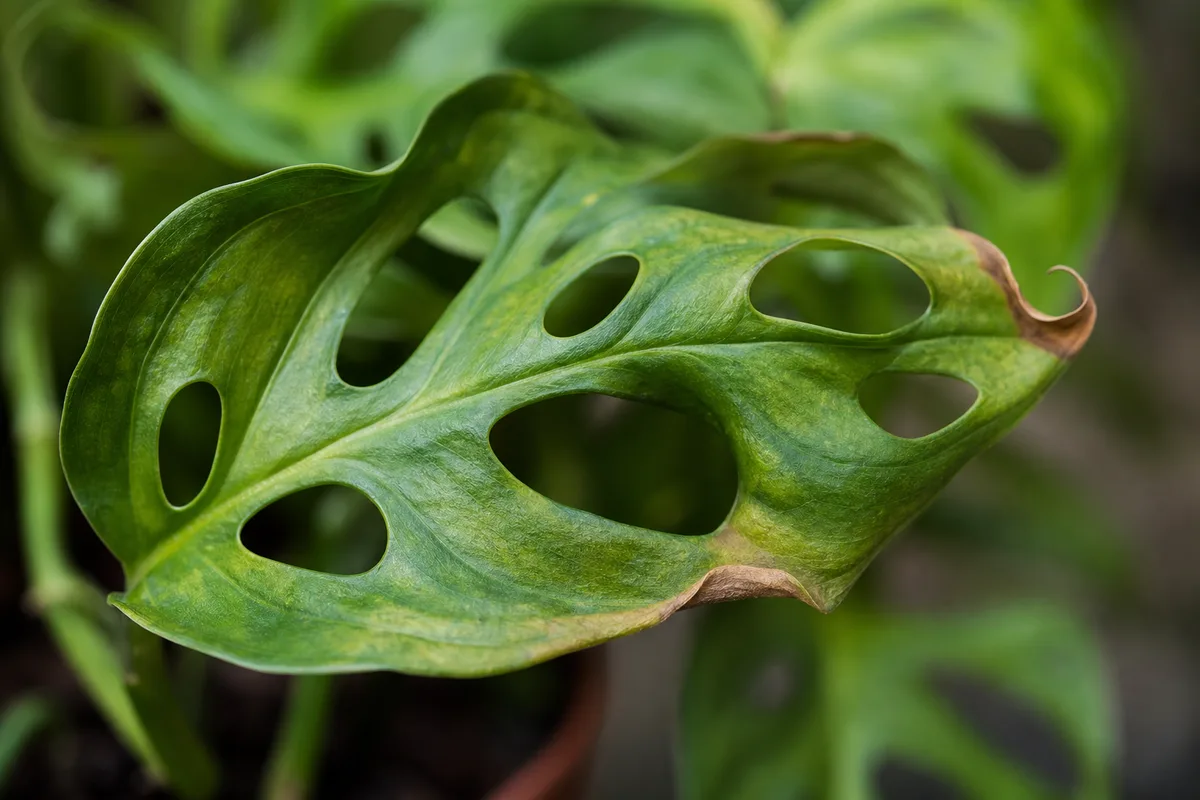
Curling Leaves symptoms on Monstera Adansonii - compare with healthy tissue on the same plant.
- Inward roll or tube shape - Leaf margins curl under along the length of the blade, often starting at tips or edges
- Upward cupping - The whole leaf bowls upward like a spoon, common in dry air or after heat stress
- One-sided curl - Only the leaves facing a bright window cup or crisp; the shaded side stays flatter
- Wrinkled or wavy texture - Thin tissue looks puckered when the plant cannot refill cells fast enough
- Stuck or distorted new leaves - Emerging leaves stay narrow, twisted, or fail to unfurl fully
- Brown crispy margins with curl - Dry edges often accompany underwatering or low humidity below what this tropical vine prefers
Curl is not the same as normal unfurling. A brand-new leaf emerging from a sheath may look curled for several days before it opens-that is growth, not crisis. Worry when established leaves that were flat begin curling, or when multiple new leaves in a row open small and deformed.
Why Monstera Adansonii gets curling leaves
Swiss cheese vine comes from tropical rainforests where humidity stays high and roots access steady moisture in airy, well-drained soil. Curl happens when leaf expansion or turgor maintenance outpaces what the root zone and air can supply.
Underwatering
The most common cause indoors. Adansonii in small hanging pots or chunky aroid mix dries faster than many houseplants expect. When the top 3–5 cm goes dry and the pot feels light, roots cannot deliver enough water and the plant rolls leaves inward to reduce exposed surface area. Thin leaves show this before thicker aroids would.
Low humidity and dry airflow
Monstera adansonii prefers high humidity and struggles when indoor air drops during winter heating or near AC vents. Dry air increases transpiration; leaf edges curl upward or inward as the plant tries to conserve moisture. Brown tips often appear alongside curl on Adansonii because the leaf margins dry first.
Excess direct light or heat
This species wants bright, indirect light-not hot midday sun on the foliage. Direct sun can scorch leaves and drive water loss faster than roots replace it. Leaves on the sun-facing side cup or curl while the rest of the plant may look fine until the exposure worsens. See the light guide for placement.
Overwatering and root stress
Less common as a primary curl trigger, but damaged roots from saturated mix can disrupt water uptake. Leaves may curl or look wrinkled even when soil feels wet because compromised roots cannot transport water-a pattern easy to misread as thirst. Overwatering can result in root rot on this species when drainage fails; see overwatering and root rot when wet soil persists.
Pest feeding on new growth
Spider mites thrive in warm, dry indoor air and pierce leaf tissue, causing stippling, silvering, and permanent distortion on expanding leaves. Thrips and aphids can twist tender new Adansonii foliage before it hardens. Full treatment detail lives on the spider mites guide.
Display setup: moss pole vs. hanging basket
How you grow Adansonii changes how fast the mix dries-and how curl misleads you. A moss-pole climber in a floor pot often holds moisture longer at the root ball center because the vine shades the surface and aerial roots pull from the pole. A trailing hanging basket exposes more pot wall and leaf surface to dry air; the top crust can look dry while the center stays wet, or the opposite-surface damp while roots are thirsty. Probe at 3–5 cm depth on every setup; do not trust surface color alone. The overview compares climbing vs. trailing culture in more depth.
Recent repotting or care swings
Sudden shifts-moving from a humid bathroom to a dry office, or alternating flood and drought-stress thin leaves into curl while roots readjust. Temporary curl for a few days after repotting is possible if stems stay firm and moisture stays moderate.
How to confirm the cause
Work through these checks in order:
- Pot weight - Light and dusty favors underwatering; heavy and cold for days favors overwatering.
- Moisture at depth - Insert a finger or skewer 3–5 cm down. Dry throughout suggests thirst; wet core with dry surface suggests uneven watering or a root-bound ball.
- Which leaves curl - All-over inward roll on older leaves points to dry roots or dry air. Window-side cupping points to light or heat. Only newest leaves twisted points to pests or humidity during unfurling.
- Leaf undersides - Look for fine webbing, moving specks when you tap a leaf over white paper, or sticky residue.
- Environmental context - New heater season, AC blast, or a recent move to a south window?
- Stem base - Soft, dark tissue at soil line suggests advanced root rot, not simple curl from dry air.
| What you find | Likely cause | Next move |
|---|---|---|
| Light pot, dry 3–5 cm down, inward curl on green leaves | Underwatering | Thorough soak with drainage |
| Curl on sun-facing side, possible bleaching | Direct sun / heat | Filter light per light guide |
| Dry mix, curl plus brown edge tips | Low humidity + underwatering | Soak roots; raise humidity to ~50–60% |
| Wet heavy pot, yellow lower leaves, curl persists | Root stress / overwatering | Stop watering; inspect roots if no improvement |
| Stippling, webbing, twisted new leaves | Spider mites or thrips | Isolate and treat pests |
| Curl only on leaves still unfurling | Low humidity or normal emergence | Raise humidity; wait 3–7 days on one leaf |
If soil moisture is ambiguous, recheck pot weight after 12 hours rather than guessing with another full watering.
First fix to try
Probe moisture at 3–5 cm and lift the pot-then act on what you find, not on how curled the leaves look.
- If dry and light: water thoroughly until a little runs from drainage holes, then empty the saucer. Root-zone water fixes inward curl from thirst; misting leaves is a poor substitute.
- If wet and heavy: do not add water. Give bright indirect light and airflow, recheck in 48 hours, and inspect roots if curl worsens or lower leaves yellow.
- If soil is fine but air is dry: increase humidity with a humidifier or grouped plants-not a one-time mist-while keeping your normal dry-down watering rhythm.
- If pests are confirmed: isolate the plant and rinse leaf undersides before any spray; do not fertilize stressed foliage.
One decision, one action. Save repotting, pruning, and fertilizer for after you know whether the problem is dry roots, drowning roots, dry air, sun, or pests.
Step-by-step recovery
When the plant is underwatered
- Bottom-water or top-water until the mix is evenly moist, not just the surface.
- Drain fully-Adansonii needs good drainage and moist, well-drained soil, never standing water in the saucer.
- Move out of direct hot sun until leaves relax.
- If mix repelled water, bottom-soak 20–30 minutes, then drain.
- Resume watering when the top 3–5 cm dries-roughly every 7–10 days in active growth, less in winter.
When humidity is too low
- Run a humidifier or group tropical plants to hold local humidity near 50–60%.
- Keep the plant away from heater vents and AC drafts that strip moisture from thin leaves.
- Maintain steady watering; dry air plus drought doubles curl severity on Adansonii.
- Expect the next new leaves to open fuller within two to four weeks if humidity stays stable.
When direct sun is the trigger
- Move the vine to bright indirect light-partial shade indoors with filtered sun, not hot midday rays on the foliage.
- Rotate the pot weekly once light is corrected so new growth balances.
- Trim only fully scorched leaves; partially cupped older leaves may not flatten but new growth should look normal.
When pests are involved
- Isolate from other houseplants.
- Rinse undersides with lukewarm water or wipe with a soft cloth; repeat washing reduces spider mite numbers.
- If populations persist, use insecticidal soap or horticultural oil per label directions on a test leaf first.
- Hold fertilizer until new leaves emerge clean and flat. See the full spider mites protocol for repeat-treatment timing.
When overwatering damaged roots
- Stop watering until the top half of the mix dries to your normal checkpoint.
- Confirm drainage holes are open; never let the pot sit in runoff.
- If yellow lower leaves and wet soil persist more than a week, gently unpot, trim mushy roots, and repot into fresh airy aroid mix only when necessary-follow root rot guidance for advanced cases.
- Judge recovery by firm new growth, not by old curled leaves reopening.
Recovery timeline
Simple thirst: Mild inward curl often relaxes within 24–72 hours after a proper soak. Overnight improvement on leaf turgor is a strong sign you diagnosed correctly.
Low humidity: Once humidity rises and watering stays steady, the next one to three new leaves should unfurl flatter within two to four weeks. Old cupped margins may stay brown or curled-that is cosmetic.
Sun stress: After you filter light, new leaves should open normally within one to two weeks. Scorched tissue on old leaves does not heal green.
Pest damage: Distorted leaves already hardened stay twisted. Success means subsequent leaves open without stippling over two to six weeks of consistent treatment.
Root rot involved: Recovery takes weeks to months, measured by rigid stems and healthy new foliage-not by saving every curled leaf.
Curling vs. wilting vs. drooping on Monstera Adansonii
These three symptoms overlap on thin Swiss cheese vine leaves, but they answer different questions. Pick the guide that matches what you see first.
| Symptom | What it looks like | What it usually means | Start here |
|---|---|---|---|
| Curling | Margins roll inward, blade cups upward, or one side deforms; tissue may still feel firm | Protective shape change to cut water loss-thirst, dry air, sun, pests on new growth, or roots failing to deliver water | This page |
| Wilting | Stems and leaves lose turgor and hang limp or soft; whole vine collapses | Broken water pathway-dry roots, heat wilt, or damaged roots on wet mix | Wilting |
| Drooping | Vines hang below the pot rim with a downward arc; may pair with curl or wilt | Gravity plus weak turgor-often underwatering, overwatering, or recent transplant stress | Drooping leaves |
A plant can show curl without droop (dry air cupping) or wilt without obvious curl (wet-soil root failure). The shared first check is the same: moisture at 3–5 cm depth plus pot weight. Shape vocabulary tells you which recovery path to follow after that fork.
Lookalike symptoms
- Drooping without curl - Often pure turgor loss from wet or dry roots; see drooping-leaves guidance and check stem firmness.
- Brown tips only - Frequently low humidity or salt buildup; curl may be mild or absent early on.
- Leggy small leaves - Not enough light; stems stretch while leaves stay small rather than cup from water stress.
- New leaf half-unfurled with brown edges - Usually low humidity during unfurling, not permanent lack of fenestrations.
- Yellow leaves without curl - Can be older senescence or overwatering; yellow plus curl on wet soil still prioritizes root checks.
Mistakes to avoid
Do not mist instead of watering when soil is dry-surface moisture does not fix inward curl on dehydrated roots. Avoid watering again because leaves look stressed when soil is already wet; that deepens root damage on moisture-sensitive aroids. Do not move the plant into direct sun hoping faster growth will uncurl leaves-Adansonii scorches easily. Skip fertilizer on curled, stressed foliage; salts add stress when roots are already struggling. Do not expect every old curled leaf to flatten; focus on new growth quality. Avoid one pesticide application and stopping when mites are confirmed-repeat treatments per label until new leaves stay clean.
If your Adansonii hangs where cats or dogs can reach it, remember that Monstera species are toxic to pets due to insoluble calcium oxalate crystals-chewed or collapsed vines near pets need veterinary guidance, not just a humidity fix.
How to prevent curling leaves next time
Match watering to how fast your pot dries, not a calendar. Let the top 3–5 cm dry before a thorough drink in spring and summer; stretch the interval when growth slows in cooler months.
Use well-drained aroid mix in a pot with open drainage holes sized to the root mass. Hanging baskets dry quickly on top-probe depth, not just the surface crust. Moss-pole climbers may need less frequent drinks than trailing baskets in the same room because root volume and shading differ.
Give bright indirect light so the plant uses water steadily without scorching thin leaves. Filter hot south or west windows with sheer curtains.
Keep humidity around 50–60% if your home runs dry in winter; a small humidifier beats daily misting for this vine.
Scout leaf undersides weekly in dry seasons-spider mites spread quickly on stressed houseplants. Quarantine new plants before placing them near your Adansonii.
When repotting, do it during active growth, water once after the mix settles, then let a normal dry-down cycle establish before the next soak.