Drooping Leaves on Monstera Adansonii: Causes, Checks &
Quick answer
Drooping leaves on Monstera Adansonii mean the plant lost turgor-probe soil moisture at 3–5 cm depth and lift the pot before watering or repotting.
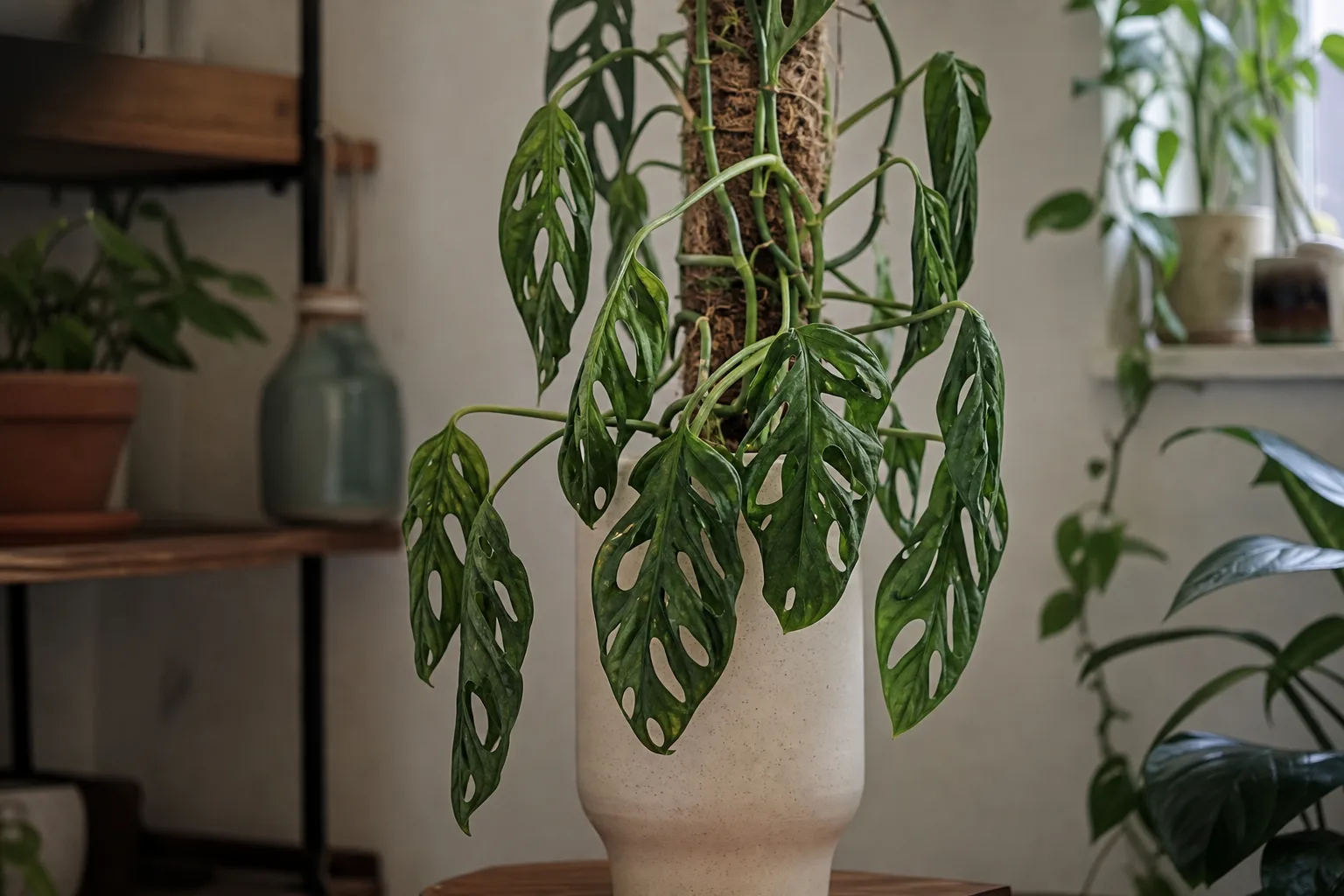
Drooping Leaves on Monstera Adansonii: Causes, Checks & Fixes
This guide covers drooping leaves on Monstera Adansonii. See also the general Drooping Leaves guide, watering, and light pages for this plant.
Drooping Leaves on Monstera Adansonii: Causes, Checks & Fixes
Quick answer
Drooping leaves on Monstera Adansonii (Monstera adansonii, Swiss cheese vine) mean the plant lost turgor-internal water pressure that keeps thin vining leaves rigid. On Monstera Adansonii overview, that collapse shows up fast because the leaves are smaller and thinner than on Monstera deliciosa, so a missed watering or a soggy root zone becomes visible within a day or two.
First step: probe soil moisture 3–5 cm deep and lift the pot. Do not water automatically. Dry, lightweight mix with limp but still-green leaves usually means thirst. Wet, heavy mix with limp leaves despite moisture often means roots cannot absorb water-a classic overwatering pattern that can lead to root rot on Adansonii.
What drooping leaves look like on Monstera Adansonii
Healthy Adansonii leaves hold their oval, fenestrated blades at a slight upward angle on firm petioles. When turgor drops, the whole vine looks limp and hang-dog:
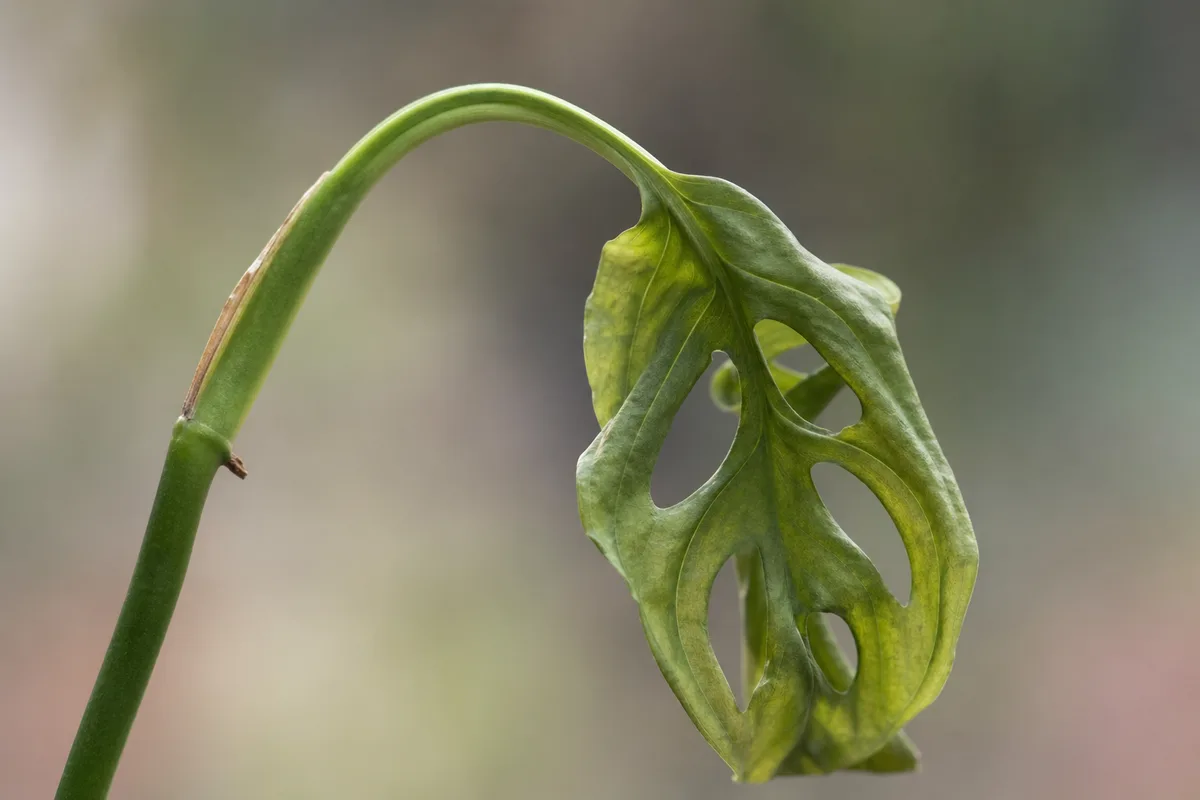
Drooping Leaves symptoms on Monstera Adansonii - compare with healthy tissue on the same plant.
- Petioles and leaf tips angle downward instead of reaching toward light
- Thin leaf tissue feels soft or floppy rather than crisp
- Trailing stems may sag off a shelf or moss pole before older leaves yellow
- Newest leaves often droop first on underwatered plants because they have the least stored water
- The plant may look wilted on one side if that section dries faster in a hanging basket
Droop is not the same as leggy stretching-stretched internodes with small pale leaves mean too little light. It is also not the same as cold damage, which can show darkened patches on leaves while stems stay firm.
Early droop keeps leaf color green. If lower leaves turn yellow while soil stays wet, suspect root stress rather than simple thirst. Brown crispy edges with droop often mean the pot went too dry for too long, especially near a heater or AC vent.
Why Monstera Adansonii gets drooping leaves
Swiss cheese vine is a tropical climber that wants moist but well-drained soil, Monstera Adansonii light guide, and steady warmth. Drooping happens when roots fail to deliver water to leaves-whether because the mix is too dry, too wet, or the root system is damaged.
Underwatering
Adansonii dries faster than many houseplants when grown in small hanging pots or airy aroid mix. Thin leaves transpire quickly in bright light or dry indoor air. If the top 3–5 cm goes bone dry and the whole pot feels light, roots cannot pull enough water upward and the vine collapses.
Overwatering and root stress
Overwatering is equally common and more dangerous. When soil stays saturated, roots lose oxygen and begin to decay. Leaves droop even though the mix feels wet because damaged roots cannot transport water-a pattern gardeners often misread as thirst.
Overwatering can result in root rot on Monstera adansonii, and the plant needs good drainage with moist-not constantly wet-soil.
Heat, light shock, and fast transpiration
Direct sun can scorch Adansonii leaves and drive water loss faster than roots replace it. Moving a plant suddenly from dim shade to a hot south window can cause temporary droop until it acclimates. Drafts below about 10°C (50°F) slow root function; avoid temperature drops below 50°F for this species.
Monstera Adansonii repotting guide and root disturbance
Recent repotting breaks fine root hairs. Temporary droop for several days after transplant is normal if the base stays firm and you avoid keeping the new mix soggy.
Root-bound or hydrophobic dry pockets
A crowded root ball in an undersized pot can dry unevenly-the surface feels moist while the center stays dry, or old peat repels water. Both cause limp leaves even when you think you watered on schedule.
How to confirm the cause
Work through these checks in order before changing care:
- Pot weight - Lift the container. Noticeably light means dry; heavy and cold often means wet.
- Moisture at depth - Insert a finger or bamboo skewer 3–5 cm down. Surface dust on top of wet core still counts as overwatering risk if the lower zone never dries.
- Watering history - Did you skip a cycle, water twice in one week, or leave the saucer full?
- Leaf pattern - All-over limp green leaves favor thirst or heat. Lower yellow leaves plus wet soil favor root stress.
- Stem base - Soft, dark tissue at the soil line suggests advanced rot, not reversible droop.
- Smell - Sour or swampy odor from drainage holes confirms saturated, failing roots.
- Recent changes - Repot, move, heat wave, or new grow light within the last week?
| What you find | Likely cause | Next move |
|---|---|---|
| Light pot, dry 3–5 cm down, green limp leaves | Underwatering | Thorough soak with drainage |
| Heavy pot, wet mix days, yellow lower leaves | Overwatering / root stress | Stop watering; inspect roots if no improvement |
| Dry surface, wet core, water runs straight through | Hydrophobic or uneven dry-out | Bottom-soak slowly; consider repotting |
| Drooped after repot, firm stems, moderate moisture | Transplant shock | Stable light; let mix dry slightly before next drink |
| Drooped after hot window move | Light or heat shock | Filter sun; acclimate gradually |
If soil is ambiguous, wait 12 hours and recheck weight rather than guessing with another full watering.
First fix to try
Probe moisture at 3–5 cm and lift the pot-then act on what you find, not on how sad the leaves look.
- If dry and light: water thoroughly until a little runs from drainage holes, then empty the saucer. Do not mist as a substitute; root-zone water fixes turgor.
- If wet and heavy: do not add water. Pause irrigation, give bright indirect light and airflow, and recheck in 48 hours. If droop worsens or stems soften, unpot and inspect roots.
One decision, one action. Save repotting, fertilizer, and pruning for after you know whether the problem is dry roots or drowning roots.
Step-by-step recovery
When the plant is underwatered
- Bottom-water or top-water until the mix is evenly moist, not just the surface.
- Drain fully-Adansonii needs good drainage; never leave standing water in the saucer.
- Move out of direct hot sun until leaves firm up.
- If mix repelled water and ran down the sides, bottom-soak the pot in a basin for 20–30 minutes, then drain.
- Resume your normal rhythm: water when the top 3–5 cm dries, roughly every 7–10 days in active growth, less in winter.
When the plant is overwatered
- Stop watering immediately.
- Confirm drainage holes are open and the pot is not sitting in runoff.
- If lower leaves yellow and soil stays wet more than a week, gently unpot and rinse roots. Trim brown mushy tissue with clean scissors; keep firm white or tan roots.
- Repot only if roots are damaged-use fresh well-drained aroid mix (potting soil with perlite and orchid bark), same size or slightly smaller pot, and wait until the root zone stabilizes before the next drink.
- Hold fertilizer until new growth looks healthy for two weeks.
When droop follows repot or a move
Keep bright indirect light stable, maintain moderate humidity if your home is dry, and avoid both drought and flood while roots settle. Mild droop should ease within three to seven days if stems stay firm.
Recovery timeline
Simple thirst: Leaves often perk within 6–24 hours after a proper soak. Overnight improvement is a strong sign you diagnosed correctly.
Overwatering without advanced rot: Once the mix dries to your normal dry-down point and you adjust frequency, new leaves should emerge firm within one to three weeks. Old limp leaves may not fully re-stiffen; that is cosmetic, not fatal.
Root rot involved: Recovery takes several weeks to months, judged by firm new growth and a hard stem base-not by saving every old leaf.
Worsening signs: Continued collapse after correct watering, blackening stems, or sour smell mean the root zone is still failing-escalate to root surgery or propagate healthy stem cuttings as backup.
Lookalike symptoms
- Wilting at midday only - May recover overnight if soil moisture is actually fine; check before watering again.
- Leggy pale growth - Insufficient light; move brighter but avoid sudden direct sun.
- Curling with droop - Often dry air or underwatering on thin Adansonii leaves; confirm moisture before raising humidity alone.
- Yellow leaves without limpness - Can be older leaf senescence or nitrogen issues; droop plus yellow on wet soil still points to roots first.
- Pest droop - Spider mites or mealybugs on undersides cause stippling and limp tissue; look for webbing or cottony clusters before treating water stress.
Mistakes to avoid
Do not water again because leaves look sad when soil is already wet-that deepens root rot on Adansonii. Avoid misting instead of watering the root ball; surface moisture does not restore turgor. Do not repot on day one unless roots are mushy or mix is failing. Skip fertilizer during acute droop; salts stress damaged roots. Do not move the plant repeatedly between rooms while it is stressed; pick stable bright indirect light and wait.
How to prevent drooping leaves next time
Match watering to how fast your pot dries, not a calendar. For most homes, letting the top 3–5 cm dry before a thorough drink works in spring and summer; stretch the interval in cooler months when growth slows.
Use a well-drained aroid mix in a pot with drainage holes sized to the root mass-not an oversized decorative cachepot that holds moisture for weeks. Hanging baskets dry quickly on top; check depth, not just the surface.
Give bright indirect light so the plant uses water steadily without scorching thin leaves. Partial shade indoors-roughly two to six hours of gentle light, not hot midday sun on the vine-matches what this species prefers.
Keep temperatures above 50°F and away from blasting heat or AC. If humidity runs below 40%, grouped plants or a humidifier reduce edge crisping that often precedes droop on dehydrated Adansonii.
When repotting, do it during active growth, water once after the mix settles, then let a normal dry-down cycle establish before the next soak.
When to use this page vs other Monstera Adansonii guides
- Monstera Adansonii watering guide - Use for routine moisture checks before assuming drooping leaves is the main issue.
- Monstera Adansonii problems hub - Browse all 22 common issues on this species.
- Root Rot on Monstera Adansonii - Different entry point when symptoms overlap with drooping leaves.