Best Soil for Monstera Adansonii: Mix, Drainage & Repotting
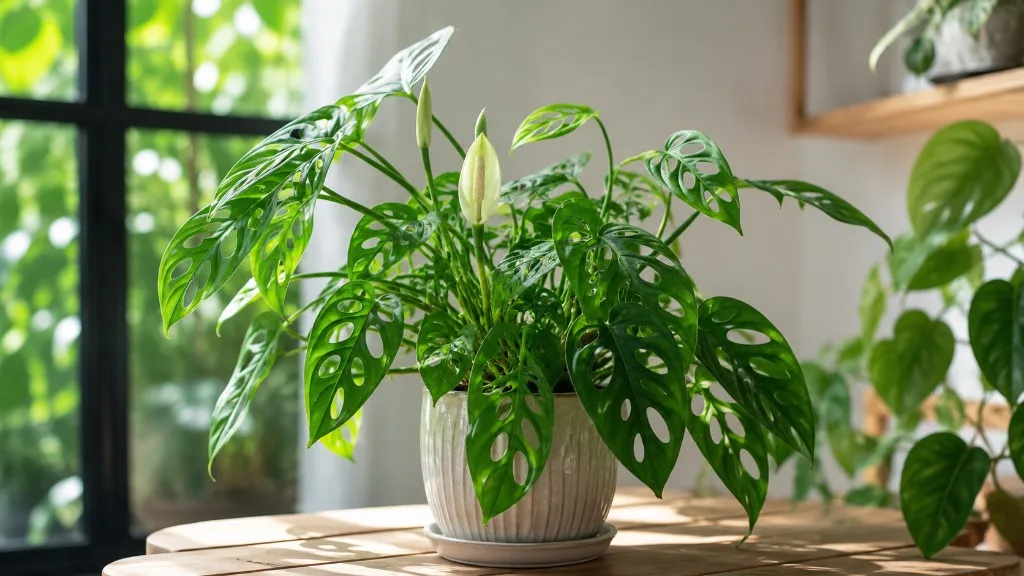
Best Soil for Monstera Adansonii: Mix, Drainage & Repotting
Best Soil for Monstera Adansonii: Mix, Drainage & Repotting
Best soil for Monstera adansonii is a chunky, well-draining aroid blend - standard indoor potting mix amended with 20–25% perlite and 10–15% orchid bark by volume - that drains fast enough for oxygen to return after every watering yet holds enough moisture that thin Swiss cheese vine leaves do not crisp between checks. Monstera adansonii is not Monstera deliciosa in a smaller pot: it is a fast-growing tropical climber with thinner foliage, smaller root volumes in hanging baskets, and aerial roots that behave differently on a moss pole than in a trailing shelf display. Soil is the system that decides how much air, moisture, and recovery time those roots get after every drink.
This guide gives you three measured recipes (default, hanging basket, moss-pole climber), step-by-step mixing and drainage tests, pot-depth rules for each display style, pH guidance reconciled with extension language, wrong-soil diagnostics tied to adansonii symptoms, and links across the Monstera adansonii cluster so you can fix the root zone before chasing light or fertilizer.
Why Soil Structure Matters for Monstera Adansonii (Swiss Cheese Vine)
Soil is not a shopping-list ingredient on a care card - it is the control system for every watering decision you make on this plant. A mix that sheds excess water within minutes after a soak but retains light moisture in its pores gives adansonii predictable recovery time between drinks. A dense, peat-heavy blend in a small hanging pot does the opposite: the top inch dries while the center stays saturated, lower leaves yellow on wet soil, and growers often blame watering when the real problem is aeration.
NC State Extension recommends moist, well-drained soil with good drainage and a slightly acidic root zone for Monstera adansonii. That phrasing matters. “Moist” means evenly damp after watering, not constantly wet. “Well-drained” means excess water exits through the drainage hole and air returns to the root zone before the next soak. The Toolbox also notes rapid growth indoors and a vining habit that uses aerial roots to climb - which means the root zone must stay open enough for those roots to breathe whether they sit in potting mix or attach to a moss pole.
Penn State Extension adds the practical houseplant layer: use a well-draining soilless potting mix rich in organic matter with neutral pH (6.0 to 8.0), and amend purchased mix with charcoal, bark, or perlite when drainage needs improvement. Overwatering in dense media can cause root rot - the failure mode adansonii hits faster than thick-leaved deliciosa because thin leaves transpire quickly and small pots in hanging displays dry unevenly when mix compacts.
What Thin-Leaved Aroid Roots Need From the Mix
Think of the substrate as a sponge with tunnels, not a brick and not a bog. After you water thoroughly, runoff should appear at the drainage hole within about a minute in a typical indoor pot. What remains should feel evenly damp through the root ball, not waterlogged at the bottom while the surface looks dry. UF/IFAS notes that potting mediums must meet root requirements for air, water, nutrients, and support - and that soilless mixes with peat, bark, and perlite are common precisely because they balance those needs in containers.
Adansonii roots are adventitious aroid roots, not taproots. They spread through open mix, cling to bark and moss, and suffocate quickly when fine peat compacts into mud. In a 12–15 cm (5–6 inch) hanging basket, the entire soil volume may be less than a liter - there is almost no buffer for heavy, water-retentive mix. In a deeper moss-pole pot, roots near the pole surface may dry faster than the base; the mix still needs chunkiness throughout, not only at the top.
Quick-Reference Aroid Mix Card
Mix by volume with a scoop or cup. These are starting points; run the drainage tests below and adjust perlite upward if your pot stays wet more than seven to ten days after a normal watering in your home.
| Scenario | Recipe (by volume) | When to use |
|---|---|---|
| Default | 65% quality potting mix + 20% perlite + 15% orchid bark | Bright to medium indirect light, tabletop or floor pot with moss pole |
| Hanging basket | 55% potting mix + 30% perlite + 15% orchid bark | Small shallow pots, trailing display, fast top-down dry-down |
| Moss-pole climber | 60% potting mix + 15% perlite + 25% orchid bark | Deeper pots, aerial roots on pole, slightly more structure |
Store-bought shortcut: Start with any peat- or coir-based indoor potting mix (not cactus mix alone). Add one scoop of perlite for every three scoops of mix, then one scoop of orchid bark for every six to seven scoops of total blend. Blend dry in a tub before moistening. If the bag looks fine and dark with no visible perlite, assume it needs amendment - Penn State Extension specifically recommends adding bark or perlite to purchased mix for Monstera.
Best Soil Mix for Monstera Adansonii
The goal is a mix that matches how your room dries the pot, not a single magic bag every grower must buy. Adansonii tolerates a range of textures when drainage and pot size stay appropriate; it fails when heavy peat compacts, oversized pots hold unused wet volume, or gravel at the bottom creates a perched water table.
The Core Potting Mix + Perlite + Bark Formula
The most reliable baseline for adansonii in a typical indoor pot:
- 65% quality indoor potting mix (peat- or coir-based)
- 20% perlite or pumice
- 15% medium-grade orchid bark
That ratio translates LeafyPixels plant data and extension “moist, well-drained” language into measurable volume. In a 12 cm hanging basket with unamended retail mix, many growers report the pot staying wet four to five days after watering in a dim room; the same basket with 30% perlite often dries in six to eight days - closer to the watering rhythm adansonii expects without chronic root-zone stagnation.
Squeeze test: Moisten a handful of finished blend. It should hold together briefly when squeezed, then crumble apart. A sticky mud clump means too little aeration - add perlite and retest. A mix that will not hold together at all may dry too fast for a low-light hanging basket; add a little more base or pre-moisten coir.
Drainage test: Fill a small pot with finished mix, water until runoff, then tip the pot slightly. Water should move through within 15–30 seconds without pooling on the surface for minutes. If it pools, increase perlite before repotting the plant.
Optional Amendments: Coco Coir, Charcoal, and Worm Castings
None of these are required for a healthy adansonii, but each solves a specific problem:
- Coco coir (replace up to half the peat base): Peat-free alternative with similar moisture buffering; pre-moisten before mixing so dry coir does not repel the first watering. Useful in dry, bright rooms where pure peat dries unevenly.
- Horticultural charcoal (5%): Optional; helps limit odor and organic buildup in mixes that stay in the same pot 18–24 months between full repots.
- Worm castings (5–10%): Gentle nutrition at repot; skip if you fertilize regularly - excess fine organic matter can hold water in small hanging pots.
Do not overload amendments in a shallow hanging basket. Three components - base, perlite, bark - cover most homes. Add extras only when you have a specific reason.
How to Mix and Test Drainage Before Repotting
Mixing is simple; doing it before the plant is in the pot is what saves you from discovering drainage failure mid-repot.
- Measure dry ingredients by volume into a clean tub or bucket. Use the same scoop for every “part.”
- Blend thoroughly with gloved hands or a trowel until perlite and bark are distributed evenly - not clustered on top.
- Pre-moisten lightly if using dry coco coir; the finished blend should feel evenly damp, not dripping.
- Run the squeeze test on a handful. Adjust perlite up if it clumps; adjust base up if it will not hold together.
- Run the pot drainage test in an empty container with the same mix you will use for the plant.
- Repot only when satisfied with drainage behavior - not when you are tired of the old mix smell.
Wear gloves when handling mix and roots. UF/IFAS EP639 notes that Monstera adansonii is toxic to cats, dogs, and humans, with insoluble calcium oxalate crystals in sap and tissue that irritate skin and mucous membranes. The ASPCA lists Monstera species as toxic to pets. Keep repot debris out of reach and wash hands after handling.
For step-by-step repot procedure - pot sizing, root inspection, post-repot care - see the dedicated Monstera adansonii repotting guide.
Drainage Speed and the One-Minute Check
Drainage speed is how fast water moves through the pot after a full watering, not how fast the surface looks dry. Adansonii needs excess water to exit so oxygen can return to roots between drinks.
One-minute drainage check: After watering thoroughly until runoff, watch the pot for sixty seconds. Water should not sit on the surface in a visible puddle for the full minute. Within a few minutes, the pot should feel heavier but not sloshing; the saucer may hold runoff - empty it within 30 minutes so the plant never sits in standing water.
A drainage hole is not optional for long-term indoor care. Illinois Extension states that a hole at the bottom is critical so water drains freely and adequate air reaches roots. Decorative cachepots work only when the inner nursery pot drains freely and you never let runoff accumulate at the bottom.
Root-zone smell test: Fresh mix smells earthy. Sour, swampy, or stagnant odor around adansonii means roots may be losing oxygen even before leaves show the full problem - often a sign to inspect roots and refresh mix rather than watering again.
Pot Choice: Size, Depth, Hanging vs Climbing
Pot geometry changes how the same mix behaves. A recipe that works in a 15 cm deep moss-pole pot may stay too wet in a shallow 12 cm hanging basket because the saturated zone occupies a larger fraction of the root volume.
Size rule: Choose a pot only one size larger than the root ball - roughly 2–5 cm wider in diameter - unless you are refreshing mix in the same container. Oversized pots hold wet mix around unused space; tiny pots dry so fast that thin leaves crisp between checks.
Hanging baskets are usually wider than deep. Favor higher perlite (around 30%) and avoid oversized baskets “for future growth.” Trailing adansonii in a basket that is too large for the root mass is one of the most common paths to yellow leaves on chronically wet soil.
Moss-pole climbers in deeper pots benefit from extra bark (up to 25%) so mix stays open as aerial roots explore the pole surface. Keep the pole moist for aerial root attachment, but do not let the pot mix stay soggy because the pole is wet - two different moisture zones.
Terracotta dries faster than glazed ceramic; adjust watering and perlite fraction together rather than changing only one variable after repot.
pH, Minerals, and Salt Buildup
NC State lists adansonii soil pH as spanning acid (<6.0), neutral (6.0–8.0), and alkaline (>8.0) in outdoor cultural conditions, with a practical indoor preference for slightly acidic mix. Most peat-based indoor blends naturally land around 5.5–7.0 without amendment - a workable band that overlaps Penn State’s neutral pH (6.0 to 8.0) recommendation for Monstera houseplants.
Chase texture and drainage behavior first. Test pH only if growth stays poor despite correct watering, light, and a fresh airy mix. Hard tap water with high salts can build up in small pots over months and show as brown leaf tips or white crust on the soil surface.
Salt flush protocol: When tips burn or crust forms, water slowly with plain room-temperature water until 2–3 times the pot volume runs from the drainage hole (catch runoff). Let the mix dry normally before the next full watering. If crust returns within weeks, refresh mix at repot rather than stacking more fertilizer.
When to Refresh the Mix
Peat-based blends break down and compact over 12–18 months indoors even when watering is correct. Refresh soil when:
- Water runs straight down the sides without wetting the root ball
- Mix smells sour or looks shrunken away from the pot walls
- The pot stays wet more than ten to fourteen days after a normal watering in your usual season
- Fungus gnats persist despite surface drying
- Growth stalls despite good light and appropriate watering
Spring through early summer is the safest window for full repot - the same active-growth period NC State associates with repotting timing for this species. You do not need to upsize every time; same pot, new mix is often the best fix for compacted peat in a mature vine.
Link to repotting for root inspection, division, and post-repot recovery. If roots are already mushy and brown, treat as root rot - trim damage, repot into fresh dry airy mix, and hold fertilizer until new growth resumes.
How Adansonii Differs From Monstera Deliciosa in the Root Zone
Both are aroids, but copying deliciosa soil advice verbatim misses adansonii biology. Monstera deliciosa is a larger plant with thicker leaves and typically larger root mass in bigger pots; it tolerates slightly slower dry-down in a floor specimen. Monstera adansonii is a thinner-leaved vine with faster leaf dry-down, smaller pots in many homes, and more visible stress when mix stays wet or swings dry.
| Factor | Monstera adansonii | Monstera deliciosa |
|---|---|---|
| Typical indoor pot | 12–18 cm hanging or pole pot | 25–35 cm floor pot |
| Leaf thickness | Thin; marks and crisps quickly | Thick; more drought buffer |
| Perlite tendency | Often higher in small/shallow pots | Moderate; larger volume buffers mix |
| Display stress | Yellow leaves on wet hanging soil | Slower symptom onset in large pots |
Use one deliciosa contrast section, not repeated plant-description blocks on every soil page. The actionable takeaway: adansonii in a small basket needs more aggressive aeration than a deliciosa in a large floor container with the same bagged mix.
Diagnosing Wrong Soil Before Leaves Show It
Catch mix failure early with physical checks before yellow leaves stack up:
| Symptom | Likely soil issue | What to do |
|---|---|---|
| Water pools on surface 30+ seconds | Too dense, peat compacted | Add perlite; refresh mix at repot |
| Pot heavy 10+ days after watering (dim room) | Too little aeration, pot too large | Increase perlite; same-pot refresh |
| Sour smell from drainage hole | Anaerobic root zone | Inspect roots; repot into airy mix |
| New leaves small with few fenestrations (good light) | Chronic stress - often wet roots | Fix mix before chasing fertilizer |
| Crispy tips, fast dry-down every 2–3 days | Mix too airy or pot too small | Slightly more base; check watering |
| White fuzzy mold on surface only | Surface staying wet; often overwatering | Scrape surface; improve drainage; see overview |
Worked example: A 12 cm hanging adansonii in unamended retail mix in a north-facing room may stay wet five days after watering; lower leaves yellow while the grower waits for “dry top inch.” After repot into 55/30/15 mix in the same pot, the same room often yields seven- to nine-day dry-down - enough for healthy roots without drought stress on thin leaves.
Lift the plant from the pot if symptoms persist. White firm roots with sparse brown tips suggest salvageable mix adjustment. Brown mushy roots across the ball mean root rot protocol, not another sprinkle of perlite on top.
Common Monstera Adansonii Soil Mistakes to Avoid
Gravel or stones at the pot bottom. Illinois Extension is explicit: gravel inside the bottom of a pot does not improve drainage - it creates a perched water table where saturated soil sits just above the gravel, often closer to roots. Fix mix texture throughout; use a drainage hole instead.
Repotting into an oversized pot when only the mix was wrong. Fresh heavy soil in a pot two sizes up keeps the root zone wet for weeks - a common post-repot yellowing trigger. Refresh in the same size or one step up only.
Changing soil, pot size, and window placement the same week. Roots need one variable at a time. Pair mix refresh with the same pot and same light first; move the plant after it stabilizes.
Using garden soil or unamended cactus mix alone. Garden soil compacts in containers; pure cactus mix may dry too fast for thin adansonii leaves in bright light. Aim for amended indoor aroid blend.
Ignoring aerial roots on a moss pole. Pole moisture supports attachment; pot mix still must drain. Do not compensate for dense pot soil by over-misting the pole while the base stays soggy.
Burying nodes too deep at repot. Adansonii roots from nodes along the stem; burying growth points in wet mix invites stem rot. Keep the base at the same depth as before unless you are deliberately propagating - see propagation for node handling.
Related Monstera Adansonii Guides
- Monstera adansonii overview - full care context, fenestrations, and ID
- Watering - how fast your mix should dry between drinks
- Light - placement that changes dry-down speed
- Repotting - when and how to move up a pot size
- Propagation - stem cuttings and node care in moss or water
- Root rot - rescue when wet mix has already damaged roots
Conclusion
Monstera adansonii soil succeeds when the mix is chunky enough for aroid roots to breathe, matched to whether the plant hangs or climbs, and tested before it goes in the pot - not when it copies a generic recipe from a larger Monstera. Start with potting mix plus 20–25% perlite and 10–15% orchid bark, push perlite higher in shallow hanging baskets, add bark for moss-pole climbers, and adjust by drainage test and dry-down speed in your room. Refresh compacted peat every 12–18 months, skip gravel layers, use a drainage hole, and link soil fixes to the rest of the cluster before changing light, fertilizer, and pot size all at once. Get the root zone right and the Swiss cheese vine rewards you with steady fenestrated growth; get it wrong and no watering app will save a soggy hanging basket.
Related tool
Try the Soil Mix Calculator with monstera-adansonii pre-selected to estimate needs for your setup.