How to Propagate Monstera Adansonii: Water & Moss Guide
How to Propagate Monstera Adansonii: Water & Moss Guide
How to Propagate Monstera Adansonii: Water & Moss Guide
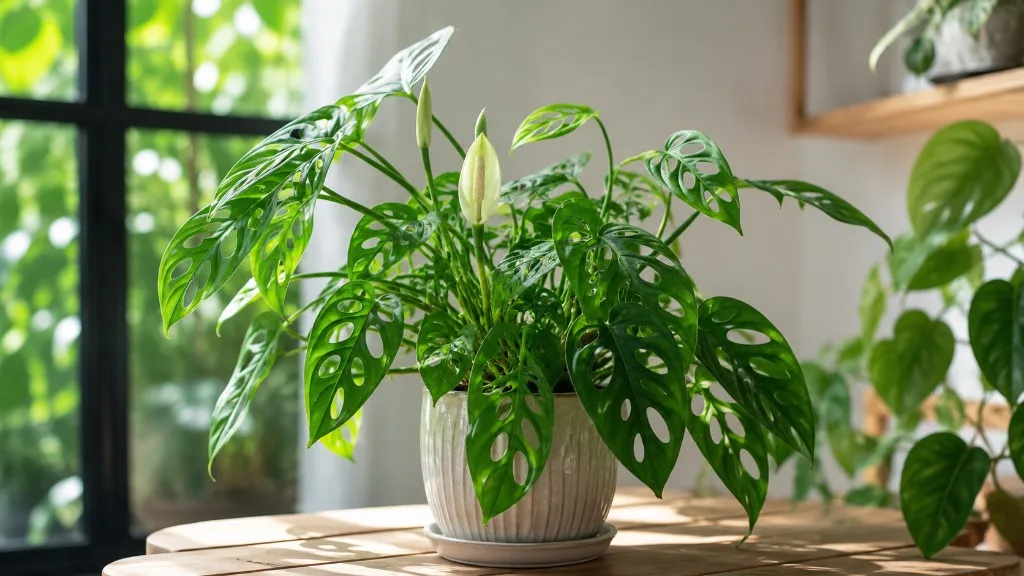
Monstera adansonii propagation turns one fenestrated Swiss cheese vine into several - fill a hanging basket, refresh a leggy trailer, or clone a climbing specimen onto a moss pole. The plant roots from stem cuttings that include at least one node, the swollen joint where leaves and aerial roots emerge. NC State Extension lists stem cutting as the recommended propagation strategy for this species. Home growers most often root those cuttings in plain water or moist sphagnum moss indoors, then pot into a well-draining aroid mix once roots are firm. That workflow is straightforward, but success depends on clean cuts, submerged nodes, and steady warmth - not on a calendar alone.
Unlike seed propagation, stem cuttings produce clones that match the parent’s fenestration pattern. That matters for variegated cultivars such as ‘Archipelago’, where seed-grown plants would not preserve the parent’s look. The two dependable home methods are water rooting for visibility and speed, and sphagnum moss for aroids that already carry aerial roots along the stem. Both work because M. adansonii is a soft-stemmed Araceae vine with a rapid growth rate and cells near nodes that can reorganize into adventitious roots when moisture and oxygen are available.
Why Monstera Adansonii Is Worth Propagating (Fenestration Cloning)
Monstera adansonii - the Swiss cheese vine - is a tropical rainforest climber from Mexico, Central America, and South America. Indoors it uses aerial roots to attach to stakes or moss poles, or trails from shelves when unsupported. Its smaller, thinner, fenestrated leaves distinguish it from the floor-sized Monstera deliciosa, and those thinner leaves dry faster than deliciosa foliage - a detail that affects how quickly propagation jars lose water and how soon cuttings wilt in dry rooms.
Propagation solves real display problems: turning one long bare vine into several compact starts, filling out a hanging pot without buying another plant, or preserving a favorite vine before a hard prune. Because adansonii pushes new growth quickly when conditions are right, a rooted cutting can produce its first new fenestrated leaf within weeks of potting - faster than many slower aroids. The payoff is disproportionately large for the effort: a 10–15 cm (4–6 inch) tip cutting with two nodes and one leaf can become a full trailing or climbing plant within a season.
How Adansonii Stem Propagation Works
Stem propagation asks wounded tissue to prevent excessive water loss through leaves while building a new root system from nodes along the stem. A cutting without roots still transpires moisture from its leaf surfaces. If it loses water faster than the stem can replace it, it wilts, yellows, or rots at the submerged end. Your setup must close that gap: enough leaf area for modest photosynthesis, enough water contact at submerged nodes, and enough oxygen that microbes do not consume the cutting before roots appear.
Adventitious roots form from cells at or near nodes - the joints where leaf petioles attach. On adansonii, nodes often show slight swellings and may carry small aerial roots already visible as brown nubs. Submerging or wrapping at least one node in water or moist moss gives root initials a place to emerge. Internodal stem tissue - the smooth section between nodes - does not reliably produce roots and will soften if left underwater without a node at that level. University of Minnesota Extension states plainly that Monstera cuttings lacking a node will not produce new growth and ultimately rot - a rule that applies across the genus, including adansonii.
Nodes, Aerial Roots, and What Actually Roots
A node is non-negotiable. An adansonii leaf detached with no stem segment - or a stem segment with no node - may stay green in water for weeks but cannot reliably become a full vine. This is the most common beginner mistake: placing a pretty fenestrated leaf in a jar and waiting for a plant that never arrives. If a leaf breaks off with a tiny piece of stem that includes a node, treat it as a very short node cutting; a leaf alone is not a propagation strategy.
For a standard tip cutting, aim for two or more nodes on the portion you will submerge or wrap, with at least one node fully in water or moss. Keep the top one or two leaves and remove everything on the lower half that would sit underwater or inside wet moss. Adansonii leaves are smaller than deliciosa leaves, so halving is rarely needed unless you are working with an unusually large leaf on a very short cutting. If aerial roots are already present at a node, include that node in the submerged or wrapped zone - those tissues often extend into water roots faster than a node that has never been exposed to humidity.
Choosing the Best Adansonii Cuttings
Start with a healthy parent plant that is actively growing, not drought-stressed, pest-ridden, or recovering from root rot. Adansonii shows stress through limp leaves, pale fenestration, and stalled vine tips. Weak parent tissue produces weak cuttings. If the plant looks tired but you still want to try, take material from the firmest new growth at the vine tip rather than woody lower sections with long bare internodes.
Prefer vines with firm stems, normal fenestration for the cultivar, and no black mushy spots at the nodes. Avoid stems with recent sun scorch, sticky pest residue, or mechanical damage. If you are propagating to preserve a specific look - especially on variegated ‘Archipelago’ - take two or three cuttings rather than one. Redundancy costs only spare jars and protects you from a single failed stem.
Which Vines to Cut and Which to Skip
Take cuttings from terminal shoots - the soft growing tips - or from mid-vine sections when you are deliberately refreshing a leggy trailing plant. Iowa State University Extension recommends cuttings 3 to 6 inches long with at least two nodes, cut just below a node. Home growers often take 10–15 cm (4–6 inch) sections to capture two or three nodes and enough leaf area for stability. Make the cut with a sharp, clean blade so you do not crush stem tissue.
Reject stems that are mushy, blackened at the base, or heavily chewed by pests. Avoid cuttings taken immediately after the parent sat in bone-dry soil or waterlogged anaerobic mix. When refreshing a leggy adansonii, cut the long bare vine into individual node sections, each with one leaf if possible, rather than trying to root a foot of leafless internode. That tissue lacks the nodes roots need and tends to rot instead of rooting.
Method 1: Water Propagation Step by Step
Water propagation is the most visible route and the one many extension guides recommend for vining houseplants that root readily in plain water. You can watch roots emerge, catch stem rot early, and share the process without mixing soil indoors. The trade-off is a water-to-soil transition later, because roots formed in water are structurally adapted to aquatic oxygen levels and can struggle if moved to dense wet soil without acclimation.
Follow the standard protocol: place the cutting in enough water to cover the zone where lower leaves were removed, ensuring at least one node is fully submerged while all leaves stay above the waterline. Use room-temperature water - tap water is fine in most municipalities. Set the jar in bright, indirect light, not direct midday sun that overheats the water and scorches thin adansonii leaves.
Supplies, Cut Prep, and Jar Setup
You need very little: sharp bypass pruners or scissors, a clean clear jar, fresh water, optional labels, and 70% isopropyl alcohol for disinfecting blades. Bypass cuts heal cleaner than crushing anvil pruners on soft aroid stems.
Step 1: Select and cut. Choose a healthy vine and cut 10–15 cm (4–6 inches) of stem - or shorter node sections when dividing a long vine - slicing just below a node with a clean single cut.
Step 2: Strip lower leaves. Remove all leaves from the lower half of the cutting. Any leaf sitting in water will rot and foul the jar within days.
Step 3: Confirm node placement. Identify at least one node on the submerged portion; two or three nodes improve redundancy. If aerial roots are present, orient that node into the water.
Step 4: Insert immediately. Place the cutting in water within minutes. Delay increases dehydration and contamination risk.
Choose a container you can keep clean. A narrow-neck jar can help hold stems upright, but do not cram so many cuttings that wounds stay wet and rub together.
Water Changes and Root Monitoring
Change water when it looks cloudy, smells stale, or develops slime on the glass. Iowa State Extension advises changing water one to two times per week and never allowing the water level to drop enough to expose developing roots to air. Many successful growers top up evaporation and replace only when quality declines; both approaches work if the stem stays firm and leaves remain turgid.
Expect visible root initials in about one to two weeks under warm, bright conditions. University of Minnesota Extension notes roots form in about two to four weeks for Monstera stem cuttings in appropriate media; adansonii’s faster growth habit often aligns with the shorter end of that range in warm rooms. Cool corners, dim shelves, or stressed cuttings stretch the schedule. Do not fertilize the water; the cutting is not ready to metabolize salts until it has roots and later soil.
Method 2: Sphagnum Moss Propagation Step by Step
Sphagnum moss propagation suits adansonii stems that already carry aerial roots along nodes - common on mature climbing vines wrapped around a moss pole. Moss keeps nodes evenly moist and airy without the stagnation risk of a neglected water jar, and roots that form in moss transition to aroid mix with less shock than long water-adapted roots.
Step 1: Moisten moss. Soak long-fiber sphagnum moss until fully hydrated, then squeeze until it feels like a wrung-out sponge - damp but not dripping.
Step 2: Wrap the node. Place the node (and any aerial roots) against the moss. For a single cutting, fill a small clear cup or propagation box with moss and bury the lower node zone. For air-layering style on an attached vine, wrap moss around a node on the parent plant, cover with clear plastic, and mist through small vents every few days.
Step 3: Provide warmth and light. Keep the setup at 18–27°C (65–80°F) in bright, indirect light. Iowa State Extension lists coarse sphagnum moss as a propagation medium with high moisture retention and good aeration - well matched to aroid nodes that rot in compacted wet soil.
Step 4: Monitor and pot. Check weekly for firm white roots pushing through moss. When roots are 2.5 cm (1 inch) or longer, pot into a small container with drainage and the same well-draining aroid mix you use for mature adansonii: potting mix amended with perlite and orchid bark for airflow.
| Factor | Water rooting | Sphagnum moss rooting |
|---|---|---|
| Root visibility | Excellent | Limited unless container is clear |
| Typical speed in warm homes | Often 2–4 weeks | Often 2–5 weeks |
| Best for aerial-root nodes | Good | Excellent |
| Rot risk | Stagnant water, submerged leaves | Moss kept too wet without airflow |
| Transition to soil | Required; manage carefully | Usually smoother |
Best Timing for Monstera Adansonii Propagation
Adansonii roots fastest during active growth, when temperatures are warm and days are reasonably long. Spring through early fall is ideal in temperate homes. Room temperatures roughly 18–27°C (65–80°F) - the same comfort range adansonii prefers in mature watering and light care - support steady rooting better than a cold windowsill that drops at night. Iowa State Extension notes early spring is ideal for stem cuttings, though most houseplants can be propagated any time of year if warmth and light stay consistent.
Use plant readiness, not only the season. The parent should show firm new tips, normal fenestration, and no active mealybug or scale outbreak. If the plant is mid-recovery from repotting, shipping, or severe wilt, wait until new growth looks stable. Propagation during stress sometimes works, but it is not the example you want when learning the method. You can propagate adansonii year-round indoors if light and warmth stay consistent, but most growers see the fastest water roots in late spring and summer when the parent is already pushing new leaves.
When to Transplant from Water to Soil
Move the cutting to soil when roots are about 2.5 cm (1 inch) long - long enough to anchor in mix but not so long that they become fragile water-adapted roots. Iowa State Extension recommends transplanting water-rooted cuttings when roots reach roughly 1 inch. Some growers pot at 1.3 cm (½ inch) to ease the soil transition; waiting until water roots grow 10 cm (4 inches) or longer often makes the shift harder.
Use a small pot with drainage, roughly 9–10 cm (3.5–4 inches) for a single cutting, filled with moistened aroid mix. Make a hole, place the cutting so roots hang naturally, and backfill gently. Bury the node that was submerged in water. Water once to settle the mix, then allow the top 2–3 cm to approach dryness before watering again - the same partial dry-down rhythm mature adansonii prefers. Avoid oversized pots and direct hot sun for the first week to reduce transplant shock.
Aftercare for Newly Rooted Adansonii Plants
During rooting, patience beats interference. Do not pull cuttings daily to photograph roots. Do not increase water when progress seems slow unless leaves are visibly limp. After transplant, treat young adansonii like a gentler version of the parent: bright indirect light, soil that dries partially between waterings, and protection from cold drafts below 10°C (50°F) - NC State warns adansonii suffers below that threshold.
Wait until new top growth is obvious - often two to four weeks post-transplant - before feeding with a dilute balanced fertilizer at half strength, following the same cautious approach as the fertilizer guide. If you want a climbing display with larger fenestrated leaves, install a moss pole or trellis early rather than letting the vine trail indefinitely - adansonii develops cleaner fenestration when it can climb. If you prefer a fuller hanging basket, root three to five cuttings in one pot rather than a single lone vine.
Pinch or trim the tip once the plant is rooted and growing if you want a bushier pot. Cuttings taken during pruning sessions can go straight into water or moss, turning maintenance into propagation stock.
Signs Propagation Is Failing (and What to Do)
Most failures trace to missing nodes, contaminated water, submerged leaves, cold, or oversaturated moss - not to adansonii being difficult.
Black mushy stem base in water means rot. Discard the soft portion, recut to healthy tissue above the next node if enough stem remains, clean the jar, and restart with fresh water. If rot repeats, switch to moss method or improve warmth and light.
Green stem but no roots for weeks usually means the node was not submerged or the cutting lacks a node entirely. Confirm a node sits below the waterline or inside moist moss.
Wilting with firm stem often indicates low humidity or excessive leaf surface for the root system. Move away from dry heat vents. Mild wilt can recover once roots form - a pattern also seen in wilting on established plants.
Sour water or collapsing moss signals bacterial buildup. Replace water or refresh moss; trim any softened tissue back to firm green stem.
Roots form in water but the plant collapses after potting usually means overwatering in an oversized pot. Repot into a smaller container with appropriately airy mix and water lightly until new growth appears.
When rot and wilting coincide, the cutting is usually past saving. Start over with a new section from a healthier vine.
When Not to Propagate
Do not propagate adansonii as a first response to every problem. If pests, rot, or severe dehydration are active, stabilize the parent plant first or take only clean unaffected material. Propagation is a backup plan, not a cure for bad conditions. Skip propagation when the parent shows widespread root rot, when you cannot identify a healthy node on the only vine available, or when room temperatures will stay below 18°C (65°F) for weeks without supplemental warmth.
Also pause if you are about to move the parent or change its light and watering routine simultaneously - stacked stress reduces success on both the parent and the cuttings.
Adansonii vs. Monstera Deliciosa Propagation
Both species propagate by stem cuttings with nodes using water, moss, or airy mix - the same genus-level biology described in Monstera deliciosa propagation guides and UMN Extension. The practical differences are size and speed, not method.
Adansonii carries smaller, thinner leaves that dry faster and mark more easily than deliciosa foliage, so propagation jars may need more frequent water top-ups and cuttings in dry rooms wilt sooner. Adansonii also grows faster indoors - NC State lists a rapid growth rate versus deliciosa’s larger but slower floor-vine habit - which often translates to quicker visible roots and earlier new fenestrated leaves on successful cuttings. Deliciosa cuttings are bulkier and need larger containers for support; adansonii fits standard jars and small starter pots easily.
For genus-level step comparisons and air-layering detail on large deliciosa specimens, see the deliciosa propagation page. This page focuses on adansonii’s fenestrated vine cloning, aerial-root nodes, and hanging-basket or moss-pole outcomes.
Safety During Propagation (Sap, Gloves, Pets)
Monstera adansonii is toxic to humans and pets if ingested and can cause contact dermatitis from sap during stem trimming. NC State Extension lists low-severity poison symptoms including mouth and throat inflammation, vomiting, and drooling, with calcium oxalate crystals in sap, leaves, stems, and roots. Wear gloves when taking cuttings, wash hands after handling, and keep trimmings out of reach of cats and dogs. The ASPCA documents similar oral irritation for Monstera species due to insoluble calcium oxalates.
Place propagation jars and moss trays on elevated shelves away from curious pets. Discard trimmings in sealed waste rather than compost buckets pets can access. If a pet chews a cutting, contact your veterinarian or the ASPCA Animal Poison Control Center promptly.
How We Wrote and Verified This Guide
Author: sai-ananth · Reviewed by: LeafyPixels Review Board · Reviewed: 2026-06-15
Methodology: Propagation steps were checked against NC State Extension species guidance, University of Minnesota Monstera propagation bulletins, and Iowa State stem-cutting protocols. Adansonii-specific biology - thinner leaves, rapid growth, fenestration goals - was cross-checked against the LeafyPixels Monstera adansonii overview and sibling care guides. Timing ranges reflect extension consensus and typical indoor conditions, not guaranteed calendars.
Related Monstera Adansonii Care Guides
- Overview - species identity, display options, and hub links
- Light - brightness for fenestration after pot-up
- Watering - moisture rhythm for newly rooted plants
- Soil - aroid mix for transplant
- Pruning - vine management and cutting stock
- Repotting - when to size up rooted cuttings
- Root rot - if parent or cutting shows mushy roots
- Leggy growth - when to propagate mid-vine
- Not enough light - dim rooting stalls fenestration
Conclusion
Propagating Monstera adansonii from stem cuttings with nodes is straightforward when you match the method to the plant’s vining biology: take a 10–15 cm section with at least one node (two or three is better), remove lower leaves, and root in clean water or moist sphagnum moss in warm bright indirect light. Water gives you speed and visibility; moss gives aerial-root nodes a head start and often eases the move into mix. Transplant when roots are about 2.5 cm (1 inch) long, keep the first pot small and well drained, install climbing support if you want larger fenestrated leaves, and delay fertilizer until new growth confirms the root system is working.
Whether you are filling a hanging basket, cloning a favorite Swiss cheese vine, or refreshing a leggy trailer, the logic stays the same - healthy material, submerged nodes, clean conditions, and moisture without stagnation. Master that chain and adansonii propagation becomes one of the most reliable skills in your houseplant toolkit, not a lottery you hope to win once.