Monstera Adansonii Pruning: When, How, and Mistakes to Avoid
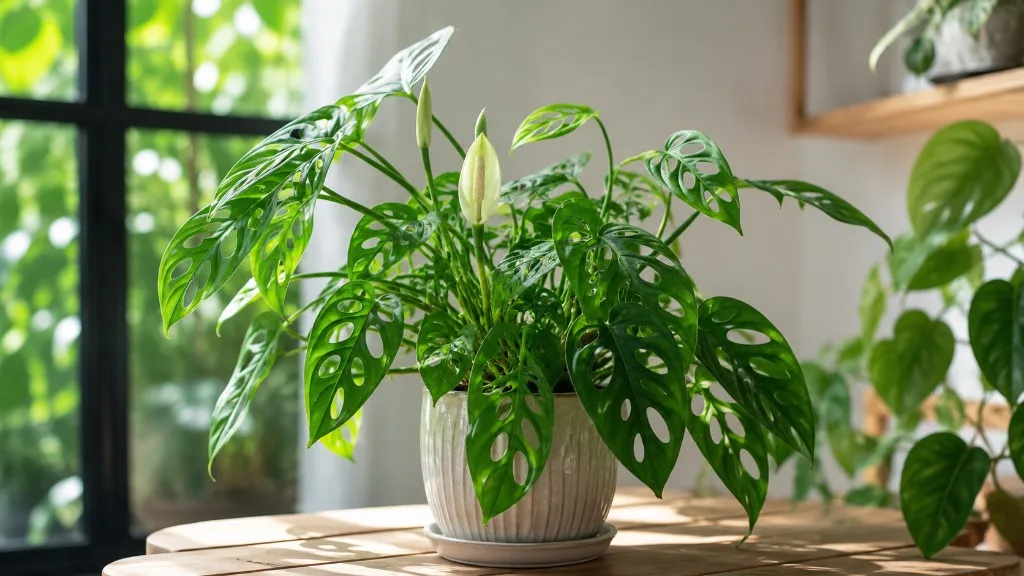
Monstera Adansonii Pruning: When, How, and Mistakes to Avoid
Monstera Adansonii Pruning: When, How, and Mistakes to Avoid
Quick Answer - Remove Damaged Leaves Before Any Structural Cut
First action: Scan every vine for yellow, brown, torn, or pest-damaged leaves. Snip each affected leaf at the base of its petiole - where the leaf stalk meets the main stem - using clean, sharp scissors. Do not pull leaves by hand; tearing can damage the node tissue you may need for branching or propagation later.
Only after damaged foliage is cleared should you decide whether the plant needs leggy-vine shortening, tip pinching, or harvest cuttings. That order keeps scissors focused on tissue that is already failing instead of removing healthy growth you will need for recovery.
What Pruning Does for Swiss Cheese Vine
Monstera adansonii - the Swiss Cheese Vine - is a fast-growing tropical climber in the Araceae family. NC State Extension notes its rapid growth rate and vining habit: indoors it uses aerial roots to climb a stake or moss pole, or it trails from a shelf or basket when unsupported. Unlike the floor-sized Monstera deliciosa, adansonii carries smaller, thinner, fenestrated leaves that dry and mark faster - so pruning decisions should account for how quickly Monstera Adansonii overview loses moisture after a hard trim.
Pruning on adansonii serves four practical jobs:
- Removing failing leaves so the plant stops sending energy to tissue that will not recover
- Breaking apical dominance by cutting above nodes, which activates dormant lateral buds on the stem below the cut
- Controlling length on leggy trailers or vines that have outgrown a moss pole
- Supplying propagation material - every node-bearing section can root in water or soil
Pruning does not create fenestrations on existing leaves, and it cannot replace Monstera Adansonii light guide or climbing support. Larger, more perforated leaves develop on mature, upward-growing vines - scissors manage shape and fullness; poles and light deliver the leaf size adansonii is known for.
Nodes, Internodes, and Where New Growth Emerges
A node is the slightly swollen ring on the vine where a leaf petiole attaches and where a small aerial root nub often appears. The smooth stem between two nodes is an internode. New shoots and roots emerge from nodes, not from bare internode tissue.
When you cut above a node, the bud at that node (or the next one down) typically produces one or two new stems. Cut mid-internode and you leave a stub with no dormant buds - it browns and dies without branching. This node rule applies to every Monstera species, but adansonii shows the result faster because of its quick growth cycle.
Trailing Basket Goals vs Moss Pole Goals
Hanging basket: The usual problem is leggy vines - two or three feet of bare internode with leaves clustered at the tips. Prune back to lower nodes along those bare sections, root cuttings in the same pot, and pinch growing tips during active season for a fuller base.
Moss pole or trellis: Limit pruning to damaged leaves and harvest cuttings unless a vine exceeds the support or blocks a window. Upward growth on a pole produces larger fenestrated leaves than trailing stems in low light. Hard mid-season cutbacks on a climber you are training for leaf size work against that goal - adjust support and light before reaching for scissors.
What to Inspect Before You Cut
Walk the plant stem by stem before making structural cuts:
- Yellow or brown leaves - often overwatering, cold drafts, or root stress; remove the leaf, then check whether soil moisture or light needs correction before cutting further
- Leggy internodes - long bare gaps between nodes signal insufficient light or lack of pinching; note which vines need shortening and at which nodes
- Aerial roots - healthy roots on a moss pole help anchor the vine; trim only broken, dried, or obstructive roots
- Pests - mealybugs and scale sometimes hide at leaf axils; treat or isolate before spreading trimmings to other plants
- Overall vigor - wilted vines, sour-smelling soil, or a pot that never dries suggest root problems; fix care before a major cutback
If the plant was recently repotted, moved, or underwatered, delay structural pruning until it shows stable new growth for one to two weeks.
When to Prune Monstera Adansonii
Damaged or dead leaves: remove any time you notice them - waiting does not help the plant.
Structural cutbacks and leggy-vine shortening: late spring through early summer when adansonii is in active growth. Clemson HGIC groups Monstera care adjustments, including propagation, in the warm season when recovery is fastest.
Maintenance tip pinching: during active growth on fast baskets, pinch the top one to two leaves above the uppermost node every two to four weeks to slow vertical stretch and encourage side shoots.
Light cleanup: year-round for a single yellow leaf or a torn fenestrated leaf that detracts from the display.
When Not to Prune
Hold off on removing more than a few leaves when:
- Soil stays wet for days and roots may be compromised
- The plant was repotted within the last two weeks
- Room temperatures drop below 10°C (50°F) - NC State warns adansonii suffers below that threshold
- You cannot provide bright indirect light after a hard cutback - new growth in dim corners reverts to long internodes within weeks
Tools and Sanitation
Adansonii stems stay relatively soft - bypass snips, floral scissors, or sharp kitchen shears work well. Bypass pruners handle older, woodier lower stems on mature specimens.
Sterilize blades with 70% isopropyl alcohol between plants and after removing diseased tissue, following Iowa State Extension sanitization guidance.
Wear gloves when handling cut material. NC State Extension lists calcium oxalate crystals in sap and tissue, with contact dermatitis risk; the ASPCA classifies Swiss cheese plant (Monstera) as toxic to cats and dogs. Keep trimmings out of pet reach and wash hands after pruning.
The First Structural Cut - Above a Node
After damaged leaves are removed, locate the lowest node on the leggy section you want to shorten. Position the blade 6–10 mm above that node - not flush against it, not halfway up the internode - and make a clean angled cut so water runs off the wound.
On a ten-node trailer with foliage only at the top three nodes, cuts at nodes three, six, and nine activate three branch points instead of one tip-only trim that leaves feet of bare stem below. Leave enough healthy leaves on the remaining vine to fuel regrowth - stripping a weak plant bare slows recovery even when each cut is placed correctly.
Tip pinching is a lighter version: remove the top one to two leaves just above the highest node. It redirects energy without the visual shock of a long-vine harvest.
How to Prune Step by Step
- Remove damaged leaves at the petiole base (first action - see above).
- Identify leggy vines with internodes longer than 8–10 cm and sparse foliage.
- Mark node positions along each target vine - look for leaf scars and aerial root bumps.
- Cut 6–10 mm above chosen nodes, starting lower on the vine and working up so you do not remove nodes you still need.
- Trim obstructive aerial roots only if they block paths or are dry and broken - leave healthy roots on moss-pole vines.
- Pinch or trim tips on remaining vines if you want ongoing bushiness through summer.
- Set aside node-bearing sections for propagation before discarding anything.
Work on one vine at a time rather than rotating the whole plant and cutting blindly from every angle.
How Much You Can Safely Remove
Follow the standard one-third rule: remove no more than one-third of total foliage in a single session on a healthy plant. Adansonii recovers quickly in warm, bright conditions and may tolerate slightly more in peak summer - but staged pruning over four to six weeks prevents the sparse, shock-cut look common on hanging baskets after an aggressive single session.
For a severely leggy basket with most leaves at the tips, plan two or three moderate sessions rather than one hard chop. Each session should leave enough leaf surface for photosynthesis while you root cuttings at the pot base for immediate visual density.
Propagation From Prunings
Every trimming section needs at least one node and preferably one healthy leaf to root successfully. NC State Extension lists stem cuttings as the recommended propagation method for this species.
Same-pot method (fastest fullness): Bury the node of a fresh cutting in moist potting mix at the base of the parent plant while still attached or immediately after removal. Keep bright indirect light and steady moisture until the new section roots - usually three to six weeks in warm conditions.
Water method: Submerge the node in a jar of clean water, change water every few days, and transplant when roots reach 2–5 cm. Keep the original lower end downward - orientation affects root emergence.
A leaf without a node may stay green in water for weeks but will never produce a new plant. Always confirm a node is present before labeling a cutting.
After Pruning Care and Recovery
Match aftercare to adansonii’s thin-leaf physiology:
- Bright indirect light - essential; a pruned vine in a dim corner produces long internodes again within weeks
- 50–60% humidity - reduces edge crisping on new leaves while the plant rebalances
- Water when the top 3–5 cm of mix dries - fewer leaves mean slower water use; adjust downward if soil stays wet
- Hold fertilizer two to three weeks, then resume light balanced feeding during active growth
- Re-tie climbing vines to moss poles after shortening so new growth follows support
Expect visible new buds in two to four weeks during spring and summer. Adansonii often outpaces deliciosa on recovery time, but the plant still looks briefly sparse after multi-node cutbacks - that is normal, not a sign of failure.
Signs Pruning Worked vs Signs You Cut Too Hard
Pruning worked when:
- New shoots emerge from nodes below your cuts within a few weeks
- Remaining leaves stay firm and green without widespread yellowing
- Internodes on new growth are shorter than the leggy sections you removed
- Rooted same-pot cuttings hold their leaf color and firm up at the base
Cut too hard or timed poorly when:
- Multiple remaining leaves yellow within days - often overwatering on a root-stressed plant after over-removal
- No bud break after four to six weeks in warm bright conditions - check light and root health
- New growth is etiolated (small, pale, on long internodes) - light is still insufficient
- Cut stubs brown back past the node - usually a mid-internode cut or diseased stem
Common Mistakes
Mid-internode cuts - the most common error. No bud means no branch; the stub dies back.
Pruning without improving light - adansonii legginess returns quickly in low light regardless of cut placement.
One hard chop on a weak plant - remove damage first, then stage structural cuts across weeks if vigor is low.
Overwatering after a heavy prune - fewer leaves transpire less moisture; wet soil causes yellowing on an already stressed vine.
Discarding every cutting - node sections root easily; same-pot planting is the fastest path to a full basket.
Expecting pruning to increase fenestrations - hole development depends on maturity, genetics, light, and climbing - not scissors on existing leaves.
Ignoring sap and pet toxicity - oxalate crystals irritate skin; trimmings attract curious pets.
Conclusion
Monstera Adansonii pruning starts with damaged-leaf removal, then moves to node-aware cuts that match your display goal - fuller trailing baskets through multi-node shortening and same-pot cuttings, or restrained trimming on moss-pole climbers you are training for larger fenestrated leaves. Cut 6–10 mm above nodes in active season, respect the one-third foliage limit, and pair every structural session with bright indirect light and stable humidity. Swiss Cheese Vine recovers quickly when cuts are placed correctly; scissors control shape and fullness, while support and light deliver the holed leaves that make this species worth the trim.
When to use this page vs other Monstera Adansonii guides
- Monstera Adansonii overview - Start here for whole-plant context before deep-diving this topic.
- Monstera Adansonii problems hub - Jump to symptom-specific fix guides when this care topic does not resolve the issue.
- Leggy Growth on Monstera Adansonii - Escalate here when pruning adjustments are not enough.
- Plant Leaning on Monstera Adansonii - Escalate here when pruning adjustments are not enough.
- Brown Tips on Monstera Adansonii - Escalate here when pruning adjustments are not enough.