Watering Monstera Adansonii (Swiss Cheese Vine): Schedule &
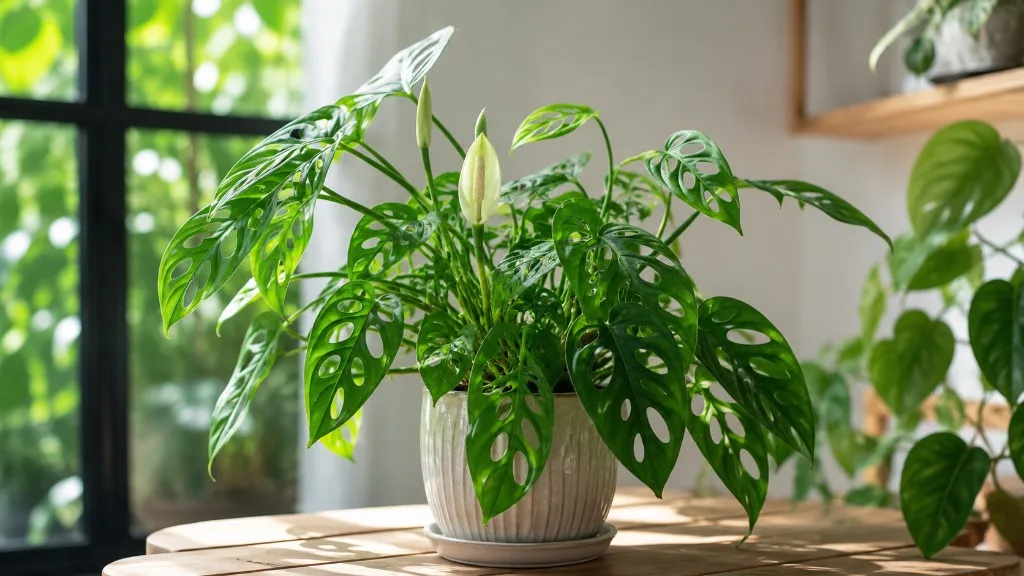
Watering Monstera Adansonii (Swiss Cheese Vine): Schedule & Checks
Watering Monstera Adansonii (Swiss Cheese Vine): Schedule & Checks
A six-inch Monstera adansonii in a hanging basket under bright light can need water every four to five days in summer, while a moss-pole climber in a floor cachepot in the same room may still feel heavy after ten days. That gap is not a contradiction-it is the plant telling you that Swiss cheese vine watering depends on container form, leaf surface area, and how fast your mix breathes, not on a shared weekly calendar. The most common failure mode is treating Adansonii like a smaller copy of Monstera deliciosa and watering both on the same Tuesday habit without lifting the pot.
Monstera adansonii is a vining tropical aroid with thinner, fenestrated leaves that lose turgor quickly when roots dry and mark just as fast when mix stays wet too long. Your job is to water when the root zone has dried to the right depth for your setup, soak thoroughly until drainage runs clear, and empty any saucer or decorative outer pot so roots never sit in stale runoff. This guide covers how often that actually means in practice, how hanging baskets differ from moss poles, how to read thin-leaf drought signals, and how to avoid the mistakes that send Adansonii growers to the overwatering and root rot problem pages.
Quick Answer: Check the Pot, Not the Calendar
Water Monstera adansonii when the top 3 to 5 cm (1 to 2 inches) of mix feels dry to your knuckle-or when a dry skewer pulled from mid-depth shows no darkening-and the pot feels noticeably lighter than right after a soak. Then water evenly until excess drains from the bottom holes and discard runoff from saucers and cachepots. In many bright indoor setups, that cycle falls roughly every 7 to 10 days during active growth and 10 to 14 days in cooler winter months, but a small hanging basket in heat can dry in 4 to 6 days, while an oversized floor pot in dim light may need two weeks or more.
Penn State Extension recommends letting the top 1 to 2 inches of soil dry between waterings for Monstera houseplants and notes that overwatering can result in root rot. NC State Extension lists moist, well-drained soil for M. adansonii-which means even moisture between drinks, not constantly soggy mix. The calendar is a reminder to check, not permission to pour.
Why Swiss Cheese Vine Watering Differs From M. deliciosa
Both species are rainforest aroids, but indoor Adansonii behaves like a fast, fine-leaved vine while deliciosa behaves like a thick-leafed floor climber. The biology changes how quickly you see stress and how fast pots dry.
Thin Leaves Show Drought and Overwatering Faster
Adansonii leaves are smaller, thinner, and more perforated than deliciosa foliage. Less leaf mass means less internal water storage, so the vine wilts or curls within hours of a dry root zone-and thin tissue also shows brown edge marks and translucent patches soon after a bad watering swing or chronic wet feet. Deliciosa can hide root problems longer behind thick, leathery leaves. On Adansonii, new growth is your early warning system: stalled unfurling leaves, smaller new leaves, or crisp margins often trace back to moisture rhythm before older foliage tells the story.
Penn State Extension describes Monstera adansonii as denser and more vigorous than deliciosa, reaching 3 to 8 feet tall and 1 to 3 feet wide indoors with much smaller, hole-punched leaves. That vigor increases transpiration when the plant is actively vining in bright light-raising water demand compared with a slow deliciosa in the same room.
Smaller Pots and Trailing Vines Dry Down Quickly
Retail Adansonii is often sold in 4-to-6-inch hanging baskets with long trailing stems. Small soil volume plus high leaf-to-soil ratio means fast dry-down-especially when warm air circulates under a hanging pot. A shelf-trailing plant in a shallow wide pot dries differently again: more surface area, sometimes faster top drying but a wet core if mix is peat-heavy. A moss-pole climber in a deeper floor pot holds moisture longer and may grow larger leaves that transpire more overall, but the total mix volume still dominates the interval.
If you own both Monstera species, read the deliciosa watering guide for floor-plant defaults, then recalibrate for Adansonii’s thinner leaves and smaller starter pots-do not copy the same schedule.
How Often to Water Monstera Adansonii Indoors
There is no honest universal interval. “Once a week” is a social-media shorthand that fails the moment your pot size, light level, or display form differs from the influencer’s setup. Treat frequency as the output of dryness checks, not the input.
Starting Ranges by Season
Use these as starting hypotheses only-confirm with finger, skewer, or weight every time:
| Season / conditions | Typical check interval | Notes |
|---|---|---|
| Bright active growth (spring–summer) | Every 5–10 days | Faster in small hanging pots; slower in large cachepots |
| Cooler or dimmer months (fall–winter) | Every 10–18 days | Growth slows; mix stays wet longer in cold rooms |
| Recently repotted into larger pot | Add 2–5 days to prior rhythm | Extra mix holds moisture until roots fill it |
| Variegated ‘Archipelago’ or high-light heat | Often 4–7 days | More leaf stress when dry; verify before assuming |
When in doubt, wait until the top 3–5 cm is dry rather than watering on schedule. One dry day stresses Adansonii less than one extra wet day when roots need oxygen.
What NC State’s “Moist, Well-Drained” Actually Means
Extension language sounds contradictory until you translate it for containers. Moist, well-drained describes a cycle: the mix is fully wetted at each watering, then air returns as the root zone dries to the appropriate depth before the next soak. It does not mean the pot should feel damp every day. Pair that cycle with chunky aroid mix-potting soil with perlite and orchid bark-so water moves through instead of pooling around fine roots.
If your mix still feels cool and clumpy at depth while the surface looks pale, you are not in a “moist” phase-you are trending toward overwatering. Fix light, mix, or pot geometry before adding more water.
Container Form Matters: Hanging Basket vs. Moss Pole vs. Shelf Trail
The same species in three displays can have three dry-down profiles. Choose checks that match your geometry.
Expected Dry-Down by Display Type
| Display form | Pot traits | Typical dry-down tendency | Watering note |
|---|---|---|---|
| Hanging basket | Small volume, elevated, often plastic | Fastest (4–8 days in bright heat) | Lift pot daily until you learn weight; watch cachepot runoff |
| Shelf trail | Medium wide pot, stems cascading | Moderate (7–12 days) | Top dries first-confirm depth, not surface color alone |
| Moss pole climber | Deeper floor pot, aerial roots | Slower in large pots (8–14+ days) | Water pole and pot; aerial roots drink from support |
| Grouped / bushy prune | Fuller canopy, same pot | Faster than sparse vine | More leaves = more transpiration |
A trailing Adansonii is not “thirstier” because it wants more calendar water-it uses the small soil volume faster. A moss-pole plant may need less frequent pot watering but still needs support moisture so aerial roots do not desiccate while the inner pot is appropriately dry.
Best Moisture Checks: Finger, Skewer, and Pot Weight
Surface color lies, especially on peat-heavy mixes. Use at least one physical test before every major watering.
Finger or knuckle test: Push into the top 3 to 5 cm. Cool, clinging mix means wait. Dry, loose mix at that depth means proceed- in pots under 15 cm wide, also check closer to the bottom because small pots dry uniformly.
Skewer or chopstick test: Insert a dry wooden skewer to the pot’s lower third. Pull it out. Darkening or stuck particles mean moisture remains. Clean, dry wood means the root zone has breathed enough for a full soak.
Pot weight test: Lift the container right after watering to feel “heavy,” then daily until it feels noticeably lighter. Weight is the most reliable signal for hanging baskets where finger depth is awkward.
The Hanging-Basket Weight Test
For elevated baskets, bring the pot down or hook your fingers under the bottom rim safely. Compare today’s heft to yesterday’s. When the lightweight phase coincides with dry top 3 cm, water at the sink until water runs free, then let it drain fully before rehanging. Never rehang while the bottom drip tray still holds water-hanging pots that stay wet underneath are a common hidden cause of yellow leaves on otherwise “well cared for” vines.
How to Water Cleanly: Drainage, Cachepots, and Moss Poles
One full drink, then dry-down beats partial top-ups. Apply water slowly across the soil surface until 10–20% runs from drainage holes, confirming the whole root ball rewet. Stop. Do not water again until checks pass.
Cachepots and saucers: Decorative outer pots must not hold runoff. Empty them within 30 minutes. A small inner pot sitting in a deep outer shell is especially risky for Adansonii-roots wick back into stagnant water and rot while leaves still look green for a week.
Bottom watering: Optional for compacted mix. Set the nursery pot in a basin of water for 15–30 minutes, then drain completely. Useful occasionally; not a substitute for top watering that flushes salts.
Water quality: Room-temperature tap water is fine for most Adansonii. If your municipality chlorinates heavily, let water sit overnight or use filtered water if you see chronic brown tips on an otherwise correct schedule-often humidity or mineral buildup, not chlorine alone.
Watering Aerial Roots on a Moss Pole
Climbing Adansonii develops aerial roots that attach to supports. Wisconsin Horticulture Extension recommends watering thoroughly and allowing soil to dry slightly between waterings, and also watering the moss-covered support so aerial roots obtain moisture and nutrients. Apply the same principle to Adansonii: when the pot is due for a soak, mist or pour water slowly down the moss pole until the moss darkens evenly-not constantly soggy, but not dust-dry for weeks while the pot is wet.
Aerial roots that stay dry while only the inner pot is watered may shrivel or fail to attach, slowing leaf size gains. If you do not want to maintain pole moisture, trim aerials or accept smaller leaves-see the pruning guide for shape options.
Signs You Are Watering Too Much
Chronic wet mix deprives roots of oxygen. On Adansonii, watch for:
- Soft, limp stems with wet mix - the wilting with wet soil paradox; roots fail before leaves show classic yellow
- Yellowing lower leaves that spread up the vine while mix stays cool at depth
- Sour or musty smell from the pot; mold on soil surface or fungus gnats
- Dark brown to black soft roots when you inspect - escalate to root rot protocol
- New leaves stalling or browning while unfurling on consistently wet mix
NC State Extension notes that overwatering can result in root rot on M. adansonii. Overwatering is less about one generous soak and more about watering again before the root zone breathed-especially in low light, oversized pots, or cachepots that trap runoff. If several signs overlap, pause watering, improve light and airflow, and inspect roots before fertilizing.
Signs You Waited Too Long: Thin-Leaf Drought Signals
Adansonii forgives one dry episode but punishes repeated drought. Underwatering signs include:
- Dramatic leaf curl or fold along the midrib; thin leaves feel papery
- Crisp brown margins on multiple leaves-not just one old leaf aging out
- Soil pulling away from the pot edge and feeling rock-hard
- Slow springback after watering - recovery takes hours instead of minutes
- Smaller new leaves or reduced fenestration when drought repeats
Rehydrate with a full soak until drainage, then drain fully. Do not compensate with daily sips-that keeps only the top wet while the center stays hydrophobic. If leaves stay limp 24 hours after a proper soak, suspect root damage from past overwatering or underwatering stress, not a one-day miss.
Low humidity accelerates edge crisping even when soil moisture is correct. If margins brown but the pot weight cycle looks right, check the low humidity page before watering more.
Seasonal Adjustments: Winter Slowdown vs. Summer Vining
Growth phase changes water use more than the date on the calendar. In spring and summer, longer days and active vining increase transpiration-especially on moss-pole plants pushing new leaves weekly. Expect shorter dry cycles if light increased without you noticing.
In fall and winter, cooler rooms and shorter days slow metabolism. The same mix that dried in five days in August may take twelve in January. Reduce watering frequency because checks say wait, not because it is December. Plants near heating vents can dry faster despite winter dates-always verify weight.
If you move Adansonii closer to a window for winter light, recheck dry-down for two weeks; brighter placement can offset seasonal slowdown. Avoid stacking changes-do not repot, fertilize, and radically change watering in the same week. The overview hub links the full care cluster if multiple factors shifted at once.
Common Watering Mistakes on Adansonii
Watering on a fixed weekly alarm without lifting the pot - the top mistake on this species in hanging baskets.
Misting instead of watering roots - foliar mist does not replace root-zone moisture; it can worsen leaf spot issues if foliage stays wet overnight.
Leaving hanging pots in full outer cachepots - hidden standing water kills fine roots fast in small volumes.
Using deliciosa timing on Adansonii - thicker-leaf scheduling stays too wet for thin roots in small pots.
Watering after repot “to help it settle” - if you just repotted into fresh aroid mix, mix is often already moist; wait until the top dries unless the plant was bare-root dry.
Ignoring aerial roots on poles - pot-only watering starves climbing tissue and shrinks new leaves.
Chronic underwatering to “prevent rot” - fine roots die in drought; the next soak then causes wilting that looks like overwatering.
Know Your Plant: Native Habitat and Indoor Biology
Monstera adansonii is a vining climber from the tropical rainforests of Mexico, Central America, and South America. In habitat it grows epiphytically on tree trunks with aerial roots accessing humid air and intermittent rain while root zones drain rapidly. Indoors you replicate the rhythm (soak, then airy dry-down), not constant jungle wetness.
The species prefers bright, indirect light, high humidity, and moist, well-drained soil with good drainage-hardy outdoors only in USDA zones 10–12. Typical indoor size runs 3 to 8 feet tall and 1 to 3 feet wide with support. All parts contain calcium oxalate crystals and are toxic if chewed-keep vines out of pet reach; see the overview for safety detail.
Allowed to climb, Adansonii develops larger, more fenestrated leaves; left to trail, it stays charming but leaf size stays modest. Watering supports whichever form you chose-poles need pole moisture; trailers need vigilant small-pot checks.
Practical Checks for New and Repotted Plants
First month after purchase: Do not repot day one unless mix is failing or pests are obvious. Quarantine, learn your pot’s dry-down speed, and keep care boring. Watch for curling leaves, crispy leaves, or sour soil.
After repotting: Larger pot = slower dry-down until roots fill new space. Extend intervals and verify depth with a skewer, not surface color alone. See repotting guidance for timing.
After propagation: Cuttings in water or moss have different rules until potted-use the propagation guide until rooted plants join this watering rhythm.
Fast Decision When Leaves Look Tired
Run this before every reactive watering:
- Lift the pot - heavy or light?
- Check depth - dry top 3–5 cm or wet core?
- Read the leaves - limp + wet = hold water and inspect; limp + light dry pot = soak and drain
- Scan new growth - stalled unfurling on wet mix ≠ thirst
One variable change at a time. If problems repeat, compare light, soil, and watering together before adding fertilizer or repotting again.
Conclusion
Monstera adansonii watering comes down to one discipline: check the pot, not the calendar. Thin leaves and small hanging baskets dry fast and show mistakes quickly; moss-pole climbers may need less frequent pot soaks but still need support moisture for aerial roots. Let the top 3 to 5 cm dry, soak until drainage runs clear, empty cachepots, and read new growth to confirm the rhythm works.
If limp leaves meet wet mix, pause and inspect for overwatering. If crisp curls meet a light dry pot, soak thoroughly and fix repeated drought before roots fail. Match your interval to display form-hanging, trailing, or climbing-not to a generic aroid schedule copied from M. deliciosa. Get that right and Swiss cheese vine stays full, fenestrated, and far less prone to the leaf marking that sends growers searching for a second opinion.
When to use this page vs other Monstera Adansonii guides
- Monstera Adansonii overview - Start here for whole-plant context before deep-diving this topic.
- Monstera Adansonii problems hub - Jump to symptom-specific fix guides when this care topic does not resolve the issue.
- Root Rot on Monstera Adansonii - Escalate here when watering adjustments are not enough.
- Drooping Leaves on Monstera Adansonii - Escalate here when watering adjustments are not enough.
Related Monstera Adansonii guides
- Monstera Adansonii overview
- Monstera Adansonii light
- Monstera Adansonii soil
- Monstera Adansonii propagation
- Monstera Adansonii fertilizer
- Monstera Adansonii repotting
- Root Rot on Monstera Adansonii
- Drooping Leaves on Monstera Adansonii
- Monstera Adansonii problems
Related tool
Try the Plant Watering Calculator with monstera-adansonii pre-selected to estimate needs for your setup.