Crispy Leaves on Monstera Adansonii: Causes, Checks & Fixes
Quick answer
Crispy leaves on Monstera Adansonii are dry, brittle tissue-most often on leaf tips, edges, or sun-facing sections of thin Swiss cheese vine foliage-from low humidity, underwatering, or direct sun. First step: move the pot out of direct sunlight and feel the top 3–5 cm of soil; water deeply if bone dry, or raise humidity toward 50% if soil moisture is normal.
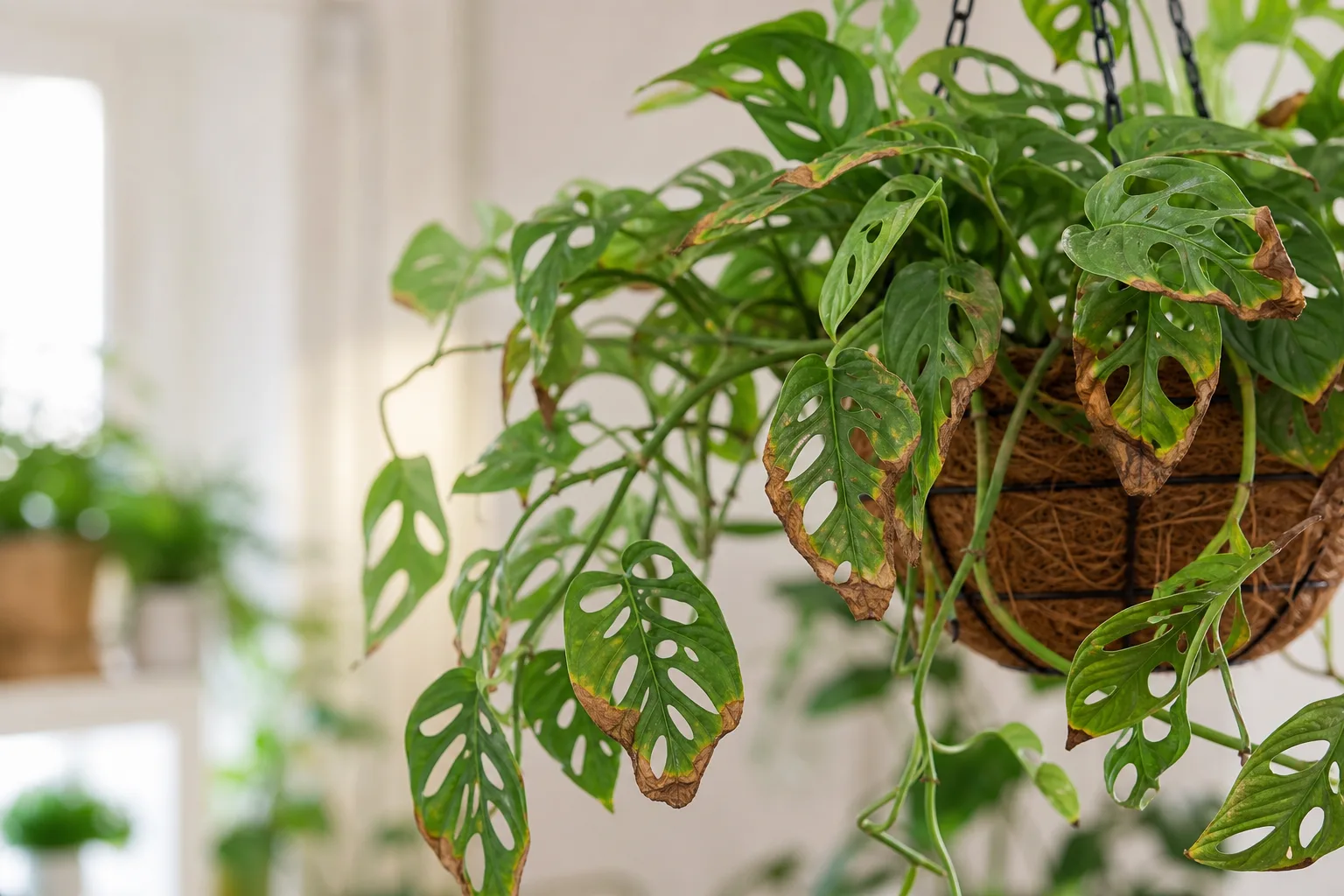
Crispy Leaves on Monstera Adansonii: Causes, Checks & Fixes
This guide covers crispy leaves on Monstera Adansonii. See also the general Crispy Leaves guide, watering, and light pages for this plant.
Crispy Leaves on Monstera Adansonii: Causes, Checks & Fixes
Quick answer
Crispy leaves on Monstera Adansonii (Monstera adansonii, Swiss cheese vine) mean dry, dead leaf tissue-not rot. This vining aroid has thin, fenestrated foliage that loses moisture through tips and edges faster than thicker Monsteras in dry indoor air. Low humidity, underwatering, and direct sun on delicate leaves are the usual triggers; disease is rare when stems stay firm and soil smells neutral.
First step: move the pot out of any direct sunlight on the foliage, then feel the top 3–5 cm of soil. If soil is bone dry and vines feel limp or papery, water thoroughly until excess drains. If soil moisture is normal but leaf tips facing a window have turned tan and brittle, Monstera Adansonii light guide and higher humidity-not more sun or more water-are the fix.
What crispy leaves look like on Monstera Adansonii
Healthy Adansonii leaves are oval, glossy, and pierced with natural oval holes (fenestrations). Crispy damage breaks that pattern in predictable ways:
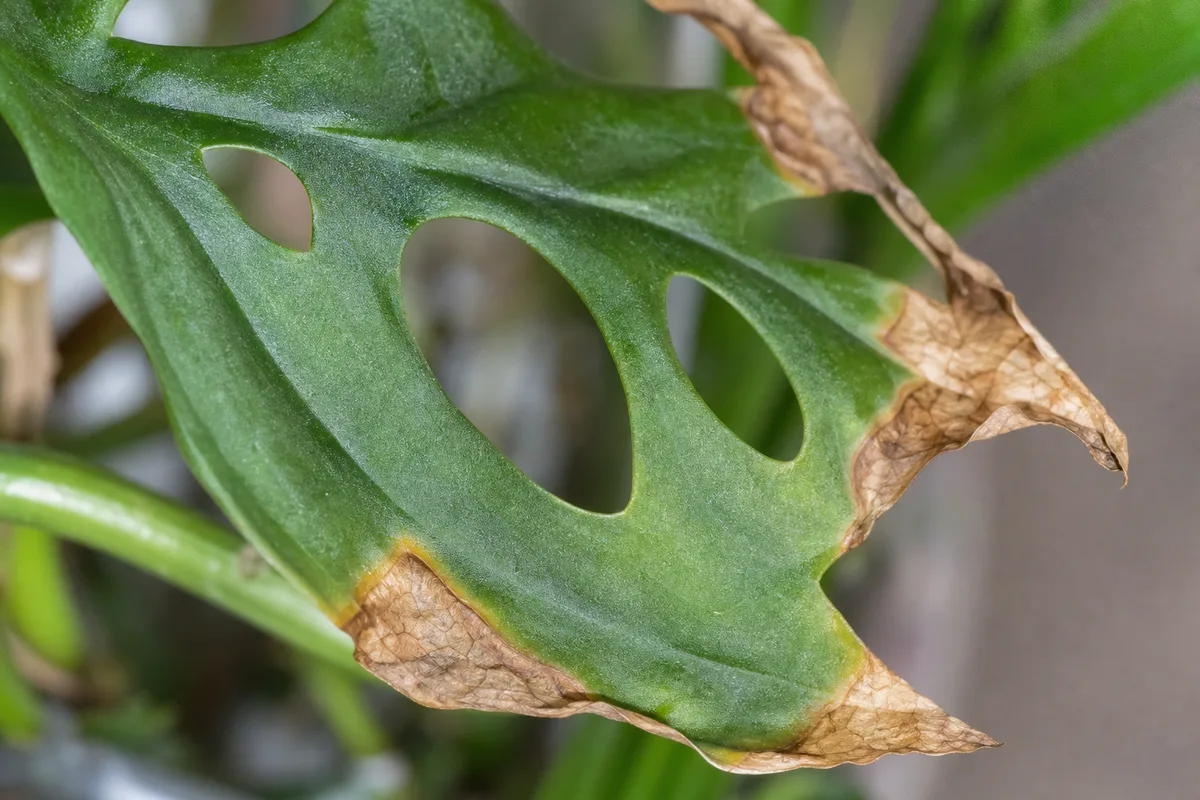
Crispy Leaves symptoms on Monstera Adansonii - compare with healthy tissue on the same plant.
- Dry, papery brown or tan edges and tips that crumble when rubbed-not soft, wet, or black
- Scorch blotches on the leaf half facing a south or west window, often on fenestrated tissue before solid green sections
- Whole-leaf crispiness on several trailing vines when soil has been dry for weeks
- Uniform tip burn on the longest hanging stems farthest from the pot during winter heating
- Brittle margins on new unfurling leaves when humidity drops below about 45% for extended periods
What crispy leaves do not look like: yellowing that starts at the petiole and spreads inward on soggy soil, mushy stems at the crown, water-soaked brown spots with halos, or fine stippling with silk webbing underneath. Those patterns point to overwatering, rot, fungal leaf spot, or spider mites-not simple dry tissue stress.
Adansonii’s thin leaves and natural holes make it more vulnerable to edge desiccation than Monstera deliciosa. Leaves formed in lower light need gradual acclimation before stronger exposure; sudden moves to a bright window often produce overnight crisping on the sun-facing side while the rest of the vine still looks structurally fine.
Not crispy leaves: Natural fenestrations are oval holes in healthy green tissue-not brown, dry, or brittle. Do not confuse intentional leaf perforations with damage.
Why Monstera Adansonii gets crispy leaves
Low humidity
Adansonii evolved as a tropical climber in humid rainforests. NC State Extension notes it prefers warm, humid conditions and bright indirect light-indoor winter air often falls well below what the foliage expects. When ambient humidity drops-especially below 45% in heated or air-conditioned rooms-leaf tips and fenestrated margins desiccate first. Iowa State Extension identifies low humidity as the most common reason houseplants develop brown, crispy leaf tips and edges.
Underwatering
Adansonii is often sold as multiple cuttings in one pot for a fuller look. Dense root balls in small hanging baskets dry unevenly: outer vines may crisp while the center stays moist, or the whole pot may go bone dry between infrequent top waters. Allowing the top 3–5 cm to go completely dry for too long, then watering lightly, stresses feeder roots. Damaged roots cannot hydrate leaf edges even when the center of a leaf still looks green.
Signs of underwatering alongside crispiness: light pot weight, dusty dry mix several centimeters down, limp or curling leaves before they turn fully brown, and crispy tissue spreading from tips inward on several vines at once.
Direct sun and heat stress
Adansonii wants bright indirect light, not midday sun on foliage. NC State Extension recommends avoiding direct sun that can scorch leaves. Thin Adansonii tissue bleaches and crisps faster than deliciosa when placed in an unfiltered south or west window. Heat from radiators, fireplaces, or hot glass pressed against trailing stems produces the same dry, papery damage on the exposed side only.
Salt and mineral buildup
Hard tap water and heavy fertilizer leave a white crust on soil and burn margins over time. Colorado State Extension links accumulated salts to brown, crispy leaf tips and impaired root function. Adansonii shows salt damage quickly because its leaves are thin and transpire at the edges first.
Overwatering (less obvious)
Soggy roots fail to take up water, so tips and edges can dry while soil stays wet-a pattern that confuses owners who increase watering when they see brown foliage. On Adansonii, soft stems at the base plus wet mix and crispy upper leaves point to root stress, not simple dry air.
Draft and cold injury
NC State recommends avoiding cold drafts and temperatures below 50°F (10°C). Leaves pressed against cold window glass in winter can brown and crisp overnight even when the room feels warm.
How to confirm the cause
Work through these checks in order before stacking fixes:
- Light exposure - Note whether crispy patches appear only on leaves facing a window or heat source. Sun scorch is localized; humidity or underwatering often affects many leaves at once.
- Soil moisture - Stick a finger 3–5 cm into the mix. Bone dry with a feather-light pot strongly suggests underwatering. Wet soil with crispy tips suggests root stress or salts.
- Humidity at plant level - Place a hygrometer beside the foliage. Readings below 45% with crispy tips on moist soil implicate dry air.
- Pot weight and Monstera Adansonii watering guide - Lift the pot before and after watering. Does it swing from bone-dry to heavy for many days? Dense multi-cutting pots need thorough soaks, not quick surface pours.
- Soil surface - White or yellow crust suggests salt buildup. UC IPM lists salt accumulation and overfertilization among common causes of brown, crispy leaf tips and margins.
- Pattern on new growth - All new leaves crisping at the edges despite stable humidity suggests water quality or fertilizer salts. Seasonal tip burn on older trailing leaves only fits low humidity or drafts better.
If humidity reads above 50%, watering is steady, and salts are absent, test filtered or rested tap water for four to six weeks before Monstera Adansonii repotting guide.
First fix for Monstera Adansonii
Move the plant out of direct sunlight on the foliage and confirm soil moisture at the top 3–5 cm.
If the mix is bone dry, water thoroughly until runoff exits the drainage holes and discard saucer water. If soil moisture is normal and damage is on window-facing tips or edges, raise humidity around the plant to roughly 50% and keep it there for two weeks-run a small humidifier, set a pebble tray beneath the pot (pot on pebbles, not sitting in water), or group it with other tropicals. NC State Extension recommends a humidifier or wet-pebble tray for Monstera Adansonii overview.
Do not increase watering frequency solely because leaves look crispy when soil is already wet-that worsens root stress. Do not mist as your only strategy; brief surface moisture does not fix chronic low humidity and wet foliage in crowded pots can invite fungal issues.
Step-by-step recovery
Once light and moisture are addressed, follow this sequence:
- Stabilize watering - Water when the top 3–5 cm feels dry, then soak the full root ball. For dense multi-cutting pots, bottom watering can rehydrate all stems more evenly than a quick top pour.
- Flush salts if crust is visible - Run lukewarm water through the pot two to three times its volume, letting it drain fully each time. Iowa State Extension recommends addressing excess fertilizer salts when brown, crispy edges appear.
- Trim cosmetic damage - Snip fully crispy leaves at the base or trim brown edges following the natural leaf curve, leaving a thin brown margin if needed to avoid cutting into green tissue.
- Adjust placement - Move the vine at least 15 cm from cold window glass in winter and away from heating vents and radiators.
- Review fertilizer - Hold feeding until new leaves open clean. Resume half-strength liquid fertilizer monthly in spring and summer only when growth is active.
- Consider climbing support - Vines trained up a moss pole often produce larger, less edge-stressed leaves than long trailing stems in a small hanging pot.
Recovery timeline
Existing crispy tissue will not turn green again. Improvement shows up on new leaves and unfurling foliage with intact margins and fenestrations.
Under corrected humidity, light, and watering, expect cleaner new growth within two to four weeks during active growth. Winter recovery may take longer if the plant is growing slowly. One or two old leaves with trimmed crispy edges can stay on the plant indefinitely-they are cosmetic, not contagious.
Watch for firm stems, steady new nodes, and damage that stays tan rather than spreading as signs you are on track. Worsening means reassess roots and soil moisture before adding more humidity alone.
Lookalike symptoms
| What you see | Likely cause | What to do |
|---|---|---|
| Crispy tips on many leaves after heat kicks on | Low humidity / dry air | Humidifier; move away from vents |
| Whole vines crispy with dusty dry soil | Underwatering | Deep soak; check multi-cutting pot evenly |
| Crispy patches on sun-facing side only | Direct sun scorch | Filter light; no midday sun on foliage |
| Tips brown with white soil crust | Salt or fertilizer buildup | Flush pot; reduce feed strength |
| Tips brown only on leaves touching glass | Cold draft / chill injury | Move pot inward from window |
| Soft brown tissue, wet soil, limp vines | Overwatering / root stress | Stop watering; inspect roots |
| Random brown spots with yellow halos | Leaf spot / fungal issue | Improve airflow; isolate; trim affected leaves |
| Stippling with fine webbing under leaves | Spider mites | Rinse; treat; raise humidity after pest control |
Adansonii’s natural fenestrations are not damage-do not confuse oval holes with crispy burn.
Mistakes to avoid
- Watering more because leaves look dry - Soggy roots cause the same margin crisping when uptake fails.
- Misting instead of humidifying - Brief leaf wetting does not fix chronic low humidity.
- Leaving the plant in direct sun while increasing water - Sun scorch needs less light, not more moisture.
- Cutting deep into green tissue - Follow the leaf shape; aggressive trimming wounds healthy cells.
- Heavy fertilizer to “green up” crispy leaves - Salts worsen edge burn on stressed vines.
- Repotting on day one - Unless roots are rotting or the mix is completely exhausted, fix air, light, and water first.
- Ignoring hanging-basket dry-out - Small pots in open air dry unevenly; check every stem’s soil zone in multi-cutting pots.
How to prevent crispy leaves next time
Match care to how Adansonii actually grows indoors:
- Humidity: Target 50–60% near the foliage year-round; boost in winter.
- Watering: Let the top 3–5 cm dry, then water thoroughly; reduce frequency in cool months when growth slows.
- Light: Bright indirect light supports even growth; avoid direct sun that scorches thin fenestrated leaves.
- Water quality: Use filtered or rested tap water if hard-water minerals keep returning after flushes.
- Pot and support: Well-draining aroid mix with perlite and bark; a moss pole reduces cramped trailing stress.
- Salt management: Flush the pot monthly during active growth if you fertilize regularly.
- Acclimation: Shift to brighter spots gradually over one to two weeks so new leaves harden off without scorch.
When to worry
Crispy leaves alone on firm Adansonii vines are usually cosmetic and reversible through environment fixes. The plant is not dying because of dry tissue on older trailing leaves.
Escalate when:
- Stems soften at the soil line while mix stays wet-humidity and light fixes will not fix rot
- More than a third of leaves yellow and collapse within a week
- Black, spreading spots appear with sour-smelling soil
- Spider mites spread to every vine despite corrected placement
- New growth fails to open and shrivels-a sign combined stress exceeds what trimming can solve
If only older leaves on long trailing vines are crispy and new growth is clean after your fixes, the plant is stable. Trim or tolerate the cosmetic damage.
Conclusion
Crispy leaves on Monstera Adansonii are a distress signal from dry dead tissue-most often low humidity on thin fenestrated foliage, underwatering in dense multi-cutting pots, or sun scorch. Move out of direct sun, confirm soil moisture, then stabilize humidity and water quality without stacking repots and fertilizer. Old burn will not reverse; watch the next fenestrated leaves that unfurl for proof your fix worked.
When to use this page vs other Monstera Adansonii guides
- Monstera Adansonii watering guide - Use for routine moisture checks before assuming crispy leaves is the main issue.
- Monstera Adansonii problems hub - Browse all 22 common issues on this species.
- Brown Tips on Monstera Adansonii - Different entry point when symptoms overlap with crispy leaves.
- Curling Leaves on Monstera Adansonii - Different entry point when symptoms overlap with crispy leaves.