Yellow Leaves on Monstera Adansonii: Causes, Checks & Fixes
Quick answer
Yellow leaves on Monstera Adansonii are a symptom, not one diagnosis. First step: check whether the top 3–5 cm of mix is wet or dry and which leaves are yellowing-bottom-up on wet soil usually means overwatering; scattered yellow on dry trailing vines means drought; slow fade on one old leaf at a vine base is often normal aging.
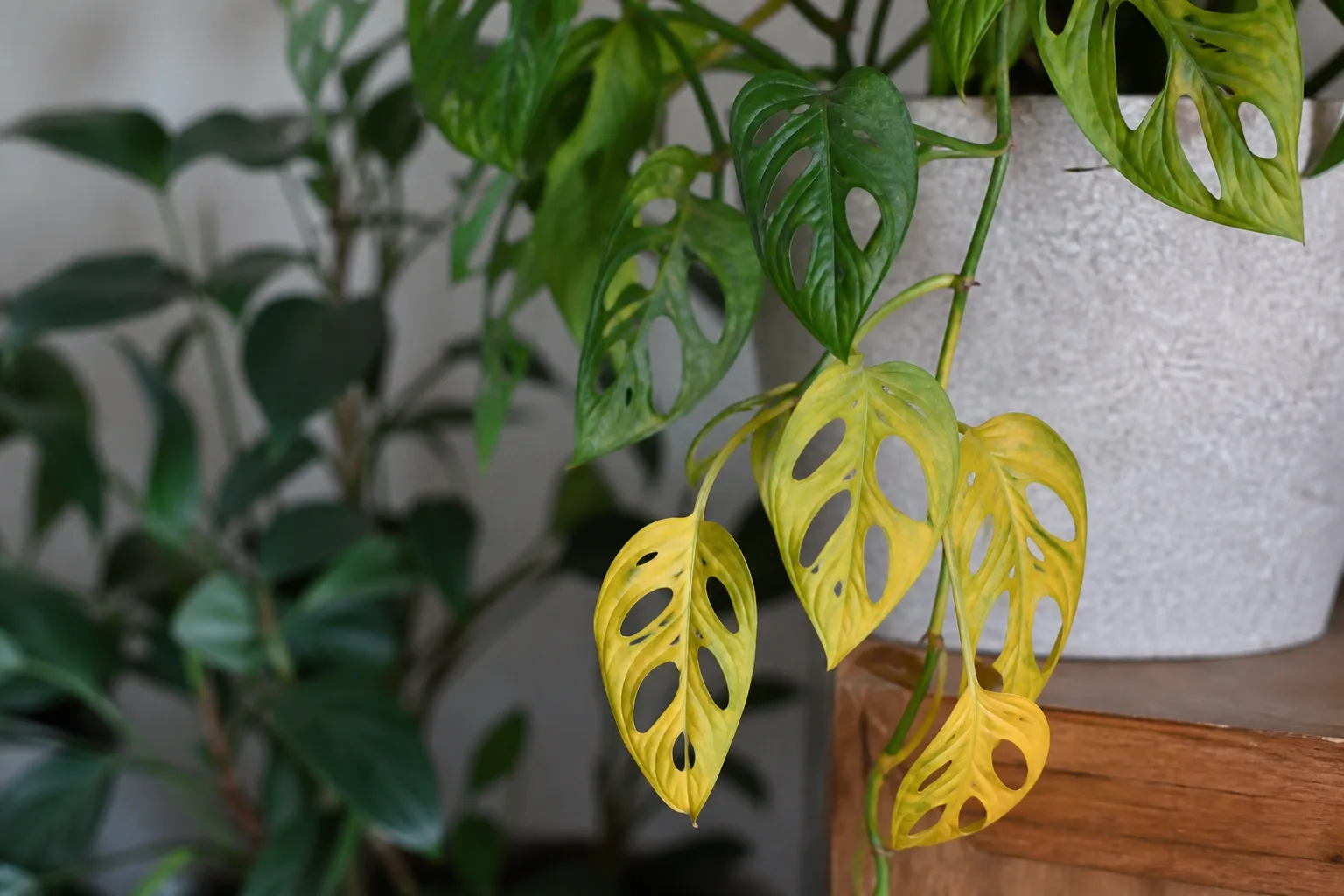
Yellow Leaves on Monstera Adansonii: Causes, Checks & Fixes
This guide covers yellow leaves on Monstera Adansonii. See also the general Yellow Leaves guide, watering, and light pages for this plant.
Yellow Leaves on Monstera Adansonii: Causes, Checks & Fixes
Quick answer
Yellow leaves on Monstera Adansonii (Monstera adansonii) are a symptom, not a single diagnosis. This is a fast-growing vining tropical aroid with thin, fenestrated leaves emerging from nodes along trailing or climbing stems-not a rosette plant with a central crown. Indoors, yellowing most often traces to overwatering in insufficient light, chronic drought on dry trailing vines, or normal aging of the oldest leaves at the base of long stems.
First step: check soil moisture at 3–5 cm depth and note which leaves are yellowing. Push your finger into the mix near the pot edge and lift the pot to feel weight. Bottom-up yellowing with wet, heavy soil points to overwatering or root stress. Scattered yellow leaves along vines with light, dusty-dry soil points to underwatering. Pale yellow new leaves with long gaps between nodes usually means low light-even if watering looks correct on a calendar.
Do not fertilize, repot, or prune every vine on day one. Match the first fix to what you find. Full species context: Monstera Adansonii overview and watering guide.
What yellow leaves look like on Monstera Adansonii
Yellowing on Adansonii follows patterns tied to vining aroid architecture. New leaves unfurl from nodes along stems; the oldest leaves on each vine section sit closest to the soil or at the trailing end of a long stem. Unlike the thicker Monstera deliciosa, Adansonii has thinner fenestrated foliage that shows water and light stress faster.
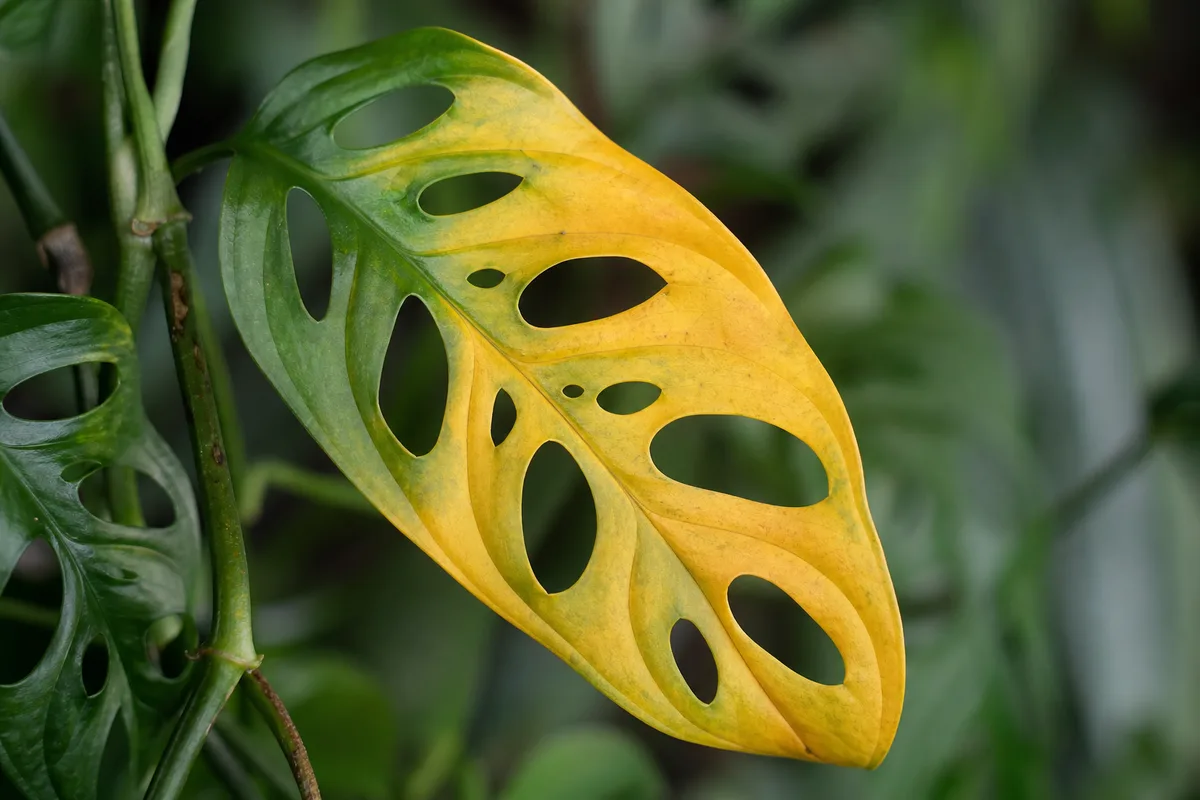
Yellow Leaves symptoms on Monstera Adansonii - compare with healthy tissue on the same plant.
Bottom-up yellow on wet mix (overwatering / root stress)
- Lower leaves yellow first, often several at the base of the pot or on the lowest section of a trailing vine
- Leaves turn chartreuse then fully yellow while mix stays damp or cool at depth for many days
- Limp, soft fenestrated leaves even though soil feels wet-wilt on wet soil usually means damaged roots, not thirst
- Fungus gnats, sour smell, or soft darkened tissue at stem bases in advanced cases-see overwatering and root rot
Scattered yellow on dry trailing vines (underwatering)
- Yellow leaves appear along the vine, sometimes with crispy brown edges on thin fenestrated tissue
- Pot feels light; top 3–5 cm of mix is dusty dry
- Vine may look limp in afternoon heat but the issue is drought, not root rot-soil confirms dryness
Pale fenestrated new leaves with long internodes (low light)
- Newest leaves stay pale yellow-green with weak or missing fenestrations
- Long bare gaps between nodes as the vine stretches toward the brightest window
- Soil may stay wet 10+ days in summer because transpiration is too slow in shade-the light–watering trap
- Overlaps with not enough light and pale leaves
Slow single-leaf fade on oldest vine sections (normal aging)
- One leaf (sometimes two) on an old section of vine fades from tip to base over weeks to months
- New fenestrated leaves keep opening from vine tips or upper nodes with good color
- No widespread limpness, no sour wet soil, no rapid multi-leaf collapse
Why Monstera Adansonii gets yellow leaves
The light–watering trap
Adansonii is a vining climber that prefers bright, indirect sunlight and moist, well-drained soil. In a dim corner the plant photosynthesizes slowly, uses less water, and the same watering rhythm from a brighter window keeps roots damp too long. Excess water reduces oxygen in soil and shows as wilting or yellowing of lower leaves-the same drought-like symptoms as underwatering, which is why soil checks beat leaf appearance alone. This overlapping trap is the most common reason Adansonii yellows indoors even when the owner “waters correctly.”
Overwatering and root decline
Overwatering can result in root rot on Monsteras when heavy mix, low light, pots without drainage, or calendar watering keep the root zone saturated. Adansonii’s rapid growth rate in summer can mask early root stress until several lower leaves yellow at once. Small hanging pots in shade dry especially slowly.
Underwatering on fast-growing vines
Trailing Adansonii in bright windows or near heat vents can dry out between waterings. Thin leaves lose water quickly; repeated drought yellows scattered leaves and damages fine roots. A single missed cycle is often recoverable after a thorough soak.
Natural senescence on long vines
On a multi-foot trailing plant, the oldest leaf on each stem section eventually yellows and drops as the vine extends from nodes above. One fading leaf on an otherwise vigorous vine is routine turnover-not crisis.
Nutrient stress and salt buildup (secondary)
Chronic yellowing with uniform pale new growth on a well-lit, correctly watered plant may involve nitrogen shortage or nutrient deficiency appearing as yellowing on older leaves. Salt buildup from overfeeding can also yellow margins-see nutrient lockout. Do not fertilize waterlogged or stressed Adansonii before fixing light and moisture.
Pests
Monitor for spider mites, mealybugs, and aphids on Adansonii. Spider mite stippling can yellow thin fenestrated tissue, often with fine webbing on undersides-see spider mites.
Lookalike symptoms to rule out
| What you see | More likely cause | Quick check |
|---|---|---|
| Limp leaves, wet soil, sour smell | Overwatering / root rot | Pot weight; stem firmness at base |
| Curled leaves, light pot, dry mix | Underwatering | Finger to 3–5 cm; lift pot |
| Pale new leaves, long internodes | Not enough light | Shadow test at leaf level |
| One old leaf fading slowly | Normal senescence | New vine-tip leaves stay green |
| Fine stippling, webbing | Spider mites | Underside inspection |
| Limp vine, wet soil, no perk after dry-down | Root damage-see wilting | Roots mushy when unpotting |
How to confirm the cause
Work through these checks in order. One honest soil-and-light reading beats guessing from photos.
- Soil moisture at 3–5 cm - Insert your finger near the pot edge; let the top 1–2 inches dry between waterings on Adansonii. Wet cool mix with yellow limp lower leaves supports overwatering. Dusty dry mix with light pot supports underwatering. Evenly moist mix with only one fading old leaf supports aging.
- Pot weight - Heavy for days after watering with multiple yellow lower leaves confirms slow dry-down. Light pot with scattered yellow and crispy edges confirms drought.
- Which leaves are affected - Bottom cluster on wet soil = water stress. Scattered along dry vines = drought. Pale new growth with stretched stems = light. One old leaf on a long green vine = senescence.
- New vine-tip growth - Medium green fenestrated leaves unfurling from upper nodes mean the plant is still healthy overall. Yellowing climbing toward new growth while soil stays wet is urgent.
- Light at leaf level - Hold your hand between window and foliage. Faint shadow with pale yellow new leaves means too dim. Compare with Monstera Adansonii light needs.
- Root inspection trigger - If yellowing spreads quickly with sour smell or stems soften at the base, unpot and inspect-trim only mushy roots.
First fix for Monstera Adansonii
Match one action to your top finding-do not stack Monstera Adansonii repotting guide, fertilizer, and a window move on the same day.
Wet soil branch
Stop watering until the top 3–5 cm of mix dries completely. Move to brighter indirect light if the plant sits in shade-evaporation and root recovery both need light. Empty saucers and cachepots. If soil has been wet for two weeks or more with spreading yellow, unpot and inspect roots for rot before the next drink. Full protocol: overwatering guide.
Dry soil branch
Water thoroughly until excess drains from holes; discard saucer water after 30 minutes. Recheck dryness at 3–5 cm depth in one week-not a fixed calendar. See underwatering.
Low-light branch
Move to bright filtered east, west, or south exposure-or add a grow light 12–14 hours daily. Acclimate over 7–10 days if coming from deep shade; direct sun can scorch thin Adansonii leaves. Stretch watering interval until dry-down returns. See not enough light.
Normal aging branch
Trim the mostly yellow spent leaf at the node with clean shears. Use gloves when handling cut tissue because Adansonii sap contains calcium oxalate crystals that irritate skin. No other treatment required.
Step-by-step recovery by confirmed cause
After the first correction:
- Adjust watering to new dry-down speed - Brighter rooms dry pots faster; dim winter rooms need longer intervals. Follow the watering guide rhythm: top 3–5 cm dry before each drink.
- Provide climbing support - A moss pole or trellis lets upper nodes receive more light than stems pressed against a shelf.
- Remove fully yellow leaves once conditions stabilize-do not strip every yellow leaf the same day you change water.
- Treat pests if confirmed - Isolate, rinse undersides, and address spider mites before expecting color recovery.
- Feed only after two good new leaves - If light and water are correct and older leaves still yellow uniformly, consider diluted fertilizer during active growth-not on waterlogged roots.
Recovery timeline
Recovery is judged by new fenestrated leaves from vine tips or nodes, not old blade color.
- Watering correction: Firm new leaf unfurling within 2–3 weeks after soil rhythm stabilizes
- Light correction: Greener, tighter-node new growth within 3–6 weeks; chronically dim plants may take a full growing season
- Root rot rescue: Weeks to months if salvageable-some plants do not recover when stems are extensively mushy
- Single aging leaf: Replacement leaf visible on the vine within weeks on an otherwise healthy plant
Fully yellow tissue does not re-green. Worsening signs: every new leaf yellows after four weeks of corrected care; sour soil smell persists; stippling spreads despite cultural fixes.
What not to do
- Do not assume yellow leaves need fertilizer-salt buildup yellows margins; low-light chlorosis will not respond to feed alone
- Do not increase watering on wet soil because leaves look limp-limp with wet mix often means damaged roots, not thirst
- Do not repot on day one unless roots are visibly mushy or soil is compacted and hydrophobic
- Do not keep a summer watering calendar in a dim winter room-slow dry-down keeps roots damp and leaves yellow
- Do not describe Adansonii recovery as “new center growth”-this vining aroid recovers via new leaves from nodes and vine tips
How to prevent yellow leaves on Monstera Adansonii
Place Adansonii where bright indirect sunlight reaches the leaves most of the day. Water when the top 3–5 cm of mix is dry, not on a fixed weekly schedule from a brighter season.
Use well-draining aroid mix and pots with drainage; empty saucers after watering. Rotate the pot weekly so trailing sections get even light. Remove spent lower leaves before they harbor pests. In winter, water less when growth slows in cooler, darker rooms.
When to worry
Treat yellowing as urgent if:
- Many leaves yellow within two weeks with wet, sour soil or soft stem tissue at the base
- Newest leaves yellow while soil stays wet and vines fail to perk after dry-down
- Yellowing climbs toward growing tips on multiple stems at once
- Fine webbing and stippling spread despite corrected watering-see spider mites
Lower urgency: one old leaf fading over months on a long otherwise green trailing vine-that is routine senescence on a vining aroid.
Symptom quick-reference
| Cause | Leaf appearance | Soil | Urgency | First fix |
|---|---|---|---|---|
| Overwatering | Bottom-up yellow, limp fenestrated leaves | Wet, heavy | Medium–high | Pause water; improve light |
| Underwatering | Scattered yellow, crispy edges | Dry, light | Medium | Soak thoroughly once |
| Low light | Pale new leaves, long internodes | Often stays wet | Medium | Brighter indirect light |
| Normal aging | One old leaf fading slowly | Normal | Low | Trim spent leaf |
| Root rot | Rapid spread, soft base | Sour, wet | High | Inspect roots; see root-rot guide |
Conclusion
Yellow leaves on Monstera Adansonii usually mean wet roots, weak light, drought on trailing vines, or one spent leaf aging out on a long stem-not a mystery disease. Confirm with soil moisture at 3–5 cm, pot weight, and which leaves yellow, then apply one cause-specific fix before stacking treatments. Judge recovery by the next fenestrated leaves unfurling from vine tips-not by old yellow tissue re-greening. For ongoing care rhythm, see the watering guide.
When to use this page vs other Monstera Adansonii guides
- Monstera Adansonii watering guide - Use for routine moisture checks before assuming yellow leaves is the main issue.
- Monstera Adansonii problems hub - Browse all 22 common issues on this species.
- Not Enough Light on Monstera Adansonii - Different entry point when symptoms overlap with yellow leaves.
- Root Rot on Monstera Adansonii - Different entry point when symptoms overlap with yellow leaves.