Nutrient Lockout on Monstera Adansonii: Causes, Checks &
Quick answer
Nutrient lockout on Monstera Adansonii shows as pale or small new leaves with weak fenestrations even after feeding-often from salt buildup, wrong pH, or feeding stressed roots. First step: stop fertilizer, flush the pot with clear water until it drains freely, and pause feed until new growth looks normal.
Nutrient Lockout on Monstera Adansonii: Causes, Checks & Fixes
This guide covers nutrient lockout on Monstera Adansonii. See also the general Nutrient Lockout guide, watering, and light pages for this plant.
Nutrient Lockout on Monstera Adansonii: Causes, Checks & Fixes
Quick answer
Nutrient lockout on Monstera Adansonii shows as pale or small new leaves with weak fenestrations even after feeding-often from salt buildup, wrong pH, or feeding stressed roots. First step: stop fertilizer, flush the pot with clear water until it drains freely, and pause feed until new growth looks normal.
This fast-growing vining aroid needs steady-not heavy-nutrition to keep fenestrated leaves crisp. When salts accumulate or pH drifts, roots cannot absorb minerals even when fertilizer is present in the mix.
What nutrient lockout looks like on Monstera Adansonii
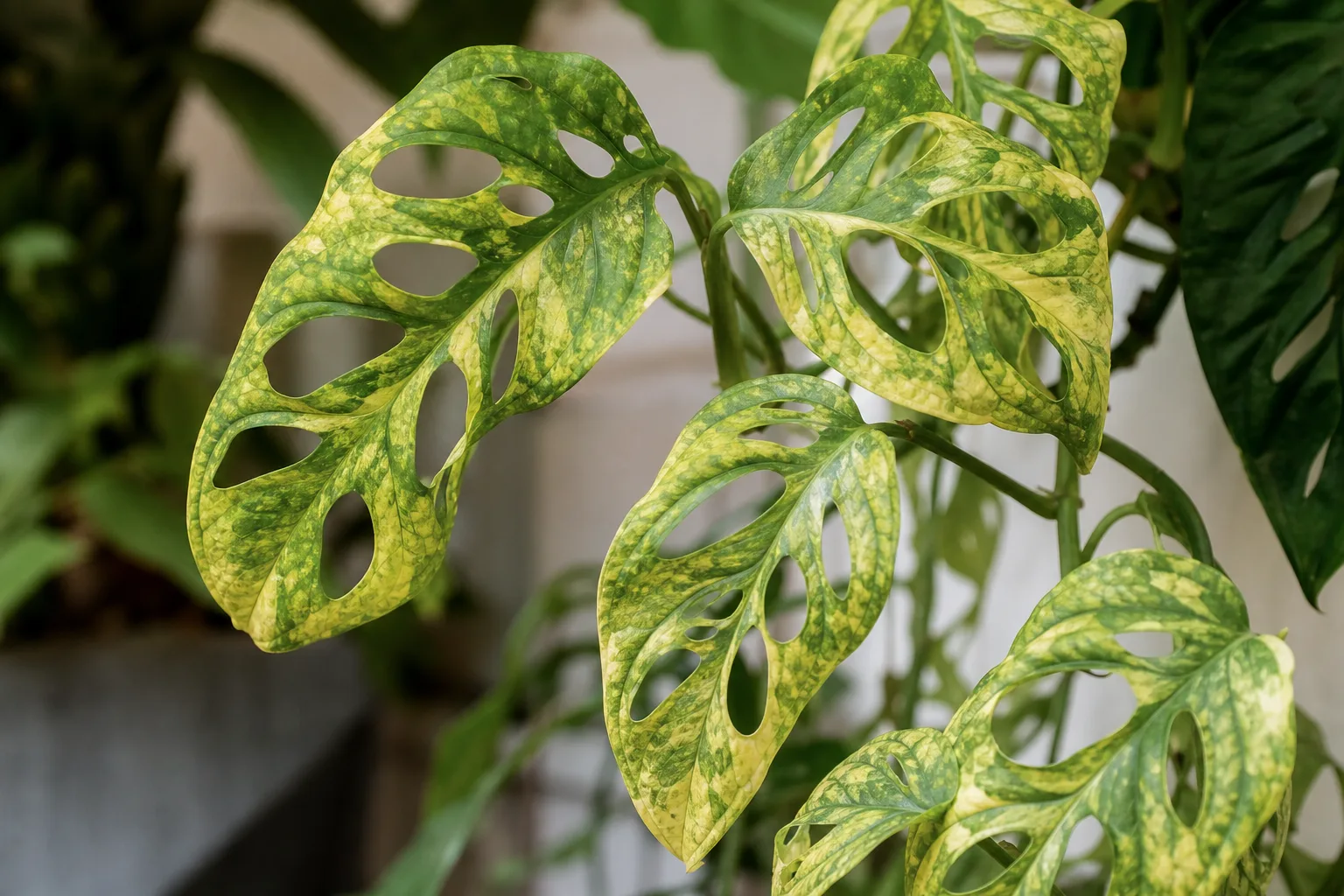
Older leaves may yellow while new vine tips stay small, pale green, or produce leaves with fewer or missing fenestrations-a frustrating mismatch because the plant looks hungry but does not respond to more fertilizer.

Nutrient Lockout symptoms on Monstera Adansonii - compare with healthy tissue on the same plant.
A white crust on the soil surface, pot rim, or saucer often follows repeated liquid feeding, especially at full label strength. Brown crispy leaf tips or margins after a recent dose suggest fertilizer salt deposits on indoor plants rather than low humidity alone.
Unlike Monstera deliciosa, Adansonii has thinner leaves that show stress quickly. When the whole trailing or climbing shoot looks washed out-not just one aging lower leaf-and stems stay firm, lockout or salt stress is more likely than normal leaf drop.
Why Monstera Adansonii gets nutrient lockout
Adansonii is a moderate feeder, not a heavy one. Its active growth in spring and summer uses nutrients quickly, but excess nitrogen can push soft foliage without improving fenestrations, while salt from repeated soluble feed builds up faster than the plant uses it-especially in small hanging pots that dry slowly.
Salt buildup from over-fertilizing or feeding too often blocks root uptake. Excessive fertilizer causes soluble salts to concentrate as water evaporates from the pot; those salts can draw moisture from root tips and impair nutrient absorption even when minerals remain in the mix.
pH outside Adansonii’s comfort range limits uptake. Home culture targets roughly pH 5.5–7.0 in a well-draining aroid mix. Alkaline tap water or limestone-heavy substrates can lock iron and other micronutrients; Monstera adansonii prefers slightly acidic to neutral soil with good drainage.
Feeding at the wrong time deepens the problem. Fertilizing during winter when reduced light slows growth can harm houseplants and concentrate unused salts. Adansonii also should not be fed when roots are damaged from overwatering, recently repotted, or sitting in constantly wet mix-stressed roots cannot process nutrients you add.
Old, exhausted potting mix in a plant that has not been repotted in two or more years may be chemically depleted or compacted. Wet, poorly aerated mix impairs root function, so fertilizer burns damaged tissue instead of supporting new fenestrated leaves.
How to confirm the cause
- Recent feeding history - Multiple liquid feeds in the past month, especially above half strength, raise salt-lockout odds on Adansonii.
- Salt signs - White mineral crust on soil surface, pot edges, or exterior clay pots.
- Soil moisture and roots - Heavy wet pot with soft stems points to overwatering; dry mix with slight wilt differs from lockout.
- Light check - Insufficient light causes smaller leaves and weak fenestrations on Adansonii; pale stretched vines in dim corners may be light-starved, not locked out.
- Leaf pattern - Lower-leaf yellowing with green veins can indicate iron issues tied to pH; uniform pale new growth after feeding points to salt stress.
- Response test - If another half-dose of fertilizer worsened tip burn within days, stop feeding and flush.
First fix for Monstera Adansonii
Stop all fertilizer immediately. Water the pot deeply with plain room-temperature water until a steady stream runs from drainage holes; empty the saucer. Repeat the flush once or twice over the next week to leach accumulated salts-irrigate with clear water at least equal to the pot volume and let each pass drain fully.
Hold fertilizer until new leaves emerge with normal size and fenestrations-usually three to six weeks after flushing. Keep Adansonii in bright indirect light and return to dry-down watering: allow the top 3–5 cm of mix to dry before the next drink.
Step-by-step recovery
- Stop fertilizer; scrape visible white crust from the soil surface if present.
- Flush with clear water two to three times over seven to ten days, draining fully each time.
- If mix is old, compacted, or sour-smelling, repot into fresh draining aroid blend after flushing-do not feed on repot day.
- Resume half-strength balanced liquid fertilizer monthly only after firm new leaves appear during active growth.
- Leach the soil with clear water every four to six months if you use synthetic fertilizer regularly.
- Trim brown burned leaf tips for appearance; damaged tissue will not green back.
Recovery timeline
Mild salt stress corrected with flushing may show greener new fenestrated leaves within three to six weeks in warm bright conditions. Severe burn with widespread tip crisping takes longer and may require Monstera Adansonii repotting guide into fresh mix. Judge recovery by new vine growth, not old foliage-Adansonii’s fast habit means progress shows on the newest leaves first.
Lookalike symptoms
- Not enough light - Long gaps between nodes, small pale leaves, and weak fenestrations in a north-facing corner. Move to brighter filtered light before blaming nutrients.
- Overwatering or root rot on Monstera Adansonii - Soft mushy stem base, sour smell, wet heavy pot. Fix drainage and dry-down first; fertilizer will burn damaged roots.
- True nitrogen deficiency - Rare on Adansonii that has never been fed through a full growing season. Deficiency lacks heavy salt crust and often follows zero feeding, not repeated doses.
- Low humidity - Brown tips without salt crust or recent feeding history; more common in dry winter rooms than lockout alone.
Mistakes to avoid
Do not double fertilizer on pale Adansonii leaves-that deepens salt lockout. Do not feed dry or stressed plants; apply fertilizer to moist soil and avoid feeding newly repotted plants for several weeks. Do not use full-strength outdoor doses in small indoor pots. Do not assume every yellow leaf needs nitrogen-check light, moisture, and salt first. Keep away from pets when handling cut tissue; Monstera contains calcium oxalate crystals toxic to cats and dogs.
Monstera Adansonii care cross-check
Adansonii wants bright indirect light, well-draining aroid mix, and sparse feeding during active growth only. Nutrient lockout on Monstera Adansonii overview is usually a feeding-mechanics problem-salts, pH, or timing-not a call for aggressive fertilizing. Fix the root environment, flush, then feed lean.
How to prevent nutrient lockout next time
Feed at half strength monthly from spring through early fall; pause in winter when reduced light and temperature slow growth. Flush containers occasionally if you use synthetic liquid feed. Repot every one to two years so mix does not become salt-saturated or depleted. Never stack repotting, pruning, and heavy feeding on the same week.
When to worry
Escalate if stems collapse at the base, crown softness spreads, or roots are brown and mushy when unpotting-follow root-rot rescue after repotting into fresh dry mix. Widespread bleached new growth after heavy feeding may need full mix replacement, not another fertilizer dose. If soluble salts remain high after flushing, replace growing media in smaller pots rather than continuing to feed.
Conclusion
Nutrient lockout on Monstera Adansonii is fixable when stems stay firm and roots are mostly healthy. Stop feeding, flush salts, confirm bright indirect light and proper dry-down watering, then resume diluted fertilizer only after new fenestrated leaves prove the root zone is working again.
When to use this page vs other Monstera Adansonii guides
- Monstera Adansonii watering guide - Use for routine moisture checks before assuming nutrient lockout is the main issue.
- Monstera Adansonii problems hub - Browse all 22 common issues on this species.