Holes in Portulaca Leaves: Causes, Checks & Fixes
Quick answer
Holes in Portulaca (Moss Rose) usually come from slugs, snails, or caterpillars chewing fleshy leaves overnight-not disease. First step: go out at dusk with a flashlight, look for shiny slime trails and the pest itself, then hand-pick before spraying anything.
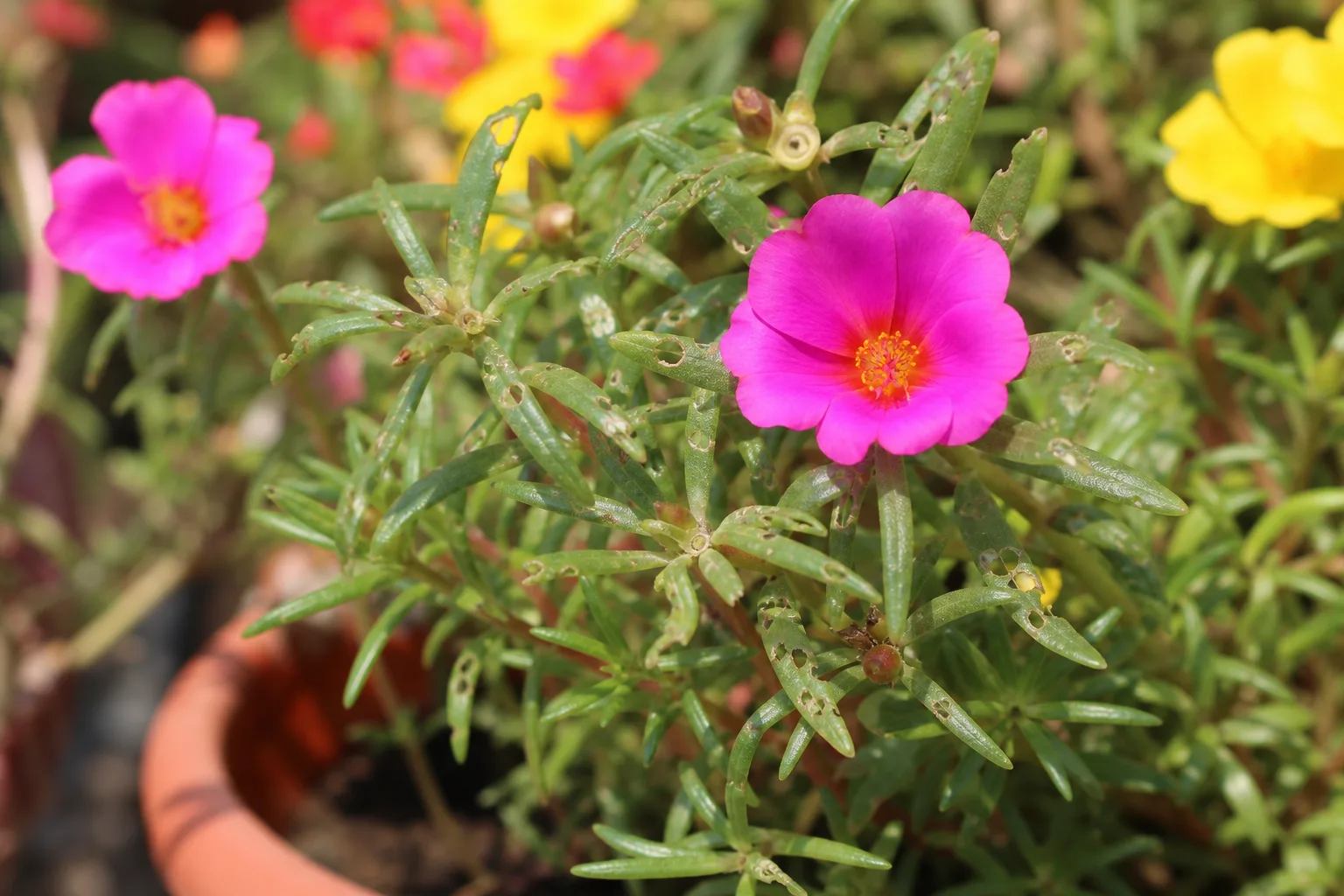
Holes in Portulaca Leaves: Causes, Checks & Fixes
This guide covers holes in leaves on Portulaca. See also the general Holes in Leaves guide, watering, and light pages for this plant.
Holes in Portulaca Leaves: Causes, Checks & Fixes
Quick answer
Holes in Portulaca (Portulaca grandiflora, Moss Rose) almost always mean something is chewing the fleshy succulent leaves-not a fungal leaf spot or watering mistake. Slugs and snails are the most common culprits on this low, mat-forming annual because they feed at night on tender foliage close to damp soil. Caterpillars, flea beetles, and grasshoppers can also punch or raggedly chew Moss Rose leaves during warm outdoor season.
First step: inspect at dusk with a flashlight. Look for shiny slime trails (slugs or snails), dark frass pellets (caterpillars), or the pest itself under pot rims and mulch before you spray Bt or insecticide.
What holes in Portulaca leaves look like
Moss Rose has cylindrical, fleshy, needle-like leaves arranged along prostrate reddish stems. Chewing damage stands out against that smooth succulent tissue:
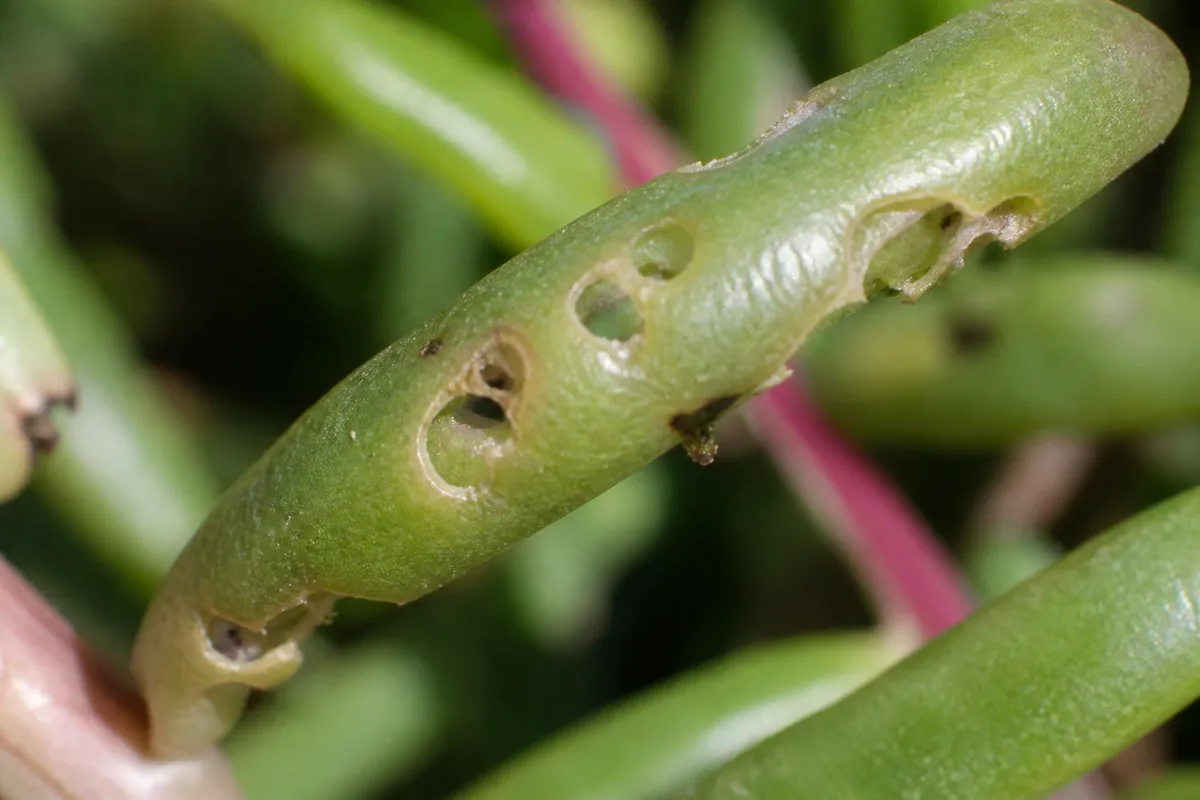
Holes in Leaves symptoms on Portulaca - compare with healthy tissue on the same plant.
- Large irregular holes with relatively smooth edges-often on lower mat leaves touching the soil or pot rim
- Shiny slime trails on leaf surfaces, stems, or soil beneath the plant (slugs and snails)
- Ragged chewed edges with dark pellet droppings nearby (caterpillars)
- Tiny round shot holes scattered across leaves without slime (flea beetles)
- Damage that appears overnight on tissue that looked fine the previous afternoon
- Chewed unopened flower buds when slug pressure is high
Leaf miners on portulaca create serpentine tunnels inside the leaf, not open holes punched through the surface-that pattern points to a different pest and treatment.
Chewed Moss Rose leaves do not repair themselves. Judge recovery by new clean foliage and buds, not by old holes closing up.
Why Portulaca gets holes in leaves
Portulaca is built for heat and drought-full sun, well-drained sandy or rocky soil, and high drought tolerance-but its growth habit still invites chewers. The plant forms a low mat only a few inches tall with trailing stems, placing fleshy leaves right where slugs and snails travel after dark.
Several Moss Rose culture patterns overlap with pest habitat:
- Damp saucers and wet monsoon beds keep the soil surface moist even though the plant prefers dry roots-exactly what slugs and snails need to stay active.
- Mulch piled against trailing stems traps humidity and gives mollusks daytime hiding spots within centimeters of leaves.
- Partial shade or crowded mixed baskets produce softer growth that caterpillars and beetles find easier to chew than sun-hardened foliage.
- Succulent leaf texture attracts slugs, which prefer succulent foliage and easily clip small plant parts.
- Terrace pots on cool patios collect moisture under rims where slugs congregate before climbing into the crown.
NC State lists aphids and slugs as occasional problems on Portulaca. Holes are chewing damage from those slugs-or from caterpillars, beetles, and grasshoppers sharing the same sunny annual bed-not from the aphid sap-sucking that causes distortion and sooty mold instead.
How to confirm the cause
Work through these checks before treating:
- Slime trail test - Rub a finger along a damaged leaf or nearby soil. Snails and slugs leave silvery mucous trails wherever they crawl. No slime with ragged holes points to caterpillars or beetles.
- Night inspection - Go out at night or early morning to view slugs and snails in action. They hide under pots, boards, and thick groundcover by day.
- Frass versus slime - Caterpillars deposit dark pellet frass on leaves near damage. Slugs leave slime, not pellets.
- Hole size and pattern - Large irregular holes fit slugs, snails, or caterpillars. Dozens of pinhead-sized round holes suggest flea beetles. Internal squiggly tunnels mean leaf miners, not open holes.
- Location on the plant - Lower mat leaves and bed-edge pots hit first before pests climb stems or chew buds.
- Timing - Damage appearing only after cool wet nights fits slugs. Holes progressing on dry hot afternoons with visible caterpillars at dusk suggest caterpillars instead.
- Rule out hail or handling - Random torn holes across the whole plant after a storm, with no pests or slime, may be mechanical-not biological.
First fix for Portulaca
Hand-pick slugs and snails after dark, dropping them into soapy water or relocating them far from the garden.
This is the safest first response for Moss Rose-especially where Portulaca is toxic to cats and dogs and pets might reach fallen plant tissue. Hand-picking confirms the pest, stops immediate feeding, and avoids spraying insecticide across open flowers on day one.
Walk your Moss Rose pots or bed edges with a flashlight. Check under rim saucers, along mulch lines, and at the soil surface beneath damaged leaves. Repeat three nights in a row-slugs return to reliable feeding sites until shelter and surface moisture are reduced.
Do not spray Bt or broad insecticides without confirming caterpillars. Bt targets caterpillar larvae through ingestion-it does not control slugs or snails.
Step-by-step recovery
After the first hand-picking round:
- Remove slug shelters - Pull mulch back from trailing stems. Clear fallen leaves, stacked pots, and boards that trap moisture against bed edges.
- Dry the root zone surface - Water Moss Rose only when soil is completely dry; empty saucers after watering. Surface moisture fuels slug activity even when the plant tolerates drought at the root level.
- Apply iron phosphate bait if hand-picking is not enough. Sprinkle granules on soil near hiding spots-not on plants. Iron phosphate baits are safer around children, pets, and wildlife than metaldehyde. Apply in late afternoon or evening when mollusks emerge.
- Treat caterpillars separately if you find frass and larvae but no slime. Pick visible caterpillars by hand first; apply Bt to remaining foliage only after confirming caterpillar identity.
- Install copper barriers on container rims or raised-bed edges when slugs persist. Barriers work only if no plant parts bridge over the copper.
- Protect young seedlings - Move vulnerable spring plugs to elevated benches or use copper tape on tray rims until stems toughen in full sun.
Repeat bait applications per label in the same areas-mollusks tend to return until population pressure drops.
Recovery timeline
Hand-picking shows results the next morning when slime trails stop appearing on new damage. After two to three nights of consistent removal plus shelter cleanup, fresh Moss Rose leaves should emerge without new holes within one to two weeks in warm full sun.
Scattered holes on mature trailing plants rarely stop bloom entirely-Moss Rose keeps pushing buds from stem tips. Seedlings chewed to stubs may not recover if the growing point is destroyed; replant with fresh plugs rather than waiting.
Lookalike symptoms
- Aphid distortion - Curled yellow new growth and sticky honeydew, not punched holes. Treat sap feeders, not mollusk baits.
- Leaf miners - Pale winding tunnels inside the leaf blade; remove affected leaves rather than baiting slugs.
- Flea beetle shot holes - Tiny uniform round holes; scout for jumping beetles on sunny afternoons.
- Sun scorch or fertilizer burn - Brown crispy patches without chew margins or slime trails.
- Slug damage on neighboring plants - Moss Rose in a mixed basket may show holes while a wet saucer underneath feeds slugs from petunias or calibrachoa too.
Causes to rule out
- overwatering on Portulaca - Yellow mushy stems and crown rot, not neat chew holes with slime.
- Disease leaf spots - Circular brown or black lesions with halos, not ragged missing tissue.
- Normal aging - Lower leaves yellow and drop without chew marks.
- Deer or rabbit browsing - Large torn strips on multiple plant species, not slug trails on a low mat.
What not to do
Do not spray ant killer or broad insecticides across Moss Rose flowers on day one without identifying the chewer. Do not sprinkle slug bait on foliage-baits work on soil near hiding spots. Do not overwater trying to “wash away” pests; Portulaca roots rot rapidly in wet soil. Avoid metaldehyde baits where pets might ingest granules-use iron phosphate instead.
How to prevent holes next time
Weekly dusk inspections during spring flush and monsoon season catch slugs before mats look ragged. Grow Moss Rose in the sunniest spot available-full sun with good drainage keeps the soil surface drier and foliage tougher. Empty saucers after watering, clear debris under pots, and quarantine new mixed baskets before placing beside existing Moss Rose.
Encourage ground beetles and toads by skipping unnecessary broad-spectrum sprays during bloom. Copper tape on container rims blocks repeat slug climbs once the pest is cleared from inside the pot.
Portulaca care cross-check
Hole problems often flare when Moss Rose sits in partial shade with damp saucers-opposite its needs. Align sun, drainage, and lean sandy mix before escalating pesticides. Chewing on a firm, dry, sunny Moss Rose mat is a pest problem; wilting with wet mix is a watering problem.
When to worry
Escalate when seedlings are eaten to stubs overnight, slime trails appear daily across the whole plant, or every flower bud disappears before opening. Scattered lower-leaf holes on a mature trailing Moss Rose in full sun are manageable with standard hand-picking and bait.
Conclusion
Holes in Portulaca leaves mean something chewed the succulent foliage-usually slugs or snails on the low mat at night. Scout at dusk, confirm slime trails or frass, hand-pick first, dry the soil surface, and use targeted bait or caterpillar control only after you know which pest is responsible. New clean growth in full sun is the sign recovery is working.
When to use this page vs other Portulaca guides
- Portulaca watering guide - Use for routine moisture checks before assuming holes in leaves is the main issue.
- Portulaca problems hub - Browse all 50 common issues on this species.