Portulaca Care Guide: Moss Rose Light, Water & Soil
Portulaca grandiflora
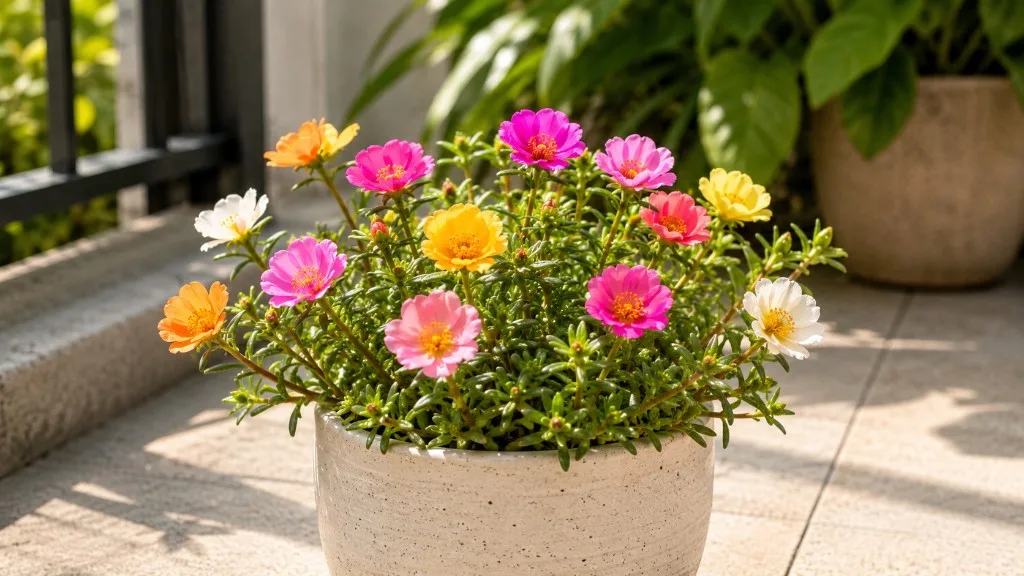
Portulaca is the ultimate summer flower - it thrives in the hottest, driest conditions with minimal water, sandy soil, and full direct sun where other flowers fail.
Portulaca Care Guide: Moss Rose Light, Water & Soil
Start with wateringThe most common care mistake for PortulacaWatering guide →Portulaca care essentials
Light
full direct sun - 6+ hours; opens flowers only in bright sunlight
Water
Extremely drought-tolerant succulent-like plant; water sparingly and allow to dry fully.
Soil
Sandy, well-draining, low-fertility soil - portulaca thrives in poor conditions.
Humidity
Low to moderate; tolerates Indian conditions but prefers drier air
Temperature
25°C to 40°C (77–104°F) - one of the most heat-tolerant flowering plants
Fertilizer
Feed once at planting with slow-release fertilizer; minimal additional feeding during at sowing time. Use very diluted balanced fertilizer - portulaca is not a heavy feeder and stop if the plant is stressed, newly repotted, or not actively growing.
About Portulaca
Portulaca is native to South America (Argentina, Uruguay, Brazil), typically reaches 10–20 cm tall; 30–40 cm spreading indoors, with fast during warm sunny weather growth. Portulaca has a trailing growth habit and part of the Portulacaceae family. It is also known as Moss Rose, Sun Rose, Table Rose, Ten O'Clock Plant, and Navamalika.
| Detail | Information |
|---|---|
| Also known as | Moss Rose, Sun Rose, Table Rose, Ten O'Clock Plant, Navamalika |
| Native region | South America (Argentina, Uruguay, Brazil) |
| Mature size | 10–20 cm tall; 30–40 cm spreading |
| Growth rate | Fast during warm sunny weather |
| Growth habit | Trailing |
| Scientific name | Portulaca grandiflora |
| Family | Portulacaceae |
Portulaca Care Guide: Moss Rose Light, Water & Soil
Portulaca is the annual you reach for when the thermometer climbs, the balcony bakes, and every other bedding plant wilts by noon. Also sold as moss rose, sun rose, table rose, and the ten o’clock plant, Portulaca grandiflora is a low, trailing succulent annual from South America that turns Portulaca light guide and dry soil into a carpet of papery, rose-like blooms. The care is simple in theory and easy to get wrong in practice: give it too much water, too much shade, or too-rich soil, and the plant collapses. Give it what it actually wants - six or more hours of direct sun, sandy well-draining soil, and a Portulaca watering guide that respects drought - and it becomes one of the most reliable summer flowers for pots, hanging baskets, rock walls, and front-of-border color.
This guide covers the full routine for home growers: how moss rose differs from edible purslane, where to place it, how to water without rotting the roots, what soil and pots work best, when to sow or plant, how to propagate from seed and cuttings, what to do about closed flowers and leggy stems, and why you should keep it away from pets.
For related Portulaca care, see Bacterial Wilt on Portulaca, Damaged Roots on Portulaca, Curling Leaves on Portulaca.
What Moss Rose Actually Is (And Why It Is Not Purslane)
Moss rose is Portulaca grandiflora, a member of the Portulacaceae family native to Argentina, Uruguay, and Brazil, per the North Carolina Extension Gardener Plant Toolbox. In cultivation it typically reaches 8–20 cm tall and spreads 30–40 cm into a dense, prostrate mat of fleshy, needle-like leaves on reddish stems. The flowers are the show: single, semi-double, or double blooms in red, orange, yellow, pink, purple, and white, often with ruffled petals that look like miniature roses.
The name confusion starts here. Many articles and tags use “portulaca” and “purslane” interchangeably, but the two main species gardeners encounter are different plants with different jobs. Common purslane (Portulaca oleracea) is a low, mat-forming plant with flat, paddle-shaped leaves and small yellow flowers, widely eaten as a leafy green. Moss rose (P. grandiflora) has cylindrical succulent leaves and large, brightly colored ornamental flowers. Both like sun and drainage, but moss rose is far less forgiving of shade and wet soil, and it is grown for display rather than the plate. Cornell Home Gardening lists moss rose under Portulaca grandiflora in the Portulacaceae family and describes it as an annual that “needs hot, dry conditions, but otherwise not fussy.”
In most of the world, moss rose is treated as a warm-season annual. It grows fast in heat, flowers heavily through summer and into fall, and dies at the first hard frost. In USDA zones 10–11, and in frost-free tropical climates, it can behave as a short-lived perennial, but for balcony and terrace growers in temperate and subtropical regions - including most of India north of the coast - plan on replacing plants each warm season. Sow or plant fresh stock once night temperatures stay consistently above about 15–18°C (60–65°F) and soil has warmed; in much of India that means March onward when daytime highs are regularly above 25°C.
Moss rose is not a thirsty annual pretending to be tough. It is a succulent whose leaves and stems store water, and whose shallow root system is adapted to fast-draining, low-fertility soils. The North Carolina Extension entry classifies it as a ground cover succulent with high drought and heat tolerance, and notes resistance to deer and heat as landscape virtues. Proven Winners describes portulaca as a warm-season tropical that thrives in “full sun, heat, humidity, drought and poor soils” - a combination that kills many traditional bedding plants. That physiology drives every care decision: in strong sun the plant opens its flowers and dries the soil predictably; in shade or soggy mix it stretches, closes blooms, or rots from the base up. For Indian terrace and rooftop gardens, moss rose is one of the few flowering annuals that stays cheerful through scorching summers when marigolds flag and impatiens quit.
Light: Full Sun Is Non-Negotiable
If you remember only one rule for portulaca care, make it this: full direct sun, at least six to eight hours a day. The North Carolina Extension Plant Toolbox specifies “full sun (6 or more hours of direct sunlight a day).” Proven Winners notes that insufficient light produces leggy plants and few open flowers. Moss rose is not a bright-shade plant, not a morning-sun-only plant, and not a candidate for a dim balcony unless you are growing it exclusively for foliage - which almost no one is.
Place pots on the sunniest rail, wall, or terrace edge you have. In garden beds, site moss rose south-facing or otherwise unobstructed; do not tuck it under shrubs that will cast afternoon shade as they fill in. In hanging baskets, avoid eaves and covered patios that filter out midday light. The plant can handle intense reflected heat from concrete and masonry better than most annuals, which is why it is a standard choice for rock gardens, pool decks, and paved courtyards.
Acclimate nursery packs gradually if they were grown under shade cloth, but do not use acclimation as an excuse to keep them in partial shade long term. Over one to two weeks, move pots into progressively brighter positions until they sit in full sun all day. If leaves look slightly pale at first, that often resolves once the plant adjusts. If stems stretch and the internodes lengthen, the plant is telling you it needs more light, not more fertilizer.
Why Moss Rose Flowers Close on Cloudy Days and at Night
One of moss rose’s charming habits - and the source of the ten o’clock plant nickname - is that flowers open in bright sunlight and close at night. Cornell Home Gardening notes that blooms “open on sunny days and close at night or when it is cloudy.” The North Carolina Extension adds that flowers “do not open on cloudy or rainy days and close up from sundown to sun up.” This is normal photonastic behavior, not a sign of disease.
Closed flowers on a sunny afternoon, however, mean something is wrong. Check shade first: has a nearby plant grown taller, has a umbrella gone up on the balcony, or did you move the pot under a roof edge? Second, check temperature and soil moisture. Cool, wet weeks can reduce blooming even in adequate light. Third, look at nitrogen: overfed plants push leafy growth and hold buds closed longer. If the calendar says July, the sky is clear, and the plant still will not open, the fix is almost always more sun and less water, not the other way around.
Watering: Let the Soil Dry Completely
Portulaca is extremely drought-tolerant once established. Cornell Home Gardening notes that portulaca tolerates droughty soil - avoid overwatering on Portulaca and let the soil dry out between waterings. Proven Winners notes that portulaca “prefers dry conditions” but flowers best with some periodic moisture during heat waves - the nuance is deep, infrequent watering, not constant dampness. The LeafyPixels plant profile for portulaca recommends watering sparingly and allowing the mix to dry fully, with a practical starting interval of every 4–5 days in summer and about once a week in cooler months, always adjusted to how fast your pot actually dries.
The failure mode is almost always too much water, not too little. Moss rose roots are shallow and succulent; they absorb water quickly and rot quickly in saturated mix. Overhead watering late in the day, daily sprinkles, and saucers that hold runoff are how healthy plants turn mushy in 48 hours. Water at the soil line or use bottom watering for containers, and never let pots sit in standing water.
underwatering on Portulaca is rare. In extreme drought, stems may look slightly limp in midday heat, then recover by evening. If the plant is wilting in the morning on bone-dry soil, soak thoroughly until water runs from drainage holes, then wait until the mix is dry again before repeating. In the monsoon season on Indian terraces, pull back hard: cool, cloudy days slow drying, and daily rain can replace irrigation entirely. During cool winter weeks when plants are fading, water lightly only when the soil is fully dry.
How to Check Moisture in Containers and Garden Beds
The finger test works everywhere. Push your finger 2–3 cm into the mix in pots, or 3–5 cm in garden beds. If you feel coolness or cling, wait. If the surface and the tested depth are dry, water. Lift small pots when you can; a dry portulaca pot is noticeably light compared with one watered yesterday.
In beds, check several spots because stone mulch and slope drainage vary. Sandy beds on slopes may need water more often than clay-heavy pockets that hold moisture. The goal is not a fixed calendar; it is complete dry-down between soakings. If you are debating whether to water, you probably should not.
Soil and Bed Preparation
Moss rose wants sandy, rocky, or gritty soil with exceptional drainage and low to moderate fertility. The North Carolina Extension lists good drainage as essential and includes sand, shallow rocky soil, and occasionally wet sites only in the sense that the plant tolerates brief moisture if drainage follows - not that it wants wet feet. Cornell describes portulaca as preferring “hot, dry, almost desert-like conditions.” A practical pH target is 5.5–7.0, slightly acidic to neutral, which most lean garden soils and cactus mixes already meet.
Heavy clay, moisture-retentive peaty mixes, and richly composted beds are poor fits. They hold water around the crown, encourage fungal issues, and push soft leafy growth instead of flowers. If your native soil is dense, amend planting pockets with coarse sand, fine gravel, perlite, or crushed granite, and raise beds or mounds slightly to improve runoff. In rock and crevice gardens - one of moss rose’s best settings per NCSU - plant into gaps with almost no organic matter beyond what settles naturally.
Container Mix Recipe for Balconies and Hanging Baskets
For pots and hanging baskets, use a succulent-leaning mix, not standard peat-heavy potting soil. A reliable home recipe:
- 40% potting mix or coco coir (structure, not richness)
- 40% coarse sand or perlite (drainage and air)
- 20% fine gravel, pumice, or crushed granite (weight and fast dry-down)
Proven Winners recommends an all-purpose potting mix with added perlite for drainage in containers instead of ordinary moisture-retentive houseplant soil. Choose pots with large drainage holes; terracotta is helpful on humid terraces because it breathes. Avoid sealed decorative pots without drainage unless you are using them as cachepots and lifting the grow pot out to water.
Temperature, Frost, and Seasonal Timing
Moss rose is a heat lover. The LeafyPixels plant data puts its comfort zone at roughly 25–40°C (77–104°F), making it one of the most heat-tolerant flowering annuals for terraces and rooftops. Germination and early growth are most successful at 70–85°F (21–29°C), per Cornell’s portulaca growing guide. Established plants handle blazing surface temperatures on concrete and stone better than most bedding species, though extreme reflected heat can scorch stems if the plant was previously grown soft in a greenhouse.
The cold limit is firm. Frost kills moss rose; Cornell and multiple extension sources describe it as frost-tender, dying back at the first fall frost in temperate climates. Proven Winners notes it can be grown as a perennial in zones 10–12, but everywhere else, treat it as a seasonal plant. Do not set seedlings out while nights are still cool; wait until night temperatures stay above 60°F (15°C) and soil has warmed. In India, sow from March when days are consistently above 25°C; in the US, that translates to after last frost when soil reaches at least 65°F.
For growers trying to stretch color into autumn, plants often look best in late summer and early fall when days are warm and nights moderate. Once night temperatures drop below about 10°C, growth slows, flowers close more often, and replacement is usually smarter than rescue.
Fertilizer: Less Is More for Blooms
Moss rose is not a heavy feeder. The North Carolina Extension lists maintenance as low, and Proven Winners implies that rich conditions are unnecessary. The LeafyPixels profile recommends one slow-release application at planting and minimal additional feeding during the season. High nitrogen - from lush compost, frequent liquid feed, or rich potting mix - produces soft stems and fewer flowers, the opposite of what you want from a bedding succulent.
If you feed at all, use a balanced fertilizer at quarter to half label strength on already-moist soil, once or twice mid-season at most. Slow-release granules mixed lightly into the top of the bed at planting are enough for many displays. Do not fertilize stressed, rotting, or cold-stalled plants; salts on dry roots burn quickly. If stems are green and thick but buds stay shy, suspect shade or overwatering before hunger.
Planting and Bedding Layout
Plant moss rose after the weather is genuinely warm. Proven Winners advises waiting until all danger of frost has passed and soil has warmed, then spacing plants 15–30 cm (6–12 inches) apart depending on cultivar vigor. Cornell recommends thinning seedlings to about 8 cm apart early, then to 30 cm as mats spread. In containers, three to five plants in a 30 cm bowl or one trailing plant per 20–25 cm hanging basket pocket gives a full look without immediate crowding.
Set plants at the same depth they grew in the pack; burying succulent crowns leads to rot. Firm soil gently, water once to settle, then let the site dry. For beds, a light gravel mulch can keep mud from splashing onto flowers during monsoon rains, but avoid moisture-holding bark mulch thickly piled against stems.
Moss rose shines in front-of-border edges, walkway cracks, rock walls, and cascading containers. NCSU suggests crevice gardens, hanging planters, and walls where it can cascade. Proven Winners pairs it with creeping phlox, ice plant, dianthus, and sedum for continuous low-water color. Because it stays low, use it in front of taller summer annuals like zinnias or celosia, not behind them where shade steals sun.
Portulaca repotting guide and Transplanting Without Shock
Moss rose does not enjoy transplanting. The North Carolina Extension warns that plants “don’t take well to transplanting and care should be given when handling seedlings.” That does not mean you cannot move them - it means you should minimize root disturbance, transplant in cool morning hours, and water once after planting, then back off.
For nursery packs, water lightly the day before, slide the root ball out intact, and plant immediately into pre-moistened gritty mix. Do not tease apart a tight mat unless you are deliberately dividing for propagation. For seasonal containers, it is often easier to sow or root cuttings directly in the display pot than to transplant mature mats from small cells into large bowls mid-season.
Because moss rose is a seasonal annual in most climates, “repotting” usually means replacing the plant each year, not upgrading the same specimen for a decade. Refresh mix in reused pots, scrub salts from terracotta, and start new seed or cuttings rather than fighting a collapsed August plant in soggy soil.
Propagation from Seed and Stem Cuttings
Moss rose is easy to multiply, which matters because a single pack of plants can seed an entire terrace once you learn the rhythm.
From seed: Cornell’s portulaca guide is the clearest reference. Surface-sow tiny seeds on moist, well-draining mix; do not bury them, because light aids germination. Maintain 70–85°F (21–29°C) soil temperature and bright light. Germination takes 7–21 days; Cornell lists 10 to 14 days under good conditions. Start indoors 6–8 weeks before last frost, or direct-sow outdoors after frost danger passes and soil warms. Keep soil lightly moist, not wet, until seedlings have two sets of true leaves, then thin to one plant per cell or 8 cm spacing, later to 30 cm in beds. Blooms often appear about 45 days after sowing.
From stem cuttings: Take 5–8 cm non-flowering stems from healthy perimeter growth. Pinch off flowers and buds, strip leaves from the lower half, and insert stems into moist sandy mix so buried nodes contact soil. Iowa State Extension lists moss rose among annuals propagated from stem cuttings; moss rose roots easily without rooting hormone in warm, bright conditions, with roots typically emerging in 7–14 days. Firm soil around the stem, water lightly once, then keep barely moist until new growth appears. Every leaf scar on the buried stem can branch, so cuttings often produce bushier plants than single seedlings.
Collect seed at season’s end if you like: let flower capsules dry on the plant, harvest carefully - they split easily - and store seeds in a labeled envelope in a cool, dry place until spring.
Pruning, Deadheading, and Self-Seeding
Moss rose is low-maintenance, but light grooming improves appearance. Pinch stem tips in early season if plants look sparse; this encourages branching and more flower nodes. Proven Winners notes that pruning back leggy plants in mid-summer can stimulate new growth and flowers.
Deadheading is optional. NCSU states that deadheading “will deter self-seeding” but is not required for plant health. If volunteers are welcome in gravel paths or rock beds, let a few seed capsules mature. If you want a tidy container, snip spent flowers weekly.
At season’s end, remove plants to the compost only if you are sure no purslane-family volunteers are a problem in that bed. In warm climates, light shearing can sometimes push another flush before plants decline.
Toxicity to Pets and Human Safety
Moss rose is not a pet-safe plant. The ASPCA lists Portulaca - under common names including moss rose, wild portulaca, rock moss, purslane, pigweed, and pusley - as toxic to dogs, cats, and horses, with toxic principles of soluble calcium oxalates. Clinical signs listed for portulaca include muscle weakness, depression, and diarrhea; the ASPCA moss rose entry also notes tremors, salivation, and kidney failure (rare in dogs and cats). The database species name is Portulaca oleracea, but the shared common names and family chemistry mean you should treat ornamental moss rose as unsafe for all pets, consistent with the LeafyPixels toxicity research on P. grandiflora soluble oxalates.
Keep pots on high shelves, fenced beds, or rooms pets cannot access. Do not assume bitterness will stop chewing. If ingestion is suspected, call ASPCA Animal Poison Control at (888) 426-4435 (US) and your veterinarian promptly.
Cats, Dogs, and Horses
Cats appear especially vulnerable to oxalate-related kidney injury in some portulaca exposures, which is why the LeafyPixels plant profile flags kidney failure risk in cats as a particular concern. Dogs may show gastrointestinal upset and tremors. Horses grazing ornamental beds could be affected; fence off landscape plantings near paddocks. Wear gloves if stem sap irritates your skin when pruning large mats.
For households with curious animals, choose confirmed pet-safe summer color instead of moss rose for floor-level pots.
Common Problems and Real Fixes
Most moss rose problems trace back to too much water, too little sun, or too-rich soil. Diagnose in that order before reaching for fertilizer or pesticide.
root rot on Portulaca, Overwatering, and Damping-Off
Yellowing, mushy stems, a sour smell, and sudden collapse mean rot. Seedlings damp off in wet, cool mix with the same symptoms. There is no reliable rescue once the crown is soft. Discard affected plants, replace soggy mix, improve drainage, and restart from seed or cuttings in a drier site. Prevention is the real fix: gritty soil, dry-down between waterings, and no overhead sprinkling at dusk.
Leggy Growth, Few Blooms, and Closed Flowers
Stretched stems, pale leaves, and buds that never open point to shade or excess nitrogen. Move pots into full sun, trim back neighboring plants that cast shadow, and stop feeding. If weather is genuinely cloudy for days, closed flowers are temporary. If plants are lanky in August, take 5–8 cm cuttings from healthy tips, root them in dry mix, and replant into a sunnier container rather than nursing weak parent mats.
Aphids occasionally cluster on tender tips in spring; a sharp water rinse or insecticidal soap on a cool morning usually clears them. Avoid oil sprays on heat-stressed succulents in midday sun.
Conclusion
Moss rose is one of the simplest summer annuals on paper and one of the easiest to kill with kindness. Treat Portulaca grandiflora like the South American succulent it is: full sun all day, sandy well-draining soil, complete dry-down between waterings, minimal fertilizer, and warm-season timing without frost. Flowers that open in blazing light and close at night are normal; stems that stretch and stay shut are a sun problem, not a mystery disease.
Propagate from surface-sown seed or stem cuttings if you want more plants than the nursery sells, deadhead only if you dislike volunteers, and replace tired mats each season rather than fighting rot in old mix. Keep it away from cats, dogs, and horses because of soluble oxalate toxicity. Use moss rose where it earns its keep - terrace bowls, hanging baskets, rock gardens, and hot balcony rails in full sun - not in shade containers, pet-heavy floors, or richly irrigated vegetable beds. Get those boundaries right, and portulaca will give you weeks of saturated color in the hottest, driest corner of your garden - the place where everything else was supposed to fail.
When to use this page vs other Portulaca guides
- Portulaca overview - Canonical hub for this species - care topics and problems branch from here.
- Portulaca problems - Symptom-first path when you already know something is wrong.
Related Portulaca guides
How to care for Portulaca?
How much light does Portulaca need?
full direct sun - 6+ hours; opens flowers only in bright sunlight
- full direct sun - 6+ hours; opens flowers only in bright sunlight - full direct sun - 6+ hours; opens flowers only in bright sunlight.
When should you water Portulaca?
Extremely drought-tolerant succulent-like plant; water sparingly and allow to dry fully.
- Water only when soil is completely dry - portulaca tolerates drought better than most - Extremely drought-tolerant succulent-like plant; water sparingly and allow to dry fully.
- Drain excess water - Extremely drought-tolerant succulent-like plant; water sparingly and allow to dry fully.
What soil works best for Portulaca?
Sandy, well-draining, low-fertility soil - portulaca thrives in poor conditions.
- 40% potting mix
- 40% coarse sand or perlite - Sandy, well-draining, low-fertility soil - portulaca thrives in poor conditions.
- 20% fine gravel
Grower notes for Portulaca
What matters most with Portulaca
Portulaca is easiest to grow when you judge the whole plant: new growth, root-zone moisture, light exposure, and how quickly the pot dries after watering. In practice, the care checkpoint is simple: full direct sun - 6+ hours; opens flowers only in bright sunlight. Pair that with sandy, well-draining, low-fertility soil - portulaca thrives in poor conditions, and avoid changing water, pot size, and placement all at once.
Best placement in a real home
Portulaca belongs where full direct sun - 6+ hours; opens flowers only in bright sunlight is realistic for most of the day, not only where the pot looks good. Extremely drought-tolerant succulent-like plant; water sparingly and allow to dry fully. If the pot stays wet longer than expected, move the plant into better light or reassess the mix before watering again. Humidity target: Low to moderate; tolerates Indian conditions but prefers drier air. Temperature comfort zone: 25°C to 40°C (77–104°F) - one of the most heat-tolerant flowering plants.
Before you buy this plant
Choose Portulaca with firm new growth, clean leaf undersides, and soil that does not smell sour or feel compacted. Be cautious if you see root-rot, sticky residue, collapsed crowns, or a pot that is wet in poor light. Cosmetic old-leaf damage is less worrying than weak roots or active pests.
First month after bringing it home
Do not repot Portulaca on day one unless the mix is failing or pests are obvious. Quarantine it, learn how fast the pot dries, and keep care boring while it adjusts. Watch especially for root-rot, leggy-growth, and wilting. If problems appear, correct the condition first rather than stacking fertilizer, repotting, and pruning together.
Safety note for Portulaca
Portulaca is not a plant to keep within reach of pets or children. The database flags it for cats and dogs. Use gloves if sap or plant tissue is irritating, and pick a pet-safe alternative for floor pots or low shelves.
How to tell Portulaca is settling in
Also sold as Moss Rose, Sun Rose, and Table Rose, this plant should be judged by stable new growth rather than label names alone. If you plan to multiply it later, common methods include Seeds and Stem cuttings. Repot only when you see N/A - seasonal annual. If leggy-growth shows up early, inspect light, watering, and roots before assuming the plant is permanently weak.
Is it pet safe?
Portulaca is toxic to cats and dogs.
ASPCA lists Portulaca (Portulaca oleracea - purslane is related) as toxic to cats and dogs, causing kidney failure in cats particularly. Portulaca grandiflora contains soluble oxalates. Keep away from all pets.
Watering Portulaca
For Portulaca, water only when soil is completely dry - portulaca tolerates drought better than most and water every 4–5 days in summer; once a week in cooler months. Minimal watering in monsoon season; reduce significantly in cool months.
| Detail | Information |
|---|---|
| How often | Every 4–5 days in summer; once a week in cooler months |
| How to check | Water only when soil is completely dry - portulaca tolerates drought better than most |
| Seasonal changes | Minimal watering in monsoon season; reduce significantly in cool months |
Signs of overwatering
- stem rot
- yellowing mushy stems
- plant collapse
Signs of underwatering
- slight wilting in extreme drought - but very tolerant
Soil & potting for Portulaca
Use a mix of 40% potting mix, 40% coarse sand or perlite, 20% fine gravel for Portulaca. Exceptional drainage - roots rot rapidly in wet soil. Target soil pH around 5.5–7.0. Repot annual - grown as seasonal plant; replace each season, ideally in sow seeds from March onwards in India when temperatures are consistently above 25°C.
| Detail | Information |
|---|---|
| Recommended mix | 40% potting mix, 40% coarse sand or perlite, 20% fine gravel |
| Drainage | Exceptional drainage - roots rot rapidly in wet soil |
| Soil pH | 5.5–7.0 |
| Repotting frequency | Annual - grown as seasonal plant; replace each season |
| Best season to repot | Sow seeds from March onwards in India when temperatures are consistently above 25°C |
Signs it needs repotting
- N/A - seasonal annual
Humidity & temperature for Portulaca
Portulaca prefers low to moderate; tolerates Indian conditions but prefers drier air, though normal home humidity is usually fine. Keep temperatures around 25°C to 40°C (77–104°F) - one of the most heat-tolerant flowering plants.
| Detail | Information |
|---|---|
| Humidity | Low to moderate; tolerates Indian conditions but prefers drier air - normal home humidity is fine. |
| Ideal temperature | 25°C to 40°C (77–104°F) - one of the most heat-tolerant flowering plants |
Fertilizer & pruning for Portulaca
Use feed once at planting with slow-release fertilizer; minimal additional feeding during at sowing time. Use very diluted balanced fertilizer - portulaca is not a heavy feeder and stop if the plant is stressed, newly repotted, or not actively growing. for Portulaca.
| Detail | Information |
|---|---|
| Fertilizer type | Feed once at planting with slow-release fertilizer; minimal additional feeding during at sowing time. Use very diluted balanced fertilizer - portulaca is not a heavy feeder and stop if the plant is stressed, newly repotted, or not actively growing. |
Common problems on Portulaca
Brown Leaves
MediumLikely cause: Jan 16, 2026 · Learn why portulaca leaves turn yellow, brown , or drop—and how to revive them with precise watering, light, and soil fixes. Get species-specific care for Portulaca grandiflora and oleracea.
Quick fix: Confirm diagnosis on your Portulaca, then address the most likely care or pest factor described in current extension guidance.
Full fix guide →Bud Drop
LowLikely cause: No Buds On Portulaca | Portulaca Bud Drop & Drying without Bloom | Homemade Fertilizer For Portulaca # portulaca #summergardening #summerflower #gardening
Quick fix: Confirm diagnosis on your Portulaca, then address the most likely care or pest factor described in current extension guidance.
Full fix guide →Likely cause: Portulaca (/ ˌpɔːrtʃəˈlækə / POR-chə-LAK-ə, UK also / ˌpɔːrtjʊˈlækə / POR-tyuul-AK-ə, US also / ˌpɔːrtʃəˈlɑːkə / POR-chə-LAH-kə) [3][4] is a genus of flowering plants in the family Portulacaceae, and …
Quick fix: Confirm diagnosis on your Portulaca, then address the most likely care or pest factor described in current extension guidance.
Full fix guide →Aphids
MediumLikely cause: Aug 1, 2023 · These tiny insects can quickly multiply and wreak havoc on your plants, sucking out their sap and leaving behind unsightly damage. However, with the right approach and some simple techniques, you can effectively get rid of aph
Quick fix: Confirm diagnosis on your Portulaca, then address the most likely care or pest factor described in current extension guidance.
Full fix guide →Compacted Soil
MediumLikely cause: Jul 10, 2023 · Choosing the right type of soil is essential for growing healthy and vibrant portulaca plants. Sandy soil, loamy soil, sandy loam soil, or a well-draining soil mix are all suitable options.
Quick fix: Confirm diagnosis on your Portulaca, then address the most likely care or pest factor described in current extension guidance.
Full fix guide →Bacterial Wilt
HighLikely cause: The first sign of this disease is when one or two leaves wilt in the afternoon, but then recover in the evening. This wilting eventually spreads to the whole plant and the leaves start to die off, usually without turning yellow first.
Quick fix: Confirm diagnosis on your Portulaca, then address the most likely care or pest factor described in current extension guidance.
Full fix guide →Damaged Roots
MediumLikely cause: Aug 6, 2025 · Watering practices significantly influence portulaca health; both too much and too little moisture cause distress. Overwatering often leads to root rot, indicated by yellowing leaves, mushy stems, and plant decline. Saturated
Quick fix: Confirm diagnosis on your Portulaca, then address the most likely care or pest factor described in current extension guidance.
Full fix guide →Curling Leaves
MediumLikely cause: Nov 24, 2024 · By following these steps, you can effectively treat curling leaves and foster a thriving Portulaca. Next, let's explore how to prevent future leaf curl and ensure your plant remains healthy year-round.
Quick fix: Confirm diagnosis on your Portulaca, then address the most likely care or pest factor described in current extension guidance.
Full fix guide →Distorted Leaves
MediumLikely cause: Nov 22, 2025 · While Portulaca ’ s thick foliage provides some natural resistance, certain mobile organisms can still cause localized damage. Aphids congregate on tender, new growth, resulting in distorted leaves and stems as they feed on t
Quick fix: Confirm diagnosis on your Portulaca, then address the most likely care or pest factor described in current extension guidance.
Full fix guide →Faded Leaves
MediumLikely cause: Jan 16, 2026 · Learn why portulaca leaves turn yellow, brown, or drop—and how to revive them with precise watering, light, and soil fixes. Get species-specific care for Portulaca grandiflora and oleracea.
Quick fix: Confirm diagnosis on your Portulaca, then address the most likely care or pest factor described in current extension guidance.
Full fix guide →Exposed Roots
MediumLikely cause: Jul 23, 2023 · Like many succulent plants, Portulaca has a shallow root system that spreads horizontally rather than deeply into the soil. These fibrous roots are thin, fleshy, and tend to form a dense network. One of the key features of Po
Quick fix: Confirm diagnosis on your Portulaca, then address the most likely care or pest factor described in current extension guidance.
Full fix guide →Likely cause: The flowers of portulaca are photonastic — they open in response to direct light and close in shade, on cloudy days, and at night. This is completely normal behaviour.
Quick fix: Confirm diagnosis on your Portulaca, then address the most likely care or pest factor described in current extension guidance.
Full fix guide →Fertilizer Burn
MediumLikely cause: Feb 28, 2026 · If you suspect fertilizer burn , stop fertilizing immediately and flush the soil with water to remove excess salts. You may need to repot the plant with fresh soil if the damage is severe.
Quick fix: Confirm diagnosis on your Portulaca, then address the most likely care or pest factor described in current extension guidance.
Full fix guide →Fungus Gnats
LowLikely cause: Jun 29, 2023 · If you’ve noticed gnats buzzing around your portulaca plant, it’s essential to take immediate action to get rid of them. In this article, we will explore various methods to eliminate gnats and keep your portulaca plant health
Quick fix: Confirm diagnosis on your Portulaca, then address the most likely care or pest factor described in current extension guidance.
Full fix guide →Holes in Leaves
MediumLikely cause: Jan 16, 2026 · Learn why portulaca leaves turn yellow, brown, or drop—and how to revive them with precise watering, light, and soil fixes. Get species-specific care for Portulaca grandiflora and oleracea.
Quick fix: Confirm diagnosis on your Portulaca, then address the most likely care or pest factor described in current extension guidance.
Full fix guide →High Humidity
MediumLikely cause: Jun 2, 2026 · Summer-loving portulaca can withstand high heat and dry weather conditions. It tolerates the high humidity of the Southeast but suffers with too much moisture. Jul 19, 2024 · Portulaca loves dry conditions since excessive mois
Quick fix: Confirm diagnosis on your Portulaca, then address the most likely care or pest factor described in current extension guidance.
Full fix guide →Flowers Turning Brown
MediumLikely cause: Feb 14, 2026 · Portulaca produces new flower buds throughout the season. If the plants go through a particularly warm spell of weather and get plenty of water, they may produce buds very quickly, and it may appear that some of these buds tu
Quick fix: Follow extension or botanical guidance for Portulaca flowers turning brown; adjust care before applying broad treatments.
Full fix guide →Leaf Miners
MediumLikely cause: Hypurus bertrandi is a small weevil in the family Curculionidae, commonly known as the Portulaca leafmining weevil. The species is native to the Palearctic…
Quick fix: Confirm diagnosis on your Portulaca, then address the most likely care or pest factor described in current extension guidance.
Full fix guide →Leaf Spot Disease
MediumLikely cause: Jul 20, 2023 · Leaf spot is another common disease that affects Portulaca grandiflora plants. It is characterized by circular or irregular-shaped spots on the leaves, which may be brown, black, or yellow in color. In severe cases, the spots
Quick fix: Confirm diagnosis on your Portulaca, then address the most likely care or pest factor described in current extension guidance.
Full fix guide →Mealybugs
MediumLikely cause: Jul 23, 2023 · Mealybugs can be a nuisance for portulaca plants, but with proper identification and timely intervention, you can successfully get rid of them. Remember to regularly inspect your plants for signs of infestation, practice good
Quick fix: Confirm diagnosis on your Portulaca, then address the most likely care or pest factor described in current extension guidance.
Full fix guide →Mold on Soil
LowLikely cause: Jul 22, 2023 · If your Portulaca plants have already been affected by mold , don’t worry. There are several effective methods to eradicate the problem and restore your plants’ health and beauty.
Quick fix: Confirm diagnosis on your Portulaca, then address the most likely care or pest factor described in current extension guidance.
Full fix guide →Leggy Growth
LowLikely cause: Insufficient direct sun - portulaca stretches toward light when shaded
Quick fix: Move to full direct sun; pinch leggy stems
Full fix guide →Low Humidity
LowLikely cause: Sep 6, 2025 · Portulaca is exceptionally well-adapted to low-humidity environments. Its natural preference is for dry air, with ideal relative humidity levels being between 40% and 50% .
Quick fix: Confirm diagnosis on your Portulaca, then address the most likely care or pest factor described in current extension guidance.
Full fix guide →Mosaic Virus
MediumLikely cause: A new isolate of Alternanthera mosaic virus (AltMV-MU) was purified from Portulaca grandiflora plants. It has been shown that the AltMV-MU coat protein (CP) can be efficiently reassembled in vitro under different conditions into helical RNA
Quick fix: Follow extension or botanical guidance for Portulaca mosaic virus; adjust care before applying broad treatments.
Full fix guide →No Flowers
LowLikely cause: Sep 15, 2022 · Moss roses (Portulaca) are beautiful, vibrant plants, but when there are no flowers on portulaca, it can be disappointing and downright frustrating. Read on for possible reasons and solutions when there are no flowers on moss
Quick fix: Follow extension or botanical guidance for Portulaca no flowers; adjust care before applying broad treatments.
Full fix guide →Not Enough Light
MediumLikely cause: Nov 24, 2024 · When Portulaca doesn't get enough light, it shows clear signs. You might notice leggy growth , where the stems stretch out in search of sunlight, along with pale leaves and fewer flowers.
Quick fix: Confirm diagnosis on your Portulaca, then address the most likely care or pest factor described in current extension guidance.
Full fix guide →Nutrient Lockout
MediumLikely cause: Aug 6, 2025 · Portulaca are not heavy feeders and can thrive in relatively poor soil, so nutrient deficiencies are less common. However, in extremely depleted soils, plants might show general yellowing or stunted growth, indicating a lack o
Quick fix: Confirm diagnosis on your Portulaca, then address the most likely care or pest factor described in current extension guidance.
Full fix guide →Overwatering
HighLikely cause: Jul 20, 2023 · To prevent overwatering and root rot, use well-draining soil when planting your Portulaca grandiflora . Sandy or loamy soil types are ideal for this plant as they provide excellent drainage while retaining enough moisture for
Quick fix: Confirm diagnosis on your Portulaca, then address the most likely care or pest factor described in current extension guidance.
Full fix guide →Nitrogen Deficiency
MediumLikely cause: Feb 28, 2026 · Develop pale or yellowing leaves: This can be a sign of nutrient deficiencies, such as nitrogen deficiency . If you suspect your portulaca is under-fertilized, observe the plant for signs of nutrient deficiencies , and consid
Quick fix: Confirm diagnosis on your Portulaca, then address the most likely care or pest factor described in current extension guidance.
Full fix guide →Plant Leaning
MediumLikely cause: Portulaca (/ ˌpɔːrtʃəˈlækə / POR-chə-LAK-ə, UK also / ˌpɔːrtjʊˈlækə / POR-tyuul-AK-ə, US also / ˌpɔːrtʃəˈlɑːkə / POR-chə-LAH-kə) [3][4] is a genus of flowering plants in the family Portulacaceae, and …
Quick fix: Confirm diagnosis on your Portulaca, then address the most likely care or pest factor described in current extension guidance.
Full fix guide →Pale Leaves
MediumLikely cause: Jan 16, 2026 · Learn why portulaca leaves turn yellow, brown, or drop—and how to revive them with precise watering, light, and soil fixes. Get species-specific care for Portulaca grandiflora and oleracea.
Quick fix: Confirm diagnosis on your Portulaca, then address the most likely care or pest factor described in current extension guidance.
Full fix guide →No New Growth
MediumLikely cause: May 7, 2024 · How To Grow And Care For Drought-Tolerant Portulaca Also known as moss rose, portulaca plants delight gardeners with their vibrant multi-colored blooms. Unique in form and growth …
Quick fix: Follow extension or botanical guidance for Portulaca no new growth; adjust care before applying broad treatments.
Full fix guide →Pot Too Large
MediumLikely cause: Sep 6, 2025 · A pot that is too large holds a greater volume of soil, which in turn retains more water for a longer period. This large , damp mass of soil surrounds our relatively small root ball and increases the risk of rot. A pot that is
Quick fix: Confirm diagnosis on your Portulaca, then address the most likely care or pest factor described in current extension guidance.
Full fix guide →Poor Root Growth
MediumLikely cause: Aug 6, 2025 · Portulaca are not heavy feeders and can thrive in relatively poor soil, so nutrient deficiencies are less common. However, in extremely depleted soils, plants might show general yellowing or stunted growth , indicating a lack
Quick fix: Confirm diagnosis on your Portulaca, then address the most likely care or pest factor described in current extension guidance.
Full fix guide →Powdery Mildew
HighLikely cause: Jul 23, 2023 · Fungal infections on Portulaca grandiflora can manifest in various ways, including powdery mildew, leaf spot, and root rot. In this article, we will explore effective methods to get rid of fungus on your Portulaca grandiflora
Quick fix: Confirm diagnosis on your Portulaca, then address the most likely care or pest factor described in current extension guidance.
Full fix guide →Red Leaves
MediumLikely cause: Jun 2, 2026 · Portulaca ( Portulaca grandiflora) is a ground-hugging succulent that displays garden blooms all summer. Learn how to grow and care for this easy plant. View all Portulaca flowers are single or double, with rounded or ruffly p
Quick fix: Confirm diagnosis on your Portulaca, then address the most likely care or pest factor described in current extension guidance.
Full fix guide →Root Bound
MediumLikely cause: Jul 8, 2023 · The root system of the Portulaca Grandiflora plays a vital role in anchoring the plant into the soil and absorbing essential nutrients and water. Despite its small size, this plant has an extensive root system that is well-ada
Quick fix: Confirm diagnosis on your Portulaca, then address the most likely care or pest factor described in current extension guidance.
Full fix guide →Root Rot
HighLikely cause: Overwatering - the number-one killer; portulaca stores water in its stems
Quick fix: Immediately stop watering; repot in dry sandy mix; do not water for 5–7 days
Full fix guide →Rust Disease
MediumLikely cause: Jul 25, 2023 · Root rot is a common problem for portulaca plants, especially when grown in poorly drained soil or overwatered. This disease is caused by various fungi that attack the roots, leading to their decay and eventual death. Symptom
Quick fix: Confirm diagnosis on your Portulaca, then address the most likely care or pest factor described in current extension guidance.
Full fix guide →Slow Growth
LowLikely cause: Cool temperatures or insufficient sunlight
Quick fix: Plant only in warm weather; ensure 6+ hours of direct sun
Full fix guide →Slugs and Snails
MediumLikely cause: Slugs originally had shells like snails , but abandoned them in favor of their ability to hide in crevices in the soil and under rocks (they burrow down into the soil when it gets too cold or hot). They also hide under boards, rocks, and le
Quick fix: Confirm diagnosis on your Portulaca, then address the most likely care or pest factor described in current extension guidance.
Full fix guide →Seedlings Falling Over
MediumLikely cause: Jul 13, 2023 · However, one common issue that many people face with their Portulaca plants is them falling over or becoming leggy. In this article, we will explore the reasons behind this problem and discuss some solutions to help your Port
Quick fix: Confirm diagnosis on your Portulaca, then address the most likely care or pest factor described in current extension guidance.
Full fix guide →Soil Too Acidic
MediumLikely cause: Jul 7, 2025 · Portulaca, commonly known as moss rose or purslane, is a drought-tolerant succulent that thrives in well-draining, nutrient-light soil . From a plant's perspective, the ideal soil must balance moisture retention and aeration t
Quick fix: Confirm diagnosis on your Portulaca, then address the most likely care or pest factor described in current extension guidance.
Full fix guide →Likely cause: Jun 2, 2026 · Portulaca (Portulaca grandiflora ) is a ground-hugging succulent that displays garden blooms all summer. Learn how to grow and care for this easy plant. Aug 3, 2023 · However, the plant’s aesthetic appeal – particularly Portul
Quick fix: Confirm diagnosis on your Portulaca, then address the most likely care or pest factor described in current extension guidance.
Full fix guide →Thrips
MediumLikely cause: Jul 9, 2023 · Thrips can be a nuisance for portulaca plant owners, but with proper identification and prompt action, it is possible to get rid of these pests. Natural remedies such as pruning, water sprays, neem oil, sticky traps, and intro
Quick fix: Confirm diagnosis on your Portulaca, then address the most likely care or pest factor described in current extension guidance.
Full fix guide →Underwatering
MediumLikely cause: Jul 7, 2025 · However, improper watering —whether overwatering or underwatering —can cause wilting. From the plant's perspective, wilting is a stress response to either waterlogged roots or extreme dehydration. To fix the issue, it's essent
Quick fix: Confirm diagnosis on your Portulaca, then address the most likely care or pest factor described in current extension guidance.
Full fix guide →Water Stress
MediumLikely cause: Nov 27, 2020 · In this work we try to demonstrate the feasibility of such strategy applying and investigating the effects of saline stress in different species and cultivars of Portulaca.
Quick fix: Confirm diagnosis on your Portulaca, then address the most likely care or pest factor described in current extension guidance.
Full fix guide →Stunted Growth
MediumLikely cause: May 7, 2024 · How To Grow And Care For Drought-Tolerant Portulaca Also known as moss rose, portulaca plants delight gardeners with their vibrant multi-colored blooms. Unique in form and growth habit, …
Quick fix: Follow extension or botanical guidance for Portulaca stunted growth; adjust care before applying broad treatments.
Full fix guide →Wilting
LowLikely cause: Extreme cold snap (below 10°C) or waterlogged roots
Quick fix: Check temperature; improve drainage; protect from cold
Full fix guide →Wrong Soil Mix
MediumLikely cause: Jul 10, 2023 · Choosing the right type of soil is essential for growing healthy and vibrant portulaca plants. Sandy soil, loamy soil, sandy loam soil, or a well-draining soil mix are all suitable options.
Quick fix: Confirm diagnosis on your Portulaca, then address the most likely care or pest factor described in current extension guidance.
Full fix guide →Brown Tips
MediumLikely cause: Brown tips on Portulaca are usually drought in a bone-dry hanging basket during a heat wave or salt buildup in containers-not low humidity. First step: Probe soil at 2–3 cm depth and check for white s
Quick fix: See plant-specific guide for step-by-step fixes.
Full fix guide →Drooping Leaves
MediumLikely cause: Drooping leaves on Portulaca are usually from wet roots, severe dry-down in a small pot, or cold nights. First step: check pot weight and stem firmness at the crown before adding water.
Quick fix: See plant-specific guide for step-by-step fixes.
Full fix guide →Spider Mites
MediumLikely cause: Spider mites on Portulaca usually start as fine stippling on older succulent leaves during hot, dry weather. First step: isolate the pot and rinse the undersides thoroughly with water before deciding
Quick fix: See plant-specific guide for step-by-step fixes.
Full fix guide →Yellow Leaves
MediumLikely cause: Yellow leaves on Portulaca are usually tied to overwatering or root rot in slow-draining mix, not nutrient deficiency. First step: Check stem firmness and soil moisture before watering again.
Quick fix: See plant-specific guide for step-by-step fixes.
Full fix guide →