Soil Too Acidic on Portulaca: Causes, Checks & Fixes
Quick answer
Soil too acidic on Portulaca locks out nutrients and shows as pale, stunted trailing growth with thin blooms on firm dry stems. First step: test mix pH at root depth and aim for slightly acidic to neutral around 5.5–7.0 before repotting or adding lime.
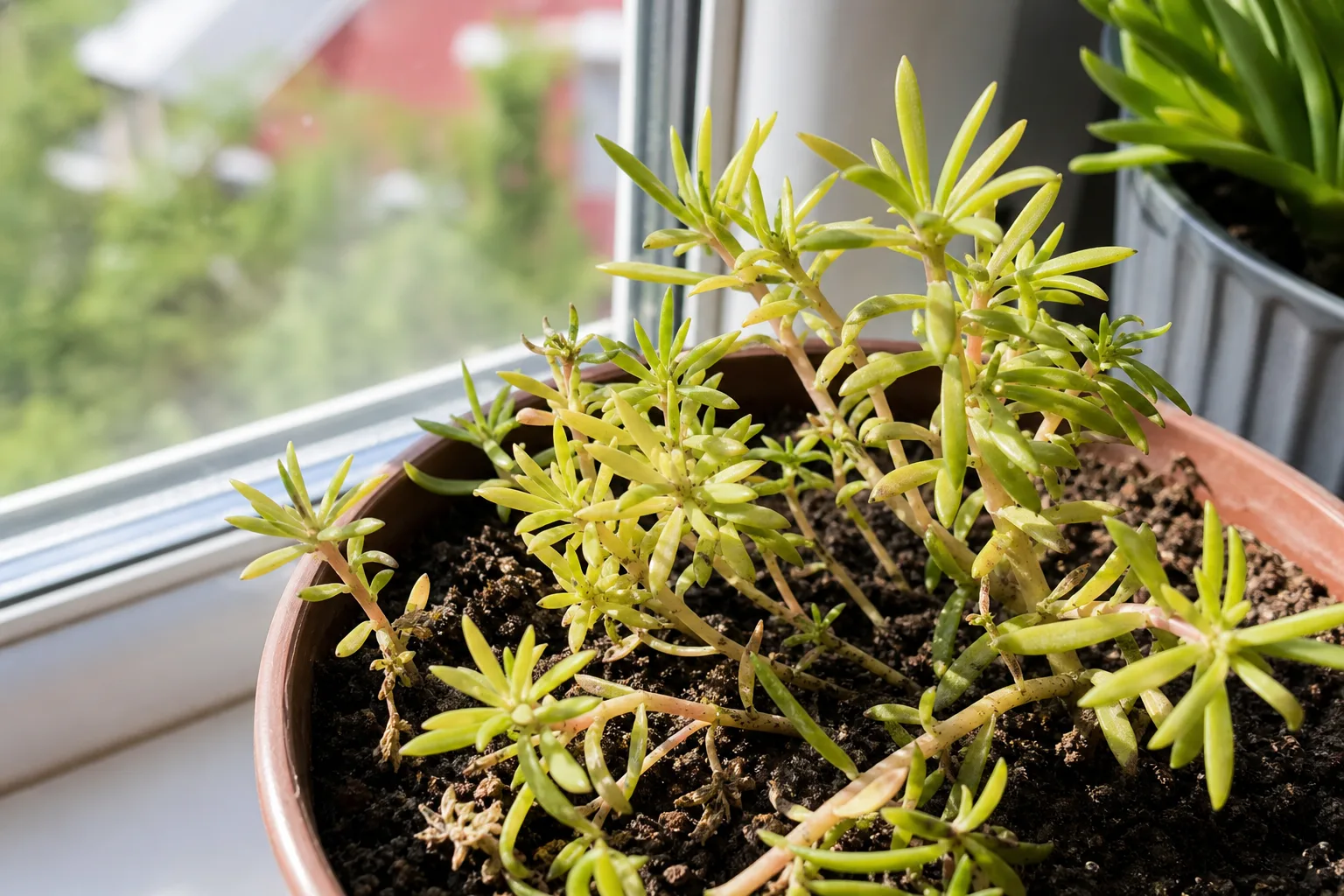
Soil Too Acidic on Portulaca: Causes, Checks & Fixes
This guide covers soil too acidic on Portulaca. See also the general Soil Too Acidic guide, watering, and light pages for this plant.
Soil Too Acidic on Portulaca: Causes, Checks & Fixes
Quick answer
On a hot terrace in midsummer, Moss Rose (Portulaca grandiflora) should pour out color in full sun-so thin blooms and a washed-out trailing mat on firm dry stems often mean root-zone chemistry failed, not light. The usual pattern: an old peat-heavy bowl sat through weeks of heat and daily watering until mix pH drifted well below 5.5, nutrients locked out, and a light fertilizer feed did nothing.
First step: test mix pH at root depth with a meter or soil test kit before repotting, liming, or fertilizing. Moss Rose tolerates mild acidity-NC State lists acid soils below pH 6.0 as acceptable alongside neutral ranges-but crisis symptoms appear when acidity pushes far below the useful band around 5.5–7.0.
Scope of this page: Use this guide when an established Moss Rose mat looks nutrient-starved despite sun and dry soil, and you suspect excess acidity in aged container mix or acid native beds. To build or refresh gritty mix and set baseline pH targets for new plantings, start on the portulaca soil guide instead.
Reviewed by LeafyPixels Review Board · Author: sai-ananth
When to use this page vs. sibling guides
| Symptom pattern | Best guide | Why |
|---|---|---|
| Pale mat, thin sunny-day blooms, pH below 5.0 on firm dry stems | This page | Acid lockout specialty |
| Mushy yellow stems on wet heavy mix, sour smell | Root rot or overwatering | Rot is more common than pH alone on Moss Rose |
| Pale leaves, normal pH, heavy peat that won’t dry | Compacted soil or wrong soil mix | Drainage failure mimics chemistry stress |
| Fertilizer stopped working, white crust on pot rim | Nutrient lockout or fertilizer burn | Salt overlap with acid stress |
| General pale foliage without confirmed pH drift | Pale leaves | Broader chlorosis differential |
| Building 40/40/20 gritty mix for a new planting | Soil guide | Mix construction, not troubleshooting |
If unsure, test pH at mid-pot depth first-then follow the row that matches your reading and stem texture.
What overly acidic soil looks like on Portulaca
Moss Rose shows chemistry stress through whole-plant vigor, not dramatic leaf spots. On firm, dry stems in bright sun, acid-related stress usually looks like this:
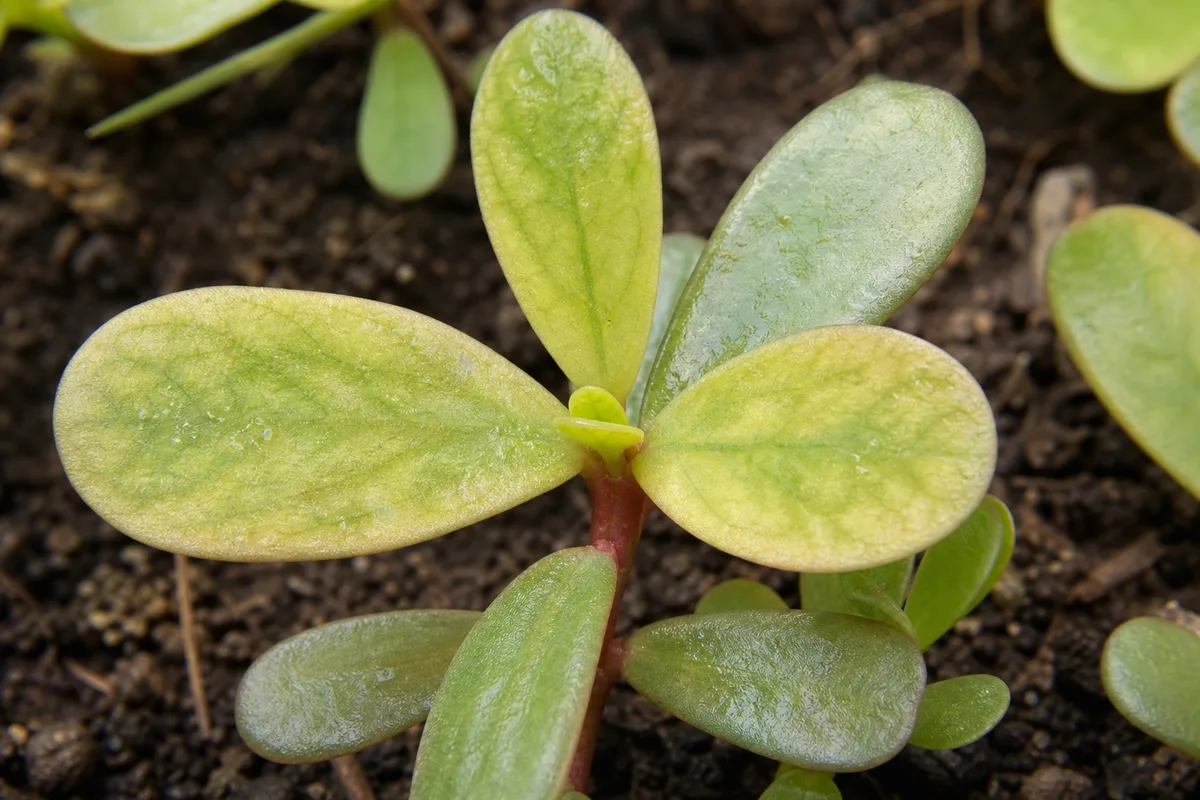
Soil Too Acidic symptoms on Portulaca - compare with healthy tissue on the same plant.
Common signs:
- Pale yellow-green older leaves along trailing stems while stems stay firm-not mushy
- Smaller flowers or fewer open blooms on sunny days despite adequate light
- Stunted new tips that arrive lighter green and thin
- Fertilizer seeming to do nothing-no surge of color after a light feed
- Slow recovery after pinching spent stems during warm weather
- Normal dry-down between waterings, but overall mat looks washed out
What it usually is not:
- Soft yellow stems at the base on wet mix-that pattern points to overwatering or crown rot, not pH alone
- Leggy pale growth in shade-see not enough light before adjusting chemistry
- Flowers closed on cloudy days-normal photonastic behavior for species-type Moss Rose
- Crispy brown leaf tips with otherwise green tissue-often salt burn or drought, not acid stress
Because Portulaca is a light feeder in lean sandy or gravelly soil, owners often notice the problem mid-season when new shoots stay pale after a routine feed and blooms look smaller than neighbors in fresh mix.
How bloom thinning differs from photonastic closure
Species-type Moss Rose closes flowers at night and on cloudy days-that is expected photonastic behavior, not a pH alarm. Newer hybrids such as the Sundial series remain open in cooler and cloudier weather, but even those stall when roots cannot uptake nutrients.
| Observation | Likely cause | What to check |
|---|---|---|
| Blooms closed overnight; open again by mid-morning on sunny days | Normal photonastic cycle | Stem firmness, pot weight-no lime yet |
| Blooms stay closed on bright afternoons after weeks of decline | Root stress-often rot or severe lockout | Unpot roots; test pH and moisture |
| Flowers open on sunny days but look smaller or fewer than earlier in the season | Chemistry or salt lockout on firm dry stems | pH at root depth; salt crust on rim |
| Entire mat pale with thin blooms and wet heavy mix for days | Compound stress-acid drift plus overwatering | Fix drainage and rot risk before lime |
On terrace pots, acid drift, wet peat breakdown, and overwatering often stack: organic matter acidifies while staying saturated, accelerating both chemistry drift and crown stress. Treat rot and drainage overlap before liming sour mix.
Why Portulaca gets soil too acidic
Moss Rose accepts mild acidity-NC State lists acid soils below pH 6.0 as acceptable alongside neutral ranges. The trouble starts when container chemistry drifts far below 5.5, where aluminum and manganese become more soluble and can interfere with root function.
At very low pH, phosphorus and several macronutrients become less available even when fertilizer is present. In very acidic soils, nitrogen, phosphorus, potassium, and other nutrients may be unavailable despite adequate levels in the mix, while aluminum can limit root growth and nutrient uptake. Portulaca’s shallow fibrous roots feel that lockout quickly in a small pot.
Several situations push Moss Rose pots too acid:
Aged peat-heavy potting mix. Peat and some bark blends acidify as organic matter breaks down. Moss Rose is often grown as a seasonal annual in the same bag mix all summer on hot terraces. By late season, chemistry can drift while sun and watering stay consistent-exactly why the soil guide recommends refreshing mix each warm season.
Acidifying fertilizers or amendments. Heavy use of ammonium-based feeds, elemental sulfur, or leftover acidifier products from acid-loving neighbors can lower pH in a closed root zone faster than in open ground.
Rain leaching in naturally acid beds. In regions with acid native soil or pine-needle mulch piled against the crown, in-ground mats can sit below their comfort zone unless a soil test guides correction.
Confusion with salt buildup. White crust on the pot rim and pale growth mimic acidity problems. Both reduce uptake-but salt issues need flushing or repotting, not lime alone. Testing pH separates the two; see nutrient lockout when fertilizer history is heavy.
Portulaca is not a heavy nitrogen user, so lockout shows as weak color and thin blooms rather than dramatic yellowing on every leaf. That subtle pattern makes acidity easy to miss until growth stalls.
How to confirm the cause
Work through these checks in order. You want evidence of low pH-not just pale color-before changing mix chemistry.
Six-step confirmation workflow
-
pH test at root depth - Slide the plant partly out or take a core sample from the middle of the pot, not just the dry surface. Compare a slurry reading or probe inserted into moist mix. Below 5.0 strongly supports excess acidity; 5.5–7.0 is the typical Moss Rose comfort band. Cheap probe meters drift in peat-heavy mix-rinse the tip, test a moist slurry, and confirm borderline readings with a kit or extension soil test.
-
Mix age and recipe - Note whether the pot has gone a full hot season without refresh, whether the blend was mostly peat, and whether sand or gravel was part of the original mix per the soil guide. Old peat containers on sunny balconies are the most common culprit.
-
Salt crust check - White mineral rim on the pot or crust on the surface suggests fertilizer salts. Scrape surface mix and test pH separately from deeper layers. Salt stress and acid stress can overlap; both need correction, but lime alone will not fix salt burn.
-
Root inspection - Tip the plant out gently. Firm white or tan roots in airy gritty mix support a chemistry diagnosis. Black mushy roots with a sour smell mean rescue rot care first on the root rot guide-liming soggy rotting mix helps neither problem.
-
Light and water cross-check - Confirm full sun for most of the day and that soil cycles completely dry between waterings per the watering guide. Pale Moss Rose in shade looks similar but will not improve after pH correction unless light improves too.
-
Feeding history - List recent fertilizer type and frequency. Heavy feeding on acid-locked roots increases salts without greening tips. Pause feeding until pH is confirmed and corrected.
Confirmation decision table
| Pattern | pH (root zone) | Stem / mix feel | Sunny-day blooms | Most likely cause | Next step |
|---|---|---|---|---|---|
| Washed-out mat, firm dry stems | Below 5.0 | Dry gritty or aged peat | Open but thin | Acid lockout | Repot or lime per below |
| Yellow mushy base | Any | Wet, sour smell | Closed or few | Root rot | Dry-down rescue first |
| Leggy pale stretch | 5.5–7.0 | Dry, normal | Few | Not enough light | Move to full sun |
| White rim crust, brown tips | Variable | Dry surface salt | Variable | Salt / fertilizer burn | Flush or repot |
| Pale, water pools on surface | 5.5–7.0 | Wet, dense peat | Variable | Compacted soil | Open gritty mix |
| Pale, normal pH, sterile sand | 5.5–7.0 | Dry, zero organic matter | Thin | Low nitrogen | One restrained feed trial |
If pH reads 5.5–7.0, roots are firm, and light is strong, look elsewhere-wrong soil mix, underwatering, or simple aging are more likely on Moss Rose.
First fix for Portulaca
Test mix pH at root depth with a reliable meter or soil test kit-then record the number before changing anything.
This single step prevents the two most common errors: dumping lime into a pot that does not need it, or repotting blindly when the real issue is rot, salt, or shade. Moss Rose tolerates mild acidity; you are checking whether pH has fallen below the useful range, not chasing a perfectly neutral number.
Once you have a reading:
- Below 5.0 in an old container: plan to repot into fresh sandy gritty mix per the soil guide rather than guessing lime doses in a small pot.
- Below 5.0 in ground beds: use extension soil-test lime recommendations for your region-rates depend on soil texture and current pH.
- 5.5–7.0 with pale growth: pH is unlikely the main issue; return to root health, light, and drainage checks.
Do not fertilize heavily while pH is suspect. Extra nutrients on locked-out roots add salt without greening trailing tips.
Step-by-step recovery
After testing confirms excess acidity and roots are sound:
-
Repot container plants into fresh gritty mix - Blend roughly 40% potting mix, 40% coarse sand or perlite, and 20% fine gravel-the same 40/40/20 ratio on the soil guide. Move up one pot size only if roots filled the old container. Trim only clearly dead mushy roots. Full gentle timing on the repotting guide.
-
Adjust in-ground beds with lime only per soil test - Agricultural lime raises pH gradually. Follow label or extension sheet rates for your square footage and target pH near 6.0–6.5. Avoid double applications within the same season without retesting.
-
Water through once after repotting - Settle mix around roots with plain water until a small amount drains. Skip fertilizer for the first two weeks while the mat re-establishes.
-
Resume one light balanced feed in active growth - Once new tips show brighter green, apply a single half-strength balanced liquid feed on moist soil per the fertilizer guide. Moss Rose flowers best in lean conditions with sufficient moisture and sun-not heavy nitrogen stacks.
-
Pinch only fully spent pale stems - Redirect energy into new trailing shoots. Old chlorotic tissue will not fully re-green.
-
Retest pH in four to six weeks if growth stays flat - Containers repotted into fresh mix should show improvement sooner than large outdoor beds.
If roots were partly stressed, let mix dry completely at depth before the next drink-Moss Rose needs dry-down, not sympathy watering during recovery.
Recovery timeline
In warm weather with six or more hours of direct sun, expect visible improvement in new tips and bloom size within two to three weeks after repot or successful lime correction. Cool cloudy stretches slow response to four weeks.
Judge success by greener new trailing shoots and flowers opening on sunny days-not old pale leaves along lower stems. A corrected mat produces firm new segments and fuller blooms through the rest of the season.
Signs the fix is working:
- New tips emerge deeper green than the previous flush
- Flower count increases on bright days
- One light feed produces a noticeable color response within ten to fourteen days
Signs the problem persists or worsens:
- Continued pale regrowth after six weeks in warm sun with confirmed pH correction
- Spreading stem softness or sour smell despite drier watering-escalate to root rot
- Entire mat collapsing-may indicate rot or cold damage rather than acidity alone
Lookalike symptoms to rule out
Overwatering and root rot. Yellow mushy stems on wet heavy mix are far more common on Moss Rose than true acidity. Fix drainage and dry-down on the overwatering guide before adjusting pH.
Not enough light. Leggy pale growth with closed flowers on cloudy days in shade will not respond to lime. Move to full sun first.
Compacted soil. Water pools on the surface while roots suffocate in dense peat-even at acceptable pH. Repot into open gritty mix via compacted soil.
Nitrogen deficiency on normal pH. Rare on Moss Rose, but possible in sterile sand with zero organic matter. If pH reads 5.5–7.0 and roots are healthy, one restrained feed trial is reasonable.
Salt/fertilizer burn. White crust and brown tips after heavy feeding fit salt buildup. Flush or repot; do not add lime for salt alone.
Nutrient lockout from wrong pH direction. Over-liming above 7.5 can also reduce iron uptake and pale leaves-another reason to test before adding lime. Broader overlap on nutrient lockout.
What not to do
Do not add garden lime to containers without a pH test and a clear target-over-liming is harder to reverse in a small pot than repotting into appropriate mix.
Do not keep increasing fertilizer on acid-locked Moss Rose. You risk salt injury on shallow roots without fixing uptake.
Do not confuse surface crust with acidity. Test deeper mix.
Do not repot into pure peat to “help” a plant already sitting in acid conditions-add sand and gravel for drainage and pH stability per the wrong soil mix guidance.
Do not expect old pale leaves to turn deep green again. Recovery shows in new growth.
Do not adjust water, pot size, lime, and fertilizer all on the same day. Correct pH first, stabilize watering for two weeks, then resume feeding.
Wear gloves when handling cut stems if pets are nearby-Portulaca is toxic to cats and dogs. If a pet chews foliage or potting mix, call ASPCA Animal Poison Control at (888) 426-4435 or your veterinarian promptly.
How to prevent acidic soil on Portulaca
Use a sandy fast-draining blend from the start-not straight peat. Moss Rose prefers lean, sandy, gravelly or rocky areas with good drainage.
Refresh container mix each season-Moss Rose is commonly grown as an annual. Waiting until growth collapses often means chemistry has already drifted; follow seasonal refresh on the soil guide.
Test pH when growth stalls in a long-used pot before reaching for more fertilizer. A cheap probe or kit saves wasted feed and plant stress.
Flush salts periodically if you feed mid-season-water until excess runs clear from drainage holes, then allow full dry-down.
In-ground plantings: send a soil sample to your extension lab if beds stay in continuous summer color production. Lime applications should follow lab rates, not generic bag guesses.
Store acidifying products away from Moss Rose pots. A sulfur drench meant for blueberries in a neighboring container can lower shared tray water pH over time.
Portulaca care cross-check
Acidic soil rarely appears in isolation on a well-placed mat. Confirm these basics align while you correct pH:
- Light: Full direct sun-six or more hours daily per the light guide. Pale shade-grown Moss Rose will not respond fully to pH fixes alone.
- Water: Completely dry soil between drinks; wet mix accelerates peat breakdown and rot regardless of pH.
- Feeding: Minimal-one light dose mid-season if growth stalls after pH is confirmed in range.
- Mix: Sandy and gritty with open drainage; compaction mimics many of the same pale, weak-bloom symptoms.
If all four are sound and pH is corrected, yet the mat stays weak, start fresh seed or cuttings in new mix-sometimes a late-season clump exhausts itself even when chemistry is fine.
When to worry
Act promptly when pH tests below 4.5, when no new green tips develop through a warm sunny week despite dry firm stems, or when pale growth pairs with spreading base rot after repotting. Extremely acid mix plus chronic overwatering can destroy the crown quickly on Moss Rose-see root rot when softness spreads.
You can usually wait and observe when pH is 5.5–6.0 with mild paleness, roots are firm, and new shoots still appear-Moss Rose tolerates slight acidity. Retest in four weeks before aggressive liming.
Replace the planting rather than fighting endless correction if repeated repots, confirmed pH in range, full sun, and sane watering still produce only thin pale mats across a full hot season.
Related Portulaca guides
- Portulaca overview - full care hub
- Soil - gritty 40/40/20 mix and pH targets for new plantings
- Repotting - gentle transplant timing
- Root rot - mushy-root decay rescue
- Overwatering - chronic wet soil without pH drift
- Wrong soil mix - peat-heavy or dense blends
- Nutrient lockout - fertilizer stopped working
- Pale leaves - broader chlorosis differential
- Compacted soil - dense mix that won’t dry
- Fertilizer - lean mid-season feeding after pH correction
- Watering - dry-down schedule
- Light - full-sun placement