Fertilizer Burn on Portulaca: Causes, Checks & Fixes
Quick answer
Fertilizer burn on Portulaca shows as brown, crispy leaf tips and margins-often within days of feeding on lean-soil Moss Rose. First step: stop all fertilizer immediately and flush the pot with plain water until it drains freely.
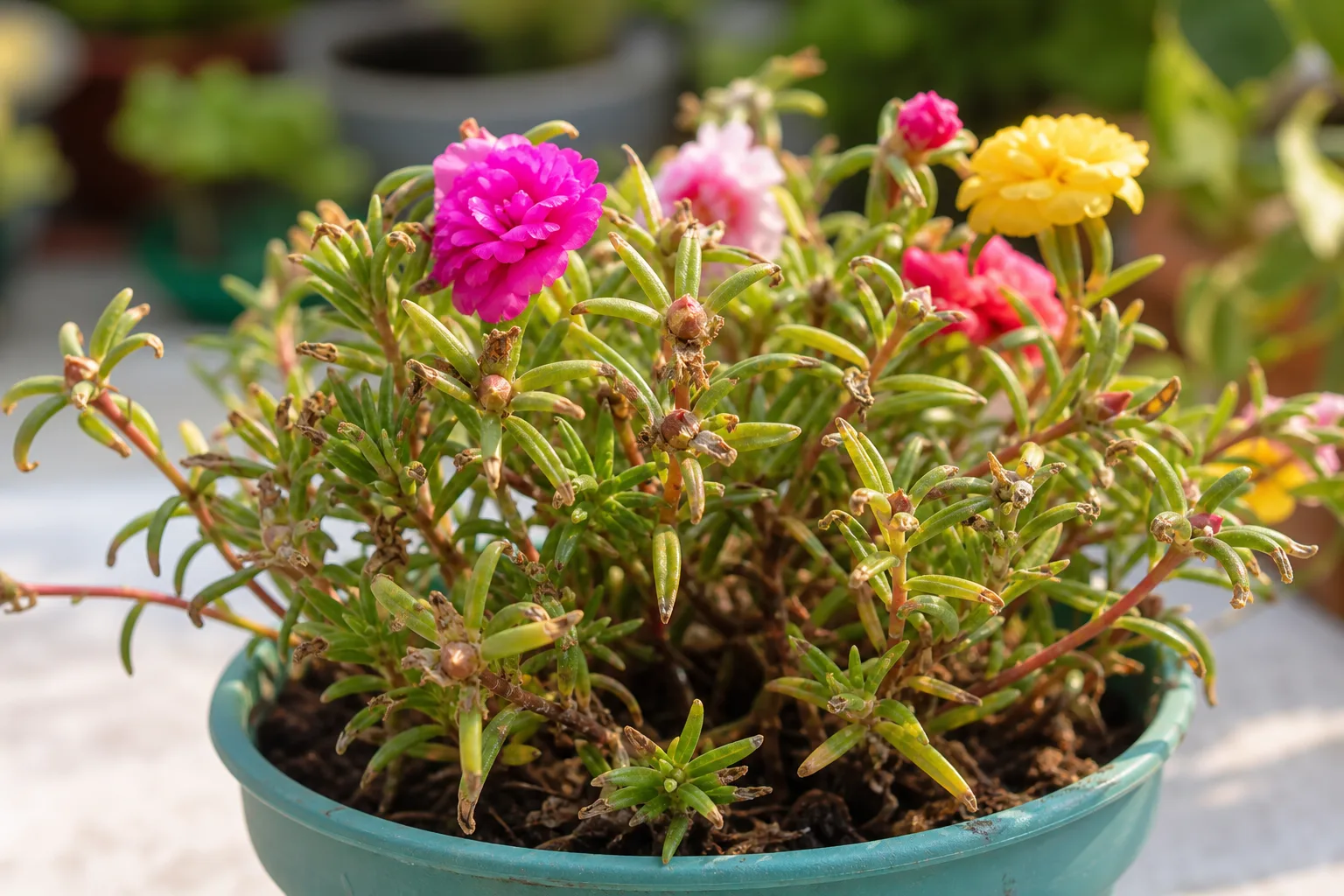
Fertilizer Burn on Portulaca: Causes, Checks & Fixes
This guide covers fertilizer burn on Portulaca. See also the general Fertilizer Burn guide, watering, and light pages for this plant.
Fertilizer Burn on Portulaca: Causes, Checks & Fixes
Quick answer
Fertilizer burn on Portulaca (Portulaca grandiflora, Moss Rose) shows as brown, crispy leaf tips and margins-often within days of feeding a plant built for lean, sandy soil. You may also see a white or brownish salt crust on the soil surface or pot rim (accumulation on the planting medium or container rim), fewer open flowers despite lush trailing stems, and wilting that does not match dry soil.
First step: stop all fertilizer immediately. Moss Rose is not a heavy feeder; excess salts damage shallow roots before fleshy stems show obvious stress. Flush the pot with plain water until it runs freely from drainage holes, empty the saucer, and hold feed for at least four to six weeks while you watch new growth.
What fertilizer burn looks like on Portulaca
On Moss Rose, salt damage has a recognizable pattern tied to when you last fed and how concentrated the dose was.
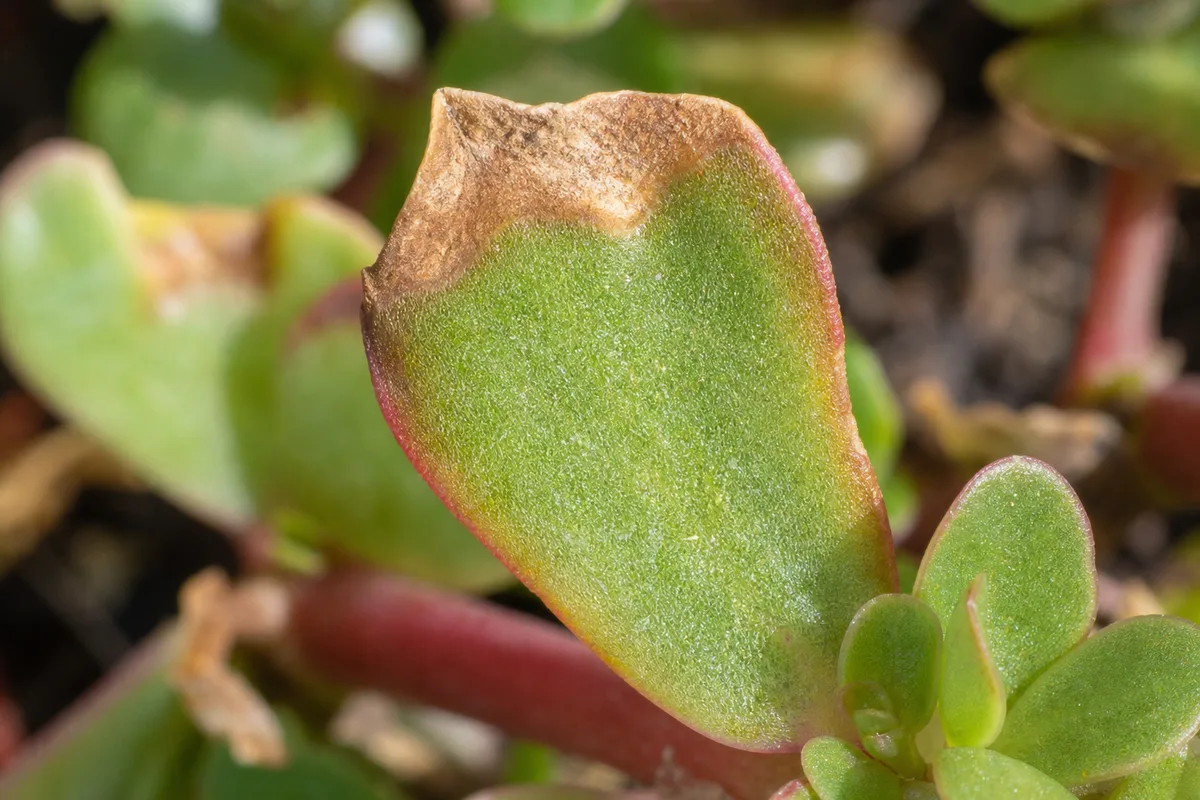
Fertilizer Burn symptoms on Portulaca - compare with healthy tissue on the same plant.
Typical fertilizer-burn signs:
- Brown, dry margins on needle-like leaves-tips and edges turn tan to dark brown while the leaf center may stay green briefly
- Symmetry across the plant-unlike spot diseases, burn often affects many leaves at once after a single feeding event
- White or crusty deposits on soil surface, inner pot rim, or saucer-accumulated fertilizer salts leaching out of mix
- Wilting despite moist soil-damaged roots cannot take up water even when mix feels wet
- Bud drop or fewer open flowers on Portulaca after a nitrogen-heavy feed-Portulaca pushes leaves instead of blooms when overfed
- Timing within days of feeding-liquid fertilizer on dry roots or full-strength dose often triggers visible tip burn within one week
What is not fertilizer burn:
- Crispy brown on bone-dry soil with no recent feed-classic underwatering on Portulaca on a shallow terrace pot
- Soft dark stems on wet mix-overwatering on Portulaca and crown rot in poorly drained soils, not salt damage
- Circular brown spots with yellow halos-fungal leaf spot in humid weather
- Flowers closed on cloudy days-normal Moss Rose photonasty (flowers do not open on cloudy or rainy days), not burn
Double-flowered cultivars with heavier bloom load may show tip burn first because new tissue is most salt-sensitive.
Why Portulaca gets fertilizer burn
Moss Rose evolved for poor, fast-draining soil in Portulaca light guide (well-drained sandy or rocky soils in full sun). Container gardeners often overcorrect with frequent feeding-a mismatch that concentrates salts in shallow root zones.
Too much fertilizer or full label strength. Portulaca prefers lean conditions and needs little supplemental feed. Soil that is too rich, or overfertilizing, may result in foliage growth at the expense of flowers-and concentrated salts burn tender leaf margins. Terrace gardeners who feed weekly at full strength see tip necrosis faster than in-ground plants where salts dilute.
Feeding dry soil or stressed plants. Fertilizers require moisture to work. Applying liquid feed to bone-dry mix or to heat-stressed Moss Rose concentrates salts at root contact points. Never apply fertilizer to plants stressed by heat or drought.
Slow-release pellets in small pots. A full dose of slow-release in a 6-inch hanging basket can release steadily through a hot Indian summer, building salts faster than shallow roots can tolerate-especially when evaporation leaves crust on the soil surface.
Repeated feeding without flushing. Container plants are particularly susceptible to fertilizer damage. Salts accumulate in leaf tissues, causing dieback of leaf tips and margins. Without periodic leaching, even moderate monthly feeds stack up in porous but small pots.
High-nitrogen formulas. Moss Rose blooms best in lean soil. Heavy nitrogen pushes soft leafy trails with aborted buds-then salt load browns the very leaves that overgrew. This pattern is common when gardeners treat Moss Rose like hungry summer bedding instead of a succulent annual.
Granules on wet foliage. Dry fertilizer contacting wet succulent leaves can scorch localized brown patches on contact-not the same as root-driven tip burn, but often confused with it after top-dressing containers.
How to confirm the cause
Work through these checks before Portulaca repotting guide or trimming heavily:
- Last feed date and concentration - Burn strongly suspected if brown tips appeared within 7–10 days of liquid feed, slow-release application, or foliar spray at or above label strength.
- Salt crust inspection - White or brownish crust on soil or pot rim supports excess fertilizer; absent crust does not rule out recent liquid overfeed.
- Soil moisture vs leaf appearance - Moist mix with drought-scorched tips and firm stems points to salt-damaged roots; wet mix with soft stems points to rot.
- Pattern on leaves - Even marginal browning on old and new leaves after feeding fits burn; single-leaf spots suggest disease or mechanical damage.
- Stem base firmness - Firm reddish stems with only tip browning supports salt stress; mushy base on wet soil is rot.
- New growth response - If tips on freshest leaves brown first after feed, stop fertilizer and treat as burn until proven otherwise.
First fix for Portulaca
Stop all fertilizer immediately-do not feed again to “help recovery.”
Then flush the container thoroughly with plain water. Pour slowly until water runs freely from drainage holes, wait ten minutes, and repeat two to three times. This leaches soluble salts from the soil in containers. Empty saucers so leached salts are not reabsorbed. Use room-temperature water; avoid feeding-flush combinations.
Do not repot on day one unless roots smell sour, stems are mushy, or flush water runs through instantly on severely root-bound plants. Most Moss Rose burn cases recover in place once salts drop.
Do not prune every brown leaf immediately-partially green succulent foliage still photosynthesizes. Trim fully necrotic tips only after new growth looks stable.
One primary action first: stop feed + flush. Hold secondary steps until you see whether wilting eases over the next week.
Step-by-step recovery
- Stop fertilizer, foliar sprays, and compost tea entirely.
- Flush pot two to three times with plain water; confirm drainage holes are open.
- Move to full sun with airflow-recovery still needs six or more hours of direct sunlight, but avoid foliar feed in heat.
- Resume dry-down watering only-water when soil is completely dry at depth; do not keep mix soggy while roots heal.
- Trim fully brown dead leaves after two weeks if new tips look clean.
- Repot into fresh sandy mix only if flush fails, salt crust returns within days, or roots are dark and limp with sour smell.
Recovery timeline
Mild tip burn on firm Moss Rose often stabilizes within one to two weeks after flushing-new needle leaves emerge without crisp margins. Moderate burn with early wilting may need three to four weeks before buds reopen reliably. Severely damaged roots in small pots may not recover; replace with fresh seedlings rather than forcing feed.
Judge success by clean new tips and return of daily flower opening in sun-not by old brown margins re-greening.
Lookalike symptoms
Brown leaves from rot show soft dark tissue at the stem base on wet soil-not isolated crispy margins after feed. Brown tips from drought appear when soil has been bone dry for days and no fertilizer was applied recently. Bud drop alone without tip browning often traces to shade or overwatering rather than salts. Sun scorch after moving from shade to blazing terrace can bronze whole leaf faces, not just margins after a feed event.
What not to do
Do not feed burned Moss Rose to “push recovery”-fertilizer on damaged roots worsens salt load. Do not use full-strength outdoor flower fertilizer in small indoor or balcony pots. Do not assume brown tips mean the plant needs more water when soil is already wet-overwatering compounds root stress. Do not scrape all soil away unless flush failed; unnecessary repotting during heat shock delays recovery. Wear gloves when handling cut tissue-Portulaca is toxic to pets.
How to prevent fertilizer burn on Portulaca
Feed once at planting with a light slow-release dose if soil is truly depleted-then pause unless growth stalls in lean mix. Use half-strength balanced liquid at most monthly during active summer growth, and skip feed entirely in cool months when Moss Rose slows. Water the day before feeding and apply to moist soil only. Flush containers every few months in hot terrace setups where evaporation concentrates salts. Match feeding to full sun and fast-draining sandy mix-plants in shade use less and accumulate salts faster relative to growth. Fertilize moderately according to plant needs; when in doubt, underfeed Moss Rose rather than overfeed.
Practical checks
Urgency check
Urgent if wilting persists on moist soil after flush, new growth browns within 48 hours of feeding, or stems soften at the base.
Best inspection order
Last feed date, salt crust, soil moisture, leaf margin pattern, stem firmness, then roots only if soft.
Portulaca care cross-check
Moss Rose in ground beds rarely shows burn unless granular fertilizer was piled against stems-container and hanging-basket growers see salt crust and tip necrosis first. Pair feeding guidance with the Portulaca fertilizer guide and keep mix lean.
When to use this page vs other Portulaca guides
- Portulaca watering guide - Use for routine moisture checks before assuming fertilizer burn is the main issue.
- Portulaca problems hub - Browse all 50 common issues on this species.