Best Soil for Portulaca: Mix, Drainage & Repotting
Best Soil for Portulaca: Mix, Drainage & Repotting
Best Soil for Portulaca: Mix, Drainage & Repotting
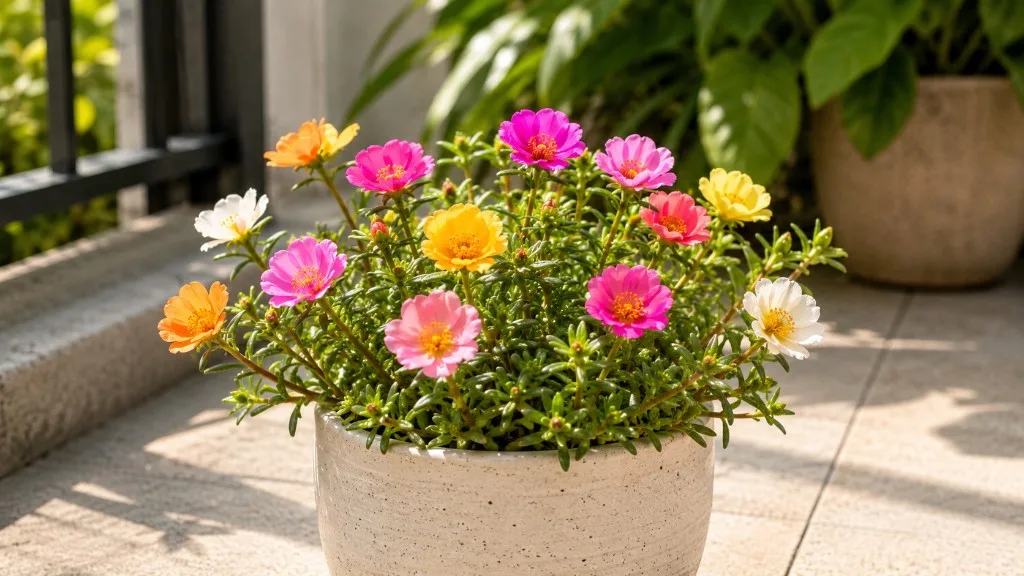
Portulaca soil is not a place for rich, moisture-holding houseplant mix. Also sold as moss rose and sun rose, Portulaca grandiflora is a low, mat-forming succulent annual from South America whose fleshy cylindrical leaves and shallow roots evolved for sandy or rocky, fast-draining ground in full sun. The mix around those roots must dry quickly after every watering-or after monsoon rain on a terrace-or crown rot follows within days. Peat-heavy potting soil, oversized glazed pots, and cachepots without drainage turn a heat-tolerant summer annual into a mushy casualty faster than underwatering on Portulaca ever will.
This guide covers why moss rose soil differs from typical houseplant mixes, a measured 40/40/20 DIY recipe with ingredient roles, monsoon-season adjustments for Indian balconies, store-bought cactus-mix suitability, the one-minute drainage test, shallow-root pot depth, pH targets, when to refresh or repot, and a link to the full portulaca repotting walkthrough for plug-intact moves. For watering rhythm tied to how fast your mix dries, see portulaca watering; for full-sun placement that drives dry-down speed, see portulaca light.
Quick answer
Use sandy, gritty, low-fertility mix with exceptional drainage-not standard indoor potting soil straight from the bag. A reliable container recipe is 40% potting mix or coco coir, 40% coarse sand or perlite, and 20% fine gravel or pumice. Target pH 5.5–7.0, always use pots with drainage holes, and pass a one-minute drainage test after watering. Refresh mix each warm season for annual terrace plantings, or when the mix compacts, smells sour, or stays wet through cool monsoon weeks. For step-by-step repot moves, follow the portulaca repotting guide.
Why Portulaca soil is different
Most flowering annual guides assume you can improve any bed with compost and keep roots evenly moist. Moss rose breaks that model. NC State Extension lists Portulaca grandiflora as needing planting in well-drained sandy or rocky soils in full sun, with poorly drained soils leading to crown rot. Cornell Home Gardening adds that portulaca requires well-drained soil and tolerates droughty, lean conditions in hot, dry sites. The soil job is not to feed heavily or hold water-it is to pass water through quickly while giving shallow roots enough anchorage to spread into a dense mat.
That biology explains why the same peat-based mix that keeps a pothos happy will rot moss rose on a sunny rail within a fortnight. Portulaca stores water in its stems and needle-like leaves, so saturated mix around the crown is redundant moisture the plant cannot use-and actively harmful when oxygen disappears from the root zone.
Succulent leaves, shallow roots, and fast dry-down
Moss rose behaves like a ground-hugging succulent, not a thirsty tropical. Proven Winners notes portulaca is shallow rooted, which makes plants prone to rot if overwatered-and equally sensitive when fine roots sit in wet mix after rain. The Wayne County NC State plant spotlight describes fleshy leaves that store water during dry periods and emphasizes full sun with well-drained soils for summer bloom.
Those traits set dry-down expectations. In full direct sun on a hot terrace, a correctly gritty mix in a 20–25 cm bowl may reach complete dryness in two to four days between soakings. During monsoon overcast weeks, the same mix may stay damp five to ten days even without manual watering-so drainage quality matters more when evaporation slows. Soil texture, not calendar habit, should drive both watering and mix adjustments.
Annual container context
In most climates-including much of India north of the warmest coast-growers treat moss rose as a seasonal warm-weather container plant, not a multi-year houseplant with slowly expanding roots. NC State classifies P. grandiflora as an annual that completes its life cycle in one season. That means refreshing or replacing mix each planting cycle is normal practice, not a sign of failure. You are optimizing one summer of bloom, not building a long-term root system in the same peat column for years.
Plan soil work around sow or plant-out timing-in India, often from March onward when nights stay above about 15–18°C and days exceed 25°C-and finish container moves before buds form, because mid-bloom repotting on this short-season plant wastes flowering weeks. If you start seedlings indoors, remember NC State’s warning that moss rose doesn’t take well to transplanting; direct sowing into the display pot or gentle plug-intact upsizing beats rough root washing.
Best DIY soil mix for Portulaca
The goal is a mix that crumbles in your hand, drains in seconds after a soak, and carries modest organic matter without staying spongy. Moss rose prefers lean fertility; rich compost-heavy blends promote soft growth and crown rot before they promote flowers.
40/40/20 recipe and ingredient roles
Measure by volume, not weight:
| Component | Share | Role |
|---|---|---|
| Potting mix or coco coir | 40% | Holds minimal moisture and nutrients; coir dries faster than heavy peat in humid monsoon air |
| Coarse sand or perlite | 40% | Opens air pockets; perlite resists compaction in hanging baskets |
| Fine gravel, grit, or pumice | 20% | Adds weight and bottom drainage channels; prevents mix from collapsing into a solid plug |
Potting mix (40%): Provides structure and a small nutrient buffer. Choose a lightweight all-purpose blend-not moisture-control or water-retention formulas marketed for ferns.
Coarse sand or perlite (40%): The main drainage engine. Sand adds grit in outdoor bowls; perlite stays lighter in hanging baskets. Either works; combining both at 20% each is fine if you lack one material.
Fine gravel or pumice (20%): Creates fast exit paths at the pot bottom and keeps the matrix from packing when you tamp around shallow roots. Horticultural grit or washed construction sand (not salty beach sand) suits terrace containers.
Mix dry in a bucket until uniform. The finished texture should feel gritty, not sticky. When squeezed, it should fall apart when you open your hand-not form a tight ball.
Adjustments for monsoon vs. dry season
Pre-monsoon and dry summer (April–June on many Indian terraces): The base 40/40/20 recipe usually performs well in full sun when pots dry every two to four days. If a plastic bowl on a blazing south rail dries so fast that moss rose wilts between checks despite healthy roots, reduce perlite slightly and keep gravel-never add peat to “hold moisture longer” without also increasing drainage material proportionally.
Monsoon season (July–September): Cool overcast days and frequent rain slow evaporation. The same mix that worked in May may stay damp too long. Increase perlite or coarse sand to 45–50% of total volume and cut potting mix to 30–35%. Elevate pots on feet or bricks so saucers drain fully. Skip cachepots outdoors during weeks of daily rain. If stems yellow at the base while the mix smells sour, hold all watering, improve air flow, and consider replacing the top third of mix with fresh grit rather than waiting for full crown collapse.
Post-monsoon heat: Return toward the base recipe as sun intensity rises and dry-down speeds up again. Track pot weight weekly rather than assuming last month’s mix ratio still fits.
Store-bought cactus mix: when it works
Commercial cactus and succulent mix is a legitimate shortcut if you amend it. Bagged cactus soil is often still too peat-heavy for moss rose in full monsoon containers. Use it as roughly 50–60% of the blend, then add perlite and grit for the remaining 40–50% until the one-minute drainage test passes. Straight cactus mix from the shelf without amendment may work in arid, full-sun hanging baskets that dry in a day; it often fails on covered balconies and monsoon terraces where evaporation drops.
| Mix type | Drainage speed | Fertility | Best use |
|---|---|---|---|
| DIY 40/40/20 | Fastest when mixed correctly | Low; matches moss rose preference | Terraces, rooftop bowls, hanging baskets in full sun |
| Commercial cactus mix (amended 50/50 with perlite/grit) | Fast | Low to moderate | Quick repot when materials are limited |
| Straight peat-based potting soil | Slow | High | Avoid for portulaca containers |
Proven Winners recommends all-purpose potting mix with added perlite for container portulaca-a middle path between bare cactus mix and unamended houseplant soil.
Drainage speed and the one-minute test
Drainage is a pass/fail property, not a vibe. After a full watering, excess water should exit the drainage holes within about 60 seconds in a typical 20–25 cm container. If water pools on the surface, runs down the gap between mix and pot wall, or sits in a saucer you forgot to empty, the root zone is at risk-even if the plant looked fine yesterday.
Run the test on freshly mixed soil before planting a whole flat, and again mid-season if growth slows while the pot feels heavy. Compost breakdown, algae crust, and fine silt from tap water can clog grit over weeks. Refresh or remix when the test fails twice in a row.
Pot choice and depth for mat-forming roots
Moss rose spreads into a prostrate mat roughly 10–20 cm tall and 30–40 cm wide at maturity-not a deep taproot tree. Proven Winners and extension guidance converge on shallow containers with excellent drainage rather than deep buckets.
Depth: A 10–15 cm bowl, window box, or hanging basket depth suits most varieties. Going deeper does not help roots; it adds wet mix volume below the active root mat.
Width: Allow 25–30 cm spread per plant in mixed bowls, or one plant per 25 cm basket pocket for trailing types.
Drainage holes: Non-negotiable for long-season outdoor culture. One large hole beats many pinholes clogged by grit.
Oversized pots: A tiny seedling in a 30 cm glazed pot holds a reservoir of damp mix the roots will not reach for weeks-classic crown-rot setup. Match pot volume to current root mass plus one size up during seedling staging, then finish in the display container before bloom.
Cachepots: Decorative outer pots are fine indoors only if you lift the grow pot out to drain after every watering. Never let moss rose sit in standing runoff.
pH and minerals
Target pH 5.5–7.0-slightly acidic to neutral-consistent with NC State’s acid-to-neutral range listing for P. grandiflora. Most grit-amended container mixes land in that band without lime additions.
Moss rose is not a heavy feeder and thrives in lean soil. Proven Winners warns that overfertilizing promotes foliage at the expense of flowers. If leaf tips brown or white crust builds on the mix surface, flush once with plain water or refresh mix at repotting-do not stack fertilizer to compensate for poor drainage. Mineral buildup often signals slow drainage and repeated light watering, not a deficiency. See portulaca fertilizer for feeding timing that assumes gritty mix is already correct.
When to refresh or repot the mix
Refresh moss rose mix when:
- The mix compacts and the drainage test fails
- A sour or swampy smell rises from the root zone
- Stem bases turn yellow or mushy while the mix stays cool and damp
- White mold or algae crusts the surface through monsoon weeks
- You are starting a new warm-season planting in the same container
For seasonal terrace culture, replacing mix each cycle-even if the old texture looked acceptable-is cheaper than losing six weeks of bloom to hidden compaction.
Repot walkthrough and full guide link
Soil refresh on moss rose usually means repotting into fresh gritty mix, not top-dressing alone. Because the species does not tolerate rough transplanting, keep moves minimal:
- Water lightly the day before so the plug holds together-not soggy.
- Choose a pot one size up with drainage holes; pre-fill with dry 40/40/20 mix.
- Slide the plant out with the soil plug intact. Do not rinse roots.
- Set at the same crown depth as before-never bury stems.
- Backfill with fresh mix, tamp gently at the edges, water once to settle.
- Place in full sun and let the mix dry completely before the next soak.
For seedling staging, direct sowing, hanging-basket sizing, hardening off, and recovery timelines, use the full Portulaca repotting guide-it owns the step-by-step workflow this soil page supports.
Soil mistakes to avoid
Using unamended peat-heavy potting soil. It stays wet too long in monsoon containers and contradicts Cornell’s well-drained requirement.
Adding gravel only at the pot bottom. A “drainage layer” of stones does not fix upper-layer compaction; it can create a perched water table. Mix grit throughout the column.
Planting in heavy clay beds without containers. NC State notes crown rot in poorly drained soils. On clay terraces, grow in bowls or raised beds with imported gritty mix rather than fighting native soil structure for one season.
Burying crowns or stems at repot. Moss rose rots when soft tissue sits below the new mix line. Keep the crown at the same level as in the nursery pot.
Repotting stressed or blooming plants unnecessarily. Mid-bloom moves waste flowers; rough handling during heat stress compounds wilt. Fix drainage in place first, or wait for the next sowing cycle.
Adding fertilizer instead of fixing drainage. More nutrients cannot oxygenate waterlogged mix.
Ignoring pet safety when handling mix and seedlings. Portulaca is toxic to cats and dogs. Wear gloves if sap irritates skin; keep pots off pet reach. Details live on the portulaca overview toxicity section.
Practical checks
Use these two field tests before you blame watering or light for decline.
One-minute drainage check
Water until excess runs from holes. Pass: water clears the surface within 60 seconds and the saucer fills only from the initial flush you then discard. Fail: water pools on top past one minute, or the pot stays heavy and cool five days after a single soak in full sun. Fail means add perlite or grit, reduce pot size, or replace mix-not more frequent light watering.
Root-zone smell test
Healthy moss rose mix smells neutral to mildly earthy. Sour, eggy, or stagnant odors mean anaerobic conditions-roots may already be dying even if top stems still look green. Stop watering, inspect the crown, and repot into fresh dry mix if stems are firm and roots still white. If the crown is soft, discard the plant, sterilize or replace the pot, and restart with new mix.
Conclusion
Moss rose rewards growers who treat soil like fast infrastructure, not moisture storage. Build or buy gritty, lean mix-the 40/40/20 recipe or amended cactus blend-keep pH near 5.5–7.0, choose shallow pots with drainage holes, and pass the one-minute drainage test after every mix change. Increase perlite during monsoon, refresh mix each warm season, and repot gently using the full repotting guide when the root zone compacts or smells sour. Get the soil column right in full sun, and Portulaca grandiflora delivers the papery summer blooms it evolved for-without the crown rot that kills mis-potted moss rose faster than any drought.
When to use this page vs other Portulaca guides
- Portulaca overview - Start here for whole-plant context before deep-diving this topic.
- Portulaca problems hub - Jump to symptom-specific fix guides when this care topic does not resolve the issue.
- Wrong Soil Mix on Portulaca - Escalate here when soil adjustments are not enough.
- Compacted Soil on Portulaca - Escalate here when soil adjustments are not enough.
- Root Rot on Portulaca - Escalate here when soil adjustments are not enough.