Compacted Soil on Portulaca: Causes, Checks & Fixes
Quick answer
Hot terrace pots collapse peat-heavy mix by midsummer, trapping moisture around shallow Moss Rose roots while flowers fail to open on sunny days. First step: stop watering, probe for a hard wet plug, and plan a full repot into fresh sandy gritty mix-not surface fluffing.
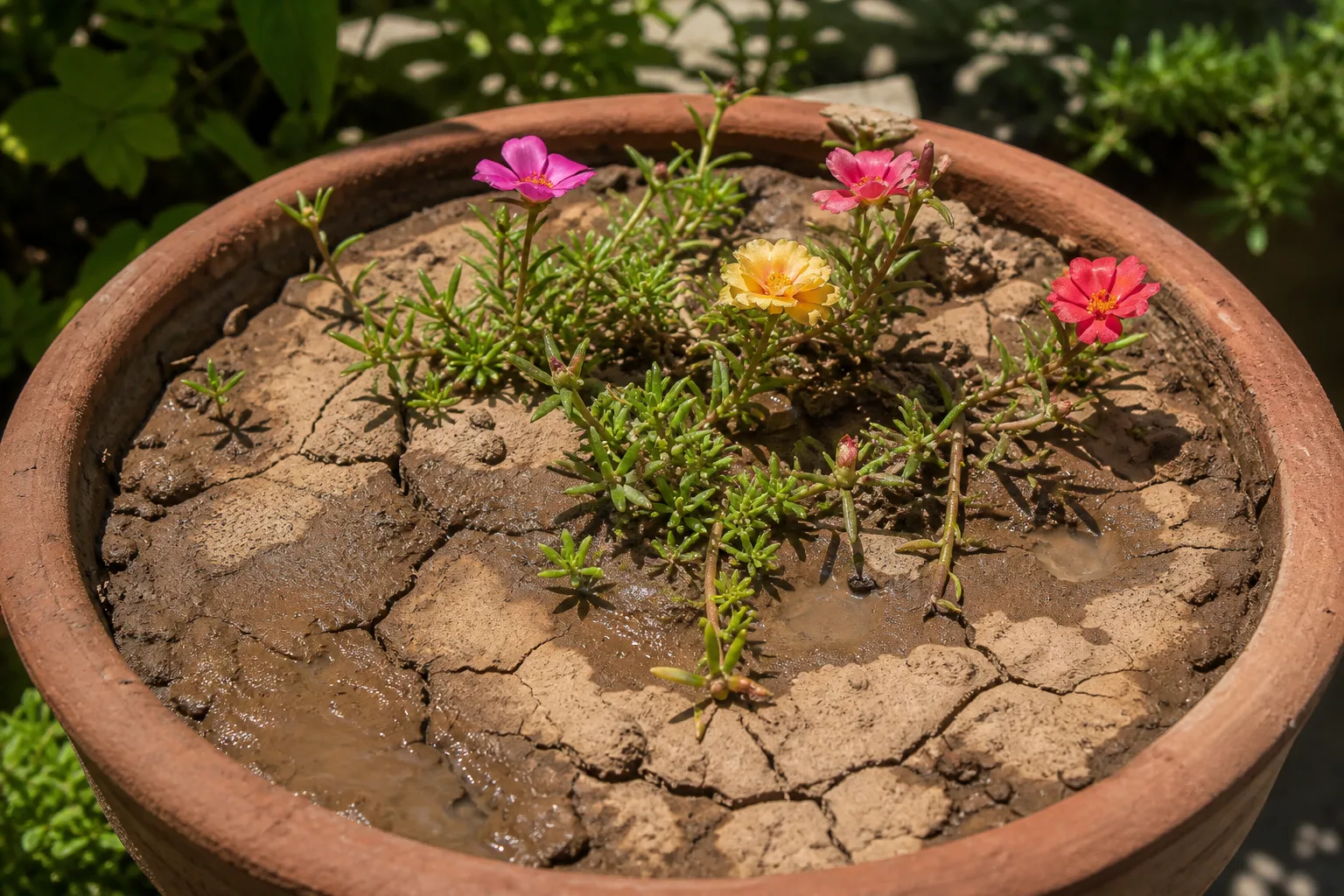
Compacted Soil on Portulaca: Causes, Checks & Fixes
This guide covers compacted soil on Portulaca. See also the general Compacted Soil guide, watering, and light pages for this plant.
Compacted Soil on Portulaca: Causes, Checks & Fixes
Quick answer
Peat-heavy potting mix in a hot terrace urn or balcony plastic pot often collapses by midsummer-fine particles pack into a dense plug while the surface looks merely dry. Water beads on crust or runs down the inside wall without wetting the center. Moss Rose (Portulaca grandiflora) roots suffocate in that anaerobic core even when you water lightly.
The telltale stress cue: flowers close early or fail to open on sunny afternoons while the pot stays heavy and wet. That pattern points to root suffocation in compacted mix-not thirst and not shade alone.
First step: stop watering and probe the mix. Push a finger or dry wooden skewer to mid-depth. A hard, dark, clinging plug that resists entry confirms compaction-not a cue to water more. Plan to unpot and repot into fresh gritty sandy mix rather than fluffing the top inch.
Scope of this page: This guide covers physical compaction and peat collapse in mix that may have drained well earlier in the season. If you planted in heavy garden soil, straight peat, or moisture-retentive blend from day one, start at wrong soil mix instead. For fresh mix ratios and the one-minute drainage test, see the portulaca soil guide.
Portulaca needs well-drained sandy or rocky soil in full sun. Compacted terrace pots deliver the opposite of the lean, sandy, gravelly conditions Moss Rose prefers.
What compacted soil looks like on Portulaca
Compaction shows in substrate behavior and bloom rhythm before leaves always tell the story.
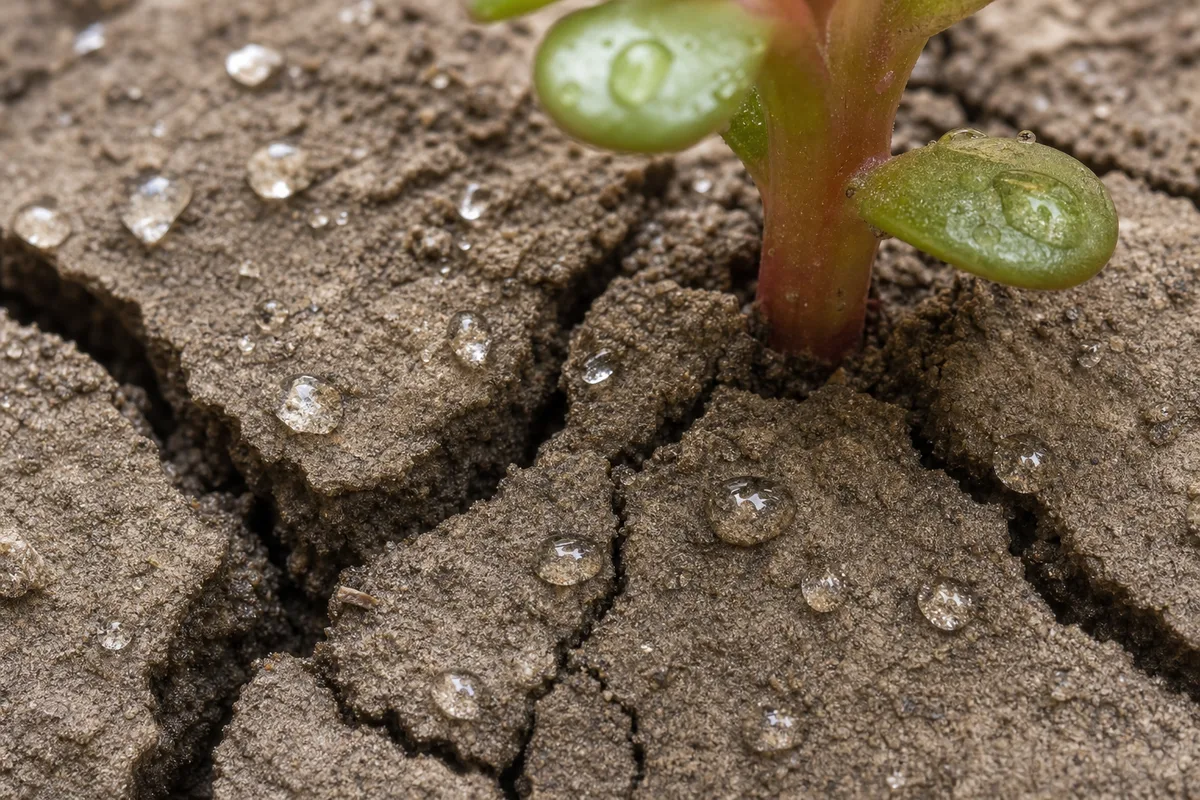
Compacted Soil symptoms on Portulaca - compare with healthy tissue on the same plant.
Surface and watering clues:
- Water beads on dry crust or channels down the pot sides without soaking the root zone
- White mineral rings on the rim from repeated top watering without flushing
- Pot feels heavy for many days after one watering on a hot terrace
- Flowers close early or fail to open on sunny afternoons while mix stays damp
Probe and smell clues:
- Finger or skewer meets a hard wet plug at mid-depth-not loose crumbly grit
- Skewer pulls out dark and clinging when you expected dry sand
- Sour or musty odor from drainage holes after the mix should have aired out
Plant clues (often delayed on Moss Rose):
- New shoots stall while lower stems may yellow or soften
- Trailing stems stay plump-succulent tissue masks root trouble longer than thin-leaved annuals
- Surface crust or mold may appear while the center stays anaerobic
Visual checks at unpot (what to compare):
- Crusted terrace surface: water pools on top or runs around the brick-like edge instead of soaking through-common in shallow urns that baked all afternoon.
- Root mat vs. healthy tips: a solid dark root mass pressed against dense peat with few white fibrous tips; healthy recovery shows loose white tips spreading into fresh gritty mix after repot.
Why Portulaca suffers in compacted soil
Moss Rose stores water in fleshy, succulent leaves and stems but depends on oxygen at shallow roots between drinks. Fine peat and compost-heavy mixes compress under repeated watering, heat, and shallow root pressure, eliminating air pockets.
Peat collapse in hot containers. What drained well in cool spring often bricks up after weeks on a sun-baked terrace. Oversized plastic pots and saucers left full keep compacted mix wet far longer than Moss Rose tolerates-overlap with pot too large.
Top watering without flushing leaves mineral crust while collapsed peat packs the root zone. Channeling worsens: water runs around the brick, not through it.
Shaded balconies extend wet time. Dim exposure slows evaporation; compacted mix that barely worked in June can stay anaerobic for weeks on a north-facing rail-see wilting when limp stems could be wet roots or drought.
Garden clay or rich compost on rooftops compacts faster than gritty blends. Poorly drained soils may lead to crown rot-compaction mimics chronic overwatering even when you water lightly.
How to confirm the cause
Work through these checks in order. One probe test beats guessing from flower color alone.
- Drainage speed - Pour water slowly. In proper Moss Rose mix it should exit holes within seconds, not pool on top for minutes.
- Probe resistance - Dry skewer to mid-depth. Hard wet core that resists and pulls out dark confirms dense mix, not drought.
- Root ball structure - Unpot gently. Tight circling mass in brick-like peat vs. loose white tips on fibrous roots.
- Wilting pattern - Limp stems with a heavy wet pot suggest suffocation, not underwatering.
- Mix age - Same peat-heavy substrate through a full hot terrace season without refresh.
- Smell - Sour anaerobic odor from drainage holes means discard mix; do not fluff in place.
Cross-check lookalikes before Portulaca repotting guide:
| Pattern | More likely compaction | More likely something else |
|---|---|---|
| Probe | Hard wet plug, dark clinging skewer | Loose dry mix throughout → underwatering |
| Mix history | Once drained well; collapsed mid-season | Heavy from planting → wrong soil mix |
| Drainage hole | Open, water still pools on top | Blocked hole or no hole |
| Watering habit | Light drinks, pot still heavy | Heavy calendar watering on open mix → overwatering |
| Roots on unpot | Dense peat brick, firm roots until late | Brown mushy roots → root rot on Portulaca |
| Pot size | Shallow roots in huge wet urn | Excess wet volume → pot too large |
First fix for Portulaca
Stop watering. Compacted mix will not open up with more moisture-it deepens anaerobic conditions around shallow roots.
Unpot, discard dense or sour substrate, and repot into fresh gritty sandy mix sized to the root mass-not the same soil stirred loosely on top. Reusing a collapsed peat plug, even amended with a handful of perlite, leaves the problem intact.
Blend roughly 40% potting mix, 40% coarse sand or perlite, and 20% fine gravel by volume-full ratios and drainage testing live in the portulaca soil guide. Stem or root rots can be a problem in wet soils, so err dry after repotting. Place in full sun (6+ hours of direct light) and wait until mix is bone-dry at depth before the next drink.
Step-by-step recovery
- Stop water unless stems are actively softening-slightly dry roots are easier to inspect than a muddy brick.
- Unpot gently - Support trailing stems; tap the rim. Note sour smell and root color.
- Discard all dense or sour mix - Do not reuse. Anaerobic peat harbors pathogens linked to crown failure.
- Assess roots - Trim mushy brown tissue with clean shears. Tease or score a tight circling mat so new tips can reach fresh grit.
- Choose right-sized pot - Match volume to shallow roots, not trailing spread. Open drainage holes; avoid oversized terrace tubs.
- Fill with fresh sandy gritty blend - One homogeneous mix top to bottom; skip bottom gravel layers that create perched wet zones.
- Plant at the same depth - Crown above mix line; do not bury fleshy stems.
- Water once lightly until a small amount drains; empty saucer immediately.
- Hold fertilizer until new firm tips and open flowers return.
- Water only when completely dry - recovery needs dry-down, not sympathy watering.
Wear gloves when cutting-Portulaca is toxic to pets. If a pet ingests plant material, contact your veterinarian or the ASPCA Animal Poison Control Center promptly.
Recovery timeline
Mild compaction caught before rot: new buds and open flowers often return within two to four weeks after repot into open gritty mix and correct dry-down in full sun. Judge progress by fresh blooms and firm stem bases, not old yellow tissue re-greening.
Moderate binding plus compaction: one to two full dry-down cycles in a right-sized pot with strong light before steady flowering resumes.
Advanced anaerobic damage: stem softness, spreading black at the base, or mostly mushy roots on unpotting may fail despite repot-escalate to root rot rescue if tissue softens after repot.
Signs recovery is working: probe meets loose mix at depth; pot lightens within days after watering; white root tips visible; flowers open on sunny afternoons again.
Signs the problem is worsening: stem base indents under gentle pressure; sour smell returns within a week of repot; flowers stay closed on sunny days with a heavy wet pot.
Causes to rule out
- Simple underwatering - Light pot, loose dry mix throughout, slight wilt that perks after one deep soak. See underwatering.
- Wrong mix from planting - Garden soil, straight peat, or cocopeat-heavy blend from day one-not mid-season collapse. See wrong soil mix.
- Overwatering in still-open mix - Crumbly gritty mix at depth but watered on a calendar in cool shade. Fix rhythm first; see overwatering.
- Pot too large - Excess wet mix below shallow roots in a wide terrace bowl. See pot too large.
- Not enough light - Leggy pale growth in loose appropriate mix; move to sun before blaming soil. See not enough light.
- Surface mold without deep brick - White fuzz on top crust may overlap with mold on soil when overwatering meets poor airflow-probe depth before repotting.
What not to do
Do not water more to “soften” compacted mix-that deepens anaerobic conditions. Do not add sand alone to clay-it can set like concrete. Do not repot into a larger peat-heavy bag without coarse amendment. Do not mulch heavily over the crown. Do not fluff sour-smelling mix in place-discard it. Do not fertilize stressed roots immediately after repot.
How to prevent compacted soil on Portulaca
Refresh mix each season-Moss Rose is often grown as a hot-season annual display. If the same terrace urn baked through one full summer, replace substrate before the next heat wave rather than hoping last year’s mix still drains.
Use sandy, rocky, fast-draining substrate from the start per the soil guide. Match shallow pots to root mass-not trailing spread. Keep full sun so pots dry fast between drinks.
Hot terrace vs. cool spring: peat retains structure longer in mild weather; collapse accelerates once afternoon pot temperatures climb. A monthly skewer probe during peak bloom season catches resistance before flowers stop opening.
Flush mineral crust in summer if needed, then allow full dry-down. Empty saucers after every soak.
Compaction vs. wrong soil mix
| Compacted soil (this page) | Wrong soil mix | |
|---|---|---|
| When it starts | Mid-season collapse of mix that once drained | Wrong substrate chosen at planting |
| Key tests | Probe resistance, water channeling, solid root mat in aged peat | Garden soil clumps, heavy peat bricks, sodden cocopeat from day one |
| Fix | Discard collapsed mix; full repot into gritty blend | Discard wrong substrate; full repot into gritty blend |
| Next page | You are here | Wrong soil mix guide |
Both problems suffocate shallow Moss Rose roots. Compaction is a time-based failure of substrate structure; wrong mix is a choice error at planting. The recovery repot looks similar-the diagnosis path differs.
When to worry
Escalate immediately if stems collapse, blackening spreads from the base, or roots are mostly mush after unpotting-follow root rot rescue after repotting into dry gritty mix.
Lower urgency when stems are firm, smell is neutral, and the issue is closed flowers on sunny days with a heavy pot-repot proactively before softness reaches the crown.
For in-ground beds where clay compaction is the issue-not container peat collapse-contact your local cooperative extension office for soil amendment guidance suited to your site.
Related Portulaca problems
- Portulaca soil guide - gritty 40/40/20 mix, drainage test, seasonal refresh
- Wrong soil mix - heavy substrate from planting, not mid-season collapse
- Root rot - salvage when stems soften after compaction
- Overwatering - calendar watering on mix that still drains
- Pot too large - excess wet volume below shallow roots
- Wilting - wet-root suffocation vs. drought on compacted mix
- Portulaca watering - dry-down rhythm for terrace containers
Conclusion
Compacted soil suffocates Moss Rose shallow roots in a dense peat plug while succulent stems and closed flowers mask the damage. Confirm with probe resistance, water channeling, and pot weight; stop watering; discard sour or brick-like mix; and repot into fresh coarse sandy substrate in a right-sized pot. Instant soak-in after watering-and flowers opening on sunny afternoons within weeks-is the simple test that compaction is actually fixed.
When to use this page vs other Portulaca guides
- Portulaca watering guide - Use for routine moisture checks before assuming compacted soil is the main issue.
- Portulaca problems hub - Browse all 50 common issues on this species.