Brown Leaves on Portulaca: Causes, Checks & Fixes
Quick answer
Brown leaves on Portulaca mean dead tissue-usually from overwatering and rot on wet soil, not underwatering. First step: Touch the stem base and probe soil moisture before watering again.
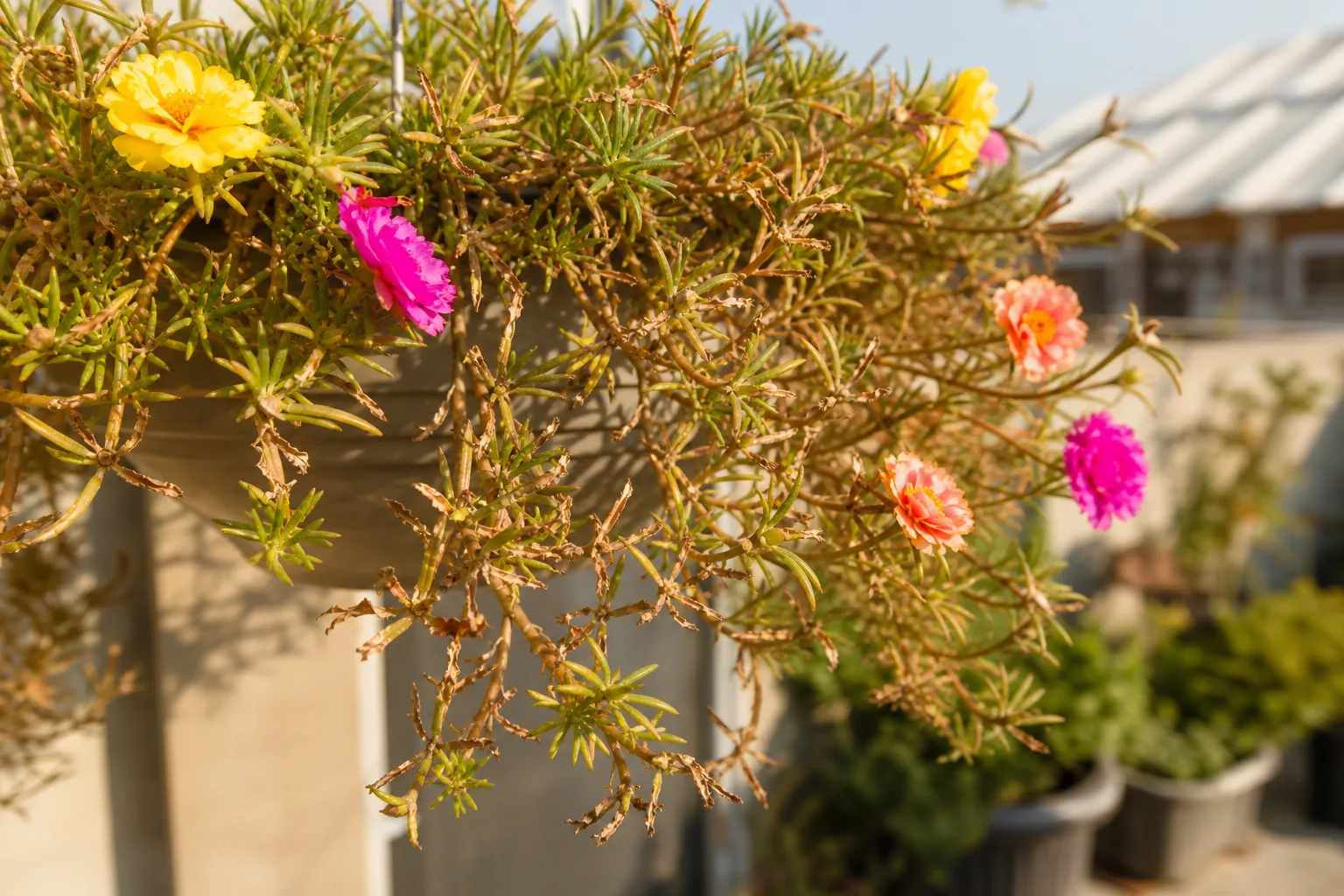
Brown Leaves on Portulaca: Causes, Checks & Fixes
This guide covers brown leaves on Portulaca. See also the general Brown Leaves guide, watering, and light pages for this plant.
Brown Leaves on Portulaca: Causes, Checks & Fixes
Quick answer
Brown leaves on Portulaca (Portulaca grandiflora, Moss Rose) mean dead tissue-usually from overwatering and rot on wet soil, not underwatering. Picture a trailing hanging basket after three rainy monsoon days: lower stems turn dull brown while the mix stays damp and smells sour. That is the rot path. A few tan-brown needles on dry, firm outer runners in full sun is often normal aging, not a crisis.
First step: squeeze the stem base and probe soil depth before watering again. Wet + soft → root rot until proven otherwise. Dry + firm → aging or brief drought. Cold night + firm stems → temperature damage.
Portulaca stores water in fleshy, succulent leaves and stems. Once tissue turns fully brown, it will not recover; the goal is to stop spread and protect new growth. For full Moss Rose culture context, start at the portulaca overview.
Scope of this page: Brown-leaf symptom triage-rot vs. aging vs. cold vs. fungal spot vs. drought crisping. If wet soil is the only issue and stems are still firm, open overwatering on Portulaca for dry-down workflow. If leaves are chartreuse yellow before they brown, start at yellow leaves. Confirmed mushy roots → root rot.
What brown leaves look like on Portulaca
On Moss Rose, browning shows up in distinct patterns you can separate at the pot edge.
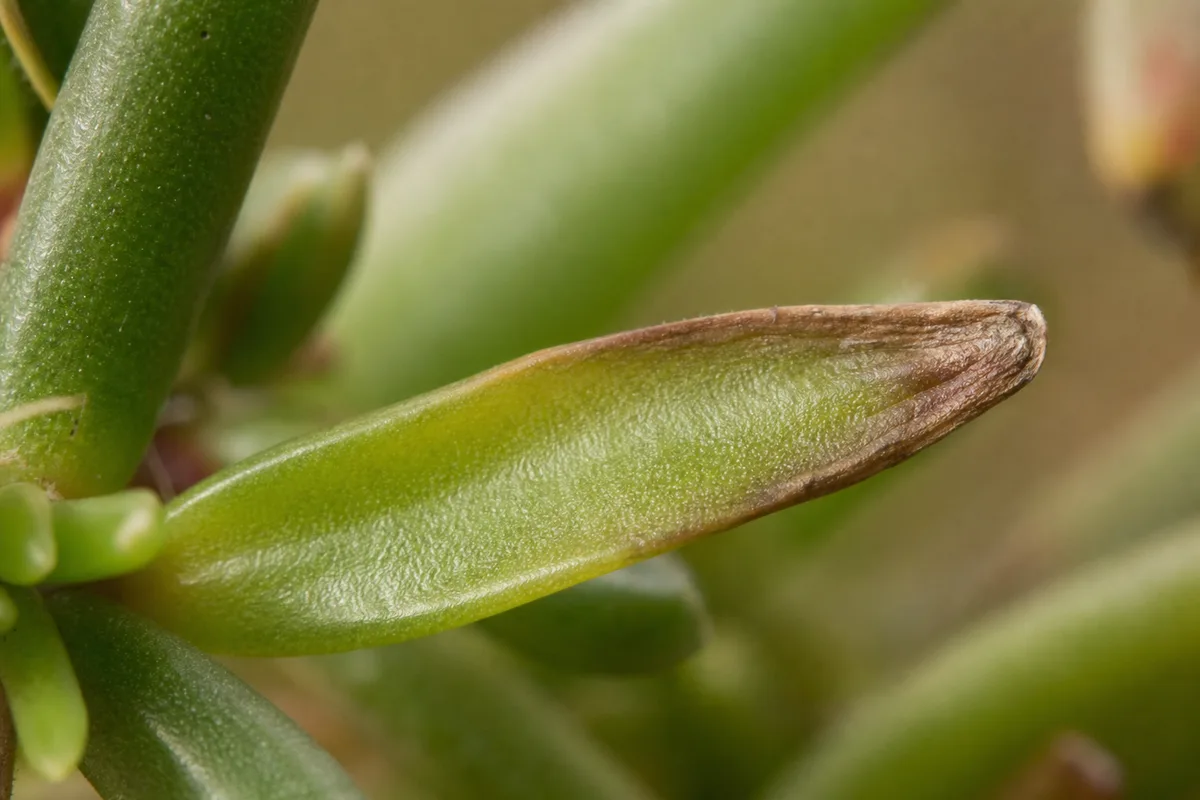
Brown Leaves symptoms on Portulaca - compare with healthy tissue on the same plant.
Rot-related browning
Starts at the base or lower stems: leaves turn dull brown or black, feel soft or water-soaked, and may drop while soil stays wet. Flowers stop opening on sunny afternoons when rot is active-a stress cue that distinguishes rot from normal night closure. Compare new tips with old runners: if browning climbs from wet soil, treat as rot.
Aging browning
Affects older trailing sections only-leaves dry to tan-brown but stems remain firm. Common on long prostrate mats in full sun where outer runners age faster than crown tips.
Cold damage
After nights below about 10°C (50°F), entire shoots can brown overnight. Tissue may look translucent before drying brown. Stems often stay firm; soil smells neutral-not sour.
Leaf spot and botrytis
Leaf spot shows circular brown patches, sometimes with yellow halos, on otherwise firm plants in humid weather-see leaf spot disease when lesions are discrete and stems stay firm. Botrytis (gray mold) adds fuzzy gray-brown growth on damp tissue after cool, humid nights; remove affected parts and improve airflow rather than soaking the crown.
Drought crisping (less common)
Severe drought in shallow containers during heat waves browns whole leaves crispy-dry on firm stems-but Moss Rose tolerates dryness far better than wet feet.
Why Portulaca gets brown leaves
Overwatering in slow-draining mix (most common)
Portulaca roots need oxygen; poorly drained soils may lead to crown rot. Failing roots cannot supply leaves evenly-lower foliage browns even when mix feels moist at the surface. Cool, shaded, or oversized pots stay wet for days and accelerate decline. Proven Winners notes portulaca is shallow rooted-dense trailing habit in crowded monsoon balcony pots traps humidity at the crown.
Normal senescence on trailing shoots
Fast-growing prostrate stems naturally shed older needle clusters. A few brown leaves on dry, firm outer sections while tips stay green and flowering is low priority-pinch old runners rather than repotting.
Cold and frost
Portulaca is a warm-season annual sensitive to frost in most regions. Sudden cold below about 10°C damages tissue quickly; severe frost can kill the plant outright.
Fungal leaf spot and botrytis
Humidity that stays high and foliage or soil that remains damp overnight favor fungal browning-more common in monsoon or crowded balcony setups than in open, sunny beds. Botrytis thrives in cool, humid conditions with temperatures around 15–21°C (60–70°F) and high relative humidity.
Monsoon saucer and cachepot traps
Even when you stop hose watering after rain, standing water in saucers or outer cachepots wicks back into the root zone. Surface mix can look dry while the stem base sits in saturated peat-classic Moss Rose crown-rot setup on terrace rails.
How to confirm the cause
Work through this decision path in order-one branch at a time.
- Stem base firmness - Soft, dark tissue at the soil line on wet mix confirms rot; firm stems with dry brown lower leaves suggest aging or drought.
- Soil moisture and smell - Wet, sour-smelling soil plus browning stems is rot until proven otherwise. Probe 2–3 cm deep per the watering guide.
- Pot weight and drainage - Heavy pot after days without your watering history suggests slow drainage, saucer standing water, or an oversized container.
- Weather and placement - Recent cold below 10°C or sudden frost after warm weeks points to freeze damage.
- Spot pattern - Circular lesions on multiple leaves in humid weather suggest leaf spot disease; gray fuzzy mold on damp tissue suggests botrytis.
- New growth - Browning on fresh tips while soil is wet is urgent rot; isolated brown on old runners only is lower priority.
| Pattern | Soil | Stems | Spread | Likely cause | Next page |
|---|---|---|---|---|---|
| Soft-dark base, sour smell | Wet, heavy | Soft at soil line | Climbs from base | Rot | Root rot |
| Early wet soil, no mush yet | Moist, not dry | Mostly firm | Lower leaves first | Overwatering | Overwatering |
| Crispy tan on old runners | Dry | Firm crown + tips | Outer trailers only | Aging | Stay here-pinch runners |
| Uniform brown after cold night | Variable | Firm | Many shoots at once | Cold damage | Warm sun + frost protection |
| Circular spots, yellow halos | Variable | Firm | Discrete lesions | Leaf spot | Leaf spot disease |
| Gray fuzz on damp tissue | Humid, damp foliage | Firm to soft | Flowers + leaves | Botrytis | Remove tissue, improve airflow |
| Whole-leaf crispy on firm stems | Bone-dry, light pot | Firm | Exposed leaves | Drought | Underwatering |
Confirmed rot = wet soil + soft base + sour smell or mushy roots when gently unpotting. Confirmed aging = dry firm stems + isolated lower-runner brown + healthy tips.
First fix for Portulaca
Pick one primary action based on what you confirmed. Do not repot, fertilize, and spray fungicide on the same day.
If soil is wet or stems feel soft
Stop all watering immediately. Lift the pot, confirm drainage holes are clear, and empty saucers. Do not add moisture until you have assessed roots. If softness persists after several dry days, unpot, trim mushy roots, and repot into dry sandy mix-then wait 5–7 days before the next drink in full sun. For full rescue depth, see root rot or early wet-soil triage on overwatering.
If stems are firm and only older leaves are crispy-brown on dry soil
Pinch off fully dead foliage with clean shears and resume dry-down watering-water only when soil is completely dry at depth per the portulaca watering guide.
If cold damage is suspected
Move to warm full sun, protect from further frost, and trim mushy tissue only after it dries clearly dead.
If leaf spot or botrytis is confirmed
Remove affected leaves, improve airflow between pots, avoid overhead watering, and water early so foliage dries before evening. Escalate to the dedicated leaf spot disease page if circular lesions keep spreading.
Step-by-step recovery
- Identify pattern: soft-dark on wet soil (rot), crispy on firm dry stems (aging/drought), spot lesions (fungal), or uniform cold browning.
- Stop watering if mix is wet; empty saucers; confirm drainage.
- Pinch or trim fully brown dead leaves-keep partially green tissue unless diseased.
- Repot into dry sandy mix only if roots are mushy or smell sour.
- Relocate to the sunniest spot with airflow between pots.
- Monitor new tips weekly; hold fertilizer until growth looks stable.
Terrace recovery vignette
On a documented balcony observation (June monsoon, hanging basket): three overcast rainy days left saucer water standing while lower stems softened. Watering stopped, saucer emptied daily, and the plant was repotted into dry sand-perlite mix in full sun. Firm new tips appeared at stem ends in about ten days-typical when rot was caught before the crown collapsed, not a guaranteed calendar.
Recovery timeline
Rot-related browning stabilizes in one to two weeks if enough healthy roots remain. Aging brown leaves are replaced by new trailing growth over the season. Cold-browned shoots may not recover until warm weather returns; severe frost damage can kill the plant outright. Leaf spot clears as new clean leaves emerge over two to four weeks once moisture and airflow improve.
Judge success by stopped spread and firm new tips-not by old brown tissue re-greening.
Lookalike symptoms
Yellow leaves often precede brown rot on Moss Rose-if chartreuse color appears first, open yellow leaves on Portulaca. Brown tips only on otherwise green leaves usually mean drought or salt in containers, not full-leaf necrosis-see brown tips. Flowers turning brown can be normal spent blooms; focus on stem and leaf tissue at the base for rot diagnosis-compare with flowers turning brown.
What not to do
Do not water because leaves look dry when soil is already wet-overwatering can result in root rot and worsen browning. Do not fertilize stressed Moss Rose to force recovery. Do not strip every leaf; partially green foliage still supports the plant. Do not assume all browning needs more sun-rot in wet shade needs less water and better drainage first.
When pruning dead tissue, wear gloves-Portulaca contains soluble calcium oxalates toxic to cats and dogs. Call ASPCA Animal Poison Control at (888) 426-4435 or your veterinarian if a pet ingests plant material.
How to prevent brown leaves on Portulaca
Water when completely dry at depth per the watering guide. Use sandy, rocky, fast-draining mix in full sun. Avoid cool, shaded overwatering in spring. Protect from frost below 10°C. Water early in the day so foliage dries before cooler evenings-reducing fungal pressure in humid climates. Remove fallen debris and diseased leaves promptly. During monsoon weeks, empty saucers daily and skip calendar watering until finger-test depth is dry.
Hanging baskets vs. ground beds
Trailing Moss Rose in hanging baskets dries faster on the exposed sides but holds water at the crown when saucers fill during rain. In-ground beds drain more freely but can stay cool and damp in partial shade-both need the same rule: dry soil at depth before the next soak.
Practical checks
Urgency check
Urgent if stems soften on wet soil, browning climbs from the base daily, or new growth browns after frost.
Low urgency if a few tan-brown needles sit on dry firm trailing runners while tips stay green and flowering.
Best inspection order
Stem base firmness → soil moisture at depth → pot smell → saucer/cachepot standing water → weather history → gentle root check only if wet-soil browning persists after 3–4 days without watering.
Portulaca care cross-check
- Watering rhythm: Portulaca watering guide
- Confirmed mushy roots: Root rot
- Early wet soil, firm stems: Overwatering
- Chartreuse precursors: Yellow leaves
- Circular lesions: Leaf spot disease
- Spent bloom browning: Flowers turning brown
- Hub entry: Portulaca overview
Trailing Moss Rose in hot, dry, sunny sites with bone-dry soil is rarely rot-look for sun scorch after sudden shade-to-sun moves or mechanical damage before you soak a healthy crown.
Related Portulaca guides
This page owns brown-leaf symptom triage-wet+soft vs dry+firm vs cold+firm vs fungal lesions. For rescue depth after rot is confirmed, use root rot and overwatering rather than repeating those steps here. Baseline culture lives on the portulaca overview and watering guide.
Related tool
Use the Plant Problem Diagnosis Tool to narrow causes for brown leaves on this plant before changing multiple variables at once.