Portulaca Light Needs: Best Window, Sun & Warning Signs
Portulaca Light Needs: Best Window, Sun & Warning Signs
Portulaca Light Needs: Best Window, Sun & Warning Signs
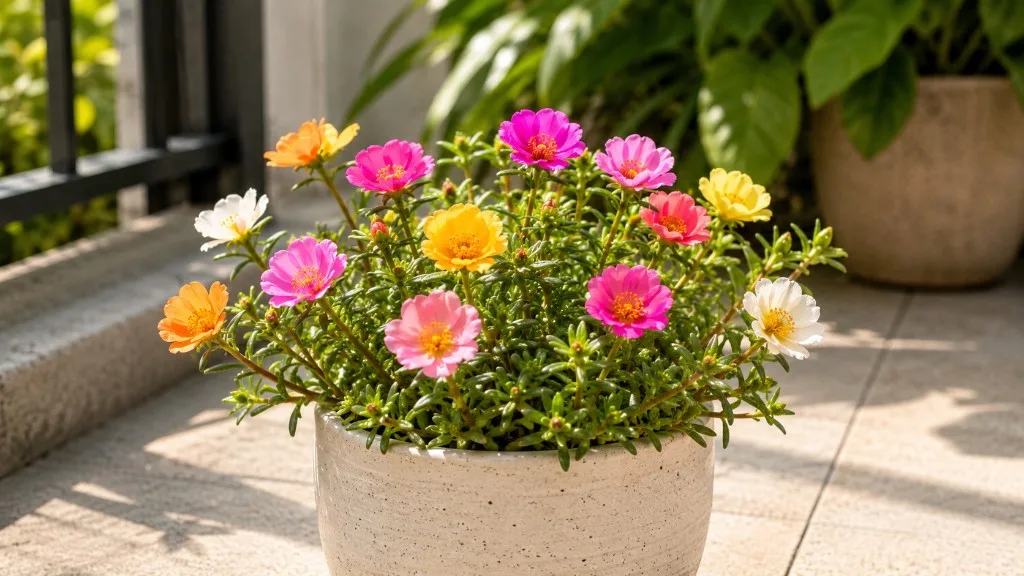
Portulaca light needs are simpler than most houseplant guides admit: moss rose wants sun, more sun, and direct sun. Portulaca grandiflora is a trailing succulent annual from South America (Argentina, Brazil, Uruguay) built for open, hot, bright habitats-not dim shelves or “bright indirect” corners where foliage plants thrive.
NC State lists portulaca cultural requirements as full sun (6 or more hours of direct sunlight daily) and notes flowers open only in bright sunlight. That single biological trait explains most “my portulaca won’t bloom” complaints: the plant is not broken-you are measuring room brightness instead of direct photons on the leaves.
This guide covers best placement, balcony and terrace use, honest indoor limits, acclimation, grow lights, and warning signs that light-not watering-is the limiting factor.
How Much Light Portulaca Actually Needs
Portulaca performs best in unfiltered direct sun for six or more hours daily. In Indian and tropical climates it is commonly grown on rooftops, hot dry balconies, and terrace edges where other annuals scorch. It is an extremely drought-tolerant succulent-like plant that pairs high light with infrequent deep watering.
In measurable terms useful for comparison:
- Optimal: 6–12+ hours direct sun at the canopy
- Marginal: 4–6 hours direct sun-may live but flower poorly
- Insufficient: Less than 4 hours direct sun-stretch, dull leaves, closed buds
Partial sun locations limit growth and flowering. Proven Winners notes portulaca is not suited to shade and needs heat plus brightness for the carpet-of-color effect growers expect.
Best Outdoor Placement
Rooftop and terrace gardens
Portulaca excels in shallow bowls and hanging baskets on full-sun terraces. Heat radiating from concrete or tiles matches its native niche. Ensure drainage holes-light without drainage still kills roots.
South- and west-facing balconies
In the Northern Hemisphere, south and west exposures deliver the longest direct sun blocks. East balconies work in very hot climates where afternoon scorch is extreme-but portulaca generally prefers more sun, not less.
Ground beds and rock gardens
Plant at the sunniest bed edge with sandy, low-fertility soil. Portulaca thrives in poor conditions when light is strong.
Can Portulaca Grow Indoors?
Honest answer: rarely well. Most indoor rooms-even “bright” living spaces-deliver far less direct sun than a balcony rail. A south windowsill with glass contact for several hours can sustain vegetative growth short-term, but closed buds and stretch usually follow within weeks.
If you must grow indoors:
- Place on the sunniest sill available
- Rotate daily so all sides receive direct beams
- Supplement with a full-spectrum grow light 12–14 hours at high intensity (not a weak desk lamp)
- Accept that moss rose is often a seasonal display, not a permanent indoor foliage plant
Why Portulaca Flowers Close Without Sun
Moss rose blooms are photoperiod and light-intensity sensitive. Each flower typically opens mid-morning in sun and closes by evening-or stays shut entirely on overcast days and in shade. Closed flowers on an otherwise healthy plant almost always mean insufficient direct light at bloom time, not nutrient deficiency.
Do not respond with extra fertilizer in shade-that weakens stems without opening buds.
Low-Light Limits and Warning Signs
When light is limiting growth, portulaca shows:
- Leggy pale stems with wide spacing between leaves
- Small dull succulent leaves instead of plump cylindrical foliage
- Few or no open flowers despite visible buds
- Soil staying wet for days-slow photosynthesis means slow water use, raising rot risk
- Thin branching-the plant loses its mounded carpet habit
These overlap with leggy growth problem pages when light fails long-term.
Direct Sun and Heat Tolerance
Portulaca is among the most heat-tolerant flowering annuals, comfortable from roughly 25°C to 40°C (77–104°F) in full sun when soil drains well. It does not need afternoon shade in most climates-the opposite of impatiens or coleus.
Sunburn on portulaca is uncommon compared with insufficient light. If leaf tips crisp after a sudden move from shade to blazing roof sun, acclimate over one week rather than pulling back to deep shade.
Acclimating Portulaca to Stronger Light
Plants grown in nursery shade houses need gradual exposure:
- Days 1–3: Morning sun only (east exposure)
- Days 4–7: Add midday sun hours
- Week 2: Full target placement
Sudden jumps without acclimation can scorch soft nursery leaves-but the fix is gradual increase, not permanent shade.
Grow Lights for Portulaca
When natural sun is unavailable, use full-spectrum LED grow lights positioned 6–12 inches above the canopy for 12–14 hours daily. Monitor leaf temperature-lights that cook foliage indicate too close. Grow lights should supplement direct-equivalent intensity, not replace it with ambient room glow.
Light and Watering Together
High light increases transpiration-portulaca in full sun may need more frequent checks than the same plant in marginal light. Conversely, dim portulaca stays wet longer-the classic setup for root rot when owners water on a sunny-day schedule in shade.
Always pair light corrections with watering adjustments.
Seasonal Light Changes
Summer: Maximum bloom period in long days plus strong sun.
Monsoon / cloudy stretches: Flowers close on overcast days-normal biology, not failure.
Winter (mild climates): Portulaca is frost-tender; in warm frost-free zones it may continue in greenhouse-level sun. In cool temperate winters, treat as an annual or provide maximum light indoors.
Window Direction Quick Reference
| Exposure | Outdoor balcony | Indoor sill |
|---|---|---|
| South | Excellent-primary choice | Best indoor option |
| West | Excellent-hot afternoon OK | Good with heat monitoring |
| East | Good; may need more hours | Usually insufficient alone |
| North | Poor for flowering | Not recommended |
Moving Portulaca Safely
Change placement gradually when possible. Sudden shifts from nursery shade to roof sun can scorch; sudden shifts from roof sun to indoor dim cause closed flowers and stretch within days.
Make one light change, wait one week, read newest stem growth and bud behavior before changing water or fertilizer.
Common Light Mistakes
- Judging by room brightness instead of direct sun on leaves
- Keeping portulaca indoors and expecting open blooms
- Responding to closed flowers with fertilizer instead of sun
- Pairing shade placement with frequent watering
- Treating portulaca like a foliage houseplant that “tolerates low light”
Practical Placement Checklist
- Six or more hours of direct sun on the leaf canopy?
- Flowers opening on sunny days?
- Compact branching-not long pale runners?
- Soil drying on a predictable rhythm after watering?
- Plump leaves-not thin and stretched?
If you answer no to several, increase direct sun before changing anything else.
Conclusion
Portulaca is not a flexible low-light annual. Give it full direct sun, heat, and sharp drainage, and it rewards you with jewel-toned flowers that open in midday light. Fail on sun, and no watering tweak or bloom booster substitutes. Judge placement by open flowers and compact new growth-not by whether the plant is merely still green in shade.
For related care, see portulaca watering, soil, and the portulaca overview.
When to use this page vs other Portulaca guides
- Portulaca overview - Start here for whole-plant context before deep-diving this topic.
- Portulaca problems hub - Jump to symptom-specific fix guides when this care topic does not resolve the issue.
- Not Enough Light on Portulaca - Escalate here when light adjustments are not enough.
- Leggy Growth on Portulaca - Escalate here when light adjustments are not enough.