Not Enough Light on Portulaca: Causes, Checks & Fixes
Quick answer
Not enough light on Portulaca shows as closed flowers on sunny days, stretched stems, and sparse bloom. First step: move to full direct sun (at least 6 hours daily) and recheck flower opening at midday.
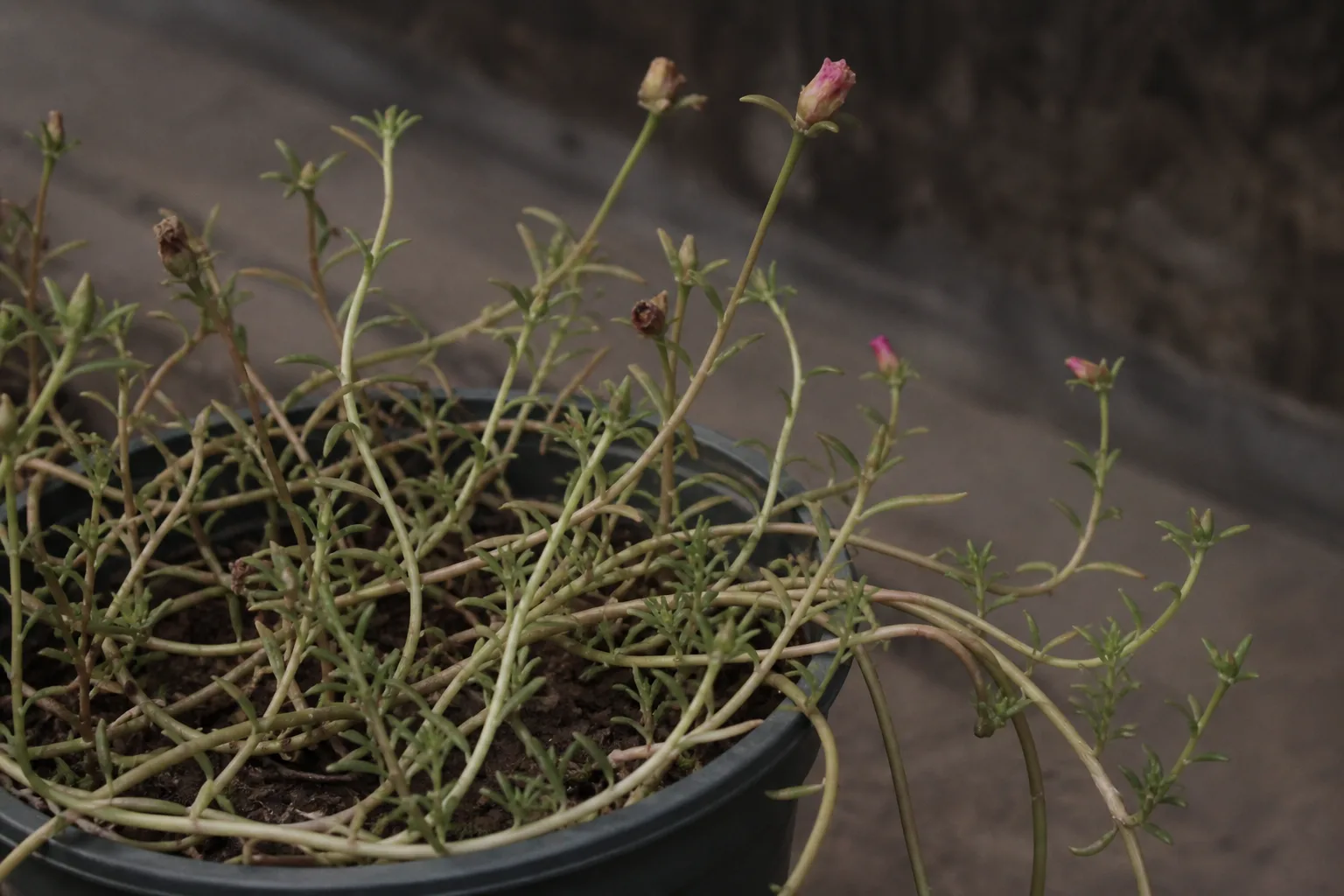
Not Enough Light on Portulaca: Causes, Checks & Fixes
This guide covers not enough light on Portulaca. See also the general Not Enough Light guide, watering, and light pages for this plant.
Not Enough Light on Portulaca: Causes, Checks & Fixes
Quick answer
Not enough light on Portulaca (Portulaca grandiflora, Moss Rose) usually shows as three signs together: flowers staying closed even on clear days, stems stretching and leaning, and reduced blooming density. The first fix is simple: move the plant into full sun (6 or more hours of direct light) and reassess flower opening at midday.
Moss Rose flowers naturally close at night and during overcast weather, then reopen in strong light. Both NC State and Missouri Botanical Garden note this cloudy-day flower closure behavior. If flowers remain closed through bright midday sun, treat that as a light deficiency, not normal daily cycling.
Why Portulaca struggles in low light
Portulaca is adapted to hot, open sites and lean soils. Wisconsin Extension describes it as native to hot, dry plains in South America, which explains why it blooms best under intense light and fast drying.
In shade, the plant shifts toward survival growth: internodes lengthen, stems lean toward brighter edges, and bloom initiation slows. Light stress also compounds watering errors. A shaded pot dries more slowly, so a normal summer watering routine can turn into chronic root-zone saturation. NC State cautions that poor drainage can lead to crown rot, and this risk rises when shade and wet soil occur together.
What not-enough-light looks like on Portulaca
- Flowers stay closed through sunny midday windows, not just rainy or cloudy periods.
- Stems stretch with wider gaps between leaf clusters.
- Growth leans toward one bright edge of the balcony, wall, or railing.
- Bud count drops compared with nearby plants in open sun.
- The mat looks greener than bloomier, with weak branching.
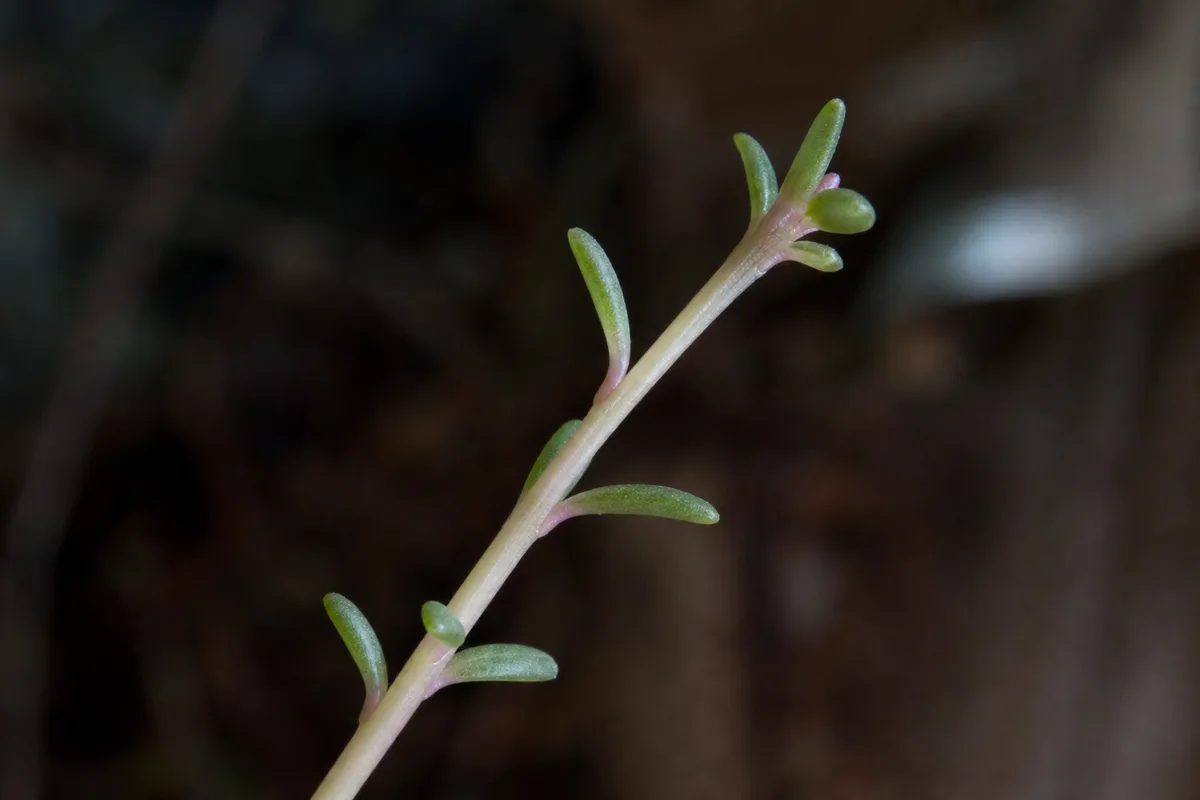
Not Enough Light symptoms on Portulaca - compare with healthy tissue on the same plant.
If these signs are paired with wet, heavy soil and softening stems, low light may already be cascading into rot risk.
Lookalikes to rule out first
Before blaming light alone, check these common lookalikes:
- Normal cloudy-day closure: flowers close in overcast weather, then reopen in sun.
- Nitrogen-heavy feeding: lush green growth with low bloom can happen when soil is too rich; Proven Winners notes overfertilizing can favor foliage over flowers.
- Wet-root stress: poor drainage or overwatering suppresses flowering and can precede stem collapse.
- Cool-weather pause: flowering slows in cooler spells and resumes in sustained warmth.
- Transplant stall: NC State notes seedlings do not transplant well, so newly moved plants may pause briefly.
How to confirm the cause
Use this order so you do not over-correct:
- Clear-day bloom check: On a bright day, inspect flowers between late morning and early afternoon.
- Direct-sun log: Track direct sun on the pot surface for a full day; bright room light is not enough.
- Shade-map obstacles: Check eaves, railings, neighboring pots, and tree canopies that block midday sun.
- Stem pattern check: Look for directional lean and stretched nodes.
- Root-zone check: Feel 3-5 cm deep; wet-heavy mix plus shade points to compounded stress.
- Neighbor comparison: If nearby full-sun Portulaca blooms and yours does not, placement is likely the primary issue.
If direct sun is below six hours or midday is consistently shaded, treat low light as the main diagnosis.
First fix for Portulaca
Move the pot to the sunniest available position immediately, then pause other interventions for several days. Prioritize full-sun access before pruning, Portulaca repotting guide, or feeding.
- Relocate to open terrace edge, roof, or unshaded front border.
- Water only after clear dry-down at root depth.
- Delay fertilizer until new compact growth appears.
- Pinch only the most stretched tips after recovery begins.
Do not stack many fixes on day one. Sun correction plus watering reset is the most reliable first step.
Acclimation if moving from deep shade
If the plant was indoors or in dense shade for weeks, transition over several days to reduce scorch stress. RHS guidance on hardening-off explains that tender plants need gradual exposure to sun and outdoor conditions over about two to three weeks. For Portulaca, that means starting with bright morning sun, then extending exposure toward full-day sun as foliage adapts.
Recovery timeline
Flower opening can resume within days after strong sun returns, while denser branching and better bloom set usually follow over one to two weeks in warm conditions. Old stretched stems do not contract; improvement is measured on new growth and fresh bud opening.
If no improvement appears after two weeks of corrected light and watering, reassess root health, fertilizer history, and drainage setup.
What not to do
- Do not keep Moss Rose in bright-indirect indoor spots and expect normal bloom.
- Do not compensate shade with extra watering; this raises rot risk.
- Do not apply bloom boosters before fixing sun and drainage.
- Do not judge light from a single cloudy day.
- Do not compare Portulaca to true shade bedding plants.
How to prevent not-enough-light problems
Site Portulaca where full sun is realistic through the growing season. NC State and Missouri Botanical Garden both classify Moss Rose for full-sun use, so treat partial-shade corners as high-risk placements.
- Avoid north-facing walls, deep eaves, and under-tree beds.
- Keep trailing containers spaced so mature mats do not self-shade.
- Recheck sun patterns after monsoon cloud shifts or seasonal angle changes.
- Use fast-draining mix in containers so reduced light does not trap moisture.
Practical checks
Urgency check
Urgent when low light is paired with wet soil and soft or yellowing stems. Correct light and drying conditions immediately to reduce progression toward crown rot.
Best inspection order
Midday flower opening -> direct-sun hours -> stem stretch pattern -> root-zone moisture -> fertilizer history.
Portulaca care cross-check
Closed flowers on cloudy days are normal. Closed flowers through clear sunny midday conditions suggest insufficient light.
For overlapping symptom patterns, check related guides:
- No Flowers on Portulaca
- Leggy Growth on Portulaca
- Overwatering on Portulaca
- Root Rot on Portulaca
- Portulaca light needs
When to use this page vs other Portulaca guides
- Portulaca watering guide - Use for routine moisture checks before assuming not enough light is the main issue.
- Portulaca problems hub - Browse all 50 common issues on this species.
- Leggy Growth on Portulaca - Different entry point when symptoms overlap with not enough light.
- Slow Growth on Portulaca - Different entry point when symptoms overlap with not enough light.