Root Rot on Portulaca: Causes, Checks & Fixes
Quick answer
Root rot on Portulaca is usually tied to overwatering in slow-draining mix. First step: Stop watering immediately, unpot, trim mushy roots, and repot in dry sandy mix-then wait 5–7 days before the next drink.
Root Rot on Portulaca: Causes, Checks & Fixes
This guide covers root rot on Portulaca. See also the general Root Rot guide, watering, and light pages for this plant.
Root Rot on Portulaca: Causes, Checks & Fixes
Quick answer
Root rot on Portulaca (Portulaca grandiflora, Moss Rose) is usually tied to overwatering on Portulaca in slow-draining mix. First step: Stop watering immediately, unpot, trim mushy roots, and repot in dry sandy mix-then wait 5–7 days before the next drink.
Portulaca is a drought-tolerant succulent annual that stores water in fleshy stems and leaves. It thrives in full sun and well-drained sandy or rocky soil but collapses quickly when roots sit wet. Judge progress by firm new growth, not by hoping yellow stems green up again.
Why Portulaca gets root rot
Moss Rose is built for hot, dry conditions, not constantly moist potting mix. Crown rot may occur in poorly-drained soils-the same waterlogged environment that suffocates roots. Overwatering is the number-one killer on Portulaca because its stems hold reserves; gardeners keep watering when leaves look tired, even though the root zone is already saturated.
Common triggers include dense peat-heavy mix, pots without drainage holes, oversized containers that stay wet for days, and watering on a calendar instead of checking dryness. Cool, shaded pots dry slowly and make rot more likely during monsoon or indoor overwintering attempts.
What root rot looks like on Portulaca
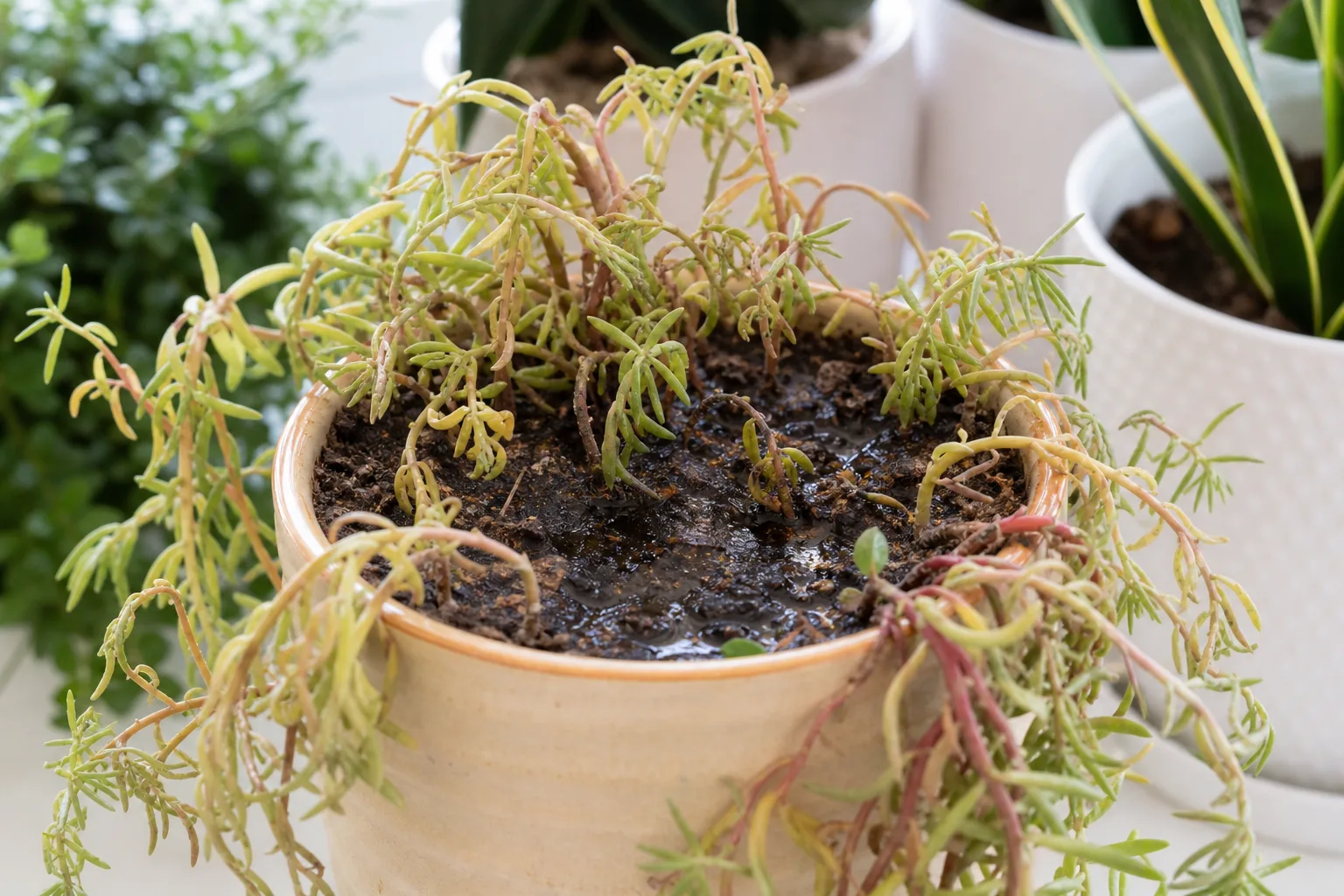
Lower stems turn yellow or translucent while the mix still feels wet. Stems may feel soft at the soil line, and the pot may smell sour when lifted. Wilting on wet soil is a key mismatch-if the top looks thirsty but the root zone is swampy, suspect rot before pouring more water. Flowers stop opening even on sunny days when the plant is stressed.
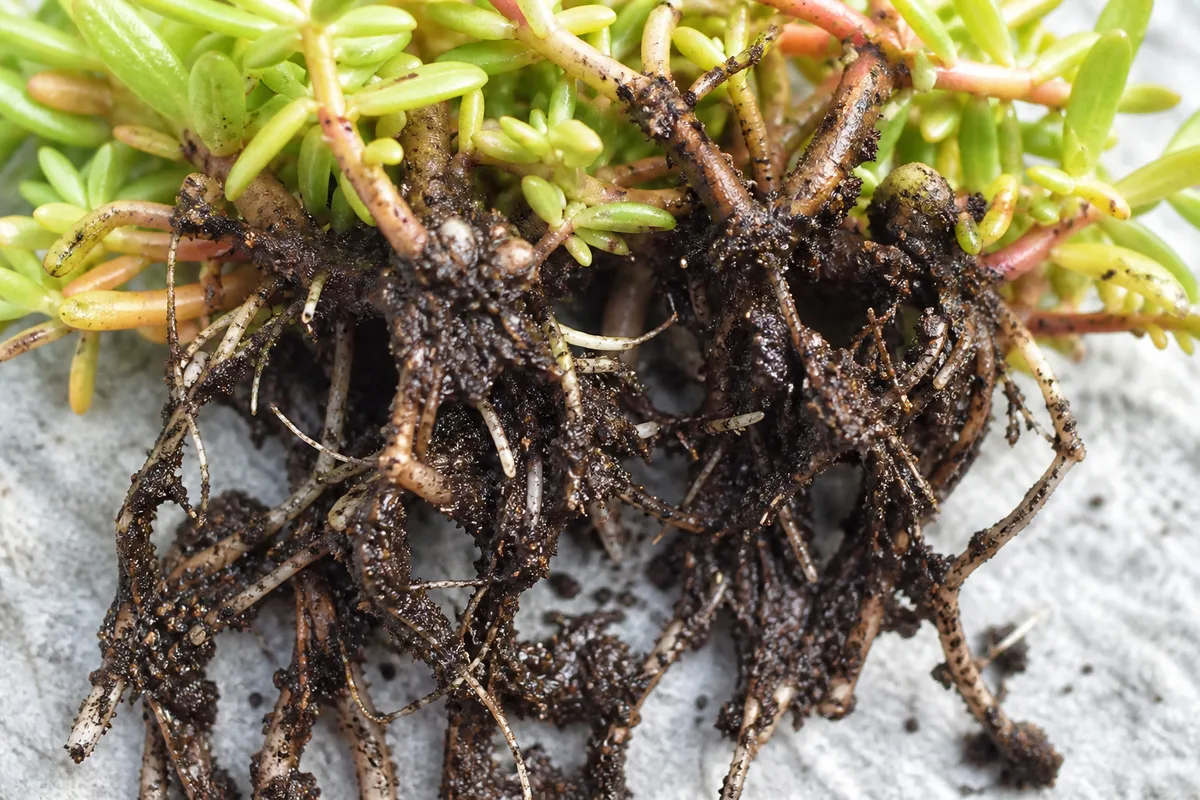
Root Rot symptoms on Portulaca - compare with healthy tissue on the same plant.
How to confirm the cause
Unpot the plant and rinse roots gently. Healthy Portulaca roots are pale and firm; rotting roots are brown, mushy, and may pull away easily. Compare pot weight, drainage-hole flow, and recent watering against light levels. If more than one-third of roots are mushy, treat as urgent. Stem softness at the base confirms advanced crown involvement.
First fix for Portulaca
Stop watering immediately. Unpot, shake off wet soil, and trim all soft, dark roots with clean scissors. Let trimmed roots air-dry for a few hours, then repot into dry sandy mix with perlite or coarse sand. Do not water for 5–7 days unless the plant is in full sun and the mix is bone-dry at depth. Make this one change first-stacking fertilizer, heavy pruning, and fungicide on the same day hides what actually helped.
Recovery timeline
Damaged stems and yellow leaves rarely return to perfect form. Within one to two weeks you should see firm new tips if the root zone is drying correctly. Severe rot can take several weeks and may require cutting back to healthy stem tissue above the soil line.
What not to do
Do not keep watering because leaves look limp when the soil is already wet. Overwatering can result in root rot on container plants. Do not repot into standard garden soil or a pot without holes. Do not place stones over drainage holes-they reduce usable root space without improving drainage. Wear gloves when handling cut stems-Portulaca is toxic to cats and dogs.
How to prevent root rot on Portulaca
Water only when soil is completely dry at depth, not on a fixed schedule. Use well-drained sandy or rocky soil in full sun. Match pot size to the root mass. Empty saucers after watering. Inspect stem bases weekly during the growing season.
Practical checks
Urgency check
Treat as urgent if stem bases soften, blackening climbs upward, or the plant wilts on wet soil.
Best inspection order
Stem bases, soil smell, pot weight, drainage flow, then roots.
Portulaca care cross-check
Portulaca wants full sun (6+ hours of direct light) and dry-down watering. If the pot stays heavy for days, improve light and drainage before the next drink.
When to use this page vs other Portulaca guides
- Portulaca watering guide - Use for routine moisture checks before assuming root rot is the main issue.
- Portulaca problems hub - Browse all 50 common issues on this species.
- Overwatering on Portulaca - Different entry point when symptoms overlap with root rot.
- Wilting on Portulaca - Different entry point when symptoms overlap with root rot.
- Mold on Soil on Portulaca - Different entry point when symptoms overlap with root rot.