Watering Portulaca: Schedule, Soil Checks & Mistakes
Watering Portulaca: Schedule, Soil Checks & Mistakes
Watering Portulaca: Schedule, Soil Checks & Mistakes
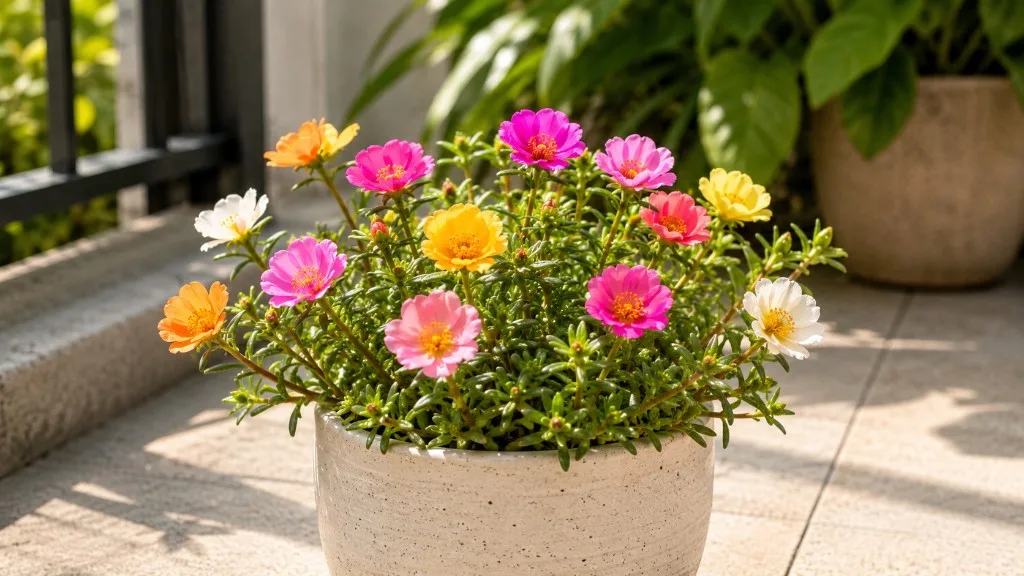
Portulaca watering is one of the few summer annual routines where doing less is almost always safer than doing more. Also sold as moss rose and sun rose, Portulaca grandiflora is a low, trailing succulent annual from South America whose fleshy leaves and shallow roots evolved for fast-draining, low-fertility soils-not for damp potting mix and daily sprinkles. The plant stores water in its stems and needle-like leaves, tolerates extreme drought once established, and collapses quickly when kindness turns into soggy soil. Overwatering-not underwatering on Portulaca-is why moss rose growers search for “mushy stems” and “portulaca rotting” mid-season.
The practical rule is simple: water only when the soil is completely dry, soak until excess drains, then wait until the mix dries fully before repeating. A starting interval of every 4–5 days in full-sun summer containers and about once a week in cooler months helps beginners-but the pot, not the calendar, makes the final call. This guide covers check-first rhythm, finger and pot-weight tests, dry-wilt versus wet-wilt diagnosis, monsoon terrace pull-back, clean watering technique, and the mistakes that turn a heat-loving bedding plant into a mushy mess within 48 hours.
Why Moss Rose Watering Confuses Growers
Moss rose looks tough-and it is, in heat and drought. Cornell Home Gardening describes portulaca as an annual that “needs hot, dry conditions,” tolerates droughty soil, and notes you should avoid overwatering and let soil dry between waterings. The Wayne County NC State plant spotlight calls moss rose very drought tolerant with fleshy leaves that store water during dry periods. Proven Winners adds the nuance: portulaca “prefers dry conditions” but flowers best with periodic moisture during heat waves. That combination-deep, infrequent soaking, not constant dampness-is where beginners stumble.
Three factors stack the confusion. First, midday limp on dry soil looks alarming but often recovers by evening because succulent tissue rehydrates from internal stores once heat stress eases. Second, closed flowers on cloudy days are normal photonastic behavior, not a thirst signal-blooms open in bright sunlight and close at night or in shade. Third, moss rose roots are shallow and succulent; they absorb water fast and rot fast in saturated mix. Daily sprinkles, overhead watering at dusk, and cachepots holding runoff create the wet feet Portulaca overview cannot tolerate.
Growers in shade or on covered balconies make the problem worse. Less light slows transpiration, so the same weekly habit that works on a blazing terrace rots a pot tucked under an eave. If your moss rose stretches, closes flowers on sunny afternoons, or yellows at the base, check light before you increase water.
The Short Answer for Busy Growers
Push your finger 2–3 cm into the mix in containers (or 3–5 cm in garden beds). If you feel coolness or cling, wait. If the tested depth is dry, water thoroughly until excess runs from drainage holes, then empty the saucer or lift the grow pot out of any cachepot. In full-sun summer containers, many terrace growers land near every 4–5 days; in cooler weather, about once a week-always adjusted to how fast your pot actually dries. During monsoon on Indian terraces, pull back hard: cool cloudy days slow evaporation, and daily rain may replace irrigation entirely. If you are debating whether to water, you probably should not. Limp leaves on wet, heavy soil mean stop watering and inspect for root rot; limp leaves on bone-dry, light soil mean soak once and wait for full dry-down again.
How Often to Water Portulaca (Check, Not Calendar)
There is no honest universal schedule for how often to water portulaca. A fixed “every Tuesday” fails because pot material, mix texture, sun exposure, wind, and season all change dry-down speed. What works as a starting framework-not a rule-for full-sun terrace containers looks like every 4–5 days in peak summer heat and roughly once a week in cooler months, but only when moisture checks confirm dryness.
The interval is a consequence of dry-down, not a cause. A 25 cm terracotta bowl on a south-facing rail in pre-monsoon May may need water every four days. The same bowl in July monsoon-with cool overcast days and afternoon showers-might stretch to ten days or longer with rain supplementing what you add. A plastic hanging basket in full sun dries faster than a glazed pot in partial shade. Track two full wet-dry cycles: note when you watered, when the pot felt light, and whether any wilt appeared before you checked. Within a month you will know your setup better than any blog interval.
Proven Winners recommends waiting until soil has warmed and all frost danger has passed before planting-cold, wet mix at the roots is as dangerous as mid-season overwatering. In India, sow or plant when nights stay above about 15–18°C and days regularly exceed 25°C; in temperate climates, that means after last frost when soil has warmed-Cornell lists germination temperature at 70–85°F (21–29°C) for portulaca seed.
Best Moisture Checks (Finger, Skewer, Pot Weight)
Surface color lies. Gritty succulent mix can look pale and cracked on top while staying damp near shallow roots. Use at least one of these checks every time before you water.
Finger test: Push your finger into the mix to the depths below. Cool, clingy moisture means wait. Dry at the tested depth means proceed.
Skewer or chopstick test: Insert a dry wooden skewer toward the pot bottom. Darkening or soil sticking means moisture remains. Clean, dry wood confirms enough dry-down for moss rose.
Pot weight: Lift small containers before and after watering until you can judge moisture by heft. A dry portulaca pot is noticeably light compared with one watered yesterday.
Finger Test Depth for Pots and Garden Beds
In containers, push your finger 2–3 cm into the mix. Moss rose roots sit shallow; that depth reflects the active root zone in a typical 20–30 cm bowl or hanging basket. In garden beds, test 3–5 cm because slope, stone mulch, and soil texture vary across the planting area-check several spots before deciding the whole bed needs water. Sandy pockets on a slope may dry faster than clay-heavy depressions that hold moisture. The goal is complete dry-down between soakings, not a fixed surface appearance.
Pot Weight Training
Lift the container before and after several watering sessions until weight alone tells you when to wait. Terracotta feels deceptively cool on the outside even when inner mix is dry-weight cuts through that. A freshly soaked pot feels heavy and cool; as the mix dries, weight drops sharply. Compare weight to your finger reading for two weeks; when they disagree and the pot is still heavy, do not water even if the top looks acceptable.
Quick-Reference Dry-Down Table (Pot Size × Sun × Season)
Use this table as a starting range only. Always confirm with finger or weight checks.
| Setup | Typical check interval | Notes |
|---|---|---|
| 20–25 cm terracotta bowl, full sun terrace, pre-monsoon heat | Every 4–5 days | Baseline for Indian rooftop containers |
| Same bowl, monsoon overcast + rain | Every 7–14+ days | Rain may replace manual watering |
| Plastic hanging basket, full sun | Every 3–5 days | Dries faster; watch cachepot runoff |
| Glazed pot, partial shade balcony | Every 7–10 days | Slower transpiration; rot risk if overwatered |
| Garden bed, sandy slope, full sun | Every 4–7 days | Check multiple spots |
| Cool winter fade (temperate climate) | Every 10–14 days or less | Growth slowing; minimal needs |
Signs You Are Watering Too Much
Overwatering is the primary failure mode for moss rose. Watch for these signals together-not in isolation:
Yellowing, mushy stems at the base, especially where soil stays damp against the crown. Sudden collapse of otherwise firm plants after a rainy week or daily sprinkles. Sour smell from the mix. Soil that stays dark and cool many days after watering. Fungus gnats hovering over perpetually moist surface. Soft crown tissue that does not firm up after a dry-down period.
On portulaca, overwatering pairs with poor drainage, low light, or a decorative outer pot trapping runoff. Shallow roots rot quickly when mix stays saturated. If several signs appear together, pause watering, inspect the root zone, and read the overwatering and root rot guides before feeding or Portulaca repotting guide into richer mix. There is no reliable rescue once the crown is soft-prevention beats surgery.
Signs You Waited Too Long
Underwatering is rarer but not impossible. In extreme drought, stems may look slightly limp in midday heat on bone-dry soil, then recover by evening as internal water stores redistribute-a pattern that confuses growers into thinking the plant needs daily water when it actually needs a deeper soak less often.
If the plant is wilting in the morning on completely dry soil, water thoroughly until excess drains, then wait for full dry-down before repeating. Repeated drought episodes can damage fine roots and make the plant react badly when water finally returns-avoid the pendulum swing from desert to swamp. Seedlings in tiny cells dry faster than established mats; newly rooted cuttings need barely moist, not wet mix until new growth appears.
Dry-Wilt vs Wet-Wilt: Which Problem Do You Have?
This fork saves moss rose every summer. Run it before you reach for the watering can.
Dry-wilt: Leaves and stems look limp, especially in afternoon heat. Soil is light, dry, and dusty at finger-test depth. Pot feels light. Plant often perks up by evening or within hours after a thorough soak. Action: water deeply once, drain fully, then return to complete dry-down rhythm.
Wet-wilt: Leaves yellow or feel mushy. Soil is dark, cool, and heavy. Pot feels weighty days after the last watering. Crown or lower stems may be soft. Action: stop watering immediately. Inspect roots, improve drainage, move to full sun if shade is slowing dry-down, and discard if crown tissue is mushy.
If you misread wet-wilt as thirst and add more water, you accelerate rot. If you misread dry-wilt midday limp as overwatering and wait, you may stress the plant-but moss rose forgives one dry cycle far more easily than one soggy week.
Seasonal Watering Changes (Including Monsoon Terraces)
The same pot can dry in a few days under blazing pre-monsoon sun and take much longer when cool monsoon clouds cut evaporation. Reduce irrigation significantly in cool months when growth slows and plants begin fading toward season’s end. In temperate climates, moss rose is a frost-tender annual that dies at the first hard frost; watering should taper as nights drop below about 10°C and flowering declines.
Terrace growers should couple watering to light as much as season. A plant moved under a monsoon awning for storm protection dries slower than one fully exposed-adjust checks, not habits. After heavy repotting into a larger bowl, expect slower dry-down until roots fill the new volume.
Monsoon Terrace Pull-Back Protocol
On Indian terraces and balconies, monsoon changes the math. Cool, overcast days slow evaporation from terracotta and plastic alike. Daily rain may deliver enough moisture that manual watering becomes unnecessary-or harmful if drainage is poor. Practical steps:
Skip scheduled watering after measurable rain until finger-test depth is dry again. Empty cachepots after every storm; standing water at the base rots shallow roots within 48 hours. Move pots off saucers that flood during downpours if drainage holes clog with grit. Avoid overhead sprinkling at dusk when foliage and crowns stay wet overnight in humid air. If stems yellow at the base during a wet week, hold all water until mix dries completely-even if leaves look slightly limp at midday on a rare sunny break.
How to Water Cleanly (Drainage, Soil Line, Cachepots)
Water at the soil line, not over the crown, to keep succulent foliage dry and reduce disease pressure on humid terraces. Apply evenly across the surface until water runs freely from drainage holes-that confirms the root ball received moisture throughout, not just at the rim. Stop there. Do not water again until dryness checks pass.
Bottom watering works for small containers: set the grow pot in a tray of water until the surface darkens, then lift and drain. Never leave the pot sitting in the tray afterward.
Cachepots-decorative outer pots without holes-are a common rot vector. Either drill drainage, use them only as display shells and lift the grow pot out to water and drain, or add a layer of gravel that does not block the inner pot’s holes. Saucers must be emptied within 30 minutes of watering. For hanging baskets, confirm runoff does not pool in the bracket cup.
Pair watering technique with the right soil: sandy, gritty, fast-draining mix-not moisture-retentive houseplant soil. Heavy mix plus generous watering equals rot even on a sunny terrace.
Common Watering Mistakes
Calendar watering without checks. Moss rose does not care what day it is. Pot weight and finger depth decide.
Daily light sprinkles. Keeps the upper layer damp while never flushing salts or reaching deep roots-then the first deep soak hits already-stressed roots in partially wet mix.
Leaving pots in full saucers or cachepots. Standing water suffocates shallow roots faster than underwatering damages them.
Overhead watering at dusk on humid terraces. Wet crowns overnight invite rot and fungal issues on succulent tissue.
Repotting and watering heavily the same week. Fresh gritty mix in a larger pot holds moisture longer; roots need time to colonize before you resume the old schedule.
Watering shaded moss rose on a terrace schedule. Less light means slower dry-down-stretch the interval or improve light first.
Ignoring monsoon rain as irrigation. Adding manual water on top of saturated mix is the fastest route to mushy stems.
Practical Checks (Fast Decision, Pot-Size Reality)
Fast Decision Check
If moss rose looks tired, run the dry-wilt vs wet-wilt fork before watering. Check pot weight, finger depth, and light exposure together. Closed flowers on a sunny afternoon point to shade or overwatering before thirst. Mushy base on wet soil means hold water-not soak.
Pot-Size Reality After Repotting
A larger pot changes the watering schedule immediately. If portulaca was recently repotted into a bigger bowl, expect the mix to dry more slowly until roots fill the new volume-sometimes 30–50% longer between soakings. Water once to settle at planting, then let the site dry fully before the next drink. For seasonal containers, sowing or rooting cuttings directly in the display pot often beats transplanting mature mats mid-season, because NC State notes moss rose does not take well to transplanting.
When to use this page vs other Portulaca guides
- Portulaca overview - Start here for whole-plant context before deep-diving this topic.
- Portulaca problems hub - Jump to symptom-specific fix guides when this care topic does not resolve the issue.
- Overwatering on Portulaca - Escalate here when watering adjustments are not enough.
- Underwatering on Portulaca - Escalate here when watering adjustments are not enough.
- Root Rot on Portulaca - Escalate here when watering adjustments are not enough.
Related Portulaca guides
- Portulaca overview
- Portulaca light
- Portulaca soil
- Portulaca propagation
- Portulaca fertilizer
- Portulaca repotting
- Overwatering on Portulaca
- Underwatering on Portulaca
- Root Rot on Portulaca
- Wilting on Portulaca
- Mold on Soil on Portulaca
- Portulaca problems
Conclusion
Moss rose rewards growers who treat it like the South American succulent it is: complete dry-down between deep soakings, full sun, and sharp drainage. Check the pot with finger depth and weight-not the calendar. Expect every 4–5 days in blazing summer containers as a starting point, stretch intervals during monsoon when rain and clouds slow drying, and run the dry-wilt vs wet-wilt fork before every drink. Overwatering kills portulaca faster than drought; mushy stems on wet soil are an emergency, not a cue to water more. Get the rhythm right on a hot terrace rail or hanging basket, and Portulaca grandiflora delivers weeks of papery blooms in the corner where everything else was supposed to fail.