Portulaca Repotting: Seedling Upsize & Final Pot Guide
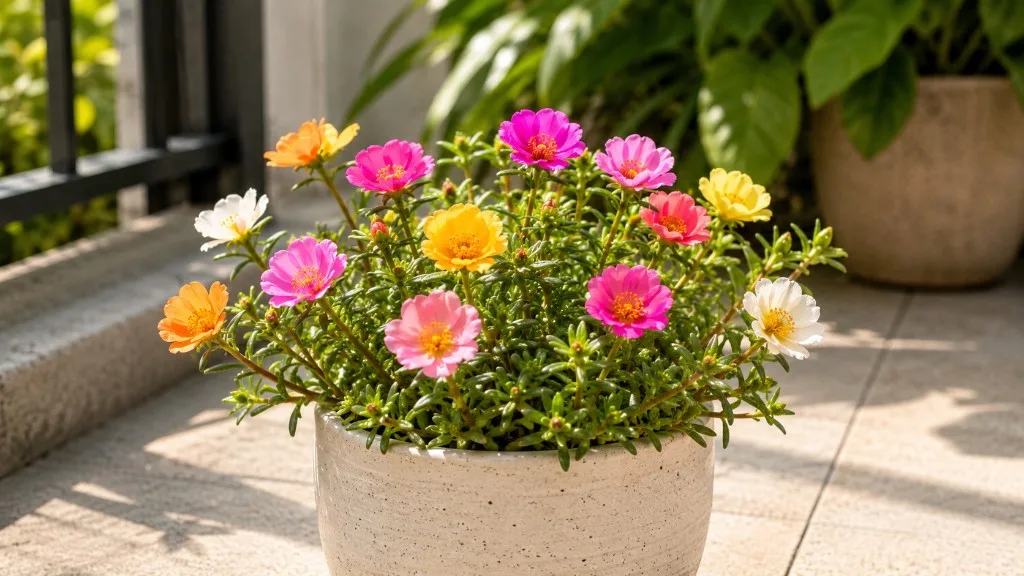
Portulaca Repotting: Seedling Upsize & Final Pot Guide
Portulaca Repotting: Seedling Upsize & Final Pot Guide
Portulaca (Portulaca grandiflora, moss rose) is a warm-season succulent annual whose shallow roots and brittle stems make container moves a logistics problem - not a calendar ritual. The North Carolina Extension Plant Toolbox states plainly that moss rose plants “don’t take well to transplanting and care should be given when handling seedlings.” That single line should shape every decision on this page: minimize moves, keep soil plugs intact, upsize only one pot diameter at a time, and finish in the final bloom container before buds form. For terrace and balcony growers - especially in hot climates like much of India - repotting moss rose means staging seedlings from tray to display pot once or twice per season, then replacing the planting when heat or frost ends the run.
This guide covers the annual container workflow: why moss rose is not a perennial houseplant, the two-stage upsize path, final hanging-basket and bowl sizing, direct-sow shortcuts, March temperature rules, step-by-step plug-intact moves, hardening off, sandy mix ratios, recovery timelines, and the mistakes that cost weeks of bloom.
Why Moss Rose Repotting Is Not Houseplant Repotting
Perennial houseplant advice assumes the same specimen lives in your home for years. You refresh soil, go one pot size up every season or two, and the root system keeps expanding indefinitely. Moss rose repotting breaks that model because Portulaca grandiflora is an annual in most climates - a low-growing succulent that completes its life cycle in one warm season, flowers heavily through summer, and dies at frost or extreme heat decline.
In USDA zones 10–12, portulaca can behave as a short-lived perennial, but for balcony growers in temperate and subtropical regions - including most of India north of the coast - plan on replacing plants each warm season rather than upgrading the same root ball indefinitely. “Repotting” on moss rose therefore means seedling logistics: moving plugs from cramped cells into a bloom container, or sowing directly into that final pot and skipping intermediate moves entirely.
The practical takeaway: moss rose gets one well-timed upsize path per planting, not a recurring spring repot schedule. Direct sowing into the final hanging basket or shallow bowl eliminates repotting when soil temperature cooperates. Indoor- or tray-started seedlings get a short chain - cell to intermediate bowl to final container - completed before the first visible bud. Anything that sounds like “repot your portulaca every spring” is perennial logic applied to the wrong plant.
What NC State Means by “Doesn’t Take Well to Transplanting”
NC State’s warning is not a ban on moving moss rose. It is a directive about root disturbance tolerance. Moss rose has shallow, succulent roots adapted to fast-draining sandy or rocky soils in full sun. Proven Winners notes that portulaca is shallow rooted, making plants more prone to root rot if overwatered - and equally prone to transplant shock if fine root hairs are stripped during a rough move.
Cornell Home Gardening adds that moss rose “does not like transplanting, so handle seedlings carefully” and recommends direct seeding outdoors after frost danger when possible. Wisconsin Horticulture Extension echoes that moss rose stems can be somewhat fragile and break easily, though broken pieces may root if soil stays moist. The extension guidance converges on three practices: keep the soil plug intact, transplant in cool morning hours when you must move plants, and water once to settle then let the mix dry - matching the drought-tolerant physiology NC State describes.
What transplant intolerance looks like in practice: a seedling moved roughly from a 72-cell tray may wilt for several days, lose lower leaves, and stall flowering for one to two weeks even in perfect sun. A plug moved gently into pre-moistened gritty mix with one pot-size increase often shows new tip growth within a week. The difference is almost always handling, not timing alone.
The Two-Stage Container Strategy for Moss Rose
Container moss rose culture works best as a two-stage strategy that respects early seedling vulnerability and the mature plant’s need for stable roots through bloom. Stage one handles the fragile weeks after germination when roots are thin and drying out or sitting wet for half a day can kill the plant. Stage two sets the container the plant will live in through flowering - the last move before buds form.
Skipping stage one and sowing directly into a huge final hanging basket is possible in warm regions, but it creates moisture-management problems for tiny seedlings sitting in a vast soil volume. Skipping stage two and leaving plants in nursery six-packs or 7 cm cells is worse: root-bound moss rose stops branching, produces fewer flowers, and rarely recovers full bloom potential even after a late rescue repot.
Stage 1: Seedling Tray to Intermediate Bowl
Stage one begins when seedlings outgrow their germination container - usually a 72-cell flat, six-pack, or small biodegradable pot - and need more root volume without jumping to a 25 cm hanging basket. Move them into an intermediate pot roughly 2–5 cm wider in diameter than the cell they came from. A common progression runs from a 3 cm cell into a 10–12 cm bowl, or from a 10 cm bowl into a 15 cm pot if outdoor placement is still two to three weeks away.
The intermediate stage exists because moss rose germination and early growth need warm soil - 70–85°F (21–29°C) per Cornell and 71–79°F (22–26°C) for germination per Johnny’s Selected Seeds - but final outdoor containers may not be ready if nights are still cool. Larger pots hold more moisture around small root systems, which slows drying but increases rot risk if you water on autopilot. One size up keeps the soil environment proportional to the roots actually present.
Handle stage-one moves gently. Slide the seedling out with the soil plug fully intact. Cornell warns against disturbing seedlings; do not rinse soil from moss rose roots. Water lightly after the move, provide bright light per our portulaca light guide - seedlings need light for germination and early growth - and hold fertilizer until new growth shows roots have contacted fresh mix.
Editorial note (March 2026, Pune terrace): A tray of Mojave Pink moved from 72-cell to 10 cm bowls on 18 March showed firm new tip growth by day 6 once nights stayed above 16°C and plugs were watered lightly the evening before the move - typical for a plug-intact upsize in early Indian heat, not a guarantee in cooler springs.
Stage 2: Intermediate Bowl to Final Container
Stage two is the last repot of the plant’s life. Move moss rose into its final bloom container when seedlings have two sets of true leaves, stocky green stems, and roots that hold the intermediate soil together but have not yet circled densely at the bottom. For tray-started plants, this often falls three to four weeks after germination, when soil temperatures outdoors stay above 15–18°C (60–65°F) and days regularly exceed 25°C in Indian terrace gardens.
The final container must match cultivar habit - trailing versus mounding - not the seedling’s current size. After stage two, mark the calendar: no more repotting unless you are rescuing obvious root rot (see our root rot guide). Bud formation is the off switch. Your work shifts to watering, full sun placement, and optional light feeding per our fertilizer guide through bloom.
When Moss Rose Seedlings Are Ready for Their First Upsize
The most reliable readiness signal is botanical, not cosmetic. Wait for two sets of true leaves - the narrow, succulent needles that look like adult moss rose foliage - not just the rounded cotyledons that emerged first. Most seedlings hit this mark at roughly 5–8 cm tall, typically 10–14 days after germination under Cornell’s 70–85°F germination range, though total time to first upsize is often three to four weeks once true leaves expand and roots explore the cell.
Height alone misleads. A pale, stretched seedling can be 8 cm tall with only one set of true leaves because it was grown on a dim windowsill. That plant is not ready; it is etiolated. Improve light before upsizing - moss rose needs full sun (six or more hours of direct light daily) once hardened off. Moving a weak seedling into a bigger pot does not fix stretch; it gives you a weak seedling in a bigger pot.
Visual confirmation cues (until photos are added): A ready plug lifts as one cohesive cylinder when you squeeze the cell - white roots visible at the bottom but not spiraling thickly, stem base green and firm, true leaves plump. A too-early plug crumbles when tipped out with bare white root tips and cotyledons only. A root-bound six-pack shows roots poking from multiple drainage holes, soil pulling away from the cell wall, and stunted branching even under good light - upsize within 24 hours or accept reduced bloom.
Root cues matter too. Lift a seedling gently from its cell. Roots should be visible at drainage holes or just beginning to hold the soil plug together when you squeeze the cell lightly. If roots spiral thickly or poke from multiple holes, upsize within the next day. If the plug falls apart and roots are barely visible, wait a few more days. Keeping seedlings in cells so long that roots girdle themselves caps final spread and flower count for the rest of the season - a common mistake when March sowing outpaces outdoor warmth.
Final Pot Size for Trailing vs Upright Cultivars
Final container volume should be chosen from mature spread and habit, because moss rose grows fast in heat and does not forgive a cramped bloom-season home. NC State lists typical dimensions of 8 inches tall and 1 foot wide for standard P. grandiflora, while Proven Winners Mojave-series guidance cites 4–8 inches tall by 12–16 inches wide for modern trailing cultivars. Johnny’s Selected Seeds recommends 3 plants per 10–12 inch container for finished pots.
| Cultivar habit | Typical mature size | Final container |
|---|---|---|
| Trailing / spreading (Rio, Mojave, Yubi Summer Joy) | 10–20 cm tall, 30–40 cm spread | 25–30 cm hanging basket or 30 cm shallow bowl; one plant per pocket in baskets |
| Mounding / compact (Margarita, Happy Hour) | 8–15 cm tall, 20–30 cm spread | 15–20 cm bowl or 20 cm pot; 3–5 plants in a 30 cm bowl for mass color |
| Nursery pack / single cell finish | Seedling stage | 10–12 cm intermediate only - not a bloom container |
Drainage holes are non-negotiable. A decorative pot without holes is a bloom-season trap. Moss rose in full sun on a terrace can dry a small bowl in one hot afternoon, but it still cannot sit in saturated soil for 24 hours without crown rot - the failure mode covered in our overwatering guide. If you use a cachepot, grow in a plain nursery pot with holes and lift it out to water.
Proven Winners recommends spacing plants 15–30 cm (6–12 inches) apart in beds depending on vigor; apply the same logic in mixed planters - do not pack six trailing moss roses into a 20 cm pot because they look small at transplant time.
Direct Sow vs Transplant: When Repotting Never Happens
Many experienced growers skip staged repotting entirely and direct sow into the final container once weather is warm. Cornell advises scattering seeds outdoors after frost danger or starting indoors 6–8 weeks before last frost, but also notes that moss rose handles direct seeding where desired - eliminating root disturbance completely, which is the gold standard for a transplant-sensitive annual. Missouri Botanical Garden likewise recommends sowing seed directly in the garden after last frost or starting indoors 6–8 weeks earlier.
Surface-sow tiny seeds on moist, well-draining mix; do not bury them, because light aids germination. Sow two to three seeds per final pot, then thin to one plant per 25–30 cm hanging basket or three to five plants per 30 cm bowl once true leaves appear. Competition from twins in a single container looks fine at week three and disastrous by week six - thin ruthlessly.
Direct sowing wins when frost is past, soil is warm, and the container sits in full sun all day. It loses when you are trying to beat the season by more than a few weeks in a cool spring. In that case, tray starts and one gentle upsize are worth the transplant risk if you keep plugs intact. For balcony gardeners who cannot sow in ground soil, direct sowing into the final patio pot is often the lowest-stress path - aligned with NC State’s preference for minimal handling.
India and March Sowing: Temperature Rules Before You Pot Up
In much of India, moss rose sowing starts from March onward when daytime highs stay consistently above 25°C and nights remain above 15–18°C. Those thresholds mirror Cornell’s 70–85°F germination range and Proven Winners’ guidance that portulaca prefers 70–90°F active growth, with damage possible below 50°F (10°C).
Do not upsize seedlings into final outdoor containers during an unseasonable cool spell - cold soil stalls root growth after transplant, leaving plants in limbo. Wait until terrace tiles hold warmth in the evening and soil in a test pot dries on a predictable rhythm. In monsoon-heavy regions, complete the final container move before peak daily rains if your balcony lacks shelter; saturated fresh mix in an oversized new pot is harder to manage than in a nearly full cell.
Second sowings in June–July follow the same readiness rules: true leaves, intact plug, one size up at a time, final pot before buds. A September sowing for short winter color in frost-free zones is a replacement planting, not a repot of summer stock.
Step-by-Step: How to Upsize Moss Rose Without Shock
The mechanics are simple. The discipline is in what you choose not to do - bare-rooting, burying crowns, or jumping two pot sizes at once.
Water lightly a few hours before the move so the soil plug holds together but is not soggy. Dry plugs crumble; wet plugs tear.
Prepare the new pot with pre-moistened sandy mix (see soil section below). Fill partway so the seedling’s soil surface will sit 1 cm below the rim after planting.
Remove the seedling by pushing up from the drainage hole of a flexible cell, or tipping the pot while supporting the stem between two fingers. Never yank by the brittle stem.
Keep the plug intact. Do not tease apart the sides unless you see dense circling at the very bottom - and even then, disturb only the bottom 6 mm.
Place the plug at the same depth it grew before. Burying the succulent crown invites rot; exposing roots on the surface dries them within hours.
Backfill with fresh mix and settle with gentle taps. Do not stab a dowel through the root ball.
Water once until a small amount drains, then empty any saucer. Skip fertilizer for at least two weeks per our fertilizer hold guidance.
Place immediately in bright light. For outdoor final moves, shade for 48 hours, then return to full sun as the plant hardens.
Signs you are doing it right: firm new tip growth within 5–7 days (typical range, not a guarantee), no progressive wilting, and soil drying on a predictable rhythm. Signs something is off: sustained limp stems past 72 hours, yellowing from the base up, or sour-smelling mix - often overwatering in a too-large pot rather than transplant timing alone.
Hardening Off Before Outdoor Final Placement
Indoor- or shade-house-started moss rose needs gradual acclimation before living full-time on a windy terrace. Move trays outdoors to a sheltered bright spot for one hour on day one, then increase outdoor time over 7–10 days while reducing protection from wind. Skipping hardening off scorches leaves and causes wilting you may blame on the repot when the real failure was light acclimation.
Schedule the final container move toward the end of hardening off, so the plant enters its permanent home already accustomed to outdoor light levels. If night temperatures drop below 10°C during hardening, bring plants inside overnight - cold nights after repotting stall root establishment on a heat-loving annual.
During hardening off, check moisture more often than indoors. Wind and sun pull water from small bowls in hours. Match your watering rhythm to faster dry-down once plants sit in full terrace sun.
Common Moss Rose Repotting Mistakes and Quick Fixes
Most failures come from applying perennial houseplant instincts to a fast succulent annual.
Too-large pot: Jumping from a 7 cm cell into a 25 cm decorative bowl surrounds tiny roots with a large volume of wet soil they cannot explore quickly. Fungi move faster than moss rose roots. One pot size up at each stage - roughly 2–5 cm wider in diameter - until the final container. The final pot is chosen for mature spread, but only after roots nearly fill the previous home.
Bare-rooting or breaking the plug: Shaking off mix and combing moss rose roots destroys fine root hairs responsible for water uptake. Proven Winners instructs: “Remove the plant from its nursery container and avoid disturbing the fragile roots.” Keep original soil around the ball; slide the plant out, place it, backfill, water once.
Repotting after buds form: Once moss rose enters reproductive growth, the root system functions as a stable pipeline, not a construction zone. Mid-bloom repotting on a short-season annual wastes weeks of color - flowers do not reopen on schedule after shock. If buds are visible, finish the season in place. If the plant wilts daily in a tiny pack at peak bloom, you chose the final container too small weeks earlier - note it for next year’s propagation calendar.
Nursery pack bought in full bloom: Do not repot a flowering six-pack into a larger bowl unless roots are severely root-bound and the plant wilts by midday despite watering - a rare rescue case where accepting bud drop is better than finishing the season in a dried-out plug. Otherwise, plant the pack intact at final spacing or slip each plug into its bloom container without teasing roots.
Other quick fixes: using peat-heavy indoor mix without sand or perlite (see soil section); repotting during midday heat instead of morning; fertilizing immediately after repot on dry roots; confusing Portulaca oleracea (purslane) with P. grandiflora (moss rose) when reading mixed nursery labels.
Sandy Soil Mix and Drainage for Container Moss Rose
Moss rose wants sandy, rocky, gritty soil with exceptional drainage and low to moderate fertility. NC State lists good drainage as essential and includes sand and shallow rocky soil among suitable textures. For repotting, use a succulent-leaning mix, not standard moisture-retentive houseplant soil.
A reliable home recipe for container repotting:
- 40% potting mix or coco coir (structure, not richness)
- 40% coarse sand or perlite (drainage and air)
- 20% fine gravel, pumice, or crushed granite (weight and fast dry-down)
Proven Winners recommends an all-purpose potting mix with added perlite for extra drainage in pots. Target pH 5.5–7.0, slightly acidic to neutral, which NC State lists as suitable. Full details and drainage testing live in our portulaca soil guide.
When repotting into reused terracotta, scrub salt crust and refresh mix entirely - old peat collapses and holds water around succulent crowns. Choose pots with large drainage holes; elevate on pot feet during monsoon season so saucers do not become standing water reservoirs.
Recovery Timeline After Transplant
Expect mild wilting for 24–48 hours after a well-executed plug-intact move - a typical range, not a promise. Leaves should recover overnight if roots were minimally disturbed. Wilting that worsens over five days suggests rot, crown burial, or a pot far too large - inspect stem color at the soil line.
New tip growth within 5–7 days is the clearest success signal. Older leaves may yellow slightly; do not panic unless yellowing climbs the stem. Full mat spread in the final container typically develops over 3–4 weeks in warm sun as branches fill the pot rim - moss rose forms a dense prostrate mat quickly when roots are stable.
Hold fertilizer until new growth appears, typically 10–14 days after the final repot. Moss rose prefers lean conditions; excess nitrogen after repotting produces soft stems and fewer open flowers.
Pet Safety: Moss Rose vs Purslane
Moss rose (P. grandiflora) is an ornamental succulent with large colorful flowers. Common purslane (P. oleracea) is a related species with flat leaves, often grown or foraged as an edible green. Nursery tags frequently blur the names; verify what you are handling before repotting near pets.
The ASPCA lists Portulaca species as toxic to cats, dogs, and horses because of soluble calcium oxalates. Possible signs include vomiting, diarrhea, tremors, and kidney injury - cats appear especially vulnerable. Wear gloves if sap irritates skin when handling root balls. If ingestion is suspected, call ASPCA Animal Poison Control at (888) 426-4435 and your veterinarian promptly.
Tray-Start vs Direct-Sow Decision Table
| Factor | Tray-start then upsize | Direct sow in final container |
|---|---|---|
| Minimum soil temp | 21–29°C germination indoors; move out after frost and hardening | Soil ≥23°C (75°F) per Johnny’s; frost-free outdoors |
| Transplant shock risk | Moderate - plug-intact discipline required | None - roots never moved |
| Weeks to first bloom | Earlier bloom if started 4–8 weeks before outdoor warmth | Slower start; catches up in heat |
| Best for | Cool springs, competitive bloom timing, ordered cultivar mixes | Warm terraces, India March+ sowing, lowest-stress path |
| Repot count | 1–2 upsizes before buds | Zero if thinned in place |
| Common failure | Bare-rooting, oversized final jump, repot after buds | Overwatering huge pot around tiny seedlings; failure to thin |
Use tray-start when you need bloom weeks earlier than your climate allows outdoors. Use direct sow when terrace soil is already warm and the basket will sit in full sun all day - the path NC State and Cornell favor when handling can be avoided entirely.
FAQs
When should I repot portulaca seedlings?
Repot moss rose seedlings when they have two sets of true leaves, stocky green stems about 5–8 cm tall, and roots beginning to hold the soil plug together - usually three to four weeks after germination in warm conditions. Move one pot size up (roughly 2–5 cm wider), and place them in the final bloom container before buds form, after soil temperatures stay above 15–18°C and days regularly exceed 25°C.
What soil mix should I use when repotting portulaca?
Use a sandy, succulent-leaning mix with exceptional drainage - not standard peat-heavy houseplant soil. A reliable recipe is 40% potting mix or coco coir, 40% coarse sand or perlite, and 20% fine gravel or pumice. Proven Winners recommends all-purpose potting mix with added perlite for container portulaca. Target pH 5.5–7.0 and always use pots with drainage holes.
Can I sow moss rose directly in its final hanging basket?
Yes, when soil is warm and the basket will sit in full sun all day. Surface-sow seeds without covering them because light aids germination, then thin to one plant per 25–30 cm basket pocket once true leaves appear. Direct sowing eliminates transplant shock entirely - the lowest-stress path for a species NC State warns does not take transplanting well.
Can I repot portulaca after it starts blooming?
You should not. Moss rose redirects energy to flowers once buds form, and mid-bloom repotting on this short-season annual often causes wilting, bud drop, and lost weeks of color. If the plant is already flowering, finish the season in place and plan a better final container size for next year’s sowing or cuttings. Rescue repot only when a root-bound nursery pack wilts by midday despite watering.
Why does NC State say portulaca doesn’t take transplanting well?
Moss rose has shallow, succulent roots adapted to fast-draining soil; disturbing the root ball strips fine root hairs that absorb water and stalls growth for one to two weeks. NC State advises care when handling seedlings. Keep the soil plug intact, upsize only one pot diameter at a time, transplant in cool morning hours, water once to settle, then let the mix dry - or direct-sow into the final container to avoid moving roots at all.
Can I repot portulaca bought in bloom at the nursery?
Usually no. Flowering nursery packs are already in their bloom-season home unless severely root-bound. If the pack dries out twice daily and roots circle the bottom, slip plugs into a slightly larger gritty container without breaking the root ball - expect bud drop. Otherwise, harden off and place the pack intact in full sun.
Conclusion
Use this decision tree before every move: (1) Is the plant still a seedling without buds? If no, do not repot unless rescue root-bound wilting forces your hand. (2) Can you sow directly into the final container this week with warm soil? If yes, skip intermediate repots. (3) Is the next pot only one size up with fresh gritty mix? If no, fix the pot choice first. (4) Will the destination sit in full sun after a brief hardening period? If no, fix placement before moving roots.
Mark sowing date, first upsize, and final-container date on the same calendar line. Cross-check overview for full-care context, propagation for seed-starting before your first upsize, light for post-move sun needs, and watering for post-repot dry-down rhythm. Next season, adjust final pot volume based on how far trailing cultivars actually spread on your rail - that feedback loop, not yearly repotting, is how container moss rose improves even though the plants themselves are brand new each warm season.
When to use this page vs other Portulaca guides
- Portulaca overview - Start here for whole-plant context before deep-diving this topic.
- Portulaca problems hub - Jump to symptom-specific fix guides when this care topic does not resolve the issue.
- Root Rot on Portulaca - Escalate here when repotting adjustments are not enough.