Overwatering on Portulaca: Causes, Checks & Fixes
Quick answer
Overwatering on Portulaca is the most common container failure-fleshy stems store water but roots suffocate in soggy mix. First step: stop watering immediately and confirm stem-base firmness before adding any moisture.
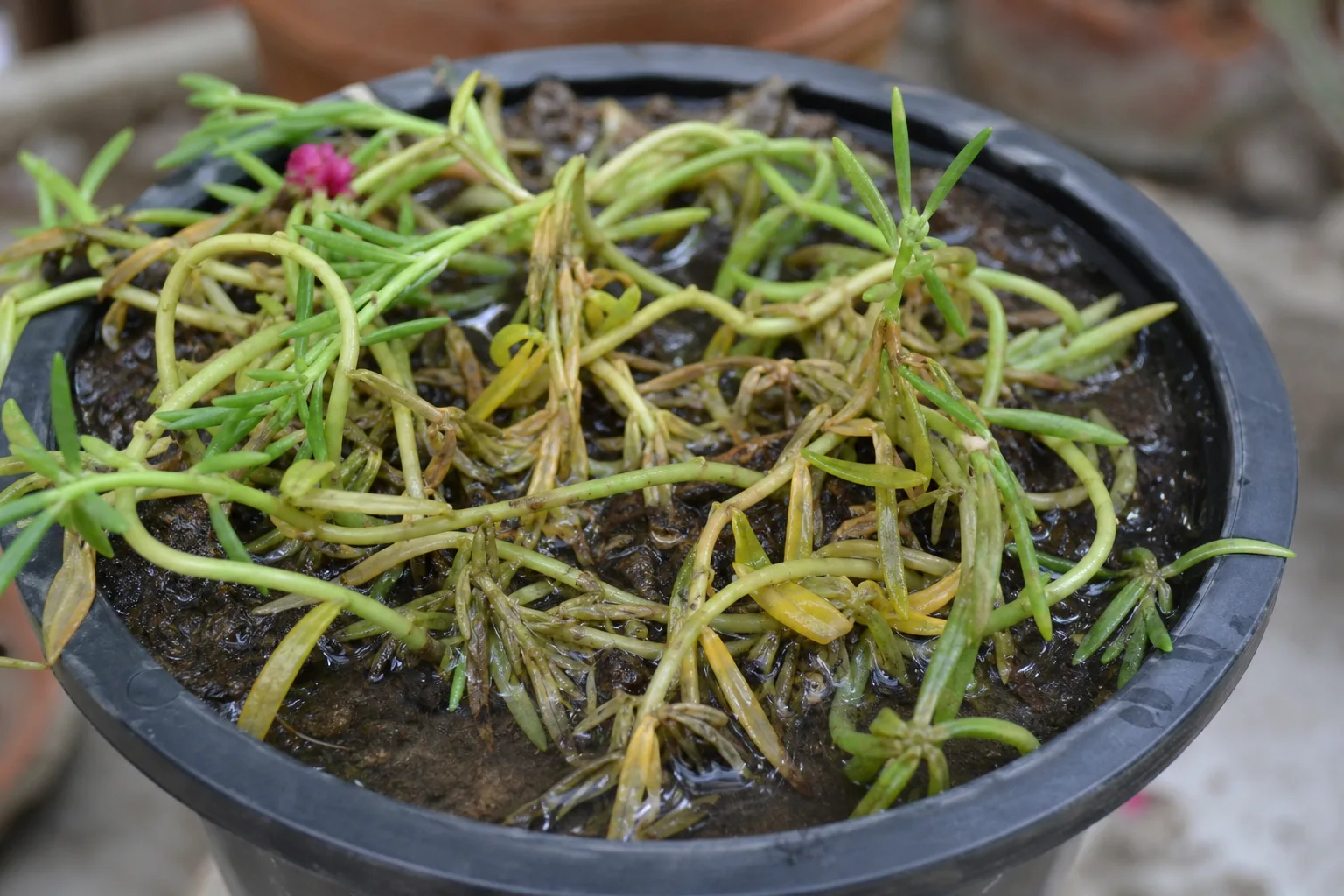
Overwatering on Portulaca: Causes, Checks & Fixes
This guide covers overwatering on Portulaca. See also the general Overwatering guide, watering, and light pages for this plant.
Overwatering on Portulaca: Causes, Checks & Fixes
Quick answer
Overwatering on Portulaca (Portulaca grandiflora, Moss Rose) is the most common container failure-fleshy stems store water but roots suffocate in soggy mix. First step: stop watering immediately and confirm stem-base firmness before adding any moisture.
Scope of this page: This is an early-triage guide for Moss Rose showing wet-soil stress before you have confirmed mushy roots. If you already unpot and find brown, mushy roots on more than one-third of the root mass, open the root rot rescue guide instead. If symptoms flip between soggy and bone-dry within the same week, start at water stress.
Portulaca is easily grown in dry to moderately moist, well-drained soils in Portulaca light guide. “Moderately moist” in garden beds does not mean constantly damp in containers-treat Moss Rose like a succulent annual, not a thirsty bedding impatiens. For normal dry-down rhythm, see the portulaca watering guide.
Why Portulaca suffers from overwatering
Fleshy stems vs. oxygen-starved roots
Gardeners overwater because plump trailing shoots look thirsty. In reality, Moss Rose stores water in fleshy, succulent leaves and stems while its shallow roots need oxygen. Poorly drained soils may lead to crown rot when the root zone stays saturated-roots stop absorbing water, and the plant wilts on wet soil.
Monsoon calendar watering and indoor overwintering traps
Cool, overcast monsoon weeks slow evaporation on Indian terraces and balconies. Watering on the same summer calendar-every three or four days-keeps mix damp when rain already supplied moisture. Indoor overwintering attempts in dim rooms extend wet cycles further; Moss Rose needs hot, dry conditions in full sun, not steady moisture in shade.
Hanging baskets, oversize pots, and cool shade
Proven Winners notes portulaca is shallow rooted, which makes shallow baskets rot faster when daily sprinkles keep fine roots damp. Oversize glazed pots hold water at the bottom while the surface looks dry. Trailing shoots can mask a soft, yellow stem base-always lift foliage and check the crown, not just the pretty runners.
What overwatering looks like on Portulaca
Sour soil, soft stem base, and wilting on wet mix
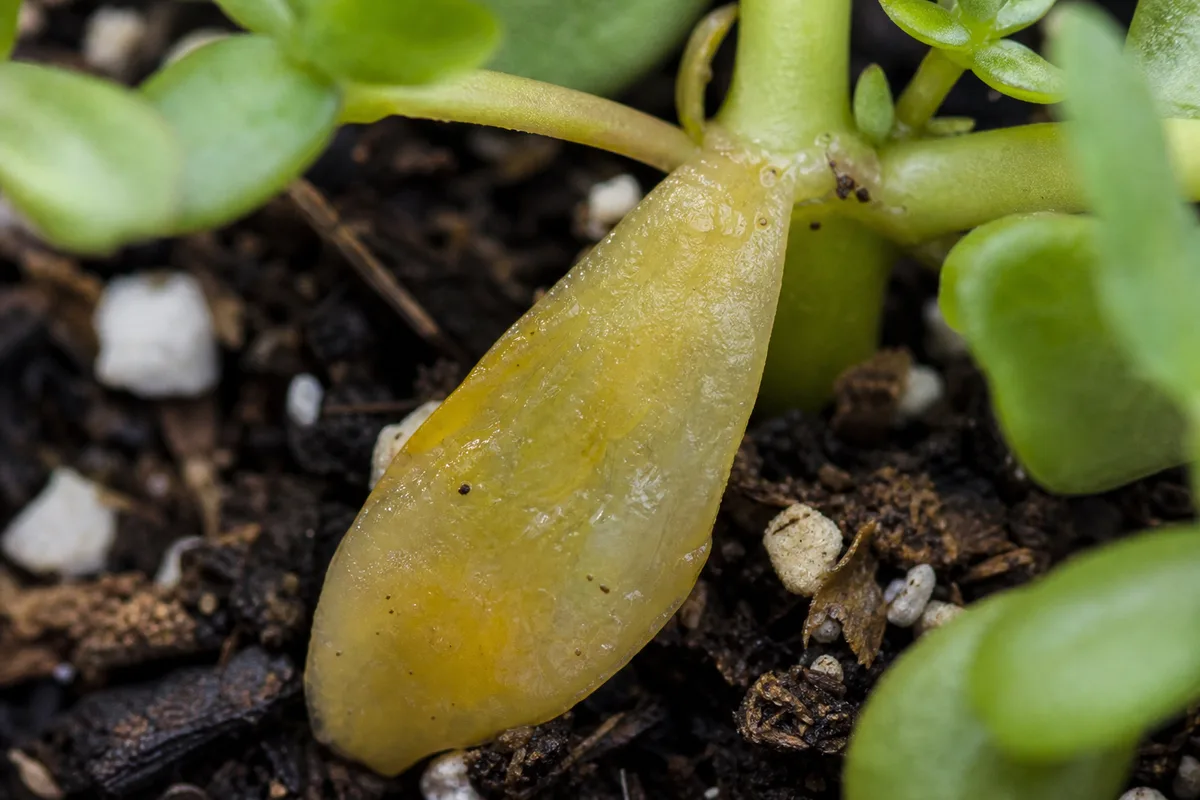
Overwatering symptoms on Portulaca - compare with healthy tissue on the same plant.
Early signs include soil that stays dark and heavy for days, a sour smell when you lift the pot, and stems that turn yellow or translucent at the soil line. Wilting on wet soil is the classic mismatch-leaves look tired while the root zone is already swampy. Outer leaves may drop while the base softens.
Flowers failing to open as an early stress cue
Moss Rose blooms open in bright sunlight and close at night or in shade-that daily rhythm is normal. When flowers stay closed on sunny afternoons while soil stays damp, suspect wet-root stress before you pour more water. Yellowing often follows; see brown leaves if necrosis spreads.
Severity stages
| Stage | What you see | Urgency |
|---|---|---|
| Mild | Heavy pot, damp mix, no stem softness yet | Stop watering; improve drainage |
| Moderate | Soft stem base on wet soil, flowers not opening | Unpot and inspect roots; repot dry if needed |
| Severe | Blackening climbing stems, sour smell, collapse | Escalate to root rot rescue |
Lookalikes: underwatering on Portulaca vs. root rot
| Signal | Overwatering (this page) | Underwatering | Advanced root rot |
|---|---|---|---|
| Pot weight | Heavy, cool | Light | Heavy or light if mix collapsed |
| Stem base | Soft on wet soil | Firm | Soft, may be black |
| Soil | Wet at 2–3 cm depth | Bone-dry | Wet, sour, or compacted |
| Wilt pattern | Limp on moist soil | Limp on dry soil, perks after soak | Limp despite moisture |
| Next step | Stop watering | Underwatering guide | Root rot guide |
How to confirm the cause
Work through these checks in order:
- Pot weight - Lift the container. A heavy, cool pot days after your last watering suggests slow drainage or oversize volume.
- Stem-base firmness - Push foliage aside at the soil line. Soft, squishy tissue on wet mix confirms overwatering; firm stems on dry mix point to underwatering.
- Soil smell and moisture - Sour odor plus damp mix at 2–3 cm depth (finger test from the watering guide) is rot risk until proven otherwise.
- Drainage flow - Water should exit holes freely within seconds. Blocked holes, stones over holes, or cachepots holding runoff extend saturation.
- Sun and season - Dim sites and monsoon overcast slow dry-down. Moss Rose in less than six hours of direct sun stays wet longer.
- Root inspection - If softness persists after several dry days, gently unpot. Pale firm roots support mild recovery; brown mushy roots mean escalate to root rot rescue.
Confirmed overwatering = wet soil + soft base OR wilt on moist soil + heavy pot. Not overwatering = bone-dry soil + firm stems → open underwatering.
First fix for Portulaca
Mild cases - stop watering and improve drainage. Lift the pot out of any cachepot, empty saucers, confirm holes are clear, and place in the sunniest spot with airflow. Do not add moisture until soil is completely dry at depth.
Moderate cases - unpot, trim, repot dry. Shake off wet soil, trim any mushy roots with clean scissors, let trimmed roots air-dry one to two hours, then repot into dry gritty mix. A workable recovery blend is 40% potting mix or coco coir, 40% perlite or coarse sand, and 20% fine gravel-full ratios and drainage testing live in the portulaca soil guide. Wait 5–7 days before the next drink in full sun.
One primary fix at a time-do not repot, fertilize, and spray fungicide on the same day.
Step-by-step recovery
- Stop all watering; empty standing water from saucers and bracket cups on hanging baskets.
- Confirm severity using the table above-mild dry-down only vs. moderate repot.
- Unpot only if stem softness persists after several dry days or soil smells sour.
- Rinse roots gently. Trim brown mushy tissue; keep pale firm roots.
- Repot into dry sandy mix with open drainage; do not tamp wet.
- Relocate to full direct sun; wait 5–7 days, then finger-test before watering.
- Monitor new tips weekly-hold fertilizer until growth firms up.
Recovery timeline
Mild overwatering stabilizes in one to two weeks once mix cycles dry correctly. Moderate cases with trimmed roots may need two to three weeks before new trailing shoots look vigorous. Severe crown softness can be irreversible within days-some plants cannot be saved if rot reaches the crown. Judge success by firm new tips and soil that dries within a few days after watering, not by old yellow stems re-greening.
What not to do
Do not water limp leaves when soil is already wet-overwatering can result in root rot and worsen collapse. Do not use peat-heavy mix without grit. Do not leave saucers or cachepots full after rain. Do not assume daily watering is kindness-shallow roots rot in damp mix faster than drought stresses the plant. Wear gloves when pruning-Portulaca is toxic to cats and dogs.
How to prevent overwatering on Portulaca
Water only when soil is completely dry at 2–3 cm depth in containers. Use sandy, rocky, fast-draining mix in full sun. Match pot size to shallow roots-wide bowls beat deep cachepots. During monsoon, skip scheduled watering after measurable rain until the finger test confirms dryness. Empty runoff after every soak. Follow the portulaca watering guide for terrace rhythm rather than a fixed calendar.
When to escalate to root rot rescue
Open the root rot guide when:
- More than one-third of roots are mushy after inspection
- Blackening climbs stems above the soil line
- Stems collapse despite several dry days in sun
- Sour smell returns within 48 hours of Portulaca repotting guide into dry mix
This page covers pause-and-dry triage and moderate repot before rot is confirmed. Advanced crown loss needs the dedicated rescue protocol.
Practical checks
Urgency check
Urgent at first stem softness on wet soil, sour pot smell, or flowers failing to open for several sunny days while mix stays damp.
Best inspection order
Pot weight → stem-base firmness → soil smell and finger-test depth → drainage flow → sun hours → roots if softness persists.
Portulaca care cross-check
If you are watering more than once a week in cool weather on a shaded balcony, you are likely overwatering Moss Rose. Compare your habit with the watering guide dry-down tests-not a summer-only calendar.
When to use this page vs other Portulaca guides
- Portulaca watering guide - Use for routine moisture checks before assuming overwatering is the main issue.
- Portulaca problems hub - Browse all 50 common issues on this species.
- Root Rot on Portulaca - Different entry point when symptoms overlap with overwatering.
- Wilting on Portulaca - Different entry point when symptoms overlap with overwatering.
- Fungus Gnats on Portulaca - Different entry point when symptoms overlap with overwatering.