Fungus Gnats on Portulaca: Causes, Checks & Fixes
Quick answer
Fungus gnats on Portulaca mean the mix stays wet too long for a full-sun succulent annual. Let the entire pot dry completely before watering again-that is the first fix. Add sticky traps for adults and BTI for larvae only if drying alone is slow.
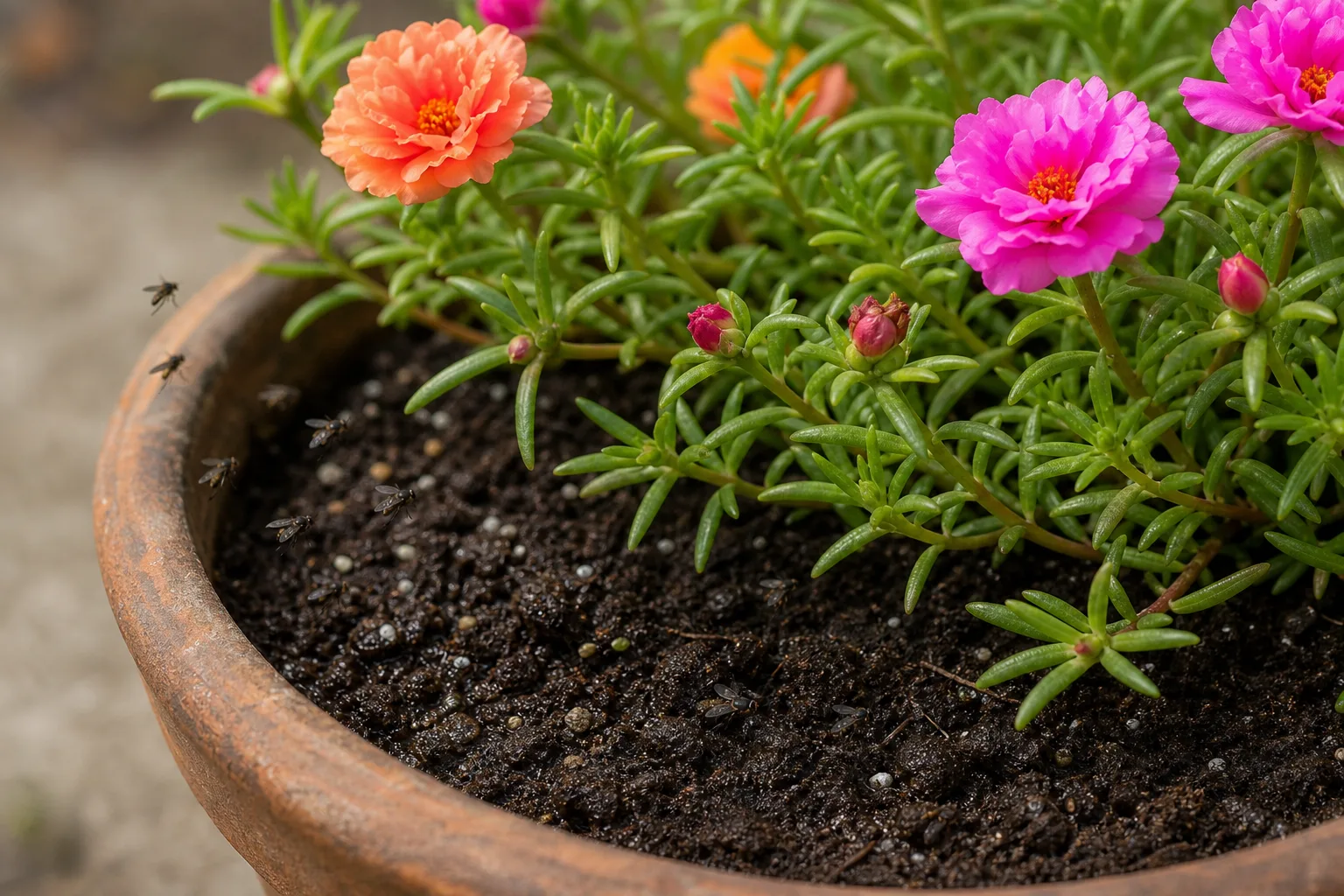
Fungus Gnats on Portulaca: Causes, Checks & Fixes
This guide covers fungus gnats on Portulaca. See also the general Fungus Gnats guide, watering, and light pages for this plant.
Fungus Gnats on Portulaca: Causes, Checks & Fixes
Quick answer
Fungus gnats on Portulaca (Portulaca grandiflora, Moss Rose) are a moisture warning, not a random pest attack. These tiny flies breed when the top layer of potting mix stays damp for days-exactly the opposite of what this full-sun succulent annual evolved for. On terrace pots and hanging baskets, gnats almost always mean someone watered Moss Rose like a moisture-loving houseplant.
This page covers pest identification and breaking the gnat life cycle. If your main problem is soggy soil, soft stems, or rescue watering habits without flies, start with the overwatering guide and portulaca watering rhythm instead.
First fix: stop watering until the entire pot is dry throughout. Lift the container-if it still feels heavy or cool at the root zone, wait. Fungus gnat larvae die when moist soil dries. Only after dry-down is underway should you add yellow sticky traps for adults or BTI products for persistent larvae.
What fungus gnats look like on Portulaca
The clearest sign is behavioral: small dark flies that flutter up when you water, bump the pot, or brush trailing stems. Adults are mosquito-sized but weaker fliers-they hover near the soil line, windows, and sunny railings rather than biting you. Moss Rose leaves and papery flowers usually look fine at first; unlike aphids, gnats do not coat buds or leave sticky honeydew on fleshy foliage.
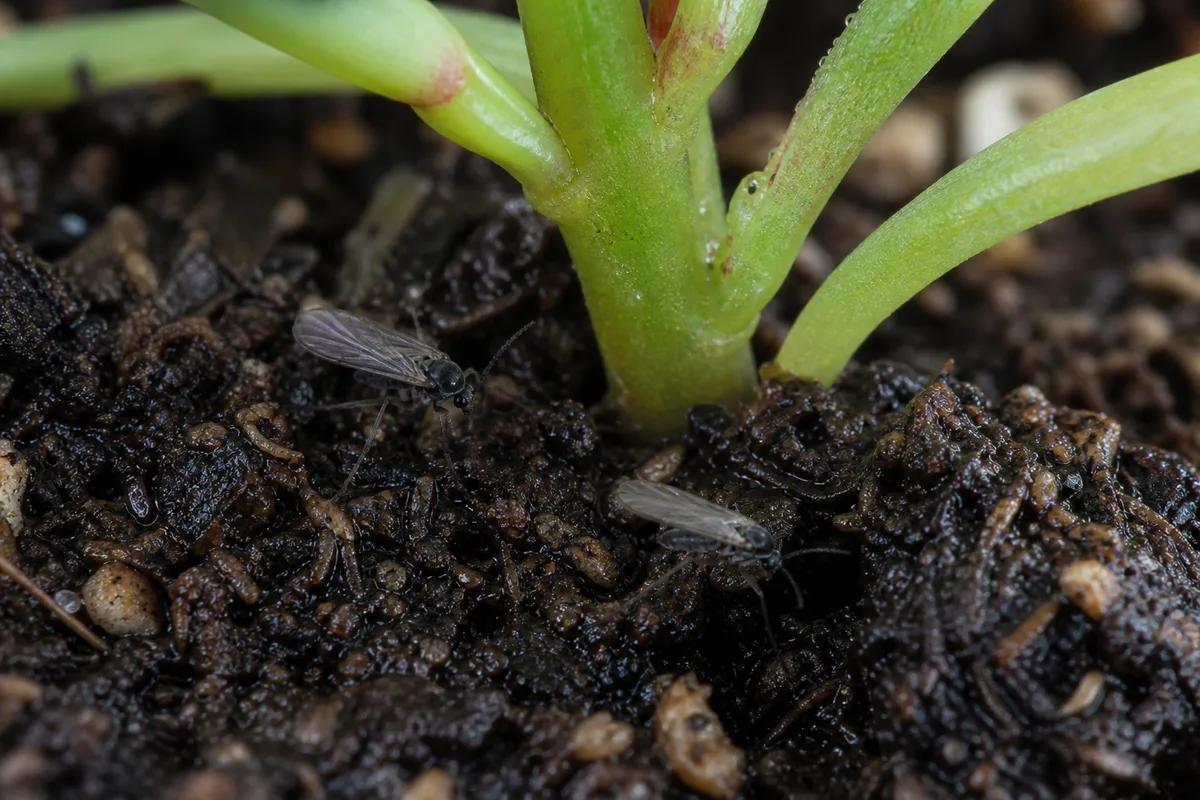
Fungus Gnats symptoms on Portulaca - compare with healthy tissue on the same plant.
Damage and breeding happen in the mix:
- Translucent, worm-like larvae in the top inch when you scrape soil onto white paper
- Soil that never dries on the surface even a week after watering
- Green algae or white mold on the same constantly damp surface-see mold on soil when fuzzy growth dominates
- Yellow sticky traps near the pot rim catching dozens of tiny flies within days
If stems soften at the base while soil stays wet, treat that as root stress from moisture, not as a fly problem alone. Gnats and crown rot often share the same cause on Moss Rose.
Lookalikes: fruit flies vs. fungus gnats
Fruit flies are rounder-bodied and cluster near kitchen fruit, compost bins, or open drains-not necessarily a constantly wet Moss Rose pot. Fungus gnats have slender bodies, long legs, and clear wings; they rise from the pot when disturbed and rest on damp mix. If the terrace soil is bone-dry, stems are firm, and flies appear only indoors near food, clean the kitchen before drying an already-thirsty annual.
Shore flies also breed in wet media but look stouter with short antennae; the fix is the same-dry the surface and improve drainage.
Why Portulaca gets fungus gnats
Fungus gnats need persistently moist organic soil to reproduce. Females lay eggs in damp mix; larvae feed on fungi, decaying organic matter, and tender feeder roots when populations are high. Overwatered container plants are especially vulnerable because wet mix supports both fungal growth and continuous egg-laying.
Moss Rose is prone to this pattern for plant-specific reasons:
Watering before the pot dries. This annual stores water in fleshy succulent leaves and needs the entire mix dry between soakings in full sun-not a damp surface with wet roots below. Watering on a calendar while the pot still feels heavy keeps larvae fed for weeks.
Cool-spring peat-heavy repots. Nursery packs and bagged potting soil hold moisture in shade before summer heat arrives. Moss Rose planted in rich mix under an eave stays wet longer than the same plant on an open sunny rail-gnats appear while flowers still close on cloudy days.
Oversized bowls and hanging baskets. Trailing cultivars tempt growers into deep decorative pots, but Moss Rose has shallow roots. A large wet zone around a small root ball dries slowly. Bracket cups and saucers that hold runoff extend surface dampness where eggs hatch.
Treating outdoor annuals like houseplants. Moss Rose belongs in well-drained sandy or rocky soil in full sun-not dim corners with frequent light sprinkles. Shade slows transpiration; the mix stays wet even when you water less than you think.
Gnats are a symptom of wet culture, not a primary Moss Rose pest like aphids or slugs. They mean habitat is wrong.
How to confirm the cause
Work through these checks before reaching for sprays:
- Fly behavior - Do insects rise from the pot when disturbed? Fungus gnats fit. Fruit flies hover near food; shore flies rest on algae-coated wet surfaces.
- Surface moisture - Is the top inch damp to the touch days after watering? Press a finger 2–3 cm deep; crumbly dry mix with occasional flies may mean a nearby infested pot instead.
- Pot weight and drainage - Lift the container. Heavy pot plus slow dry-down confirms excess moisture. Saucer or bracket cup still holding water?
- Larva scrape - Remove the top centimeter of mix onto white paper. Tiny white or translucent larvae confirm breeding in this pot.
- Stem firmness - Press where reddish stems meet soil. Firm is good; soft or mushy means moisture damage beyond gnats alone-open the root rot guide.
- Sun hours and season - Cool spring with unchanged watering often triggers gnats before summer heat. Moss Rose in fewer than six hours of direct sun dries too slowly for gritty culture.
Confirmation decision guide
| What you see | Likely cause | First move |
|---|---|---|
| Flies + larvae + damp top inch + firm stems | Gnats on wet mix | Dry entire pot; move to full sun |
| Flies + soft stems + sour smell on wet soil | Gnats + advancing rot | Stop water; escalate to root rot rescue |
| Algae or mold + flies, firm stems | Wet-culture cluster | Dry-down + see mold on soil |
| Dry mix throughout, flies near kitchen only | Fruit flies | Clean food sources; do not over-dry Moss Rose |
| Wet soil, no flies, flowers closed midday | Overwatering without pests | Overwatering guide |
First fix for Portulaca
Let the potting mix dry completely before the next watering.
That single change targets the root cause. Larvae in the upper soil cannot survive when the surface stays dry long enough, and adult females lose favorable egg-laying sites. For Moss Rose, “dry” means the pot feels light, the top 2–3 cm are crumbly, and you may wait longer than houseplant advice suggests-especially during cool spring or monsoon overcast weeks.
Hold Portulaca repotting guide, fertilizer, and pesticide sprays until moisture rhythm is stable. Stressed roots from wet soil need consistency, not extra interventions on day one.
Step 2: Move to full sun and improve drainage
Relocate to the sunniest spot with six or more hours of direct light so the mix cycles faster. Empty saucers and hanging-basket runoff cups after every soak. Confirm drainage holes are open-not sealed by roots or liner fabric.
Step 3: Sticky traps and BTI for persistent larvae
Once drying is underway, add controls by severity:
- Yellow sticky traps - Place just above soil level or pegged to basket chains. Replace when coated. Traps reduce adult egg-layers; they do not fix wet soil alone.
- BTI drenches - Products containing Bacillus thuringiensis subsp. israelensis (Mosquito Bits, Gnatrol) target larvae in moist soil. Prepare per label, water through the mix, and repeat at about five-day intervals for several weeks because BTI does not kill eggs or pupae and does not persist indoors.
Skip hydrogen peroxide drenches as a default-they stress shallow succulent roots and do not replace drying plus BTI for sustained infestations.
When to repot into grittier mix
Repot only when the basket stays soggy for weeks despite corrected watering, when mix smells sour, or when peat-heavy nursery soil will not dry at depth. Move into dry, sandy mix per the portulaca soil guide-40% potting base, 40% coarse sand or perlite, 20% fine gravel is a reliable terrace recipe. Choose a pot sized to roots, not trailing length. Trim any soft stem bases during repot.
Recovery timeline
Expect two to six weeks of consistent dry-down and larval control before flies disappear completely. Overlapping gnat generations mean adults may linger on traps after larvae decline-do not panic if a few flies appear in week three.
Improvement signs:
- Fewer flies on sticky traps each week
- Topsoil dries within your normal portulaca watering cycle
- Firm stem bases and new trailing tips opening flowers on sunny afternoons
- Pot weight drops predictably before the next soak
Worsening signs:
- Swarms increase despite dry surface (check nearby pots or saturated basket liners)
- Soft crowns and sour soil alongside gnats-shift focus to root rot, not traps alone
- New growth wilting on wet mix while flies decline (root damage may already be underway)
Adult gnats are mostly a nuisance; the wet soil habit is what threatens Moss Rose long term.
What not to do
Do not water on a calendar while fighting gnats-check pot weight and finger depth instead. Do not top-dress with moist compost or bark mulch; organic surface layers stay damp and feed larvae. Do not rely on sticky traps alone while soil stays wet-eggs keep hatching. Do not mist Moss Rose or leave decorative moss on the soil surface.
Avoid spraying pyrethroids on open flowers or heat-stressed plants in midday sun unless label allows and you move pots to shade briefly during application. Do not assume gnats are harmless-persistent wet soil leads to crown rot in poorly drained conditions.
Stopping treatment after a few days when adults briefly decline leaves larvae in the mix. Do not reuse infested wet soil without replacing or thoroughly drying.
How to prevent fungus gnats on Portulaca
Water only when completely dry at depth-see portulaca watering for finger and pot-weight tests. Use sandy, fast-draining mix in full sun. Empty saucers and basket cups. Avoid overpotting into large wet containers. Quarantine new nursery packs two weeks before combining them with established [portulaca displays](/plants/portulaca/Portulaca overview/) on sunny rails.
During monsoon overcast weeks, pull back irrigation even when gnats are absent-slow evaporation keeps shallow roots damp longer. One yellow sticky trap per terrace shelf during spring helps catch hitchhikers from moist nursery mix before they spread.
Prevention on Moss Rose is mostly correct watering in a right-sized, gritty pot in full sun-not constant pesticide rotation.
When to escalate
Escalate beyond basic drying and BTI if seedlings or fresh transplants collapse (larvae damage tender roots quickly), flies swarm multiple pots despite dry mix (inspect the whole collection), or Moss Rose shows soft crowns and sour soil alongside gnats. That is a root-health emergency-unpot, trim decay, and repot dry per the root rot guide rather than relying on traps alone.
For a mature trailing plant with firm bases, dry soil rhythm, and falling trap counts, gnats are manageable. They are telling you the pot was too wet for too long-fix that, and Moss Rose usually outgrows the problem without lasting damage.
Practical checks
Urgency check
Urgent when gnats persist alongside soft stems, sour-smelling soil, or wilting on wet mix-rot and larvae may be damaging roots together. Lower priority when flies annoy but stems are firm and mix dries within a normal sun cycle after you correct watering.
Best inspection order
Soil dryness rhythm at 2–3 cm depth, larva scrape on white paper, pot weight and drainage holes, sun hours (target six or more direct), stem firmness at crown, then nearby pots or basket liners holding hidden moisture.
Portulaca care cross-check
If gnats appear on Moss Rose, assume overwatering or slow dry-down first-not “normal indoor plant” moisture. Cross-check light placement if the pot sits in shade; cross-check soil texture if peat-heavy mix never dries at depth. Aphids on buds in full sun are a different pest-see the aphids guide when insects feed on tissue, not soil.
When to use this page vs other Portulaca guides
- Portulaca watering guide - Use for routine moisture checks before assuming fungus gnats is the main issue.
- Portulaca problems hub - Browse all 50 common issues on this species.
- Overwatering on Portulaca - Different entry point when symptoms overlap with fungus gnats.
- Mold on Soil on Portulaca - Different entry point when symptoms overlap with fungus gnats.
- Root Rot on Portulaca - Different entry point when symptoms overlap with fungus gnats.