Slow Growth on Portulaca: Causes, Checks & Fixes
Quick answer
Slow growth on Portulaca means tips still inch forward but the mat never accelerates-usually low heat, partial sun, or a wet root zone. First step: move to full direct sun in the warmest spot you have and watch fresh tip movement for 7–14 days before changing anything else.
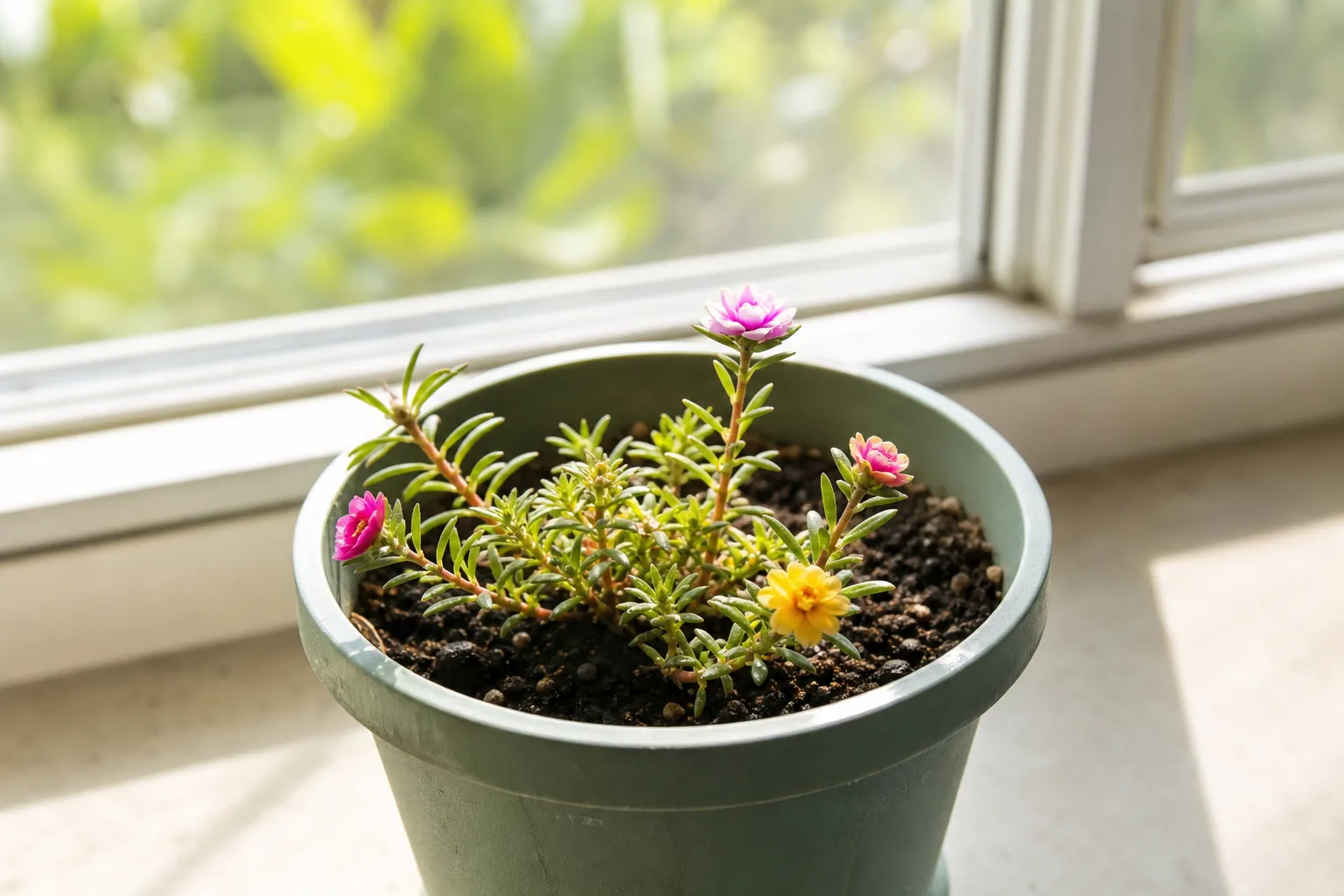
Slow Growth on Portulaca: Causes, Checks & Fixes
This guide covers slow growth on Portulaca. See also the general Slow Growth guide, watering, and light pages for this plant.
Slow Growth on Portulaca: Causes, Checks & Fixes
Quick answer
Slow growth on Portulaca (Portulaca grandiflora, Moss Rose) means stem tips still move forward-but the mat spreads at a crawl instead of the quick warm-season pace Moss Rose is built for. That low-speed pattern is different from no new growth, where tips stay frozen for weeks, and from stunted growth, where the plant stays permanently miniature.
First fix: move to the sunniest, warmest spot available and hold that setup for 7–14 days before stacking repotting, pruning, or fertilizer. Portulaca is a warm-season annual with high heat and drought tolerance that only accelerates spread once days stay hot and the pot receives full sun-6 or more hours of direct light.
Scope of this page: Use this guide when Moss Rose is alive and inching but never hits normal spreading speed. If tips are completely frozen, start on no new growth. If the plant has looked miniature all season, see stunted growth. If stems stretch long and weak toward windows, see leggy growth.
Reviewed by LeafyPixels Review Board · Author: sai-ananth
When to use this page vs. sibling guides
| Symptom pattern | Best guide | Why |
|---|---|---|
| Tips inch forward but mat never accelerates | This page | Warm-season pace issue specialty |
| Zero fresh tips for two or more weeks | No new growth | Full-stop stall |
| Frozen miniature habit all season | Stunted growth | Size cap, not pace |
| Long weak stems toward light | Leggy growth | Stretch from shade |
| Slow pace plus soft crown on wet soil | Root rot | Decay rescue |
| Chronic heavy wet pot, no handling event | Overwatering | Moisture habit |
| Placement and sun-hour depth | Not enough light | Light diagnosis |
If unsure, mark stem tips with tape and check again in seven days: any forward movement points here first; none points to no new growth.
What slow growth looks like on Portulaca
On a truly slow-not dying-plant, tips still advance a little each week, but lateral spread lags behind neighbors of the same age. Internodes may stay short, bloom count stays low, and the mat looks alive but paused. Stems remain mostly firm; leaves stay fleshy rather than wrinkled and collapsing.
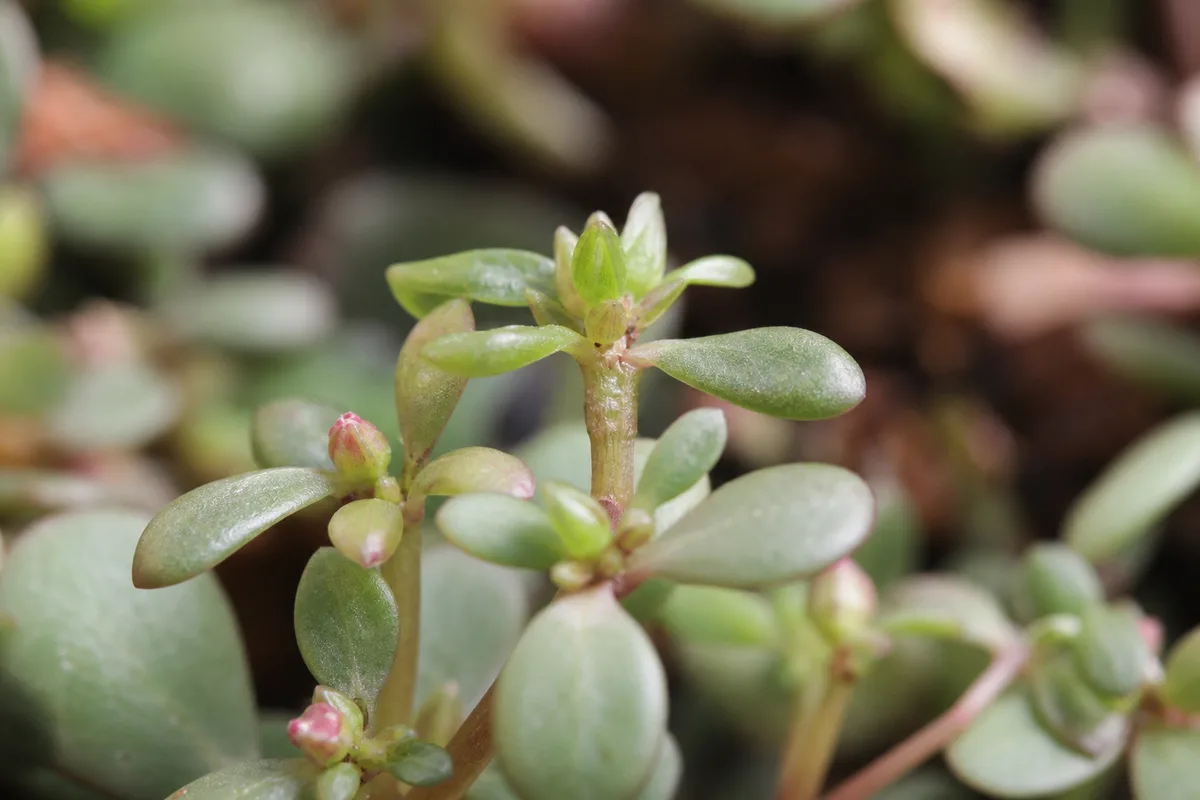
Slow Growth symptoms on Portulaca - compare with healthy tissue on the same plant.
Common field pattern:
- tip growth exists, but it inches instead of running
- flowering is sparse or delayed; flowers may not open on cloudy days even when some sun returns
- stems stay firm at the soil line
- pot weight cycles slowly-mix may stay damp in cool shade
After transplant, this lag can last one to two weeks because Moss Rose does not take well to transplanting when seedlings or starts are moved roughly.
Symptom comparison at a glance
| Pattern | Tip movement | Mat spread | Stem base | Next page |
|---|---|---|---|---|
| Slow growth (this page) | Tips inch weekly | Behind neighbors, not frozen | Firm | - |
| No new growth | Zero change for weeks | Static | Firm (or mushy if rot) | No new growth |
| Stunted growth | Tiny occasional tips | Stays seedling-sized | Firm | Stunted growth |
| Leggy growth | Weak forward stretch | Long gaps between leaves | Firm | Leggy growth |
| Wet-root decline | Slow then stop | Stalls as crown fails | Soft, sour soil | Root rot |
Why Portulaca growth slows
Moss Rose is adapted to open, sunny ground in hot weather. When nights stay cool or the pot gets partial sun, metabolism stays low-the plant survives but never invests in the spreading habit Mississippi State Extension describes as vigorous and low-growing. Wisconsin Extension notes Moss Rose is frost tender and performs after soils warm, which explains why early-season containers can look stalled while still showing tiny tip movement.
Light and temperature bottlenecks
Low direct sun is the second major brake. Portulaca needs unobstructed full sun plus good drainage for both spread and flowering. Reflected indoor brightness or bright shade does not substitute-Moss Rose in a north-facing rail may inch along while an open-ground neighbor in six hours of direct sun runs.
Cool root zones slow pace even when air feels warm. Oversized pots and peat-heavy mix hold cold, wet soil around shallow roots longer than lean sandy beds-see pot too large if dry-down takes many days after one drink.
Wet-root stress without full collapse
In poorly drained mixes, Portulaca can develop crown or root rot where growth slows before stems soften. Stem or root rots occur in wet soils on Moss Rose-pace drops first, collapse follows if drainage never improves.
Hanging baskets vs. ground beds
In hanging baskets, a thin soil column heats and cools quickly-overcast monsoon weeks keep roots cold longer than open ground, so spread lags even when you water on schedule. In wide terrace bowls, trailing mats hide a soggy crown until pace drops; lift foliage at the soil line when inspecting. Same species, different dry-down speed-judge progress against this container, not a neighbor in different soil depth.
How to confirm the cause
Work through these checks before changing multiple variables:
- Track midday direct sun on the pot for two clear days. Portulaca needs 6+ hours of direct sun. Less than this commonly slows spread.
- Log overnight lows for one week. Cool nights below roughly 50–55°F (10–13°C) delay growth in frost-tender annuals. Pace may be normal for the calendar even when frustrating.
- Mark a stem tip and remeasure in seven days. Any forward movement confirms slow growth on this page-not a full-stop stall.
- Observe bloom behavior at midday on a sunny day. Persistently closed flowers on bright afternoons point to site or vigor issues, not normal cloudy-day closure alone.
- Assess pot weight and dry-down speed. A heavy pot for many days suggests slow dry-down and root stress risk.
- Press stems at the soil line. Firm usually means a pace problem. Soft or mushy means possible crown rot-unpot next.
- Compare with a healthy nearby Moss Rose. If another plant in hotter, sunnier placement is spreading and yours only inches, placement is likely your main constraint.
First fix for Portulaca
Move the container to your warmest, brightest location-open ground, unobstructed railing, or roof terrace with at least six hours of direct sun. Hold that single change for 7–14 days before repotting, pruning, or feeding.
Then maintain conservative care:
- water only after the mix has dried enough for the pot to feel light
- avoid heavy feeding during the slow phase
- keep air movement up around the crown
If rot signs are present-soft base, sour smell-stop water, unpot, trim mushy tissue, and repot into fast-draining mix before resuming normal watering. Full rescue steps live on root rot.
Recovery by confirmed cause
Cool weather plus low light
Keep full sun exposure stable and wait through a full warm spell. Many plants resume spread quickly once heat returns, especially in open, bright placements. Early spring inching may last until hot, dry weather arrives-that wait can span several weeks without indicating failure.
Chronic shade
Relocate to unobstructed direct sun per the light guide. Keep watering conservative until new growth visibly picks up. If blooms still fail in good weather after two warm weeks, reassess roots and pot constraints before feeding.
Wet root zone
Switch to a faster-draining setup-open drainage holes, leaner mix, no standing water. Missouri Botanical Garden and NC State both flag drainage as critical because Portulaca is vulnerable to crown and root issues in wet soils. Match pot size to root mass rather than upsizing into a cold, wet soil mass.
Post-transplant lag
If you moved the plant within the last two weeks, hold sun correction and skip repeated repotting. Moss Rose often needs one warm spell after gentle handling before pace normalizes.
Recovery timeline and escalation triggers
In proper heat and sun, Moss Rose can shift from stuck to active spread within 1–2 weeks. Mississippi State Extension notes best flowering when plants receive about six hours of full sun a day-pace and bloom count usually rise together once that threshold is met.
Field example (May terrace container): A west-rail Moss Rose inched outward for three cool May weeks-tips moved, but spread lagged behind a ground pot. Relocated to open south-facing ground in mid-June when overnight lows stayed above 60°F (16°C). Lateral spread doubled and midday blooms opened reliably within 11 days-no fertilizer added.
Use these checkpoints:
- Days 3–5: flowers open more reliably in bright midday conditions
- Days 7–14: tip growth and lateral spread become more obvious
- After 14 warm days with firm stems and no acceleration: unpot, inspect root texture, and review pot too large or root rot guides
- Late autumn with cooling nights: replacement may be more practical than rescue on a spent annual
Judge success by widening mat spread and firm new tips, not by old stems magically lengthening on their own.
What not to do
Do not force speed with frequent watering or high nitrogen when light is poor-that usually produces weak stretch, not dense flowering mats.
Do not repot repeatedly while diagnosing. One stable correction-sun and warmth-tells you more than three simultaneous changes.
Do not assume slow means nutrient starvation. Portulaca commonly performs in poor to average soils, and over-correcting fertility can worsen soft growth.
Do not keep Moss Rose indoors on dim shelves expecting terrace performance. Air-conditioned rooms combine cool roots with weak light-a permanent pace cap unlike outdoor spring delay.
How to prevent slow growth on Portulaca
Plant after frost risk has passed and soils are warm. Site in full direct sun with fast drainage, and avoid heavy mixes that stay wet.
Prevention checklist:
- start in seasonally warm windows
- keep containers in true full sun, not bright shade
- use lean, quick-draining media per the soil guide
- water sparingly once established per the watering guide
- handle transplants gently to reduce setback
- match pot size to root mass on terraces and hanging baskets
Related Portulaca problems
If this page does not match your symptom exactly, route here next:
- No new growth - zero fresh tips for weeks
- Stunted growth - frozen miniature habit
- Not enough light - placement and sun-hour diagnosis
- Leggy growth - stretch toward weak light
- Root rot - mushy crown on wet soil
- Overwatering - chronic heavy wet rhythm
- Pot too large - cold wet soil mass around shallow roots
Conclusion
Pace delay with firm stems: move to full sun, wait two warm weeks, judge by widening spread-not fertilizer. Wet-root slowdown: improve drainage and pot fit before collapse-see root rot if the base softens. Spent or rotted plant: replace rather than force feed when nights cool or the crown has failed. Still unsure after 14 warm days: unpot, check roots, and compare against the routing table above before trying a third fix.