Pot Too Large on Portulaca: Causes, Checks & Fixes
Quick answer
Portulaca in a pot much wider than its shallow root mat sits in wet, idle soil that roots never colonize. First step: unpot, measure the root mass-not the trailing spread-and repot into a container only 2.5–5 cm (1–2 in) wider with fresh sandy gritty mix.
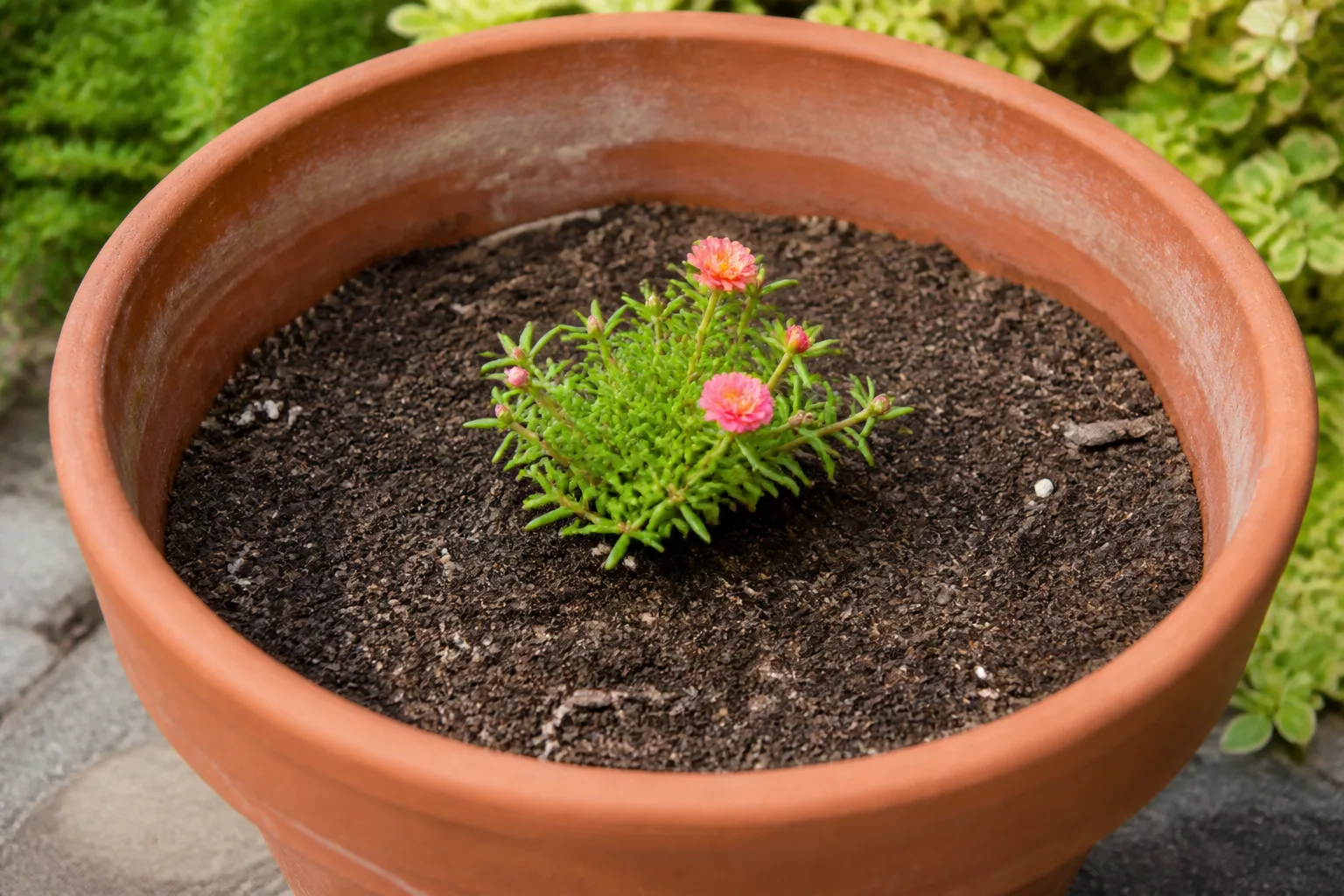
Pot Too Large on Portulaca: Causes, Checks & Fixes
This guide covers pot too large on Portulaca. See also the general Pot Too Large guide, watering, and light pages for this plant.
Pot Too Large on Portulaca: Causes, Checks & Fixes
Quick answer
Portulaca (Portulaca grandiflora, Moss Rose) spreads into a low mat but keeps a shallow, fibrous root system that does not fill a deep or oversized container quickly. Putting Moss Rose in a decorative pot sized for trailing stems-not roots-surrounds a small root mat with wet compost that roots never colonize. That soggy outer ring reduces oxygen and invites the crown rot that poorly drained soils cause on this drought-tolerant succulent annual.
First step: unpot the plant and measure the root mass. Repot into a container only 2.5–5 cm (1–2 in) wider than the root ball, with fresh sandy gritty mix-not the same peat-heavy soil stirred loosely.
Why Portulaca gets an oversized pot
The most common mistake is buying a large hanging basket or terrace planter so Moss Rose can “fill in fast.” Portulaca trails 30–40 cm but roots stay shallow and compact. Jumping from a 10 cm nursery pot to a 25–30 cm decorative tub surrounds a tiny root mat with excess wet mix.
Portulaca needs well-drained sandy or rocky soil in full sun and tolerates drought far better than chronic wetness. In an oversized pot, the root zone saturates after one drink while outer compost stays damp for days. A small plant in an overlarge container may suffer from too much water because the large soil volume stays saturated long after the roots have what they need.
Several habits push Moss Rose into this trap:
- Deep glazed planters when shallow-rooted portulaca does not need a deep container
- Heavy peat-rich mix in plastic pots that hold moisture far longer than terracotta on a hot terrace
- Cache pots or full saucers that re-wet soil from below
- Sympathy watering on a calendar while a huge pot never dries at depth
- Trying to overwinter indoors in dim light with an outdoor-sized container
Unlike jungle houseplants, Moss Rose shows distress quickly once crown tissue softens-often days, not months, after the pot was oversized.
What pot too large looks like on Portulaca
Overpotting on Portulaca mimics overwatering on Portulaca because the mechanism is the same: roots sit in wet mix too long.
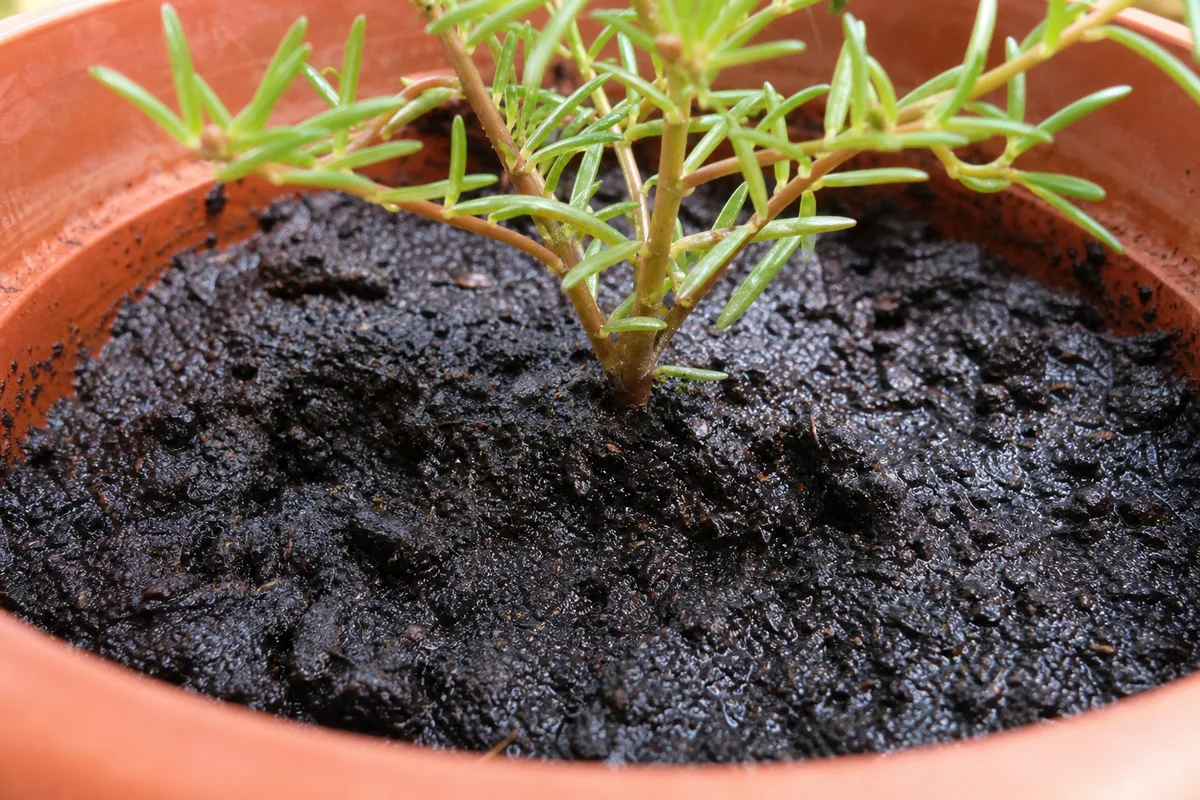
Pot Too Large symptoms on Portulaca - compare with healthy tissue on the same plant.
Typical patterns:
- Slow dry-down - Surface feels dry, but soil at 3 cm stays cool and damp 7–10 days after watering despite full sun
- Stalled or closed flowers - Blooms stay shut on bright days or fail to open when wet roots stress the plant
- Leggy or pale stems - Stretching in shade compounds slow drying, but wet depth alone can stall flowering
- Yellow or translucent stem bases - Lower tissue softens while upper leaves still look plump from stored stem water
- Musty or sour smell - Anaerobic breakdown in idle outer compost
- Fungus gnats - Small flies over wet surface soil that shallow roots are not using
- Small root mat in a large pot - After gentle unpotting, roots form a thin plate with loose, wet mix falling from the sides
Healthy Moss Rose for contrast: Firm cylindrical leaves, flowers open in direct sun, mix bone-dry at depth before the next drink, and roots gradually reaching toward-not rattling in-the pot walls.
How to confirm the cause
Work through these checks before Portulaca repotting guide again:
- Pot-to-root ratio - Slide the plant out (water lightly the day before if mix is completely dry). Measure root ball width. If fresh mix on all sides exceeds 3–4 cm, the pot is likely too large for current roots.
- Dry-down test - Water once, then probe depth every few days. If the top 3 cm takes more than a week to dry in hot full sun, oversizing or heavy mix is suspect.
- Weight check - Lift the pot. An oversized container feels disproportionately heavy days after watering while stems look thirsty.
- Repot history - Did you transplant a 10 cm nursery flat into a 30 cm bowl? That single step commonly triggers overpotting on Moss Rose.
- Drainage path - Confirm holes are open and no saucer or cache pot holds standing water.
- Root firmness - White, firm roots with pale tips support downsizing. Mushy brown roots suggest rot-trim before repotting.
Rule out lookalikes: Root-bound Moss Rose in a small pot dries in one day and may need a modest upsize-opposite timing. Pure underwatering on Portulaca gives light pots and slight wilt that perks after one drink. Leggy growth in loose appropriate mix often traces to shade, not pot size alone.
First fix for Portulaca
Unpot, assess the true root mat, and repot into a container only one size larger than the root mass-not the trailing spread.
Steps:
- Water lightly if mix is completely dry, then tip the plant out over newspaper.
- Brush away loose outer compost. Keep the intact root mat; do not bare-root unless rot is present.
- Choose a wide, shallow pot 2.5–5 cm (1–2 in) wider than the root ball with open drainage holes. Avoid deep tubs filled with idle wet mix below shallow roots.
- Use fresh gritty sandy blend-roughly 40% potting mix, 40% coarse sand or perlite, and 20% fine gravel. Stem or root rots can be a problem in wet soils.
- Set the crown at the same depth as before. Firm mix gently without compacting.
- Water once until a little drains, then empty the saucer. Wait until mix is bone-dry at depth before the next drink.
- Place in full sun (6+ hours of direct light) and hold fertilizer until new firm tips appear.
Do not jump to hard pruning, moving pots, and feeding on the same day. One correction-right-sized container and dry-down watering-comes first.
Step-by-step recovery
After the downsizing repot:
- Keep full direct sun - Moss Rose recovering from wet roots needs strong light to use water and open flowers.
- Water on dry-down only - Check depth, not the calendar. In cool or dim conditions, stretch intervals only if the smaller pot actually dries.
- Trim only dead or mushy material - Remove yellow leaves that come away easily and any soft stems at the base.
- If roots were mushy - Trim brown soft roots back to firm white tissue with clean scissors. Repot immediately into the smaller container with dry gritty mix.
- Support trailing stems - Re-drape stems over pot edges without pulling the root mat.
- Monitor weekly - Track pot weight, open flowers, and soil smell. Improvement shows as new buds opening in sun, not re-greening of old yellow tissue.
If symptoms persist three weeks after correct sizing, inspect for root rot on Portulaca or insufficient light-not another upsize.
Recovery timeline
Mild overpotting often stabilizes within one to two weeks once mix dries predictably in sun. New open flowers commonly appear in two to four weeks during warm weather. Lower yellow stems may continue dropping; that is normal shedding, not failure.
Severe crown rot from weeks in a wet oversized pot may kill the plant before recovery shows. Moss Rose is often grown as a seasonal annual-starting fresh seed in a correctly sized pot is sometimes faster than rescuing a collapsed specimen.
Lookalike symptoms to rule out
Root-bound Moss Rose - Water runs straight through, roots circle densely, soil dries within a day. Fix with a modest one-size-up repot in gritty mix, not a dramatic downsize.
Overwatering without oversizing - Same soft stems and gnats, but root mat fills most of the pot. Correct watering and drainage first.
Compacted soil - Hard wet plug in an appropriately sized pot; repot with fresh grit rather than only downsizing.
Not enough light - Leggy pale growth with loose dry mix; move to sun before blaming pot size.
Underwatering - Light pot, fully dry mix throughout, slight wilt that recovers after watering.
Mistakes to avoid
Do not upsize because trailing stems reached the pot rim-roots decide container size, not spread width.
Do not use a deep pot “so you water less often”-idle wet mix below shallow roots is worse than frequent drinks in a small gritty pot.
Do not add gravel at the bottom instead of proper mix; it does not fix oversizing and can keep the root zone wetter.
Do not keep watering because leaves look plump when the pot is heavy and wet at depth-stems store water while roots rot.
Do not repot into an even larger container hoping roots will “grow into it faster.”
Do not fertilize a stalled, wet-rooted Moss Rose to force bloom-lean soil suits Portulaca overview better when stressed.
Wear gloves when cutting damaged tissue-Portulaca is toxic to pets.
Portulaca care cross-check
While correcting pot size, confirm the basics that determine how fast mix dries:
- Sun - Six or more hours of direct light; dim sites slow water use and worsen overpotting indoors or on shaded balconies.
- Mix - Lean, sandy, gravelly, fast-draining substrate from the start.
- Container shape - Wide and shallow beats tall and deep for this mat-forming succulent annual.
- Material - Terracotta dries faster than glazed ceramic-helpful after overpotting recovery.
- Season - Moss Rose is a warm-season annual; oversized wet pots in cool weather stall drying longest.
How to prevent pot too large next time
Start seedlings and store-bought flats in pots matched to current roots-roughly 10–15 cm for young plants, moving up one size only when roots reach walls. For mature trailing baskets, choose width for spread but avoid excess depth and volume beyond what roots fill.
Use pots with open drainage, empty saucers within 30 minutes, and size for the root mat you see at unpotting-not the full mat you hope for next month. After repotting, water sparingly until new flowers confirm roots are active in the fresh mix.
When to worry
Treat as urgent when soil smells sour, stems soften at soil line, or wilting appears on wet mix in hot weather-those signs suggest active crown decline from chronic wetness. Downsize, trim rotted roots, and improve sun and airflow the same week.
If the root mat is mostly mush after unpotting and stems collapse, replacement seed or a new nursery flat may be more realistic than repeated repots.
Conclusion
Portulaca’s trailing habit tempts gardeners into oversized pots, but this shallow-rooted Moss Rose thrives when root mass and container volume stay in balance. Unpot, measure the root mat, repot one size up at most with sandy gritty mix, and water only when soil is dry at depth in full sun. That single path fixes most overpotting cases and protects the open summer blooms Moss Rose is grown for.
When to use this page vs other Portulaca guides
- Portulaca watering guide - Use for routine moisture checks before assuming pot too large is the main issue.
- Portulaca problems hub - Browse all 50 common issues on this species.