Underwatering on Portulaca: Causes, Checks & Fixes
Quick answer
Underwatering on Portulaca is uncommon but shows as slight wilting when small pots bake dry in extreme heat. First step: Confirm bone-dry soil and firm stems at the crown, then water deeply once-or bottom-water if mix repels water-before returning to dry-down rhythm.
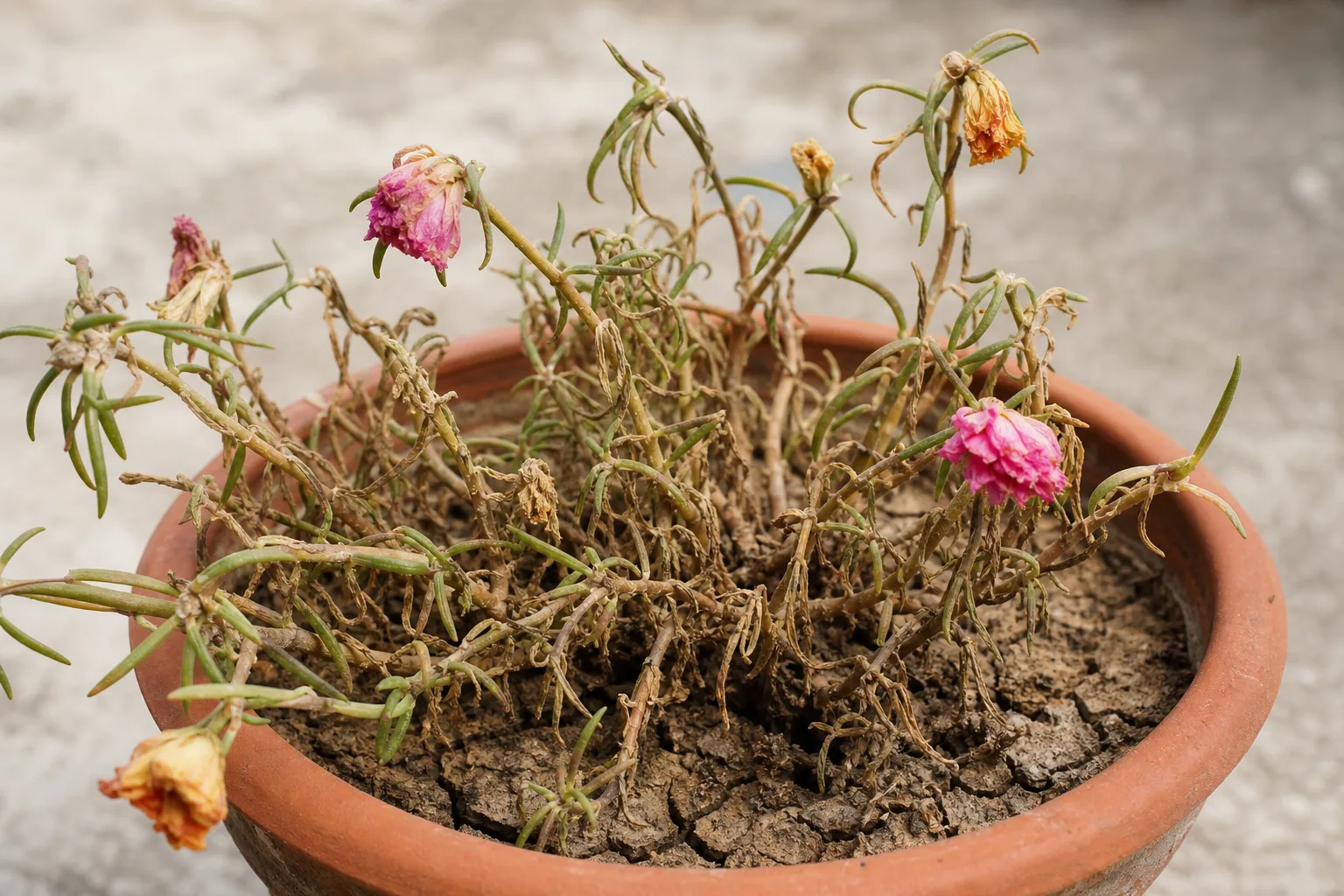
Underwatering on Portulaca: Causes, Checks & Fixes
This guide covers underwatering on Portulaca. See also the general Underwatering guide, watering, and light pages for this plant.
Underwatering on Portulaca: Causes, Checks & Fixes
Quick answer
Underwatering on Portulaca (Portulaca grandiflora, Moss Rose) is uncommon but shows as slight wilting when small pots bake dry in extreme heat. First step: confirm bone-dry soil at depth and firm stems at the crown-then water deeply once, or bottom-water if dry mix repels water, before returning to the dry-down rhythm in the portulaca watering guide.
Scope of this page: This is a drought-only early-triage guide for Moss Rose that looks thirsty. If symptoms flip between wet soggy soil and bone-dry soil within the same week, open water stress instead. If wilt could be rot, cold, shade, or pests-not just dryness-start at the wilting hub.
Portulaca is highly drought tolerant with fleshy leaves and stems that store water during dry periods. Underwatering becomes visible mainly in shallow hanging baskets on hot terraces-not in well-established ground beds that tap deeper moisture.
Why Portulaca rarely shows underwatering
Fleshy stems and drought tolerance
Moss Rose evolved on hot, dry plains in South America as a drought and heat tolerant annual. Stems and needle-like leaves hold reserves, so missed drinks bother it less than thirsty impatiens or petunias. NC State notes to avoid excessive watering-the bigger risk on Portulaca overview is rot, not thirst.
That biology is why underwatering is far less common than overwatering on Portulaca on Portulaca. Always confirm stems are firm and soil is dry before adding water. Soft stems on wet mix point to overwatering or root rot-not a drought rescue.
Small pots, hanging baskets, and heat-wave triggers
Container culture changes the math. A 20–25 cm plastic hanging basket in full sun can bake bone-dry in two to three days during a pre-monsoon heat wave while ground plantings stay workable longer. Proven Winners notes portulaca is shallow rooted-small root zones dry fast and rehydrate fast, but they also stress fast when forgotten on a blazing rail.
Trailing shoots hang over basket rims and wilt first while the crown still feels firm. That pattern is classic acute drought in shallow pots-not crown rot.
Fear of overwatering and chronic dry-down neglect
Many Moss Rose growers overcorrect after one mushy stem episode. They stop watering entirely during a heat wave, letting terrace pots go bone-dry for a week or more. Chronic neglect browns leaf tips and can damage fine roots before the whole mat collapses-different from one missed drink that perks up after a single soak.
Hydrophobic dry mix compounds the problem. Peat-heavy store blend that baked dry repels water; the surface looks damp after a quick sprinkle while roots stay desiccated. That mimics chronic drought even when you think you watered.
What underwatering looks like on Portulaca
Slight wilt, shrunken leaves, and early flower closure
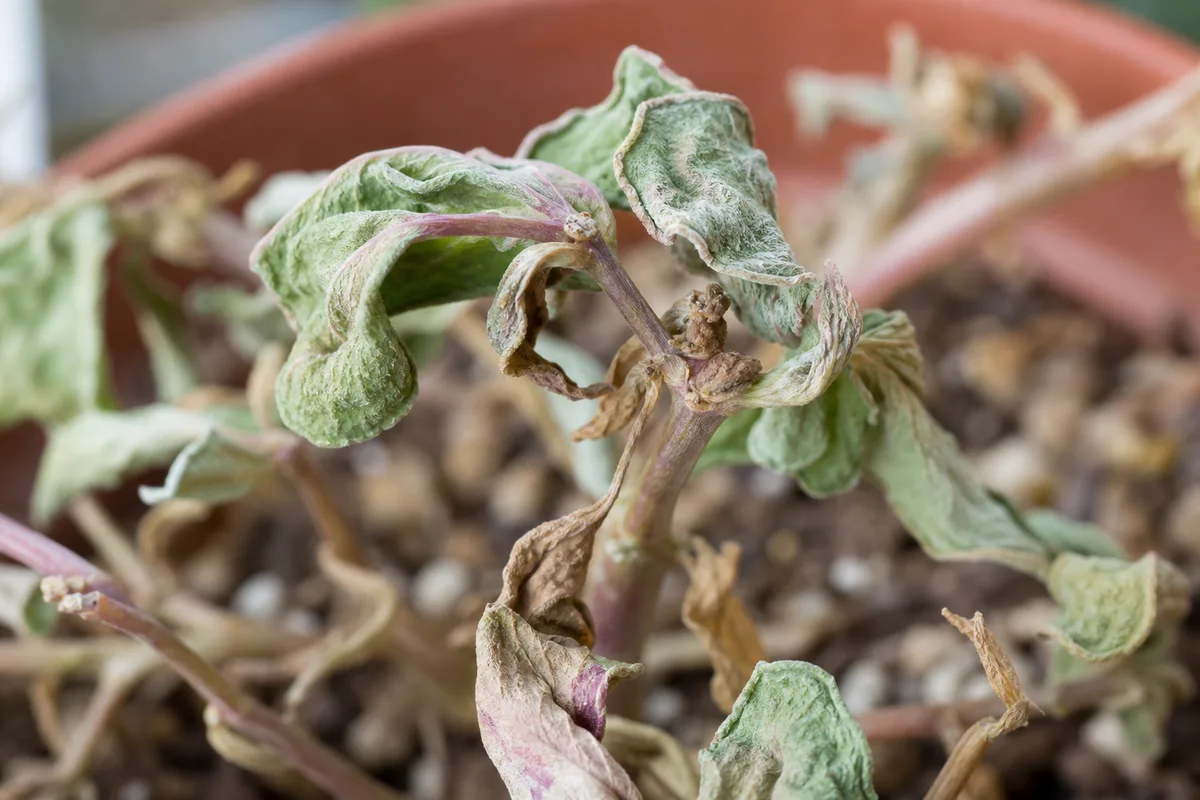
Underwatering symptoms on Portulaca - compare with healthy tissue on the same plant.
Acute drought signs:
- Trailing shoots limp in afternoon heat, especially on outer runners
- Needle leaves look slightly shrunken or dull-not yellow and translucent
- Pot feels very light compared with after a recent soak
- Soil is dry at 2–3 cm depth in containers (finger test from the watering guide)
- Flowers may close earlier than usual during severe drought -distinct from normal cloud-cover closing Moss Rose shows on overcast days only
Chronic drought adds:
- Browned tips on older leaves that will not green up
- Thin new tips and stalled buds even after you resume watering
- Soil pulled away from pot sides; water runs down the gap without soaking in
Firm stems vs. soft rot-critical differentiation
The stem-base squeeze is the fastest Moss Rose moisture test. Underwatering: crown and lower stems stay firm and plump even when upper trailers limp. Overwatering: stem base turns soft, yellow, or translucent while soil stays wet and may smell sour.
No sour smell. No stem softness at the soil line. Those negatives matter as much as the wilt positives.
Lookalikes: overwatering, heat stress, and cold wilt
| What you see | Likely cause | Next step |
|---|---|---|
| Light dry pot, firm crown, quick perk-up after one soak | Underwatering | Deep water or bottom-water once; resume dry-down |
| Heavy wet pot, soft stem base, wilt on moist soil | Overwatering / rot | Overwatering guide-stop watering |
| Midday limp, heavy pot, moist at depth, evening recovery without watering | Heat stress | Heat stress-confirm sun and airflow |
| Wilt after cool nights below ~10°C on dry soil | Cold stress | Protect or wait for warmth; not a thirst fix |
| Buds closed on cloudy days only, firm stems, normal pot weight | Normal photonasty | No action-blooms reopen in sun |
How to confirm the cause
Work through these six checks in order before you water. Skipping straight to the hose is how Moss Rose rot starts after a false drought guess.
- Pot weight - Lift the container. Very light means dry throughout; unexpectedly heavy after days without watering suggests wet lower soil (not drought).
- Soil dryness at depth - Push a finger or dry skewer 2–3 cm deep in pots. Dry wood or dry fingertip confirms drought; cool cling means wait.
- Stem firmness - Pinch the base above the soil line. Firm = drought possible; soft = rot path.
- Hydrophobic mix test - Apply a small cup of water. If it runs down sides without darkening the center, plan bottom-water-not another sprinkle.
- Recovery test - After one proper soak, place in full sun and recheck in 2–4 hours. Perk-up supports drought; no change with wet soil below suggests rot or water stress swings.
- Timing cross-check - Morning wilt on bone-dry soil is a strong drought signal. Midday limp alone on moist soil points to heat stress-do not auto-water.
Confirmed underwatering = dry at depth + firm stems + light pot + perk-up after one even rehydration (or clear hydrophobic dry mix fixed by bottom-water).
Not underwatering = wet soil, soft base, sour smell, or wilt that persists after proper rewetting → open wilting or overwatering.
First fix for Portulaca
One clear first action: rehydrate the dry root zone once, evenly-only after confirmation above.
Do not water if soil is wet or stems are soft. Do not sprinkle the surface daily.
Deep top-water vs. bottom-water for bone-dry pots
Standard bone-dry pot (mix still absorbs water):
- Move the pot to its sunniest spot with airflow.
- Water slowly until excess drains from holes-about one-quarter to one-third of pot volume for a typical 20–25 cm basket.
- Empty saucers, bracket cups, and cachepots immediately.
- Do not water again until soil is completely dry at depth-often every 4–5 days in peak summer sun per the watering guide, but your pot sets the interval.
Bone-dry hanging basket that absorbed normally: lift after watering; weight should feel noticeably heavier. Trailers often firm within hours in warm sun when stems still had internal reserves.
Slow rehydration for hydrophobic mix
When water sheets off dry peat or rides down pot walls:
- Set the grow pot in a tray or bucket with 2–5 cm clean water (bottom-water).
- Let it wick upward 30–60 minutes until the surface darkens evenly-lift early if mix is saturated at the top.
- Remove, drain fully, and return to full sun.
- If top-water is your only option, poke a few shallow holes with a skewer, then apply slow water in two passes ten minutes apart.
Bottom-water is safer than dumping a full hose volume on crusted dry mix in one blast-shallow roots rehydrate evenly without leaving a soggy bottom and dry core.
Full-sun placement after recovery drink
Moss Rose uses moisture predictably in hot, dry, full-sun conditions. After rehydration, keep the pot in at least six hours of direct sun so transpiration and dry-down stay consistent-dim corners slow drying and invite the rot cycle this plant cannot tolerate.
Recovery timeline
Acute drought (one dry spell, firm crown): visible perk-up often occurs within 2–6 hours in warm sun; flowers may reopen the next sunny day.
Moderate drought (several dry days, some tip brown): stems firm over 1–3 days; old browned tips do not green up-judge by new tips and bud swell.
Chronic drought (repeated bone-dry cycles): fine root damage may slow recovery to a week or more; some leaf tips stay brown permanently. If new growth stays thin after proper rhythm, inspect roots when dry-rot from earlier overwatering may overlap.
Failed recovery: no perk-up 24 hours after even rehydration on a light pot → suspect misdiagnosed rot or cold, not ongoing thirst. Stop watering and follow wilting escalation.
What not to do
Do not switch to daily watering after one dry spell-that invites root rot on shallow succulent roots. Do not assume every wilt needs water; probe depth first. Do not deep-water when soil is already wet at the crown-check stem firmness. Do not use heavy feeding to compensate for drought; stressed Moss Rose is not a heavy feeder. Do not mist leaves instead of soaking mix-surface moisture does not fix desiccated roots.
How to prevent underwatering on Portulaca
Check hanging baskets and small pots daily during hot, dry weather using finger depth and pot weight from the portulaca watering guide. Water when fully dry-not on a fixed calendar. Use fast-draining gritty mix so you can soak deeply without stagnation.
During monsoon cool weeks on Indian terraces, evaporation slows; pots that needed water every four days in May may need ten days or longer-pull back rather than copying peak-summer frequency.
Accept that Moss Rose prefers dry to medium moisture in well-drained soil-not constant wetness. Prevention is about not forgetting shallow pots in heat, not keeping mix damp.
When to escalate beyond this page
Open water stress when the same pot alternates between soggy and bone-dry within a week. Open overwatering when stems soften on wet soil. Open wilting when cause is unclear or multiple symptoms stack. Open heat stress when midday limp happens on moist soil with evening recovery and no perk-up after watering.
If you fear overwatering rot more than drought-as many Moss Rose growers do-read the portulaca overview watering section before increasing frequency.
Practical checks
Urgency check
Low urgency compared with overwatering rot-unless a hanging basket fully desiccated during a multi-day heat wave with no recovery window. Even then, confirm firm crown before soaking; soft tissue means rot triage, not drought rescue.
Best inspection order
Pot weight → soil dryness at 2–3 cm → stem firmness at crown → hydrophobic runoff test → recovery after one soak → timing (morning vs. midday wilt).
Portulaca care cross-check
- Watering rhythm: Portulaca watering guide - dry-down authority for terrace containers
- Wet vs. dry swings: Water stress - not this page
- Soft stems on wet soil: Overwatering
- Ambiguous wilt: Wilting hub
- Midday limp on moist soil: Heat stress
If wilt persists after proper rehydration, the problem is rot, cold, or misread heat stress-not ongoing drought.
Conclusion
Underwatering on Moss Rose is real but secondary to overwatering in most gardens. Confirm dry soil at depth, firm crowns, and light pots before you soak once-bottom-water hydrophobic mix instead of sprinkling. Resume full-sun dry-down after recovery; do not slide into daily watering. When symptoms do not fit clean drought, or wet soil enters the picture, use the linked hub pages rather than repeating another deep drink.
When to use this page vs other Portulaca guides
- Portulaca watering guide - Use for routine moisture checks before assuming underwatering is the main issue.
- Portulaca problems hub - Browse all 50 common issues on this species.
- Wilting on Portulaca - Different entry point when symptoms overlap with underwatering.
- Overwatering on Portulaca - Different entry point when symptoms overlap with underwatering.
- Curling Leaves on Portulaca - Different entry point when symptoms overlap with underwatering.