Bud Drop on Portulaca: Causes, Checks & Fixes
Quick answer
Bud drop on Portulaca means tight buds detach before opening-usually from too little direct sun, soggy roots, or recent transplant shock. First step: confirm buds are actually falling (not just closed on a cloudy day), then move the pot to full sun and let soil dry completely.
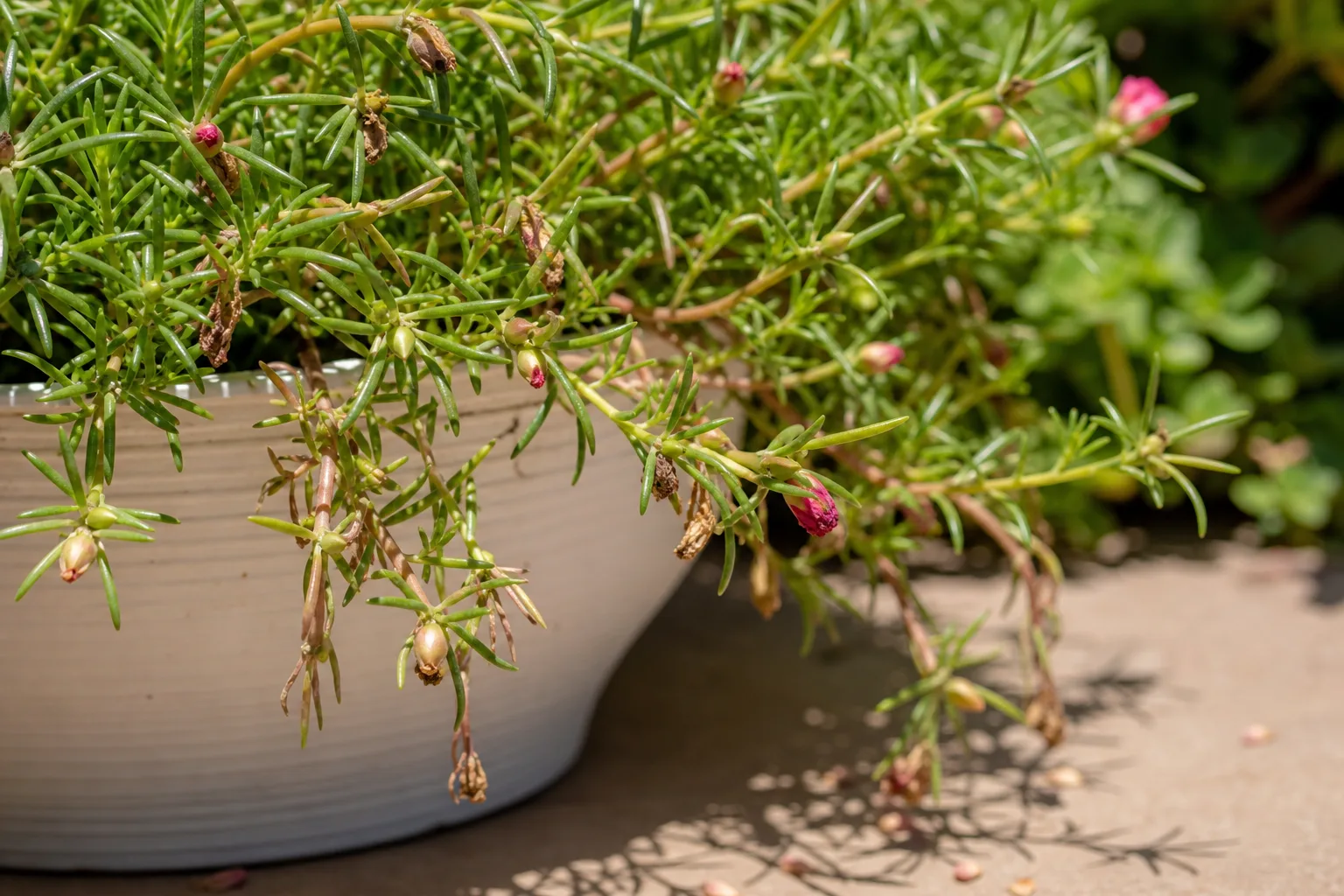
Bud Drop on Portulaca: Causes, Checks & Fixes
This guide covers bud drop on Portulaca. See also the general Bud Drop guide, watering, and light pages for this plant.
Bud Drop on Portulaca: Causes, Checks & Fixes
Quick answer
Bud drop on Moss Rose (Portulaca grandiflora) means tight flower buds detach from stem tips before petals open-you find small buds on the soil or pot rim while trailing stems still look mostly green. This is different from Moss Rose’s normal habit of keeping buds closed on cloudy days and at night, which is not bud drop.
First step: confirm buds are actually falling, not just closed. On a clear sunny afternoon, buds should swell and open in direct light. If buds stay shut all day in bright sun, the problem is usually not enough light-not classic bud drop. If buds formed, then cleanly fell off after a care change, treat it as true bud drop.
Last July I moved a rootbound six-pack Moss Rose from a nursery tray to a north-facing balcony rail during Pune monsoon week. Within 48 hours, clean green unopened buds littered the saucer while stems stayed firm and mix felt moist. Direct sun on the pot surface logged under four hours. After relocation to a south rail logging seven hours and a full dry-down cycle per the Portulaca watering guide, new bud swell showed at stem tips by day 11. First fix for most cases: move to full direct sun and let soggy soil dry completely before the next drink.
Scope on this site: This page owns pre-open bud abort-buds that formed then detached. For zero buds ever forming, see no flowers on Portulaca. For closed buds that never fall on sunny days, see not enough light. For opened blooms fading after one day, see faded flowers.
What bud drop looks like on Portulaca
True bud drop on Moss Rose is about what falls and when, not fewer flowers at season end.
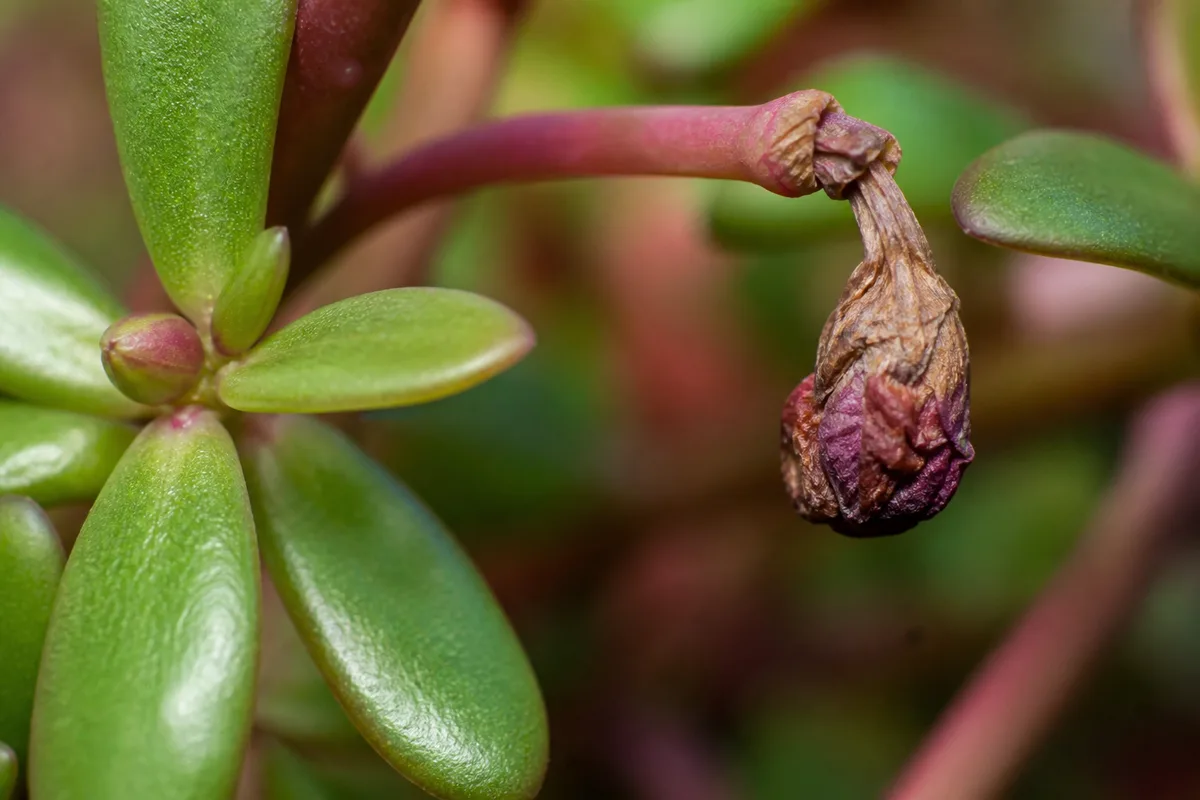
Bud Drop symptoms on Portulaca - compare with healthy tissue on the same plant.
True drop vs. cloudy-day closure vs. single-day senescence
| Pattern | What you see | Buds on soil? | Stems | Next step |
|---|---|---|---|---|
| True bud drop | Small unopened buds detach after shade move, wet spell, or repot | Yes-clean green buds below stems | Usually firm | Fix sun + dry-down |
| Cloudy-day closure | Buds stay shut on overcast mornings | No-buds stay attached | Firm | Wait for afternoon sun |
| Overwatering abort | Buds fail or drop with soft yellow base | Sometimes | Soft at crown | Overwatering / root rot |
| Aphid shrivel | Buds collapse in place on tips | No | Firm; sticky tips | Aphids |
| Spent single-day bloom | Open flower fades by evening | No-petals senesce on stem | Firm | Deadheading, not drop |
Typical bud-drop signs:
- Small unopened buds lying on soil below trailing stems
- Bare stem tips where a bud was attached-the pedicel may look dry or cleanly broken
- New buds still forming at some tips while others in the same cluster are missing
- Timing after stress-drop within days of repotting, a move to shade, heavy rain, or a watering binge
- Stems still firm when drop is from light or water stress alone; soft yellow bases suggest rot compounding the abort
What is normal Moss Rose behavior-not bud drop:
- Flowers close at night and on cloudy days and reopen when direct sun returns
- Single-day blooms that open mid-morning and fade by evening-each flower lasts one day; that is senescence, not bud drop
- Reduced flowering during monsoon cloud cover-temporary, not tissue loss
Double-flower cultivars invest more energy per bud; when stress hits during swell, they shed buds before singles on the same terrace row.
Why Portulaca drops buds
Moss Rose is a heat-loving succulent annual built for full sun in well-drained sandy or rocky soil. Flower buds are the first reproductive tissue sacrificed when the plant cannot balance water, light, and root health.
Insufficient direct sun
Portulaca needs at least six hours of full sun daily for best flowering. In partial shade, buds may fail to open or abort during swell because the plant cannot photosynthesize enough to finish bloom development. Mississippi State Extension notes flowers also close when the plant is under stress-chronic shade mimics that signal daily. Sun-hour targets and rail placement detail live on Portulaca light needs.
Overwatering and root stress
Soggy soil suffocates shallow roots. Stressed roots deliver less water and oxygen; buds abort even when fleshy stems look plump. Monsoon waterlogging on terrace pots without drainage is a common Indian trigger. Poorly drained soils may lead to crown rot, which weakens the whole plant and stops bud development. Escalate to overwatering when mix stays wet at depth for four or more days.
Transplant shock
Moss Rose does not take well to transplanting-seedlings moved from trays or rootbound packs often drop buds within 48 hours while stems stay firm and soil is moist. Direct-sown neighbors in the same bed keep buds; only disturbed plants stall. Avoid repotting during active monsoon swell even if mix looks tired-wait for a dry week or direct-sow replacements instead. See Portulaca repotting for timing.
Excess nitrogen
Portulaca thrives in lean soil. Heavy nitrogen fertilizer pushes leafy growth at the expense of blooms. Container gardeners who feed weekly often see lush trails with few open flowers and aborted buds on heavily fed plants. Feed boundaries sit on Portulaca fertilizer.
Drought during bud swell
Moss Rose tolerates extreme drought, but letting soil dry out completely for prolonged periods reduces flower production as the plant survives on internal moisture. Boom-bust watering-bone dry for weeks during active swell, then flood-triggers repeated bud loss through midsummer.
Aphids on tender tips
Soft shoot tips and developing buds attract aphids that drain sap and distort tissue. Heavy feeding can cause buds to shrivel or drop without obvious wilting if soil moisture looks fine. Confirm with a hand lens and treat per aphids on Portulaca.
Cold and temperature swings
Portulaca is frost tender; nights below 10°C damage developing buds. Sudden heat after cold also stresses tissue on terrace pots.
Disease on buds (less common)
Brown spotted buds with leaf lesions may signal rust on Portulaca or leaf spot rather than culture stress alone. Heat-stressed terrace Moss Rose can also host spider mites that distort tips without clean fallen buds.
How to confirm the cause
Work through these checks in order-the answer usually appears before you need sprays or fertilizer:
- Separate closed flowers from fallen buds - On a clear sunny afternoon, do any buds open? All-day closure in bright sun confirms light stress. Clean green buds on the soil confirm drop.
- Direct sun hours on the pot - Track unobstructed sun on the soil surface from mid-morning through afternoon. Less than six hours strongly implicates placement. Log a full clear day before repotting or feeding.
- Soil moisture at stem base - Wet and heavy for several days with limp stems suggests overwatering. Dry with afternoon wilt points to drought stress during swell.
- Recent transplant or move timeline - Bud loss within 48 hours of planting, with firm stems and moist soil, fits shock. Gradual loss after a dry week fits drought.
- Container vs in-ground - Pots in partial shade on balconies dry unevenly and drop buds faster than open-ground plants in full sun.
- Bud and tip inspection - Look at stem tips with a hand lens. Soft aphid clusters, sticky residue, or honeydew confirm insect pressure. Brown spotted buds with leaf lesions point to rust or leaf spot rather than simple stress.
- Weather context - Record whether heavy rain, a heat spike, cold night, or repotting preceded the drop.
If buds fell cleanly after a move to shade or after soil stayed wet, culture-not pests-is the working diagnosis.
First fix for Portulaca
Move the pot to full direct sun and let soil dry completely before watering again.
Relocate to the sunniest terrace rail, roof edge, or open bed where Moss Rose receives six or more hours of direct sunlight. Do not interpret closed flowers on the first cloudy day after moving-wait for a clear afternoon to judge opening.
For wet soil: skip all watering until the mix is bone-dry at 3 cm depth per the Portulaca watering guide. Confirm drainage holes flow freely. Empty saucers. Do not fertilize a stressed root system.
For dry soil after a wilt spell: water deeply at soil level in early morning until moisture exits drainage holes-then return to dry-down rhythm. Do not mist flowers or foliage.
After sun and moisture stabilize:
- Hold off on repotting or pinching until new buds appear
- Rinse aphids from shoot tips with a strong water stream if insects are confirmed-only after moisture is stable
- Remove only diseased brown buds if spots are present; leave healthy closed buds in place
Do not apply nitrogen fertilizer as a first response. Bud drop from stress is not fixed by feeding; excess nitrogen can abort more buds.
Step-by-step recovery
Once the first sun-and-moisture fix is done, follow this sequence:
- Maintain dry-down watering for two weeks - Water only when soil is completely dry at depth. In full summer sun, that may mean every four to five days; in cool weather, once a week or less.
- Avoid moving the pot until new buds swell-Moss Rose aborts buds when placement shifts during bloom development.
- Scout new tips every three to four days - Watch for fresh green bud swell at stem ends. That is your recovery signal.
- Pinch leggy sections lightly only after new growth firms up-Wisconsin Extension recommends midseason pruning or shearing when mats look straggly to promote fuller regrowth, but do not strip budded tips during active stress.
- Resume very diluted balanced feed only after new buds are visible-see Portulaca fertilizer; half-strength bloom fertilizer once is enough for lean container mix.
- Direct-sow replacements if transplants repeatedly drop buds-late-season seed in warm soil still blooms before frost in most Indian climates.
Recovery timeline
New buds typically appear within one to two weeks once sun and moisture stabilize. Flower opening resumes within days of strong direct light on the first clear afternoon. Fallen buds do not reopen-recovery means fresh buds at tips and side shoots.
Severe root rot with soft stems may require cutting back to firm tissue; some plants cannot be saved if rot reaches the crown. Monsoon cloud cover may temporarily reduce blooms even after recovery-that is environmental, not ongoing bud drop.
Lookalike symptoms
Not enough light shows closed buds every sunny day plus leggy stems-buds may never fall because they never fully formed. Fix placement first via not enough light.
Overwatering pairs bud failure with soft yellow stems, sour soil smell, and wilting on wet mix. Investigate roots if softness persists after dry-down.
No flowers means buds never form-often total shade or heavy nitrogen. Bud drop means buds formed then aborted.
Faded flowers are opened blooms losing color after their single-day cycle-deadheading territory, not bud drop.
Aphid damage leaves buds shriveled in place with visible insects rather than clean green fallen buds.
Mistakes to avoid
Do not repot when buds appear hoping for “more energy”-transplant shock causes drop on Moss Rose, especially during monsoon swell.
Do not keep Moss Rose in bright indirect indoor light-it needs outdoor full sun to finish buds.
Do not alternate flood and drought during heat waves.
Do not feed heavily with nitrogen while buds are swelling.
Do not confuse cloudy-day closure with bud drop and apply unnecessary treatments.
Portulaca care cross-check
Bud drop ties full sun, dry-down watering, and transplant timing together on Moss Rose. Best flowering occurs with about six hours of full sun and consistently moist-but not waterlogged-root zones in well-drained mix. Reconciling both: let the mix go dry between drinks at the surface, then water deeply until drainage runs free; never keep saucers full during monsoon weeks and never leave bone-dry mix for two or more weeks while buds are actively swelling. Shade plus wet soil is the fastest path to aborted buds and rot.
Closed flowers on cloudy monsoon days are normal. Clean fallen buds on sunny days after a care mistake are not.
When to worry
Act quickly when every bud aborts alongside soft stems on wet soil-unpot and inspect roots for mush per root rot on Portulaca. Cold damage after frost shows blackened bud tips that will not recover. Repeated total bud loss through peak summer on a sun-exposed pot warrants checking for aphids and confirming you are not over-fertilizing.
Low urgency when a few buds fall after one missed watering day if soil is corrected immediately-Moss Rose rebounds fast in heat and sun.
Related Portulaca guides
- Not enough light on Portulaca - closed buds on sunny days without tissue loss
- No flowers on Portulaca - zero bud formation triage
- Overwatering on Portulaca - wet-mix rescue before rot
- Root rot on Portulaca - soft-base escalation
- Aphids on Portulaca - shriveled tips with sticky residue
- Portulaca light needs - sun-hour logging and rail placement
- Portulaca watering - dry-down rhythm for terrace pots
- Portulaca overview - full Moss Rose care hub
Related tool
Use the Plant Problem Diagnosis Tool to narrow causes for bud drop on this plant before changing multiple variables at once.