Wrong Soil Mix on Portulaca: Causes, Checks & Fixes
Quick answer
Portulaca in heavy peat, garden soil, or moisture-retentive mix sits wet around shallow roots and invites crown rot. First step: unpot, inspect mix texture and root color, then repot into fresh sandy gritty blend-not the same substrate stirred loose.
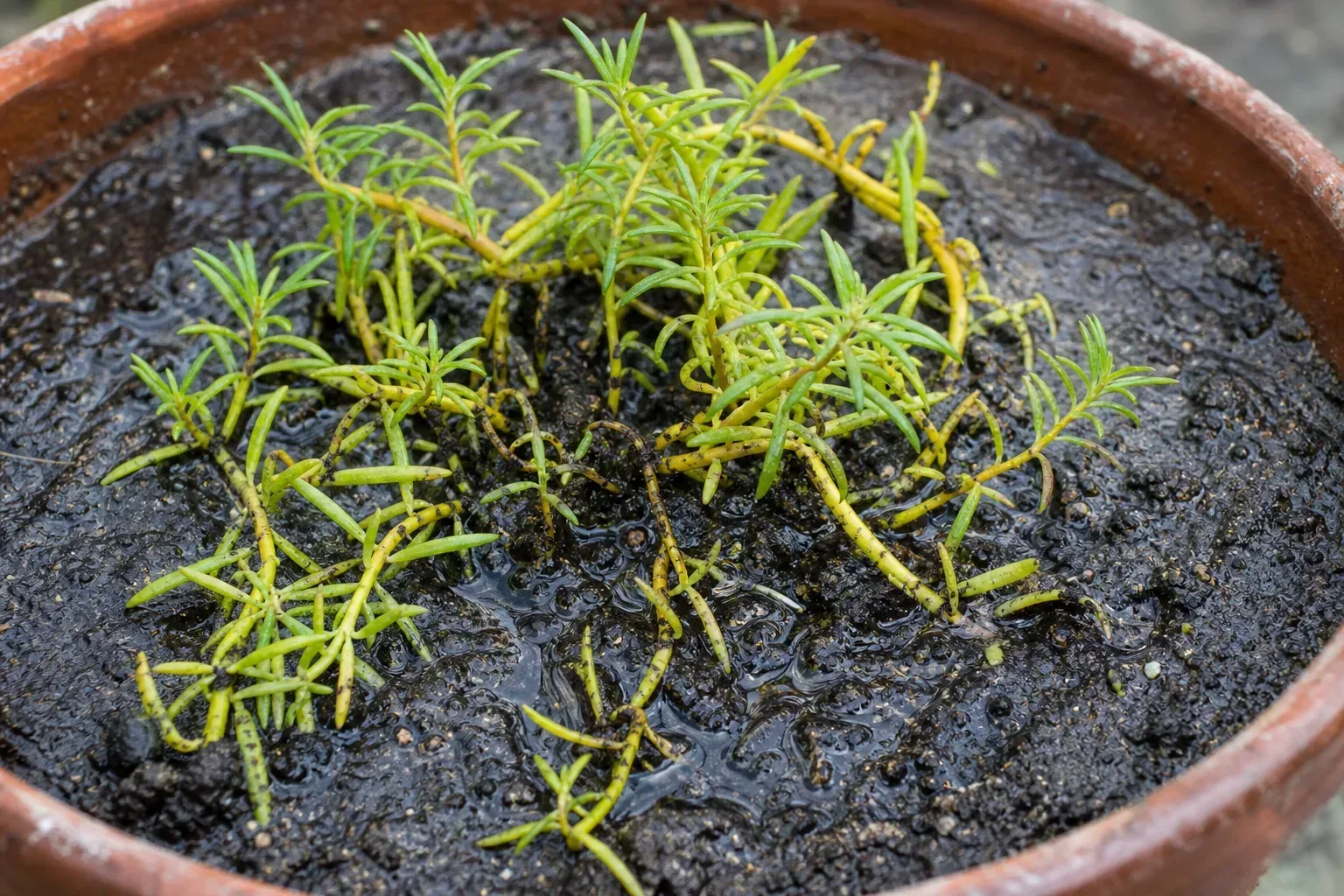
Wrong Soil Mix on Portulaca: Causes, Checks & Fixes
This guide covers wrong soil mix on Portulaca. See also the general Wrong Soil Mix guide, watering, and light pages for this plant.
Wrong Soil Mix on Portulaca: Causes, Checks & Fixes
Quick answer
On a hot terrace or shallow hanging basket, Moss Rose (Portulaca grandiflora) fails fast when the pot holds moisture like a houseplant mix instead of draining like rocky ground. Heavy peat, scooped garden soil, moisture-retentive blends, or last season’s compacted basket soil keep shallow succulent roots oxygen-starved and wet too long-often before you ever “overwater” on a calendar.
First step: unpot the plant and inspect mix texture and root color. If substrate feels dense, muddy, or brick-like-and roots are brown or slimy-repot into fresh sandy gritty blend before adjusting anything else.
Scope of this page: Use this guide for active substrate failure-wrong fill, degraded mix, or drainage mismatch you can confirm by unpotting. To build correct mix from scratch, start on the soil guide. If mushy decay is already advanced with sour smell and soft crowns, follow the root rot guide after you replace mix.
Portulaca needs well-drained sandy or rocky soil in full sun; poorly drained soils may lead to crown rot. Proven Winners notes portulaca is shallow rooted, making plants more prone to rot if overwatered-wrong mix makes every drink worse in terrace containers.
Reviewed by LeafyPixels Review Board · Author: sai-ananth
When to use this page vs. sibling guides
| Symptom pattern | Best guide | Why |
|---|---|---|
| Dense garden soil, peat brick, or moisture-retentive fill from the start | This page | Substrate choice failure |
| Building fresh gritty mix ratios and drainage test | Soil guide | Mix recipe, not active rescue |
| Chronic wet soil on already-gritty mix | Overwatering | Schedule habit, not texture |
| Mushy roots, sour smell, soft crown after weeks in wet mix | Root rot | Confirmed decay rescue |
| Open gritty mix in a huge tub; outer ring stays wet | Pot too large | Volume mismatch |
| Last season’s peat bag substrate degraded but was once appropriate | Compacted soil | Age and collapse, not wrong fill |
| Midday limp trails on damp mix with firm stem bases | Wilting | Uptake vs. substrate overlap |
What wrong soil mix looks like on Portulaca
Above soil, a bad mix mimics overwatering and early crown rot. Watch for:
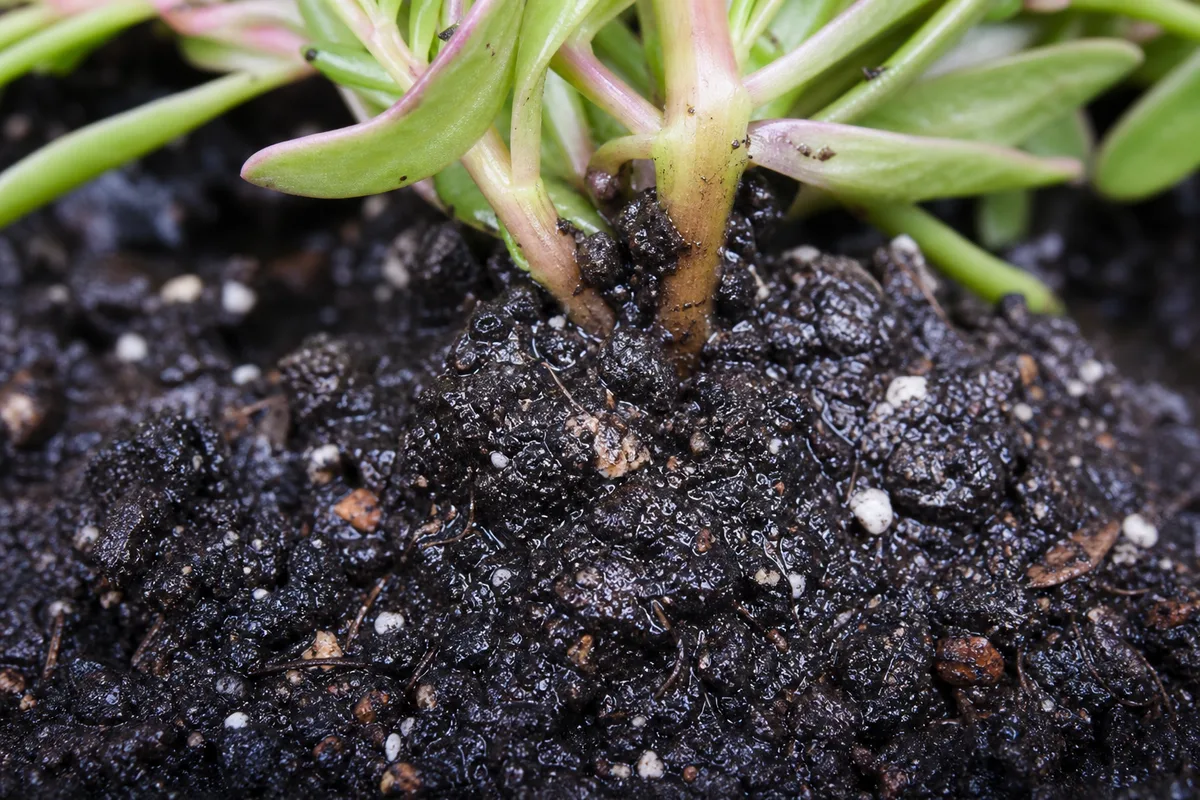
Wrong Soil Mix symptoms on Portulaca - compare with healthy tissue on the same plant.
- Water sitting on the surface or running down pot sides without soaking the center.
- Pot still heavy many days after one watering while lower stems yellow or soften.
- Flowers failing to open on sunny days despite bright weather-stress closure, not normal night or cloudy-day species habit.
- Midday wilt on upper growth even when soil looks damp.
- Green algae, white mold, or crust on a constantly wet surface.
- Sour or swampy smell from drainage holes.
Portulaca on hot terraces shows these signs quickly because shallow roots sit in a small volume. One Moss Rose in a mixed planter can fail while neighbors thrive if it was potted in leftover garden soil or a different bag of mix.
Below soil, roots in the wrong mix turn brown, slimy, or pull away when rinsed. Healthy Moss Rose roots are pale and firm. Dense garden soil in a pot often forms a solid wet core even when the top crust looks dry-a classic heavy-mix pattern on a drought-tolerant succulent annual.
Why Portulaca gets wrong soil mix
Portulaca is built for lean, sandy, gravelly conditions with exceptional drainage. In containers, every oxygen and moisture decision falls on what you fill the pot with. Several common choices set Moss Rose up to fail:
Garden soil or topsoil in pots. Field soil compacts in containers, shrinks from pot walls, and holds water far longer than in a garden bed. Portulaca in decorative urns filled with scooped yard soil suffocates within weeks of peak bloom season.
Dense peat without grit. Straight peat or peat-heavy bagged mix without enough perlite, sand, or gravel holds moisture in cool or cloudy weather-exactly when Moss Rose uses less water. The mix stays anaerobic while you wait for the surface to dry.
Moisture-retentive “water-saving” blends. Mixes heavy on cocopeat, vermiculite, or gel crystals without enough perlite keep shallow roots wet in shade or during cool spring weeks when transpiration is low.
Reused or degraded old mix. Last season’s basket soil compacts, sheds water on the surface while staying wet inside, and may harbor pathogens from prior crops. Old peat also drifts alkaline over time, which can lock out nutrients on Moss Rose already stressed by poor structure-see compacted soil when texture was once appropriate.
Seed-starting mix for established plants. Fine, low-nutrient starting media is designed for tiny roots in small cells-not trailing Moss Rose in hanging baskets. It collapses, dries unevenly, and lacks the structure fibrous roots need.
Rich compost or manure-heavy blends. Portulaca prefers average to lean soil fertility and thrives in poor conditions. Heavy organic mixes that stay wet invite the crown rot that poorly drained soils cause.
“Improved drainage” with rocks at the bottom. A gravel layer does not fix bad mix; it can raise the wet zone closer to roots while the upper substrate still compacts.
How to confirm the cause
Separate wrong mix from overwatering habit, compacted old substrate, oversized pots, and advanced rot:
- Unpot and texture test - Crumbly mix with visible sand or perlite differs from dense mud, brick-like peat, or obvious garden soil clumps.
- Drain-through test - Pour water on a dry handful. Proper Moss Rose mix absorbs and drains fast; hydrophobic or compacted mix repels water or stays sodden in your palm.
- Root color and smell - Pale firm roots in heavy wet mix mean damage is recent and repotting can help. Brown slimy roots with sour smell mean rot has started; you still must replace mix entirely and may need the root rot guide.
- Pot weight timeline - Note weight 24 and 48 hours after watering. Wrong mix keeps pots heavy long after gritty blend would lighten in full sun (6+ hours of direct light).
- Finger test at depth - Top crust may dry while mix 3–5 cm down stays cold and wet. That split pattern points to structure failure, not drought.
- Compare neighbors - In mixed planters, one failing Moss Rose in the same watering routine often sits in a different fill.
Underwatering shows a light pot, dry crumbly mix throughout, and slight wilt that perks after one drink. Overwatering on good gritty mix is a schedule problem-see overwatering. Wrong mix is a substrate problem-though bad mix makes every watering mistake worse.
First fix for Portulaca
Repot into fresh sandy gritty blend and verify open drainage before the next full watering.
Knock the plant out of the old substrate. Discard heavy, sour, or compacted mix entirely-do not shake off outer mud and replant into the same failing core. If roots are firm, tease away compacted outer mix gently. If more than half the roots are mushy, trim decay first per the root rot guide or replace severely collapsed plants.
Target roughly 40% potting mix, 40% coarse sand or perlite, and 20% fine gravel-the open structure Moss Rose needs, matching the soil guide. Stem or root rots can be a problem in wet soils, so err dry after repotting. Set the crown at the same depth; do not bury stems deeper to stabilize a floppy plant.
Use a shallow container with clear drain holes sized to the root mass-not trailing spread. Place in full sun and wait until mix is bone-dry at depth before the next drink.
Step-by-step recovery
Work in this order for container Moss Rose in the wrong mix:
- Unpot and document - Note root color and mix texture before discarding substrate.
- Assess roots - Rinse gently. Trim brown or slimy roots with clean shears. Keep firm pale roots.
- Discard all old mix - Do not blend heavy soil with fresh grit in the same pot; anaerobic pockets persist.
- Clean or replace the container - Scrub pots; drill holes if needed. Avoid oversized tubs that hold excess wet mix-see pot too large.
- Mix fresh substrate - Combine potting mix with coarse sand or perlite and fine gravel. Target pH 5.5–7.0.
- Repot at correct depth - Firm lightly around the root ball without packing mix tight.
- First water lightly - Water until a small amount drains, then stop. Empty saucers immediately.
- Full sun and airflow - Move pots to the sunniest spot per light needs so the plant uses water at a healthy rate once roots heal.
- Hold fertilizer - Wait until new firm tips appear before feeding leanly.
- Monitor dry-down - Check moisture at depth daily for two weeks. Adjust frequency to weather, not habit-use the watering guide finger test.
Seasonal Moss Rose rarely rebuilds a large root mass late in the display year. Early repot after mix correction gives the best chance of recovery blooms.
Recovery timeline
Mix correction should show within several days: the pot lightens on schedule, surface water no longer pools, and smell fades if rot was not advanced.
Yellow lower stems from weeks in heavy mix usually do not firm up. New growth at tips and open flowers on sunny days are the reliable signals-expect visible improvement in two to four weeks if roots remained mostly firm.
Root damage from prolonged saturation in bad mix needs three to four weeks of stable dry-down before judging success. Replace plants with soft crowns or mostly decayed roots rather than repeating rescue on collapsed pots.
Worked example: A terrace grower filled a 30 cm urn with garden soil for trailing Moss Rose. The pot stayed heavy 72 hours after one soak while neighbors in gritty mix lightened in 24 hours. After full repot into 40/40/20 blend and five dry days in full sun, firm side shoots appeared at week two and blooms reopened by week three-while yellow lower stems were left in place.
Worsening signs: crown softening after repot, blackening at the stem base, or collapse within 48 hours of wilting-escalate to the root rot guide or replace the seasonal display.
Lookalike symptoms
Use this matrix before repotting again or flooding the pot:
| Pattern | Mix texture | Pot weight 48h after water | Root appearance | Flowers on sunny days | First action |
|---|---|---|---|---|---|
| Wrong soil mix (this page) | Dense peat, garden soil, or cocopeat-heavy | Stays heavy in full sun | Pale firm turning brown in wet core | Stay closed on wet soil | Full repot; discard old fill |
| Overwatering on good mix | Gritty; perlite/sand visible | Heavy but drains in pour test | Firm pale when unpotting | May close on chronic wet | Overwatering dry-down fix |
| Pot too large | Often appropriate grit | Heavy outer ring, dry center mat | Healthy in small center | Variable | Pot too large downsize |
| Compacted old mix | Was gritty; now brick-like | Slow dry-down mid-season | Firm unless rot added | Decline late season | Compacted soil refresh |
| Underwatering | Dry crumbly throughout | Light pot | Firm pale | Open normally | One soak; wait for dry-down |
| Not enough light | Loose appropriate mix | Normal dry-down | Healthy if inspected | Fewer blooms; leggy | Full sun |
- No drainage hole - Related but distinct; fix holes and mix together.
- High humidity without airflow - Surface stays damp longer; substrate may still be correct.
- Wilting on wet mix - If stem bases stay firm, see wilting for uptake overlap before blaming mix alone.
Container sizing for Moss Rose
Moss Rose trails 30–45 cm from a hanging basket while roots stay in a shallow mat only a few centimeters deep. Proven Winners describes spread of 12–16 inches with a low mounding-trailing habit-visual spread is not root depth.
| Container type | Typical size | Root zone | Common mistake |
|---|---|---|---|
| Shallow terrace bowl | 15–20 cm deep, 25–30 cm wide | Matches shallow mat | Filling deep urn with garden soil “for stability” |
| Hanging basket | 12–18 cm deep, 25–35 cm wide | Thin soil column dries fast in sun | Peat-heavy liner mix with no perlite |
| Mixed planter | Variable | One cell may differ from neighbors | Leftover yard soil in one corner only |
| Oversized tub | 30+ cm deep | Roots occupy small center | Wet outer ring-see pot too large |
Size pots to root mass and drain speed, not how far stems will trail. A shallow bowl with gritty mix outperforms a deep decorative pot filled with moisture-retentive blend.
What not to do
Do not water more to “soften” heavy mix-that deepens anaerobic conditions. Do not add sand alone to clay-it can set like concrete. Do not repot into larger peat bags without grit. Do not mulch heavily over the crown. Do not use garden soil because Moss Rose “grows anywhere outdoors.” Do not top-dress with sand instead of full repot in hanging baskets.
Wear gloves when cutting damaged tissue-Portulaca is toxic to cats and dogs. If a pet chews trimmings or soil, call ASPCA Animal Poison Control at (888) 426-4435 or your veterinarian promptly. See the portulaca overview for fuller toxicity detail.
How to prevent wrong soil mix on Portulaca
Start each season with sandy, rocky, fast-draining substrate matched to shallow roots-not garden soil scooped from a bed. Build ratios on the soil guide. Refresh mix annually since Moss Rose is often grown as a seasonal display. Match pot size to root mass. Keep full sun so pots dry fast. Flush mineral crust in summer if needed, then allow full dry-down.
On hot terraces, gritty mix may dry in two to four days between drinks; during cool overcast weeks the same pot may stay damp five to ten days-so a peat-heavy fill fails first when evaporation slows.
When to worry
Escalate if stems collapse, blackening spreads from the base, or roots are mostly mush after unpotting-follow the root rot guide after repotting into dry gritty mix. Replace entire seasonal displays when crowns soften rather than repeating rescue on collapsed pots.
For in-ground beds with heavy clay, amend drainage or grow in raised containers-and contact your local cooperative extension office for site-specific soil correction guidance.
Related Portulaca guides
- Portulaca overview - full care hub
- Soil - gritty mix ratios and drainage test (build mix; this page fixes wrong fill)
- Root rot - confirmed mushy-root decay rescue
- Overwatering - chronic wet soil on correct gritty mix
- Pot too large - volume mismatch with open mix
- Compacted soil - degraded season-old substrate
- Wilting - midday limpness and uptake overlap
- Mold on soil - surface algae on constantly wet mix
- Watering - dry-down schedule after mix correction
- Light - full sun placement that drives dry-down
- Repotting - gentle transplant protocol
Wrong soil mix suffocates Portulaca’s shallow roots and mimics chronic overwatering. Unpot to confirm substrate texture, repot into fresh coarse sandy blend, size the pot correctly, and water on dry-down checks in full sun. Instant drainage after watering is the simple test that the mix is fixed.