Pale Leaves on Portulaca: Causes, Checks & Fixes
Quick answer
Pale leaves on Portulaca mean washed-out chlorophyll-usually from too little direct sun at the pot, not fertilizer shortage. If buds stay closed through clear midday sun, light is the first suspect. Log sun hours on the soil surface before watering or feeding.
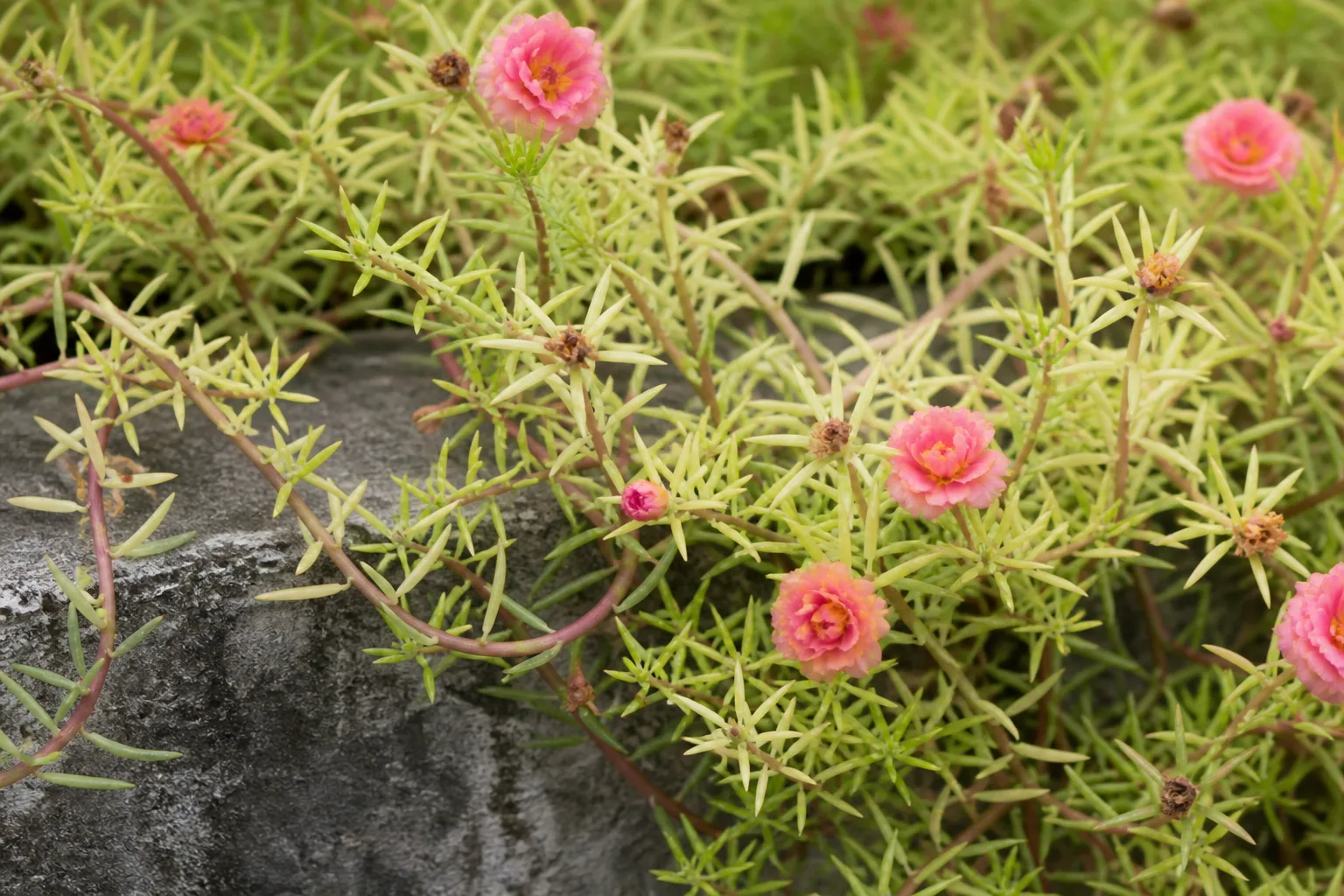
Pale Leaves on Portulaca: Causes, Checks & Fixes
This guide covers pale leaves on Portulaca. See also the general Pale Leaves guide, watering, and light pages for this plant.
Pale Leaves on Portulaca: Causes, Checks & Fixes
Quick answer
On a clear June afternoon, healthy Moss Rose (Portulaca grandiflora) should show open saucer blooms at midday and deep succulent green on cylindrical leaves. When buds stay closed through sunny midday while foliage turns uniform light green or mint wash-out, chlorophyll production is underpowered-almost always from too little direct sun at the pot, not hunger in lean terrace soil.
Last May I tracked two 20 cm bowls on the same west terrace: a north-rail pot logged 4 hours of direct sun on the soil surface; an open south-rail neighbor logged 7.5 hours. By day 10 the shaded bowl showed closed midday flowers, 3 cm internode gaps, and washed-out mint-green leaves. The south-rail pot held darker green tips and open blooms. First fix: log sun hours on the pot surface, then move to unobstructed full sun if under six hours daily.
Scope on this site: This page owns chlorophyll paleness-uniform light-green wash-out on living Moss Rose tissue. For gloss loss, grey-green dullness, or crispy sun-bleach patches after a sudden relocation, see faded leaves on Portulaca. For chartreuse yellow on wet soil, see yellow leaves. For long internodes without color wash-out as the main clue, see leggy growth.
What pale leaves look like on Portulaca
Healthy Moss Rose leaves are cylindrical, fleshy needles about an inch long, often with a reddish margin in direct sun. Pale-leaf stress shows as:
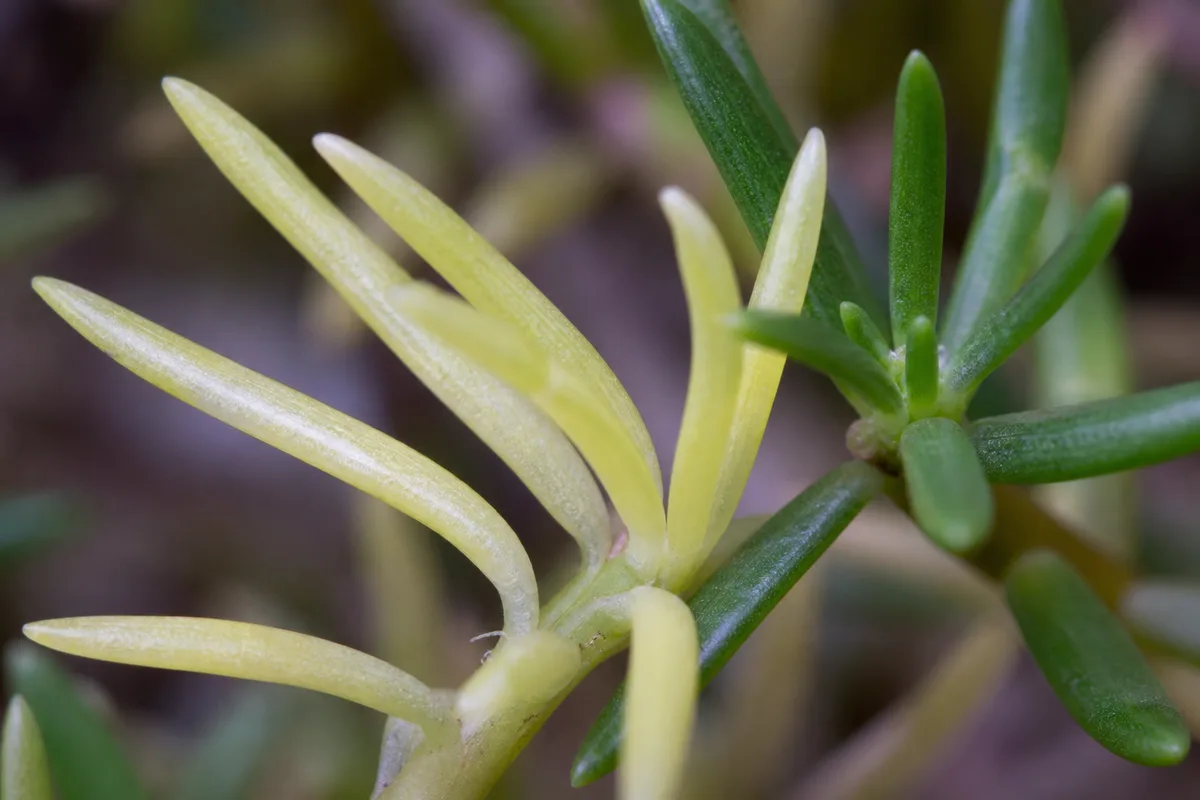
Pale Leaves symptoms on Portulaca - compare with healthy tissue on the same plant.
Shade chlorophyll wash-out
- Uniform light green, yellow-green, or faded mint across trailing sections-not crisp brown necrosis
- Thin-looking chlorophyll compared with neighbors in full sun on the same terrace
- Flowers staying closed on clear sunny days-the strongest light-stress signal on a photonastic plant
- Longer gaps between leaf clusters as stems reach toward the brightest rail gap
One-sided exposure pattern
Compare new tips with old runners: if only the shaded side of a pot looks pale while the sun-facing edge stays darker, uneven exposure is the driver-rotate the pot after you fix placement.
What pale is not
- Crispy bleached white or tan patches on sun-facing tips after an abrupt shade-to-full-sun move → sun shock; see faded leaves
- Chartreuse yellow climbing from a soft base on wet mix → rot overlap; see yellow leaves and root rot
- Closed flowers only on cloudy days → normal cycling; compare on the next clear midday
Cloudy-week dullness that clears when sun returns within three to five days is weather, not a care failure. Pale color that persists ten or more days after warm bright weather returns points to chronic shade or wet roots.
Why Portulaca gets pale leaves
Insufficient direct sun (most common)
Moss Rose needs full sun-6 or more hours of direct sunlight daily to photosynthesize strongly. In partial shade, on east-only balconies, or under taller neighbor pots, leaves lose chlorophyll density and appear pale. Flowers close at night and on cloudy days-chronic shade mimics that failure every clear afternoon. Stems stretch between leaf clusters as the plant reaches for light; deep stretch nuance lives on not enough light.
Proven Winners notes that too little light produces leggy growth and blooms that won’t stay open-the same light deficit drives pale chlorophyll before internodes look dramatic.
Wet soil in a dim spot
Shade slows evaporation; roots sit damp while the plant receives too little light to use moisture. Portulaca stores water in fleshy succulent leaves and stems. Crown rot may occur in poorly drained soils, leaving pale, weak growth that can slide into rot. Escalate to overwatering when mix stays wet at depth for four or more days.
Trailing stems self-shading the crown
As Moss Rose spreads, outer runners can cast midday shadow on the soil surface and lower crown-especially in crowded balcony rows. The pot may sit “in sun” while the root zone logs fewer hours than you expect. Space baskets or elevate trailing sections so the crown receives direct rays.
Cool, cloudy weather
A week of overcast skies can temporarily fade new trailing shoots. If firm stems on dry soil pale during cool rain but re-green at the tips within days of returning sun, no intervention beyond patience is needed.
Sun-shock bleach after abrupt relocation
Moving from a dim shelf or deep shade straight into harsh midday sun without hardening can bleach sun-facing tips-patches look papery white or tan, not uniform mint wash-out. That pattern belongs on faded leaves. Harden gradually: add one to two hours of direct sun per day over five to seven days (or follow RHS hardening guidance of about two to three weeks for tender stock).
Cultivar and soil context
Some Moss Rose selections carry naturally lighter green leaves. Wisconsin Extension notes that modern Sundial-type lines open in cooler and cloudier weather-blooms may mask light stress while foliage still washes out. Moss Rose thrives in lean, sandy soil and rarely needs heavy feeding; pale color on firm dry stems is almost never solved by nitrogen.
Oversize pots staying damp
A bowl much larger than the root ball holds excess wet mix around small roots-especially in shade. Pale floppy growth on chronically damp mix in a dim corner often needs less water and better drainage, not more sun alone. Downsize or improve drainage before fertilizing.
How to confirm the cause
Work through these checks in order:
- Direct sun hours on the pot surface - Track unobstructed sun from late morning through mid-afternoon. If clear-day blooms rarely open at noon, light is insufficient. Baseline targets live on the Portulaca light guide.
- Stem firmness at the base - Firm stems on dry soil with pale color strongly suggest light stress. Soft stems on wet soil suggest rot compounding paleness.
- Soil moisture and pot weight - Heavy, damp mix in shade explains pale, floppy growth. Dry, firm stems with pale leaves point to light, not drought.
- Pattern on the plant - One pale side facing away from sun confirms uneven exposure. Uniform paleness on wet mix needs drainage review.
- New growth color after one week in stronger light - Darker tips emerging after a sunny move means light was the fix. Continued pale tips on wet soil means roots still need drying or repotting.
Symptom comparison table
| What you see | Likely cause | Stem / soil feel | First move |
|---|---|---|---|
| Uniform mint or light-green wash-out, closed midday blooms on clear days | Pale leaves (this page) - insufficient pot-level sun | Firm, often dry-succulent | Log sun hours; move to full sun |
| Loss of gloss, grey-green dullness, washed flower color | Faded leaves - culture or moisture stress | Variable | Faded leaves guide |
| Crispy white/tan patches on sun-facing tips after sudden move | Sun shock | Firm | Harden gradually; faded leaves |
| Chartreuse yellow from base upward on wet mix | Rot / overwatering | Soft at soil line | Yellow leaves, root rot |
| Long internodes, lean to bright side; color may still be mid-green | Leggy stretch | Firm | Leggy growth |
| Translucent pale leaves, mix wet 4+ days | Wet-root stress | Softening base | Stop water; overwatering |
| Closed flowers on cloudy days only; compact nodes | Normal photonastic cycling | Firm | Monitor next clear midday |
First fix for Portulaca
If stems are firm and soil is dry but leaves look washed out and stems stretch: move the pot to the sunniest available location-open terrace, south-facing rail, or unobstructed bed with at least six hours of direct sun in hot, dry conditions. If the plant came from deep shade or indoors, harden over five to seven days instead of one jump. Pinch the longest pale runners by one-third after new tips firm in stronger light. Do not fertilize until new leaves emerge darker.
If soil is wet or stems feel slightly soft at the base: stop watering immediately, confirm drainage holes are clear, and relocate to full sun so the mix can dry. Do not add fertilizer or repot on day one unless roots smell sour or feel mushy when you unpot-then follow root rot on Portulaca.
One primary action first-either improve sun or dry the root zone-not both heavy pruning and repotting the same afternoon.
Step-by-step recovery
- Log sun hours and flower opening on the next three clear days.
- Move to full direct sun or fix wet soil-whichever check failed first.
- If relocating from deep shade, add one to two hours of direct sun daily for five to seven days to avoid bleach.
- Pinch leggy pale sections after one week in stronger light if new tips look firmer.
- Repot into dry sandy mix only if roots are mushy or sour-smelling.
- Hold fertilizer until new growth shows deeper green.
- Monitor weekly: darker new leaves and open midday blooms mean recovery is working.
Terrace recovery snapshot (documented observation)
| Checkpoint | North-rail bowl (4 h pot sun) | South-rail bowl (7.5 h pot sun) |
|---|---|---|
| Day 0 | Mint wash-out, closed midday blooms | Dark green tips, open blooms |
| Day 3 after move to open rail | Still pale; first buds opening at noon | - |
| Day 10 | New tips noticeably darker green; internodes shortening on fresh growth | Reference plant unchanged |
Old pale runners on the moved bowl stayed light until pinched at day 14; success was judged on new tip color, not old tissue re-greening.
Recovery timeline
New leaves often look noticeably greener within one to two weeks after a sun move on a firm plant. Flower opening may resume within days on sunny terraces once light is adequate. Pale tissue on old stretched stems stays light until those sections are pinched or replaced by new trailing growth. Rot-related paleness stabilizes in one to two weeks once soil dries and healthy roots remain. Cool, cloudy spells may keep Moss Rose pale until warm, bright weather returns-give ten days of good sun before assuming failure.
Judge success by darker new tips and open flowers on sunny days-not by old pale leaves re-greening.
Lookalike symptoms
Yellow leaves on Moss Rose often signal overwatering and rot first-chartreuse color with wet soil and soft stems is the rot path, not simple chlorophyll pale.
Not enough light overlaps heavily with paleness but emphasizes closed flowers and leggy spread when internode stretch is the headline symptom.
Faded leaves covers gloss loss and sun-bleach patches; this page owns uniform chlorophyll wash-out.
Faded flowers on cloudy days are normal photonastic behavior-focus on leaf color and stem length on the sunniest day of the week.
Brown leaves mean dead tissue; pale leaves are still living but under-powered.
What not to do
Do not treat pale Moss Rose with nitrogen fertilizer before fixing light and drainage-feeding stressed roots in wet shade worsens decline. Do not keep Moss Rose indoors on dim shelves expecting deep green foliage. Do not increase watering because pale leaves look “thirsty” when soil is already damp. Do not jump from deep shade to all-day blazing sun without a five-to-seven-day hardening ladder. Do not confuse normal flower closure on rainy days with a pale-leaf crisis-check leaf color on the clearest midday of the week.
How to prevent pale leaves on Portulaca
Plant only where full direct sun is realistic all season. Use sandy, fast-draining mix in small-to-moderate pots that dry predictably-avoid oversize bowls in shade. Space trailing pots so runners do not shade each other as they spread. Water only when soil is completely dry at depth per the portulaca watering guide. Avoid north-facing walls, under-tree shade, and crowded balcony corners that cut sun below six hours at the soil surface.
Practical checks
Urgency check
Act today if:
- pale color pairs with soft stems on wet soil
- paleness climbs from the base during cool, rainy weeks while mix never dries
- more than one-third of roots are mushy after a gentle unpot
Low urgency if firm stems on dry soil show one-sided pale on a single shaded face-rotate and relocate before internodes lengthen further.
Best inspection order
- Midday sun hours on the pot surface (not just the terrace)
- Flower opening on the next clear day at noon
- Stem lean direction and internode length on new growth
- Soil moisture at 2–3 cm depth
- Stem base firmness and pot smell
- New tip color compared with last week
Portulaca care cross-check
- Baseline light: Portulaca light needs
- Gloss fade / sun bleach: Faded leaves
- Wet-soil yellowing: Yellow leaves, overwatering
- Confirmed rot: Root rot
- Stretch without wash-out focus: Leggy growth
- Hub: Portulaca overview
Pale Moss Rose in hot, dry, full sun with bone-dry soil is rarely a light problem-look for recent cold nights or root damage from past overwatering instead.
Related Portulaca guides
- Faded leaves on Portulaca - gloss loss and sun-bleach patches
- Not enough light on Portulaca - closure and lean deep-dive
- Yellow leaves on Portulaca - wet-soil chartreuse triage
- Overwatering on Portulaca - damp-mix rescue before rot
- Root rot on Portulaca - soft-base escalation
- Leggy growth on Portulaca - internode stretch focus
- Portulaca light needs - sun-hour targets and placement