Nutrient Lockout on Portulaca: Causes, Checks & Fixes
Quick answer
Nutrient lockout on Portulaca shows as pale stunted growth or fewer flowers even after feeding-often from salt buildup, wrong pH, or feeding stressed roots. First step: stop fertilizer, flush container mix with clear water until roughly twice the pot's volume drains, and confirm full sun before feeding again at half strength.
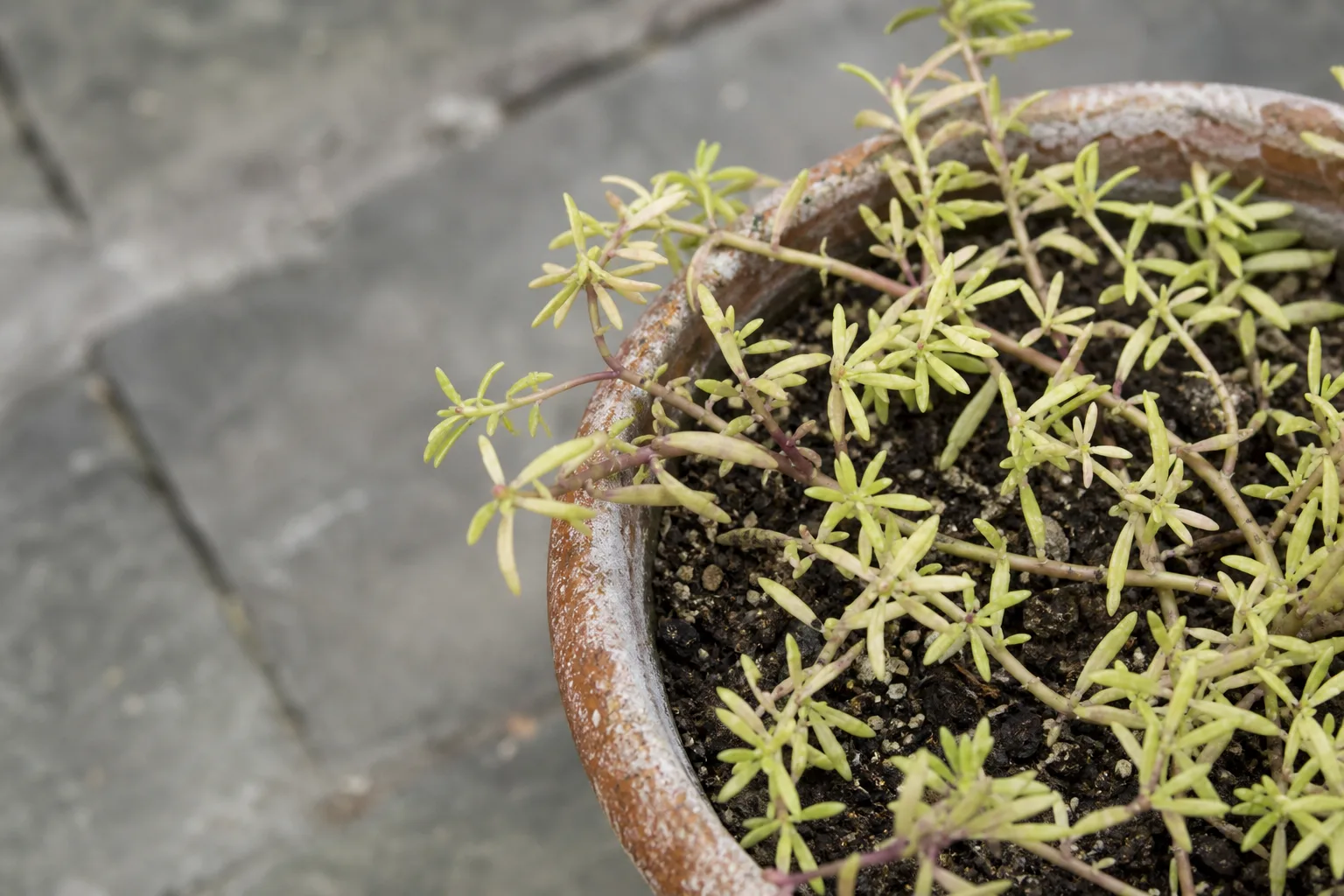
Nutrient Lockout on Portulaca: Causes, Checks & Fixes
This guide covers nutrient lockout on Portulaca. See also the general Nutrient Lockout guide, watering, and light pages for this plant.
Nutrient Lockout on Portulaca: Causes, Checks & Fixes
Quick answer
Nutrient lockout on Portulaca (Portulaca grandiflora, Moss Rose) means roots cannot absorb minerals already in the mix-the plant looks hungry even though you feed on schedule. On a lean-soil succulent annual built for well-drained sandy or rocky soil in full sun, lockout is usually salt buildup, pH drift, or feeding stressed roots-not a missing single nutrient.
First step: stop all fertilizer, then flush the container with plain water until roughly twice the pot’s volume drains freely. Empty the saucer after each pass. Confirm full sun (6+ hours of direct light) before resuming feed at half strength.
Scope on this site: This page owns lockout diagnosis and salt-leach recovery on Moss Rose. For feeding schedules and NPK choices, see Portulaca fertilizer. For pale growth without salt crust, see faded leaves and not enough light.
Terrace recovery snapshot (July 2025)
A 20 cm bowl on a west-facing rail in Raleigh received half-strength liquid feed every two weeks through June. By mid-July: white mineral ring on the pot lip, pale new tips, and flowers that stayed closed through clear midday despite eight hours of ambient brightness. After three flush passes (each ~2× pot volume) over ten days with feed paused, new stem tips greened by day 14 and blooms reopened by day 21. Old burned leaf margins never re-greened.
What nutrient lockout looks like on Portulaca
Older leaves may yellow while new tips stay small or pale. Flowers open less often on sunny days or look smaller than usual. A white crust on the soil surface or pot rim often follows repeated liquid feeding. Brown crispy leaf edges after a recent dose suggest salt burn from soluble fertilizer residues rather than drought.
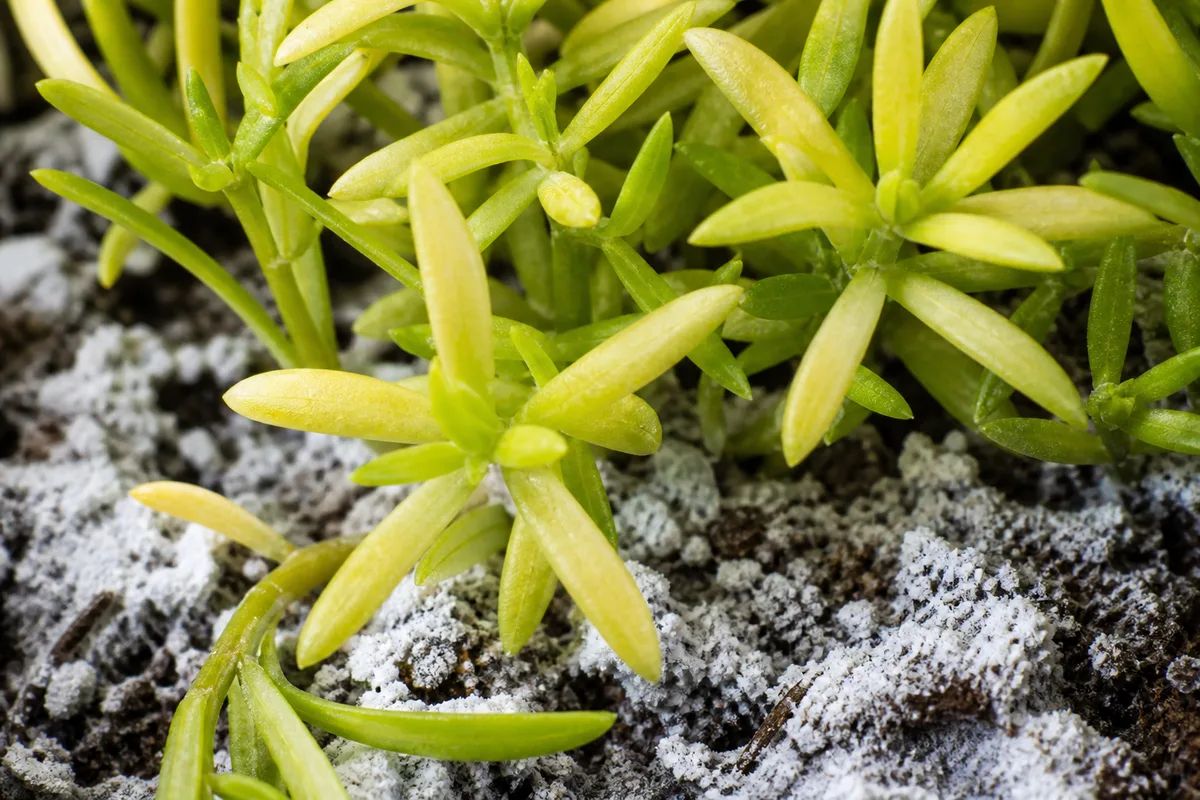
Nutrient Lockout symptoms on Portulaca - compare with healthy tissue on the same plant.
Growth stalls mid-season despite your feeding schedule. Stems may stay firm-unlike overwatering collapse-but the plant looks hungry and unresponsive to more fertilizer. That mismatch is the classic lockout clue on a light feeder.
Trailing succulent stems can mask base stress until flower stall appears: the mat still spreads, but midday blooms fail to open even when neighbors in the same rail row flower normally.
Why Portulaca gets nutrient lockout
Portulaca is not a heavy feeder and performs best in low-fertility gritty mix. Gardeners who treat it like hungry annuals in rich peat can overshoot quickly-especially with high-nitrogen formulas that push leaves at the expense of blooms. Proven Winners warns that rich soil or overfertilizing produces foliage at the expense of flowers.
Salt buildup from repeated soluble feed without leaching blocks root uptake. Repeated watering leaches nutrients over time, but terrace pots that dry fast in heat concentrate salts at the root zone when you keep feeding without flushing. Small hanging baskets and rail bowls evaporate surface moisture within hours on hot afternoons-each feed leaves residues that accumulate faster than rain-leached in-ground plantings.
pH outside the plant’s comfort range limits uptake. Moss Rose tolerates acid to neutral soil pH-roughly 5.5 to 7.0 in home culture. Alkaline tap water or limestone-heavy mixes above ~7.0 can lock iron and other micronutrients even when fertilizer is present. Lower leaves yellowing with green veins on an otherwise fed plant point toward iron availability problems tied to pH-not simple nitrogen hunger. See soil too acidic for the opposite pH branch.
Long-season containers without mix refresh can become chemically exhausted or compacted. Wet, poorly aerated mix also impairs root function-poorly drained soils may lead to crown rot-and stressed roots cannot use nutrients you add.
Any repeated liquid feed without periodic leaching is a lockout pathway on Moss Rose-not only “overfeeding mistakes.” This species evolved for lean sites; even label-rate monthly feeding on a 15 cm pot stacks salts across one warm season.
Lookalike symptoms to rule out
Use this table before adding more fertilizer:
| If you see… | Likely cause | Next check |
|---|---|---|
| Pale tips, white rim crust, recent liquid feed | Nutrient lockout / salt stress | Stop feed; measure flush protocol below |
| Leggy stretch, no crust, pot logs under 6 h direct sun | Not enough light | Relocate to full sun before feeding |
| Soft mushy stems, sour smell, wet heavy pot | Overwatering / root rot | Dry-down and inspect roots-no feed on damaged roots |
| Lower-leaf yellow, green veins, pH above 7.0 | Iron chlorosis from alkaline mix | Test pH; repot or acidify per soil guide-not more nitrogen |
| Uniform pale mat, zero feed all season, lean grit mix | True nitrogen deficiency (rare) | One half-strength balanced dose on moist soil; if no response, suspect lockout |
| Growth pause in cool wet spell, firm stems, no crust | Cool-weather stall | Wait for heat; do not stack feed in cold slow growth |
| Washed-out dull foliage without salt ring | Faded leaves overlap | Log sun hours and soil moisture first |
How to confirm the cause
- Recent feeding history - Multiple liquid feeds in the past month, especially at full label strength, raise salt-lockout odds on Moss Rose.
- Salt signs - White mineral crust on soil surface, pot edges, or saucers; salt deposits visible on pot exteriors support chronic buildup.
- Soil moisture and roots - Completely dry mix with slight wilt differs from heavy wet pot with soft stems (overwatering lookalike).
- Light check - Full sun at the pot surface is baseline; pale leggy plants in shade are often light-starved, not locked out.
- Leaf pattern - Lower-leaf yellowing with green veins can indicate iron issues tied to pH; uniform pale new growth after feeding points to salt stress.
- Response test - If another half-dose of fertilizer worsened tip burn within days, stop feeding and flush.
First fix for Portulaca
Stop all fertilizer immediately. Move the pot to a sink, tub, or outdoor drain spot. Water slowly with plain room-temperature water until a steady stream runs from drainage holes. Wait ten minutes, then repeat until you have passed roughly twice the pot’s volume through the mix-UMD Extension recommends leaching with a volume at least equal to pot size, and twice that volume is a practical target for moderate salt stress. Empty the saucer after each pass; do not let the pot sit in runoff.
Scrape visible white crust from the soil surface before the second flush. Do not mix crust deeper into the root zone.
Place the pot in full sun and return to dry-down watering: water only when mix is completely dry at depth. Hold fertilizer until new growth looks normal in color and size-usually two to four weeks after flushing.
Step-by-step recovery
- Stop fertilizer; note any crusty salt on the soil surface.
- Flush with clear water two to three times over seven to ten days-each pass ~2× pot volume, draining fully and emptying saucers.
- If mix is old, compacted, or sour-smelling, repot into fresh sandy gritty blend after flushing-do not feed on repot day.
- Test pH if lower leaves show green-vein yellowing-above 7.0 suggests alkaline iron lockout; see soil guidance and soil-too-acidic for correction paths.
- Resume very diluted balanced fertilizer at half label strength only after firm new tips appear in warm weather-aligned with Portulaca fertilizer mid-season guidance.
- Prefer one light feed at planting with slow-release granules over weekly strong liquids for Moss Rose.
- Trim brown burned leaf tips for appearance; they will not revert to green. Do not harvest or propagate from salt-burned tissue until new green growth confirms recovery.
Recovery timeline
Mild salt stress corrected with flushing may show greener new leaves and normal flower opening within two to four weeks in hot sun. Severe burn with widespread tip crisping takes longer and may require repotting into fresh mix. Judge recovery by new growth, not old foliage.
| Phase | What to expect |
|---|---|
| Days 1–7 | Wilting from salt may stabilize after first flush; no permission to feed |
| Weeks 2–4 | Greener new tips and midday bloom reopening on firm plants |
| Beyond 4 weeks | Old burned margins stay crisp permanently; mat fills from new runners |
Mistakes to avoid
Do not double fertilizer on pale plants-that deepens salt lockout. Do not feed dry stressed Moss Rose; follow label rates to avoid over-fertilizing. Do not use full-strength outdoor doses in small pots. Do not assume every yellow leaf needs more nitrogen-check sun, moisture, salt, and pH first.
Wear gloves when handling cut tissue if pets are nearby-Portulaca is toxic to cats and dogs, and Moss Rose contains soluble calcium oxalates that can cause kidney failure in cats if ingested in quantity.
Portulaca care cross-check
| Care factor | Lockout risk when wrong | Fix |
|---|---|---|
| Feeding | Monthly liquids on small terrace pots without leaching | Pause feed; flush; resume half strength per fertilizer guide |
| Sun | Under 6 h direct at pot → pale stretch misread as hunger | Full sun before any feed decision |
| Water | Wet shade keeps mix sour; dry-down in sun leaches naturally | Match watering rhythm |
| Soil | Limestone or alkaline tap → iron lockout | Gritty lean mix; test pH |
| Season | Cool stall + feed stacks salts unused | Hold feed until warm active growth |
Moss Rose wants gritty fast-draining mix, full sun, and sparse feeding. Nutrient lockout on this plant is usually a feeding-mechanics problem-salts, pH, or timing-not a call for aggressive fertilizing.
How to prevent nutrient lockout next time
Feed once at planting or lightly mid-season at half strength-skip winter and stressed periods. Flush containers every two to three months if you use synthetic liquid feed regularly-leaching reduces soluble salt buildup before it blocks uptake. Refresh sandy mix each season since Moss Rose is often grown as a seasonal annual. Keep pots in full sun so the plant uses water and nutrients predictably between drinks.
Hanging baskets dry fastest-prioritize leaching there over ground bowls that receive occasional rain rinse.
When to worry
Escalate if stems collapse, crown softness spreads, or roots are brown and mushy when unpotting-follow root rot rescue after repotting into dry gritty mix. Widespread bleached new growth after heavy feeding may need repotting, not another fertilizer dose.
Persistent pale growth after two thorough flushes, repot into fresh mix, and confirmed full sun warrants a closer look-inspect roots for rot overlap and consider contacting your local cooperative extension office with photos of crust, new growth, and pH readings before a third fertilizer dose.
Do not feed again if crust returns within two weeks of a complete leach cycle-that signals mix exhaustion, not hunger.
Related Portulaca guides
For overlapping pale-growth symptoms, read these intent-specific pages before stacking interventions:
- Portulaca overview - lean-soil biology and seasonal care hub
- Portulaca fertilizer - when to feed, dilution, and bloom-loss from nitrogen
- Faded leaves - washed-out foliage without salt crust
- Stunted growth - size stall vs. lockout pale tips
- Soil too acidic - pH branch when mix drifts out of range
- Not enough light - shade lookalike before blaming nutrients
- Overwatering - wet-soil weakness mimics hunger
- Root rot - soft-base escalation after failed flush
Related tool
Use the Plant Problem Diagnosis Tool to narrow causes for nutrient lockout on this plant before changing multiple variables at once.