Soil Too Acidic for Houseplants: Diagnosis and Fixes
Potting mix is the foundation of houseplant health. When you see Yellowing, weak roots, nutrient uptake problems, the soil may be holding too much water, repelling water, or locking out nutrients. Fixing Soil Too Acidic often means adjusting mix, pot size, or watering habits-not just treating leaves. Track weekly progress after you change care, and note watering, light, and repotting dates so you can tell whether the symptom is improving or returning. Compare upper versus lower leaves, new versus old growth, and soil moisture at root depth before you treat, because the same visible symptom can come from watering, light, pests, or normal aging on different plants.
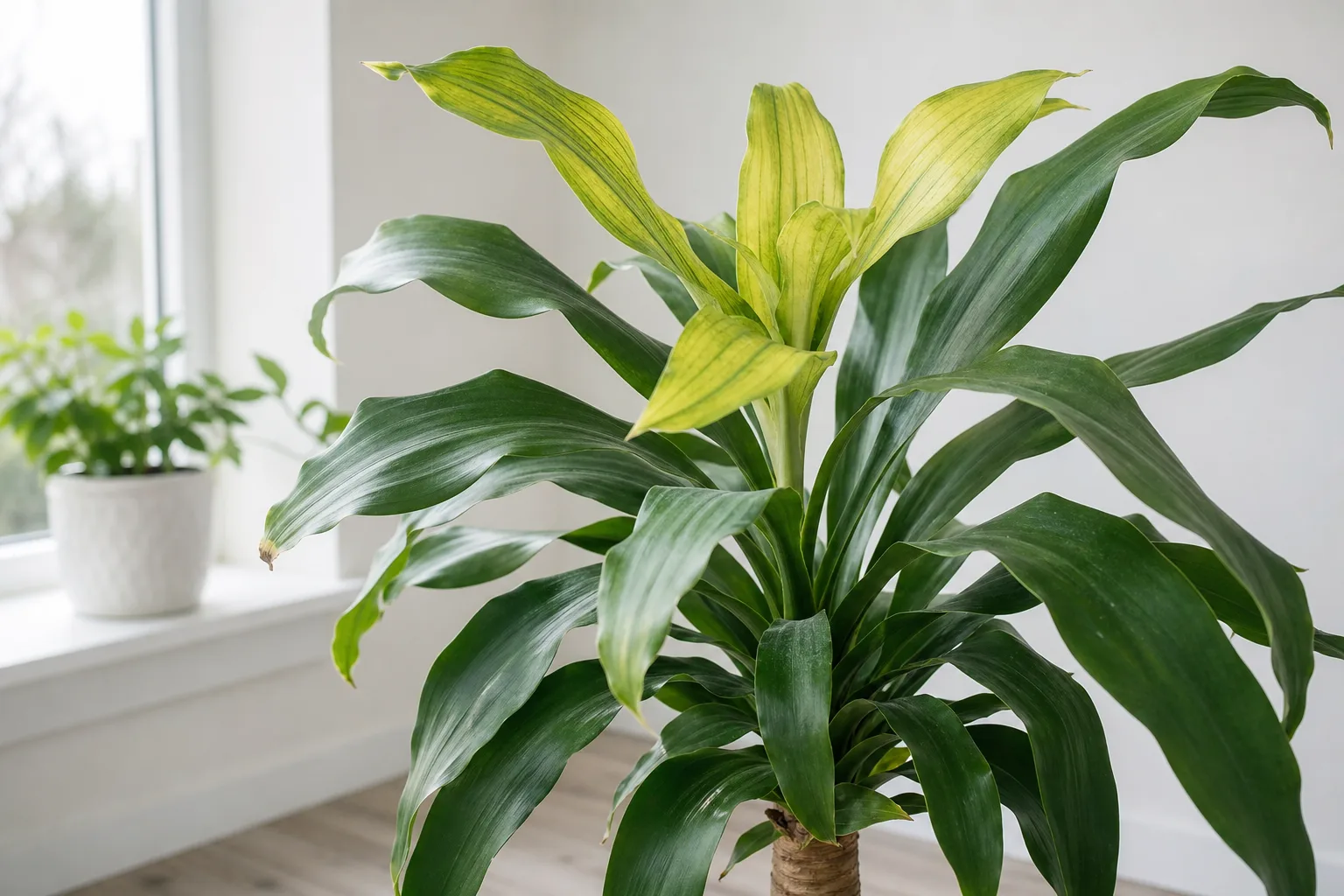
Soil Too Acidic on Houseplants
Still unsure?Match your symptoms to the most likely problems in under a minute.Run diagnosis →Understand and fix soil too acidic
Potting mix is the foundation of houseplant health. When you see Yellowing, weak roots, nutrient uptake problems, the soil may be holding too much water, repelling water, or locking out nutrients. Fixing Soil Too Acidic often means adjusting mix, pot size, or watering habits-not just treating leaves. Track weekly progress after you change care, and note watering, light, and repotting dates so you can tell whether the symptom is improving or returning. Compare upper versus lower leaves, new versus old growth, and soil moisture at root depth before you treat, because the same visible symptom can come from watering, light, pests, or normal aging on different plants.
Overview
Potting mix is the foundation of houseplant health. When you see Yellowing, weak roots, nutrient uptake problems, the soil may be holding too much water, repelling water, or locking out nutrients. Fixing Soil Too Acidic often means adjusting mix, pot size, or watering habits-not just treating leaves. Track weekly progress after you change care, and note watering, light, and repotting dates so you can tell whether the symptom is improving or returning. Compare upper versus lower leaves, new versus old growth, and soil moisture at root depth before you treat, because the same visible symptom can come from watering, light, pests, or normal aging on different plants.
How to identify it
- Water pools on top or runs straight through without soaking in
- Soil stays wet for many days after one watering
- White crust on soil surface or pot rim
- Roots circling tightly or growing out drainage holes
- Musty smell or visible mold on soil surface
When to worry
Roots turning black, plant collapsing despite watering, or salt crust thick on soil means repot and flush before permanent damage.
Common causes
Old, broken-down potting mix
Peat-heavy soil compacts over time, reducing air pockets roots need. Soil Too Acidic is common in plants not repotted for years.
Wrong mix for the plant type
Succulents in all-peat mix rot; moisture lovers in pure bark dry out too fast. Mismatch shows up as Yellowing, weak roots, nutrient uptake problems.
Salt and mineral buildup
Tap water and fertilizer leave salts that burn roots and cause crusty soil surfaces.
Pot too large for root ball
Excess soil holds water the roots cannot use, leading to chronic sogginess.
Step-by-step fix
Assess soil texture and moisture retention
Slide the plant out and smell the root ball. Crumbly, airy mix is healthy; dense, wet muck needs replacement.
Repot with appropriate fresh mix
Choose a blend matched to your plant-add perlite or bark for drainage, or more water-retentive components for ferns.
Flush salts if crust is present
Water deeply until excess runs from drainage holes. Repeat once, then resume normal care.
Right-size the container
Move up only 1–2 inches in diameter. Too large a pot worsens wet soil problems.
Adjust watering to new mix
Fresh soil dries on a different schedule-recheck moisture daily for the first two weeks.
Prevention tips
- Repot every 1–2 years for fast growers
- Use mixes suited to plant type, not garden soil indoors
- Flush soil periodically if using tap water and fertilizer
- Match pot size to root mass
Common mistakes
- Adding gravel at the bottom instead of using proper mix
- Repotting only with garden soil
- Jumping to a pot much larger than needed
Yellow leaves do not prove that a houseplant’s soil is too acidic. Neither do weak growth, brown roots, or a number taken from water draining out of the pot. Those clues justify investigation, but low root-zone pH is a measurement, and any correction should begin with a test suited to potting media.
This caution prevents a common chain of mistakes. A plant with wet, decaying roots is diagnosed as “nutrient lockout,” lime or baking soda is added without a baseline, soluble salts rise, and the real drainage problem remains. Measure first, interpret the number for the actual plant and medium, then use the smallest correction likely to work.
This guide synthesizes extension guidance on pH, alkalinity, electrical conductivity, and container-media testing; it is not a report of a controlled amendment trial. Its recommendations deliberately avoid universal target numbers because species, substrate, extraction method, irrigation water, and fertilizer history change how a result should be interpreted.
Quick Diagnosis: Low pH Is a Measurement
pH describes hydrogen-ion activity on a logarithmic scale. A change of one pH unit represents a tenfold change in hydrogen-ion activity, but that does not mean a plant responds in a simple tenfold way. Buffering, nutrient form, substrate composition, water alkalinity, and roots all influence the biological result.
A test below a generic “houseplant range” is not automatically wrong. Many commercial crops are managed in moderately acidic substrates, and acid-loving plants may perform well where another species develops nutrient stress. Compare the result with guidance for the species or crop group and the specific testing method.
Avoid treating pH 7 as a universal ideal. Neutrality is a chemical reference point, not a houseplant health target. The useful target is a range in which the specific plant can access nutrients without toxic accumulation and the chosen substrate remains physically healthy.
Confirm the diagnosis with at least two pieces of evidence: a repeatable root-zone test and a compatible symptom or management history. Recent use of strongly acidifying fertilizer, low-alkalinity water, decomposed peat or bark, and progressive micronutrient symptoms can support the case. Leaf color alone cannot.
If roots are soft, the crown is collapsing, or the pot is saturated, stabilize the physical root environment before pursuing precise chemistry. A laboratory value cannot rescue roots that lack oxygen. Treat urgent root decay and chemical adjustment as related but distinct tasks.
| Evidence | Interpretation | Next action |
|---|---|---|
| One uncalibrated probe reading; no compatible history | Low-confidence result | Repeat with a suitable, calibrated container-media method |
| Repeatable low result; plant healthy; mix structurally sound | Possible species-compatible condition | Compare with a species- and method-specific target before changing anything |
| Repeatable low result plus compatible symptoms and acidifying inputs | Supported low-pH diagnosis | Remove the cause and obtain a measured amendment recommendation |
| Low pH plus high EC, collapsed mix, or damaged roots | Multiple root-zone problems | Consider laboratory analysis and repotting rather than pH correction alone |
Understand What pH Changes
pH affects chemical equilibria, microbial activity, and the forms in which nutrients occur. In a container, it also interacts with the exchange capacity and decomposition of organic media. The familiar nutrient-availability chart is a broad teaching tool, not a diagnostic prescription for every soilless mix.
Penn State Extension’s explanation of soil pH and nutrient availability shows why both excessively low and high pH can create nutrient problems. But field mineral soil and a peat-bark houseplant substrate do not behave identically, so use a container-media method and target when interpreting results.
Nutrient Availability, Deficiency, and Toxicity
At low pH, iron, manganese, and some other metals can become more soluble. In susceptible plants and media, that can contribute to toxicity. At the same time, availability of nutrients such as molybdenum may decline, and damaged roots can create secondary deficiencies unrelated to the amount present.
This is why “pH lockout” is an incomplete diagnosis. A yellow leaf might reflect iron deficiency at high pH, magnesium shortage, nitrogen loss, root rot, pests, low light, or normal aging. Adding iron to an already low-pH medium can worsen toxicity rather than correct chlorosis.
Nutrient interactions also matter. Electrical conductivity may be high from fertilizer salts even while one nutrient is poorly available. Test pH and EC together when a valuable or chronically affected plant justifies detailed analysis.
Why Plant Species and Substrate Matter
Most common foliage plants tolerate a moderately acidic root zone, but their preferred ranges are not identical. Azaleas and gardenias are acid-loving; many carnivorous plants require both acidic, nutrient-poor media and low-mineral water; cacti, orchids, and aroids vary by species and growing system.
Substrate components begin with different chemical properties. Peat is naturally acidic, coir may contain salts unless processed well, bark changes as it decomposes, compost can be variable, and limestone may be incorporated during manufacture to adjust pH. Read the product label instead of assuming every bagged mix is neutral.
Roots can also create localized differences through nutrient uptake and exudates. A single probe reading at the surface may miss the chemistry around active roots. Representative sampling is essential.
Recognize Symptoms Without Guessing
Potential low-pH symptoms include poor growth, distorted or discolored foliage, shortened roots, and patterns compatible with micronutrient toxicity or nutrient deficiency. None is unique. The pattern’s location—old leaves, new leaves, margins, veins, or entire plant—helps form hypotheses, not final answers.
Look at timing. Symptoms beginning after a fertilizer change, prolonged use of a strongly acidifying nutrient, or repotting into an unlimed peat-based medium support a chemistry question. Symptoms beginning after cold exposure, a move to low light, or chronic saturation point elsewhere.
Photograph upper and lower foliage, new and old growth, roots, and the medium. Record water and fertilizer inputs. This evidence lets an extension diagnostician or laboratory interpret results more reliably than a detached soil sample with no plant history.
Rule Out Watering, Roots, Salts, Light, and Pests
Check moisture at root depth. Overwatered roots can be dark and soft; severely dry roots can be brittle; both can produce yellowing and wilting. University of Maryland’s indoor-plant watering guidance emphasizes assessing the medium and plant rather than following a fixed schedule.
Inspect for white crystalline crust and review fertilizer use. High soluble salts can injure roots and mimic nutrient problems. Measure EC or obtain a substrate test before adding another nutrient product.
Evaluate light against the species’ needs. Low light slows growth and water use, which can leave the pot wet and limit the plant’s demand for fertilizer. Strong sudden sun can scorch leaves without a root-zone pH change.
Use a hand lens to inspect leaf undersides, stems, and new growth for mites, thrips, scale, or mealybugs. Pest feeding can create stippling, distortion, yellow patches, and decline. A pH amendment will not control insects.
Test Potting-Medium pH Correctly
Use a method designed for container media. Professional methods include saturated-media extract, pour-through, and specific substrate-to-water or calcium-chloride ratios. Each can produce a different numeric result, so compare only with reference ranges developed for that method.
UMass Extension describes standardized pH and EC testing for greenhouse media. The central lesson for home growers is methodological consistency: sample preparation, water quality, calibration, temperature, and extraction all affect the answer.
Take small samples from several locations in the active root zone without removing a damaging proportion of roots. Exclude surface fertilizer prills, decorative stone, and drainage debris unless they represent the bulk medium. Mix the subsamples in a clean container.
Sample timing should also be consistent. A test taken immediately after fertilizer irrigation may read differently from one collected near the end of a normal watering cycle. Record whether the pot was recently watered or fed so a later comparison measures change rather than sampling noise.
Calibrate a meter with fresh standards that bracket the expected pH. Rinse and blot the probe according to its instructions, allow the reading to stabilize, and repeat. Cheap two-prong “soil meters” used directly in heterogeneous potting mix often provide false confidence if they are not designed and calibrated for that use.
Home Tests, Runoff, and Laboratory Methods
Color kits can provide a broad estimate if the sample and water are prepared consistently. They are less useful when the extract is dark or the target difference is small. Paper strips may be adequate to identify an extreme but should not drive precise dosing.
Runoff pH is easy to collect but can be influenced by irrigation water, preferential channels, salt deposits, and the volume applied. It is not automatically the same as pH throughout the root zone. Use it as a repeatable trend only when the collection method is controlled.
A laboratory test is the better choice for rare plants, repeated failures, suspected toxicity, or a collection sharing the same water and fertilizer. University of Maryland explains how soil-testing services provide calibrated analysis and recommendations in its soil testing guidance. Confirm that the laboratory accepts soilless greenhouse or container media, because ordinary garden-soil packages may use unsuitable methods.
Submit the context with the sample: plant identity, substrate brand or recipe, pot age, irrigation source, fertilizer products and rates, recent watering, symptoms, and the method used for any home readings. Without that history, a laboratory can report chemistry but may not be able to identify the management cause.
Do not average incompatible readings until they look comfortable. If a direct probe, runoff test, and lab report disagree, investigate methods and units. The professionally extracted representative sample should carry the most weight.
Read Water pH, Alkalinity, and EC Separately
Water pH describes acidity at the moment of testing. Alkalinity describes the water’s capacity to neutralize acid, often associated with bicarbonate and carbonate. A high-pH water with low alkalinity may have little long-term effect, while moderately alkaline water can push substrate pH upward over repeated irrigation.
EC estimates total dissolved-ion concentration; it does not specify alkalinity or identify ions. Water hardness mainly reflects calcium and magnesium. Sodium, chloride, and fluoride are separate concerns. Treating all four measurements as “hard water” leads to poor decisions.
Consult a current municipal water-quality report or laboratory analysis. If the source varies seasonally or comes from a private well, periodic testing may be warranted. Colorado State University Extension discusses the importance of irrigation-water quality and alkalinity in container production through its greenhouse water-quality resources.
Do not acidify household water with vinegar or another acid by guesswork. Neutralizing alkalinity safely requires measured water chemistry, appropriate acid, protective equipment, and dosing calculations. For a few houseplants, changing to a suitable tested water source or fresh buffered medium is often safer.
Find Why the Root Zone Became Acidic
The initial mix may have been too acidic for the plant, especially if raw peat or bark was used without appropriate buffering. Commercial mixes normally account for crop use, but storage, product variation, and amendments can alter the result. Check the lot label and contact the manufacturer when a fresh mix tests far outside its specification.
Some fertilizers acidify the root zone over time depending on nitrogen form and plant uptake. Applying more than the plant can use adds salts and can accelerate chemistry changes. Review the guaranteed analysis, label rate, and every overlapping product.
Low-alkalinity irrigation provides little buffering against acidification. Decomposition and root processes may also lower pH. Conversely, high-alkalinity water often raises pH, which means an acidic reading in that context deserves method verification.
Old medium can become chemically and physically unsuitable at once. If bark or peat has decomposed, adjusting pH without restoring aeration treats only half the problem. Root loss can further destabilize water use and nutrition.
Choose Between Amendment and Repotting
Use amendment when the plant is stable, roots are healthy, the medium remains structurally sound, the low result is confirmed, and a species-specific recommendation provides a measured rate. This allows a gradual correction with less root disturbance.
Repot when the medium is severely outside range, structurally collapsed, high in soluble salts, contaminated by an application error, or associated with root decay. Repotting replaces both chemistry and physical structure but adds transplant stress.
For a recently repotted plant with a modest confirmed deviation, contact the mix manufacturer or extension service before acting. The pH may stabilize as lime reacts and irrigation continues. Daily amendments made in response to fluctuating home tests can create a damaging overshoot.
Build the decision around risk. A vigorous common plant in a sound mix can tolerate observation while you confirm. A rare specimen with rapid decline deserves laboratory testing and specialist guidance rather than repeated kitchen experiments.
| Situation | Prefer observation or amendment | Prefer fresh medium or expert help |
|---|---|---|
| Stable plant; modest deviation; healthy roots | Repeat the test and monitor before dosing | Escalate only if the trend or symptoms worsen |
| Confirmed low pH; sound medium; known target and rate | Use the measured, substrate-specific recommendation | Seek help if no suitable rate exists |
| Severe deviation; decomposed medium; high salts | Amendment alone may be incomplete | Replace the compromised root environment |
| Rare plant, rapid decline, or conflicting tests | Avoid trial-and-error dosing | Use a container-media laboratory or extension diagnostician |
Correct Confirmed Low pH Conservatively
Calcitic limestone raises pH and supplies calcium; dolomitic limestone also supplies magnesium. Particle size, material quality, substrate buffering, incorporation, moisture, and temperature affect reaction. A teaspoon that is safe in one mix may overshoot another.
University of Minnesota Extension explains that lime requirement depends on more than the starting pH in its overview of soil pH and liming. That principle is even more important in a small container: obtain a substrate-specific recommendation and measure accurately.
Top-dressing lime reacts less uniformly than incorporation and can create steep local gradients. If an amendment is justified, dissolve or distribute only as the product and expert recommendation specify. Protect skin and eyes from dust and keep material away from children and pets.
Fresh repotting medium should be compatible with the plant and pre-adjusted when possible. Do not compensate for raw acidic peat by guessing at a lime dose around live roots. Commercially formulated mix offers a safer baseline for most home growers.
Retest after the recommended reaction interval using the same method. Do not add another dose because the next-day number barely moved; lime is not instantaneous. Stop when the target is reached rather than trying to force neutrality.
Care for the Plant During Recovery
Keep light, temperature, and moisture stable within the species’ range. Do not add multiple nutrient supplements while evaluating the correction. Damaged roots need air and time more than a burst of fertilizer.
Water when the root zone reaches the appropriate dryness and allow excess to drain. If EC is high, pH correction alone is incomplete; soluble salts may need managed leaching or repotting. Never flush through a pot that cannot drain.
Remove only leaves that are fully dead, diseased, or obstruct monitoring. Partly green leaves still photosynthesize. Mark existing damage so new injury can be distinguished from old.
Watch new growth rather than expecting yellow tissue to recolor. A healthy new root flush, normal leaf expansion, and stable pH trend over several weeks are stronger evidence than a single improved reading.
Special Plants and Growing Systems
Acid-loving plants should not be pushed toward neutral merely because a general chart says so. Azaleas, gardenias, blueberries grown in containers, and many carnivorous plants have specialized requirements. Use species-specific botanical or extension guidance.
Carnivorous plants add a water-quality constraint: many require very low dissolved minerals as well as acidic media. Lime, ordinary fertilizer, and alkaline tap water can be harmful. Identify the genus and growing method before intervening.
Hydroponic and semi-hydro systems use solution pH, nutrient concentration, reservoir management, and substrate properties as a coordinated system. Do not apply peat-based soil recommendations to inert media. Follow crop-specific hydroponic targets and calibrated meter procedures.
Orchids vary widely. Epiphytic orchids in bark, terrestrial orchids, and orchids in semi-hydro do not share one pH target. The same caution applies to cacti and succulents from limestone habitats versus species from acidic forest substrates.
Mistakes and Unsafe Home Remedies
Baking soda adds sodium, which can accumulate and injure roots. Wood ash is alkaline but variable and soluble, and it can rapidly increase salts. Crushed eggshells react slowly and unpredictably in a pot. None is a precise rescue for a houseplant with an unverified pH problem.
Coffee grounds are not a controlled acidifier, and fresh versus spent grounds behave differently. Vinegar or lemon juice can cause sharp temporary changes without addressing alkalinity or buffering. Do not use a bubbling kitchen demonstration as a soil test.
Avoid chasing exact decimals with an uncalibrated meter. Biological targets are ranges, and method uncertainty may exceed the difference you are trying to correct. Consistency and plant response matter more than decorative precision.
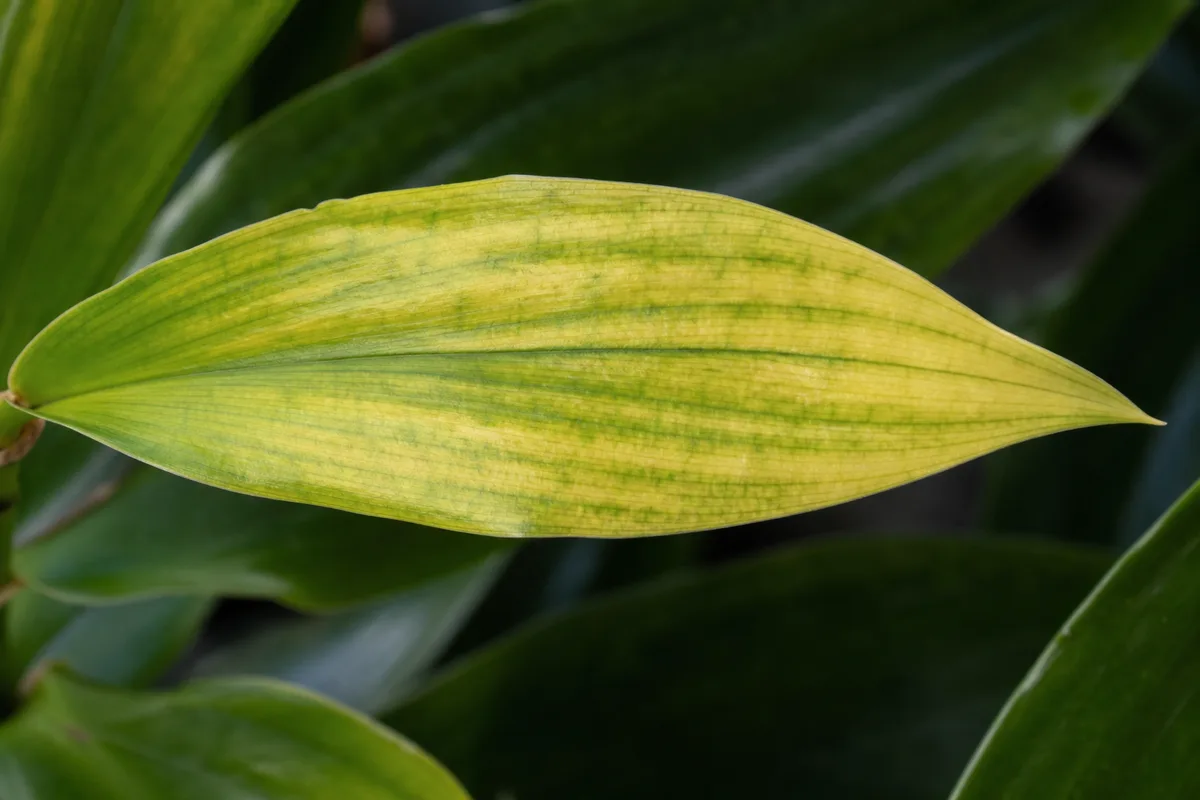
Do not diagnose by an online photograph alone. Iron deficiency at high pH, manganese toxicity at low pH, overwatering, mites, and natural senescence can all involve yellowing. Use the image as a prompt to investigate, not as proof.
Monitor Results and Prevent Recurrence
Record test method, calibration, sample location, pH, EC, water source, fertilizer, and date. Repeat under comparable conditions at an interval appropriate to the correction. Daily testing encourages noise-driven intervention.
Record the target range and its source as well. A number copied from a generic “houseplant pH chart” is not equivalent to guidance for the identified species, substrate, and extraction method. When sources disagree, use the recommendation tied most closely to the actual crop and testing protocol, or ask the laboratory that performed the analysis.
Existing damaged leaves may remain yellow or distorted. Track the newest root and leaf growth, watering response, and whether symptoms continue to spread. If the number improves but the plant declines, revisit drainage, roots, pests, and light.
Prevent recurrence by choosing a plant-compatible commercial mix, measuring fertilizer, monitoring water alkalinity when relevant, and repotting when medium structure fails. Avoid mixing multiple amendments whose combined effect is unknown.
Check the pH specification and intended crop on any specialized mix before purchase. “Acidic,” “organic,” “cactus,” and “indoor” are broad labels rather than laboratory guarantees. Store opened mix dry and sealed so contamination and uneven weathering do not undermine the starting point.
For a collection, test representative pots rather than assuming every container shares one pH. Different root activity, pot size, media age, and fertilizer history can create different results even under one roof. Use a local extension or greenhouse laboratory when the pattern is widespread.
Conclusion
Soil that is too acidic for a houseplant cannot be diagnosed from yellow leaves alone. Confirm root-zone pH with a method appropriate to container media, interpret it for the plant and substrate, and separate pH from alkalinity, EC, drainage, and root disease.
When low pH is real, correct it conservatively: stabilize the root zone, remove the cause, use a measured substrate-specific amendment or fresh buffered mix, and allow time before retesting. The goal is not neutral soil or a perfect daily number. It is a stable chemical and physical environment in which that particular plant can build healthy new roots and leaves.
Plants commonly affected
These houseplants often struggle with soil too acidic. Open a care guide or plant-specific troubleshooting page for tailored fixes.
 Medium
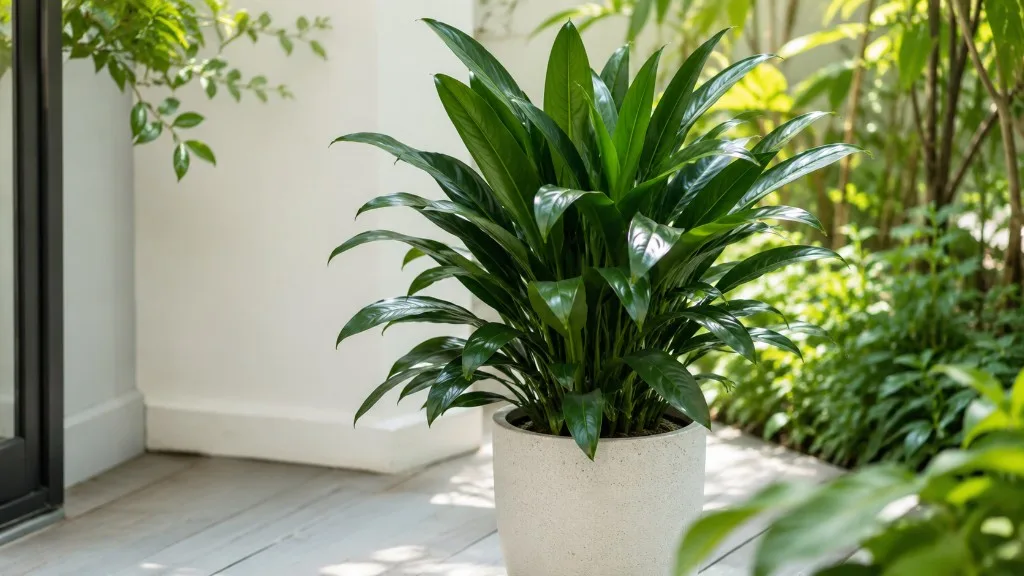
Janet Craig Dracaena
Likely causeJun 14, 2024 · The ideal pH for Dracaena 'Janet Craig Compacta' is a slightly acidic 6 to 7, like a mild salsa that's just right—not too spicy, not too bland. This pH range keeps the plant's nutrient uptake in the sweet spot.
Quick fixConfirm diagnosis on your Janet Craig Dracaena, then address the most likely care or pest factor described in current extension guidance.
 Medium
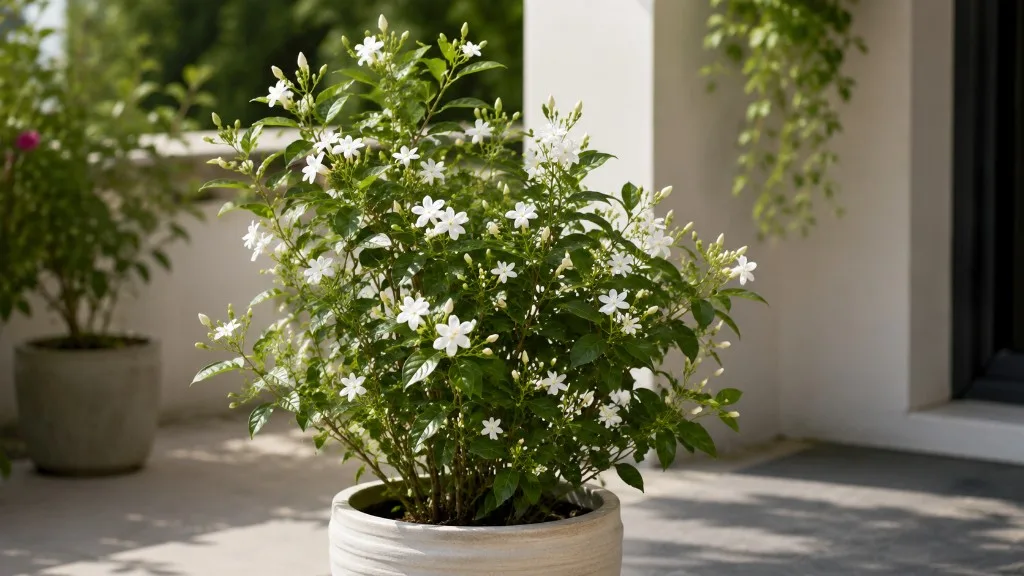
Jasmine
Likely causeJul 17, 2025 · If you find that your soil is too acidic or too alkaline, there are several steps you can take to adjust the pH level. For acidic soil , you can add lime to raise the pH, while for alkaline soil, you can add elemental sulfur
Quick fixConfirm diagnosis on your Jasmine, then address the most likely care or pest factor described in current extension guidance.
 Medium
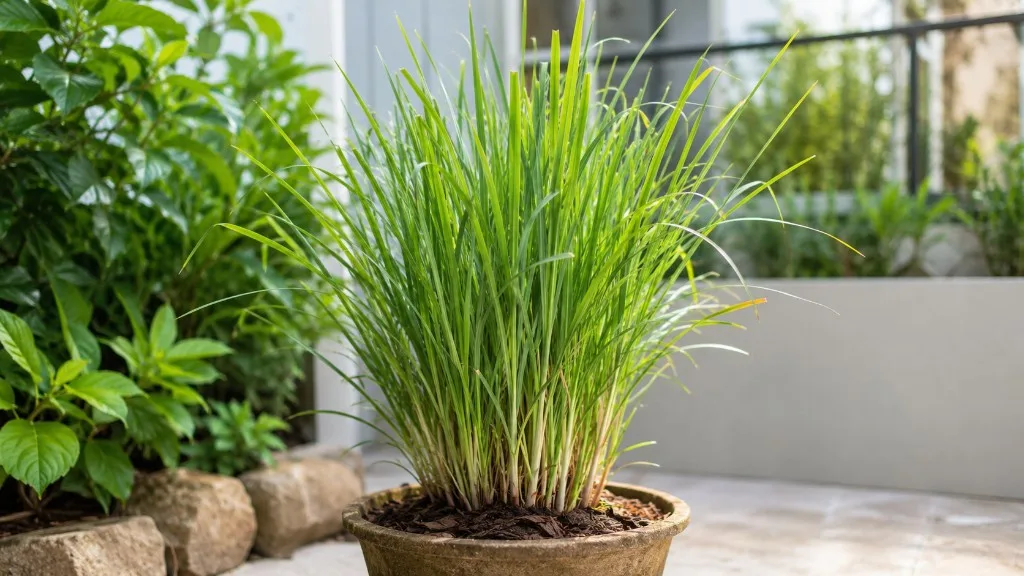
Lemongrass
Likely causeJul 24, 2023 · pH Levels: Lemongrass prefers slightly acidic to neutral soil with a pH range of 6.0 to 7.5 . Testing your soil’s pH levels can help determine if any adjustments are necessary. If the soil is too acidic, adding lime can raise
Quick fixConfirm diagnosis on your Lemongrass, then address the most likely care or pest factor described in current extension guidance.
 Medium
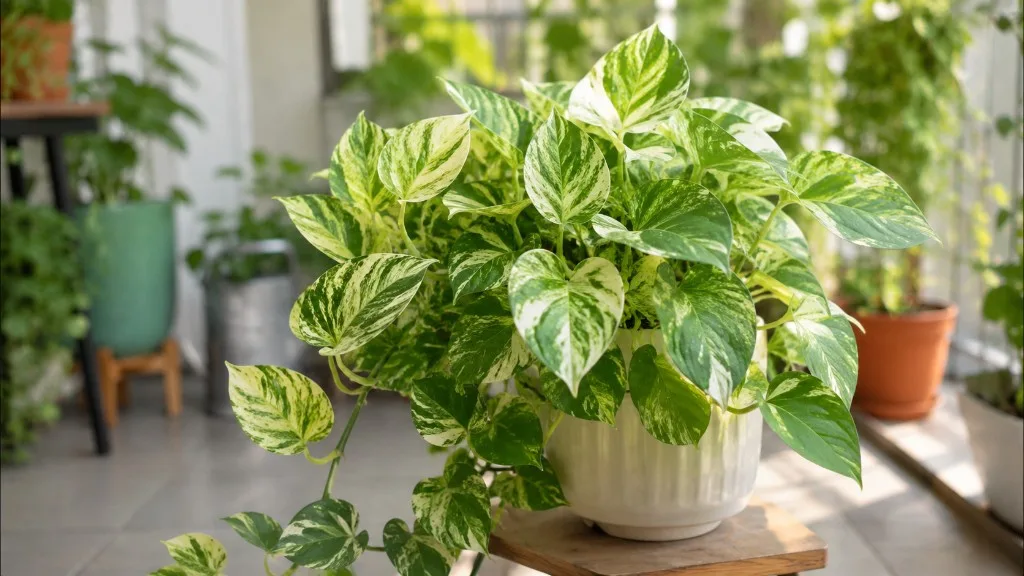
Manjula Pothos
Likely causeJun 18, 2024 · Manjula Pothos plants have a sweet spot when it comes to soil pH, preferring slightly acidic to neutral conditions. The ideal range is between 6.1 and 6.5. This is crucial because the wrong pH can lock out essential nutrients
Quick fixConfirm diagnosis on your Manjula Pothos, then address the most likely care or pest factor described in current extension guidance.
 Medium
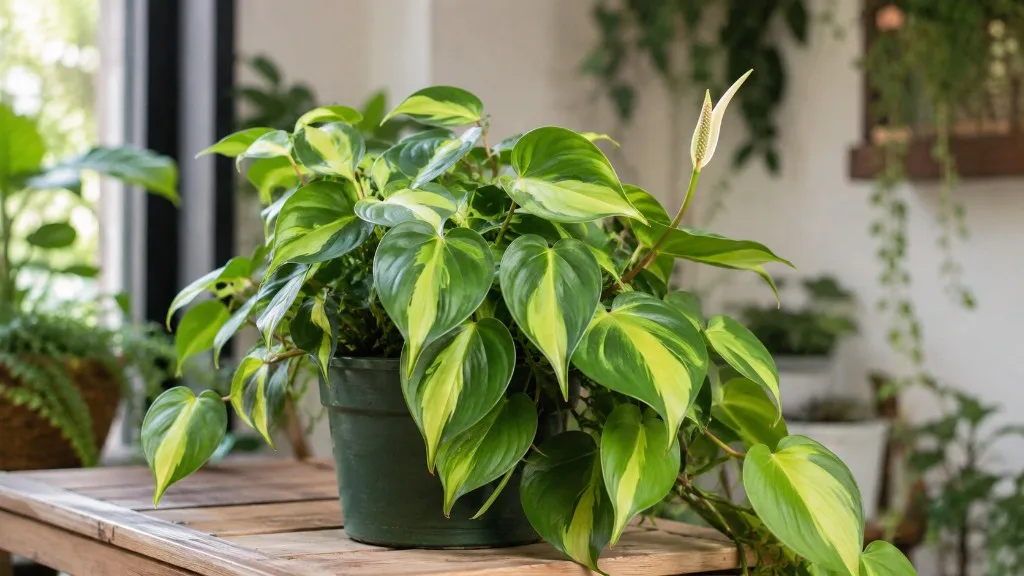
Philodendron Brasil
Likely causeJul 21, 2023 · The ideal pH level for Philodendron Brasil is slightly acidic , ranging between 5.5 and 6.5. Test the pH level of the soil before planting your Philodendron Brasil or look for soil mixes specifically formulated for acid -lovi
Quick fixConfirm diagnosis on your Philodendron Brasil, then address the most likely care or pest factor described in current extension guidance.
 Medium
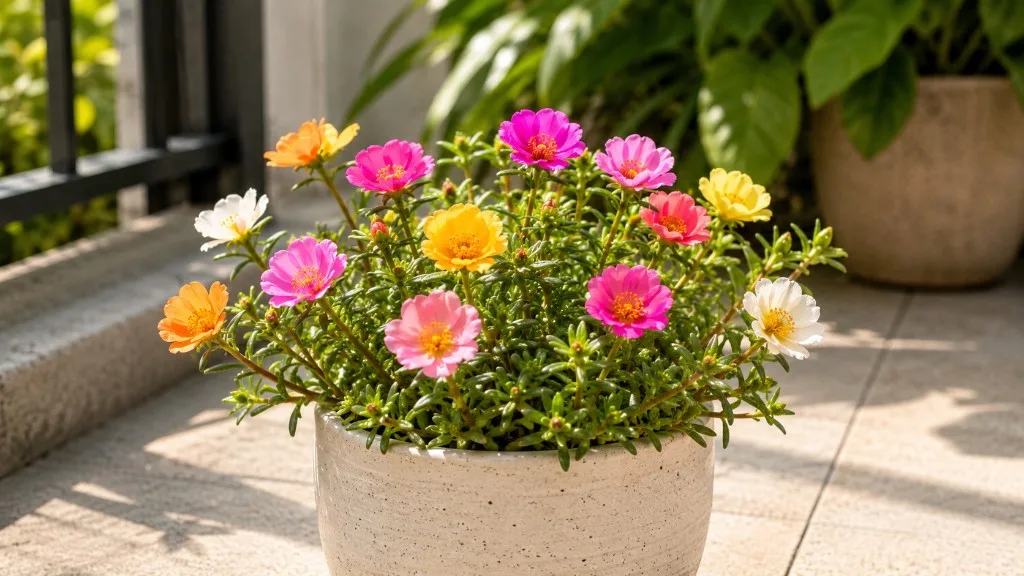
Portulaca
Likely causeJul 7, 2025 · Portulaca, commonly known as moss rose or purslane, is a drought-tolerant succulent that thrives in well-draining, nutrient-light soil . From a plant's perspective, the ideal soil must balance moisture retention and aeration t
Quick fixConfirm diagnosis on your Portulaca, then address the most likely care or pest factor described in current extension guidance.
 Medium
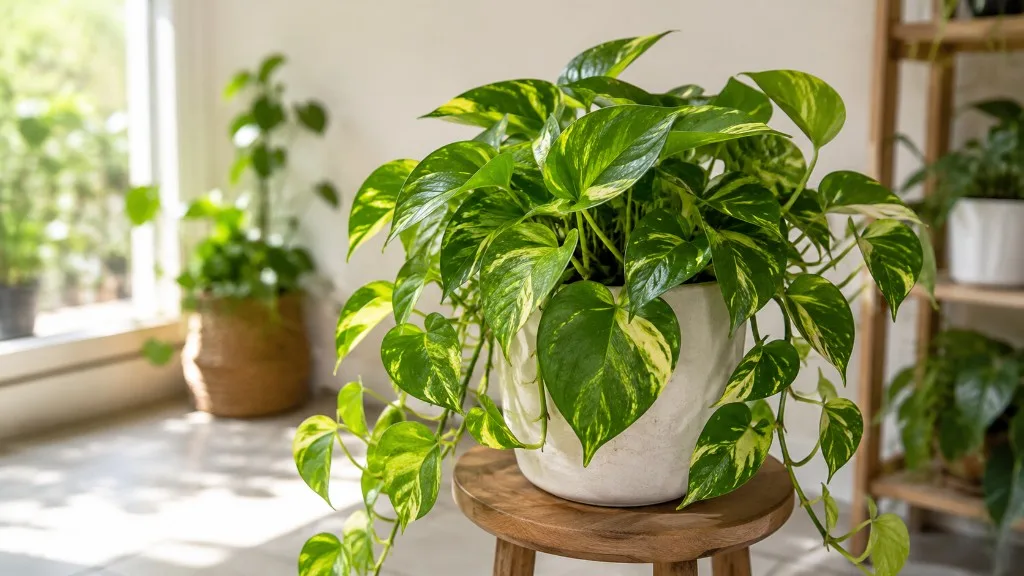
Pothos
Likely causeJul 17, 2025 · Pothos plants prefer well-draining, slightly acidic to neutral soil, with a pH range of 6.1 to 7.0 . This type of soil allows for healthy root growth and prevents waterlogged soil, which can lead to root rot and other problem
Quick fixConfirm diagnosis on your Pothos, then address the most likely care or pest factor described in current extension guidance.
 Medium
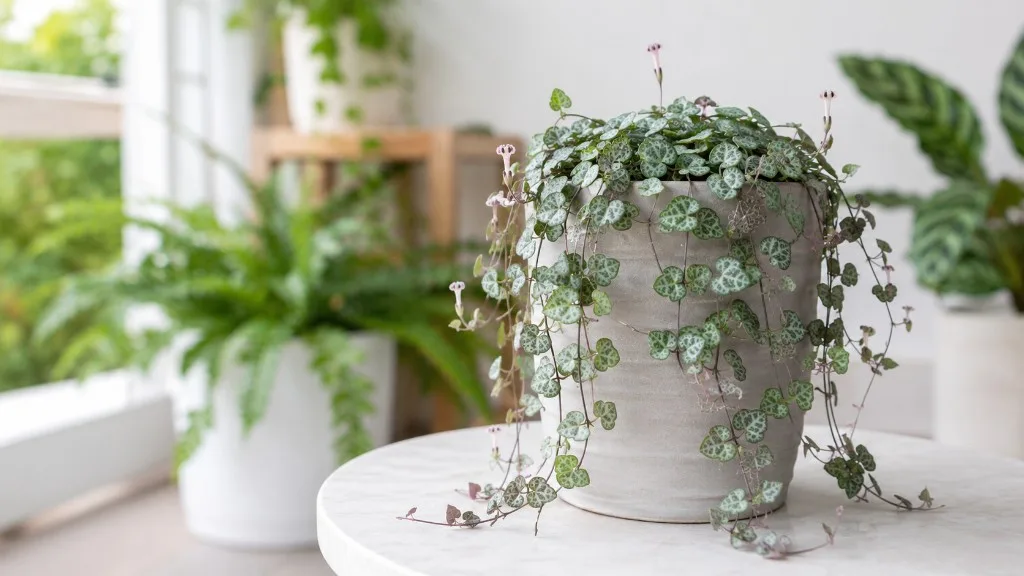
String of Hearts
Likely causeJul 17, 2025 · Neutral to slightly acidic pH: String of Hearts prefers a slightly acidic to neutral soil pH, ranging from 6.0 to 7.0. A pH outside this range can lead to nutrient deficiencies and other growth problems.
Quick fixConfirm diagnosis on your String of Hearts, then address the most likely care or pest factor described in current extension guidance.
 Medium
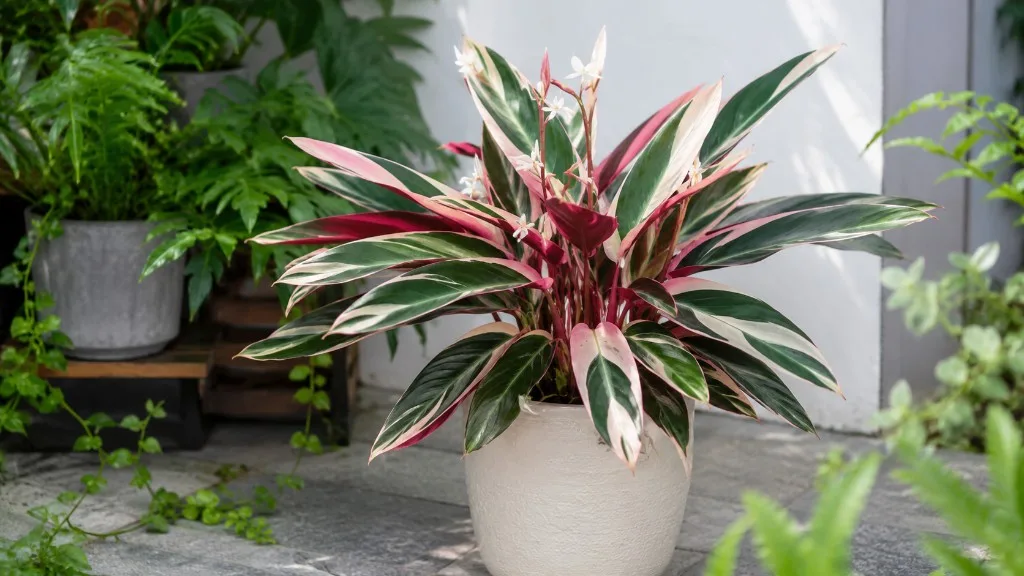
Stromanthe Triostar
Likely causeTriostar Stromanthe needs soil that stays consistently moist but drains well enough to avoid soggy roots. A rich mix with good organic content and some perlite for aeration works well. Target a slightly acidic pH of 6.0–6.5.
Quick fixConfirm diagnosis on your Stromanthe Triostar, then address the most likely care or pest factor described in current extension guidance.