Soil Too Acidic on String of Hearts: Causes, Checks & Fixes
Quick answer
Soil too acidic on String of Hearts locks out nutrients and shows as pale, stunted trailing growth with washed-out silver marbling on firm tubers. First step: test mix pH at root depth and aim for slightly acidic to neutral around 6.0–7.0 before repotting or adding lime.
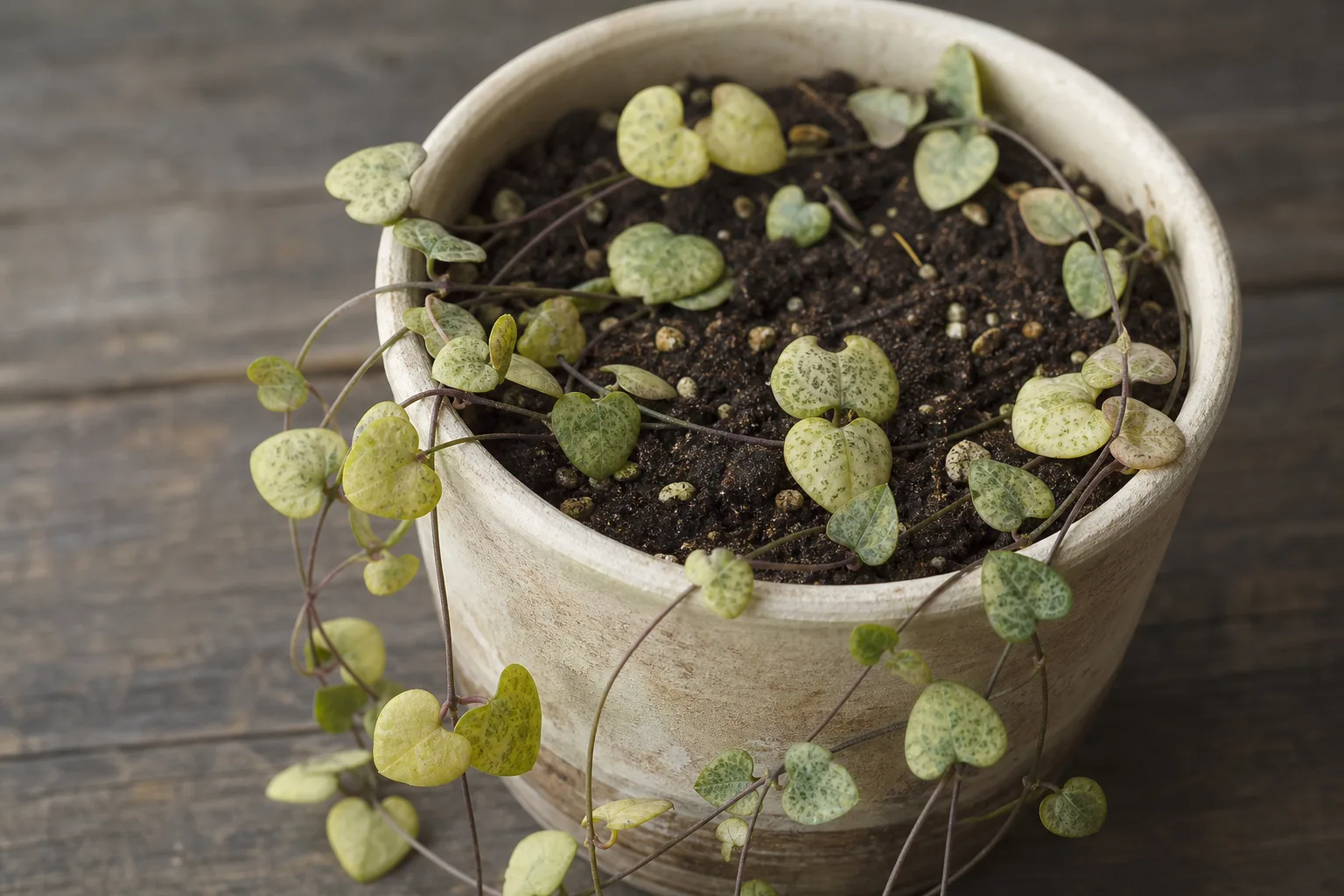
Soil Too Acidic on String of Hearts: Causes, Checks & Fixes
This guide covers soil too acidic on String of Hearts. See also the general Soil Too Acidic guide, watering, and light pages for this plant.
Soil Too Acidic on String of Hearts: Causes, Checks & Fixes
Quick answer
When silver marbling on String of Hearts hearts fades to a flat wash-while tubers stay firm and you have been watering on schedule-the root zone may have drifted too acid in an aged hanging-basket mix. Ceropegia woodii stores water in bead-like tubers along wiry stems, so trailing vines can look merely “tired” for weeks while pH falls below the useful range and nutrients sit in the pot but roots cannot absorb them. After repotting into fresh gritty mix, expect greener new hearts with sharper marbling within three to five weeks during active growth-not instant color on old pale leaves.
First step: test mix pH at root depth with a meter or soil test kit before repotting, liming, or fertilizing. This semi-succulent grows best in slightly acidic to neutral mix around 6.0–7.0 with excellent drainage. Problems usually appear when acidity pushes below 5.5-especially in old peat-heavy hanging baskets where residual limestone has been used up and organic matter has broken down. For baseline mix recipes and pH targets when building fresh soil, see the String of Hearts soil guide; this page troubleshoots chemistry drift on plants already in long-used containers.
What overly acidic soil looks like on String of Hearts
Acid-related stress on String of Hearts shows through whole-vine vigor and leaf color, not dramatic spots or mushy collapse. On firm tubers in bright light with appropriately dry soil, the pattern usually looks like this:
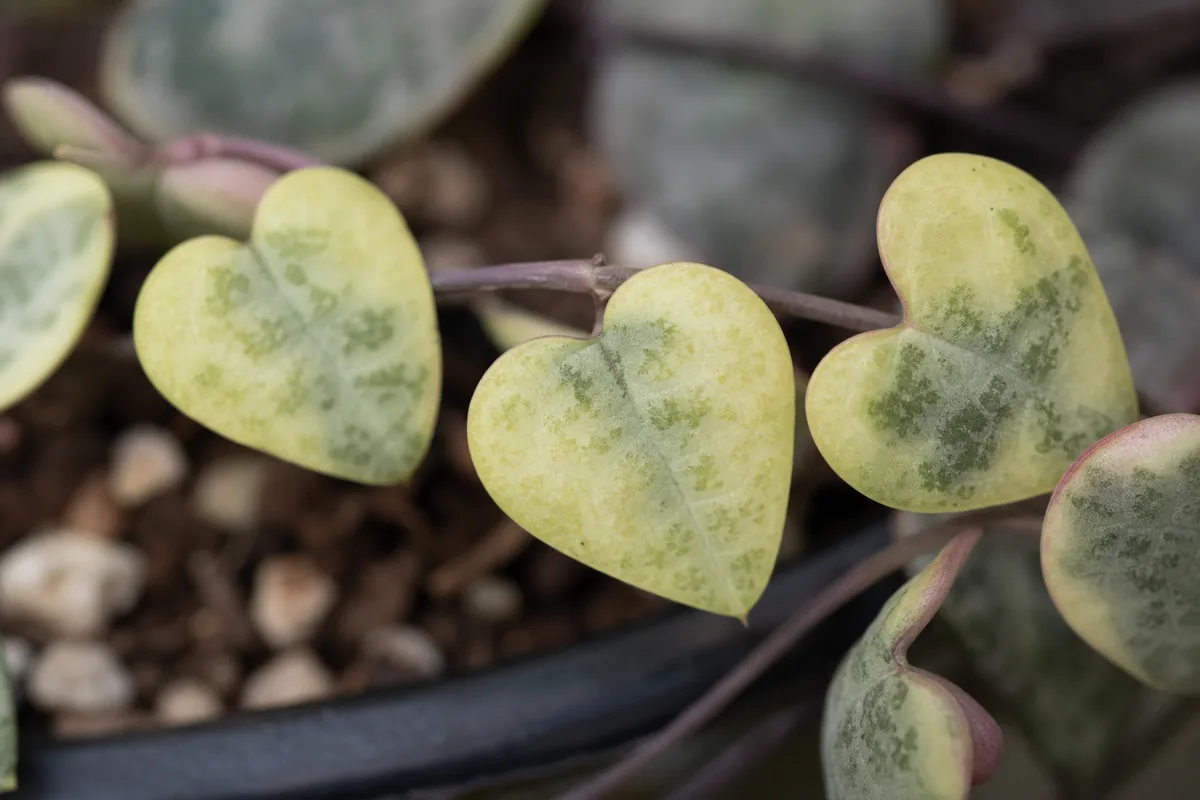
Soil Too Acidic symptoms on String of Hearts - compare with healthy tissue on the same plant.
Common signs:
- Pale yellow-green hearts along lower strands while newer tips may still look acceptable
- Faded silver marbling-the contrast between green patches and silver wash becomes weak
- Smaller new leaves with long gaps between nodes, similar to low light but paired with old-leaf paleness
- Fertilizer seeming to do nothing-no surge of color or marbling after a light feed
- Weak, limp trailing strands on a plant that still has plump aerial tubers
- Sparse or small tubular flowers during summer despite otherwise adequate care
- Normal dry-down between waterings, but overall plant looks washed out
What it usually is not:
- Soft black tubers and sour-smelling mix on a heavy wet pot-that pattern points to root rot, not pH alone
- Thin flat leaves across every strand on a very light dry pot-underwatering, not acidity
- Long internodes with pale growth only at the top in a dim corner-not enough light, not chemistry
- Crispy brown margins after a recent heavy feed-salt burn or potassium stress, not acid lockout alone
- Purple undersides fading on healthy firm leaves in strong morning sun-often normal color response, not deficiency
Because String of Hearts is a light feeder in fast-draining mix, owners often notice the problem after months in the same hanging basket when new hearts stay pale after routine feeding and marbling never returns to earlier contrast.
How silver marbling fade signals root-zone stress
The silver wash on each heart-shaped leaf is one of the fastest visual clues that root-zone chemistry-not watering rhythm-has slipped. In strong light the leaves will be darkly colored with distinctive marbling; when pH drifts too low, that pattern dulls first on older leaves along each strand while tubers remain firm. The plant still holds water in aerial tubers, so the vine does not collapse-but new hearts emerge smaller and paler because phosphorus and several macronutrients become less available below about pH 5.5 even when fertilizer salts are present.
Marbling fade paired with firm tan tubers and dry cycling soil is a chemistry signal. Marbling fade paired with wet heavy mix and soft tubers is a drainage or overwatering signal-fix those before liming. If marbling is weak but new leaves show green veins on bleached tissue plus white crust on the pot rim, suspect alkaline iron lockout instead.
Why String of Hearts gets soil too acidic
String of Hearts tolerates mild acidity-NC State lists acid soils below pH 6.0 alongside neutral ranges for this species. The trouble starts when container chemistry drifts well below 5.5, where phosphorus and several macronutrients become less available even when fertilizer is present, and aluminum and manganese can reach levels that interfere with root function on sensitive container crops.
At very low pH, nitrogen, phosphorus, potassium, and other nutrients may sit in the mix at adequate levels but remain unavailable to roots. Acidic soils also make iron, aluminum, and manganese very available-sometimes to the point of toxicity on fine roots. String of Hearts has thin tuberous roots adapted to rocky crevices; in a small pot, that lockout shows up as pale vines long before tubers soften.
Several situations push String of Hearts pots too acid:
Depleted limestone in aged peat-heavy mix. Commercial peat-based blends start near neutral because manufacturers add crushed limestone. As that buffer reacts and is flushed away over months of watering, pH can drift downward-especially in pots that have not been repotted for two or more years.
Ammonium-heavy or acidifying fertilizers. Repeated use of high-ammonium feeds, leftover acidifier products, or sulfur meant for acid-loving neighbors can lower pH in a closed root zone faster than in open ground.
Pure peat or ericaceous mix repots. Some growers repot trailing succulents into moisture-retentive peat blends to “help” a dry plant. That raises rot risk and can leave chemistry too acid for steady nutrient uptake once limestone buffers fade-see wrong soil mix when the blend itself is the problem.
Confusion with salt buildup. White crust on the pot rim and pale growth mimic acidity problems. Both reduce uptake-but salt issues need flushing or repotting, not lime alone. Testing pH separates the two.
Compound stress in hanging baskets. Acid drift often stacks with chronically wet peat in a crowded basket: organic matter breaks down faster when the center of the pot stays damp, overwatering accelerates souring, and compacted old mix mimics the same pale weak-vine symptoms as lockout. Treat rot and drainage first when tubers are soft; test pH when tubers are firm but marbling will not return.
String of Hearts is not a heavy nitrogen user, so lockout shows as washed-out marbling and weak trailing growth rather than dramatic yellowing on every leaf. That subtle pattern makes acidity easy to miss until vines stall in slow growth despite an otherwise familiar care routine.
How to confirm the cause
Work through these checks in order. You want evidence of low pH-not just pale color-before changing mix chemistry.
Six-step confirmation workflow
-
pH test at root depth - Slide the plant partly out or take a core sample from the middle of the pot, not just the dry surface. Compare a slurry reading or probe inserted into moist mix. Below 5.5 strongly supports excess acidity; 6.0–7.0 is the typical String of Hearts comfort band for container culture. Cheap probes drift on peat-heavy indoor mix-calibrate per manufacturer instructions and compare a slurry sample if readings seem inconsistent.
-
Mix age and recipe - Note whether the pot has gone two or more years without refresh, whether the blend was mostly peat or unamended “succulent mix,” and whether perlite, bark, or coarse sand was part of the original recipe. Old peat hanging baskets in bright rooms are the most common culprit.
-
Salt crust check - White mineral rim on the pot or crust on the surface suggests fertilizer salts. Scrape surface mix and test pH separately from deeper layers. Salt stress and acid stress can overlap; both need correction, but lime alone will not fix salt burn.
-
Tuber and root inspection - Tip the plant out gently. Firm tan or woody tubers with white healthy roots support a chemistry diagnosis. Black mushy tubers with a sour smell mean root-rot rescue first-liming soggy rotting mix helps neither problem.
-
Light and water cross-check - Confirm bright indirect light with some direct morning sun and that mix dries completely between waterings. Pale String of Hearts in a dim corner looks similar but will not improve after pH correction unless light improves too.
-
Feeding history - List recent fertilizer type and frequency. Heavy feeding on acid-locked roots increases salts without restoring marbling. Pause feeding until pH is confirmed and corrected.
If pH reads 6.0–7.0, tubers are firm, and light is adequate, look elsewhere-overwatering in dense mix, nitrogen or magnesium deficiency, or simple pot-bound exhaustion are more likely on String of Hearts.
Confirmation decision table
| Pattern | pH clue | Tuber feel | Mix condition | Likely cause | Next step |
|---|---|---|---|---|---|
| Faded marbling, general paleness, weak trails | Below 5.5 at root depth | Firm | Aged peat-heavy, dry cycles | Acid lockout | Repot into fresh gritty mix |
| Green veins on bleached new leaves | Above 7.0 | Firm | White crust, hard-water history | Alkaline iron chlorosis | See soil too alkaline |
| Yellow mushy leaves, sour smell | Any | Soft, black | Wet, heavy | Root rot | Root rot guide |
| White crust, brown leaf margins | Variable | Firm | Recent heavy feed | Salt buildup | Flush or repot; pause feed |
| Long gaps, tiny pale tips only | 6.0–7.0 | Firm | Dry, adequate | Low light | Light guide |
| Uniform yellow on oldest leaves | 6.0–7.0 | Firm | Long without feed | Nitrogen shortage | One light balanced feed trial |
First fix for String of Hearts
Test mix pH at root depth with a reliable meter or soil test kit-then record the number before changing anything.
This single step prevents the two most common errors: dumping lime into a small hanging pot that does not need it, or repotting blindly when the real issue is rot, salt, or shade. String of Hearts tolerates mild acidity; you are checking whether pH has fallen below the useful range, not chasing a perfectly neutral number.
Once you have a reading:
- Below 5.5 in an old container: plan to repot into fresh fast-draining cactus-style mix rather than guessing lime doses in a crowded hanging basket.
- 5.5–6.0 with mild paleness: observe new growth for two weeks after pausing fertilizer; light correction or a modest repot may be enough.
- 6.0–7.0 with pale growth: pH is unlikely the main issue; return to tuber health, light, and drainage checks.
Do not fertilize heavily while pH is suspect. Extra nutrients on locked-out tuberous roots add salt without greening trailing tips.
Step-by-step recovery
After testing confirms excess acidity and tubers are sound:
-
Repot container plants into fresh gritty mix - Use the String of Hearts soil guide 2:1:1 ratio: two parts cactus or succulent mix, one part perlite or pumice, and one part orchid bark or coarse sand. Move up one pot size only if tubers clearly crowd the old container. Trim only clearly dead mushy roots or tubers. Keep mature tubers near the surface, not buried deep.
-
Use light lime only when extension guidance fits a mild drift - For in-ground plantings or very large containers where repotting is impractical, agricultural or dolomitic lime raises pH gradually per soil-test rates. In small indoor hanging pots, fresh repot mix is usually safer than lime guessing.
-
Water through once after repotting - Settle mix around tubers with plain water until a small amount drains. Skip fertilizer for the first two to three weeks while roots re-establish.
-
Resume one light balanced feed in active growth - Once new hearts show brighter green and sharper marbling, apply a single half-strength balanced or succulent-formulated liquid feed on moist soil during spring or summer. String of Hearts tolerates infrequent feeding-do not stack heavy nitrogen hoping for faster trailing length.
-
Trim only fully spent pale foliage - After new growth looks healthy, remove the worst chlorotic lower leaves for appearance. Those pale hearts will not fully re-green.
-
Retest pH in four to six weeks if growth stays flat - Containers repotted into fresh mix should show improvement sooner than large outdoor beds.
If tubers were partly stressed, let mix dry almost completely at depth before the next drink-String of Hearts needs predictable dry-down, not sympathy watering during recovery.
When repeated repots and confirmed pH in range still produce only thin pale vines across a full growing season, propagate backup strands from healthy aerial tubers onto fresh gritty mix rather than fighting exhausted chemistry in place.
Recovery timeline
During active growth in bright indirect light, expect visible improvement in new hearts and marbling within three to five weeks after repot or successful correction. Cool winter rest slows response; pale vines may linger until spring even after mix is fixed.
Judge success by greener new hearts with restored silver contrast and firmer trailing strands-not old pale leaves along lower vines. A corrected plant produces plump aerial tubers and steady node spacing through the next growth cycle.
Signs the fix is working:
- New leaves emerge deeper green with clearer silver marbling than the previous flush
- Strand firmness improves while watering rhythm stays the same
- One light feed produces a noticeable color response within two to three weeks
Signs the problem persists or worsens:
- Continued pale regrowth after six weeks in warm bright conditions with confirmed pH correction
- Spreading tuber softness or sour smell despite drier watering
- Entire vine collapsing from the soil line-may indicate rot or chronic overwatering rather than acidity alone
Lookalike symptoms to rule out
Overwatering and root rot. Yellow mushy leaves and soft tubers on wet heavy mix are far more common on String of Hearts than true acidity. Fix drainage and dry-down before adjusting pH.
Not enough light. Leggy growth with long gaps between tiny pale hearts in a dim room will not respond to lime. Improve light first.
Nitrogen deficiency on normal pH. Whole-plant yellowing on old leaves with still-green tips can follow months without any feed. If pH reads 6.0–7.0 and tubers are healthy, one restrained balanced feed trial is reasonable.
Magnesium or iron deficiency. Magnesium shows interveinal yellowing on older leaves; iron chlorosis hits youngest leaves with green veins. Acid lockout often produces general paleness and weak marbling without classic vein patterns-use the confirmation table above when patterns overlap.
Salt/fertilizer burn. White crust and brown margins after heavy feeding fit salt buildup. Flush or repot; do not add lime for salt alone.
Nutrient lockout from over-liming. Pushing pH above 7.5 can also reduce iron uptake and pale leaves-another reason to test before adding lime.
Mistakes to avoid
Do not add garden lime to small hanging pots without a pH test and a clear target-over-liming is harder to reverse than repotting into appropriate gritty mix.
Do not keep increasing fertilizer on acid-locked String of Hearts. You risk salt injury on tuberous roots without fixing uptake.
Do not confuse surface crust with acidity. Test deeper mix.
Do not repot into pure peat or dense indoor potting soil to “help” a plant already sitting in acid conditions-amend for drainage and pH stability per the soil guide.
Do not expect old pale hearts to turn deep green again. Recovery shows in new growth.
Do not adjust water, pot size, lime, and fertilizer all on the same day. Correct pH first, stabilize watering for two weeks, then resume feeding.
Do not bury aerial tubers deep during recovery repots-surface-near tubers rot faster in wet acidic peat.
String of Hearts care cross-check
Acidic soil rarely appears in isolation on a well-placed vine. Confirm these basics align while you correct pH:
- Light: Bright indirect sunlight with some direct morning sun so new leaves can use corrected nutrients efficiently.
- Water: Allow mix to dry completely between waterings; chronically wet peat accelerates breakdown and rot regardless of pH.
- Feeding: Infrequent-half-strength monthly at most during active growth per the fertilizer guide, paused in winter dormancy.
- Mix: Fast-draining cactus-style blend with perlite and bark; compaction mimics many of the same pale, weak-vine symptoms as wrong soil mix.
If all four are sound and pH is corrected, yet vines stay weak, inspect for mealybugs at nodes and consider whether the plant has been root-bound too long in exhausted mix.
How to prevent acidic soil on String of Hearts
Use a fast-draining gritty blend from the start-not straight peat or unamended indoor potting soil. Follow the soil guide 2:1:1 recipe when refreshing hanging baskets.
Refresh container mix every two to three years-or sooner when water runs down pot sides without wetting the center, the mix smells sour, or drainage slows.
Test pH when growth stalls in a long-used hanging basket before reaching for more fertilizer. A cheap probe or kit saves wasted feed and tuber stress.
Flush salts periodically if you feed during the growing season-water until excess runs clear from drainage holes, then allow full dry-down.
Store acidifying products away from String of Hearts pots. Sulfur or aluminum sulfate meant for blueberries in a neighboring container can lower shared tray water pH over time.
When to worry
Act promptly when pH tests below 5.0, when no new green hearts develop through a warm bright week despite appropriately dry firm tubers, or when pale growth pairs with spreading tuber rot after repotting. Extremely acid mix plus chronic overwatering can destroy tubers quickly on String of Hearts.
You can usually wait and observe when pH is 5.5–6.0 with mild paleness, tubers are firm, and new shoots still appear-this species tolerates slight acidity. Retest in four weeks before aggressive liming.
Replace the plant from healthy cuttings or aerial tubers rather than fighting endless correction if repeated repots, confirmed pH in range, good light, and sane watering still produce only thin pale vines across a full growing season.
Related String of Hearts guides
- String of Hearts overview
- String of Hearts soil guide - mix building and baseline pH targets
- String of Hearts watering
- String of Hearts light
- Root rot on String of Hearts
- Overwatering on String of Hearts
- Wrong soil mix on String of Hearts
- Slow growth on String of Hearts
- Soil too alkaline on String of Hearts
- Yellow leaves on String of Hearts
- All String of Hearts problems
Conclusion
Use this page to confirm soil acidity on String of Hearts by pH at root depth and marbling-fade pattern-not by treating every pale vine the same. When symptoms overlap with sibling pages, follow the linked guide for the matching cause before stacking lime, fertilizer, or repotting on the same day.