Soil Too Alkaline on String of Hearts: Causes, Checks &
Quick answer
Alkaline soil on String of Hearts locks out iron and shows as pale new leaves with green veins plus white mineral crust on dry mix. First step: deep-flush the pot twice with low-mineral water before fertilizing or repotting.
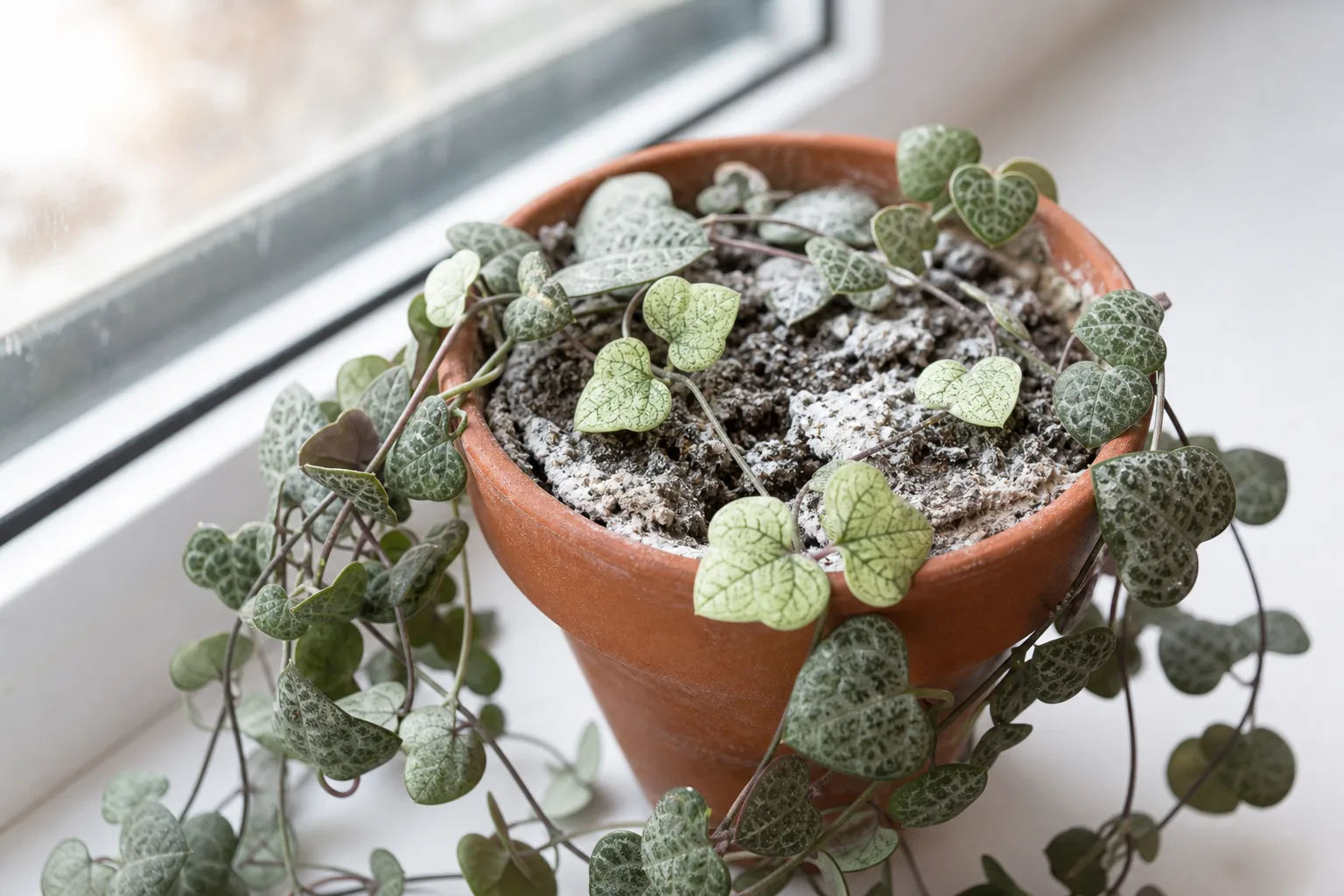
Soil Too Alkaline on String of Hearts: Causes, Checks & Fixes
This guide covers soil too alkaline on String of Hearts. See also the general Soil Too Alkaline guide, watering, and light pages for this plant.
Soil Too Alkaline on String of Hearts: Causes, Checks & Fixes
Quick answer
Alkaline soil on String of Hearts locks out iron and shows as pale new leaves with green veins plus white mineral crust on dry mix. First step: deep-flush the pot twice with low-mineral water before fertilizing or String of Hearts repotting guide.
Ceropegia woodii is a semi-succulent vine from rocky hillsides in Southern Africa that prefers well-drained sandy potting soil and String of Hearts light guide. When mix pH climbs above neutral, iron becomes less available and the distinctive silver-marbled hearts fade on the newest growth first-not because the plant needs heavy feed, but because minerals in the root zone are out of balance.
What alkaline soil looks like on String of Hearts
On String of Hearts, high pH stress usually appears on newer heart-shaped leaves along each trailing strand. The tissue between veins turns pale yellow to almost white while veins stay noticeably green-classic iron deficiency from alkaline soil. Silver marbling may wash out so leaves look flat green or chalky rather than richly patterned.
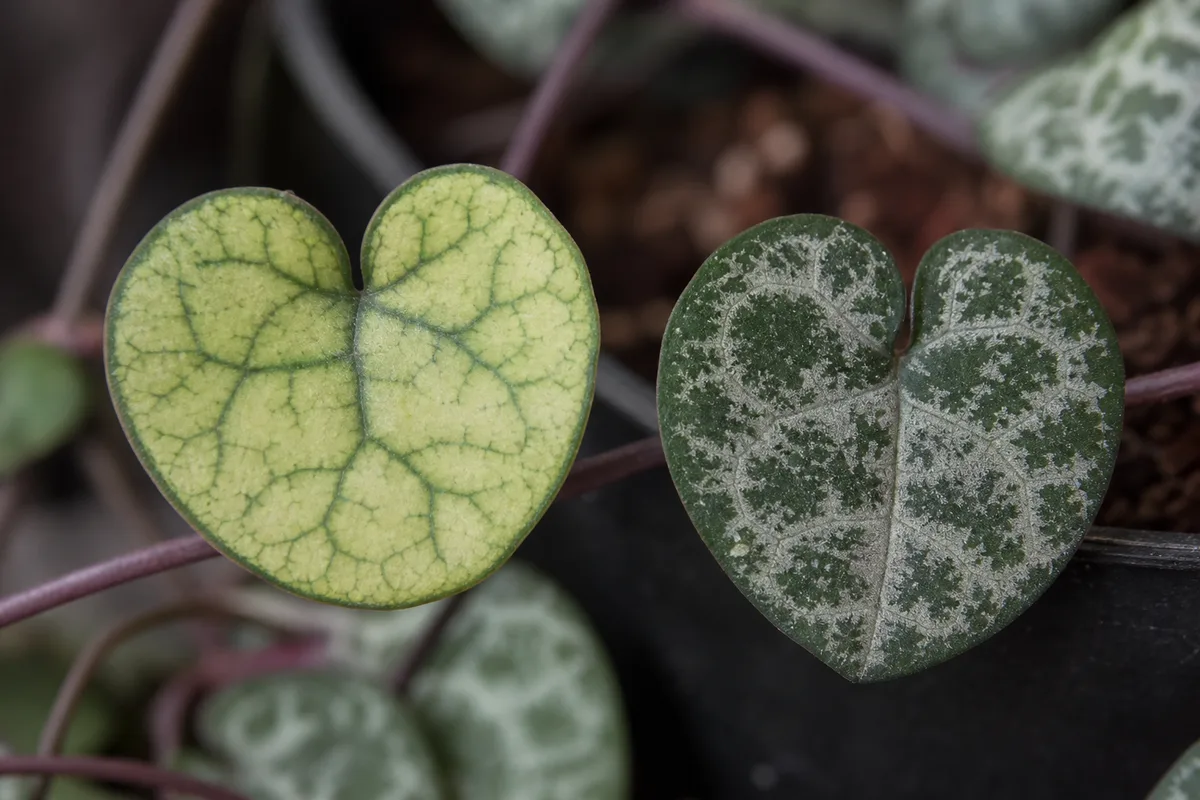
Soil Too Alkaline symptoms on String of Hearts - compare with healthy tissue on the same plant.
You may also see:
- White or tan crust on the soil surface, pot rim, or outside of terracotta
- Stunted new vine tips despite adequate light and dry soil cycles
- Older leaves staying greener while the problem climbs toward the growing tips
- Firm tubers and dry-to-moderately dry mix-unlike rot, which pairs yellow leaves with wet, soft roots
String of Hearts in dim light can look pale overall without the sharp green-vein pattern. Alkaline soil shows interveinal fading on young leaves plus mineral buildup, not uniformly washed-out strands with large gaps between tiny leaves.
Why String of Hearts gets alkaline soil
Ceropegia woodii tolerates acid to neutral soil pH in cultivation. Problems start when the mix or irrigation pushes pH toward alkaline levels where iron and manganese are less soluble-especially above about 7.5, when plants adapted to acidic conditions become prone to iron deficiency.
Hard tap water is the most common indoor trigger. Repeated watering with calcium- and bicarbonate-rich water leaves mineral salts in porous mix. Over months the crust you scrape off the soil is the visible sign of rising alkalinity at the root zone.
Wrong or aged mix contributes when standard peat-based compost includes limestone buffering, garden soil, crushed shells, or dolomite in a DIY blend. String of Hearts needs freely draining medium with coarse sand or perlite-not heavy all-purpose soil formulated for moisture-loving foliage plants.
Salt stacking from fertilizer on already hard water accelerates crust formation. This light feeder needs infrequent half-strength fertilizer during active growth only. Extra nitrogen on alkaline, salt-heavy mix does not fix interveinal yellowing and can burn tuberous roots.
Long-lived pots without flushing let minerals accumulate while organic matter breaks down unevenly. Even a good cactus mix can drift alkaline near the surface where evaporation concentrates salts.
Less often, repotting into mix labeled for succulents but amended with lime or wood ash pushes pH up immediately. String of Hearts stores water in tuberous roots and aerial beads; it cannot compensate for locked-out micronutrients by drinking more.
How to confirm the cause
Work through these checks before repotting or feeding:
- Leaf pattern - Interveinal yellowing on newest leaves with green veins supports iron lockout from high pH. Uniform pale yellow on oldest leaves alone suggests nitrogen deficiency instead.
- Mineral crust - White or chalky deposits on soil or pot rim strongly suggest alkaline salts from hard water or fertilizer buildup.
- Water source - Municipal tap water in limestone regions, softened water high in sodium, or water left sitting in kettles that scale quickly all raise risk.
- Mix type - Garden soil, unknown DIY blends with lime, or dense peat compost without grit point to pH drift-not a simple thirst issue.
- Tuber firmness - Firm tubers on cycling dry soil fit mineral stress. Soft black tubers on wet mix mean rot until proven otherwise.
- Light level - In strong light leaves are darkly marbled; pale stretched strands in shade mimic deficiency but lack crust and interveinal pattern on new growth alone.
- Soil pH test - A simple meter or strip on a sample of moist mix near the root ball confirms pH above 7.0–7.5 if symptoms are ambiguous.
Do not apply iron chelate or balanced fertilizer until rot, low light, and underwatering are ruled out.
First fix for String of Hearts
When newest leaves show interveinal yellowing, mineral crust is visible, and tubers are firm on dry-to-moderately dry soil, deep-flush the pot twice with low-mineral water-distilled, rainwater, or filtered-before any fertilizer or repot.
Set the pot in a sink or tub. Water slowly until excess runs freely from drainage holes, wait ten minutes, then repeat with a second full pass. Empty the saucer completely. Resume normal dry-down watering only after the mix feels lighter and surface crust loosens.
Hold all fertilizer for four to six weeks and judge response by color on the next two sets of new leaves, not by old bleached hearts re-greening.
If crust returns within a month or pH stays above 7.5 after flushing, plan a repot into lime-free commercial cactus mix at the next active-growth window-do not stack flush, repot, and feed on the same day.
Step-by-step recovery
- Confirm rot is absent: firm tubers, no sour smell, soil cycles dry between drinks.
- Confirm light is adequate: bright indirect with some morning sun-not a dim shelf.
- Deep-flush twice with low-mineral water as described above.
- Scrape loose white crust from the top quarter inch of mix if it peels away easily; do not disturb firm tubers on the vines.
- Wait one week and observe new leaf color at growing tips.
- If interveinal yellowing persists and pH test reads above 7.5, repot into fresh fast-draining cactus mix without lime, sized to the tuber mass.
- Switch long term to lower-mineral water if tap water scales your kettle or leaves white rings on pots.
- Resume half-strength feed only after new leaves show restored marbling for two consecutive weeks during spring or summer growth.
Recovery timeline
Mild mineral buildup often stabilizes within three to four weeks after a thorough flush if tubers stayed healthy. Moderate cases needing repot may take six to eight weeks before new hearts look richly marbled again. Severe chronic alkalinity with stunted tips can linger a full growing season even after mix correction.
Bleached leaves already on the strands rarely regain full silver pattern. Judge success by deeper green new hearts with clear marbling and steady vine extension-not by old tissue color.
Lookalike symptoms
Uniform yellow older leaves on firm plants point to nitrogen deficiency, not alkaline lockout-check feeding history and leaf age pattern. Pale washed-out strands with large gaps between tiny leaves mean insufficient light per NC State guidance on light gaps, not high pH alone. Thin flat leaves on bone-dry soil suggest underwatering. Yellow mushy leaves on wet mix with soft tubers is rot or poor drainage-fix aeration before chasing pH. Interveinal yellow with green veins on older leaves only may involve magnesium; alkaline soil typically hits newest growth first on String of Hearts.
What not to do
Do not pour full-strength fertilizer or iron supplement on alkaline crust hoping to green leaves-that adds salts without fixing pH. Do not repot into standard moisture-retentive potting soil; String of Hearts is easily killed by overwatering in dense mix even after a pH fix. Do not use garden lime, wood ash, or crushed eggshell top-dressing on String of Hearts overview. Do not assume every pale heart needs iron chelate without checking light, water, and tuber firmness first. String of Hearts is non-toxic to cats and dogs-still handle cut tissue cleanly during repot.
How to prevent alkaline soil on String of Hearts
Plant in commercial cactus or succulent mix without added lime and amend with perlite or pumice if the bag feels heavy. Water with rainwater, distilled, or filtered water when municipal tap runs hard. Flush the pot deeply every two to three months during active growth if you rely on tap water and light feeding. Refresh container mix every one to two years before minerals concentrate at the surface. Allow soil to dry completely between waterings and keep the vine in bright indirect light so it uses water and nutrients efficiently. String of Hearts does best when crowded-repot only when roots clearly need fresh gritty mix, not into oversized pots that hold extra mineral-laden soil volume.
Practical checks
Urgency check
Low urgency if only a light rim crust appears and one or two new leaves show mild interveinal fading on firm tubers. High urgency when most new hearts bleach white between dark veins across multiple strands and thick crust covers the soil surface-iron lockout is limiting new growth.
Best inspection order
Newest leaf vein pattern, mineral crust on soil or pot, water source history, mix type, tuber firmness, light exposure, then pH test if still unclear.
String of Hearts care cross-check
Pale String of Hearts in bright light with firm dry tubers, green-vein yellowing on new leaves, and white crust fits alkaline soil. Pale plants in cool shade with no crust rarely need pH correction-improve placement first. This semi-succulent vine needs excellent drainage and infrequent feed; fixing alkalinity without correcting dense wet mix will not hold.
When to use this page vs other String of Hearts guides
- String of Hearts watering guide - Use for routine moisture checks before assuming soil too alkaline is the main issue.
- String of Hearts problems hub - Browse all 45 common issues on this species.