Lemongrass Plant Care: Sun, Water & Tips
Cymbopogon citratus
Lemongrass needs full sun, consistently moist rich soil, and biweekly liquid fertilising during the growing season. Water every 1–3 days in hot weather.
Lemongrass Plant Care: Sun, Water & Tips
Start with wateringThe most common care mistake for LemongrassWatering guide →Lemongrass care essentials
Light
full sun - 6+ hours of direct sunlight daily
Water
Water every 1–3 days in hot weather, keeping soil consistently moist. Reduce to every 5–7 days in cool months. Do not allow to dry out at root level during active growth.
Soil
Rich potting mix with 15 % perlite and 10 % compost or worm castings. Moisture-retaining but well-draining. pH 6.0–7.5.
Humidity
Moderate to high (50–80%); naturally suited to tropical Indian climate
Temperature
20°C to 38°C (68–100°F)
Fertilizer
Use balanced NPK fertilizer or compost; nitrogen-rich feed supports large leafy clumps and stop if the plant is stressed, newly repotted, or not actively growing.
About Lemongrass
Lemongrass is native to Tropical Asia (India, Sri Lanka, Southeast Asia), typically reaches 90–180 cm tall; 60–90 cm clump diameter indoors, with fast in warm, sunny conditions growth. Lemongrass has a upright growth habit and part of the Poaceae family. It is also known as West Indian Lemongrass, Gavati Chaha, Lemon Grass, and Bhustrina.
| Detail | Information |
|---|---|
| Also known as | West Indian Lemongrass, Gavati Chaha, Lemon Grass, Bhustrina |
| Native region | Tropical Asia (India, Sri Lanka, Southeast Asia) |
| Mature size | 90–180 cm tall; 60–90 cm clump diameter |
| Growth rate | Fast in warm, sunny conditions |
| Growth habit | Upright |
| Scientific name | Cymbopogon citratus |
| Family | Poaceae |
Lemongrass Plant Care: Sun, Water & Tips
What Is Lemongrass?
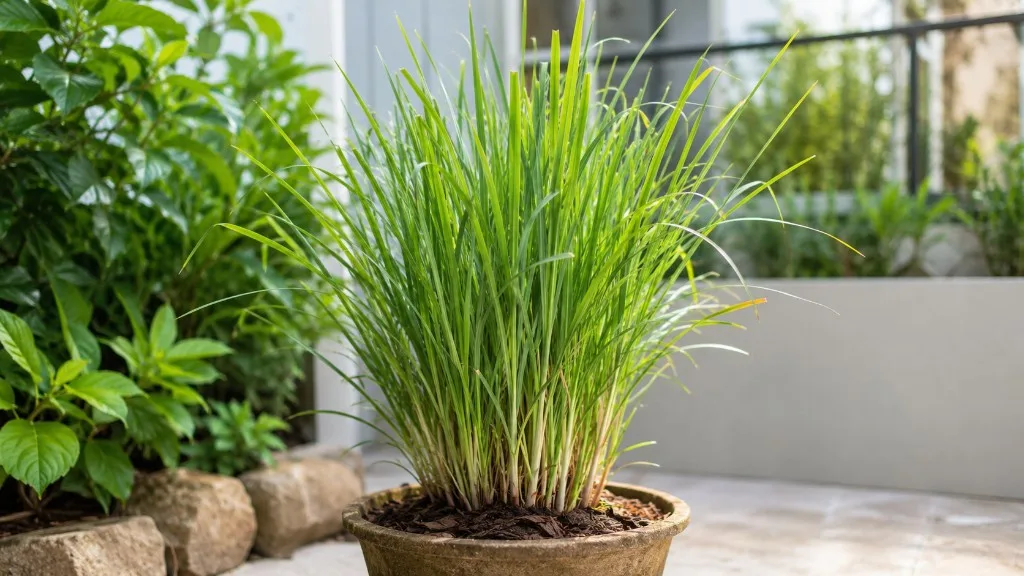
Lemongrass is a clumping tropical grass grown for its lemon-scented stalks and arching strap-like leaves - not for showy flowers or dense foliage color. The species most commonly used in cooking is Cymbopogon citratus, called West Indian lemongrass, which supplies the citrus-ginger flavor familiar from Thai curries, Vietnamese soups, and herbal teas. A related species, Cymbopogon flexuosus (East Indian lemongrass), is more common in perfumery and some regional cuisines, but the care principles below focus on C. citratus because that is what most kitchen gardeners and nursery pots label simply as “lemongrass.”
Outdoors in warm climates, lemongrass forms a dense rounded clump of light green blades typically 3 to 6 feet tall (90 to 180 cm) and 2 to 3 feet wide (60 to 90 cm), though container plants often stay shorter. Growth is fast in warm, sunny conditions and nearly stalls when temperatures drop or light weakens. The plant belongs to Poaceae - the grass family - which tells you something useful before you ever touch a watering can: lemongrass wants bright conditions, steady moisture during active growth, and excellent drainage. It is not a shade-loving foliage plant and it is not drought-hardy in the way a mature succulent is, despite what its tough-looking blades suggest.
If you are deciding whether lemongrass fits your space, the honest summary is this: lemongrass rewards Lemongrass light guide, consistent moisture, and warm temperatures - and it punishes cold, dim corners, and soggy roots. It is easier than a finicky orchid and harder than a pothos you can ignore for two weeks. The payoff is fresh stalks for cooking at a fraction of grocery-store prices, plus an ornamental grass that smells extraordinary when you brush past it. One critical caveat for pet owners: lemongrass is toxic to cats, dogs, and horses according to the ASPCA, which surprises many people who assume culinary herbs are automatically pet-safe.
Botanical Background and Native Range
Lemongrass is native to tropical and subtropical Asia, including India, Sri Lanka, and Southeast Asia (RHS), where it grows as a clumping perennial in warm, humid climates with strong seasonal rainfall. In USDA Hardiness Zones 10 and 11, it survives outdoors year-round as an evergreen grass. In Zone 9, roots may survive mild winters with protection, but foliage typically dies back. Everywhere frost occurs, gardeners treat lemongrass as a warm-season annual or overwinter divisions indoors because sustained temperatures below about 50°F (10°C) slow growth sharply, and hard frost kills aboveground tissue.
The Missouri Botanical Garden notes that C. citratus is winter hardy to Zones 10–11 where it is evergreen, with roots sometimes surviving to Zone 8b in protected microclimates. Do not assume your plant will behave like a hardy ornamental grass - lemongrass is a tender tropical perennial, not a lawn species.
Commercially, you may also encounter citronella grass (Cymbopogon nardus), which looks similar but is grown for insect-repellent oil rather than cooking. For kitchen use, confirm you have C. citratus - pale green bases, strong lemon scent when sliced, and no maroon stem coloration are practical field marks. Seed is difficult to obtain; most growers start from nursery divisions, supermarket stalks, or saved clump sections.
Why Culinary Growers Treat It Differently Than Ornamental Grass
Most ornamental grasses are chosen for texture, movement, and cold tolerance. Lemongrass is chosen because the lower portion of the stalk - the bulbous base - carries the concentrated flavor used in cooking. That changes how you care for the plant after it establishes. A purely decorative grass can look acceptable with moderate growth; a culinary lemongrass clump that grows thin and pale in partial shade produces weak-flavored stalks that disappoint in the kitchen even if the plant technically survives.
Harvesting also reshapes the clump. Cutting stalks near the base stimulates fresh shoots, but repeated harvest without adequate sun, water, and nitrogen produces exhausted, woody centers faster than you might expect from a fast-growing grass. The practical mindset is closer to managing a cut-and-come-again herb than maintaining a static landscape specimen. Replace or restart tired clumps from division or grocery-store stalks rather than nursing a woody, flavorless center indefinitely.
Because it roots easily from stalks, lemongrass also functions as an inexpensive backup plan: if frost threatens outdoor plantings, save 6-inch sections of bulbous base with roots attached and carry them indoors without hauling a heavy mature clump.
Best Growing Conditions for Lemongrass
Lemongrass does best when your space approximates the warm, bright, humid rhythm of its native range. The four variables that decide almost every outcome are light, water, soil, and temperature. Get those aligned and feeding, harvesting, Lemongrass repotting guide, and propagation become routine. Get one badly wrong - especially light or cold - and the plant declines faster than its tough blades suggest, often showing thin pale growth long before obvious collapse.
Light Requirements
Lemongrass needs full sun - at least 6 to 8 hours of direct sunlight daily for vigorous growth and the strongest flavor in harvested stalks. The Old Farmer’s Almanac recommends planning on 6 to 8 hours of full sun, and Utah State University Extension emphasizes that lemongrass requires warm conditions, full sunlight, and plenty of moisture to maximize growth. Partial shade is tolerated, especially in hot afternoon climates, but growth slows, internodes lengthen, and stalks thin - acceptable for survival, poor for kitchen quality.
The fastest diagnostic for incorrect light is new growth, not old damage. Firm, upright blades with good green color and active new shoots at the clump center mean the plant is probably receiving enough light. Thin, pale, floppy blades with slow regrowth after harvest mean the plant wants more sun. Bleached patches, crisp sun-facing areas, or midday curling after a sudden move mean it wants softer light or slower acclimation - uncommon on established outdoor plants in temperate summers, but relevant when moving a greenhouse-grown pot straight onto a blazing south-facing patio without transition.
Indoors, lemongrass is demanding. A bright kitchen window may suffice if it receives direct sun for most of the day, but many indoor placements provide survival light without harvest-quality growth. A full-spectrum grow light on a 12–14 hour timer, positioned 12–18 inches above the canopy, makes the difference between a leggy winter survivor and a plant that continues producing usable stalks.
Low light is a poor long-term setup - the plant may persist, but flavor, vigor, and pest resistance all suffer. Every light change also changes watering: a brighter plant drinks faster; a dimmer plant stays wet longer.
Temperature and Humidity
Lemongrass prefers warm, stable temperatures between 68 and 100°F (20 and 38°C) during active growth. It thrives in the heat that wilts many houseplants, which is why it pairs well with summer patios and greenhouse benches. Growth slows below about 60°F (15°C) and nearly stops below 50°F (10°C). Treat frost as fatal to aboveground tissue - when overnight lows approach 32°F (0°C), harvest what you need, divide clumps for indoor storage, or accept that outdoor plants will die back.
Lemongrass performs best around 50 to 80% relative humidity during active growth. Very dry indoor winter air - below about 30% - can stress blades and encourage spider mites. A pebble tray or small humidifier helps more than occasional misting.
Overwintering indoors means accepting slower growth in exchange for survival. Move pots to the brightest available window or under grow lights, reduce watering to match the slower dry-down, and pause heavy feeding until spring growth resumes. USU Extension recommends saving 6-inch sections of bulbous shoot base with attached roots before the first fall frost - a practical strategy for gardeners in Zone 8 and colder who want free starts each spring.
Soil and Drainage
Use a rich, moist, well-draining potting mix with good organic content. Lemongrass tolerates a wide range of soil types outdoors when drainage is adequate, but it is best in organically rich loam according to the Missouri Botanical Garden. The principle matters more than a single branded recipe: the mix should hold moisture in the root zone without staying waterlogged for days, and it should retain enough air space that grass roots can breathe. A workable home blend is roughly quality potting mix with 15% perlite and 10% compost or worm castings - moisture-retaining but well-draining, with a target pH around 6.0 to 7.5.
Target pH in the slightly acidic to neutral range; hobbyists rarely need to meter pH precisely. The bigger practical issue is compaction and salt buildup, which show up as brown leaf tips. Always plant in a container with a drainage hole, and space in-ground clumps 2 to 3 feet apart because mature plants can reach 3 to 6 feet tall and 3 feet wide. Lemongrass loves moisture, but roots sitting in stagnant water rot quickly - the correct mental model is consistently moist, never muddy.
How to Water Lemongrass
The general rule for lemongrass is keep the soil consistently moist during active growth, but never waterlogged. This fast-growing grass uses water predictably in full sun - often drying a container noticeably within one to three days at midsummer - yet it still rots if the mix stays saturated in low light or cool weather. Water when the top 3 to 4 cm (about 1 to 1.5 inches) of mix feels dry, then soak thoroughly until a small amount runs from the drainage hole. As a starting rhythm, many containers in warm, bright conditions need water roughly every two to three days in summer and every five to seven days in cooler months, though your calendar should be a reminder to check, not a rule to follow blindly.
Use your finger, a wooden skewer, or pot weight to confirm moisture at depth before you water. If the deeper mix is still damp and the pot feels heavy, wait. If the top is dry and the pot feels light, water thoroughly and empty the saucer so roots are not standing in stale runoff. Because lemongrass has substantial leaf surface area and grows quickly, container plants outpace in-ground plantings in water use, and a small pot in afternoon sun may need daily checks at peak summer heat.
Lemongrass watering guide During Active Growth
During the warm, bright months when new shoots are pushing after harvest cuts, lemongrass drinks steadily. The goal is a consistent moisture band: the mix should feel like a wrung-out sponge through most of the root zone, not wet mud and not dusty dry. Thin, pale blades and slowed regrowth at the clump center on a chronically dry pot are clear thirst signals - water thoroughly and watch for new shoot activity within a week. Yellowing at the base with a heavy, wet pot is the opposite problem and points to root stress from overwatering on Lemongrass rather than drought.
If you just bought the plant, expect a short adjustment period. Do not compensate for transplant shock by watering more frequently unless the pot is genuinely dry; stabilize light first, then fine-tune the interval. For containers, the soak-and-dry method - pouring slowly until water runs from drainage holes - works well.
Seasonal Adjustments
In cooler, dimmer months - especially for overwintered indoor plants - growth slows and the pot dries more slowly. Stretch the interval between waterings and reduce or pause fertilizer until new growth resumes in spring. The most common winter failure mode is continuing a midsummer watering schedule in lower light, which keeps the mix waterlogged and leads to yellow lower leaves, fungus gnats, and root rot on Lemongrass.
Outdoor plants in autumn need a parallel shift. As nights cool and day length shortens, lemongrass drinks less even if the weather still feels warm during the day. Check moisture before each watering rather than assuming the July rhythm still applies. Before the first frost, decide whether you are harvesting and composting, lifting divisions for indoor storage, or accepting die-back - and adjust watering to match that plan rather than maintaining peak-season frequency on a plant that is going dormant.
Common Watering Mistakes
The single most damaging mistake is watering on a fixed schedule without checking the pot. The second is letting the plant sit in a full saucer or cachepot, which suffocates grass roots within days even if the top of the mix looks fine. The third is giving tiny daily sips instead of a full soak when the plant is dry - that wets only the surface while the center stays parched, producing drought stress on a plant that appears watered.
People also misread lemongrass stress signals. A thirsty clump may show brown leaf tips and thin stalks; an overwatered clump may show yellow bases and sour-smelling mix while blades still look green for a while. Always pair symptoms with a moisture check at depth before adding more water. If the base is mushy and the mix smells sour, stop watering, inspect roots, and trim any brown soft tissue before repotting into fresh mix. Lemongrass recovers from moderate drought more easily than from advanced root rot, which is worth remembering when you are unsure which direction to adjust.
How to Feed Lemongrass
Lemongrass is a moderate to heavy feeder during active growth, especially when you harvest regularly. Grasses respond strongly to nitrogen, which fuels blade and stalk production. A balanced or nitrogen-leaning water-soluble fertilizer - for example 10-10-10 or a dedicated herb blend - diluted to one-half of the label rate is sufficient for most containers. Apply to already-moist soil every two to four weeks from late spring through early fall, or follow the Old Farmer’s Almanac guidance to supply nitrogen during summer months when growth and harvest are heaviest.
Utah State University Extension notes that lemongrass requires regular nitrogen during summer for maximum growth in Utah’s dry climate - a useful benchmark even outside Utah because it reflects how much biomass this grass produces when sun and water are adequate. Compost tea or top-dressing with compost mid-season is a gentler alternative if you prefer organic inputs, though containers still benefit from occasional soluble feeding because nutrients leach with each watering.
Hold fertilizer entirely during the cool, low-light months, after a major repot until new growth appears, and while the plant is recovering from root rot or pest damage. Overfeeding produces salt buildup and brown leaf tips that look like drought stress but persist even when watering is correct. If tips crisp despite good moisture, flush the pot with plain water at two to three times the pot volume and pause feeding for six to eight weeks.
Harvesting is part of nutrition management. Cut stalks for kitchen use at the base once they reach about 12 inches (30 cm) tall and half an inch (1 cm) thick - thick enough to yield usable bulbous bases. Regular cutting stimulates fresh shoots, but each harvest removes biomass the plant must replace. If you cut heavily without feeding or adequate sun, the clump thins out. A practical rhythm is harvest up to one-third of the clump at a time, then feed lightly and give the plant a week or two to push new growth before the next major cut.
Repotting and Root Health
Repot lemongrass roughly every one to two years, or whenever roots circle drainage holes, the pot dries out within a day of watering, or the clump becomes root-bound and stallls despite adequate sun and feeding. The best timing is early spring as active growth resumes, which gives the plant a full warm season to fill the new root zone. Fast-growing lemongrass started from supermarket stalks in small pots may need repotting twice in its first year if sun, water, and feeding are generous.
Choose a pot only one size larger than the current root ball - typically 2 to 4 inches (5 to 10 cm) wider. Oversized pots hold excess wet mix around roots that cannot use it, which is the most common trigger for rot after repotting. Use fresh, well-draining mix, plant divisions at the same depth as before, and water lightly for the first week while cut roots heal. Keep the plant in full sun or strong grow lights and avoid heavy fertilizer until you see new shoot activity at the clump center.
Signs It Is Time to Repot
Physical signs include roots emerging from drainage holes, a top-heavy clump that wilts despite moisture, or mix that has broken down into fine, water-retentive mud. Performance signs include stalled regrowth for weeks during warm weather despite adequate light and feeding, or chronic tip burn that persists after you have corrected watering - sometimes indicating mineral-loaded old mix rather than current care errors. Lemongrass also tells you through water behavior: if water runs straight through without soaking in, the root ball may be hydrophobic or so crowded that moisture channels around the mass rather than penetrating it.
Do not repot a plant that is actively collapsing from overwatering until you have inspected roots and trimmed rot. Moving a failing root ball into fresh mix without fixing the underlying moisture problem rarely saves lemongrass. Division during repotting is often smarter than simply upsizing - splitting an overcrowded clump into two or three pots refreshes vigor and gives you backup plants for next season.
Propagation Methods for Lemongrass
The standard home propagation methods for Cymbopogon citratus are division of established clumps and rooting supermarket or garden stalks in water - seed is difficult to obtain and unnecessary for most kitchen gardeners. Division is the most reliable method when you already have a healthy parent plant. Water-rooting from grocery stalks is the fastest way to start from scratch when nurseries are out of stock.
Division: In early spring, lift the clump or remove it from its pot. Separate sections that include healthy roots and at least one living base with green center growth using a sharp knife or spade. Replant divisions immediately at the same depth, water thoroughly, and place in full sun. Each division should be large enough to survive transplant shock - small fragments with few roots dry out quickly.
Supermarket stalk rooting: Fresh stalks sold for cooking - with bulbous bases intact - can root in a glass of water in about two weeks according to the Missouri Botanical Garden and USU Extension. Trim the top leaves to reduce transpiration, place the base in 2 to 3 inches of clean water, change the water every few days, and move the cutting to potting mix once roots are 1 to 2 inches long. Keep the new plant in bright light and evenly moist mix until new shoots appear at the center.
Do not propagate stressed, diseased, or heavily pest-infested plants - divisions and cuttings inherit the parent’s problems. Also avoid propagating from woody, exhausted clump centers with little green growth; start from the vigorous outer ring of shoots instead. Timing matters: propagate during active growth when warmth and light support rooting, not during winter dormancy or immediately after a pest outbreak.
Common Lemongrass Problems
Most lemongrass problems are environmental, not mysterious diseases. The plant communicates through blade color, stalk thickness, regrowth speed, and base condition long before the entire clump collapses. The useful habit is to check light, moisture, and temperature in that order before reaching for pesticide or extra fertilizer.
Yellow Leaves, Brown Tips, and Pests
Yellow leaves or yellowing at the stalk base can mean overwatering, underwatering on Lemongrass, low light, natural aging of older outer blades, sudden temperature drop, or nitrogen deficiency during heavy harvest. If yellowing is soft and the mix is wet, suspect overwatering and inspect roots for brown mushy tissue. If blades are crisp and the pot is light, drought stress is more likely. A few yellow outer leaves on an otherwise vigorous clump is often normal senescence - remove them and watch new center shoots rather than overcorrecting every variable at once.
Brown leaf tips and margins usually point to drought stress, salt buildup from over-fertilizing, or low humidity in dry indoor air. Flush the pot with plain water if salts are suspected, and review whether the watering rhythm matches how fast the plant actually dries in its current light. Tips that are already brown will not turn green again; judge success by undamaged new blades.
Thin, pale, slow regrowth after harvest almost always means insufficient light or underwatering during recovery - sometimes both. Move the plant to stronger sun or add a grow light, confirm moisture at depth, and feed lightly during active regrowth.
Watch for spider mites in dry indoor air - fine webbing and stippled blades are the tell. Mealybugs hide in leaf axils near the base. Scale appears as immobile bumps along lower stalks. Fungus gnats indicate overly wet surface mix; let the top layer dry slightly between waterings. Catch pests early with weekly inspection. A strong shower on the blades, manual removal, and insecticidal soap applied per label directions handle most infestations if you act before the population spreads.
Root rot combined with foul-smelling mix and a mushy base is advanced overwatering damage, often in low light. Trim healthy outer divisions with intact roots and restart in fresh mix rather than trying to save a fully collapsed center. Lemongrass is forgiving when you catch problems early and brutal when rot has consumed the crown.
Is Lemongrass Safe for Pets?
Lemongrass is toxic to cats, dogs, and horses according to the ASPCA’s toxic plant listing. The listed toxic principles are essential oils and cyanogenic glycosides, with clinical signs that include stomach upset in dogs and cats. Horses may experience more severe signs including difficulty breathing and weakness with significant ingestion. Lemongrass essential oil is far more concentrated and dangerous than the live plant, especially for cats, which lack certain liver enzymes needed to metabolize essential oils efficiently.
Toxic does not always mean fatal from a single nibble, and many dogs ignore grass entirely. Cats, however, are sometimes attracted to the scent and texture of grass blades, which raises the practical risk in pet households. Do not rely on “my pet never chews plants” as a safety plan. Place pots on high shelves, use fenced outdoor beds for dogs, or choose confirmed non-toxic alternatives if you have a cat that treats houseplants as entertainment.
If you suspect your pet ingested lemongrass - especially large quantities of plant material or any essential oil product - contact your veterinarian or the ASPCA Animal Poison Control Center at (888) 426-4435 (a consultation fee may apply). Bring a photo of the plant or a leaf sample to help identification. This is general information, not veterinary advice - when symptoms are severe, persistent, or involve essential oil exposure, professional care is the right move.
For households with curious pets, lemongrass belongs in the same caution category as many culinary herbs with concentrated aromatic compounds: useful in the kitchen, but a poor choice at nose level indoors with cats. Cooking with lemongrass does not pose the same risk as a pet chewing the live plant or encountering diffused essential oil, but keep stalk trimmings off counters where pets scavenge.
Conclusion
Lemongrass (Cymbopogon citratus) is a fast-growing tropical culinary grass that trades full sun and steady moisture for lemon-scented stalks worth the space it eventually occupies. Give it 6 to 8 hours of direct sunlight, consistently moist well-draining soil, warm temperatures above about 60°F during active growth, and regular nitrogen during harvest season, and it will produce usable stalks from late spring through fall - or year-round in frost-free climates and bright indoor setups. Root grocery stalks in water, divide overcrowded clumps in spring, and save bulbous sections before frost if you garden where winters kill outdoor plantings.
When something looks wrong, read the plant in context: thin pale blades mean more light or more water during recovery; yellow bases on a wet pot mean roots; brown tips on a dry pot mean drought or salt buildup. Harvest regularly but not so aggressively that the clump cannot replace biomass. Fix the environment first, adjust watering second, and treat pests before they spread. Do that, and lemongrass becomes one of the highest-return edible plants you can grow - as long as you respect its frost limits and keep it away from pets that chew leaves.
When to use this page vs other Lemongrass guides
- Lemongrass overview - Canonical hub for this species - care topics and problems branch from here.
- Lemongrass problems - Symptom-first path when you already know something is wrong.
Related Lemongrass guides
How to care for Lemongrass?
How much light does Lemongrass need?
full sun - 6+ hours of direct sunlight daily
- full sun - 6+ hours of direct sunlight daily - full sun - 6+ hours of direct sunlight daily.
When should you water Lemongrass?
Water every 1–3 days in hot weather, keeping soil consistently moist. Reduce to every 5–7 days in cool months. Do not allow to dry out at root level during active growth.
- Water when the top 3–4 cm is dry - Water every 1–3 days in hot weather, keeping soil consistently moist.
- Drain excess water - Water every 1–3 days in hot weather, keeping soil consistently moist.
What soil works best for Lemongrass?
Rich potting mix with 15 % perlite and 10 % compost or worm castings. Moisture-retaining but well-draining. pH 6.0–7.5.
- 50% potting mix - Rich potting mix with 15 % perlite and 10 % compost or worm castings.
- 30% compost - Rich potting mix with 15 % perlite and 10 % compost or worm castings.
- 20% coarse sand - Adds weight and drainage; use coarse horticultural sand rather than fine beach sand.
Grower notes for Lemongrass
What matters most with Lemongrass
Lemongrass is usually grown for harvest, so flavor, fresh shoots, and quick regrowth matter more than keeping old stems forever. Replace or restart tired plants instead of nursing woody, exhausted growth indefinitely. In practice, the care checkpoint is simple: full sun - 6+ hours of direct sunlight daily. Pair that with rich potting mix with 15 % perlite and 10 % compost or worm castings. Moisture-retaining but well-draining; pH 6.0–7.5, and avoid changing water, pot size, and placement all at once.
Best placement in a real home
Lemongrass belongs where full sun - 6+ hours of direct sunlight daily is realistic for most of the day, not only where the pot looks good. Water every 1–3 days in hot weather, keeping soil consistently moist. Reduce to every 5–7 days in cool months. Do not allow to dry out at root level during active growth. If the pot stays wet longer than expected, move the plant into better light or reassess the mix before watering again. Humidity target: Moderate to high (50–80%); naturally suited to tropical Indian climate. Temperature comfort zone: 20°C to 38°C (68–100°F).
Before you buy this plant
Choose Lemongrass with firm new growth, clean leaf undersides, and soil that does not smell sour or feel compacted. Be cautious if you see root-rot, sticky residue, collapsed crowns, or a pot that is wet in poor light. Cosmetic old-leaf damage is less worrying than weak roots or active pests.
First month after bringing it home
Do not repot Lemongrass on day one unless the mix is failing or pests are obvious. Quarantine it, learn how fast the pot dries, and keep care boring while it adjusts. Watch especially for root-rot, yellow-leaves, and brown-tips. If problems appear, correct the condition first rather than stacking fertilizer, repotting, and pruning together.
Safety note for Lemongrass
Lemongrass is not a plant to keep within reach of pets or children. The database flags it for cats and dogs. Use gloves if sap or plant tissue is irritating, and pick a pet-safe alternative for floor pots or low shelves.
How to tell Lemongrass is settling in
Also sold as West Indian Lemongrass, Gavati Chaha, and Lemon Grass, this plant should be judged by stable new growth rather than label names alone. If you plan to multiply it later, common methods include Division, Water rooting from supermarket stalks, and Seeds. Repot only when you see clump bursting out of pot and very rapid drying after watering. If yellow-leaves shows up early, inspect light, watering, and roots before assuming the plant is permanently weak.
Is lemongrass safe for pets?
Lemongrass is listed as mildly toxic to cats and dogs by ASPCA. Citral and related compounds can cause digestive upset and CNS effects. Keep out of reach of pets.
ASPCA lists lemongrass (Cymbopogon species) as toxic to cats and dogs. The essential oils in lemongrass cause gastroenteritis, CNS depression, and liver damage with significant consumption. Lemongrass essential oil is particularly concentrated. Keep plants and oils away from pets.
Watering Lemongrass
For Lemongrass, water when the top 3–4 cm is dry and water every 2–3 days in summer; every 5–7 days in cooler months. Regular watering throughout India's growing season; reduce in winter.
| Detail | Information |
|---|---|
| How often | Every 2–3 days in summer; every 5–7 days in cooler months |
| How to check | Water when the top 3–4 cm is dry |
| Seasonal changes | Regular watering throughout India's growing season; reduce in winter |
Signs of overwatering
- yellowing stalks at base
- root rot
- mushy roots
Signs of underwatering
- leaf tips browning
- stalks becoming thin and pale
- slow growth
Soil & potting for Lemongrass
Use a mix of 50% potting mix, 30% compost, 20% coarse sand for Lemongrass. Good drainage with moisture retention. Target soil pH around 5.5–7.0. Repot every 1–2 years; lemongrass grows vigorously and fills pots quickly, ideally in spring.
| Detail | Information |
|---|---|
| Recommended mix | 50% potting mix, 30% compost, 20% coarse sand |
| Drainage | Good drainage with moisture retention |
| Soil pH | 5.5–7.0 |
| Repotting frequency | Every 1–2 years; lemongrass grows vigorously and fills pots quickly |
| Best season to repot | Spring |
Signs it needs repotting
- clump bursting out of pot
- very rapid drying after watering
Humidity & temperature for Lemongrass
Lemongrass prefers moderate to high (50–80%); naturally suited to tropical Indian climate, though normal home humidity is usually fine. Keep temperatures around 20°C to 38°C (68–100°F).
| Detail | Information |
|---|---|
| Humidity | Moderate to high (50–80%); naturally suited to tropical Indian climate - normal home humidity is fine. |
| Ideal temperature | 20°C to 38°C (68–100°F) |
Fertilizer & pruning for Lemongrass
Use use balanced NPK fertilizer or compost; nitrogen-rich feed supports large leafy clumps and stop if the plant is stressed, newly repotted, or not actively growing. for Lemongrass.
| Detail | Information |
|---|---|
| Fertilizer type | Use balanced NPK fertilizer or compost; nitrogen-rich feed supports large leafy clumps and stop if the plant is stressed, newly repotted, or not actively growing. |
Common problems on Lemongrass
Likely cause: Aug 4, 2023 · Ants can cause damage to the plant by feeding on the leaves and stems, as well as protecting other pests like aphids or scale insects. In this article, we will discuss effective methods to get rid of ants on lemongrass plants
Quick fix: Confirm diagnosis on your Lemongrass, then address the most likely care or pest factor described in current extension guidance.
Full fix guide →Aphids
MediumLikely cause: Jul 17, 2023 · Fortunately, there are several effective methods for getting rid of aphids on lemongrass plants . In this article, we will explore those methods and provide you with a step-by-step guide to ensure the health and vitality of y
Quick fix: Confirm diagnosis on your Lemongrass, then address the most likely care or pest factor described in current extension guidance.
Full fix guide →Black Spots
MediumLikely cause: Jul 22, 2024 · Black spots on Lemongrass can often be a sign of fungal infection . Here's how to tackle it: Neem oil acts as a natural fungicide and is gentle on plants. A homemade mixture of baking soda, horticultural oil, or soap can alte
Quick fix: Confirm diagnosis on your Lemongrass, then address the most likely care or pest factor described in current extension guidance.
Full fix guide →Brown Tips
LowLikely cause: Low humidity, underwatering, or salt build-up in soil
Quick fix: Water more consistently; flush soil with clear water to remove salt
Full fix guide →Caterpillars
MediumLikely cause: Jul 13, 2023 · Thankfully, there are several effective methods to get rid of caterpillars on your lemongrass plant without resorting to harmful chemicals. This article will guide you through these natural and eco-friendly solutions.
Quick fix: Confirm diagnosis on your Lemongrass, then address the most likely care or pest factor described in current extension guidance.
Full fix guide →Chemical Damage
MediumLikely cause: Conclusively, we have deduced that Lemongrass possesses high therapeutic potential due to phytochemicals , such as plant sterols, flavonoids, lignans, carotenoids, terpenoids, saponins, sulfides, and fiber, which play a preventive role in o
Quick fix: Confirm diagnosis on your Lemongrass, then address the most likely care or pest factor described in current extension guidance.
Full fix guide →Cold Damage
MediumLikely cause: Sep 29, 2025 · Lemongrass is sensitive to temperatures below 40°F (4°C), with frost producing immediate damage. It is a tropical plant, and its cells rupture when ice crystals form within them.
Quick fix: Confirm diagnosis on your Lemongrass, then address the most likely care or pest factor described in current extension guidance.
Full fix guide →Compacted Soil
MediumLikely cause: Aug 7, 2025 · A DIY soil mix combines two parts quality potting soil , one part coarse sand or perlite, and one part well-rotted compost. This blend offers balanced drainage, aeration, and nutrient availability for healthy lemongrass .
Quick fix: Confirm diagnosis on your Lemongrass, then address the most likely care or pest factor described in current extension guidance.
Full fix guide →Crispy Leaves
MediumLikely cause: Apr 6, 2025 · Wondering what to do with lemongrass leaves ? Discover creative and practical ways to use them in teas, cooking, natural remedies, and DIY home products.
Quick fix: Confirm diagnosis on your Lemongrass, then address the most likely care or pest factor described in current extension guidance.
Full fix guide →Curling Leaves
MediumLikely cause: Jul 22, 2024 · Lemongrass leaves curling can be a sign of environmental stressors such as extreme temperatures, inadequate light, improper watering, and low humidity . Regularly inspect your lemongrass for pests and diseases, as these can a
Quick fix: Confirm diagnosis on your Lemongrass, then address the most likely care or pest factor described in current extension guidance.
Full fix guide →Damaged Roots
MediumLikely cause: Jul 22, 2024 · 🌱 Identify root rot early by spotting yellow leaves and wilting in Lemongrass . 💧🚫 Prevent root rot with proper watering, drainage, and environmental control. ️🪴 Treat root rot by trimming roots , repotting, and adjusting lon
Quick fix: Confirm diagnosis on your Lemongrass, then address the most likely care or pest factor described in current extension guidance.
Full fix guide →Damping Off
HighLikely cause: Jan 22, 2026 · Overwatering saturates the soil, displacing oxygen and making roots susceptible to rot and diseases like damping off . Watering from the bottom allows the soil to wick up moisture without disturbing the young plants.
Quick fix: Confirm diagnosis on your Lemongrass, then address the most likely care or pest factor described in current extension guidance.
Full fix guide →Deformed New Growth
MediumLikely cause: Oct 18, 2025 · As lemongrass grows , it produces new shoots (tillers) from the base, gradually expanding into a wider clump. In containers, this eventually leads to pot-bound conditions where roots circle the container and growth slows.
Quick fix: Confirm diagnosis on your Lemongrass, then address the most likely care or pest factor described in current extension guidance.
Full fix guide →Downy Mildew
MediumLikely cause: Downy mildew is a fungal disease that affects many plant species, including lemongrass . It is characterized by the development of fuzzy, grayish-white patches on the leaves, which eventually turn yellow and die.
Quick fix: Confirm diagnosis on your Lemongrass, then address the most likely care or pest factor described in current extension guidance.
Full fix guide →Drooping Leaves
MediumLikely cause: Jul 22, 2023 · However, like any plant, lemongrass can sometimes experience drooping or wilting leaves , which can be concerning for plant owners. In this article, we will explore the common reasons why your lemongrass plant may be drooping
Quick fix: Confirm diagnosis on your Lemongrass, then address the most likely care or pest factor described in current extension guidance.
Full fix guide →Faded Leaves
MediumLikely cause: Keep the leaves on the plant over winter to protect the stems and trim any dead leaves back in spring. Your plant should grow back well when the weather warms in the next spring.
Quick fix: Confirm diagnosis on your Lemongrass, then address the most likely care or pest factor described in current extension guidance.
Full fix guide →Flowers Turning Brown
MediumLikely cause: Lemongrass can start turning brown because of 1) aging, 2), underwatering, 3), overwatering, 4), too little light, 5) too much light, 6) cold temperatures, 7) nitrogen deficiency, 8) pest damage, and 9) plant diseases.
Quick fix: Confirm diagnosis on your Lemongrass, then address the most likely care or pest factor described in current extension guidance.
Full fix guide →Heat Stress
MediumLikely cause: Nov 25, 2025 · Common signs of heat stress in lemongrass include yellowing or browning leaves, reduced growth rates, and a decrease in essential oil production . If you notice these symptoms, adjust your care routine by providing more shade
Quick fix: Confirm diagnosis on your Lemongrass, then address the most likely care or pest factor described in current extension guidance.
Full fix guide →High Humidity
MediumLikely cause: Lemongrass (Cymbopogon citratus) does best at 21-29°C (70-85°F) and around 50-70% (outdoor) relative humidity. It is frost-tender, so it lives indoors year-round in most of the US and UK and must come in before the first autumn frost.
Quick fix: Confirm diagnosis on your Lemongrass, then address the most likely care or pest factor described in current extension guidance.
Full fix guide →Leaf Drop
MediumLikely cause: Jul 22, 2024 · Lemongrass , like any plant, communicates through its leaves . Yellowing leaves often signal a cry for help, possibly due to overwatering or nutrient deficiencies.
Quick fix: Confirm diagnosis on your Lemongrass, then address the most likely care or pest factor described in current extension guidance.
Full fix guide →Leaf Miners
MediumLikely cause: Aug 26, 2025 · This study evaluates the phytochemical composition, antimicrobial activity, cytotoxicity, antioxidant potential, and toxicity profile of Cymbopogon citratus ( lemongrass ) leaf extract.
Quick fix: Confirm diagnosis on your Lemongrass, then address the most likely care or pest factor described in current extension guidance.
Full fix guide →Low Humidity
LowLikely cause: Humidity for lemongrass Lemongrass sits happiest at around 50-70% (outdoor) relative humidity. Loves humidity. The usual low - humidity tell is crisp brown leaf tips and edges while the soil moisture is fine — a sign the air, not the wateri
Quick fix: Confirm diagnosis on your Lemongrass, then address the most likely care or pest factor described in current extension guidance.
Full fix guide →Mold on Soil
LowLikely cause: Jul 24, 2023 · If you have noticed mold on your lemongrass plant, it is important to take immediate action to prevent it from spreading and harming your plant. In this article, we will discuss some effective methods to get rid of mold on le
Quick fix: Confirm diagnosis on your Lemongrass, then address the most likely care or pest factor described in current extension guidance.
Full fix guide →Mosaic Virus
MediumLikely cause: Nov 25, 2025 · The Yellow Mosaic Virus (YMV) is a significant threat to lemongrass plantations worldwide. Symptoms of YMV infection include yellowing or mottling of leaves, stunted growth, and reduced plant yield.
Quick fix: Confirm diagnosis on your Lemongrass, then address the most likely care or pest factor described in current extension guidance.
Full fix guide →Not Enough Light
MediumLikely cause: 5 days ago · The core lemongrass sun requirements dictate that the plant needs full sun to reach its full potential. In gardening terms, this means at least six to eight hours of direct, unfiltered light every single day.
Quick fix: Confirm diagnosis on your Lemongrass, then address the most likely care or pest factor described in current extension guidance.
Full fix guide →Nutrient Lockout
MediumLikely cause: Nov 26, 2025 · Get expert advice on common lemongrass care issues, including overwatering, pests, and nutrient deficiencies. Learn how to troubleshoot and solve problems with your lemongrass plants for a healthier harvest.
Quick fix: Confirm diagnosis on your Lemongrass, then address the most likely care or pest factor described in current extension guidance.
Full fix guide →Overwatering
HighLikely cause: Nov 26, 2025 · If left unchecked, overwatering can lead to root rot and kill your lemongrass plant. To address this issue, reduce watering frequency immediately and make sure the pot has proper drainage holes to prevent waterlogged soil.
Quick fix: Confirm diagnosis on your Lemongrass, then address the most likely care or pest factor described in current extension guidance.
Full fix guide →Plant Leaning
MediumLikely cause: May 1, 2025 · Lemongrass is a tropical grass grown primarily as a flavoring for foods and beverages. Here's everything you need to know about growing lemongrass at home.
Quick fix: Follow extension or botanical guidance for Lemongrass plant leaning; adjust care before applying broad treatments.
Full fix guide →Poor Drainage
MediumLikely cause: If you’re working with poor soil — whether it’s sandy, compacted, or low in nutrients — you can still cultivate healthy lemongrass plants by improving drainage , amending the soil, and applying consistent care. Here’s a step-by-step guide t
Quick fix: Confirm diagnosis on your Lemongrass, then address the most likely care or pest factor described in current extension guidance.
Full fix guide →Powdery Mildew
HighLikely cause: Powdery Mildew (Erysiphe spp.): Powdery mildew presents as a white powdery substance on the surfaces of lemongrass leaves . Proper air circulation, regular pruning, and applying fungicides are effective measures for preventing and treating
Quick fix: Confirm diagnosis on your Lemongrass, then address the most likely care or pest factor described in current extension guidance.
Full fix guide →Purple Leaves
MediumLikely cause: May 4, 2025 · Learn this gardening post to know why the lemongrass plant turning purple , what are the main reasons and how to care for the lemongrass plant from this problem.
Quick fix: Confirm diagnosis on your Lemongrass, then address the most likely care or pest factor described in current extension guidance.
Full fix guide →Red Leaves
MediumLikely cause: Dec 7, 2024 · But sometimes, lemongrass leaves can turn an unexpected reddish color, causing concern for plant owners. Red lemongrass leaves often signal an underlying issue that needs attention. Various factors can cause this color change,
Quick fix: Confirm diagnosis on your Lemongrass, then address the most likely care or pest factor described in current extension guidance.
Full fix guide →Root Bound
MediumLikely cause: Aug 7, 2025 · Lemongrass roots are fibrous, spreading horizontally to form a dense, shallow network rather than a deep taproot. This root structure anchors the plant securely in the soil and is responsible for absorbing water and nutrients.
Quick fix: Confirm diagnosis on your Lemongrass, then address the most likely care or pest factor described in current extension guidance.
Full fix guide →Root Rot
MediumLikely cause: Overwatering in cool or dormant periods
Quick fix: Reduce watering and repot in fresh well-draining mix
Full fix guide →Seedlings Falling Over
MediumLikely cause: Jul 13, 2023 · However, sometimes you may notice that your lemongrass plant is falling over or leaning to one side, which can be concerning for any plant enthusiast. In this article, we will explore the reasons behind this issue and provide
Quick fix: Confirm diagnosis on your Lemongrass, then address the most likely care or pest factor described in current extension guidance.
Full fix guide →Slow Growth
LowLikely cause: Insufficient sun or cool temperatures
Quick fix: Move to full sun; feed regularly in warm months
Full fix guide →Likely cause: In a flower bed it makes a nice, green leafy companion to small flowers such as pansies. It is also more tolerant of hot weather than curly parsley (which can struggle during the peak of summer) and is frost tolerant.
Quick fix: Confirm diagnosis on your Lemongrass, then address the most likely care or pest factor described in current extension guidance.
Full fix guide →Soil Too Acidic
MediumLikely cause: Jul 24, 2023 · pH Levels: Lemongrass prefers slightly acidic to neutral soil with a pH range of 6.0 to 7.5 . Testing your soil’s pH levels can help determine if any adjustments are necessary. If the soil is too acidic, adding lime can raise
Quick fix: Confirm diagnosis on your Lemongrass, then address the most likely care or pest factor described in current extension guidance.
Full fix guide →Spider Mites
MediumLikely cause: Nov 25, 2025 · Learn how to identify, prevent, and control lemongrass spider mite infestations using organic and chemical methods, plus essential preventative measures.
Quick fix: Confirm diagnosis on your Lemongrass, then address the most likely care or pest factor described in current extension guidance.
Full fix guide →Stunted Growth
MediumLikely cause: Nov 26, 2025 · Keep an eye out for signs of stunted growth , such as slower-than-usual height gain or a lack of new growth. This could be indicative of nutrient deficiencies, pests, or diseases affecting the plant’s development.
Quick fix: Confirm diagnosis on your Lemongrass, then address the most likely care or pest factor described in current extension guidance.
Full fix guide →Likely cause: Sep 25, 2024 · Scorched Leaves : In hot climates, intense afternoon sun can scorch the leaves . Provide some shade during the hottest part of the day. Sunburn : Newly planted lemongrass may be susceptible to sunburn if transplanted directly
Quick fix: Confirm diagnosis on your Lemongrass, then address the most likely care or pest factor described in current extension guidance.
Full fix guide →Thin Stems
MediumLikely cause: Oct 18, 2025 · Several factors can cause thin stalks : insufficient nitrogen, inadequate sunlight, inconsistent watering, or the plant being too young. Ensure you’re fertilizing regularly, providing full sun, and being patient—stalks thicke
Quick fix: Confirm diagnosis on your Lemongrass, then address the most likely care or pest factor described in current extension guidance.
Full fix guide →Thrips
MediumLikely cause: Jul 26, 2023 · Fortunately, there are several effective methods to get rid of thrips and protect your lemongrass plant. In this article, we will explore these methods in detail.
Quick fix: Confirm diagnosis on your Lemongrass, then address the most likely care or pest factor described in current extension guidance.
Full fix guide →Transparent Leaves
MediumLikely cause: Are you searching for Lemongrass Leaves png hd images or vector? Choose from 50+ Lemongrass Leaves graphic resources and download in the form of PNG, EPS, AI or PSD.
Quick fix: Confirm diagnosis on your Lemongrass, then address the most likely care or pest factor described in current extension guidance.
Full fix guide →Underwatering
MediumLikely cause: Mar 30, 2026 · Lemongrass , with its vibrant green stalks and invigorating citrusy aroma, is a relatively easy herb to grow, but even this resilient plant can suffer if its watering needs aren’t met.
Quick fix: Confirm diagnosis on your Lemongrass, then address the most likely care or pest factor described in current extension guidance.
Full fix guide →Water Stress
MediumLikely cause: Mar 18, 2026 · Lemongrass (Cymbopogon citratus) evolved in tropical and subtropical environments where moisture is abundant and consistent. A 2023 study published in Plants tested four ornamental grass species under water deficit conditions
Quick fix: Confirm diagnosis on your Lemongrass, then address the most likely care or pest factor described in current extension guidance.
Full fix guide →White Spots
MediumLikely cause: Jun 29, 2023 · Powdery mildew is a fungal disease characterized by a white powdery growth on the surface of leaves and stems. It can cause leaf distortion and stunted growth if left untreated.
Quick fix: Confirm diagnosis on your Lemongrass, then address the most likely care or pest factor described in current extension guidance.
Full fix guide →Whiteflies
MediumLikely cause: Jul 22, 2024 · Less Susceptible Pests: While it's a tough cookie, lemongrass may still occasionally attract aphids and whiteflies , but it's less likely to be troubled by soil-dwelling pests like nematodes due to its strong root system.
Quick fix: Confirm diagnosis on your Lemongrass, then address the most likely care or pest factor described in current extension guidance.
Full fix guide →Wilting
MediumLikely cause: May 5, 2026 · Lemongrass usually wilts because the clump is too dry, too wet, cold-stressed, rootbound, or starting to rot at the base after staying soggy. Wilting lemongrass means the blades are losing support because the roots or crown ar
Quick fix: Confirm diagnosis on your Lemongrass, then address the most likely care or pest factor described in current extension guidance.
Full fix guide →Wind Damage
MediumLikely cause: Nov 25, 2025 · One of the most notable benefits of using lemongrass for wind protection is its ability to withstand strong gusts and reduce the impact of flying debris. The herb’s sturdy stems can absorb shock waves from powerful winds , pr
Quick fix: Confirm diagnosis on your Lemongrass, then address the most likely care or pest factor described in current extension guidance.
Full fix guide →Wrong Soil Mix
MediumLikely cause: If you’re working with poor soil — whether it’s sandy, compacted, or low in nutrients — you can still cultivate healthy lemongrass plants by improving drainage, amending the soil , and applying consistent care. Here’s a step-by-step guide t
Quick fix: Confirm diagnosis on your Lemongrass, then address the most likely care or pest factor described in current extension guidance.
Full fix guide →Yellow Leaves
MediumLikely cause: Nutrient deficiency or overwatering
Quick fix: Feed with balanced liquid fertiliser; check watering consistency
Full fix guide →Fungus Gnats
MediumLikely cause: Fungus gnats on lemongrass mean the top soil stays wet too long-common when summer watering continues after the clump moves indoors. First step: let the top 3–4 cm dry between drinks in active growth,
Quick fix: See plant-specific guide for step-by-step fixes.
Full fix guide →Leggy Growth
MediumLikely cause: Leggy lemongrass is usually etiolation from low light. First move: restore full sun or strong grow-light exposure, then cut thin stretched outer stalks at the base so thicker new shoots replace them.
Quick fix: See plant-specific guide for step-by-step fixes.
Full fix guide →Mealybugs
MediumLikely cause: Mealybugs on Lemongrass hide as white cottony clusters at stalk bases and inner leaf sheaths-especially on indoor-overwintered clumps. First step: isolate the pot, pull outer sheaths apart at the soil
Quick fix: See plant-specific guide for step-by-step fixes.
Full fix guide →