Faded Leaves on Lemongrass: Causes, Checks & Fixes
Quick answer
Faded lemongrass blades look dull gray-green or washed-out lime-not crisp yellow or brown. First step: measure direct sun hours and season; move to the brightest frost-free spot or add grow light before you feed a dim winter clump.
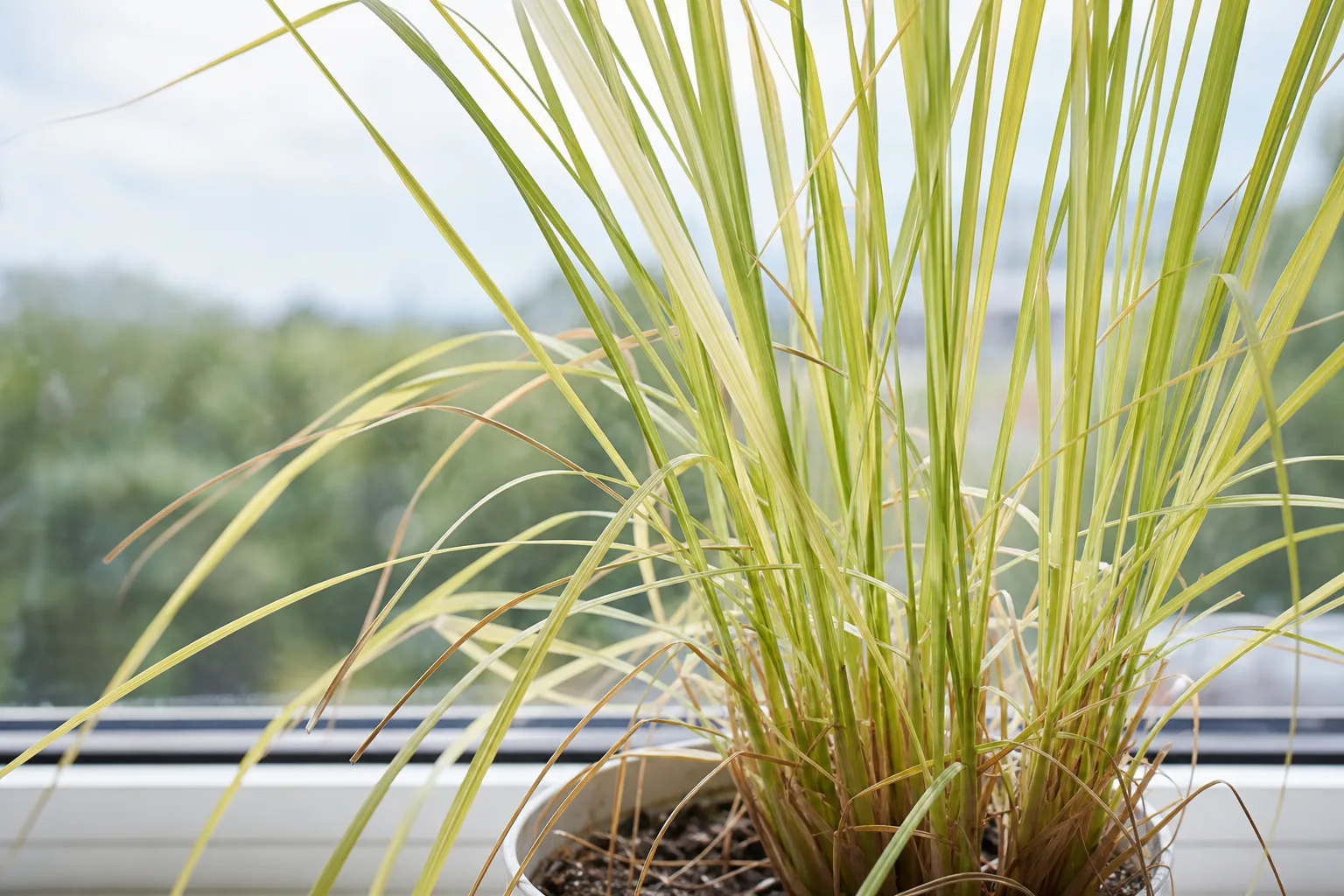
Faded Leaves on Lemongrass: Causes, Checks & Fixes
This guide covers faded leaves on Lemongrass. See also the general Faded Leaves guide, watering, and light pages for this plant.
Faded Leaves on Lemongrass: Causes, Checks & Fixes
Quick answer
Faded leaves on lemongrass (Cymbopogon citratus) mean dull, washed-out blades-gray-green or pale lime rather than the saturated medium green of a sun-fed clump. The color drains evenly across tissue; margins stay soft, not crispy.
First step: check direct sun hours and the season before you fertilize. An overwintering container on a dim windowsill often fades from cool slowdown and low light together-not disease. Move the pot to the brightest frost-free location (or add supplemental light indoors), confirm roots are firm if soil has been wet, then feed lightly only during warm active growth.
This page is the canonical guide for dull, pale blade color on container lemongrass-especially clumps brought indoors for winter. If blades are bright uniform yellow on wet or dry soil, start with yellow leaves on lemongrass instead; yellowing and fading share causes but look different and need different triage.
Lemongrass is a full-sun tropical grass that loses rich green quickly in shade. Bring potted plants indoors when temperatures cool in fall-overwintering foliage often looks faded until spring trim and regrowth restore color. For species context and seasonal rhythm, see the lemongrass overview.
What faded leaves look like on Lemongrass
Faded color is a loss of saturation, not always a loss of health.
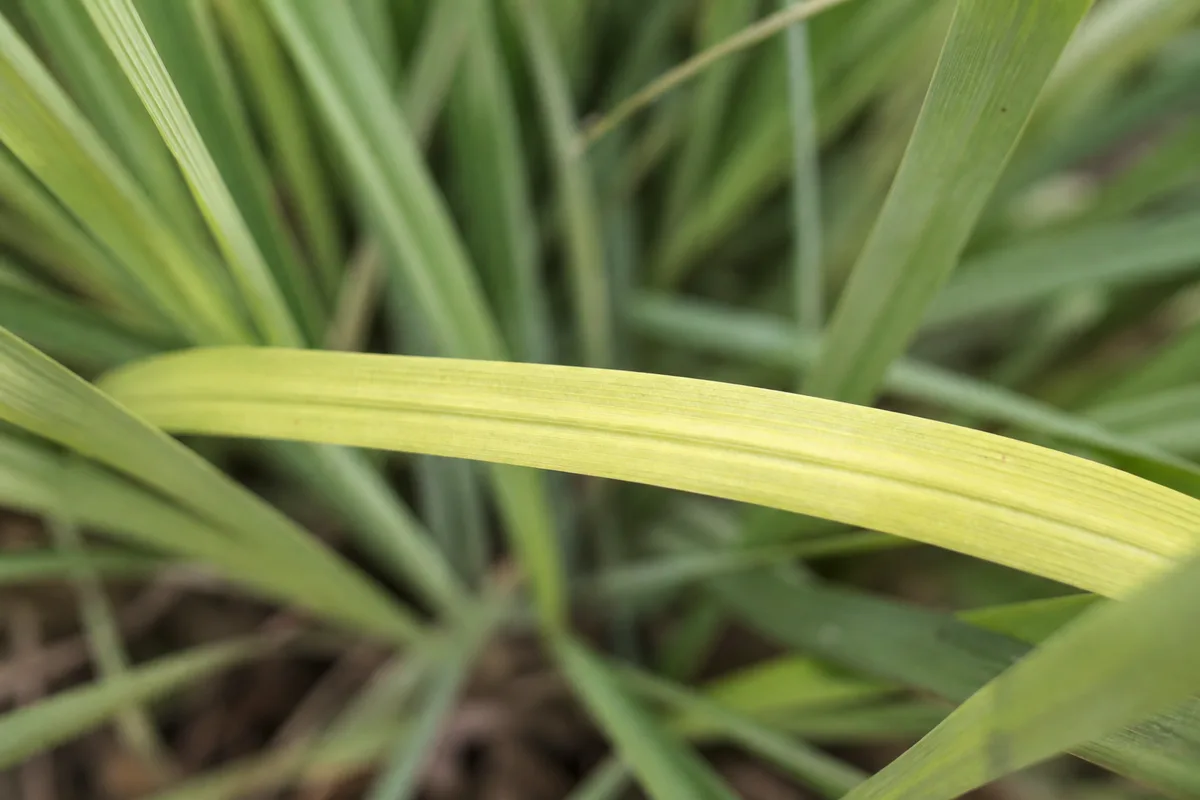
Faded Leaves symptoms on Lemongrass - compare with healthy tissue on the same plant.
Blade color and texture
- Uniform dull gray-green or washed-out lime-yellow across blades-not crisp brown tips alone
- Thin, weak new shoots in dim corners while the clump still attempts growth
- Older outer stems slightly duller as they lignify after repeated harvest-that woody gray is normal aging, not always stress
- Inner crown shoots paler than outer wood when light is the limiting factor in shade
- Soft margins-unlike nutrient burn, edges are not crispy; unlike downy mildew on lemongrass, undersides are not fuzzy
Seasonal patterns
- Gradual fade entering winter indoors - outer blades dull first; growth slows; crowns stay firm
- Sudden wash-out after a shade move - new growth pales within days of relocation off a sunny patio
- Persistent indoor paleness through midwinter - common until light and warmth return; not the same as overnight frost blackening (cold damage)
What faded leaves do not look like
- Bright uniform yellow on wet soil - see yellow leaves and overwatering
- Stippling with fine webbing - spider mites, not simple fade
- Overnight black collapse after frost - cold injury, not dull winter color
Why Lemongrass gets faded leaves
Lemongrass requires warm conditions and full sunlight for best growth. Depriving either produces washed-out foliage long before stalks die.
Insufficient light is the dominant cause indoors or on shaded patios. Plants grown indoors under low light produce fewer stalks and thinner, less vigorous blades-exactly the pale, stretched look growers describe as “faded.” See not enough light on lemongrass when placement is the main issue.
Cool dormant overwintering slows chlorophyll production. Pale color through a dim winter is expected until spring sun returns-especially when low light levels slow growth indoors and you water sparingly through winter. That is physiology, not rot.
Nitrogen shortage in exhausted container mix fades new and old blades evenly-lemongrass requires lots of nitrogen during summer growth, and heavy harvest drains small pots faster. Pale new shoots in full sun with firm roots point here; pale shoots in shade point to light first. Harvest-driven hunger overlaps with yellow leaves when color shifts brighter yellow; this page covers dull wash-out.
Overwatering in cool, low-light conditions can yellow or dull blades while roots struggle-confirm roots before assuming simple fade. Wet cool soil plus dim windows is a common indoor winter trap.
Normal woody stem aging - outer harvest stems naturally dull as they lignify. Do not confuse harvestable wood with crown failure.
Low light vs. dormancy vs. hunger vs. wet soil
Use this table before you change care. Most container fade cases fit one row.
| Pattern | Season / context | Blade look | Soil & roots | First action |
|---|---|---|---|---|
| Low light | Any; worse after shade move | Thin pale new shoots; possible leggy stretch | Normal dry-down; firm roots | Increase direct sun or grow light - light guide |
| Winter dormancy | Cool indoor overwinter | Gradual outer dulling; slow growth | Drier mix; firm crowns | Keep brightest window; reduce water - watering guide |
| Nitrogen hunger | Warm sun, active growth, heavy harvest | Even dull or pale new shoots in bright placement | Dry, light pot; firm roots | Light balanced feed - fertilizer guide |
| Wet-soil stress | Cool indoor winter or shade patio | Dull to yellow bases; possible wilt | Wet 3–4 cm down; sour smell | Stop watering; inspect - overwatering, root rot |
Faded vs. yellow on Lemongrass
On the same clump, faded and yellow are different visual reads:
| Faded (this page) | Yellow (yellow-leaves guide) | |
|---|---|---|
| Color | Dull gray-green, washed-out lime | Brighter uniform yellow |
| Margins | Soft, not crispy | May crisp on drought; mushy bases on rot |
| Typical trigger | Low light, winter slowdown, dull hunger | Wet roots, nitrogen drain, pest stippling |
| Urgency | Usually gradual | Faster when bases soften on wet soil |
When in doubt, probe soil 3–4 cm down and lift the pot before you feed or relocate.
How to confirm the cause
Work through these checks in order:
- Direct sun hours - Outdoors, fewer than six hours of direct sun explains most fade. Indoors, a dim window without supplemental light does the same. Use the lemongrass light guide for placement targets.
- Season - Gradual fade entering winter on a firm crown fits dormancy plus low light. Sudden fade after a move to shade fits light loss alone.
- New shoot quality - Thin, pale tillers reaching toward glass suggest not enough light. Even pale new shoots in full sun with a light, dry pot suggest feed need after harvest.
- Soil moisture and roots - If mix stays wet in cool placement, tip the clump out. Mushy roots mean rot, not dormancy fade. Firm roots on wet soil still need watering correction before feed.
- Outer vs. inner blade contrast - Lignified outer wood duller than pale inner crown in shade confirms light limitation. Uniform dulling on all ages in winter fits seasonal slowdown.
- Feeding history - When did you last fertilize during warm active months? Nutrient lockout can mimic hunger if pH or salt blocks uptake despite feeding.
- Pest scan - Fine stippling or webbing at blade bases rules out simple fade; see spider mites.
First fix for Lemongrass
Move to the brightest available location-outdoor full sun when frost-free, or the sunniest window plus optional grow light indoors.
That single step addresses the most common fade cause before you stack feed, repot, or prune. Do not fertilize heavily in dim cool conditions-nitrogen cannot replace photosynthetically active light.
After light is adequate:
- Trim dead faded outer blades at spring wake-up to stimulate clean regrowth - pruning guide
- Apply light balanced feed during active warm months only - fertilizer guide
- If overwintering, keep reduced watering during dormancy while roots do not desiccate - watering guide
Step-by-step recovery
- Increase direct light hours immediately where possible-or add 12–14 hours of supplemental LED in winter per the light guide.
- Confirm roots are firm-not mushy on wet soil. Escalate to root rot protocol if sour smell or soft bases appear.
- Trim heavily faded outer blades at spring wake-up; leave enough foliage to protect the crown through remaining cool weeks.
- Water when the top 3–4 cm dries in active growth; less in cool dormancy (full seasonal detail on the watering page).
- Feed lightly monthly in warm active season once new green shoots appear and light is adequate-skip feed in dim winter.
- Judge recovery by color of newest crown blades over 10–14 days (practitioner observation, not an extension mandate).
Documented recovery pattern (container overwinter)
A typical indoor container clump moved from a north-facing winter sill to a south window in early March-with a spring trim of outer dull blades and resumed light feeding only after nighttime lows stay above 10°C (50°F)-often shows deeper green new crown shoots within 10–14 days. Old faded blades remain dull until cut at harvest; judge success by fresh tillers, not woody outer stems.
Recovery timeline
New bright green shoots typically appear within one to two weeks after full sun and warm weather return-this range reflects common grower observation rather than a published extension benchmark. Old faded blades remain until cut at harvest. Indoor-only fade may persist until spring outdoor move unless grow lights supplement winter.
Signs recovery is working:
- Newest crown blades deepen from gray-green toward saturated green
- New tillers thicken rather than stay thread-thin
- Growth rate picks up in warm months without sour soil smell
Signs the problem is worsening:
- Fade spreads while soil stays wet and bases soften
- No new shoot color change after three weeks in corrected bright light and warm temperatures
- Uniform bright yellowing-switch to yellow leaves triage
Causes to rule out
- Root rot - Yellow or dull wilt on wet soil, sour smell, mushy roots - root rot
- Cold damage - Overnight black collapse after frost - cold damage
- Spider mites - Stippling and webbing, not uniform dull color - spider mites
- Downy mildew - Fuzzy undersides on grasses - downy mildew
- Normal woody stem aging - Outer harvest stems naturally dull as they lignify
What not to do
- Do not fertilize heavily in dim cool conditions-that cannot replace light and can stress idle roots.
- Do not strip every blade in winter unless moving to bright active growth-overwinter in a warm, bright, sunny location rather than a dark corner.
- Do not increase watering to “green up” pale dormant clumps in low light-wet cool soil invites rot.
- Do not confuse faded dull gray with bright yellow-wrong page means wrong first fix.
How to prevent faded leaves
Grow in full sun with organically rich well-drained soil. Overwinter in the brightest spot available or under supplemental light. Feed during active growth; repot when mix is exhausted every one to two years. Trim faded blades in spring as new growth resumes.
Container culture is the primary risk context on this page-in-ground clumps in warm zones rarely fade from winter dormancy indoors but can still wash out in heavy shade.
When to worry
Escalate when fade pairs with wilting on wet soil or sour-smelling mix-that is rot, not light fade. Uniform yellowing with firm roots in full sun after repotting may need feeding, not relocation. Winter indoor paleness alone on firm crowns is usually seasonal until spring sun returns.
Contact your local extension office if mushy roots, spreading base softness, or fade plus persistent wet soil continue after you stop watering and improve drainage.
Lemongrass care cross-check
Before you repot, feed, and relocate on the same day, run the fade decision path:
- Dull gray-green in dim winter window? → Light and seasonal watering first - not emergency feed.
- Dull new shoots in full summer sun with light pot? → Feed and harvest rhythm - see fertilizer and yellow leaves if color turns bright yellow.
- Dull plus wet soil at 3–4 cm? → Root check before any green-up attempt - overwatering.
- Only outer wood dull, inner shoots green? → Normal lignification after harvest; trim on schedule - pruning.
Related lemongrass care
- Lemongrass overview - species hub and seasonal culture
- Lemongrass light - sun hours, windows, and grow lights
- Lemongrass watering - active growth vs. winter dry-down
- Lemongrass fertilizer - nitrogen during harvest months
- Lemongrass pruning - spring trim and harvest cuts
- Lemongrass repotting - refresh exhausted mix
- Yellow leaves on lemongrass - bright yellow scope boundary
- Not enough light on lemongrass - placement detail
- Leggy growth on lemongrass - stretch with pale blades
- Overwatering on lemongrass - wet-soil overlap
- Root rot on lemongrass - mushy roots escalation
- Nutrient lockout on lemongrass - feed without uptake
- Downy mildew on lemongrass - fuzzy underside lookalike
- Thin stems on lemongrass - low-light weak regrowth
Conclusion
Faded lemongrass blades usually ask for more light, seasonal adjustment, or light feeding-not emergency disease treatment. Separate dull gray-green fade from bright yellowing, confirm firm roots, trim old dull tissue in spring, and judge recovery by rich green new crown shoots.
When to use this page vs other Lemongrass guides
- Lemongrass watering guide - Use for routine moisture checks before assuming faded leaves is the main issue.
- Lemongrass problems hub - Browse all 52 common issues on this species.