Root Rot on Lemongrass: Causes, Checks & Fixes
Quick answer
Root rot on Lemongrass usually starts when cool or dormant pots stay wet too long. First step: Stop watering, unpot, trim mushy roots, and repot in fresh well-draining mix.
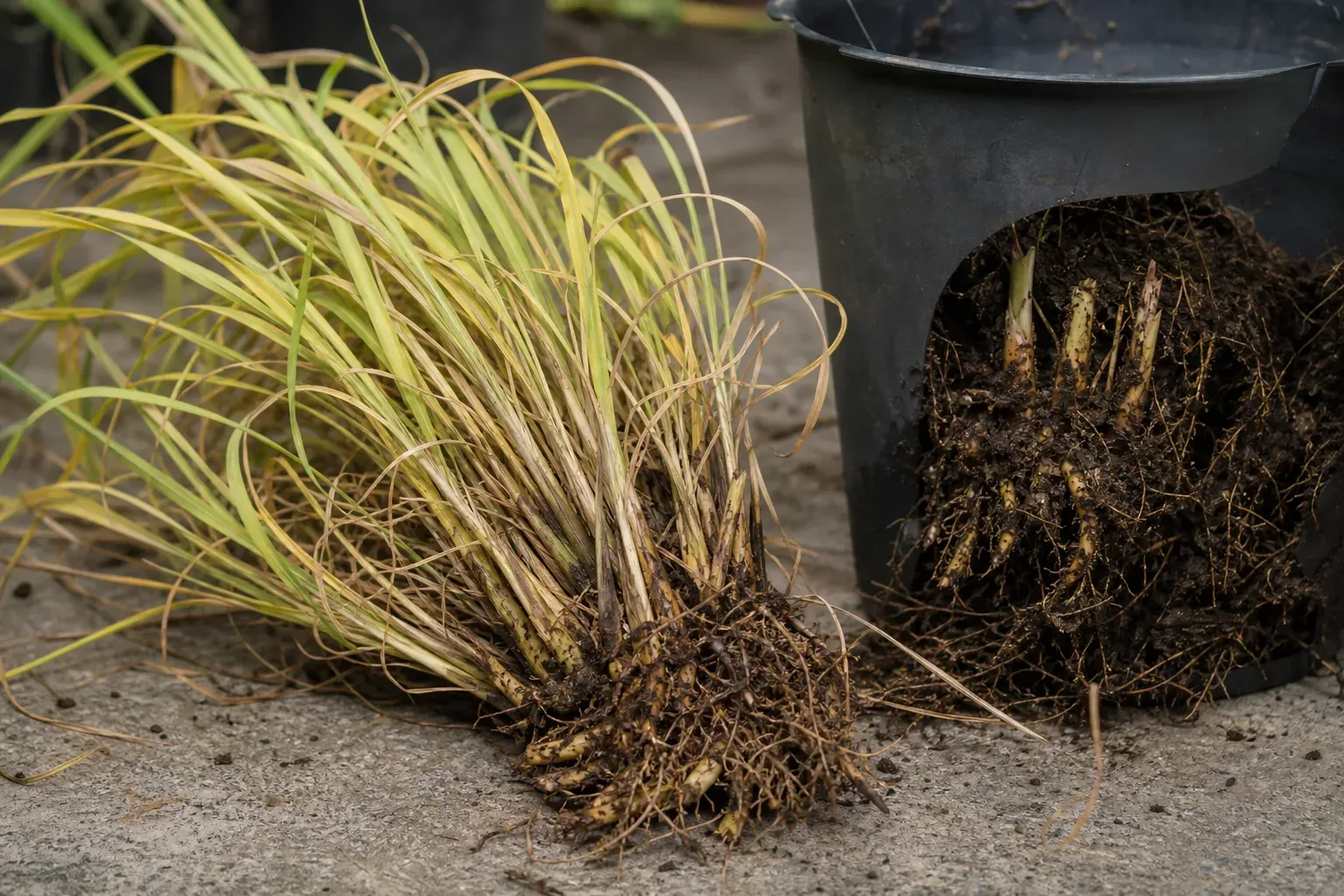
Root Rot on Lemongrass: Causes, Checks & Fixes
This guide covers root rot on Lemongrass. See also the general Root Rot guide, watering, and light pages for this plant.
Root Rot on Lemongrass: Causes, Checks & Fixes
Quick answer
Root rot on West Indian lemongrass (Cymbopogon citratus) is a rescue guide for confirmed or likely root decay-not early overwatering triage. If stems are still firm and you suspect too much water but have not inspected roots, start with the lemongrass watering guide and overwatering on lemongrass first. Use this page once mushy roots, sour-smelling mix, or wilting on a heavy wet pot point to decay below soil.
Lemongrass is a frost-tender clumping grass that drinks heavily in warm sun but uses little water when temperatures drop or plants move indoors. Mix that stays wet for days suffocates roots-then long blades droop and stalks wilt even though the surface looks damp. Damaged roots cannot move water upward despite a heavy pot.
First step: stop watering, unpot the clump, rinse roots, and trim away all soft dark tissue before you repot or divide.
When to use this page vs. the overwatering guide
Use this page when you have already found mushy roots, sour-smelling mix, or widespread decay and need a salvage plan-trim, repot, division, or discard.
Start with the overwatering guide if soil has simply stayed wet too long but stalk bases still feel firm, roots are mostly pale, and you want to break the wet cycle before rot advances. Overwatering is the upstream cause; root rot is the damage that follows when wet conditions persist in cool or low-growth periods.
If you are unsure which stage you are in, work through the confirmation checklist below-unpotting settles the question in minutes.
Root rot vs. underwatering vs. heat collapse on lemongrass
| What you see | Pot / mix | Roots (if checked) | Likely cause | Urgency | Next step |
|---|---|---|---|---|---|
| Wilting, heavy wet pot, sour smell | Saturated days after watering | Brown, mushy | Root rot | Urgent-same day | Stop water; unpot; trim and repot |
| Crispy tips, light dry pot | Dry throughout | Firm, pale | Underwatering | Monitor | Water deeply once; recheck in 24 h |
| Yellow lower blades, firm stalks, wet pot | Wet but no sour smell yet | Still firm, pale | Early overwatering | Act this week | Dry root zone; see overwatering guide |
| Midday wilt, moist soil, firm stalks | Moist | Firm | Heat collapse | Wait | Verify evening recovery |
| Stippling, fine webbing on blades | Normal to dry | Firm | Spider mites | This week | See spider mites guide |
| Temporary wilt after division | Moist after repot | Firm if intact | Transplant shock | Monitor | Hold water; recheck in 3–5 days |
What root rot looks like on Lemongrass
Above ground, rot often masquerades as drought stress. Outer leaf blades droop, lower stalks yellow at the base, and new shoots stall-yet the pot feels heavy. That mismatch is a key clue on long grass blades: damaged roots cannot move water up even when mix near the surface is damp.
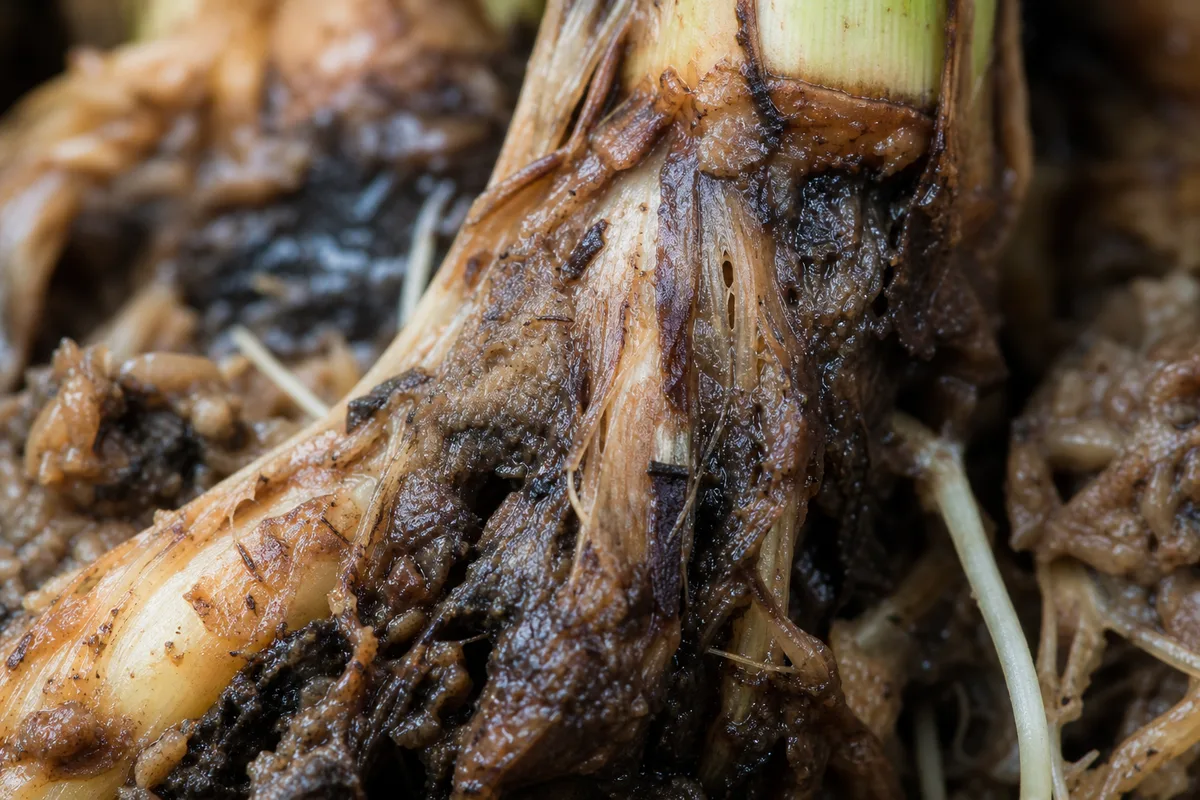
Root Rot symptoms on Lemongrass - compare with healthy tissue on the same plant.
Advanced cases show soft stalk bases, sour odor from the drain hole, and a clump that pulls apart with brown, slimy roots. Spider mites can be a serious pest on indoor lemongrass, but wilting on constantly wet soil with a swampy smell points to roots first-not mites alone.
Below ground, healthy lemongrass roots are pale and firm. Rotting roots are brown, translucent, or mushy and may break away when rinsed.
Why Lemongrass gets root rot
Container culture concentrates the risk on a tropical grass that evolved for warm, humid, sunny margins-not sealed kitchen pots in dim winter rooms.
The summer watering habit trap
Lemongrass requires warm, humid conditions, full sunlight, and plenty of moisture during active summer growth. In hot sun, a large container may need water every one to two days as blades transpire heavily. That rhythm trains growers to water on reflex.
When you bring potted plants indoors as temperatures cool in the fall, growth slows sharply. Light drops, evaporation falls, and root uptake drops with temperature-yet many growers keep the July schedule. Mix that dried in two days outdoors may stay wet for two weeks on a north windowsill. Reduce watering significantly during winter dormancy indoors so roots are not anaerobic while the clump barely drinks.
Waterlogged mix and poor drainage
Waterlogged mix is the direct trigger. Most container plants prefer moist, not soggy, soil. Heavy peat mix without perlite, blocked drain holes, and saucers that hold runoff keep the root ball oxygen-starved. Lemongrass is easily grown in average, medium, well-drained soils in full sun-shade plus frequent watering in cool weather keeps mix wet while the plant uses little water.
Congested clumps and oversized pots
Fast-growing grass roots fill pots within a season. Dense root mass plus exhausted mix traps moisture in the center while the surface looks dry-so you water again. Repotting into an oversized pot without division adds wet soil volume around a small root zone, a common late-fall failure mode before overwintering indoors.
Season-adjusted watering: summer vs. indoor dormancy
Match frequency to growth, not the calendar:
| Season / location | Typical signal to water | What to avoid |
|---|---|---|
| Active summer outdoors | Top 3–4 cm dries in 1–3 days; pot lightens | Leting small pots bake completely dry in extreme heat |
| Fall slowdown | Cut frequency as nights cool; probe before every drink | Keeping daily summer schedule into October |
| Indoor overwintering | Top 3–4 cm dry; often 7–14 days between drinks in cool rooms | Saucer water and dim corners with heavy wet mix |
| Post-rescue recovery | Slight dry-down at top 3–4 cm; err dry rather than wet | Fertilizing or soaking while roots heal |
The finger test at 3–4 cm depth beats any fixed schedule-especially after rescue repotting when fresh mix dries differently than old compacted peat.
How to confirm the cause
Work through these checks in order before you trim roots or repot:
- Season and watering history - Did summer frequency continue into fall or indoor overwintering?
- Drainage check - Are holes blocked by dense roots? Does a cachepot hold standing water?
- Wilting vs. moisture - Wilting with wet soil strongly suggests root dysfunction, not thirst.
- Root inspection - Unpot carefully. Compare firm pale roots with mushy tissue.
- Stalk base - Soft, dark tissue at the soil line indicates advanced crown involvement.
- Smell - Sour or swampy odor supports rot over simple underwatering.
Underwatering shows light pots, crispy leaf tips, and firm roots-the opposite pattern. If more than one-third of roots are mushy, treat as urgent and move straight to trim-and-repot or division salvage.
First fix for Lemongrass
Stop watering, unpot the clump, rinse roots, and trim away all soft dark tissue - then repot only firm sections into fresh draining mix.
Slide the clump out and rinse away old wet mix. Cut away brown or mushy roots with sterilized scissors until only firm tissue remains. Do not fertilize, mist heavily, or water again until firm tissue sits in fresh mix with open drainage.
If more than half the root mass is gone but outer shoots are still firm with attached roots, divide healthy outer sections rather than trying to save a collapsed center-follow the numbered division protocol on the lemongrass repotting guide (3–5 stalks per section, trim foliage to 15–25 cm, partial shade for 7–10 days after split).
Step-by-step recovery
After inspection confirms rot, proceed based on severity:
Mild: trim and repot
When most roots are still firm and only scattered sections are mushy:
- Trim decay - Cut away brown, slimy roots back to firm pale tissue.
- Discard sour mix - Do not reuse wet, smelly substrate.
- Repot into airy mix - Fresh potting mix with perlite in a pot sized to the trimmed root mass-not dramatically larger. See lemongrass soil for ratios.
- Water once after repot until a small amount drains, then empty saucers completely.
- Hold fertilizer until new leaf blades unfurl.
- Resume active-season watering only when the top 3–4 cm is dry; during recovery, err slightly dry rather than wet.
Trim yellow outer blades to reduce stress on the reduced root system.
Moderate to severe: divide outer shoots or discard center
When the center is mushy but outer stalks are firm with roots:
- Divide per the repotting division steps - Each section needs 3–5 healthy stalks and a substantial root mass; single-stalk pieces often fail.
- Trim all decay from each division before repotting into separate 25–30 cm containers.
- Place in partial shade for 7–10 days while roots establish.
- Start a grocery-store stalk backup if the center is fully collapsed-fresh stalks root in water in about two weeks per UF/IFAS propagation guidance.
When softness climbs well above the soil line, more than two-thirds of roots are mushy, or sour smell returns within a week after repotting, discard the parent and rely on divisions or new starts.
Recovery timeline
Recovery depends on how much root mass you lost. These ranges are general observations for container lemongrass in warm, bright conditions-not guarantees.
| Severity | What you did | What to expect |
|---|---|---|
| Mild | Trimmed scattered mush; repotted firm roots | Firm new shoots within 10–14 days; old yellow blades may stay ugly |
| Moderate | Aggressive trim or division of outer shoots | New tillers in 2–4 weeks; harvest pause until blades firm |
| Severe | Center collapsed; only outer divisions saved | 4–8 weeks to normal growth per division; parent center often lost |
| Advanced crown rot | Blackening above soil line on multiple stalks | Parent unlikely to recover-restart from grocery stalk or firm divisions only |
Clumps with mild rot and most roots intact may show firm new shoots within 10–14 days in warm sun. Judge success by clean new blades and neutral soil smell-not immediate stalk size or old yellow foliage greening up.
Signs the problem is worsening: stalk bases soften and blacken upward, wilting spreads on soil that never dries, mushy roots increase on recheck, or sour smell returns within days of repotting.
What not to do
Do not water wilting plants automatically when soil is already wet-check roots first. Do not repot into oversized pots filled with heavy garden soil. Do not leave the plant in standing saucer water through cool weeks. Avoid fertilizing stressed roots immediately after repotting. Do not return a trimmed clump to the same saturated mix hoping it dries on its own.
How to prevent root rot next time
Start with organically rich loams with good drainage in containers with multiple drain holes. Match watering to season: frequent in hot sun, reduced when growth slows indoors.
Improve airflow around pots; space clumps so blades dry after rain. Replace mix when repotting vigorous clumps that fill pots every one to two years. Before fall move-in, audit drainage and cut watering the day the pot comes inside-not after the first wilt on wet soil.
Prevention rhythm details live on the watering guide and overwatering guide-this page is for rescue.
Related lemongrass problems
- Overwatering - summer rhythm carried into cool dormancy
- Compacted soil - anaerobic core before rot spreads
- Poor drainage - blocked holes and saucer water
- Wilting - droop routing when wet vs. dry is unclear
- Fungus gnats - chronically wet overwintering pots
Lemongrass care guides
- Watering - season-adjusted dry-down
- Soil - perlite-rich mix
- Repotting - spring division after rescue
- Overview - indoor overwinter culture
When to worry
Escalate immediately if:
- Stalk bases soften while soil is saturated
- More than one-third of roots are mushy on inspection
- Blackening climbs upward from the soil line within 48 hours of wilting
- Sour smell persists even after you stop watering
- The clump collapses within days of wilting on wet mix
Early root browning with firm stalk bases still allows same-day trim-and-repot rescue. Advanced crown rot on a single overwintering division may be easier to replace from a fresh grocery-store stalk than to repeat rescue attempts.
FAQs
My lemongrass is wilting but the soil is wet-what should I do?
Wet soil plus wilt is the classic root-rot trap, not thirst. Do not add water. Unpot the clump, rinse roots, and compare firm pale tissue with brown mush. If more than one-third of roots are soft, trim decay and repot the same day using the severity guide above.
How can I confirm root rot on my lemongrass?
Unpot and rinse roots. Rotting tissue is brown, black, or mushy instead of firm and pale. Pair that with sour-smelling mix, yellow stalk bases, or wilting despite wet soil. Firm pale roots with a light dry pot point to underwatering instead.
Can lemongrass recover from root rot?
Early cases with many firm roots left after trimming often recover in fresh mix with reduced watering. Severe rot-soft crowns, mostly decayed roots, or blackening from the soil line up-may not support a full clump. Divide healthy outer shoots per the repotting division protocol if the center is gone.
Can I save lemongrass with black stalk bases?
Firm green tissue below the black zone with mushy roots only below soil still allows trim-and-repot rescue. Once black softness involves multiple stalks well above the soil line, focus on firm outer divisions or a grocery-store stalk restart rather than nursing a collapsed center.
How do I prevent root rot on container lemongrass?
Use open drainage, perlite-rich mix, and cut watering frequency when growth slows in fall or indoors. Empty saucers after every drink, give full sun so mix cycles moisture, and repot or divide before woody clumps choke drainage in an oversized pot.
Conclusion
Root rot severity on container lemongrass splits into three practical tiers. Mild root browning with firm stalk bases-trim decay, repot into fresh perlite-rich mix, strict top-3–4 cm dry-down, and you may see new shoots in 10–14 days. Moderate mushy roots with a still-firm crown-aggressive trim or same-day division of outer shoots with 3–5 stalks each per the repotting guide; do not wait for center collapse. Soft crown with total root loss or blackening climbing multiple stalks-salvage outer divisions or restart from a grocery-store stalk; the original center is unlikely to recover. Prevention lives on the watering and overwatering guides before roots ever turn mushy.