How to Propagate Lemongrass: Division and Water Cuttings
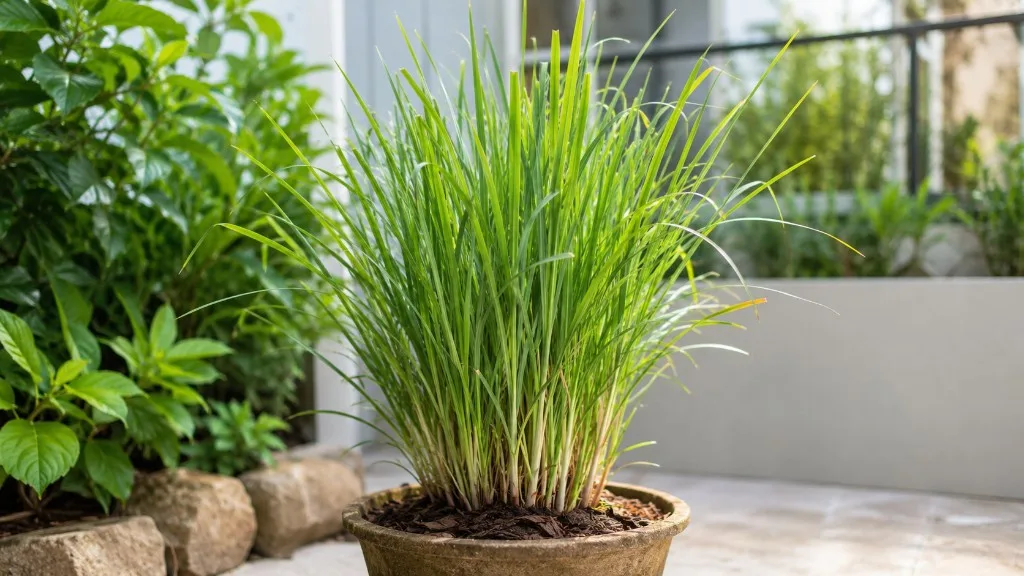
How to Propagate Lemongrass: Division and Water Cuttings
How to Propagate Lemongrass: Division and Water Cuttings
Lemongrass propagation is one of the most practical skills in a culinary herb garden because the plant is built for vegetative multiplication. A fresh stalk with an intact pale bulbous base can sprout adventitious roots in plain water on a sunny windowsill, often within two weeks under warm conditions. Utah State University Extension notes that grocery-store stalks - leaves and roots removed at harvest - will root in a glass of water in about that timeframe. An established clump divides just as readily: each tiller is structurally a small plant with its own shoot and root-initiation tissue, and separating those tillers gives you several new plants in a single session. The Royal Horticultural Society recommends spring division of potted lemongrass as the standard way to make more plants from an existing specimen.
The two home methods that matter most are stalk cuttings rooted in water and division of a mature clump. Both produce genetic copies of the parent plant, which is what you want when you are growing lemongrass for consistent citrus flavor in curries, soups, and teas. UF/IFAS Extension notes that lemongrass is rarely grown from seed; vegetative propagation is the standard home approach because it is faster and more predictable than hunting viable seed.
Why Lemongrass Multiplies So Easily From Stalks and Clumps
Lemongrass (Cymbopogon citratus) is a clump-forming tropical grass in the Poaceae family, native to tropical Asia - India, Sri Lanka, and Southeast Asia (RHS). It spreads through rhizomes, horizontal underground stems that send up vertical shoots called tillers. Each tiller carries leaf sheaths above ground and, critically, a swollen pale base where meristematic cells can generate a new root system on demand. That architecture is why a detached stalk with no visible roots can still root in water: the base tissue already contains the cellular machinery for adventitious root formation once it contacts moisture and warmth.
Division works because you are separating plants that already exist within one shared root mass. A mature home clump may hold dozens of tillers depending on age and feeding. Splitting is both propagation and maintenance - overcrowded pots exhaust soil and produce woody, less flavorful outer stems.
A few dollars of fresh grocery lemongrass can become a perennial harvest in warm climates; an overgrown patio pot divided in spring can yield several new plants in one afternoon. Neither method requires rooting hormone or special equipment - only clean tools, fresh water or mix, and the warmth lemongrass already needs for ordinary growth.
How Lemongrass Propagation Works
Propagation asks plant tissue to rebuild or extend a root system while still supporting living leaves. A lemongrass stalk in water loses some moisture through its leaf surfaces, but the bulbous base can absorb water directly and accumulate auxin - the plant’s natural rooting signal - at the submerged zone. Once root initials emerge, they extract water and dissolved oxygen from the jar, reducing stress on the upper stem. A division, by contrast, arrives with roots already formed; the challenge is minimizing mechanical damage and preventing the cut surfaces from sitting in anaerobic wet soil while the plant re-establishes.
Adventitious roots on water-rooted stalks form from undifferentiated cells at the pale base, not from pre-existing root tips sliced off at the grocery store. That distinction matters when you evaluate stalk quality: a flat-cut bottom with no bulbous swelling has far less root-initiation tissue than a stalk trimmed to leave the swollen meristem zone intact. Divisions root from existing fibrous roots attached to each tiller section; your job is to keep enough root mass per piece and avoid burying the crown too deeply, which suffocates the growing points where new tillers emerge.
Both methods are vegetative cloning - the new plant matches the parent’s flavor and growth habit. Propagating from a known plant or consistent grocery source preserves what you already like; home seed propagation of C. citratus is unreliable and introduces variability you cannot see until the plant matures.
Rhizomes, Tillers, and the Bulbous Base
The rhizome is the horizontal stem running beneath or at the soil surface. Short ringed rhizome sections connect individual tillers in a dense clump - the reason mature lemongrass feels like a tight grass bouquet rather than a single cane. When you divide, you cut through rhizome tissue to separate tillers or small groups of tillers, each piece retaining roots and at least one living shoot.
The bulbous base on a grocery stalk is the lower few centimeters of the tiller, often pale yellow-white, sometimes with faint ring scars where leaf sheaths wrapped the stem. This zone is not a true bulb like an onion; it is compressed stem tissue with active meristems. In water propagation, submerge only the base - typically 2.5 to 5 cm (1 to 2 inches) of water depth - while keeping green leaf portions above the waterline. Submerging the whole stalk invites sheath rot and cloudy water that stalls rooting.
A tiller is any individual shoot arising from the clump. New tillers emerge from the crown as the plant grows, which is why a successfully rooted grocery stalk eventually looks like a small clump rather than a lone grass blade. Waiting for that first side shoot before transplanting, a tip many experienced growers follow, signals that the base is fully awake and ready to handle soil.
Division or Water Rooting: Which Method Should You Choose?
Choose water-rooted stalk cuttings when you do not yet have a mature plant, when you want the lowest cash outlay, or when you need to monitor progress visually. This is the classic grocery-store pathway: buy fresh stalks, root them, pot them. It is also useful when salvaging a few tillers from a friend’s plant without digging up the entire clump. The trade-off is a water-to-soil transition that requires timing and brief shade acclimation, and a higher failure rate if stalks were cut flush at the base or stored too long cold.
Choose division when you already have a healthy established clump, when the plant has outgrown its pot, or when you want the fastest path to full-size harvestable stems. Divisions arrive with roots and active shoots; they skip the fragile jar phase entirely. The RHS describes division as the standard propagation route for container lemongrass in temperate climates. Division is also maintenance: potted plants often need splitting every 12 to 18 months, and in-ground clumps every one to two years, to prevent overcrowding and declining center vigor.
| Factor | Water-rooted stalks | Division |
|---|---|---|
| Starting material | Grocery or garden stalk with bulbous base | Mature clump with roots |
| Time to potted plant | Roughly 2–6 weeks in water plus transplant | Immediate after splitting |
| Skill level | Low; monitoring water quality is key | Moderate; requires confident cutting |
| Best use case | First plant, low cost, visual learners | Renewing pots, scaling harvest, sharing plants |
| Typical failure mode | Rot from stagnant water or poor stalk quality | Desiccation or crown burial after split |
The Best Time to Propagate Lemongrass
Lemongrass is a warm-season grass. Rooting and regrowth accelerate when temperatures stay consistently warm and days are reasonably long. Propagate during active growth, not during a stress period - immediately after shipping, mid-drought, or while the parent shows active root rot on Lemongrass. Plant readiness beats calendar romance: firm upright stalks, green leaf blades, and a base that has not turned brown and desiccated are the real green lights.
For division, target spring after your last frost date, once soil and air temperatures are reliably above 10°C (50°F) and preferably warmer. Spring division gives the longest warm season for re-establishment before cool weather slows growth. In mild frost-free climates (USDA zones 9–11 and comparable), early summer division also works well. Early autumn can succeed in zones 8–9 only if you still have six or more weeks of warm weather ahead; otherwise hold divisions indoors under bright light or wait until spring.
For water-rooted stalks, start jars year-round indoors, but expect slower progress in winter. A sunny summer windowsill may show roots in 7 to 14 days; a cool winter sill may take six to eight weeks or stall below 13°C (55°F), the minimum the RHS cites for meaningful growth.
Seasonal Timing in Warm and Cool Climates
In tropical and subtropical regions - including much of peninsular India and similar climates - lemongrass grows nearly year-round. Monsoon-season planting (often June–July) and pre-monsoon spring windows (March–April) are traditional outdoor planting times because rainfall and warmth align. Water jars on a shaded kitchen counter root quickly in ambient 25–30°C (77–86°F) conditions; transplant when roots are a few centimeters long and keep soil moist through the first month.
In temperate climates, start water jars indoors in late winter, transplant after frost passes, and save 15 cm (6 inch) bulbous sections with roots indoors before fall frost if you want to skip another grocery purchase next spring. Avoid propagating from woody, exhausted outer stems at any season - tired tissue produces tired plants.
Tools and Materials You Need
The equipment list is short. For water propagation, gather a clear glass jar or vase, fresh room-temperature water, and a stable sunny or bright location. Clear glass lets you inspect root color and water clarity without lifting stalks. For division, you need a sharp knife, hori-hori, or spade for in-ground clumps, plus pots with drainage holes and fresh mix for replanting sections.
Cutting tools should be clean - wipe blades with 70% isopropyl alcohol before cutting. For transplanting, use rich, well-draining potting mix amended with 15% perlite and 10% compost, near pH 6.0–7.5.
Keep jars away from pets; the ASPCA lists lemongrass (Cymbopogon species) as toxic to cats and dogs if significant material is eaten.
Preparing Lemongrass Stalks for Water Rooting
Preparation determines whether water propagation finishes in two weeks or ends in a smelly jar. Work on a clean counter, set up containers first, and trim only immediately before placing stalks in water.
Step 1: Inspect the base. Look for a pale, slightly swollen bottom with intact ring scars. Reject stalks trimmed flat with no bulbous tissue, dried brown bases, slimy black cut surfaces, or stalks that have been refrigerated so long the leaves yellow throughout. Grocery turnover matters; ask when shipments arrive if you can.
Step 2: Trim top foliage. Cut leaves back to roughly 15–20 cm (6–8 inches) above the base, or peel away the toughest outer dry sheaths until you see green inner leaf tissue. This reduces water loss and keeps the jar from becoming a tangled top-heavy mess. Do not remove every green blade; the stalk still needs photosynthesis.
Step 3: Expose the rooting zone. Gently peel one or two dry outer leaf sheaths from the base so the pale meristem tissue contacts water directly. Do not carve into living tissue; peeling papery sheaths is enough.
Step 4: No rooting hormone. Lemongrass bases carry their own rooting signals. Synthetic hormone dips are unnecessary for healthy stalks and can foul clear water setups without benefit.
Step 5: Place immediately. Stand prepared stalks bulb-down in prepped jars within minutes of final trimming. Delay increases dehydration at the cut surface.
If you harvested stalks from your own garden, cut 2.5–5 cm (1–2 inches) below the bulbous zone with a clean knife, choosing firm young tillers rather than old woody canes.
Method 1: Rooting Stalk Cuttings in Water
Water propagation is the lowest-barrier entry point Utah State University Extension highlights for store-bought stalks. Stand three to six stalks per jar, cover the pale base 2.5–5 cm (1–2 inches) deep, and keep all green leaves above the waterline. Place the jar in the brightest warm location available and change water every one to two days - stagnant water turns anaerobic within 48 hours in warm weather and destroys developing roots.
Selecting Grocery Store or Garden Stalks
At the grocery store, choose bundles with firm stalks, tight leaf bases, and visible pale swelling at the bottom. Asian and Southeast Asian markets often stock fresher lemongrass than generic supermarkets because turnover is higher. Avoid packages where every stalk was machine-trimmed flush - those can still root if some meristem remains, but success drops sharply.
From your garden, select young tillers pulled or cut with a portion of base attached. If you twist off a cane without base tissue, treat it as cooking material, not propagation stock. The best garden cuttings resemble grocery stalks: a clear swollen base and green upper leaves.
Setting Up a Clean Water Jar
Use a jar wide enough to remove stalks without snapping roots later; a pint mason jar with three stalks is a common sweet spot. Room-temperature tap water is fine in most homes. Do not add fertilizer, rooting additives, or gimmicks - salts and contaminants stress tissue before roots exist.
Success signals appear in stages. New leaf growth at the top often shows within three to seven days in warm bright conditions, even before roots are visible. White root hairs from the base typically follow in 7 to 14 days when temperatures sit roughly 21–30°C (70–86°F). Cool rooms stretch that toward four to eight weeks. If tops gray and bases blacken with no root nubs after three weeks in warm conditions, discard and restart with fresher stalks.
Method 2: Propagating Lemongrass by Division
Division is the most reliable propagation method once you own a mature plant. It is also how you rescue an overcrowded pot before the center dies out. The RHS instructs growers to tip plants out, cut the rootball into sections with several strong stems and good roots each, and replant immediately. That framework applies whether the clump lives in a 30 cm (12 inch) patio pot or a garden row.
Water the parent thoroughly the day before division. Moist roots hold soil, flex without snapping, and rehydrate faster than dust-dry rootballs torn apart in crisis. If the plant is in a pot, slide it out gently; if roots circle heavily, you may need to score the outer mat, but preserve the central healthy crown.
Work on a tarp or table. Identify natural seams where tillers cluster. With a sharp knife or spade, cut through rhizomes to separate pieces. Each division should include at least two to five tillers, a healthy fibrous root mass, and no mushy black crown tissue. Single-tiller divisions can work but recover slower and dry out faster in hot weather.
Trim top leaves by one-third to one-half on large divisions to reduce transpiration load while roots settle - not a buzz cut to nubs, just a balanced haircut. Leave roots mostly intact; shake off only loose old soil if Lemongrass repotting guide into fresh mix. Do not let divisions bake in direct sun on the table while you finish other pieces.
How to Split a Mature Clump
For potted plants, invert the pot, ease the mass out, and slice vertically like a cake into two to four wedges for a typical overcrowded container, or tease apart smaller tiller groups by hand when the clump is young and loose. For in-ground clumps, drive a spade through the center in early spring, lift each half, and further subdivide. UF/IFAS Extension suggests 90 cm (3 feet) spacing for in-ground plantings at maturity; a single division destined for a pot can be much smaller.
Replant divisions at the same depth they grew before, with the crown at or slightly above the soil line - never buried under several centimeters of mix. Firm soil gently, water thoroughly once, and place in bright light with protection from harsh midday sun for the first week if leaves wilt. Divisions in active summer growth often show new center shoots within 10 to 14 days when warmth and moisture stay steady.
If you are dividing primarily to shrink an oversized clump, replant the healthiest sections and compost woody outer canes with poor root attachment. Lemongrass is a harvest crop; restarting from vigorous inner tissue beats nursing exhausted outer stems.
Building the Right Rooting Environment
Environment separates a two-week rooting from a two-month stall. Lemongrass is a C4 tropical grass adapted to high light, warmth, and consistent moisture - conditions that mirror its native range across tropical Asia. Propagation setups should bias warm and bright without cooking jars or desiccating divisions.
Light, Temperature, and Water Changes
Light: Water jars need bright light for several hours daily. A sunny windowsill accelerates rooting compared with a dim interior shelf. If leaves pale and stretch, light is insufficient. If afternoon sun heats the jar until the water feels warm and bases soften, shift to Lemongrass light guide or move the jar back from the glass.
Temperature: Rooting progresses best between roughly 21–30°C (70–86°F). Below 18°C (65°F), metabolism slows; below 13°C (55°F), the RHS considers growth marginal for lemongrass. Heat mats under jars are optional insurance in cool spring basements, not mandatory in warm kitchens.
Water changes: Treat water hygiene as part of the environment, not maintenance trivia. Anaerobic jars smell slightly sour or eggy; bases turn brown and slimy. Healthy jars smell neutral, bases stay firm and pale-green, and root hairs look white - not gray-brown.
Transplanting Rooted Stalks and Fresh Divisions
Transplant timing for water-rooted stalks depends on root length and plant vigor, not impatience. Move stalks when roots are roughly 5–8 cm (2–3 inches) long and preferably when new side tillers begin emerging at the crown. The RHS recommends transplanting when roots are established and new growth is visible; that dual signal indicates the meristem is fully active. Transplanting at 2.5 cm (1 inch) root length works if you are gentle and provide post-pot shade, but smaller root systems fail more often in hot dry wind.
Prepare a pot 20–25 cm (8–10 inches) wide for the first transplant of multiple stalks together, or individual smaller pots if you separated them. Fill with moist well-draining mix. Plant with the base 5–7 cm (2–3 inches) deep - deep enough to anchor roots, not so deep that leaf sheaths sit under soil and rot. Backfill, firm lightly, water thoroughly until drainage runs clear, then empty the saucer.
For the first five to seven days after water-to-soil transition, keep plants in partial shade or bright indirect light rather than blasting noon sun. Roots formed in water are fragile; gradual light increase hardens them. Divisions from an established clump usually handle full sun sooner if they were never in jars, but wilting after split still warrants brief shade recovery.
Space in-ground plantings 75–90 cm (30–36 inches) apart for mature clumps. Do not fertilize heavily at transplant. Let roots explore the mix two to three weeks, then begin light feeding aligned with your normal lemongrass fertilizer rhythm during active growth.
Aftercare for New Lemongrass Plants
New plants - whether from jars or divisions - need steadier moisture and less disturbance than mature clumps. Check the top 2–3 cm (1 inch) of mix; when it approaches dry, water thoroughly. Lemongrass hates drying to dust at the root zone during active growth, but continuous sogginess invites crown rot in cool weather. The rhythm is moist, not marshy.
First month signals of success include upright firm leaves, new pale-green shoots from the center, and white root tips visible at drainage holes when you lift the pot cautiously. Yellowing of the oldest outer leaf while inner new growth stays green is often normal shedding, not crisis. Uniform yellowing with mushy bases is rot - reduce water, improve light, and confirm drainage holes are open.
Gradually move water-started plants to full sun - six or more hours of direct light daily - once they show new growth without wilting at midday. Lemongrass is not a shade herb; weak light produces thin flavor-poor canes. In hot dry regions, afternoon shade during establishment is fine; in temperate summers, maximize sun.
Hold major harvests until the clump has multiple pencil-thick canes; cutting every tiller before regrowth is a common beginner mistake. Where frost arrives, bring potted plants indoors to a warm bright room before temperatures collapse.
Common Lemongrass Propagation Failures
Most failures trace to stalk quality, stagnant water, or poor timing. Flat-cut grocery bases without bulbous swelling lack meristem tissue and rarely root. Stagnant or cloudy water causes slimy bases and blackening sheaths - change water every one to two days and keep leaves above the line. Cold dim windowsills stall rooting until stalks desiccate; use the warmest bright spot available. Transplanting too early into hot full sun with short roots causes collapse - wait for 5–8 cm roots and brief post-pot shade. Divisions buried too deep suffocate crowns; plant at the same depth as before. When a jar fails, discard stalks and restart with fresher material.
Conclusion
Lemongrass propagation comes down to two paths: root stalks with intact bulbous bases in clean water, or divide a healthy clump and replant immediately. Water rooting is fastest when starting from zero; division is most reliable once you have a mature plant. Match the method to your starting point, propagate during warm active growth, change jar water every day or two, and transplant when roots reach a few inches with new shoots emerging. Get those basics right and lemongrass becomes a self-renewing supply of citrus-scented stems for your kitchen.
When to use this page vs other Lemongrass guides
- Lemongrass overview - Start here for whole-plant context before deep-diving this topic.
- Lemongrass problems hub - Jump to symptom-specific fix guides when this care topic does not resolve the issue.
- Damping Off on Lemongrass - Escalate here when propagation adjustments are not enough.
Related Lemongrass guides
- Lemongrass overview
- Lemongrass watering
- Lemongrass light
- Lemongrass soil
- Lemongrass fertilizer
- Lemongrass repotting
- Damping Off on Lemongrass
- Lemongrass problems
Related tool
Try the Propagation Success Calculator with lemongrass pre-selected to estimate needs for your setup.