Lemongrass Light Requirements: Full Sun for Thick Stalks
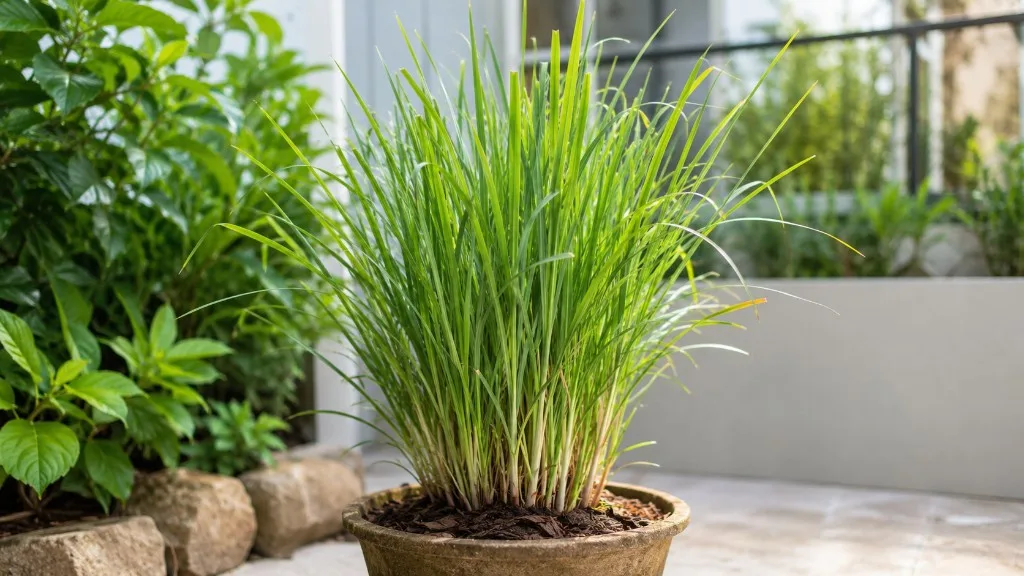
Lemongrass Light Requirements: Full Sun for Thick Stalks
Lemongrass Light Requirements: Full Sun for Thick Stalks
Lemongrass is not a forgiving low-light herb. Cymbopogon citratus - the West Indian lemongrass sold in grocery stores and grown for Thai, Vietnamese, and Indian cooking - evolved in open tropical landscapes where the sun runs hot and long. That origin sets a clear placement rule: full sun, meaning six to eight hours of direct sunlight daily, is the baseline for thick stalks, vigorous clump growth, and the citrus punch you actually want in the kitchen. Missouri Botanical Garden lists lemongrass as a full sun plant that tolerates light shade but prefers open exposure, and The Old Farmer’s Almanac recommends planning on 6 to 8 hours of full sun for healthy outdoor and container plants. (Missouri Botanical Garden) (The Old Farmer’s Almanac)
This is not a “bright indirect light” houseplant in disguise. Lemongrass can survive with less sun for a while, but survival produces a different plant: pale, floppy blades, pencil-thin stalks, slow regrowth after harvest, and weak aroma. If you are growing lemongrass for flavor - not just as a mosquito-repelling ornamental - light is the primary input, not fertilizer or wishful thinking. This guide covers how much sun lemongrass needs, why light controls citral concentration and stalk thickness, where to place pots indoors and out, when partial shade makes sense in extreme heat, how to set up grow lights, and how to read warning signs before a light mistake becomes permanent habit.
How Much Light Lemongrass Actually Needs
Lemongrass belongs to the grass family Poaceae, and like other sun-loving grasses - think corn in a field, not ferns on a forest floor - it converts high photon flux into structural biomass. The strap-like leaves you see above ground are the photosynthetic engine for the swollen, pale lower stalks that hold the culinary value. Cut light and you cut the engine’s fuel supply; the plant compensates by stretching toward whatever brightness exists and producing thinner tissue because it cannot afford dense, oil-rich growth.
For home growers, the practical target is full sun: six to eight hours of direct rays hitting the canopy daily. In horticultural terms, “direct” means unfiltered sun on the leaves - not the ambient brightness of a room where the pot sits ten feet from a window. Partial shade - often defined as four to six hours of direct sun, or dappled light through open trees - can keep a plant alive in hot climates, but it consistently produces weaker stalks and reduced essential oil content compared with an open-sky placement. Full shade - less than four hours of direct sun - is a long-term failure mode for lemongrass unless you are running serious supplemental lighting.
Indoors, the same hour count applies in principle, but window glass, winter sun angle, and single-direction exposure mean a south-facing window rarely delivers outdoor-equivalent totals without help. Treat indoor lemongrass as a high-light plant that needs either the brightest available window position or a full-spectrum grow light running 12 to 16 hours daily to approximate the photoperiod and intensity it would receive outdoors in the tropics.
The Six-to-Eight-Hour Full Sun Baseline
Why six to eight hours specifically? That range matches how extension-style references and botanical databases describe lemongrass placement, and it aligns with what experienced culinary growers report as the threshold below which stalk quality drops sharply. Below six hours of strong direct light, lemongrass often remains green but does not build the half-inch-thick lower stalks that signal harvest readiness. Above eight hours in moderate climates, the plant typically just grows faster and denser - which is what you want unless heat stress enters the picture.
Use this quick placement test rather than guessing from how bright the room feels to your eyes. Place the pot where direct sun patches hit the leaves for most of a clear day, not where you see sky through a window while standing across the room. Count direct hours at the canopy level in spring and summer - a south patio that works in June may fail in November when the sun angle drops. Read new growth after two weeks: firm, upright, deep green blades and visibly thickening base shoots mean the current total is working; pale, leaning, or thread-thin new shoots mean add light. Adjust one variable at a time - move the pot or add a lamp, wait, then change water or feed if problems persist.
If you are starting lemongrass from a grocery stalk rooted in water, do not interpret early pale growth as proof the plant “doesn’t like sun.” New roots in a dim kitchen are acclimating; once potted, move toward full sun gradually over seven to ten days rather than leaving the plant on a dark counter indefinitely.
Why Light Drives Flavor, Stalk Thickness, and Harvest Quality
Lemongrass flavor is not a static trait stored in the seed. It is a chemistry output tied to growth conditions, and sunlight is the main throttle. The signature lemon character comes largely from citral - the same aromatic compound that gives lemon zest its brightness - concentrated in the tender inner core of the lower four to six inches of the stalk. UF/IFAS Extension notes lemongrass requires full sunlight and plenty of moisture for vigorous growth, which supports the concentrated oils in harvestable stalk bases - why stalks from open, sunny beds smell stronger than shaded, leggy plants that technically still “smell like lemongrass” but barely register in a curry paste.
Stalk thickness follows the same logic. The fleshy base stores energy reserves that fuel regrowth after you cut a harvest. Strong daily photosynthesis builds those reserves; chronic shade forces the plant to prioritize height over girth - etiolation - because it is trying to escape dim conditions. A shaded lemongrass clump may reach surprising height while remaining useless in the kitchen: thin, fibrous, nearly flavorless stalks that dissolve into stringy disappointment when you slice them.
For growers choosing between species, Cymbopogon citratus (West Indian) is the culinary standard with thick, fleshy bases; Cymbopogon flexuosus (East Indian) is more common in essential-oil production and tends toward thinner stalks even in good light. If your goal is cooking quality in a home garden or sunny window, citratus under full sun is the combination that pays off. Light cannot fix wrong species genetics, but it can make the right species worth planting.
Citral Production and the Link to Sun Exposure
Citral concentration rises with light intensity and overall plant vigor, not with fertilizer alone. Overfeeding a shaded plant may push soft, nitrogen-heavy leaf growth without delivering the dense, aromatic stalk base you need. Under strong sun with adequate moisture, lemongrass produces the firm, white-to-pale-green inner core that minces cleanly into marinades, soups, and stir-fries - the part chefs actually use after peeling away the woody outer layers.
Practical implications for the kitchen gardener:
- Harvest timing shifts with light. In full sun, stalks may reach usable half-inch thickness faster; in partial shade, the same calendar week produces immature shoots.
- Regrowth after cutting depends on reserves. A well-lit plant pushes new stalks within weeks; a dim plant stalls, forcing you to wait or restart from division.
- Leaf tea and infusions also benefit. While the lower stalk is primary for cooking, sun-stressed-but-healthy foliage produces stronger-scented leaf bundles for teas and broth bags than pale shade growth.
If your lemongrass smells faint even when crushed, increase direct sun before increasing fertilizer. Flavor problems are usually photon problems.
Best Outdoor Placement for Lemongrass
Outdoors is where lemongrass is easiest to light correctly - if you have open sky. The plant wants unobstructed exposure: no building shadow creeping across the bed after noon, no fence line that blocks afternoon rays, no tree canopy that turns full sun into dappled shade by midsummer. In USDA Zones 10–11, lemongrass is evergreen outdoors; in colder zones it is grown as an annual or moved inside before frost, but the summer placement rule remains the same: the sunniest spot you can offer.
Space clumps with airflow in mind. Lemongrass reaches 90–180 cm (3–6 feet) tall with a 60–90 cm (2–3 foot) spread at maturity in warm conditions, and taller plants shade their own lower leaves if crowded. Allow enough room that the outer stalks still receive direct light on at least one side, and rotate container pots weekly if a railing or wall creates one-sided starvation.
Soil and drainage matter for light stress tolerance, even though this is a light guide. Lemongrass in full sun dries faster and needs consistent moisture during active growth; a plant in wet, poorly drained soil under blazing sun still rots. Pair bright placement with well-draining, organically rich mix and you get the combination - high light plus steady water - that produces harvestable stalks by midseason.
South-Facing Beds and Open-Sky Containers
In the Northern Hemisphere, south-facing beds, patios, and balconies deliver the longest direct-sun window for lemongrass from spring through fall. East exposures work as a second choice: morning sun is cooler and often sufficient when combined with bright open sky the rest of the day, especially if afternoon heat on west-facing pavement would cook roots in dark containers. West-facing spots can succeed in cool coastal climates but carry higher scorch risk in hot inland summers because late-day rays combine with stored heat from walls and pavers.
For containers, elevate pots off blazing surfaces when possible. A black nursery pot on dark asphalt receives root-zone heat independent of leaf scorch, and wilting on moist soil at 3 p.m. often signals cooked roots, not thirst. Light-colored pots, saucers emptied after watering, and a few inches of air gap under the container reduce heat coupling while keeping the canopy in full sun.
If you are interplanting lemongrass in an herb bed alongside basil, rosemary, or lavender, group sun lovers together rather than tucking lemongrass where taller perennials will cast increasing shadow as the season progresses. Lemongrass does not “grow up and find the sun” indefinitely - it stretches, thins, and loses flavor instead.
Partial Shade Exceptions in Extreme Heat
“Full sun” advice needs one honest caveat: full sun in a humid tropical origin climate is not identical to full sun on a low-humidity Southwest patio. In extreme heat, lemongrass may perform better with relief from blazing noonday sun - filtered light or afternoon shade - while still receiving strong morning direct light and bright open sky overall. The Missouri Botanical Garden notes the species tolerates light shade, which supports heat-load management without abandoning bright conditions entirely.
Use partial shade strategically when:
- Leaf tips brown and crisp on moist soil during heat waves despite adequate watering
- Container root temperature exceeds what the plant can tolerate even though air temperature seems acceptable
- Reflected heat from walls, glass, or pavement doubles the effective radiation load
In those cases, reduce peak-intensity hours, not total daily brightness. Morning full sun plus open bright shade after noon often outperforms all-day blast exposure that chronically scorches foliage. In moderate climates with mild summers, open full sun all day remains the default target.
Window Placement When Growing Lemongrass Indoors
Indoor lemongrass is viable in any climate if you treat light as a production input, not a decorative afterthought. The plant does not go dormant in the house the way a deciduous tree does - given warmth above 13°C (55°F) (RHS) and enough photons, it keeps producing harvestable shoots year-round, which makes it attractive for cold-climate cooks who overwinter a division on a windowsill.
Human eyes adapt to indoor dimness; lemongrass does not. A spot that feels “bright” at breakfast may deliver less than two hours of direct glass-filtered sun at the leaf surface. Success starts with placing the pot within 12 inches (30 cm) of the pane on the best available exposure, not on a table across the room.
South-facing windows are the first choice in the Northern Hemisphere. From fall through spring, south glass supplies the strongest daily totals; in summer, watch for heat buildup against the pane and pull the pot back slightly or diffuse peak hours if leaf tips crisp on the glass-facing side. East windows provide excellent morning direct sun and are often the most forgiving indoor option - strong enough for decent growth, cool enough to limit scorch. West windows can work in cool seasons but frequently overheat leaves in summer afternoons; treat west as a supplement-with-grow-light exposure unless you monitor closely. North windows rarely sustain productive lemongrass long-term without artificial light; north may keep a plant green through summer at high latitudes, but expect thin stalks and slow regrowth unless you add a lamp.
Rotate the pot a quarter turn every few days to prevent hard lean toward the glass. Lemongrass stems are stiff compared with coleus, but one-sided light still produces asymmetric clumps and weaker stalks on the shaded half.
Full Sun vs Partial Shade vs Full Shade
Clear definitions prevent placement arguments with yourself. Full sun means six or more hours of direct rays on the foliage most days - open sky, no tree filter, minimal shadow from structures during the sunniest block of the day. Partial sun or partial shade means roughly four to six hours of direct sun, or longer periods of very bright indirect light with limited direct patches; lemongrass tolerates this band, especially in heat-stressed climates, but culinary quality drops. Full shade means less than four hours of direct sun - north-side alcoves, rooms far from windows, or beds under dense evergreen canopy - and is inappropriate for lemongrass unless grow lights supply the deficit.
The mistake ranking pages often make is treating these categories as interchangeable because the plant “can grow” in partial shade. It can - the Missouri Botanical Garden lists lemongrass as tolerating light shade - but “grows” and “produces thick, flavorful stalks on a predictable harvest schedule” are different outcomes. Choose partial shade only when heat or acclimation limits require it, not because a dim corner is convenient.
What Happens When Light Falls Below Six Hours
Below the six-hour direct-sun threshold, lemongrass enters a predictable decline pattern that mimics other high-light grasses forced into houseplant conditions. Internodes lengthen between leaf bases as the plant searches for brightness. New blades emerge paler and narrower than older sun-grown tissue. Stalk bases stay thin even after months of care, never reaching the half-inch thickness that marks kitchen readiness. Aroma weakens because citral production scales with overall vigor. Recovery after harvest slows because the plant lacks reserves to push new shoots aggressively.
Pests join the problem indirectly. Chronically weak lemongrass in dim, overwatered conditions attracts spider mites more readily than dense, sun-hardened clumps. Fixing mites without fixing light treats the symptom while the underlying energy deficit remains.
If you cannot move the plant outdoors or to a better window, add a grow light rather than accepting thin shade growth as normal. Lemongrass responds quickly to improved illumination - often within one to two weeks on new shoots - which makes light correction one of the highest-return adjustments in herb growing.
Grow Lights When Windows Are Not Enough
When natural light cannot deliver six equivalent hours of intensity - common in November through February at northern latitudes, north-facing apartments, or office-adjacent kitchens - a full-spectrum LED grow light is the reliable fix. Lemongrass is not a low-light tolerant succulent; it is a high-light grass that responds visibly within days when photons increase. The RHS advises keeping overwintered plants in a bright position where temperatures remain above 7°C (45°F) - conditions that pair naturally with supplemental lighting when winter daylight falls short.
You do not need commercial greenhouse fixtures for one or two pots. A horticultural white LED rated for plant growth - not a standard room bulb optimized for human lumens - provides the photosynthetically active radiation lemongrass uses to build stalk tissue. Combine overhead supplementation with the brightest window available when possible so light arrives from more than one direction.
Fixture Height, Hours, and Lux Targets
A workable starting protocol for indoor lemongrass:
- Position the fixture 12 to 18 inches (30 to 45 cm) above the top of the canopy. Closer increases intensity but raises heat on small pots; farther reduces output below useful thresholds.
- Run the light 12 to 16 hours daily on a timer. Fourteen hours is a solid winter default when natural daylight contributes little. Avoid 24-hour continuous lighting - plants need a dark period for normal metabolism, and endless light causes stress responses that reduce vigor.
- Target roughly 2,000 to 4,000 lux at leaf level for maintenance growth; productive harvest-quality growth often benefits from the upper half of that range or brief window supplementation on top. You do not need a meter to succeed - use new stalk thickness and leaf color as your feedback loop - but meters help when tuning a shelf setup.
- Adjust one parameter at a time. If new growth still pale after two weeks, lower the fixture two inches or add one timer hour - not both simultaneously. If leaf tips bleach only under the lamp, raise the fixture two to three inches.
Clip-on LED grow lights in the modest price range often suffice for a single pot on a windowsill, integrating natural and artificial sources without rewiring a room. For overwintered divisions you plan to move outdoors in spring, maintain bright but not forced tropical growth in winter - the goal is compact holding with usable thin harvests, then acclimate to outdoor full sun when nights stabilize above frost risk.
Acclimating Lemongrass to Brighter Light
Sudden light jumps are the fastest way to scorch lemongrass, especially plants started indoors, overwintered on a dim shelf, or freshly rooted from grocery stalks with leaves accustomed to low intensity. Acclimation - hardening off - spreads the exposure increase over seven to fourteen days so new leaf tissue forms under gradually rising photon load rather than burning existing blades.
A reliable outdoor transition sequence:
- Days 1–3: Place in bright open shade or morning sun only (two to three direct hours), protected from harsh afternoon rays and wind.
- Days 4–6: Increase to four to five direct hours in an open location, still avoiding the hottest late-afternoon window on west exposures if temperatures exceed 90°F (32°C).
- Days 7–10: Move to full target placement - six to eight direct hours - if new leaves show no bleaching or tip crisping.
- Hold or step back if you see sudden widespread tip burn; repeat the current level until clean new growth appears.
Indoor-to-window acclimation follows the same principle on a smaller scale. Move from a back shelf to one hour of direct morning glass, then increment daily exposure rather than placing the pot flush against south pane at solar noon on day one. Water slightly more as brightness increases because transpiration rises with light - but verify soil moisture rather than flooding on schedule.
Plants you buy from a shaded nursery bench need the same courtesy even if the tag says “full sun.” Retail shade houses produce tender foliage; your job is to bridge the gap, not to assume the tag overrides physiology.
Seasonal Light Changes and Winter Indoors
Lemongrass responds to seasonal photoperiod and sun angle even indoors. A south window that powered thick summer growth may deliver half the daily total in January at latitude 45°N. Growth slows, stalks thin slightly, and lower leaves may yellow as the plant reallocates energy - normal if light is the limiting factor, problematic if you interpret slowdown as underwatering on Lemongrass and compensate with excess moisture.
Plan winter as a light-supplementation season, not a care-identical copy of summer. Add or extend grow-light hours from November through February in most continental climates. Reduce watering frequency to match slower growth - dim, wet soil is a common winter killer - but do not let the root zone desiccate completely in a heated room with active top growth under a lamp.
If you move lemongrass outdoors each spring, reverse-acclimate with the same patience: outdoor May sun will destroy foliage that spent five months at winter window intensity if you skip hardening off. Time the move for after last frost when nights stay above 50°F (10°C) for consistent root activity, then ramp exposure over the second week outdoors.
Division for overwintering - cutting top leaves back and potting rooted sections - pairs naturally with seasonal light shifts. Smaller divisions fit windowsills better and regenerate under lamps faster than dragging a full outdoor clump indoors intact.
How Light Affects Watering and Heat Stress
Light is not isolated from the rest of lemongrass care; it sets the pace for water use, temperature at the leaf surface, and recovery after cutting. A clump in full sun on a warm June day transpires aggressively and may need watering every one to three days in a container, while the same pot in a dim room might stay wet for a week if you copy the sunny schedule. Every light move should trigger a moisture-check recalibration, not an automatic doubling of water.
High light plus cold draft is a less common but real indoor failure: bright winter glass with nighttime leaf contact can chill tissue even when the room feels warm. High light plus dark container on hot pavement is the outdoor equivalent - roots overheat while you interpret midday wilt as thirst. Separate heat stress from drought stress by checking soil moisture at depth and feeling pot sidewall temperature before adding water.
After harvest cuts, well-lit plants regrow faster and drink more; shaded plants stall and stay wet longer. Match irrigation to new shoot activity, not calendar habit. If you must choose one diagnostic lever when lemongrass looks unhappy, verify light before rewriting the watering formula - pale stretch with soggy soil is almost always a light problem, not a hydration problem.
Warning Signs Your Lemongrass Has the Wrong Light
Lemongrass reports light problems on new tissue first. Old scorched tips or permanently thin lower stalks will not revert; watch the newest blades and the shoots emerging after your last harvest cut. Make one light change, then wait ten to fourteen days before also changing water, fertilizer, or pot size - overlapping edits make diagnosis guesswork because wilt, fade, and tip crisping overlap across stress types.
Too Little Light - Pale, Thin Stalks, Slow Growth
Long, weak leaf blades leaning toward the window or lamp indicate directional starvation and overall deficit. Pale yellow-green new foliage on a plant that was once deep green outdoors signals insufficient photon flux, not necessarily nitrogen deficiency. Pencil-thin stalk bases that never thicken after months of care are the culinary red flag - the plant is alive but not producing harvest-grade tissue. Slow or absent regrowth after cutting means energy reserves are too low to push new shoots promptly. Small, spaced leaf bases with visible gaps show etiolation - the grass equivalent of leggy houseplant stems. Musty or weak aroma when crushed confirms citral production has dropped with vigor. Persistent spider mites on indoor plants in cool, dim, overwatered conditions often couple low light with chronic stress.
Fixes: move to south or east glass within inches of the pane, remove outdoor obstructions, rotate pots for even exposure, add or lower a grow light, extend photoperiod on the timer, and avoid feeding heavily until new growth firms and darkens - fertilizer cannot replace photons.
Too Much Light - Scorched Leaf Tips and Heat Damage
Brown, crisp tips on sun-facing leaf margins, especially after a sudden outdoor move or against hot south glass, indicate scorch or heat load exceeding the plant’s current acclimation. Bleached pale patches on blades that were deep green indoors show photobleaching from unfiltered intensity jumps. Midday wilting on moist soil in dark containers on pavement suggests root-zone heat, not drought. Sudden widespread leaf collapse after relocation to full patio sun without hardening off is acclimation failure, not mysterious disease. Dry, curled leaf edges during heat waves even with watering may require afternoon shade or shade cloth, not more sun persistence.
Fixes: acclimate gradually over seven to fourteen days, pull pots back from hot glass, use morning sun instead of all-day west exposure, lighten container color or elevate off hot surfaces, add brief afternoon shade in arid climates, and reduce peak intensity before reducing total daily brightness when possible - sheer curtain, dappled noon shade, or east placement.
Conclusion
Lemongrass light requirements are straightforward and strict: full sun - six to eight hours of direct daily exposure - is the baseline for thick stalks, fast regrowth after harvest, and the citral-rich flavor that justifies growing the plant at all. Cymbopogon citratus tolerates partial shade, especially where afternoon heat would scorch otherwise healthy foliage, but shade tolerance is not shade preference; thin, pale, weakly scented stalks are what you get when light falls short.
Place outdoor clumps in open south or east exposures without building shadow; indoors, sit pots within a foot of the brightest window or run a full-spectrum LED 12 to 16 hours daily when winter sun cannot carry the load. Acclimate every light increase over seven to fourteen days, recalibrate watering when brightness changes, and judge success by new stalk thickness and leaf color, not by how green the room looks to you. Get the photons right and lemongrass becomes one of the easiest high-return culinary herbs you can grow; miss the sun target and even perfect soil and feed produce a floppy impostor that will never thicken into a curry-worthy stalk.
When to use this page vs other Lemongrass guides
- Lemongrass overview - Start here for whole-plant context before deep-diving this topic.
- Lemongrass problems hub - Jump to symptom-specific fix guides when this care topic does not resolve the issue.
- Not Enough Light on Lemongrass - Escalate here when light adjustments are not enough.
- Sunburn / Scorched Leaves on Lemongrass - Escalate here when light adjustments are not enough.
- Leaf Drop on Lemongrass - Escalate here when light adjustments are not enough.
Related Lemongrass guides
- Lemongrass overview
- Lemongrass watering
- Lemongrass soil
- Lemongrass propagation
- Lemongrass fertilizer
- Lemongrass repotting
- Not Enough Light on Lemongrass
- Sunburn / Scorched Leaves on Lemongrass
- Leaf Drop on Lemongrass
- Lemongrass problems
Related tool
Try the Plant Problem Diagnosis Tool with lemongrass pre-selected to estimate needs for your setup.