Lemongrass Fertilizer: Nitrogen Guide for Leaf Production
Lemongrass Fertilizer: Nitrogen Guide for Leaf Production
Lemongrass Fertilizer: Nitrogen Guide for Leaf Production
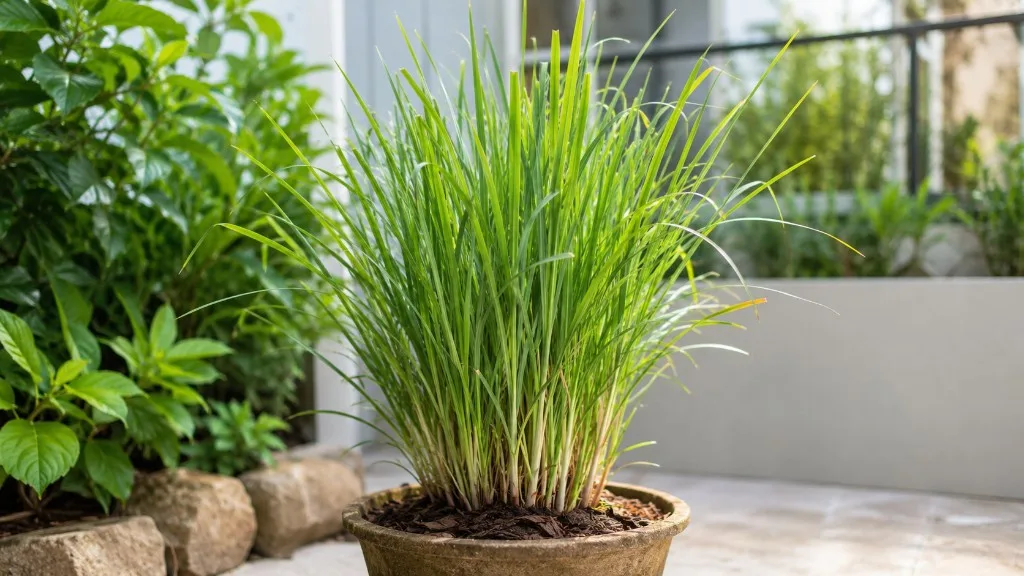
Lemongrass fertilizer is less about finding a magic product and more about matching nitrogen to the plant’s warm-season growth burst. Cymbopogon citratus - the West Indian lemongrass most kitchens use - is a fast-growing tropical grass that can reach roughly 90–180 cm tall with a 60–90 cm clump diameter when sun, water, and nutrients align. You grow it for leafy stalks, not flowers or fruit. That goal shapes every feeding decision: lemongrass behaves like other grasses, pulling heavy nitrogen during active summer growth to build chlorophyll-rich blades, new tillers, and the thick, harvestable stalk bases that hold the citrus aroma.
The practical home routine is straightforward. Use a balanced water-soluble fertilizer at half the label strength, apply it on a summer-weighted schedule while the plant is actively pushing new growth, and pause entirely in late fall and winter when metabolism drops. For outdoor containers in peak heat, that often means feeding every 7–10 days from late spring through early fall. For in-ground plants in enriched soil, monthly liquid feeding is usually enough. For indoor overwintered pots, monthly at half strength during the brightest months - or no feed at all if growth is minimal. Always apply to moist soil, never to dry roots. Nitrogen drives leaf production, but only when light and water are already in range.
This guide covers why lemongrass is nitrogen-hungry, when to feed through the seasons, which formulas work best, how container and garden schedules differ, how to spot deficiency versus burn, and the mistakes that cause more damage than skipping a week ever would.
Why Lemongrass Demands Nitrogen-Rich Feeding
Lemongrass belongs to Poaceae, the grass family. Grasses evolved for rapid vegetative expansion - blades, stems, rhizomes, and tillers - not showy reproductive displays. Nitrogen (N) is the macronutrient most directly tied to that job. It is a core building block of chlorophyll, the pigment that captures light energy. It feeds amino acids and enzymes that drive cell division. In practical terms, nitrogen is what turns a sparse clump of thin stalks into a dense, harvestable mound of fragrant leaves.
UF/IFAS Extension describes lemongrass as a plant that “requires lots of nitrogen during the summer” and recommends feeding outdoor potted plants with a half-strength balanced soluble fertilizer weekly from June through September, with monthly feeding for in-ground plants (UF/IFAS Extension - Lemongrass Fact Sheet). Utah State University Extension echoes the grass-family nitrogen emphasis and notes that indoor potted lemongrass should be fed monthly during the growing period (Utah State University Extension - Lemongrass in the Garden). Those sources agree on the principle even when frequency differs by context: nitrogen supports biomass, and lemongrass builds biomass fast when temperatures stay warm and days are long.
Agronomic research on Cymbopogon species reinforces why home growers should think nitrogen-first. Studies on C. flexuosus report that NPK fertilizer increases leaf count per clump and that nitrogen plays a primary role in green growth and photosynthetic machinery (PMC - Lemongrass growth and soil conditioners). Field trials testing different nitrogen rates show that lemongrass performance - tiller number, leaf yield, essential oil content - responds strongly to nitrogen supply up to an optimal point, beyond which returns diminish and environmental load rises (Advances in Agricultural and Food Research Journal - Nitrogen rates on lemongrass). You are not running a hectare of C. flexuosus on your patio, but the biology is the same: without adequate nitrogen during active growth, leaf production stalls.
Think of fertilizer as maintenance for a warm-season grass in harvest mode - not a rescue for a plant that is yellow because it sits in a dim corner, dries out repeatedly, or rots in waterlogged mix. Fix light and water first. Lemongrass wants Lemongrass light guide - six or more hours of direct light daily for outdoor production and the brightest window or supplemental light you can provide indoors. Only then does nitrogen translate into the thick stalks you can peel for curry paste, tea, or soup.
Phosphorus and potassium still matter. Phosphorus supports root function and energy transfer; potassium helps with water regulation and overall stress tolerance. For leaf-focused lemongrass, though, a balanced or slightly nitrogen-leaning complete formula covers all three without the excess phosphorus that pushes some ornamentals toward flowering at the expense of foliage. Your primary decision is not whether to feed - it is how much nitrogen, how often, and when to stop.
When to Fertilize Lemongrass Through the Seasons
Timing follows the plant’s metabolism more than a rigid calendar. Lemongrass is a tender perennial in USDA zones 9–11 and is often grown as a seasonal container crop or brought indoors in cooler climates. It wakes slowly in cool spring soil, then surges in summer heat, and winds down as nights lengthen and temperatures drop. Feed when you see that surge - new blades unfurling, stalk bases thickening, the clump spreading outward - and stop when growth flatlines.
A lemongrass division overwintered on a south-facing windowsill may keep green leaves through December, which tricks growers into feeding on a July schedule through the holidays. In practice, short days and cooler room temperatures reduce new blade production even when old foliage stays upright. Unused nitrogen then sits in the soil as soluble salts while roots absorb water more slowly - a direct path to brown tips and weak spring regrowth.
Spring and Summer Active Growth Window
Start feeding when active new growth appears: fresh green blades at the crown, new tillers emerging at the clump edge, and roots visibly working if you gently inspect the drainage holes for white healthy tips. Outdoors in temperate climates, that window typically runs from late spring through early fall, roughly May through September in many regions - though warm zones can start earlier and finish later.
UF/IFAS recommends concentrating fertilizer from June through September for outdoor plants, aligning with peak heat and the period when lemongrass “increases in size dramatically” after slow early-season growth (UF/IFAS Extension - Lemongrass Fact Sheet). Gardeners in cooler springs may not see that surge until late May or June; growers in subtropical climates may feed from April onward. The signal is new tissue, not a fixed date on the calendar.
During this active window, half-strength balanced liquid fertilizer is the default for most home growers. Outdoor containers in full sun and warm weather sit at the weekly to 10-day end of the range. Large in-ground clumps in compost-amended beds often need only monthly liquid feeding on top of whatever organic matter was worked in at planting. Indoor summer pots on a bright patio can follow the container schedule; indoor windowsill plants with moderate light may do better at every two to three weeks.
| Month (temperate climate) | Growth phase | Feeding guidance |
|---|---|---|
| March–April | Slow wake-up, root establishment | Hold or one light half-strength feed if active new blades visible |
| May–August | Peak leaf and stalk production | Containers: every 7–14 days at half strength; in-ground: monthly |
| September | Growth slowing, harvest wind-down | Reduce to every 2–4 weeks, then taper |
| October | Cool nights, clump contracting | Final light feed if still growing, then pause |
| November–February | Low growth indoors/overwintered | No fertilizer for typical indoor setups |
The table is a framework, not a law. A lemongrass in a 12-inch pot on a blazing patio in August may dry out every 48 hours and use nitrogen faster than a conservatory plant in partial cloud cover. Watch the clump: if it is pushing new harvestable stalks steadily and blades stay deep green, timing is right. If growth is static, solve light, temperature, and water before adding more nitrogen.
Fall Taper and Winter Rest
Taper feeding in early to mid-fall as night temperatures drop and day length shortens. One practical approach: give a final half-strength feed in early fall if you still see new blades, then stop entirely from late fall through winter. Most overwintered indoor lemongrass does fine with no fertilizer from November through February, especially in cooler rooms or when the plant is kept mainly for survival rather than harvest.
Winter rest is not full dormancy like a deciduous tree, but metabolic demand drops sharply below about 10–13°C (50–55°F). University of Maryland Extension notes that excessive or frequent fertilizer use is a primary cause of high soluble salts in container plants, with symptoms including brown leaf tips and marginal necrosis (University of Maryland Extension - Fertilizer Toxicity). Winter feeding on a plant that is not using nitrogen is an easy way to create exactly that problem - especially in a small pot that cannot dilute salts the way a garden bed can.
Exception: if you grow lemongrass under strong supplemental grow lights in a warm room and the plant keeps producing new blades all winter, you can feed lightly at half strength every four to six weeks. Even then, skipping winter feeds is safer than forcing growth with nutrients the roots cannot process. Resume normal summer frequency only when you see sustained new growth in spring and temperatures are reliably warm.
Best Fertilizer Types for Lemongrass
The best lemongrass fertilizer for most homes is a complete, water-soluble, balanced formula with adequate nitrogen for grassy leaf production. You want nitrogen for blade and stalk biomass, moderate phosphorus for root health, potassium for vigor, and micronutrients on the label - iron, magnesium, manganese - because pale new growth on an otherwise well-watered plant sometimes traces to trace-element gaps rather than nitrogen alone.
Avoid shopping by the word “lemongrass” on the bottle unless you already trust the brand’s dosing guidance. A standard balanced indoor or all-purpose garden formula used conservatively outperforms most specialty products applied at full label strength.
Balanced Soluble Formulas and NPK Ratios
A 10-10-10 or 20-20-20 water-soluble fertilizer diluted to half strength is the default recommendation across extension sources for lemongrass. Equal ratios keep feeding simple when your main goal is leaf and stalk production, not flowers or seed.
Some growers prefer a slightly nitrogen-forward ratio such as 10-6-4 or a slow-release 6-4-0 worked into the soil at planting time for steady nitrogen release through the season. That emphasis is reasonable for a grass grown primarily for foliage and culinary stalks. What is less useful for home containers is a high-phosphorus “bloom booster” - formulations heavy in the middle number. Lemongrass is not a flowering crop in the ornamental sense; excess phosphorus is wasted at best and can skew growth at worst when stacked on top of balanced feeds.
Liquid formulas win for control. You mix, dilute, and apply a known dose to moist soil around the clump base - not directly on the stalks, which can burn. That precision matters in pots where concentrated salts create hot spots. For a typical container lemongrass in a 10- to 12-inch pot, mix fertilizer at half the label’s recommended strength for houseplants or annuals, then water until a little drains from the bottom. Discard saucer water so roots are not sitting in concentrated runoff.
If you are deciding between two bottles on the shelf: pick balanced or nitrogen-leaning, water-soluble, with micronutrients listed. Skip anything marketed primarily for roses, tomatoes, or “more blooms.”
Organic Nitrogen Sources and What to Skip
Organic options work well for lemongrass when you apply them with the same conservative mindset as synthetics. Compost worked 2–4 inches deep into garden soil at planting time - UF/IFAS’s recommended prep step - supplies slow nitrogen and improves moisture retention (UF/IFAS Extension - Lemongrass Fact Sheet). A topdressing of compost or worm castings every few weeks during summer adds steady nutrition without a salt spike. Diluted fish emulsion provides readily available nitrogen for a quick green-up. Blood meal is a high-nitrogen organic amendment useful in garden beds - use sparingly in containers because it is easy to over-apply.
Compost tea and diluted seaweed extract are gentle supplements some growers use weekly at half strength alongside or in rotation with balanced liquid feed. They are not complete NPK replacements on their own unless your soil already holds adequate phosphorus and potassium.
What to skip or use cautiously:
- Slow-release pellets in small pots - release can be unpredictable in variable temperatures and stack with liquid feeds you forget you applied.
- Foliar feeding - lemongrass blades are not the primary uptake surface; soil-root feeding is simpler and safer.
- Fertilizer-pesticide combos - unnecessary on an edible herb and harder to dose accurately.
- Raw manure on containers - salt and ammonia burn risk; stick to well-composted products in pots.
Whether you choose synthetic or organic, the rule is the same: moderate, repeated, nitrogen-aware doses during active growth beat rare heavy applications.
How Much Fertilizer Lemongrass Actually Needs
“How much” is really two questions: what concentration and what total nitrogen over the season. For containers, concentration is the lever you control daily.
The half-strength rule exists because label rates assume outdoor nursery production or large garden beds with significant soil volume. A lemongrass in a 12-inch pot has a fraction of that buffering capacity. Mixing a 20-20-20 formula at half the houseplant label rate and applying it weekly in summer typically delivers enough nitrogen for strong leaf production without the salt shock of full strength.
If your fertilizer label says “1 teaspoon per gallon every 7–14 days for houseplants,” use ½ teaspoon per gallon for lemongrass in active summer growth, at the shorter interval for fast-draining pots in full sun. If the plant sits in rich compost-heavy mix and grows moderately, stretch to the longer interval.
For in-ground lemongrass spaced 90 cm (3 feet) apart - UF/IFAS’s recommended spacing for mature clumps - a monthly half-strength liquid feed through summer on top of compost-amended soil is usually sufficient. Field research discusses nitrogen in kg per hectare - rates like 100–120 kg N/ha appearing in trials (Advances in Agricultural and Food Research Journal) - which does not translate directly to a kitchen windowsill. Treat those numbers as confirmation that lemongrass responds to nitrogen, not as a measuring spoon conversion.
Signs you are applying the right amount: deep green blades (not yellow-green), steady new stalks at the clump center, no white crust on the soil surface, and no brown tipping on the newest leaves after a feed. Signs you are heavy-handed: tip burn appearing 3–10 days after feeding, crust on soil, sudden leaf curl despite moist mix.
When in doubt, reduce concentration before increasing frequency. A weaker solution on the same schedule is gentler than full strength less often.
How Often to Feed Container vs In-Ground Plants
Frequency is where extension sources diverge most - and the divergence actually helps, because it maps to different growing contexts.
Outdoor containers in full summer sun: Feed every 7–10 days with half-strength balanced liquid fertilizer during peak growth (June–September per UF/IFAS). Some growers in warm climates extend from late May through early October. Gardener’s Path recommends weekly half-strength feeding for container lemongrass during the growing season (Gardener’s Path - Growing Lemongrass Indoors).
In-ground garden clumps in compost-amended soil: Feed monthly with the same half-strength solution through summer. The larger soil volume holds nutrients longer and hosts microbes that cycle organic matter.
Indoor potted lemongrass (summer-active): Utah State Extension suggests monthly feeding for indoor pots (Utah State University Extension). If the plant sits in very bright light and warmth and produces new blades continuously, you can move to every two to three weeks - but watch for salt crust.
Indoor overwintered lemongrass: No feed from late fall through winter for most setups. Resume when spring growth returns.
Biweekly compromise for busy growers: If weekly feels aggressive, every 14 days at half strength in summer containers is a reasonable middle ground many kitchen gardeners use successfully - especially when also topdressing compost or worm castings monthly.
The core principle: containers leach nutrients with every watering and have limited soil volume, so they need more frequent, lighter feeds. Garden beds buffer nutrients and can be satisfied with monthly liquid on top of compost at planting.
Step-by-Step: How to Fertilize Lemongrass Safely
A repeatable routine prevents the two biggest failures - feeding dry soil and double-dosing after a growth slump.
- Check the calendar and the clump. Feed only during active growth months unless you have a strong year-round grow-light setup.
- Inspect soil moisture. The top 2–3 cm should be lightly dry, but the root zone should not be parched. Water plain if needed and wait a few hours, or feed the day after a regular watering.
- Mix fertilizer at half strength in a watering can. Stir well. Use room-temperature water.
- Apply around the clump base, not over the crown or up the stalks. Wet the soil evenly until a little drains from the bottom.
- Empty the saucer so the plant does not reabsorb concentrated salts.
- Log the date - a phone note beats guessing whether you fed nine or nineteen days ago.
- Once a month, even on off-feed weeks, run plain water through the pot generously to leach accumulating salts.
For in-ground plants, scratch lightly into the top soil if using granular organics, or pour liquid in a ring around the clump drip line. Water in afterward.
Pre-Feed Checks and the Moist-Soil Rule
Before every feed, run this 30-second checklist:
- Soil moisture: Moist root zone, not sopping wet, not dust-dry.
- New growth present: At least some fresh blades or tillers in the last two weeks.
- No salt crust: White or yellowish deposits on soil surface mean flush first, feed later.
- Plant not stressed: No recent transplant, division shock, drought wilt, or cold damage.
- Season appropriate: Summer-weighted schedule only; winter pause unless under strong lights and heat.
The moist-soil rule is non-negotiable for lemongrass in pots. Fertilizer salts on dry roots pull water out of root tissue by osmosis - chemical burn that looks like drought. If you forgot to water and the mix is dry, water with plain water first, let it drain, then fertilize the next day.
Never combine feeding with pesticide sprays or foliar products on the same day unless a label explicitly allows it. Keep edible-herb feeding simple: roots only, known dose, known timing.
Signs Your Lemongrass Needs More Nitrogen
Nitrogen deficiency on lemongrass usually shows as overall pale yellow-green blades, thin new stalks, and slow clump expansion despite adequate water. Older leaves may yellow from the tip downward while the crown stalls. Because lemongrass is a grass, the whole clump can look washed out and sparse rather than showing the patterned chlorosis some broadleaf houseplants display.
Before you blame nitrogen, rule out:
- Insufficient light - the most common lookalike. Lemongrass in shade stretches with weak, pale blades even when soil nutrients are fine.
- overwatering on Lemongrass - yellowing with mushy crown tissue and sour smell indicates root damage, not hunger.
- Cold stress - growth stalls below comfortable tropical temperatures; feeding does not fix chill.
- Natural older-blade dieback - outer leaves senesce as new inner stalks emerge; that is normal, not deficiency.
If light is strong (six or more hours of direct sun outdoors or your brightest indoor spot), water is consistent, temperatures are warm, and the clump is still pale with thin new growth, increase nitrogen modestly: confirm you are at half strength (not quarter), move container feeds from every 14 days to every 10 days for two cycles, or add a monthly compost topdressing. Reassess after two to three weeks. Grasses respond visibly when nitrogen was the limiting factor.
Do not jump to full label strength. Lemongrass can green up quickly with nitrogen - that is the point - but it can also burn quickly when salts spike.
Signs of Over-Fertilizing and Salt Buildup
Over-fertilizing is the dominant fertilizer mistake on container lemongrass. Symptoms often appear one to two weeks after a too-strong or too-frequent feed, or gradually when salts accumulate from winter feeding, hard water, and never flushing.
Watch for these signals:
- Brown, crispy leaf tips and margins, especially on newer blades or shortly after a feed
- White or yellowish crust on the soil surface, pot rim, or drainage holes
- Sudden leaf curl or wilt despite moist soil - damaged roots cannot take up water effectively
- Stunted new blades with burnt edges on the smallest emerging leaves
- Weak, thin stalks that brown at the base while the crown looks otherwise wet - salt stress plus possible crown rot if overwatered in response
- Slow growth with tip burn - the confusing combo that makes growers feed more
University of Maryland Extension explains that high soluble salts reduce a plant’s ability to absorb water - osmotic stress - which is why burn looks like drought even when the soil is wet (University of Maryland Extension - Fertilizer Toxicity). That mismatch pushes many growers to water more, compounding root stress.
Hard water plus fertilizer creates a double mineral load. If you see tip burn while feeding modestly, switch to filtered or rainwater before increasing nitrogen.
How to Flush and Recover After Over-Feeding
If you suspect burn, stop fertilizing immediately and leach the soil. Flushing is the rescue tool when salts get ahead of you.
- Move the pot to a sink, tub, or outdoor spot where copious drainage is acceptable.
- Water slowly with plain room-temperature water until water runs freely from the drainage holes. Let it drain completely.
- Repeat two to three times over 30–60 minutes, allowing full drainage between passes. The goal is to pull dissolved salts out of the root zone, not to leave the plant sitting in soggy mix for days.
- Pause all feeding for 4–6 weeks while you monitor new blade emergence.
- Resume at half strength only when new growth appears without burnt margins and salt crust is gone.
Badly burned blades will not green up again - judge recovery by new growth, not old damage. In-ground clumps often recover faster because rain and irrigation leach salts naturally. Trim only fully dead blades; keep any green tissue for photosynthesis during recovery.
If the crown is mushy or smells sour after flushing, you may have crown rot from overwatering during the panic phase - reduce watering, improve drainage, and consider dividing out healthy side tillers.
Seasonal and Situational Adjustments
Seasonal feeding includes transitions, not just on/off switches. In late summer, stretch the interval before stopping entirely. After a heavy harvest that removed much of the visible clump, give the plant one to two weeks of plain water before the next feed so regrowth can restart.
After Lemongrass repotting guide, Division, and Stress Recovery
After repotting or division into fresh mix that already contains compost or slow-release fertilizer, wait three to four weeks before the first liquid feed. Many commercial potting soils include starter charge; doubling up causes immediate tip burn on fresh roots.
After division for propagation, hold food until new white roots are visible at drainage holes and fresh blades emerge. Then use quarter to half strength at wide intervals for the first month.
After stress - drought wilt, cold damage, pest damage, or post-harvest shock - hold nitrogen until the clump shows stable new growth. Fertilizer on damaged roots adds salt injury to an already compromised system.
After bringing indoors for winter: Stop feeding when you bring the plant inside and growth slows. A last light feed before the move is optional if the clump is still actively growing outdoors; feeding during the dim indoor transition is riskier.
Harvest cycles: Lemongrass tolerates regular stalk harvest if the crown stays intact. Heavy cutting removes leaf area that photosynthesizes - wait until new blades are 10–15 cm tall before resuming full summer feed frequency. Light harvests need no schedule change.
Fertilizer and Other Lemongrass Care
Fertilizer only works when light, water, soil, and temperature are already in range. Lemongrass in full sun uses nitrogen faster than a dim windowsill plant, where pale weak blades are usually a light problem, not hunger. Consistent moisture keeps nutrient uptake steady - lemongrass wants moist but well-drained mix, not alternating flood and drought. UF/IFAS notes that productivity depends on sufficient water, fertilizer, sunlight, and humidity working together (UF/IFAS Extension - Lemongrass Fact Sheet).
Target soil pH 6.0–7.5. Most potting mixes and compost-amended garden soils land in that range without adjustment. Extreme acidity or alkalinity locks up micronutrients and makes nitrogen less available even when it is present in the soil.
Pot size matters for feeding. A mature clump needs at least a 30 cm (12-inch) pot to support root mass and dilute salts. Undersized pots concentrate fertilizer faster - feed lighter, flush more often.
Pet safety: The ASPCA lists lemongrass (Cymbopogon species) as toxic to cats and dogs, with essential oils including citral causing gastrointestinal upset and, with significant ingestion, more serious effects (ASPCA - Lemongrass). That does not change how you fertilize, but it matters for where you place fed plants and how you store fertilizer products away from pets.
Pair your nitrogen schedule with the rest of the lemongrass routine: bright light, warm temperatures, harvest and division when clumps overcrowd the pot, and repotting every one to two years when roots circle the container.
Common Lemongrass Fertilizer Mistakes
The failures that show up most often are predictable:
- Full label strength in containers - the fastest route to tip burn on a grass that actually responds well to modest doses.
- Feeding on a summer schedule through winter - salts accumulate while growth stalls.
- Fertilizer on dry soil - chemical root burn that looks like underwatering on Lemongrass.
- Ignoring white salt crust - crust is a warning, not decoration; flush before the next feed.
- Feeding stressed, newly divided, or repotted plants - roots need recovery time, not nitrogen push.
- Using bloom booster or high-phosphorus feeds - irrelevant to leaf production and wasteful at best.
- Fertilizing every watering - even quarter-strength constant feeding stacks salts in small pots.
- Adding more nitrogen when pale blades mean too little light - you get weak, stretched growth, not harvestable stalks.
- Applying fertilizer up the stalks - burns the edible tissue; soil application only.
- Matching a garden-bed schedule to a 6-inch starter pot - small pots need lighter, more frequent attention or no feed until sized up.
Garden lemongrass in compost-rich soil and a patio pot in lean commercial mix are not the same plant in the same root zone. Match frequency and concentration to pot volume, light, and season, not to a single blog’s headline schedule.
Conclusion
Lemongrass fertilizer success comes down to feeding a warm-season grass the nitrogen it needs for leaf production - at the right time, in the right concentration, and only when the rest of the care stack is already working. Use a balanced or slightly nitrogen-leaning water-soluble formula at half strength, feed every 7–14 days in summer containers and monthly for in-ground clumps, and stop in late fall and winter unless you are running strong grow lights and seeing continuous new blades. Compost at planting and periodic worm-castings topdressing add slow nitrogen that pairs well with liquid feeds.
When in doubt, less is more. Lemongrass tolerates a skipped week far better than it tolerates a double dose after pale blades. Watch new growth: thick green stalks and steady tiller production mean your nitrogen rhythm is working. Brown tips, white crust, and a stalled crown mean pull back, flush, and fix light and water before you reach for the bottle again. Align those pieces and fertilizer becomes simple maintenance - the kind that turns a grocery-store rooting stalk into a dense, fragrant clump worth harvesting all summer.
When to use this page vs other Lemongrass guides
- Lemongrass overview - Start here for whole-plant context before deep-diving this topic.
- Lemongrass problems hub - Jump to symptom-specific fix guides when this care topic does not resolve the issue.
Related Lemongrass guides
- Lemongrass overview
- Lemongrass watering
- Lemongrass light
- Lemongrass soil
- Lemongrass propagation
- Lemongrass repotting
- Lemongrass problems
Related tool
Try the Fertilizer Dilution Calculator with lemongrass pre-selected to estimate needs for your setup.