Overwatering on Lemongrass: Causes, Checks & Fixes
Quick answer
Overwatering on lemongrass usually starts when summer watering habits continue into cooler, lower-light conditions. First step: stop watering and let the top 3–4 cm of mix dry before the next check.
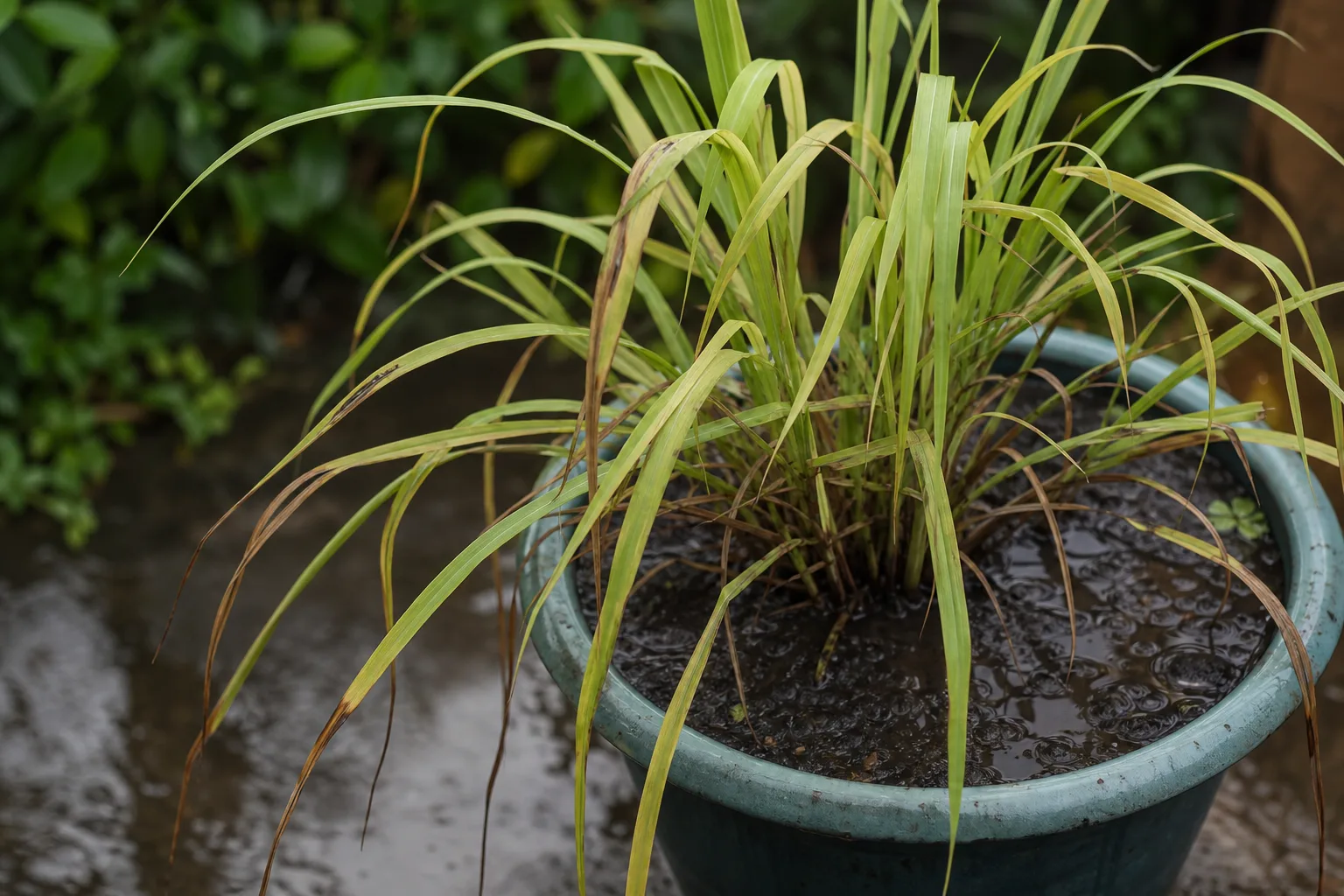
Overwatering on Lemongrass: Causes, Checks & Fixes
This guide covers overwatering on Lemongrass. See also the general Overwatering guide, watering, and light pages for this plant.
Overwatering on Lemongrass: Causes, Checks & Fixes
Quick answer
Overwatering on lemongrass is usually a season mismatch: summer-level watering continues after light and temperature drop. Lemongrass wants steady moisture in active growth but still needs oxygen at the roots-waterlogged soils should be avoided even when the plant looks thirsty on top.
First fix: stop watering now. Let the top 3–4 cm of mix dry, lift the pot to confirm it is getting lighter, and empty every saucer before you reassess. If the clump wilts while mix stays wet, treat this as possible root damage rather than drought.
This page is the early wet-soil triage hub for container lemongrass. If roots are already brown and mushy, switch to root rot on lemongrass. If wet-vs-dry diagnosis is unclear, start with water stress on lemongrass.
What overwatering looks like on Lemongrass
Lemongrass (Cymbopogon citratus) is a fast-drinking tropical grass in summer sun. Overwatering rarely shows as one isolated sign-it is a cluster you confirm together:
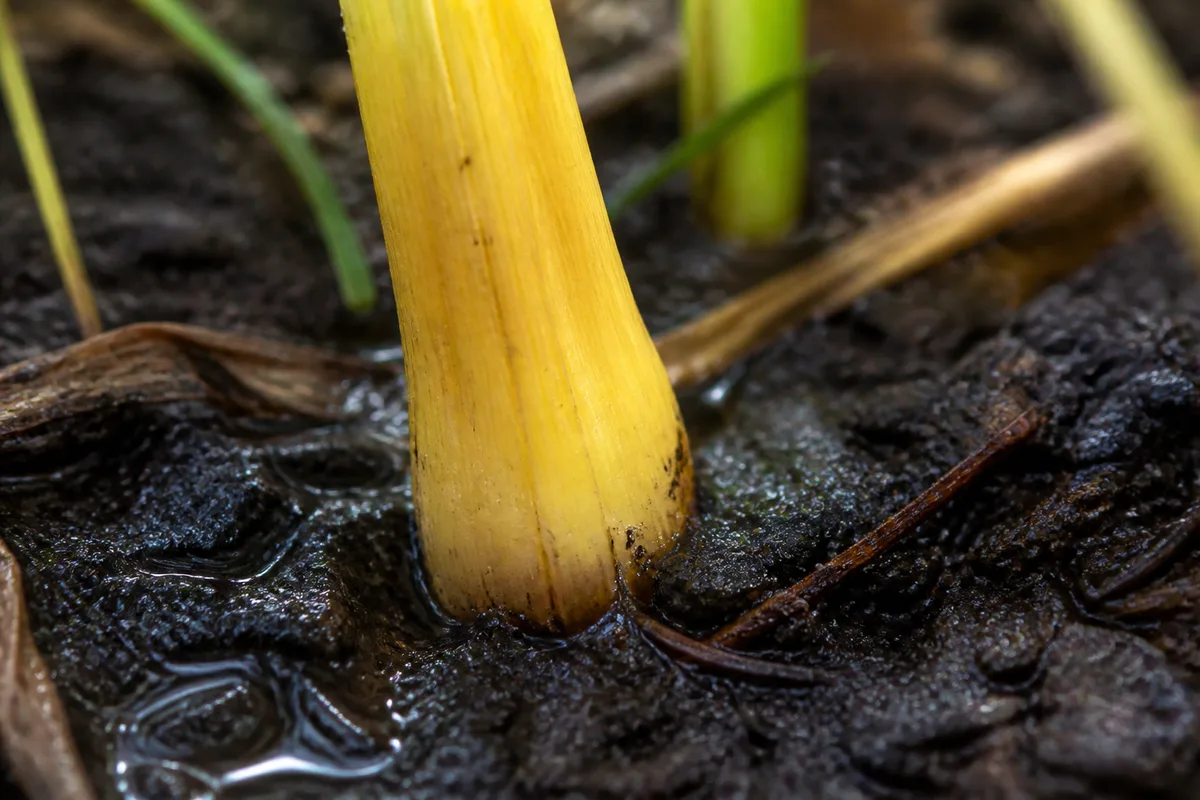
Overwatering symptoms on Lemongrass - compare with healthy tissue on the same plant.
- Pot stays heavy for days after the last drink
- Top mix feels damp when you expected dry-down
- Outer blades yellow at the base while new tillers stall
- Whole clump wilts even though soil is wet
- Stalk bases soften near the crown
- Mix smells sour or stale from the drain hole
- Roots, if visible, look brown and mushy instead of firm and pale (Wisconsin Horticulture)
The paradox that confuses growers: damaged roots cannot move water up long grass blades, so the plant looks thirsty while sitting in wet mix. That wilting on wet soil pattern is the signature to remember on lemongrass.
Container vs in-ground: Potted clumps concentrate risk. Garden beds drain sideways and warm faster; a heavy pot in a dim corner can stay anaerobic for a week. Most overwatering rescue on this page assumes container culture-in-ground plants with standing water need drainage correction at the bed level, not just a watering pause.
Why Lemongrass gets overwatered
Lemongrass grows fast in hot weather, so frequent summer watering is often appropriate. Problems start when that same schedule continues into cooler conditions or after you bring potted plants indoors when temperatures cool for overwintering.
Common triggers on container lemongrass:
- Calendar watering instead of checking root-zone moisture
- Runoff left in saucers or decorative cachepots
- Dense, tired mix that holds water too long
- Low light after moving pots indoors-low light slows growth so water sparingly while you keep summer frequency
- Oversized pots that stay wet in the center while the surface looks acceptable
- Blocked drain holes from woody root mats in mature clumps
Lemongrass is not a succulent. It wants moisture in active growth-but cool, dim, wet soil is a different failure mode than summer thirst.
How to confirm overwatering - 6 checks in order
Run these before any treatment. Stop at the step that clearly confirms or rules out overwatering.
- Season and watering history - Did summer frequency continue into fall, overwintering indoors, or a shady windowsill? Lemongrass uses far less water when growth slows.
- Pot weight - Lift the container. A heavy pot days after watering supports chronic wetness; a light pot points to underwatering instead.
- Moisture depth - Probe 3–4 cm down. If that layer is still damp and you watered recently, pause before adding more.
- Drainage path - Confirm open drainage holes, no standing water in cachepots, and that water runs freely when you do water.
- Wilting vs moisture - Wilt on wet soil strongly suggests root dysfunction, not drought. See wilting on lemongrass for uptake-failure patterns.
- Root and crown inspection (if odor, soft bases, or 48+ hours of wet-soil wilt) - Slide the clump out. Firm pale roots favor dry-down correction; brown mushy roots with sour smell mean escalate to root rot rescue.
If checks 1–5 point to dry mix and a light pot, switch to underwatering on lemongrass-not another pause.
First fix for Lemongrass
Stop watering and dry the top 3–4 cm before anything else.
Improve airflow around the pot while the surface layer dries. Do not fertilize during this phase-stressed roots do not need a growth push.
If the clump is structurally firm, odor is mild, and roots (if checked) are still pale, this dry-down correction may be enough. If odor is strong, bases are soft, or wilt persists on wet mix past 48 hours, start root-level recovery immediately-dry-down alone will not reverse active decay.
Step-by-step recovery - 7 ordered fixes
Use the full sequence when odor, soft bases, or mushy roots appear. For mild cases, steps 1–3 may suffice before reassessing.
- Stop all watering until the top 3–4 cm dries; empty saucers and cachepots every time you check.
- Unpot the clump and gently shake away saturated mix-do not yank woody stalks.
- Trim only damaged roots-brown, mushy, hollow-feeling tissue. Leave firm rhizome sections intact.
- Disinfect scissors between cuts if you removed rotted tissue (Wisconsin Horticulture).
- Repot in fresh, well-draining mix with perlite in a container sized to the remaining root mass-not dramatically larger. Open drainage holes are non-negotiable.
- Water once lightly to settle, then pause until the top layer dries again.
- Resume cautious watering by dry-down depth, not calendar days. In recovery, err slightly dry rather than wet.
Avoid the common myth of adding gravel to the bottom for drainage-rocks or gravel can actually inhibit drainage and keep roots wetter, not drier.
Trim yellow outer blades to reduce demand on a reduced root system. If the center crown collapses but outer divisions still have firm roots, divide healthy shoots rather than trying to save a dead core.
Recovery timeline - what to expect
| Severity | Root condition | Typical timeline | What improvement looks like |
|---|---|---|---|
| Mild | Firm roots, no soft crown | 3–7 days after dry-down | Pot lightens; wilt eases; no new yellowing at bases |
| Moderate | Some mushy roots trimmed | 1–2 weeks in warm bright conditions | New central shoots; firmer stalk bases; faster dry-down between drinks |
| Severe | >⅓ roots removed; soft crown | 2–4+ weeks; may not fully recover | Salvage divisions only; old outer blades may not rebound |
Judge recovery by new central growth, no new softening at stalk bases, and controlled dry-down between waterings-not by old yellow blades greening up.
If crown tissue keeps collapsing after Lemongrass repotting guide, prioritize healthy outer divisions and replace exhausted stock-lemongrass divisions root readily.
Overwatering vs lookalikes
| Pattern | Pot weight | Mix at 3–4 cm | Wilt | Odor / roots | Likely cause |
|---|---|---|---|---|---|
| Overwatering | Heavy | Wet | Persists on wet mix | Sour smell; soft roots | Wet-soil root stress → see this page |
| Underwatering | Light | Dry at depth | Improves after soak | Firm roots | Underwatering |
| Root rot (advanced) | Heavy | Wet | Severe collapse | Mushy crown; black roots | Root rot |
| Low-light slowdown | Moderate | Cycles slowly | Mild droop | Firm tissue | Cut frequency; see watering guide |
| Root-bound odd cycle | Light after brief wet | Surface damp, core dry | Confusing | Firm but cramped | Root bound |
Pot-weight check: A heavy pot + wilt = wet roots until proven otherwise. A light pot + wilt = drought check first.
What not to do
- Do not keep watering to “fix” wilt on already wet mix
- Do not leave containers sitting in runoff
- Do not reuse sour, contaminated potting mix
- Do not fertilize stressed roots hoping to push growth
- Do not reach for pesticides when root-zone conditions explain the symptoms
- Do not assume in-ground drainage rules apply to a dense indoor pot without checking weight and depth
How to prevent overwatering on Lemongrass
Build prevention around season, light, and dry-down depth:
- Keep lemongrass in full sun when possible and the brightest window you have indoors
- Water only when the top 3–4 cm has dried during active growth-container plants need moisture, not chronic saturation
- Empty saucers after every watering-do not allow plants to sit in drainage water
- Use free-draining mix and pots with true drainage-see lemongrass soil for mix ratios
- Cut frequency sharply when growth slows indoors in winter or after moving pots inside
- Divide or repot before woody clumps choke drainage in an oversized pot
For the full seasonal rhythm-summer moisture versus winter dry-down-use the lemongrass watering guide and adjust by season instead of fixed intervals.
When to escalate
Same day - unpot immediately:
- Stalk bases turn mushy across much of the clump
- Foul odor from wet mix
- Wilting worsens while mix stays saturated
- More than one-third of roots are brown and mushy on inspection
This week - repot or divide:
- Dry-down correction failed after 48 hours on wet-soil wilt
- Yellowing spreads at the base despite corrected watering
- New growth fails to resume under warm bright conditions after root trim
Monitor:
- Mild heaviness with firm roots-dry-down and saucer discipline may be enough
- Seasonal transition only-reduce frequency before symptoms appear
Contact your local extension office if symptoms cycle between soggy and drought every few days-that often signals binding, poor mix, or overlapping stress. See poor drainage when water pools despite open holes.
At advanced stages, treat as rot and prioritize salvage divisions over saving every stem.
Related lemongrass care
- Lemongrass overview - placement, light, and culture basics
- Lemongrass watering - seasonal schedules and winter dry-down rules
- Water stress on lemongrass - canonical hub when wet-vs-dry diagnosis is unclear
- Root rot on lemongrass - mushy roots, trim-and-repot protocol
- Underwatering on lemongrass - light pot and dry mix at depth
- Wilting on lemongrass - whole-clump collapse and uptake failure
- Root bound lemongrass - confusing wet surface / dry core cycles
- Poor drainage - standing water despite open holes
- Lemongrass soil - perlite-rich mix for container clumps
Next step by symptom
- Wet mix + wilt + sour smell → Root rot trim-and-repot now
- Dry mix + light pot + crispy tips → Underwatering deep-soak protocol
- Cannot tell wet from dry → Water stress decision path
- Recovered but unsure when to water → Lemongrass watering seasonal schedule
When to use this page vs other Lemongrass guides
- Lemongrass watering guide - Use for routine moisture checks before assuming overwatering is the main issue.
- Lemongrass problems hub - Browse all 52 common issues on this species.
- Root Rot on Lemongrass - Different entry point when symptoms overlap with overwatering.
- Yellow Leaves on Lemongrass - Different entry point when symptoms overlap with overwatering.
- Wilting on Lemongrass - Different entry point when symptoms overlap with overwatering.