Drooping Leaves on Lemongrass: Causes, Checks & Fixes
Quick answer
Drooping leaves on lemongrass usually mean lost blade turgidity from drought, heat, or roots that cannot take up water in wet soil-not always thirst. First step: check soil moisture 3–4 cm deep and pot weight before watering or repotting.
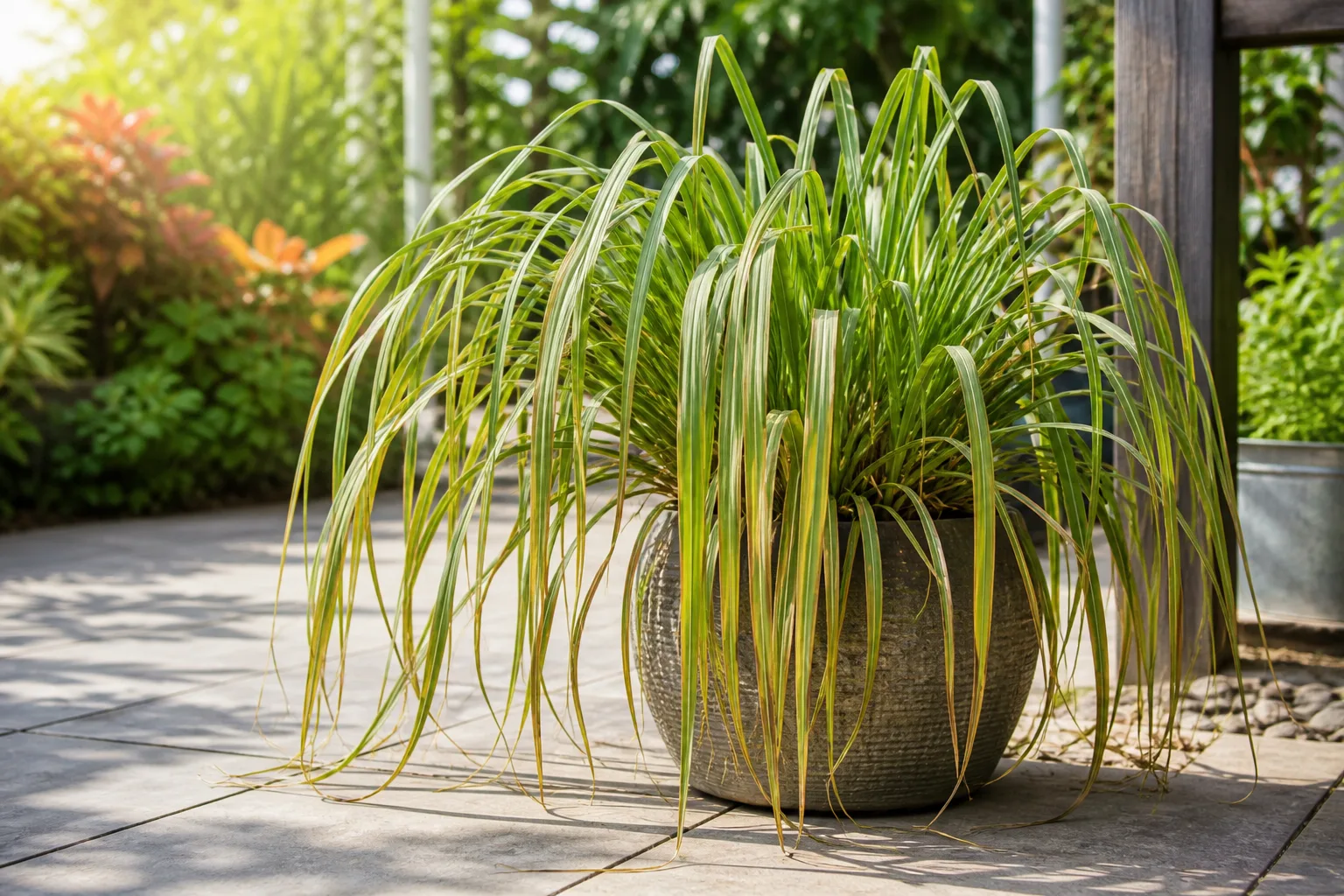
Drooping Leaves on Lemongrass: Causes, Checks & Fixes
This guide covers drooping leaves on Lemongrass. See also the general Drooping Leaves guide, watering, and light pages for this plant.
Drooping Leaves on Lemongrass: Causes, Checks & Fixes
Quick answer
Drooping leaves on lemongrass (Cymbopogon citratus) usually mean lost blade turgidity-the long leaves hang with less stiffness because roots are not keeping pace with moisture loss. That can come from too-dry soil, afternoon heat on a thirsty clump, or failing roots in wet mix that cannot take up water even when the pot feels heavy.
First step: probe soil 3–4 cm deep and lift the pot before you water or repot. A light container with dry mix needs water; a heavy pot with damp deep soil needs a pause and probably a root check-not another drink because the blades look sad.
This page focuses on blade posture and turgidity-how the arching leaves hang. If you need the broader wet-vs-dry uptake failure walkthrough, see water stress on lemongrass first; use wilting on lemongrass when the whole clump goes limp regardless of blade curve.
Normal arch vs limp collapse
Healthy lemongrass is a tall tropical grass-mature blades can reach about three feet and naturally arch outward from the clump. That graceful curve is normal. The problem is limp collapse: blades folding along the midrib, hanging flat instead of springing back, or softening at the stalk base while the pot tells you something is off.
| Sign | Normal arch (healthy) | Limp collapse (problem) |
|---|---|---|
| Blade curve | Smooth outward arc; tissue feels stiff | Folds along midrib; hangs flat or twists |
| Stalk base | Firm, pale green, no odor | Soft, yellowing, or sour smell on wet soil |
| Pot weight | Matches your usual watering rhythm | Unusually light (dry) or heavy (wet) |
| Time pattern | Steady day to day | Worsens through the day, or all-day limp on wet mix |
| After watering | No change needed | Perks within hours if drought; stays limp on wet rot |
If bases stay firm and the pot cycles normally, you may be seeing healthy arch-not a crisis. Run the table before you change care.
Drought vs wet-soil droop at a glance
Most droop cases split into two branches. Use pot weight and a deep probe-not blade appearance alone.
| Check | Drought droop | Wet-root / rot droop |
|---|---|---|
| Pot weight | Light | Heavy |
| Soil 3–4 cm down | Dry | Wet or constantly damp |
| Blade tips | Brown, crispy edges common | May stay green while bases yellow |
| Stalk bases | Firm | Soft, mushy, or hollow |
| Smell | Neutral | Sour or swampy |
| Time of day | Worse in afternoon heat; perks after soak | All-day limp despite wet soil |
| First action | Deep soak, empty saucer | Stop watering; inspect roots |
Lemongrass needs regular moisture in warm active growth but should not sit in waterlogged soil. Long blades lose turgor fast when either extreme wins.
Why lemongrass blades droop
Lemongrass evolved in tropical climates with regular rainfall and humidity. Container clumps in Lemongrass light guide transpire heavily through long, narrow blades with large surface area-much faster than short herb leaves in the same pot size. Miss one watering window in heat and outer blades fold first.
The opposite failure is equally common indoors. Growth slows when temperatures cool and plants move inside, yet summer watering continues. Roots sit wet in cool soil, suffocate, and rot. Blades droop while mix stays damp-a paradoxical pattern shared with overwatered houseplants that wilt on wet soil.
Lemongrass-specific triggers include:
- Small pots in full sun - Fibrous roots can dry the mix in one hot afternoon.
- Root-bound clumps - Dense roots block drainage or flash dry twice daily; see root-bound lemongrass.
- Heavy harvest - Cutting many outer blades reduces photosynthetic area but should not collapse the clump unless water stress already existed.
- Indoor winter carryover - Reduced growth with unchanged watering invites rot droop.
- Afternoon heat on dry soil - Temporary blade sag that recovers overnight once rehydrated; overlaps with heat stress on lemongrass.
What drooping leaves look like on lemongrass
Drought droop
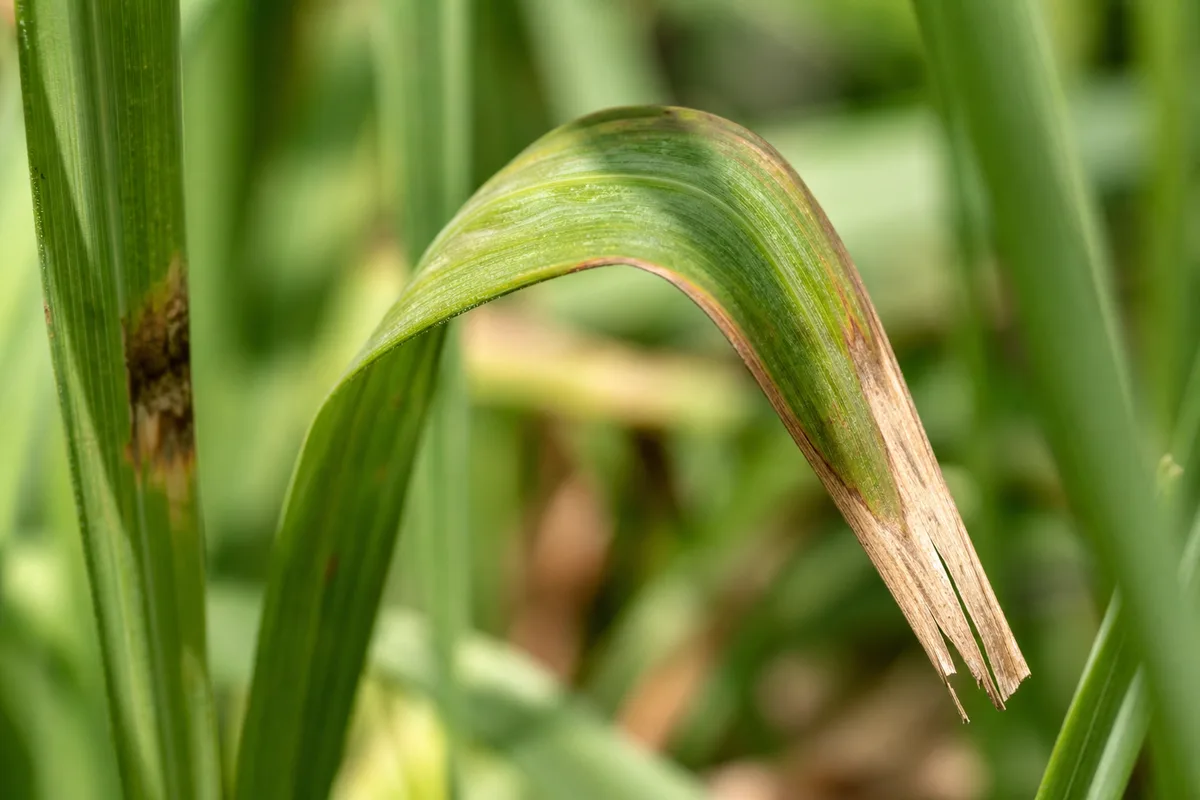
Drooping Leaves symptoms on Lemongrass - compare with healthy tissue on the same plant.
- Outer blades hang downward or fold along the midrib
- Tips and margins turn tan and crispy while bases may still look green
- Pot feels light; mix is dry 3–4 cm down and often deeper
- Stalks feel thinner; new shoots stall until water returns
Overwatering and root-failure droop
- Yellowing starts at oldest stalk bases and moves upward
- Whole clump droops despite wet or heavy soil
- Sour or swampy smell from the pot
- Stalk bases soften when squeezed
- Outer leaves brown while inner shoots may still look pale green
For step-by-step rot recovery, see root rot on lemongrass and overwatering on lemongrass.
Heat afternoon droop
On hot, dry afternoons, blades may sag even when morning soil was adequate. If the pot is only slightly dry and bases stay firm, one deep evening soak often restores arch by the next morning. This is posture stress from rapid transpiration, not necessarily crown failure.
Normal graceful arch (not a problem)
Stiff blades curving outward from a firm crown, with steady new tillers and predictable pot dry-down, are healthy. No fix is needed-just avoid confusing natural arch with limp collapse from the table above.
How to confirm the cause
Work through these checks in order:
- Pot weight - Lift the container: light means dry, heavy means moist. Terracotta gives a clearer signal than plastic.
- Deep probe - Finger or skewer 3–4 cm down. Surface dust can lie; roots live deeper.
- Arch vs collapse - Stiff curve with firm bases = likely normal. Midrib fold with limp tissue = turgidity loss.
- Time of day - Afternoon droop on dry soil in heat may be temporary; all-day limp on wet soil points to roots.
- Smell and drainage - Sour odor, full saucers, or blocked holes support rot, not thirst.
- Season and placement - Active outdoor summer growth drinks often; indoor winter rest drinks rarely.
- Root spot-check - If droop and moisture disagree, slide the clump out. White to tan firm roots are healthy; brown mush confirms excess water. Do not unpot unnecessarily on a clearly dry, light pot.
If the pot is light, mix is dry throughout, and stalk bases are firm, drought droop is the leading diagnosis. If wilt persists on saturated mix after drainage correction, treat as root failure-not underwatering.
First fix for lemongrass
Probe soil 3–4 cm deep and weigh the pot-then match one action to what you find.
That single step prevents the most expensive mistake: pouring water onto rotting roots because blades drooped. Do not fertilize, heavily prune, or repot on day one unless roots are clearly mushy.
If the mix is dry and the pot is light
- Water deeply until excess runs from drain holes-moisten the full root zone, not just the surface.
- Empty the saucer so the clump does not sit in runoff.
- Wait 24 hours before stacking other changes. Blades often perk within hours if crowns stayed firm.
If the mix is wet and stalk bases are soft or sour
- Stop watering immediately.
- Unpot, rinse roots, and trim brown mush back to firm tissue with clean scissors.
- Repot into fresh, organically rich, well-drained mix with perlite or coarse sand-not dense peat alone.
- Hold water several days, then resume lightly once. See root rot on lemongrass for full recovery steps.
If bases are firm and arch looks normal
No watering change needed. Monitor pot weight over the next week to learn your clump’s normal dry-down rhythm-see lemongrass watering.
Recovery timeline
Drought droop - Visible perk-up within hours to one day after a proper soak if tissue is not already desiccated. Crispy tips will not green up; watch for new shoots.
Heat afternoon droop - Often resolves overnight once soil is evenly moist-not saturated.
Rot-related droop - One to three weeks to see firm new tillers after root trim and repot. Yellowed outer leaves stay yellow; judge by crown firmness and fresh base shoots.
When improvement stalls - If the clump stays limp on wet mix after a week of dry-down, rot may have reached the crown. Soft spreading bases rarely recover fully; divide any firm side shoots before the whole clump fails.
Causes to rule out
- Spider mites - Stippling and fine webbing at blade bases, often on indoor winter clumps under dry heat. Mites do not cause sour soil or mushy bases; see spider mites on lemongrass.
- Transplant shock - Brief droop after division with firm roots intact; should ease within days if moisture stays even.
- Simple underwatering or overwatering - If your only symptom is moisture mismatch without arch confusion, underwatering and overwatering pages go deeper on each branch.
- Wilting without arch nuance - Whole-clump limp on wet soil is uptake failure first; see wilting on lemongrass.
What not to do
- Do not water every droop without checking soil-wet rot worsens with more water.
- Do not confuse healthy arch with limp collapse and overcorrect with extra drinks.
- Do not harvest the entire clump during recovery; leave green tissue to photosynthesize.
- Do not mist instead of watering when the root zone is dry-foliar moisture does not rehydrate roots.
- Do not repot into a much larger container to “fix” droop-extra wet soil around a small root ball prolongs saturation.
How to prevent drooping leaves on lemongrass
- Check before you pour - Finger or skewer 3–4 cm deep plus pot weight every time.
- Match season to rhythm - Medium water in full sun during active months; cut frequency sharply when plants move indoors for winter.
- Use well-drained mix and open saucers - Empty trays so retained water does not waterlog soil.
- Repot before root-bound cycles - Vigorous clumps that dry unpredictably in crowded roots alternate between flood and drought; see root-bound lemongrass.
- Harvest thoughtfully - Regular outer cuts are fine; avoid stripping the clump when it is already stressed.
When to worry
Treat as urgent when:
- Stalk bases turn mushy on saturated soil-the crown can fail within days.
- The whole clump collapses with bone-dry roots in a heat wave-rehydrate immediately.
- Droop persists more than 48 hours after a deep soak on dry mix-roots may be damaged beyond simple drought.
- More than half the crown feels soft on inspection-salvage firm divisions if any exist.
- Droop repeats every few days despite corrected watering-inspect for rot or root-bound cycling.
Not urgent: stiff arching blades on a firm crown with normal pot rhythm; mild afternoon sag on moist soil that recovers by evening; a few crispy tips on an otherwise green clump after one missed drink.
Related lemongrass problems
Use this page when blade posture and turgidity are the main question-normal arch vs limp fold. Drill down by symptom:
- Water stress on lemongrass - canonical hub for too-dry vs too-wet moisture failure
- Wilting on lemongrass - whole-clump uptake failure when limp blades dominate
- Underwatering on lemongrass - drought branch only
- Overwatering on lemongrass - excess moisture branch only
- Root rot on lemongrass - sour soil, mushy bases, repot protocol
- Heat stress on lemongrass - afternoon sag and sun exposure
- Root-bound lemongrass - unpredictable dry-down cycles
- Spider mites on lemongrass - stippling and webbing lookalike
- Lemongrass watering - routine moisture rhythm
- Lemongrass overview - species context and seasonal care
When to use this page vs other Lemongrass guides
- Lemongrass watering guide - Use for routine moisture checks before assuming drooping leaves is the main issue.
- Lemongrass problems hub - Browse all 52 common issues on this species.
- Underwatering on Lemongrass - Different entry point when symptoms overlap with drooping leaves.
- Overwatering on Lemongrass - Different entry point when symptoms overlap with drooping leaves.
- Root Rot on Lemongrass - Different entry point when symptoms overlap with drooping leaves.