Water Stress on Lemongrass: Causes, Checks & Fixes
Quick answer
Water stress on lemongrass shows as wilt, crispy tips, or yellow stalk bases depending on too little or too much moisture. First step: probe soil 3–4 cm deep and lift the pot-if wilt persists on wet mix, inspect roots before watering again.
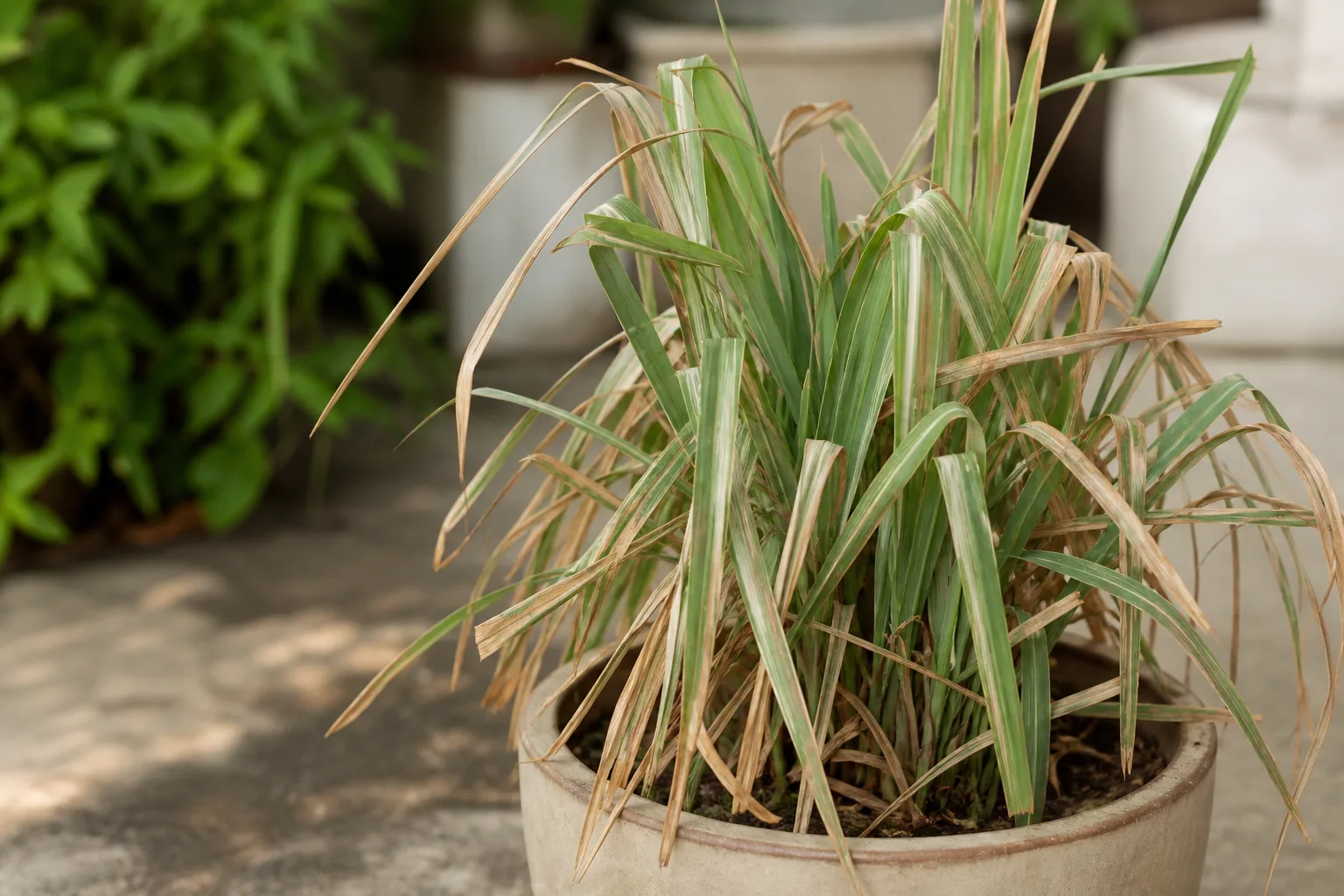
Water Stress on Lemongrass: Causes, Checks & Fixes
This guide covers water stress on Lemongrass. See also the general Water Stress guide, watering, and light pages for this plant.
Water Stress on Lemongrass: Causes, Checks & Fixes
Quick answer
Lemongrass (Cymbopogon citratus) evolved in tropical climates with regular rainfall and humid conditions-so water stress on Lemongrass overview cuts both ways. Too little moisture in Lemongrass light guide makes long blades wilt and tips go crispy fast. Too much moisture-especially when growth slows indoors-rots fibrous roots and produces paradoxical wilt on wet soil.
First step: probe soil 3–4 cm deep and lift the pot before you change anything. A light container with dry mix needs water; a heavy pot with damp deep soil needs a pause and probably a root check-not another drink because the leaves look sad.
Why lemongrass gets water stress
Lemongrass is a fast-growing tropical grass, not a drought-tolerant succulent. UF/IFAS notes that container plants should be watered regularly so pots do not dry out during active growth. In hot full sun, a mature clump can pull moisture from a small pot in a single hot afternoon. Miss a watering window and the whole arching leaf mass collapses.
The flip side is equally common. Lemongrass grows rapidly when supplied with sufficient water, fertilizer, sunlight, and humidity-but that demand drops sharply when temperatures cool and plants move indoors. Many growers keep a summer daily rhythm into fall. Cool soil plus reduced light means roots sit wet for days. Waterlogged soils should be avoided; fibrous grass roots suffocate and rot.
Lemongrass-specific triggers include:
- Small pots in full sun - Shallow fibrous roots dry the mix faster than calendar watering expects.
- Root-bound clumps - A dense root pancake blocks drainage; the surface looks dry while the core stays soggy-or the whole pot flashes dry twice a day.
- Indoor winter carryover - Growth slows below about 60°F, yet summer watering continues. Constantly wet soil encourages root rots, especially during winter.
- Heavy peat mix without grit - Lemongrass wants organically rich loam with good drainage, not a sponge that never breathes.
- Saucers holding runoff - Standing water keeps the root zone saturated after you thought you watered normally.
What water stress looks like on lemongrass
Drought stress (underwatering on Lemongrass):
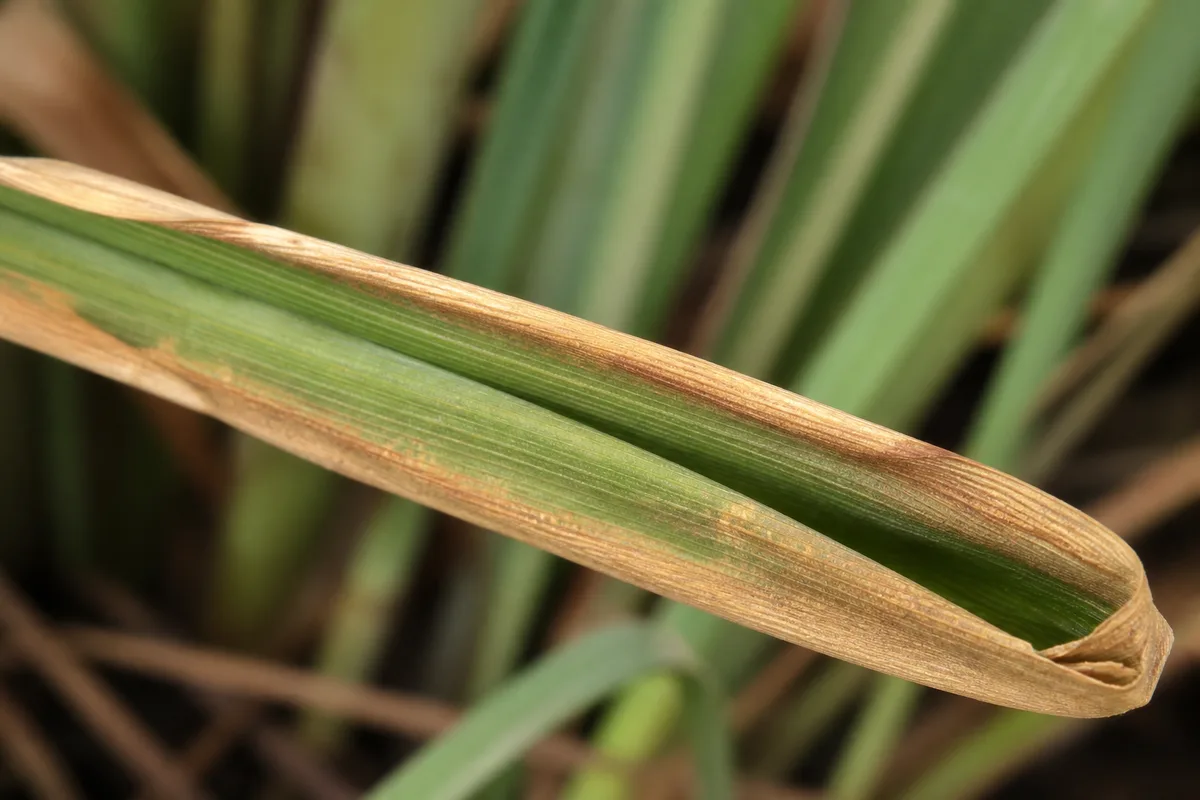
Water Stress symptoms on Lemongrass - compare with healthy tissue on the same plant.
- Long strap leaves wilt and fold along the midrib, often starting at outer blades
- Leaf tips and margins turn tan and crispy while bases may still look green
- Stalks feel thin; new shoots stall
- Pot feels light; mix is dry 3–4 cm down and often deeper
- Recovery is rapid after a thorough soak if crowns stay firm
Excess moisture (overwatering on Lemongrass / early root decline):
- Yellowing starts at the oldest stalk bases, working upward
- Whole clump wilts despite wet or heavy soil-a key confusion point
- Sour or swampy smell from the pot
- Stalk bases soften or feel hollow when squeezed
- White mold or fungus gnats on the soil surface
- Outer leaves brown while inner new shoots may still look pale green
Healthy lemongrass in full sun with medium, well-drained moisture holds stiff arching blades with firm pale-green bases and steady new tillers from the crown.
How to confirm the cause
Work through these checks in order:
- Pot weight - Lift the container: light means dry, heavy means moist. Lemongrass in terracotta gives a clearer signal than plastic.
- Deep probe - Stick a finger or skewer 3–4 cm down. Surface dust can lie; roots live deeper.
- Wilt versus moisture match - Wilt + dry deep soil = drought. Wilt + wet deep soil = root damage or rot, not thirst.
- Season and placement - Active outdoor summer growth drinks often. Indoor winter rest drinks rarely. Which mode is your plant in?
- Drainage audit - Holes open? Saucer empty within 30 minutes? Mix smell sour?
- Root spot-check - If wilt and moisture disagree, slide the clump out. Healthy lemongrass roots are white to tan and firm. Brown mush that pulls away confirms rot from excess water.
- Crown firmness - Press the base of several stalks. Firm green tissue can recover; soft brown crowns may not.
If the pot is light, mix is dry throughout, and stalk bases are firm, underwatering is the leading diagnosis. Do not unpot unnecessarily-but do not assume all wilt means drought.
First fix for lemongrass
Probe soil 3–4 cm deep and weigh the pot-then match your next action to what you find.
That single diagnostic step prevents the most expensive mistake on lemongrass: pouring water onto rotting roots because the leaves drooped. If the mix is dry and the pot is light, proceed to a deep soak (see recovery below). If the mix is wet and the pot is heavy, skip watering and inspect roots instead.
Do not fertilize, repot, or prune heavily on day one. Confirm which side of the stress line you are on first.
Step-by-step recovery
If the mix is dry and the pot is light (underwatering)
- Water deeply until excess runs from drain holes - Moisten the full root zone, not just the surface. Container plants in hot weather may need daily attention when sun and wind pull moisture fast.
- Empty the saucer - Never let the clump sit in collected runoff.
- Wait and watch - Blades often perk within hours if crowns stayed firm. Crispy tips will not green up; judge by new growth.
- Resume rhythm - Water again when the top 3–4 cm dries during active growth. In cool months, stretch intervals to every 5–7 days or longer indoors.
If the mix is wet and stalk bases are soft (overwatering / rot)
- Stop watering immediately - More water accelerates crown failure.
- Unpot and rinse roots - Knock away saturated mix. Cut brown mushy roots back to firm tissue with clean scissors.
- Repot into fresh, airy mix - Use rich but well-drained soil in full sun culture-potting mix with compost and perlite or coarse sand, not dense peat alone.
- Trim dead foliage - Remove yellowed outer stalks that pull away easily; leave any firm green shoots.
- Hold water - Let the repotted clump settle several days, then water lightly once. Most container plants prefer moist, not soggy, soil going forward.
- Bright light, no fertilizer - Place in the brightest window or return outdoors when warm. Skip feed until new tillers appear.
If you caught it early (slightly off rhythm, firm roots)
Adjust frequency only. Underwatered clumps need one deep drink and a tighter watch. Overwatered clumps need longer dry windows and saucer discipline-no repot unless roots already smell sour.
Recovery timeline
Drought recovery - Visible perk-up within hours to one day after a proper soak if tissue is not already desiccated. New shoots in one to two weeks during warm growth.
Overwatering recovery - Two to three weeks to see firm new tillers after root trim and repot. Yellowed outer leaves stay yellow; judge by crown firmness and fresh base shoots, not old blade color.
When improvement stalls - If the clump stays wilted on wet mix after a week of dry-down, rot has likely reached the crown. Soft spreading bases rarely recover fully; divide any firm side shoots before the whole clump fails.
Lookalike symptoms to rule out
Cold damage - Lemongrass is frost-tender. Exposure below about 40°F (4°C) browns blades and weakens roots that then rot when watered heavily indoors. Cold injury looks like water stress but follows a temperature drop, not a missed watering.
Heat and sun scorch - Intense afternoon sun can bleach or brown leaf tips on thin-leaved clumps. Soil moisture may be adequate; check whether damage is on the sun-facing side only.
Low humidity indoors - Crispy tips with evenly moist soil and firm roots often mean dry air, not drought. Lemongrass prefers humid conditions; misting leaves does not replace fixing soil moisture, but a humidifier near a winter windowsill can reduce tip burn.
Root-bound stress - A clump bursting from its pot dries out in hours and wilts daily despite your best effort-or stays wet in the center. Very rapid drying after every water points to Lemongrass repotting guide need, not simple underwatering.
Spider mites - Indoor winter clumps under dry heat may show stippling and fine webbing. Mites do not cause sour soil or mushy bases; confirm with a leaf tap test over white paper.
Mistakes to avoid
Do not water every wilt automatically-lemongrass wilts on wet roots too.
Do not keep a summer daily schedule when the plant moves indoors for winter. Growth and water use drop; rot risk rises.
Do not let pots sit in full saucers. Empty trays so retained water does not waterlog soil.
Do not repot into a much larger container to “fix” watering-extra wet soil around a small root ball prolongs saturation.
Do not fertilize a stressed clump hoping to push growth. Feed only after Lemongrass watering guide stabilizes and new shoots appear in warm months.
Do not assume lemongrass is drought-tolerant because it is a grass. It should never be allowed to dry out completely during active growth in containers.
How to prevent water stress next time
- Check before you pour - Finger or skewer 3–4 cm deep, plus pot weight, every time.
- Match season to rhythm - Every 1–3 days in hot outdoor growth; every 5–7 days or longer in cool months. Indoor winter pots may go 10–14 days between drinks if mix stays barely moist.
- Use the right mix and pot - Rich, well-drained blend; drain holes mandatory. Repot every 1–2 years before the clump pancakes the pot.
- Full sun outdoors when warm - Strong light drives predictable drying. Weak indoor light slows uptake-reduce water accordingly.
- Harvest outer stalks - Regular cutting of older stems improves airflow at the crown and lets you see base color early.
- Move indoors before frost - Transition watering down when nights cool, not after the plant already sits in a dim room on wet mix.
When to worry
Treat as urgent when:
- A heat-wave clump collapses with bone-dry roots and softening crown tissue-rehydrate immediately.
- Stalk bases turn mushy on saturated soil-the crown can fail within days.
- Wilt persists more than 48 hours after a deep soak on dry mix-roots may be damaged beyond simple drought.
- More than half the crown feels soft on inspection-salvage firm divisions if any exist.
Not urgent: a few crispy tips on an otherwise firm, green clump; slow winter yellowing of outer leaves while the crown stays hard and mix cycles normally; temporary wilt at midday in extreme heat that recovers by evening on moist soil.
Conclusion
Water stress on lemongrass is almost always a timing problem-too much or too little water for the season and the pot, not a mysterious grass disease. Weigh the container, probe deep, inspect roots when wilt and moisture disagree, and adjust one variable at a time. Get that diagnostic path right and this fast-growing herb recovers quickly; skip it and the same drooping leaves will send you in the wrong direction twice.
When to use this page vs other Lemongrass guides
- Lemongrass watering guide - Use for routine moisture checks before assuming water stress is the main issue.
- Lemongrass problems hub - Browse all 52 common issues on this species.