Best Soil for Lemongrass: Rich, Well-Draining Mix
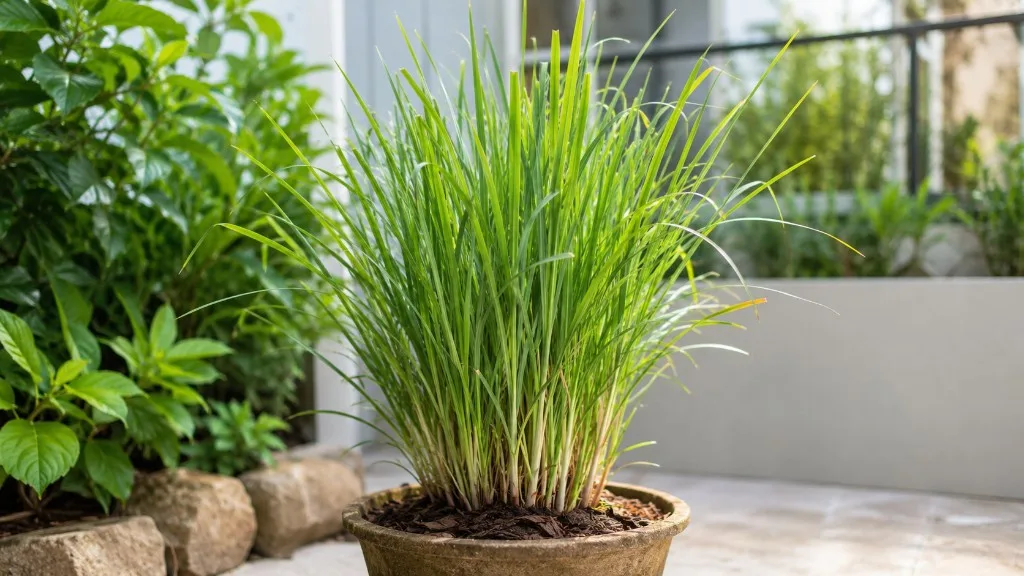
Best Soil for Lemongrass: Rich, Well-Draining Mix
Best Soil for Lemongrass: Rich, Well-Draining Mix
Lemongrass soil sits at an awkward intersection that confuses a lot of growers. Cymbopogon citratus - the West Indian lemongrass most kitchens know - wants rich, fertile mix with plenty of organic matter to fuel its fast grass growth. It also demands free drainage because its roots rot quickly in stagnant, waterlogged soil. Those two requirements sound contradictory until you understand what lemongrass actually does in the root zone: it pulls water steadily from moist but aerated soil while consuming nitrogen and organic nutrients at a pace closer to a hungry vegetable than a drought-tolerant succulent.
The practical target is a moisture-retaining but well-draining blend - rich potting mix amended with perlite and compost or worm castings, sitting in a pot with a drainage hole, at a pH between 6.0 and 7.5. A workable starting recipe for containers is roughly 60% quality potting mix, 20% perlite or pumice, and 20% compost or worm castings. That gives roots both food and air. Water should move through the mix within seconds of a full watering, but the root zone should stay evenly damp between drinks - not bone dry for days, and never soggy for hours.
This guide covers what lemongrass roots need, exact mix recipes for pots and garden beds, pH and drainage testing, seasonal soil care, when to refresh the mix, and the mistakes that turn a vigorous clump into yellow, mushy stalks at the base.
Why Soil Matters More Than You Think for Lemongrass
Lemongrass is not a set-it-and-forget-it herb. In warm, sunny conditions it can reach 90–180 cm tall with a clump spread of 60–90 cm, producing harvestable stalks within a single growing season. That speed comes from an aggressive root system that colonizes whatever medium you give it - and punishes you quickly when that medium fails. Utah State University Extension describes lemongrass as preferring well-drained, moist, rich loam soil with high organic content, noting it will tolerate poorer soils only if moisture and drainage are still adequate (USU Extension - Lemongrass in the Garden).
Most lemongrass problems that look like watering errors start in the soil. A mix that compacts after six months holds water too long at the bottom while the surface looks dry - so you water again and drown the lower roots. A mix that drains too fast and carries no organic matter leaves the plant pale, thin-stalked, and hungry despite faithful watering. A pot with no drainage hole turns even a good blend into a swamp after one enthusiastic soak. Soil is the system that decides how much air, moisture, and recovery time the roots get after every watering, and lemongrass is unforgiving when that system is wrong.
What Lemongrass Roots Need From the Mix
Lemongrass belongs to Poaceae, the grass family. Grass roots behave differently from the thick, storage-oriented roots of succulents or the fine, delicate roots of many tropical foliage plants. Lemongrass forms a dense, fibrous root mass that spreads outward and downward from a bulbous crown at the base of each stalk cluster. Those roots need three things simultaneously: steady moisture, oxygen, and accessible nutrients.
Steady moisture does not mean wet - the root zone should stay moist-but-not-saturated through the active season. Lemongrass evolved in tropical Asia where monsoon rains deliver regular water but sandy-loam soils drain quickly between storms. Compacted peat, heavy clay, or a pot without drainage drives out the oxygen grass roots need; perlite, pumice, or composted bark keeps air channels open. Organic matter - compost, worm castings, or aged manure - supplies slow-release nitrogen lemongrass uses to push thick stalks. It outgrows sterile mix within weeks, so rich soil at planting reduces how aggressively you need to fertilize later.
The Ideal Lemongrass Soil Profile: Rich and Well-Draining
The best soil for lemongrass combines fertility with structure. Think of it as a loam-like profile adapted for containers or amended garden beds: plenty of organic matter for nutrition and moisture retention, enough coarse material for drainage and aeration, and a texture that does not collapse into a brick after repeated watering.
Rich means meaningful organic content - compost, worm castings, or well-rotted manure at planting - not just peat labeled “potting soil” with a starter charge that depletes in weeks. Well-draining means water exits a container within 30 to 60 seconds after a full watering, with no surface pooling. Utah State Extension explicitly warns that waterlogged soils should be avoided (USU Extension - Lemongrass in the Garden). The Old Farmer’s Almanac describes the moisture goal as moist but not soggy (Almanac - Lemongrass) - achievable when the mix holds water in internal pores while excess drains away. Pure sand leaches nutrients; pure peat or compost holds too much water in small pots.
The ideal profile is a crumbly, earthy-smelling mix that holds together lightly when squeezed but breaks apart easily, with the top 3–4 cm drying within one to three days in active summer growth.
Best Soil Mix Recipes for Lemongrass
There is no single magic formula, but several reliable recipes share the same logic: base potting medium + drainage amendment + organic fertility. Adjust ratios based on your climate, pot size, and how fast the mix dries in your setup.
Container Mix for Pots and Planters
For indoor or patio containers, never use straight garden soil. Garden soil compacts in pots, loses air pores, becomes waterlogged after watering and brick-hard when dry, and can introduce pathogens that thrive in the warm, confined container environment. Use a quality bagged potting mix as your base and amend it.
Recipe A - General-purpose container mix:
- 60% quality peat- or coir-based potting mix
- 20% perlite, pumice, or coarse horticultural sand
- 20% finished compost or worm castings
Recipe B - Equal-parts blend (recommended by multiple horticultural sources including Gardener’s Path for indoor lemongrass):
- 33% potting soil
- 33% perlite
- 33% compost
Recipe C - Coir-forward mix (good in hot, dry climates where peat dries out fast):
- 40% coconut coir
- 30% compost or worm castings
- 20% perlite or pumice
- 10% composted pine bark fines
Mix ingredients thoroughly in a tub before filling the pot. Break up any clumps in the compost. Fill the container leaving 2–3 cm below the rim for watering space. Plant lemongrass divisions or rooted grocery stalks at the same depth they were previously growing - do not bury the crown deeper than it can tolerate.
For a newly rooted stalk from water propagation, use Recipe A or B in a 15–20 cm pot initially. Lemongrass fills containers quickly; plan to upsize or divide within a season if growth is strong.
Raised Bed and In-Ground Amendments
In the garden, lemongrass performs best in loamy soil amended with organic matter. If your native soil is sandy, add compost to improve moisture and nutrient retention. If it is heavy clay, amend aggressively with compost and coarse organic material, or build raised beds filled with a better-draining blend - clay that holds water for more than four hours after a percolation test is a problem to solve before planting.
In-ground amendment approach:
- Spread 5–8 cm of finished compost over the planting area
- Work it into the top 15–20 cm of soil
- For clay, also incorporate coarse composted bark or grit to open structure
- Plant divisions 45–60 cm apart to allow clump spread
- Mulch with 3–5 cm of straw or shredded bark to retain moisture without smothering crowns
Utah State Extension recommends determining fertilizer needs with a soil test before planting and working any needed amendments into the top 15 cm (USU Extension - Lemongrass in the Garden). For most home garden soils in the pH 6.0–7.5 range, compost amendment alone is sufficient at planting time.
Raised beds should be filled with a mix similar to the container recipes above - roughly 40% topsoil, 30% compost, 30% aeration material (perlite, pumice, or coarse sand). The raised structure itself improves drainage in wet climates.
pH for Lemongrass: What Range Actually Works
Lemongrass is flexible on pH compared to acid-loving blueberries or alkaline-loving lavender. The Old Farmer’s Almanac targets 6.0 to 7.0 and adds that some variance is acceptable. For practical home growing, aim for 6.0 to 7.5 - the range most quality potting mixes and compost-amended garden soils already provide.
For practical home growing, aim for 6.0 to 7.5. Most quality potting mixes and compost-amended garden soils fall in this range without adjustment. Amend only if a soil test shows readings outside the tolerated range and persistent growth problems remain after fixing drainage. Drainage and organic content matter more than pH fine-tuning for most growers. Hard tap water can gradually raise pH and leave mineral deposits - flush the soil if white crust builds on the pot rim despite conservative feeding.
Drainage Speed and Moisture Retention Balance
Drainage speed is the single most important soil property for lemongrass survival. The plant loves water - the Almanac notes it loves water and humidity - but roots rot when air is excluded. Your job is to build a mix that stays consistently moist in the root zone while never staying saturated for hours after watering.
After a full watering, run a quick drainage check: water should exit the drainage hole within 30 to 60 seconds, the surface should not hold a visible puddle for more than a minute or two, and the pot should feel heavy but not sloshing. Within 24 hours, the top 3–4 cm should be approaching dry while the deeper mix remains damp - that is the zone lemongrass prefers for its next drink.
If water sits on the surface and runs down the inside wall of the pot without wetting the root ball, you have hydrophobic mix - common in peat-based soils that dried out completely. Submerge the entire pot in a tub of water for 30 to 60 minutes to rehydrate from the bottom up, then maintain more consistent moisture going forward. Letting lemongrass pots dry to the point of hydrophobicity stresses the plant and makes every subsequent watering less effective.
If the pot stays wet for three or more days after a single thorough watering in warm active growth, the mix drains too slowly. Add perlite or repot into a smaller volume of better-aerated blend. An oversized pot holding wet mix around a small root ball is one of the most common hidden causes of crown rot.
The balance shifts seasonally. In hot summer growth, lemongrass may need watering every one to three days, and the mix should retain enough moisture that roots never hit bone-dry between drinks. In cooler months with slower growth, the same mix dries more slowly - that is normal, not a sign you need heavier soil. Adjust watering, not the fundamental drainage structure, unless the mix has clearly broken down.
Choosing the Right Pot and Drainage Setup
Soil performance depends heavily on the container it sits in. Even a perfect mix fails in a pot with no exit for water.
A drainage hole is non-negotiable for long-term lemongrass care in containers. Without it, no amount of perlite in the mix prevents water accumulation at the bottom. Decorative cachepots are fine only if you lift the inner pot out to drain after every watering, or if you use the cachepot purely as a saucer that you empty within 30 minutes.
Pot Size, Depth, and Material
Choose a pot one size larger than the root ball when Lemongrass repotting guide - typically 20–30 cm diameter for an established single clump, or larger if you want multiple divisions together. Oversized pots hold excess wet mix around roots that cannot use it, creating the slow-drain conditions lemongrass hates. Undersized pots dry too fast and restrict the clump spread that drives harvest volume.
Depth matters for grasses. Lemongrass roots run deeper than many herbs. A pot at least 25–30 cm deep gives roots room to anchor and access moisture from lower in the profile without constant surface watering. Shallow bowls look attractive but create drought stress in summer.
Terracotta breathes and dries evenly; plastic or glazed ceramic retains moisture longer; fabric grow bags offer excellent aeration outdoors. Match pot material to your drying conditions - the soil recipe stays, but the container modulates how fast the mix dries.
How to Test Your Lemongrass Soil Before Planting
Testing before planting costs ten minutes and prevents months of troubleshooting. Run these checks on any new mix or garden bed:
Squeeze test. Grab a handful of moistened mix and squeeze firmly. It should hold together briefly, then crumble apart when you poke it. If it forms a tight mud ball, add perlite or coarse sand. If it falls apart instantly and feels gritty with no cohesion, add compost or potting base for moisture retention.
Drainage test (containers). Fill a pot with your mix, water until drainage runs clear, then water again fully. Time how long water exits the bottom and how long the surface stays wet. Adjust before planting if drainage exceeds two minutes or the surface pools.
Percolation test (in-ground). Dig a hole 30 cm deep and wide, fill with water, let it drain once, fill again, and time the second drainage. Under one hour is good. Over four hours indicates clay or compaction problems - amend or use raised beds.
Smell test. Fresh, healthy mix smells earthy. Sour, swampy, or ammonia-sharp odors signal anaerobic breakdown or unfinished compost. Do not plant lemongrass in mix that smells wrong; roots will struggle from day one.
pH test (optional but useful). A simple meter or strip test on moist mix confirms you are in the 6.0–7.5 range. Skip this step if you are using fresh commercial potting mix with compost amendment in a typical home setup - but run it if you are recycling old mix or working with unknown garden soil.
Seasonal Soil Care Through the Growing Year
Lemongrass soil is not a set-once decision. The mix changes as organic matter decomposes, roots fill the pot, salts accumulate from fertilizer and tap water, and seasonal growth shifts water demand.
Spring: Refresh or repot if the plant overwintered in the same mix for more than a year. Top-dress outdoor clumps with 2–3 cm of compost, avoiding buried crowns. Summer: Monitor drainage weekly - fast growth compresses peat-based mixes. If water runs straight through without soaking in, repot or top-dress with compost. Fall: Reduce watering as growth slows; do not change mix structure. Winter: Indoor overwintering slows water use - the same well-draining mix stays wet longer, so adjust watering rather than drainage. Avoid repotting unless root rot on Lemongrass is active.
When to Refresh or Repot Lemongrass Soil
Plan to refresh container mix every one to two years, or sooner if you see clear signals. Lemongrass is a fast grower that fills pots quickly, so many growers repot or divide annually at the start of the growing season - a practical rhythm that keeps soil fresh and clump size manageable.
Repot or fully refresh when:
- Roots circle the drainage holes or push up against the pot wall
- Water runs straight through the pot without absorbing - channelized, depleted mix
- The mix compacts and stays wet for days despite reduced watering
- White salt crust appears on the soil surface or pot rim
- The plant dries out within hours of watering - root-bound, not enough soil volume
- Sour smell from the root zone, or yellowing stalks at the base despite corrected watering
- You are dividing the clump for propagation or overwintering storage anyway
The best timing is early spring as new growth starts, before peak summer harvest demand. Avoid repotting a heat-stressed plant in midsummer unless the roots are clearly rotting in failing mix. After repotting, hold off on fertilizer for two to three weeks while roots settle into fresh medium.
When refreshing without upsizing, remove the plant, shake or rinse old mix from roots, trim any black or mushy root sections, and replant in fresh blend at the same depth. Divide oversized clumps at the same time - each division with roots and several stalks replants easily into its own pot of fresh mix.
Signs Your Lemongrass Soil Is Wrong
Soil problems show up in predictable patterns if you know what to look for. Check the root zone before blaming pests or light.
Yellowing stalks at the base with soft, dark tissue at soil level often indicate overwatering on Lemongrass in poorly draining mix or active root rot. The upper leaves may still look green while the crown fails - a classic sign that the lower root zone is anaerobic.
Thin, pale new stalks despite adequate light and watering point to nutrient-poor or exhausted mix. Lemongrass should produce thick, firm stalks with good color in active growth. Wispy new growth in an old pot usually means the organic matter is spent.
Brown leaf tips with white crust on the soil surface signal salt accumulation from hard water, over-fertilizing, or both - common in containers that have not been flushed or refreshed in over a year.
Wilting in wet soil means roots are damaged and cannot take up water - often from prior overwatering in slow-draining mix, not from current drought. Pull the plant and inspect roots; healthy lemongrass roots are white to cream-colored and firm.
Slow growth in summer with a pot that dries in hours suggests under-potting or mix that drains too fast without enough organic matter to hold moisture and nutrients.
Musty or sour smell from the pot indicates anaerobic soil - breakdown without oxygen. Refresh immediately and trim affected roots.
If several signs appear together, treat soil as the primary suspect before changing light, fertilizer, and watering all at once. Fixing one variable at a time makes diagnosis possible; changing everything simultaneously obscures what actually worked.
Fixing Common Lemongrass Soil Problems
Most soil failures are recoverable if you act before the crown rots completely. Match the fix to the problem.
Slow drainage / early root rot: Stop watering, remove the plant, trim black mushy roots to firm white tissue, and repot into fresh well-draining mix. Wait 24 hours before the first moderate soak. Exhausted mix: Repot with added perlite and compost; divide oversized clumps. Salt buildup: Flush with twice the pot volume of plain water twice, pause fertilizer four to six weeks, and repot if crust returns quickly. Hydrophobic dry mix: Submerge the pot until the surface glistens, then drain; maintain consistent moisture going forward.
Compaction, Hydrophobic Mix, and Salt Buildup
These three problems overlap in older container lemongrass when peat-heavy mix goes 12–18 months without refresh. The comprehensive fix is full repot with fresh mix - top-dressing does not restore drainage in a compacted lower profile. Prevent by refreshing on schedule and flushing every few months if you fertilize regularly.
Lemongrass Soil Mistakes to Avoid
Using garden soil in containers. It compacts, drains poorly, and introduces pathogens. Always use amended potting mix in pots.
Adding a gravel layer at the bottom. The “drainage layer” myth creates a perched water table where fine soil meets coarse gravel, actually worsening saturation at the bottom of the pot. Mix perlite throughout instead.
Oversized pots “so it can grow into it.” Excess wet soil around a small root ball causes rot. Size up gradually.
Planting too deep. Burying the crown causes stem rot at soil level. Match the depth the plant was at previously.
Ignoring the drainage hole. A hole blocked by roots, a saucer left full, or a decorative pot with no exit defeats good mix.
Using only cactus mix. Pure cactus or succulent blend drains too fast and lacks the organic richness lemongrass needs for vigorous grass growth. Amend cactus mix with 30–40% compost if that is what you have on hand.
Assuming all lemongrass is the same species. C. citratus (West Indian) and C. flexuosus (East Indian) share similar soil needs, but confirm what you are growing if you sourced stalks without labels. Both want rich, well-drained conditions.
Pet safety oversight. The ASPCA lists lemongrass (Cymbopogon species) as toxic to cats and dogs, with ingestion causing gastroenteritis and central nervous system depression (ASPCA - Lemongrass). Keep pots out of reach in pet households, especially when refreshing soil creates loose, interesting-smelling mix at pet level.
How Lemongrass Soil Connects to Watering and Feeding
Soil, water, and fertilizer form one system. Adjusting one without the others produces confusing results.
Watering follows soil structure. Rich, well-draining mix in a appropriately sized pot with a drainage hole typically needs watering when the top 3–4 cm is dry - roughly every one to three days in hot active growth, every five to seven days in cooler months. Heavy mix that stays wet longer needs less frequent watering but more structural correction. Fast-draining lean mix needs more frequent watering and more organic content, not just more water poured on top.
Feeding follows soil fertility. Fresh mix with 20% compost or worm castings supplies baseline nutrition for the first four to six weeks. After that, a half-strength balanced liquid fertilizer every two to four weeks during active growth supports continued stalk production. Over-fertilizing in exhausted, compacted mix stacks salts without improving growth - refresh the soil instead of doubling the fertilizer dose.
Light modulates the whole system. Lemongrass in Lemongrass light guide - six or more hours of direct light daily - drives faster growth, faster water use, and faster nutrient depletion. The same soil recipe works, but the refresh and feeding schedule compresses compared to a plant in moderate indoor light.
When troubleshooting, always check soil drainage first, then Lemongrass watering guide, then light, then fertilizer. That order matches how often each factor actually causes lemongrass decline in home cultivation. A plant in perfect light with wrong soil will still fail. A plant in good soil with sloppy watering will still fail - but good soil makes watering mistakes easier to diagnose because the dry-down pattern becomes predictable.
Conclusion
The best soil for lemongrass is not a single bag from the shelf - it is a rich, well-draining blend that holds steady moisture around fibrous grass roots while letting excess water escape immediately. Aim for quality potting mix amended with perlite and compost or worm castings, a pH between 6.0 and 7.5, and a container with a drainage hole sized to the root mass, not the wishful mature height of the plant.
Build your mix with the recipes above, test drainage before planting, refresh every one to two years, and read the plant’s stalks and root zone when something looks off. Lemongrass rewards good soil with thick, aromatic harvests and fast regrowth after cutting. It punishes heavy, sour, or waterlogged mix with yellow bases and mushy crowns that no amount of careful watering can fix after the fact. Get the soil right first - everything else in lemongrass care becomes simpler once the root zone works.
When to use this page vs other Lemongrass guides
- Lemongrass overview - Start here for whole-plant context before deep-diving this topic.
- Lemongrass problems hub - Jump to symptom-specific fix guides when this care topic does not resolve the issue.
- Wrong Soil Mix on Lemongrass - Escalate here when soil adjustments are not enough.
- Poor Drainage on Lemongrass - Escalate here when soil adjustments are not enough.
- Compacted Soil on Lemongrass - Escalate here when soil adjustments are not enough.
Related Lemongrass guides
- Lemongrass overview
- Lemongrass watering
- Lemongrass light
- Lemongrass propagation
- Lemongrass fertilizer
- Lemongrass repotting
- Wrong Soil Mix on Lemongrass
- Poor Drainage on Lemongrass
- Compacted Soil on Lemongrass
- Root Rot on Lemongrass
- Mold on Soil on Lemongrass
- Lemongrass problems
Related tool
Try the Soil Mix Calculator with lemongrass pre-selected to estimate needs for your setup.