Wrong Soil Mix on Lemongrass: Causes, Checks & Fixes
Quick answer
Wrong soil mix on lemongrass either drowns fibrous roots in heavy, wet peat or starves them in pure sand. First step: unpot, smell the root ball, and repot into rich potting mix with perlite and compost in a container with open drain holes.
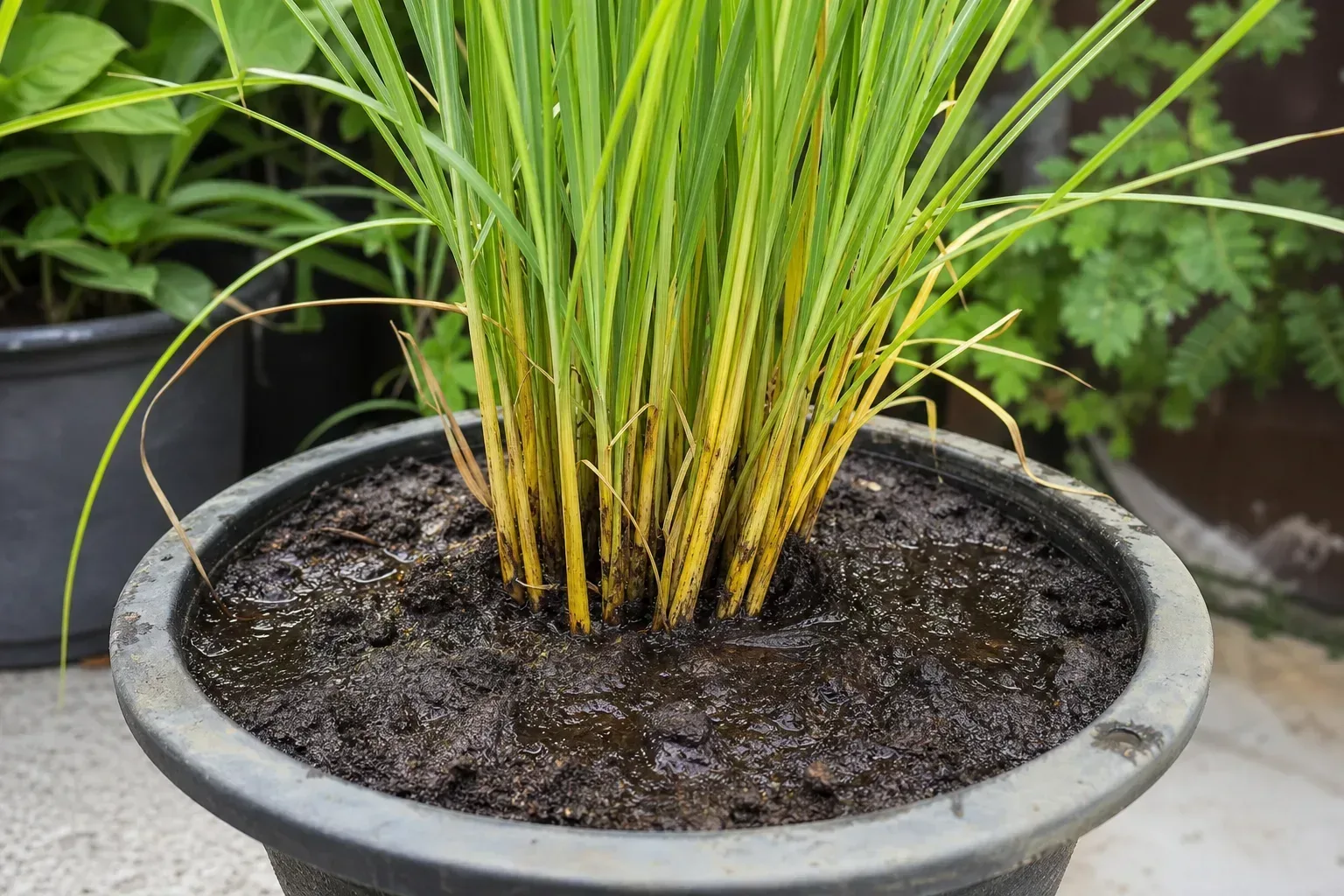
Wrong Soil Mix on Lemongrass: Causes, Checks & Fixes
This guide covers wrong soil mix on Lemongrass. See also the general Wrong Soil Mix guide, watering, and light pages for this plant.
Wrong Soil Mix on Lemongrass: Causes, Checks & Fixes
Quick answer
Lemongrass (Cymbopogon citratus) is a fast-growing tropical grass that needs moist, organically rich loam with good drainage in full sun-not the same mix you would use for succulents or moisture-hating herbs. Wrong soil mix shows up as two opposite failures: roots drowning in heavy, waterlogged peat or clay, or roots starving in pure sand or cactus blend without organic matter.
First step: unpot the plant and inspect the root ball before you change watering or fertilizer. Smell the mix, check whether roots are firm and white or brown and mushy, and note how fast the pot dried after your last water. If the blend is clearly wrong, repot into rich potting mix amended with perlite and compost in a container with multiple drain holes.
What wrong soil mix looks like on Lemongrass
Lemongrass grows as a dense clump of arching strap leaves from a shallow, fibrous root mass. When the mix fails, symptoms show at the base first because those roots sit closest to the wettest or driest zone.
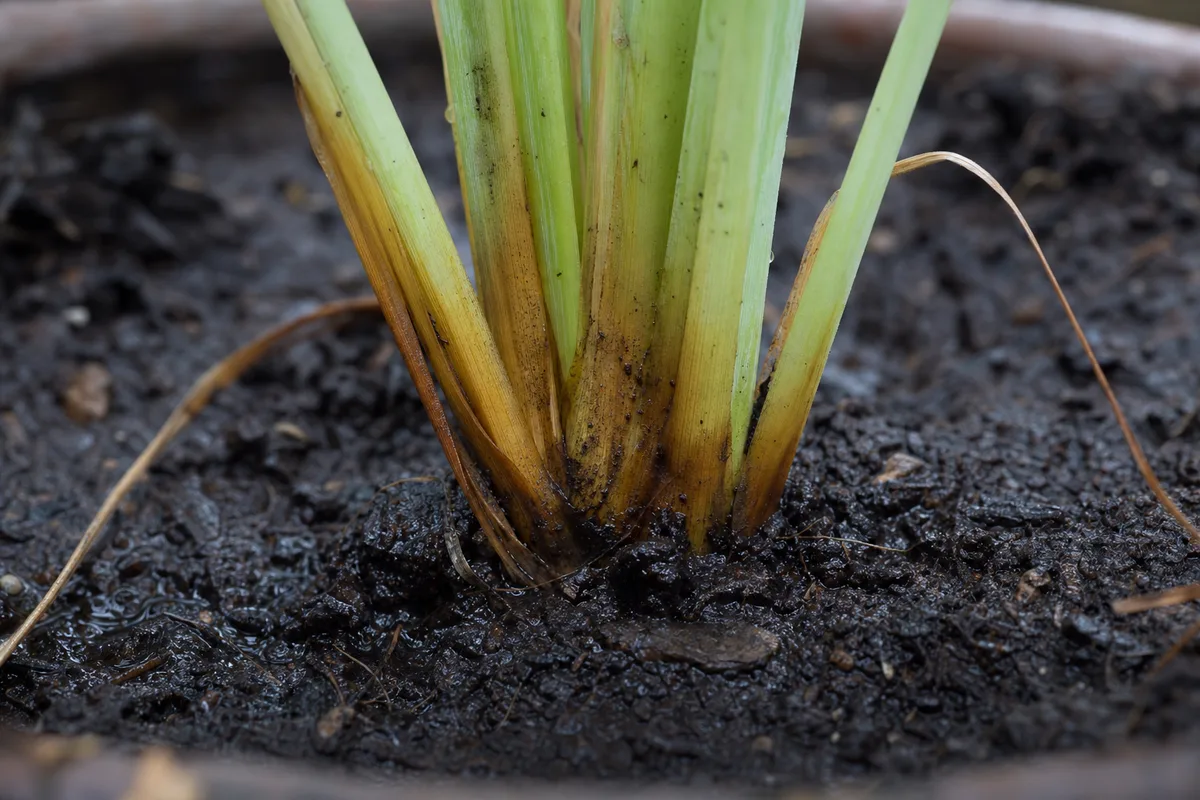
Wrong Soil Mix symptoms on Lemongrass - compare with healthy tissue on the same plant.
Too heavy or water-retentive mix:
- Surface stays dark and damp for three or more days after one thorough watering
- Stalk bases turn yellow or brown while upper leaves still look green briefly
- Sour, swampy smell when you tip the pot sideways
- Mushy, brown roots instead of firm pale ones
- White or gray mold on the soil surface in cool, low-light corners
- Slow new tiller production despite regular watering
Too lean, sandy, or fast-draining mix:
- Pot feels feather-light within hours of watering; mix repels water or runs straight through
- Tillers stay thin, pale, and floppy even in full sun
- Leaf tips brown while the crown feels dry just below the surface
- Roots look dry and brittle; white roots may be sparse
- Plant wilts on hot afternoons despite daily watering
Compaction from straight garden soil in pots:
- Water pools on top or channels down the pot sides without soaking evenly
- Clump stops spreading; outer tillers stall while inner stalks weaken
- Pot weight stays high for days, but roots still look stressed
Healthy lemongrass in the right mix produces thick new shoots at the crown, holds deep green color in sun, and dries on a predictable schedule-usually moist through the root zone but not sodden for days.
Why Lemongrass gets wrong soil mix problems
Lemongrass evolved in warm, humid regions with steady rainfall and rich surface soil. Extension guidance describes it as preferring well-drained, moist, rich loam with high organic content-a balance many bagged mixes miss when used straight from the bag or when gardeners reach for the wrong specialty blend.
Heavy peat or moisture-holding mix without perlite. Lemongrass wants consistent moisture during active growth, which tempts growers to pack pots with peat-heavy retail mix. In cool weather or partial shade, that same mix stays saturated. Waterlogged soils should be avoided because grass roots need oxygen as much as water. A soggy root zone triggers base yellowing and rot while the plant still looks thirsty above.
Pure sand, gravel, or cactus mix alone. Lemongrass is not a desert succulent. It tolerates poorer soils only when adequate moisture and good drainage are both supplied. Sterile sand holds almost no nutrients and dries too fast for a clump that grows vigorously in summer heat. The plant wilts repeatedly, pushing thin shoots that never thicken.
Unamended garden clay in containers. In-ground clay can work when amended and mounded for drainage. In a pot, clay compacts after a few water cycles, eliminating air pockets. Lemongrass roots spread horizontally near the surface; compacted mix suffocates them even if you water lightly.
Oversized pots with dense fill. Fast growers like lemongrass are often planted in large tubs “to avoid Lemongrass repotting guide.” Excess soil volume holds water the root ball cannot use, mimicking chronic overwatering on Lemongrass on a heavy mix.
Old, broken-down potting soil. Peat-based mixes decompose and collapse after one to two seasons-exactly when lemongrass fills a container and needs division. Collapsed structure sheds water down the sides while the core stays wet, producing split symptoms that look like watering errors but trace to soil failure.
How to confirm the cause
Work through these checks in order before repotting or fertilizing:
- Drainage timing - Water until excess runs from drain holes. In warm sun, correct mix for lemongrass should feel moist but not swampy within a few hours. Still soggy on day three points to too-heavy mix; dry through in under six hours points to too-lean mix.
- Finger test at crown depth - Stick your finger 3–4 cm below the surface. Lemongrass is normally watered when the top dries, but the root zone should not be dust-dry daily in summer. Chronic dust with wilting confirms lean mix; constant cold wetness confirms heavy mix.
- Unpot and smell - Slide the clump out gently. Fresh healthy mix smells earthy. Sour or musty odor means anaerobic breakdown-wrong structure or chronic saturation.
- Root color and firmness - Firm white or cream roots support diagnosis of mix failure. Brown mushy roots mean the heavy mix has already damaged tissue; dry brittle roots in a sand pot mean chronic drought stress from lean mix.
- Ingredient check - Look for perlite, coarse sand, or bark chunks plus visible compost. Straight peat, pure sand, or garden topsoil alone confirms mismatch.
- Cross-check light and season - Lemongrass in weak light uses less water and magnifies heavy-mix problems. Cool dormant months slow uptake; do not blame mix alone if the plant is cold-stressed below 10°C without adjusting water.
If roots are firm, smell is neutral, and only the top cm dries quickly, the mix may be acceptable-look next at Lemongrass watering guide or pot size before a full repot.
First fix for Lemongrass
Repot into rich potting mix amended with perlite and compost, using a container with multiple open drain holes.
This single step addresses both failure modes: organic matter and compost supply fertility and moisture retention; perlite or coarse sand opens structure so moist but well-drained loam is achievable in a pot. Do not layer gravel at the bottom instead of fixing the blend-that raises the saturated zone in the root ball without improving oxygen.
Repot sequence:
- Choose a pot only one size larger unless the clump is clearly root-bound. Multiple drain holes are mandatory.
- Blend roughly 50% quality potting mix, 30% compost or worm castings, and 20% perlite or coarse sand. Moisten lightly so it is crumbly, not mud.
- Unpot the clump. Rinse away old mix from roots with lukewarm water.
- Trim any brown, mushy roots back to firm tissue with clean scissors. Keep all firm divisions.
- Set the crown at the same depth as before. Fill around fibrous roots without packing tight.
- Water once until excess drains. Empty the saucer. Place in full sun and hold fertilizer for two weeks.
- Resume watering when the top 3–4 cm dries during active growth-adjust downward in cool months.
If more than half the roots are mushy but firm tillers remain on the outer edge, divide the healthy outer sections and discard the rotten center rather than replanting the whole failing crown.
Recovery timeline and what to expect
Damaged leaves and thin stalks do not thicken in reverse-judge recovery by new tillers and root feel, not by old blades greening up.
Week 1–2: Reduced wilting after repot; crown should feel firm when you press lightly at the base. Hold off on fertilizer while roots settle.
Week 2–3: New pale-green shoots emerging from the crown indicate the mix and drainage are working. In warm sun with correct watering, this is the normal response window.
Week 4–6: Tillers darken and thicken; harvest can resume lightly once new growth is firm. If the crown softens further or new shoots stall, re-check drain holes and whether the fill is still too heavy.
When recovery is unlikely: A base that keeps softening after repot into open mix, blackening spreading up stalks, or no new tillers after four warm weeks means salvage divisions only or restart from firm supermarket stalks rooted in water.
Lookalike symptoms to rule out
Wrong soil mix mimics other lemongrass problems. Separate them before you treat:
| Pattern | More likely cause | Quick differentiator |
|---|---|---|
| Yellow bases + wet mix for days | Wrong heavy soil / poor drainage | Sour smell; mushy roots; mix lacks perlite |
| Wilting in afternoon + dry sand pot | Lean wrong mix or underwatering on Lemongrass | Pot ultra-light; roots dry; water runs through |
| Thin pale growth in shade | Not enough light | Mix dries slowly but roots are firm; move to sun |
| Tip browning, soil moist | Low humidity or salt buildup | Roots firm; flush if crust on surface |
| Sudden collapse after frost | Cold damage | Tissue mushy after freeze; mix may be fine |
| Clump tight, fast drying | Root-bound pot | Roots circle pot; mix structure still crumbly |
Soil failure is confirmed when texture and drain speed do not match what a moisture-loving, fast-draining grass needs-even if watering habits look reasonable on paper.
Mistakes to avoid
- Adding gravel at the bottom instead of perlite throughout the blend. This does not create drainage; it shortens the aerated root zone.
- Repotting into pure cactus or succulent mix because lemongrass is drought-tolerant once established. Young container clumps need more fertility and water hold than cactus mix provides.
- Using straight garden soil indoors for a heavy feeder that refills pots every one to two years.
- Jumping to a much larger pot with dense mix, which keeps the root zone wet longer.
- Fertilizing immediately on a stressed root system. Fix the mix first; feed only after new growth appears.
- Keeping summer water volume on a heavy wrong mix in winter when growth slows. Reduce frequency when the top dries more slowly in cool months.
- Blaming pests first when soil smells sour and bases yellow-root decline from bad mix invites secondary stress but needs repot, not spray.
How to prevent wrong soil mix next time
Refresh or divide lemongrass every one to two years before peat collapse and root crowding combine. At each repot, rebuild the same balanced formula: potting mix plus compost plus perlite or coarse sand.
Match watering to how the new mix dries in your sun exposure. Container soil dries faster than in-ground beds; lemongrass in full sun on a terrace may need water every one to three days in heat, while the same plant in cool spring weather needs less.
Keep pots in at least six hours of direct sun. Shade slows drying and makes heavy mixes more dangerous. Good airflow around clumps reduces surface mold when humidity is high.
For in-ground planting, work two to four inches of compost into the top soil layer before setting divisions-not raw clay alone. Raised mounds help where native soil is compacted.
Conclusion
Wrong soil mix on lemongrass is a structure problem, not a mystery disease. Heavy, airless blend drowns shallow grass roots; lean sterile blend starves a fast summer grower. Unpot, confirm texture and smell, repot into rich amended mix with open drainage, and judge success by firm crowns and new tillers in warm sun-not by old leaves reversing damage overnight.
When to use this page vs other Lemongrass guides
- Lemongrass watering guide - Use for routine moisture checks before assuming wrong soil mix is the main issue.
- Lemongrass problems hub - Browse all 52 common issues on this species.