Black Spots on Lemongrass: Causes, Checks & Fixes
Quick answer
Black spots on Lemongrass usually come from fungal leaf spot, lemongrass rust, or frost injury on crowded blades. First step: cut spotted blades at the base and open the clump so sun and airflow can dry the crown.
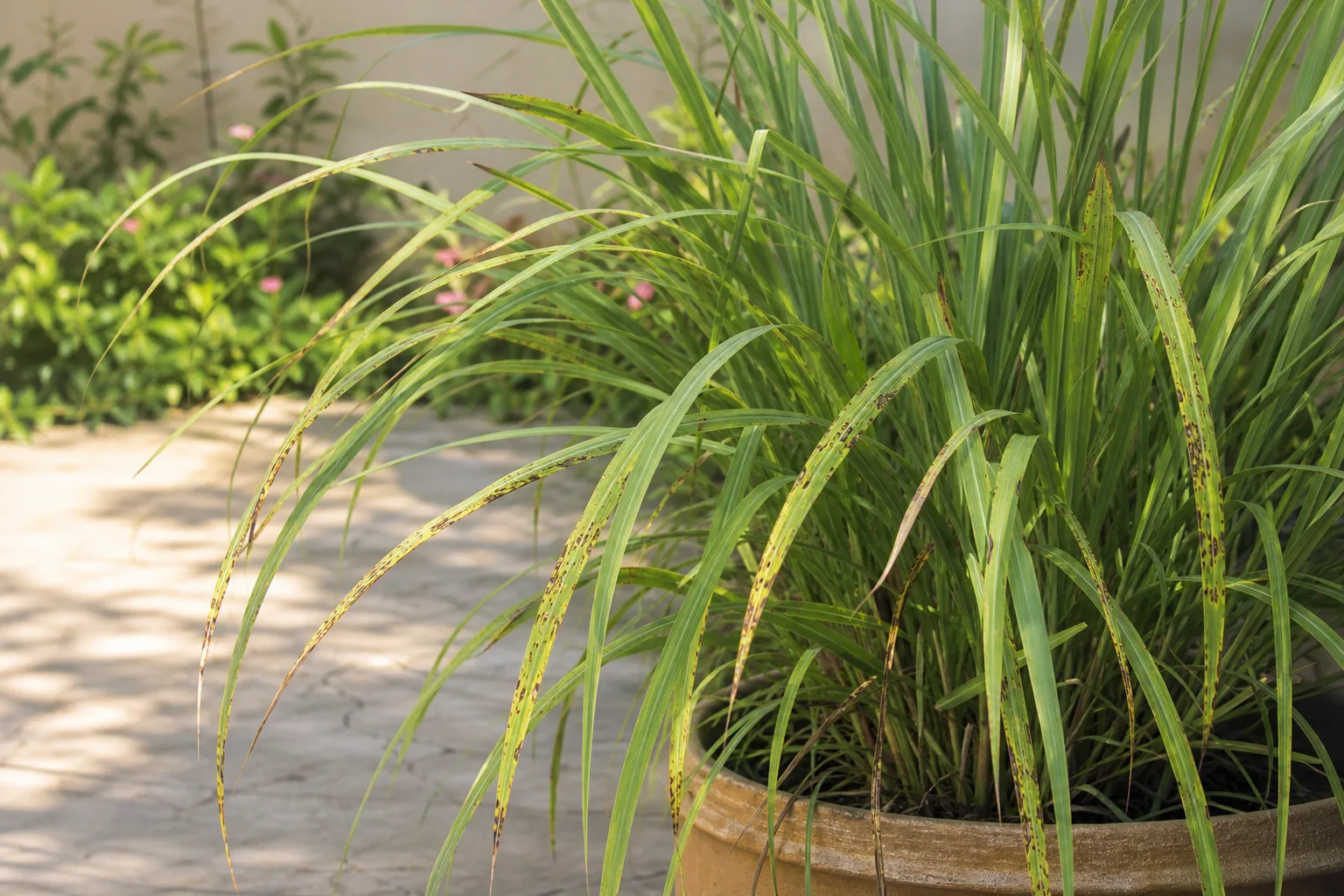
Black Spots on Lemongrass: Causes, Checks & Fixes
This guide covers black spots on Lemongrass. See also the general Black Spots guide, watering, and light pages for this plant.
Black Spots on Lemongrass: Causes, Checks & Fixes
Quick answer
Black spots on Lemongrass usually come from fungal leaf spot, lemongrass rust, or frost injury on crowded blades. Start with one move: cut spotted blades at the base and open the clump so sun and airflow can dry the crown.
Lemongrass (Cymbopogon citratus) is a frost-tender clumping grass. Dense crowns plus wet foliage create a high-humidity pocket where foliar pathogens spread quickly.
What black spots look like on lemongrass
Not all black marks are the same problem. Pattern matters:
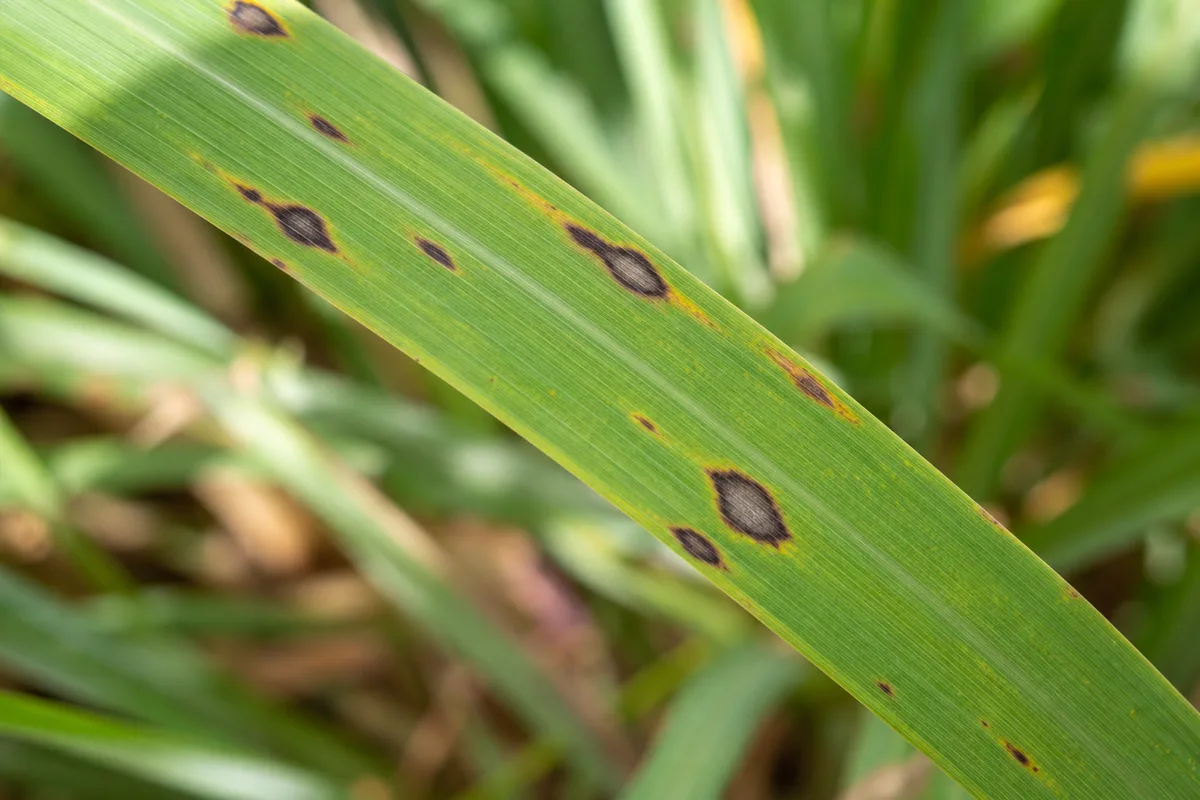
Black Spots symptoms on Lemongrass - compare with healthy tissue on the same plant.
- Leaf spot fungi: dark brown to black lesions, often with yellow halos, usually scattered at first
- Rust overlap: yellow to tan spots on top with dark pustules on undersides
- Frost injury: sudden uniform blackening from exposed tips or margins after a cold night
- Spray or salt injury: edge burn that does not spread leaf to leaf like disease
If spots are multiplying across new blades during humid weather, assume active disease pressure until proven otherwise.
Why lemongrass gets black spots
Lemongrass grows fastest in heat, moisture, and high fertility. Those same conditions can tighten clumps and trap humidity around blades.
Most black-spot outbreaks start with a combination of:
- crowded clumps that block airflow
- evening or overhead watering that leaves blades wet
- humid weather with slow daytime drying
- partial shade that reduces drying speed
UF/IFAS guidance for lemongrass favors flood or hand watering at soil level rather than repeated foliage wetting. That watering style is also your first disease-pressure control.
How to confirm the cause before treatment
Run this check in order:
- Weather link: Did spots appear after humid rain periods or after a cold snap?
- Leaf pattern: Random halo lesions suggest leaf spot; linear streaking plus underside pustules suggests rust.
- Underside check: Flip suspect blades and inspect for raised dark pustules.
- Crown condition: Soft base tissue or sour odor suggests rot overlap, not simple foliar spotting.
- Spread speed: Fast spread into fresh tillers in humid conditions means active disease.
For general leaf-spot behavior, Connecticut IPM notes that many fungal leaf spots create brown or black necrotic areas and can progress quickly under favorable conditions.
First fix for lemongrass
Cut visibly spotted blades at the base and thin the clump until you can see into the center.
Then do only the supporting basics:
- water at the soil line, not across foliage
- keep plants in full sun and well-drained conditions
- space pots so blades do not touch neighboring plants
Do not spray multiple products on day one. Cultural reset plus blade removal often stops mild outbreaks.
Step-by-step recovery
If spotting continues after your first thinning pass:
- Repeat removal of newly spotted blades every 5–7 days.
- Keep foliage dry overnight; water early if needed.
- Bag infected trimmings instead of leaving them near the crown.
- Use a fungicide only if spread continues, and only a label-approved product for your crop use and site.
For leaf-spot control principles, Clemson HGIC notes fungicide decisions should follow diagnosis, and chemical use is warranted only when severity justifies it (Clemson HGIC). On kitchen herbs, always follow harvest intervals and label restrictions.
Recovery timeline and escalation
With quick thinning and better drying, clean new tillers usually appear in 10–21 days in warm weather.
Progress signs:
- fewer new spots after one week
- no spotting on fresh center growth
- firm crown and normal new blade expansion
Escalate quickly if:
- most blades spot up within days
- new tillers emerge already damaged
- crown bases turn soft or smell sour
Use cold-damage guidance when weather-triggered blackening is uniform, and root-rot guidance when base tissue softens.
Lookalikes to rule out
- Downy mildew: underside gray-purple growth with yellow top blotches (downy mildew guide)
- Powdery mildew: white powdery film instead of black lesions (powdery mildew guide)
- Brown tips: edge dryness from moisture or salt stress, not spreading spot lesions (brown tips guide)
- Cold injury: sudden blackened tips after low temperatures (cold damage guide)
What not to do
Do not keep overhead watering dense clumps at dusk. Do not leave infected blades in the center. Do not assume every black mark is fungal without checking weather and undersides first. Do not keep harvesting for kitchen use from heavily diseased foliage until you have clean regrowth.
How to prevent black spots next cycle
- Harvest-thin regularly so the crown stays open.
- Keep consistent soil-level watering.
- Maintain spacing and sun exposure.
- Divide overcrowded pots before peak humid season.
- Scout weekly for first lesions so you can remove early.
For complete care balance, cross-check lemongrass overview, watering, and pruning.
Conclusion
Black spots on lemongrass are usually a canopy-management problem first, a spray problem second. Open the clump, keep blades dry overnight, and judge success by clean new tillers-not by old damaged tissue.
When to use this page vs other Lemongrass guides
- Lemongrass watering guide - Use for routine moisture checks before assuming black spots is the main issue.
- Lemongrass problems hub - Browse all 52 common issues on this species.
- Overwatering on Lemongrass - Different entry point when symptoms overlap with black spots.
- Mold on Soil on Lemongrass - Different entry point when symptoms overlap with black spots.
- White Spots on Lemongrass - Different entry point when symptoms overlap with black spots.