Leaf Drop on Lemongrass: Causes, Checks & Fixes
Quick answer
Lemongrass leaf drop often follows indoor overwintering, cold exposure, or root rot from wet cool soil-not random weakness. First step: Match the pattern to season and soil moisture, then adjust watering and light before repotting.
Leaf Drop on Lemongrass: Causes, Checks & Fixes
This guide covers leaf drop on Lemongrass. See also the general Leaf Drop guide, watering, and light pages for this plant.
Leaf Drop on Lemongrass: Causes, Checks & Fixes
Quick answer
Lemongrass (Cymbopogon citratus) leaf drop is usually pattern-driven, not random weakness. Outer blades age out of a frost-tender clumping grass while the center stays green in warm sun-but mass drop indoors often means care rhythm mismatch when you bring potted plants inside as temperatures cool and keep summer watering.
First step: match what you see to season, soil moisture, and stalk-base firmness-then adjust watering and light before Lemongrass repotting guide or spraying. This page is the multi-cause Lemongrass overview for blade loss; wet-soil deep-dives live on root rot and overwatering, and acute frost rescue is on cold damage. For year-round culture and pet safety, see the lemongrass overview.
What leaf drop looks like on lemongrass
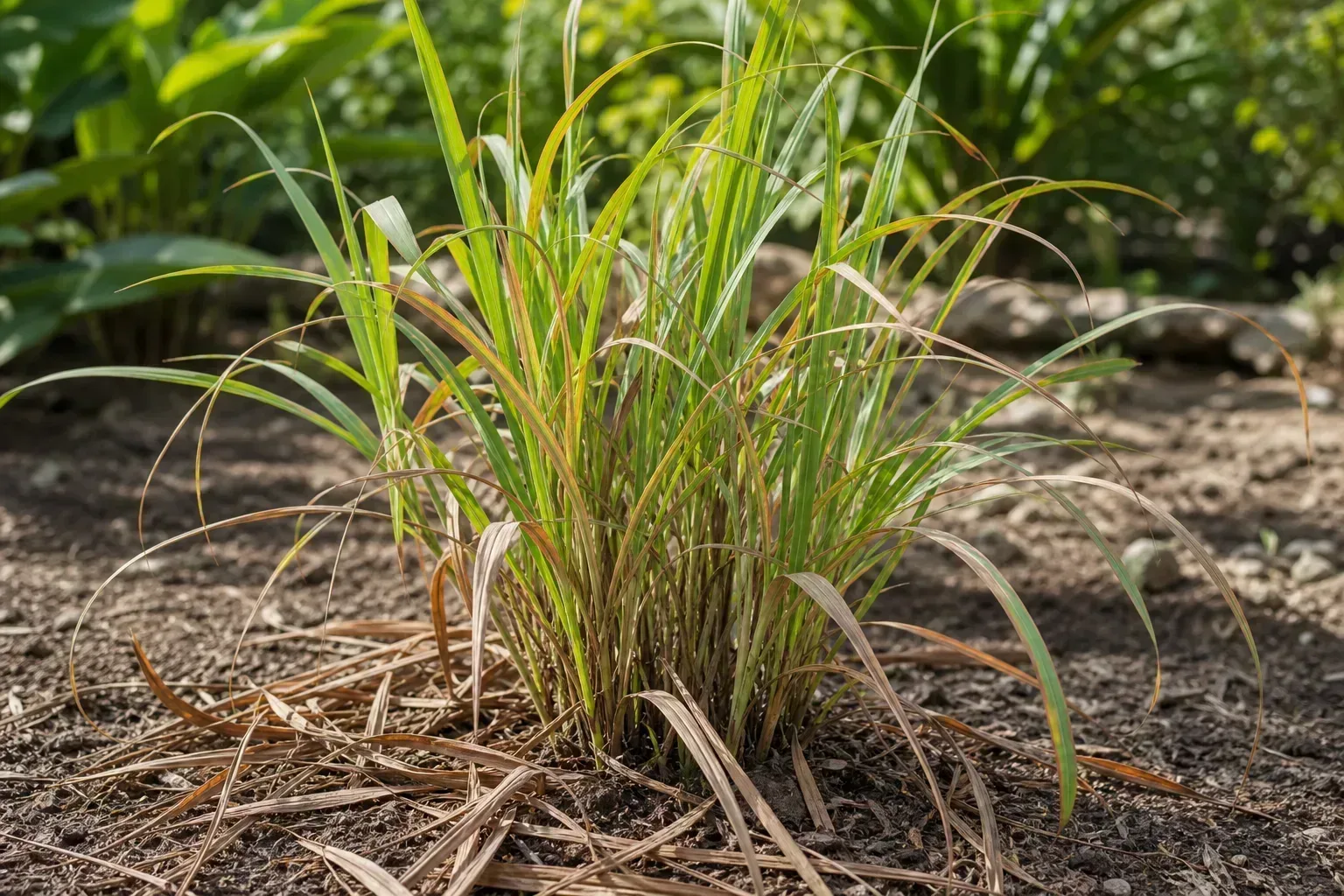
Lemongrass drops individual arching blades, not branches-watch whether loss starts outside-in or hits the whole clump at once.
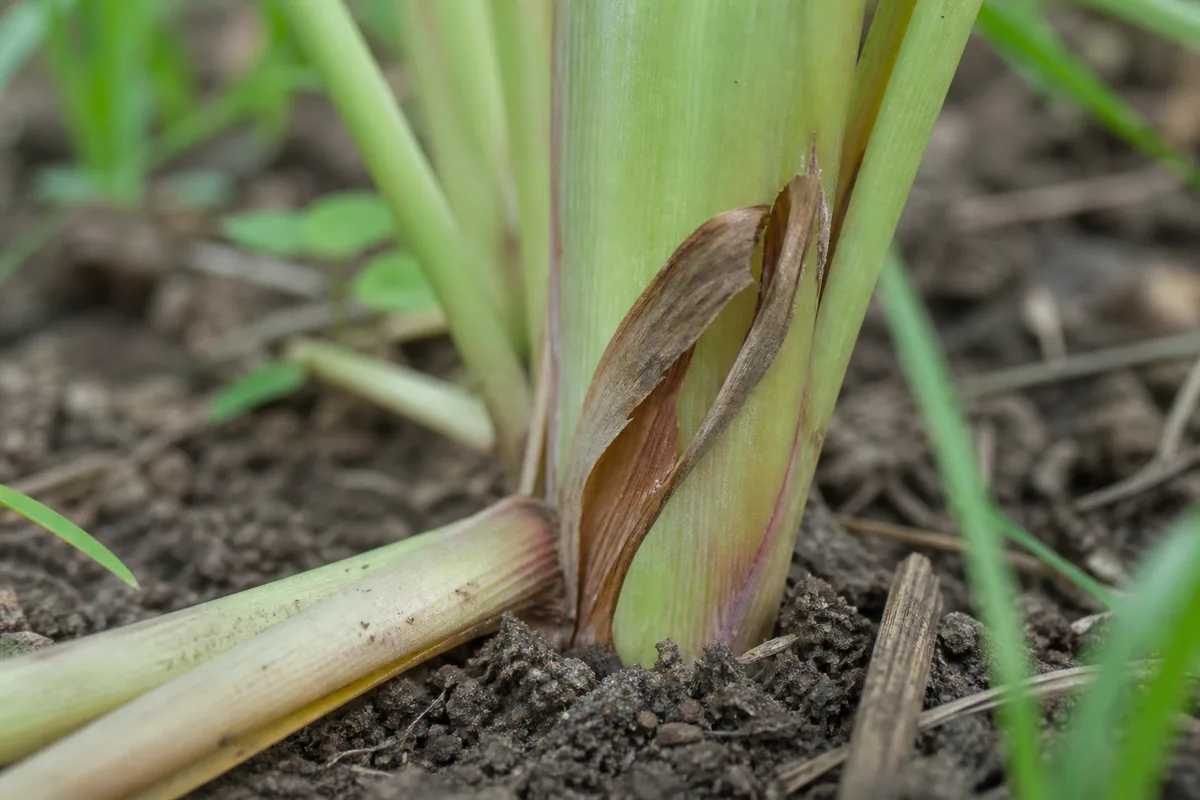
Leaf Drop symptoms on Lemongrass - compare with healthy tissue on the same plant.
Seasonal outer-blade loss
Lower, older blades brown at tips and pull away; center shoots remain green and firm. Normal in fall slowdown and dim indoor overwintering when the crown still feels solid.
Cold draft or chill slowdown
Widespread yellowing after exposure below about 50°F (10°C) stalls growth abruptly-this is draft chill and growth slowdown, not the acute frost collapse covered on cold damage (sub-40°F frost injury and overnight water-soaked collapse).
Root rot drop
Yellowing spreads up stalks while soil stays wet and heavy; bases may soften and smell sour. Fungus gnats hovering over chronically wet overwintering pots are a secondary clue that mix has stayed too damp.
Indoor mite stress
Spider mites on indoor lemongrass cause stippling and premature blade death with fine webbing-not always obvious droop first. See the dedicated spider mites guide for treatment depth.
Heavy harvest shade-stripping
Cutting large outer blade flushes for the kitchen removes the shade canopy that protected lower sheaths. Outer blades may die faster until new growth fills the clump-distinct from disease when stalk bases stay firm and soil moisture is normal.
Low-light indoor weakening
Clumps kept for winter survival-not growth-often shed blades over two to four weeks in a dim corner before uniform yellowing appears. Detach happens faster than slow chlorosis; compare with gradual fade on not enough light.
Transplant shock
Temporary outer loss after division; roots should still be firm when checked. Recovery expectations are in the step-by-step section below.
Why lemongrass drops leaves
Winter slowdown indoors reduces water use while many growers maintain summer frequency. Reduce watering significantly during winter dormancy indoors so roots are not anaerobic in dim, humid rooms.
Cold drafts from windows or doorways shock tropical grass tissue even above freezing. Growth stalls near 50°F (10°C); sustained chill below about 45°F (7°C) warrants moving pots per cold damage prevention guidance-not waiting for blade collapse.
Root rot from waterlogged mix is the most serious cause-especially in peat-heavy soil without perlite. Moist, not soggy, soil is the target year-round.
Heavy harvest without recovery time strips shade from the clump; outer blades may die faster until regrowth fills in.
Low light indoors weakens blades until they detach-common on clumps kept for survival, not growth. Brightest window plus optional supplemental hours per the light guide slows shedding.
Lookalike symptoms to rule out
- Normal harvest trimming - You cut blades; they did not “drop” on their own.
- Heat wilt - Midday droop that recovers overnight; blades stay attached. See heat stress if relevant.
- Nutrient deficiency - Uniform pale new growth without sudden detach pattern.
- Acute frost collapse - Overnight water-soaked blades after a freeze; route to cold damage, not this page.
How to confirm the cause
Work through these in order:
- Season - Fall/winter indoor drop versus summer outdoor loss?
- Moisture - Wet top 3–4 cm for many days with heavy pot weight?
- Stalk base - Firm and green, or soft and dark?
- Temperature history - Recent cold exposure below 50°F, drafty window, or heat vent blast?
- Pest check - Stippling and webbing on blade undersides indoors?
- Root rinse - Mushy roots confirm rot; firm pale roots suggest drought, cold, or light issues.
Cause quick-reference: where to go next
Use this table before stacking fixes. This page covers multi-cause blade loss; sibling guides go deeper on one branch.
| Pattern | Soil / pot | Stalk base | Urgency | Deep-dive guide |
|---|---|---|---|---|
| Outer blades brown outside-in; center green | Normal to slightly dry | Firm | Low - seasonal or light | Not enough light, watering |
| Whole clump yellows on wet heavy soil | Wet days; sour smell | Softening | High - same day | Root rot, overwatering |
| Yellowing after nights below 50°F or drafty window | Often still moist | Usually firm | Medium | Cold damage if frost; else brighten and dry down |
| Stippling, webbing, speckled blades | Normal | Firm | Medium | Spider mites |
| Loss after heavy kitchen harvest | Normal | Firm | Low | Pause cutting; restore light |
| Temporary loss after division | Moist after repot | Firm if roots intact | Low | Hold water; see recovery below |
| Wet soil + tiny flying gnats | Chronically damp | Firm to soft | Medium | Fungus gnats plus dry-down |
First fix for lemongrass (by confirmed cause)
Make one primary correction first-do not fertilize, repot, and spray the same day without knowing the cause.
Seasonal or light-related drop: Move to the brightest available spot per the light guide and water only when the top 3–4 cm dries. Remove dead outer blades at the base to reduce mold habitat.
Rot-related drop: Stop watering, unpot, and follow the numbered recovery below-or escalate immediately to root rot if more than half the root mass is mushy.
Mite-related drop: Rinse blades, improve airflow, and treat with labeled miticide or repeated soap rinses per extension guidance on the spider mites page. Wash blades thoroughly before any culinary use after soap or pesticide contact; follow the product label interval for edible herbs.
Cold-draft drop: Move off cold sills, trim collapsed outer blades, and hold sparse water until growth resumes-see cold damage if frost was involved.
Step-by-step recovery for rot-related drop
When wet soil and soft bases confirm rot-not simple seasonal shedding:
- Unpot immediately and discard saturated, sour-smelling mix.
- Rinse roots and trim all brown, mushy, or translucent tissue with sterilized scissors until only firm pale roots remain.
- Assess crown - if the center is collapsed but outer shoots are firm, divide salvageable sections with roots attached rather than saving a hollow middle.
- Repot into a container sized to the remaining root mass with fresh perlite-rich mix and open drainage-see soil guidance.
- Water once until a small amount drains, then empty saucers completely.
- Hold fertilizer until new center blades unfurl.
- Trim yellow outer blades only enough to reduce stress-do not harvest aggressively during recovery.
- Resume active-season watering when the top 3–4 cm dries; in recovery, err slightly dry rather than wet.
Do not leave saucers full “for humidity”-grass blades that touch stale water brown and detach faster.
Recovery timeline
Light and watering fixes may stabilize outer loss within one to two weeks; new center blades confirm success. Repotted rot cases need 10–21 days in warm sun before harvest resumes. Cold-shocked clumps recover slowly until temperatures stay consistently warm.
Documented pattern (container, patio to kitchen window): Moved a full patio pot indoors in October while still watering every three days; half the clump yellowed in two weeks with firm crown on squeeze but wet heavy soil. Cut watering to when the top 3–4 cm dried, moved to the brightest window, removed brown outer blades at the base-outer loss stopped by week 2; first new green tiller at week 3. Those yellowed blades never re-greened; new shoots carried the clump.
Signs of improvement: green tillers at the crown, shedding slows, firm stalk bases, dry-down rhythm restored.
Signs of worsening: sour smell after repot, softening climbing upward from soil line, more than half the clump yellowing in days on wet mix-escalate to root rot rescue or divide salvage shoots.
What not to do
Do not increase watering when blades yellow in a dim winter window. Do not leave saucers full “for humidity.” Do not assume drop means nitrogen deficiency and feed wet roots. Do not harvest aggressively during rot recovery. Do not cook with blades treated by soap or miticide until washed and any label interval has passed.
Pet safety when removing dropped blades
Lemongrass is toxic to cats and dogs per the ASPCA. Trimming dropped blades and moving pots indoors increases pet access-bag debris and keep clumps out of reach of chewers. This is general safety information, not veterinary advice.
How to prevent leaf drop next time
Match watering to season and light: frequent in hot full sun with regular moisture outdoors, reduced indoors per the watering guide. Use well-drained organically rich loam in pots with multiple drain holes.
Repot root-bound clumps before overwintering-one size up with fresh perlite mix beats cramming a dense mat into the same pot all winter. Track forecast and move balcony pots when nights approach 45–50°F, not after outer blades collapse.
Related lemongrass problems
- Root rot - mushy roots and sour soil escalation
- Overwatering - summer rhythm carried into cool dormancy
- Cold damage - frost and sub-40°F injury vs draft chill here
- Spider mites - indoor stippling deep-dive
- Not enough light - gradual winter fade
- Fungus gnats - wet overwintering pots
- Wilting - when droop vs detach is unclear
- Lemongrass overview - hub, pet toxicity, seasonal rhythm
Conclusion
Lemongrass leaf drop is pattern-driven: outer seasonal loss differs from rot, cold, mite, or harvest crises. Confirm soil moisture, stalk base firmness, and season before treating. Adjust winter watering and light first; repot only when roots confirm rot. Healthy clumps show green center shoots even when outer blades age out.
When to use this page vs other Lemongrass guides
- Lemongrass watering guide - Use for routine moisture checks before assuming leaf drop is the main issue.
- Lemongrass problems hub - Browse all 52 common issues on this species.
- Yellow Leaves on Lemongrass - Different entry point when symptoms overlap with leaf drop.
- Drooping Leaves on Lemongrass - Different entry point when symptoms overlap with leaf drop.
- Root Rot on Lemongrass - Different entry point when symptoms overlap with leaf drop.