Not Enough Light on Lemongrass: Causes, Checks & Fixes
Quick answer
Not enough light on lemongrass causes pale, thin, leaning stalks and weak aroma. First fix: move the pot to direct sun (or add a strong grow light) before changing fertilizer or repotting.
Not Enough Light on Lemongrass: Causes, Checks & Fixes
This guide covers not enough light on Lemongrass. See also the general Not Enough Light guide, watering, and light pages for this plant.
Not Enough Light on Lemongrass: Causes, Checks & Fixes
Quick answer
Not enough light on lemongrass shows up as thin pale stalks, lean toward the brightest side, and weaker lemon aroma - not as sudden leaf scorch or mushy bases. This page is for diagnosing environmental light shortage before you change feed, soil, or pot size.
First fix: move the plant to the brightest direct-sun position available (or add a grow light) before changing fertilizer, soil, or pot size.
Cymbopogon citratus is a full-sun tropical grass that needs six or more hours of direct sunlight daily for dense, flavorful clumps. UF/IFAS notes it performs best with full sunlight and warm conditions. If your clump lives in a decorative indoor corner, a covered patio, or far from glass, it may survive but not build the thick flavorful bases most growers want.
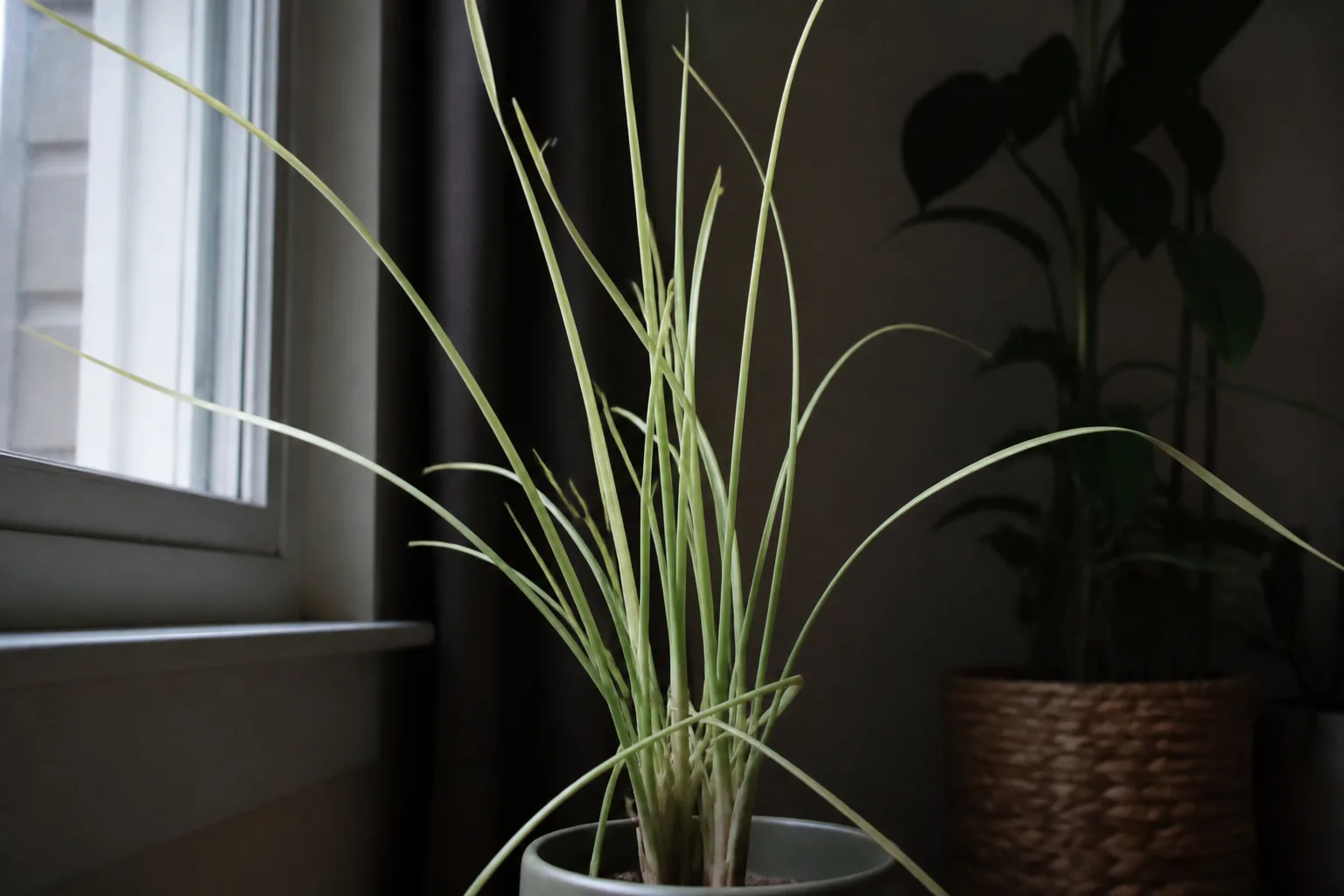
Photo caption for growers: pale yellow-green blades leaning toward a single window on an overwintered kitchen counter - compare against a full-sun outdoor clump with thicker pale-green bases at harvest height.
What low light looks like on lemongrass
Typical pattern on Lemongrass overview:
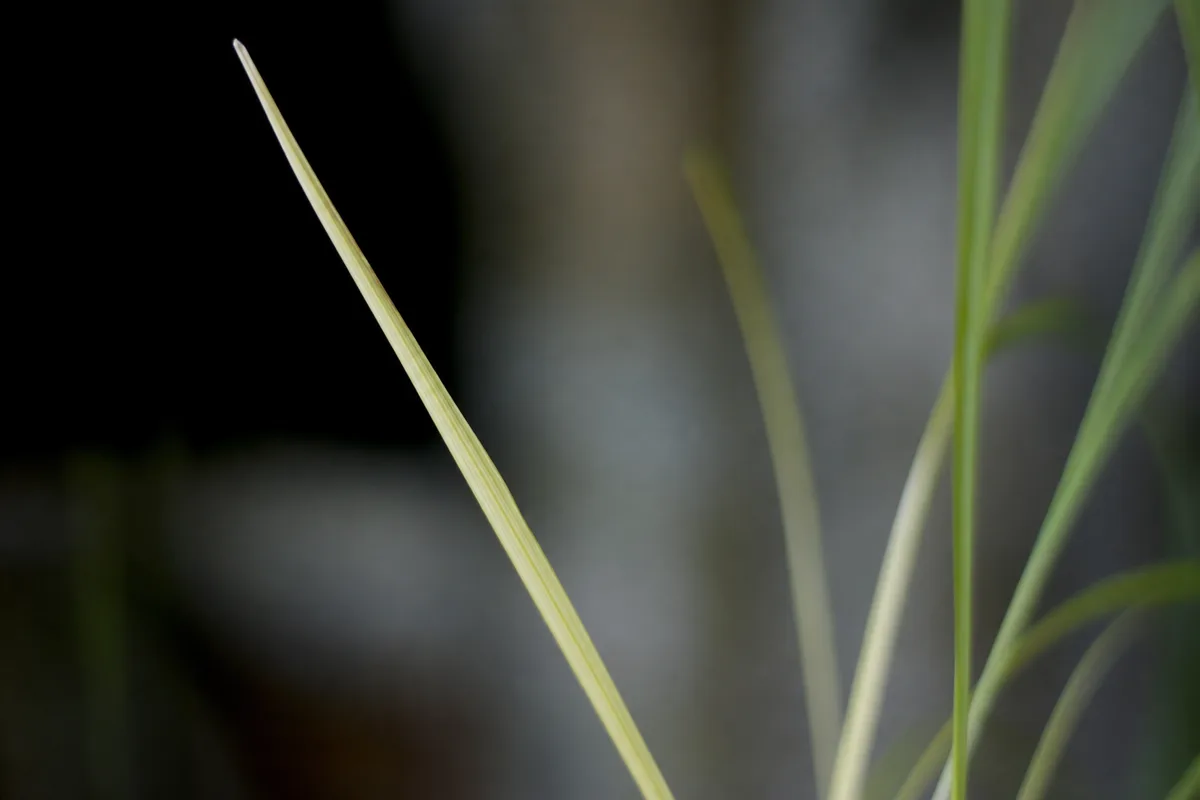
Not Enough Light symptoms on Lemongrass - compare with healthy tissue on the same plant.
- long, narrow, weak stalks instead of thicker basal shoots
- paler yellow-green leaf color
- one-sided leaning toward a window or doorway
- slower regrowth after harvest cuts
- weaker fragrance when you bruise fresh tissue
- potting mix staying damp for too long between waterings
Low light on lemongrass usually looks different from sunburn and different from root rot. Sunburn tends to show scorch on exposed leaf surfaces; low light usually shows stretch and paleness first. If bases are soft and soil smells sour, suspect rot - not light alone.
Why lemongrass gets too little light
The most common causes are placement, not disease:
- Indoor overwintering in weak light. Even a “bright room” may not provide enough direct light for dense lemongrass growth.
- Seasonal light drop. A spot that works in summer can become marginal in winter when sun angle and day length fall.
- Shaded patio placement. Rooflines, fences, and nearby plants can cut direct hours.
- Distance from window glass. Light intensity drops fast with distance indoors.
When light drops, water use also slows, so the same Lemongrass watering guide can keep mix wet too long. That is why low light often appears together with overwatering and eventually root rot.
Why old stretched stalks will not thicken again
Lemongrass builds harvestable bulk at the crown, where new tillers emerge. Once a stalk has etiolated - stretched toward dim light - the existing tissue cannot reverse into a thick base. The plant may keep that stalk alive, but it will stay narrow and weakly scented. Recovery is judged only on new shoots that form after light improves, not on old elongated stems. This is standard etiolation behavior in low-light conditions: elongated, spindly stems with pale leaves that do not bulk up in place.
How to confirm low light (3-day sun log)
Use this sequence before making multiple changes at once:
- Log direct sun at the pot for three clear days.
Track actual direct light on leaves at canopy height, not general room brightness. Note morning vs afternoon hours. - Check growth pattern.
Lean + stretch + pale new growth suggests low light. Compare against the six-hour full-sun baseline. - Check moisture pattern.
If mix stays wet too long in shade, low light is likely part of the problem. - Run a two-week placement test.
Move to stronger light without changing fertilizer. If new growth is denser and greener, diagnosis is confirmed.
Uncertainty note: Low light, mild nitrogen shortage, and root-bound stress can all produce thin stalks when light is already borderline. If sun hours look adequate but bases stay pencil-thin through a warm month, check thin stems for root space and feed history before assuming more light alone will fix the clump.
Low light vs leggy growth vs thin stems
| What you see | Primary page to use | Why |
|---|---|---|
| Pale clump, weak aroma, wet soil in shade, unsure if light is the limiter | This page | Full diagnostic workflow for environmental light shortage |
| Obvious stretch and lean, long thin stalks, etiolation is the headline | Leggy growth | Morphology-focused fix when stretch is unmistakable |
| Light already strong (6+ direct hours) but stalks stay straw-thin | Thin stems | Nutrient, root-bound, or watering limits beyond light |
First fix to try
Move lemongrass to a site with stronger direct light first:
- outdoors in full sun after frost risk passes, or
- indoors at the brightest window plus supplemental light.
Do this before adding fertilizer or Lemongrass repotting guide. Fertilizing a shaded, stressed plant often pushes weak top growth instead of stronger bases.
Indoor recovery constraints
Indoor lemongrass rarely matches outdoor sun intensity without help. A south-facing window in the Northern Hemisphere is the best natural option, but winter sun angle and single-direction exposure often deliver fewer than six equivalent direct hours at the canopy.
Practical indoor limits:
- Distance matters. A pot more than 12 inches from glass receives a fraction of window intensity.
- Short days slow everything. November through February regrowth stays slimmer even after a window upgrade; a grow light is often required for kitchen-quality shoots.
- Acclimate gradually. Moving from a dim shelf to hot south glass in one step can scorch existing leaves. Increase exposure over seven to ten days.
- Grow-light baseline. When natural light is insufficient, run a full-spectrum LED within 6 to 12 inches of the leaves on a timer for 12 to 16 hours a day - Iowa State Extension’s herb-indoors guidance for compensating weak winter daylight. Outdoor placement should target 6 to 8 hours of full sun.
See the full lemongrass light guide for placement and lamp setup detail.
Step-by-step recovery plan
- Reposition for stronger light.
Start with the brightest suitable location and increase exposure gradually if the plant was in deep shade. - Cut back the weakest outer stalks at the base.
This shifts energy to fresh replacement shoots that can thicken under better light. - Adjust watering to match new light.
Brighter light increases water use; dim light lowers it. Re-check moisture instead of watering by calendar. - Hold fertilizer briefly.
Resume only after stronger, healthy new growth appears. - Reassess in 2–3 weeks.
Judge outcome by new stalk thickness, color, and aroma - not old stretched stems.
Case snapshot: overwintered kitchen clump
A container C. citratus division spent October through January on a north-facing kitchen counter (~2 hours of weak direct sun at midday). By late January: pale yellow-green blades, 18-inch lean toward the sink window, pencil-thin new shoots, and faint aroma when crushed.
| Day / week | Placement | Direct sun at canopy (logged) | Action |
|---|---|---|---|
| Baseline (late Jan) | North counter, 24 in. from glass | ~2 h weak midday rays | - |
| Week 1 | South window sill, 8 in. from glass + LED 14 in. above crown | ~4 h direct + supplemental timer | Cut 3 thinnest outer stalks; water when top inch dries |
| Week 2–3 | Same | ~4 h direct + 14 h LED (timer) | New tillers greener, slightly wider at base |
| Week 5 | Same | ~5 h direct (Feb angle) + 14 h LED | Fresh shoots pencil-thick; stronger scent on bruised tissue |
Week 1: Moved to a south window sill (within 8 inches of glass) plus a 14-hour daily LED on an extension timer 14 inches above the crown. Cut three thinnest outer stalks at soil level. Watering reduced from twice weekly to when the top inch dried.
Week 2–3: New tillers emerged greener and slightly wider at the base; old lean persisted on remaining stalks.
Week 5: Fresh shoots reached roughly pencil thickness with noticeably stronger scent on bruised tissue. Harvest-quality bases still forming on the newest tillers only.
This timeline matches what growers should expect: old tissue does not reverse; new growth proves the fix.
Photo caption for growers: week-5 greener new tillers at the crown beside still-leaning old north-window stalks - judge recovery on fresh shoots only.
Recovery timeline
- Days 1–7: lean may persist; old weak tissue does not bulk up.
- Weeks 2–3: new shoots should begin to emerge thicker and greener in warm conditions.
- Weeks 4+: aroma and harvest quality improve on new growth, not old stretched stems.
Post-harvest regrowth in shade follows the same rule: if you cut stalks in a dim spot, replacement shoots stay thin until light improves.
If recovery stalls after 2–3 weeks
When light and watering look corrected but new shoots stay pale or narrow:
- Verify actual direct hours again - a tree leafed out, a curtain stayed closed, or a grow lamp timer failed.
- Inspect roots. Firm white roots support a light diagnosis; sour smell, mush, or black tips point to root rot instead.
- Check for root-bound crowding. A tight root mat in a small pot can limit tiller thickness even in good light - see thin stems.
- Rule out winter dormancy confusion. Slow, slim indoor growth in short-day months may be seasonal, not a failed light move. Supplemental hours matter more than repotting in February.
Mistakes to avoid
- adding fertilizer first in a dim spot
- keeping summer watering frequency through low-light winter periods
- expecting old stretched stalks to reverse
- making multiple big changes at once (repot + heavy feed + major prune)
- ignoring persistent wet soil while focusing only on sunlight hours
How to prevent low-light stress next time
- Give active-season plants full sun whenever possible.
- Overwinter divisions in a bright warm position and supplement light when needed per UF/IFAS lemongrass guidance.
- Rotate containers weekly to limit one-sided lean.
- Recalibrate watering as day length changes.
- Use the full lemongrass care overview to keep light, watering, and feeding in balance.
Related lemongrass problems (by symptom)
- Obvious stretch and lean → Leggy growth
- Thin stalks despite strong sun → Thin stems
- Wet soil and yellowing in shade → Overwatering
- Soft bases or sour smell → Root rot
- Small flies around damp mix → Fungus gnats
- Placement and grow-light setup → Lemongrass light guide
Your next diagnostic checkpoint
Before you leave this page, confirm three things:
- You logged direct sun at the pot for at least three days - not room brightness from across the room.
- You moved light before fertilizer, repotting, or heavy pruning.
- You will judge success on new tillers in 2–3 weeks, not on old stretched stalks thickening in place.
If all three are true and new growth still fails to green up, move to root inspection and the thin stems workflow.
FAQs
Why hasn’t my lemongrass improved after I moved it to a brighter window?
A north or east window often still delivers fewer than six hours of direct rays on the canopy - especially November through February when sun angle is low. Room brightness from across the kitchen is not the same as direct light on the blades.
Three common reasons the move fails to show results:
- The new window is still marginal. East glass may give strong morning light but weak afternoon totals. Count hours at pot height, not eye level from the doorway.
- Old stretched stalks mask progress. Lemongrass does not thicken etiolated tissue in place. You may have better crown shoots while outer leaners still look thin - judge only new tillers.
- Overlapping stress from the dim period. Root-bound crowding, wet soil in shade, or a failed grow-light timer can cap recovery even after a window upgrade.
Same-week fix: Add a full-spectrum LED 6 to 12 inches above the leaves on a timer for 12 to 16 hours daily, cut the weakest outer stalks at the base, and reduce watering to match lower winter use until new shoots green up. If bases stay pencil-thin through a warm month with verified strong light, move to thin stems for root and feed checks.
When to use this page vs other Lemongrass guides
- Lemongrass watering guide - Use for routine moisture checks before assuming not enough light is the main issue.
- Lemongrass problems hub - Browse all 52 common issues on this species.
- Slow Growth on Lemongrass - Different entry point when symptoms overlap with not enough light.
- Yellow Leaves on Lemongrass - Different entry point when symptoms overlap with not enough light.
- Leaf Drop on Lemongrass - Different entry point when symptoms overlap with not enough light.