Slow Growth on Lemongrass: Causes, Checks & Fixes
Quick answer
Slow growth on lemongrass usually means insufficient sun, cool temperatures, or a root-bound clump-not a dead plant. First step: log direct sun hours at the pot and confirm whether you are in active warm season before repotting or feeding.
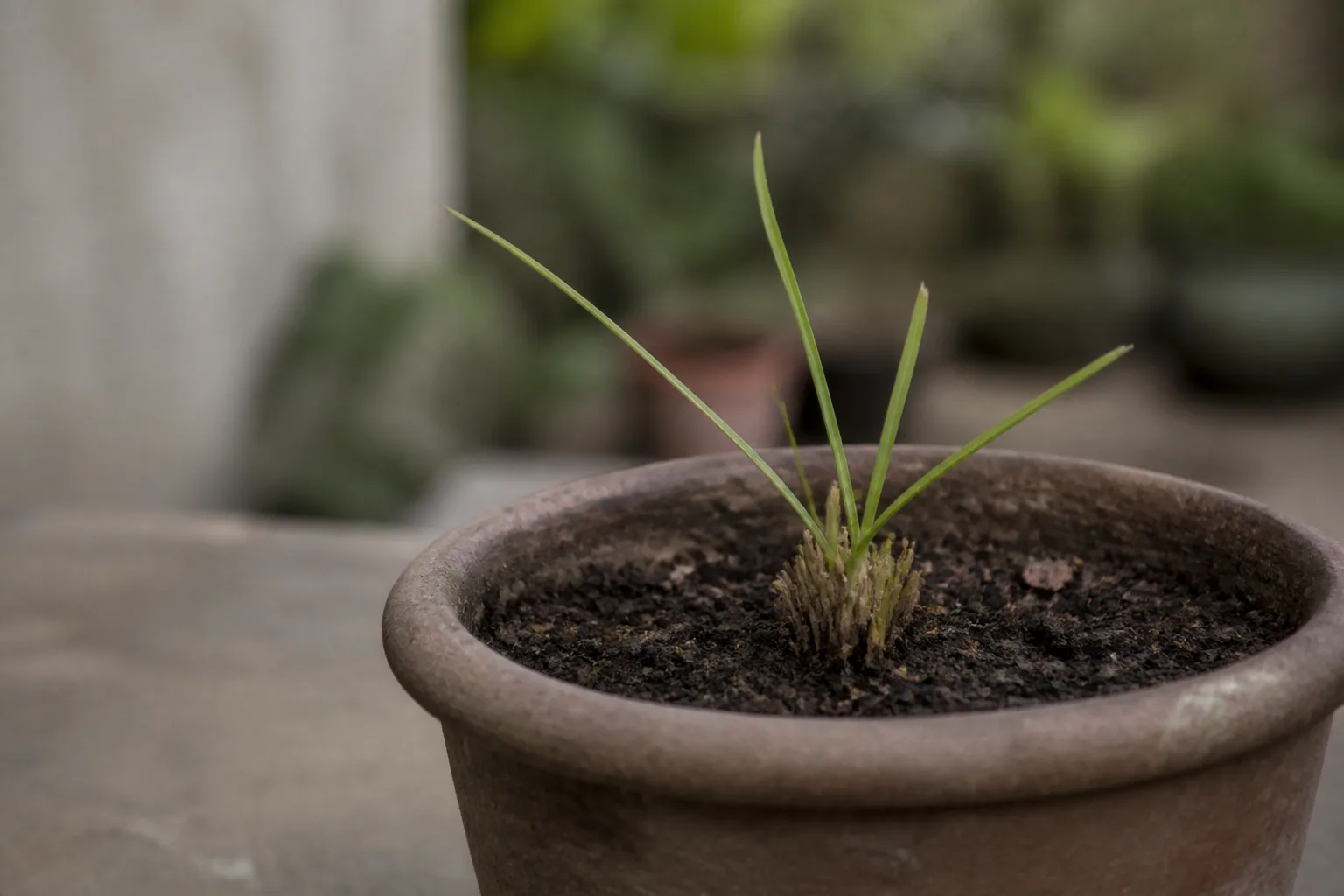
Slow Growth on Lemongrass: Causes, Checks & Fixes
This guide covers slow growth on Lemongrass. See also the general Slow Growth guide, watering, and light pages for this plant.
Slow Growth on Lemongrass: Causes, Checks & Fixes
Quick answer
Slow growth on lemongrass usually means insufficient direct sun, cool temperatures, or a root-bound clump-not a plant that has failed. First step: log direct sun hours at the pot for three days and confirm whether you are in active warm season before you repot, divide, or feed.
Lemongrass is a rapid-growing ornamental grass that can reach 2–3 feet tall in one growing season outdoors. Indoors or in shade, the same clump may produce only thin pale shoots for months. If warm-season regrowth stays arrested for weeks after harvest despite good sun and firm roots, read stunted growth on lemongrass instead-this page covers modest pace and seasonal slowdown, not full developmental stall.
Why lemongrass grows slowly
This tropical grass needs full sunlight and plenty of moisture to maximize growth from June through September. Easily grown in full sun means six or more hours of direct sunlight at the canopy-not a bright corner that reads “indirect.” Lemongrass grown indoors produces fewer stalks due to low light, which is why patio and windowsill clumps often look unchanged for weeks while soil stays moist.
Cool nights below comfortable room temperature slow metabolism. Winter hardy to USDA Zones 10–11, lemongrass is grown as an annual or overwintered indoors in colder climates-indoor winter growth is naturally limited even with good care. UF/IFAS notes lemongrass grows slowly until summer heat arrives, then size increases dramatically. Cool spring weeks before heat kicks in are normal slow pace, not a culture failure.
Root-bound pots dry in hours yet cannot support new stalks. Nitrogen shortage after heavy harvest without weekly half-strength fertiliser in summer also stalls regrowth. Productivity improves by dividing older plants, and woody congested centers produce fewer usable shoots even when outer blades still look green.
What slow growth looks like on lemongrass
Slow pace on lemongrass is a clump that adds mass gradually-not zero growth, but less than you expect for a culinary grass.
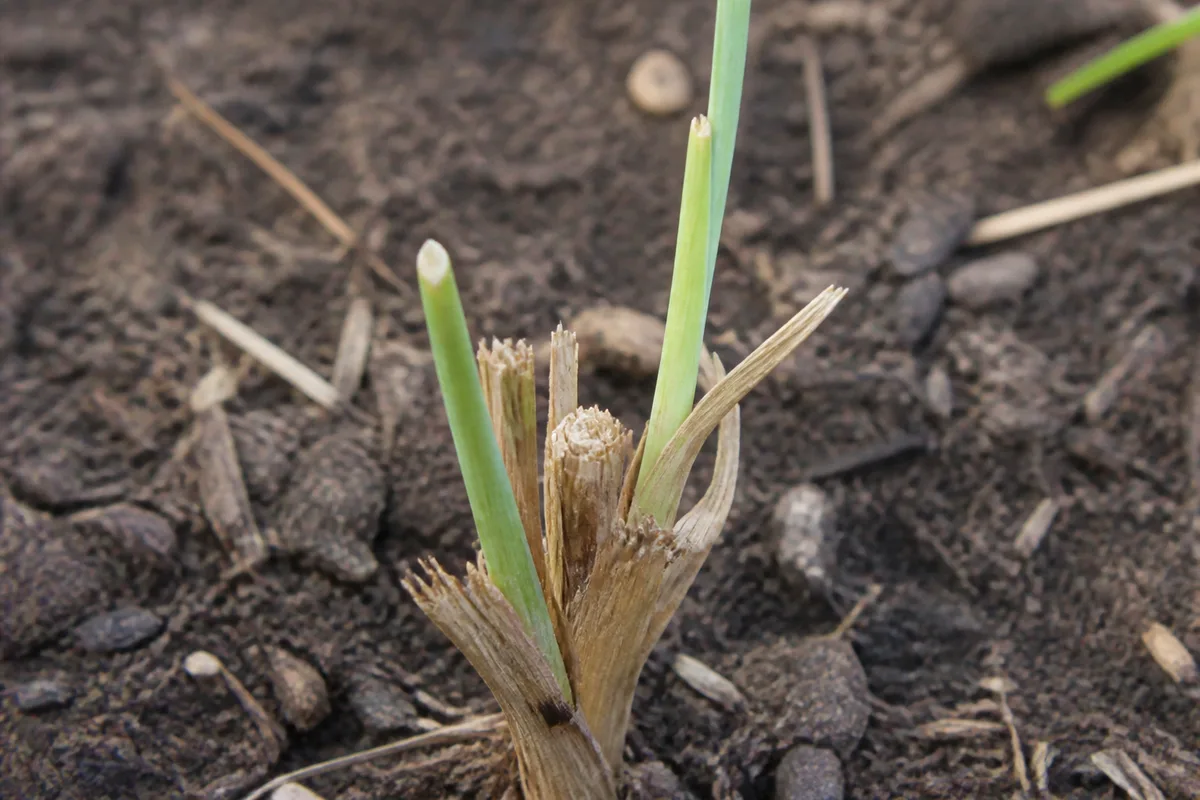
Slow Growth symptoms on Lemongrass - compare with healthy tissue on the same plant.
Typical slow-growth signs:
- Thin new shoots and long gaps between harvested stalk bases
- Pale yellow-green blades instead of deep green in warm weather
- Weak lemon scent when you bruise fresh tissue
- Clump looks much the same for two to four weeks while mix stays evenly moist
- Post-harvest regrowth takes days outdoors instead of the thick new tillers that normally appear within days in summer sun
Contrast with healthy pace:
- After a summer harvest cut outdoors, thick new stalk bases normally emerge within days when sun, moisture, and feed align
- Outdoor clumps in full June sun visibly thicken week over week
- Indoor winter clumps hold firm stalk bases with little new length-that is often rest, not failure
Weak scent and pale color together often signal light shortage before root problems show on top. See not enough light on lemongrass when stalks lean toward glass or stretch without thickening.
Normal slow growth vs a problem
Not every slow month means your clump is sick. Lemongrass biology sets the pace.
| Pattern | Season / conditions | Root check | Action |
|---|---|---|---|
| Modest indoor winter size | Short days, cool nights, dim window | Firm white roots, no sour smell | Reduce water slightly, maximize light-wait for spring |
| Cool spring stall | Days lengthening but nights still cool | Sound roots, moist mix | Move outdoors after frost; pace picks up with heat |
| Fixable slow pace | Warm active weather, partial shade | Healthy roots, roomy pot | Move to full sun first-see lemongrass light guide |
| Arrested warm-season stall | Full summer sun, weeks after harvest | May be root-bound or depleted | Read stunted growth on lemongrass |
| Decline with wet soil | Any season | Mushy roots, sour mix | Switch to overwatering or root rot protocol |
Indoor winter thinness with firm crowns is normal slow growth. Thin tillers for six or more warm weeks after you have corrected sun and feed is not-that crosses into stunting.
How to confirm the cause
Work through these checks in order so you apply one matched fix:
- Season gate - Are days lengthening and nights consistently above roughly 15°C (59°F)? Cool indoor months naturally limit pace. Slow-growth fixes apply mainly during active warm season or under bright supplemental light indoors.
- Direct sun hours - Log light at the pot rim for three days. Lemongrass needs full sunlight for best productivity. Fewer than six hours of direct sun indoors often explains thin shoots without any other problem.
- Post-harvest timing - Did you cut stalks recently? A few cool days without visible regrowth is normal. Outdoors in summer, thick replacement tillers should appear within days-persistent thin regrowth in heat points to a limiter.
- Root mass - Tip the clump out carefully. Roots circling the pot surface or escaping drainage holes confirm congestion-see root bound lemongrass. Mushy brown roots and sour smell mean rot, not light shortage alone.
- Soil moisture pattern - Does the pot dry in hours despite thin growth? Rapid drying with undersized shoots suggests root-bound stall. Chronic wetness in dim cool conditions slows uptake without necessarily rotting yet.
- Feed history - Have you harvested heavily through summer without weekly half-strength balanced feed June through September on container plants? Nitrogen shortage is plausible only after light and roots check out. Full schedule context lives on the lemongrass fertilizer guide.
- Pest scan - Inspect new shoot tips and undersides. Spider mites cause stippling that weakens photosynthesis-see spider mites on lemongrass when speckling appears indoors.
Match one primary cause before acting. Shade in warm weather beats a fertilizer guess. Wet sour soil beats a sun move.
First fix for lemongrass
Move the pot to the sunniest available location outdoors after frost danger, or the brightest window plus supplemental light indoors-before you repot or feed.
Lemongrass is a sun-driven grass. Extra water or fertiliser on a shaded, cool clump often deepens the stall without addressing the limiter. Logging sun first prevents the most common mistake: treating a light problem with division or nitrogen.
After the sun move:
- Still thin after two to three warm weeks in six-plus hours of direct sun → tip the clump out and inspect roots; divide if congested
- Firm roots, good sun, heavy harvest history → resume half-strength summer feed per the fertilizer guide
- Dim indoor overwintering only → improve light per the light guide; accept modest winter size
- Mushy roots on wet soil → hold feed, correct moisture-see overwatering
Do not repot on day one unless roots are clearly congested or rotting.
Step-by-step recovery
Once you have confirmed the primary limiter:
Low light or cool season
- Move outdoors to full sun after last frost, or place in the brightest available window.
- Lemongrass comes back quickly when returned to the garden the following spring if overwintered indoors dimly.
- Add supplemental grow light if outdoor placement is impossible during active months-the lemongrass light guide covers wattage and photoperiod for kitchen clumps.
- Reduce winter watering slightly so cool soil does not stay soggy in shade.
Root-bound clump
- Divide in warm active weather-spring through early fall after frost danger has passed.
- Trim foliage to roughly 15–25 cm so divisions are easier to handle.
- Slice the clump into sections with at least three to five firm stalks and attached roots each.
- Repot into fresh, rich, well-drained mix in a container sized to the rootball-not dramatically larger.
- Water thoroughly once, then keep evenly moist while new tillers emerge in sun.
- Resume half-strength balanced soluble feed every week to ten days June through September on outdoor container plants.
Nutrient-limited regrowth after harvest
- Confirm adequate sun and sound roots first.
- Apply half-strength balanced water-soluble fertilizer during warm active months-not in cool dormant indoor periods.
- Harvest outer woody stalks first to promote new stalk growth from the center.
- Top-dress with compost when Lemongrass repotting guide is not yet needed.
Brief post-repot pause
Division or repotting can slow visible growth for one to two warm weeks while roots settle. Firm stalk bases without sour soil mean patience-not another immediate repot. Persistent thin tillers past three to four warm weeks mean another limiter is active.
Recovery timeline
Outdoor clumps corrected for light often show thicker new stalk bases within two to three weeks in warm weather-for example, a late-May sun move in USDA Zones 8–10 often shows visibly thicker tillers by mid-June when nights stay mild.
Indoor winter recovery may stay modest until spring return outdoors. Judge success by new shoot thickness and post-harvest regrowth speed, not by old woody outer stalks.
Post-division recovery may include a brief one-week pause while roots re-establish-normal if stalk bases stay firm.
Causes to rule out
- Overwatering in cool weather - Wet soil with no new growth and yellow bases. See overwatering on lemongrass.
- Spider mites indoors - Stippling slows photosynthesis; check undersides. See spider mites on lemongrass.
- Woody center exhaustion - Old clumps need division, not more fertiliser alone. See root bound lemongrass.
- Leggy stretch toward a window - Elongated weak blades reaching for light overlap with slow pace but need placement fix first. See leggy growth on lemongrass and thin stems on lemongrass.
Slow growth vs stunted growth vs thin stems vs low light
These growth slugs overlap in the lemongrass cluster. Use this router before you re-search:
| Symptom focus | Best guide |
|---|---|
| Modest pace, seasonal pause, winter indoor thinness | This page - slow growth |
| Warm-season arrested development weeks after harvest despite good culture | Stunted growth on lemongrass |
| Pale thin stalks, lean toward glass, weak scent | Not enough light on lemongrass |
| Harvestable stalks stay pencil-thin in sun | Thin stems on lemongrass |
| Elongated stretch without thickening bases | Leggy growth on lemongrass |
Slow growth is about pace and season. Stunting is about failure to thicken when conditions should support vigor.
What not to do
Do not push heavy fertiliser on a cold, shaded, or waterlogged clump.
Do not assume slow winter growth means the plant is dead-reduce water and wait for warmth.
Do not keep an exhausted woody center indefinitely; restart from division or grocery-store stalks rather than nursing stalled clumps.
Do not repot into an oversized pot hoping for a growth surge-excess wet soil around sparse roots after division invites rot.
Do not confuse modest cool-spring pace with warm-season stalling-heat unlocks the growth surge UF/IFAS describes for summer.
How to prevent slow growth on lemongrass
Plant outside after last frost date in full sun. Water and feed regularly from June through September to maximize growth during peak season-the watering guide breaks active-season rhythm from winter dry-down.
Repot or divide every one to two years before clumps crack pots and harvest outer stalks to encourage fresh bases. Overwinter indoors with the brightest spot available or supplemental light, not a dim back room.
For full culture context-division, harvest rhythm, soil-see the lemongrass overview.
Related lemongrass problems
If slow pace is not the full picture, these guides cover overlapping symptoms:
- Stunted growth on lemongrass - warm-season arrested development, root inspection, and step-by-step recovery when tillers fail to thicken for weeks
- Not enough light on lemongrass - pale lean, weak scent, and grow-light setup for indoor clumps
- Thin stems on lemongrass - pencil-thin harvestable stalks despite otherwise healthy clumps
- Root bound lemongrass - fast dry-down, circling roots, and division timing
- Leggy growth on lemongrass - stretch toward windows without base thickening
- Lemongrass light guide - full sun outdoors, winter windows, and supplemental photoperiod
- Lemongrass fertilizer guide - summer nitrogen schedule after heavy harvest
- Lemongrass overview - placement, division, and seasonal culture
Conclusion
Slow lemongrass growth is usually light, temperature, season, or root-space math-not a mysterious blocker. Confirm sun and season first, then feed and repot during warm active growth. Thick new stalk bases after harvest cuts are the scorecard; when those return at a reasonable pace, the clump is back on track. If warm-season regrowth stays arrested despite correction, continue with the stunted growth guide rather than repeating the same sun move.
When to use this page vs other Lemongrass guides
- Lemongrass watering guide - Use for routine moisture checks before assuming slow growth is the main issue.
- Lemongrass problems hub - Browse all 52 common issues on this species.
- Not Enough Light on Lemongrass - Different entry point when symptoms overlap with slow growth.
- Yellow Leaves on Lemongrass - Different entry point when symptoms overlap with slow growth.